Babydoll Top vs Peplum Top: Two Waists, Two Very Different Stories


There’s a reason people constantly confuse babydoll tops and peplum tops — they both “flare,” they both sit above the hips, and from far away they can look like cousins. But structurally? They come from completely different design philosophies. One releases the body. The other shapes it.
As someone who obsesses over seam placement and proportion balance, I see this mix-up all the time — especially when trends recycle silhouettes without explaining the logic behind them. A babydoll top isn’t just a loose shirt. A peplum isn’t just a flare at the waist. The difference lives in how the volume moves and what it does to your proportions.
In a moment where comfort is no longer optional and structure feels intentional rather than mandatory, understanding this contrast matters. If you’ve already explored the full babydoll tops overview, you know softness can be powerful when it’s designed well. But softness and structure tell different stories — and your outfit behaves differently depending on which one you choose.

Babydoll Top: Volume, Softness, and Visual Freedom
The babydoll top is built on release. Not control. Not contour. Release.
Structurally, its defining feature is the raised waist seam — usually placed right under the bust — where the garment stops following the torso and begins to fall away from it. That seam placement is everything. Move it one inch too high and it starts looking juvenile. Move it too low and it loses its lift and becomes just… a loose blouse.
What makes babydoll interesting from a design perspective is how it distributes volume. The fullness drops vertically. It doesn’t flare outward aggressively like a peplum — it descends. That vertical flow creates air between the body and fabric, which is why it feels effortless in motion.
The Silhouette Logic
- Waist seam: under bust or slightly below
- Volume direction: downward release
- Body emphasis: upper torso, collarbone, sleeves
- Movement behavior: fluid, breathable, forgiving
The result? Visual softness without necessarily looking oversized.
But here’s where people get it wrong.
Fabric Is the Real Decision-Maker
A babydoll in stiff polyester poplin becomes architectural — and not in a good way. The volume turns into a rigid bell shape that disconnects from the body. It can look costume-like.
In contrast:
| Fabric Type | What It Does in a Babydoll | Styling Outcome |
|---|---|---|
| Soft cotton voile | Light lift + airflow | Casual, summer-ready |
| Viscose / rayon | Gentle drape | Romantic, fluid |
| Linen blend | Natural structure | Elevated casual |
| Chiffon layers | Floating softness | More editorial |
Notice something? Babydoll needs either movement or natural texture. Too much stiffness kills the charm.
“If the fabric can’t breathe, the silhouette suffocates.”
That’s my unofficial rule when choosing one.
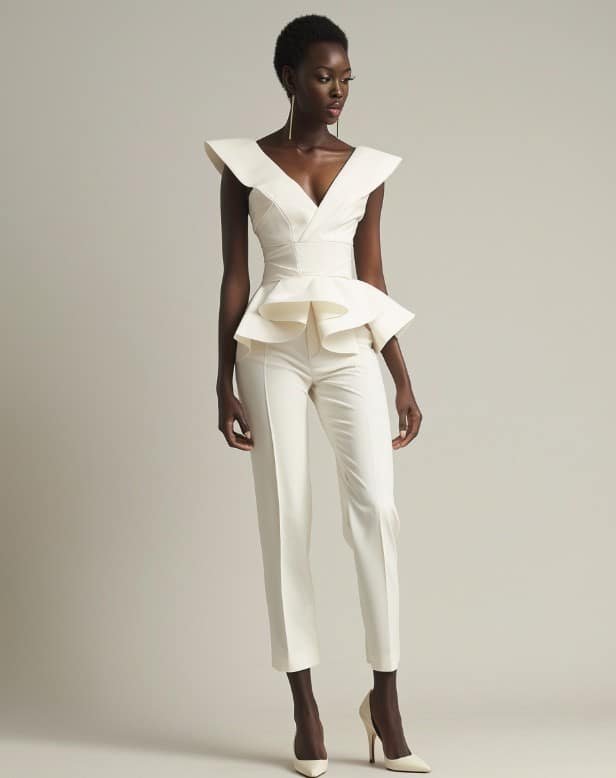
Sleeve Volume Matters More Than You Think
Designers rarely talk about this publicly, but sleeve proportion determines whether a babydoll feels balanced or awkward.
- Puffy sleeve + high seam = youthful, fashion-forward
- Slim sleeve + heavy body volume = unbalanced
- Dropped shoulder + soft flare = relaxed, modern
The top isn’t just about the waist seam. It’s about how the entire upper body interacts with the volume below.
Real-Life Wearability
This is where babydoll wins for daily comfort:
- No compression at the waist
- Heat-friendly airflow
- Easy to sit, bend, move
- Works layered over tanks without clinging
However — and this is important — it can visually widen the midsection if paired with equally loose bottoms. Balance matters. Slim jeans, straight trousers, or even structured shorts help anchor the softness.
If you’re exploring more styling nuance, the babydoll top styling guide dives deeper into proportion balancing — especially with footwear and bags.
Common Mistake I See Constantly
People size up thinking more volume equals more comfort. It doesn’t. It just distorts proportion. A well-cut babydoll already contains intentional fullness. Oversizing often shifts the shoulder seam too far and kills the structure that keeps it elevated instead of sloppy.
Babydoll works when it’s intentional softness. Not accidental shapelessness.
Next, let’s talk about its structured counterpart — the peplum — and why it behaves almost like the opposite philosophy.
Peplum Top: Structure, Shape, and Intentional Definition
If babydoll is about release, peplum is about decision.
A peplum top doesn’t float away from the body — it responds to it. The waist seam sits at the natural waist (or slightly above), and the flare begins from a fitted base. That fitted base is critical. Without it, it’s not really a peplum — it’s just a ruffle pretending to have purpose.
Where babydoll creates visual softness, peplum creates contrast: narrow → flare. That contrast is what builds the hourglass illusion.
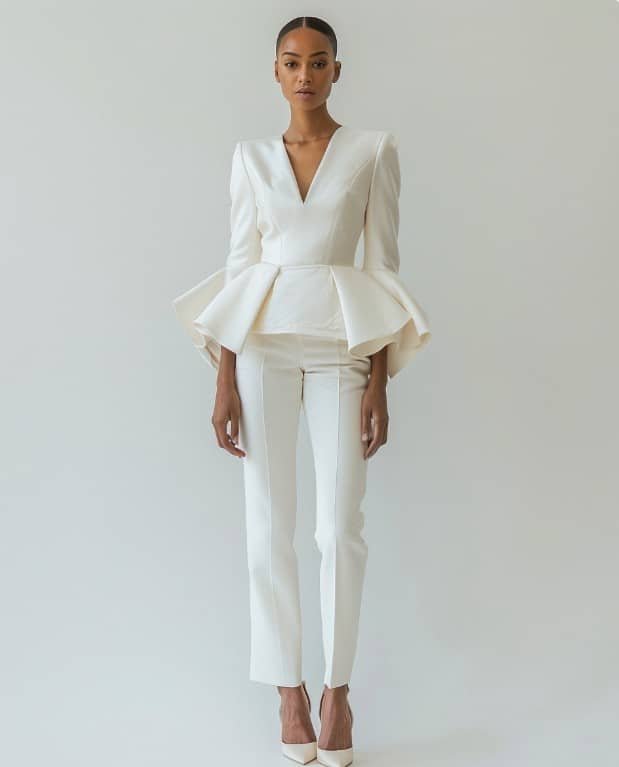
The Structural Blueprint
- Waist seam: true waist (sometimes slightly elevated)
- Upper body: fitted, contoured, shaped with darts or princess seams
- Volume direction: outward flare from the waist
- Body emphasis: waistline definition
The flare doesn’t drop vertically like a babydoll. It pushes outward horizontally before falling. That outward movement visually sharpens the waist because it exaggerates the difference between torso and hips.
And this is where fabric becomes decisive again.
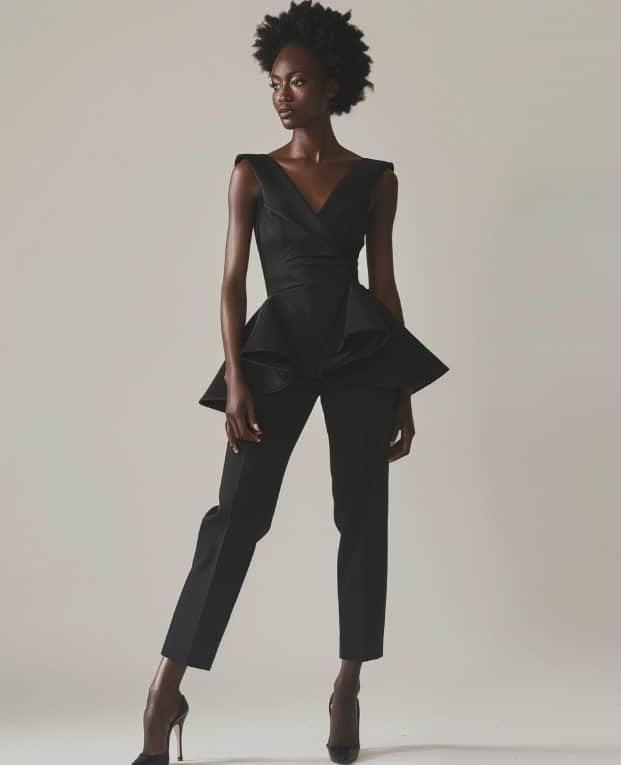
Fabric Can Make or Break a Peplum
Peplum demands structure. But not stiffness for the sake of stiffness.
| Fabric Type | What Happens in Peplum | Risk Level |
|---|---|---|
| Structured cotton | Clean sculpted flare | Safe choice |
| Neoprene | Dramatic shape hold | Can look heavy |
| Thin jersey knit | Collapse at waist | High risk |
| Satin | Elegant, fluid flare | Occasion-leaning |
Here’s the truth most brands don’t admit:
Knit peplums often fail.
Without waist tension and structure, the flare droops. Instead of sculpting, it clings. The silhouette loses its architectural intention and starts looking accidental.
Why Peplum Is Less Forgiving in Real Life
Peplum looks incredible in lookbooks because models stand upright, unmoving. In reality?
- Sitting compresses the waist seam.
- Bending can flip the flare upward.
- Thick outerwear disrupts the waist definition.

Peplum doesn’t love bulky layers. A cropped jacket can work. A long oversized blazer usually ruins the proportion logic.
Peplum isn’t about comfort-first dressing. It’s about visual precision.
That doesn’t make it outdated — it makes it deliberate.
Where It Truly Shines
- Structured office looks
- Dressy evening styling
- High-waisted trousers
- Sleek heels or pointed flats
Peplum thrives when the lower half is streamlined. Wide, voluminous bottoms compete with the flare and create unnecessary bulk around the hips.
Quick Contrast Snapshot
Without overcomplicating it:
- Babydoll releases from under the bust.
- Peplum defines at the waist.
- Babydoll elongates softly.
- Peplum sculpts sharply.
They may look similar on a hanger. On the body, they behave like opposites.
Next, let’s step back and analyze the deeper silhouette theory — how a few inches of seam placement completely change proportion logic.
Silhouette Logic: How the Waistline Changes Everything
If you strip both garments down to pattern-making basics, the difference isn’t decorative — it’s architectural.
Move the seam, and you change the entire visual equation of the body.
Design is often about micro-decisions that create macro effects. In this case, the vertical placement of one horizontal seam determines whether the eye travels up, down, inward, or outward.
Let’s break that down clearly.
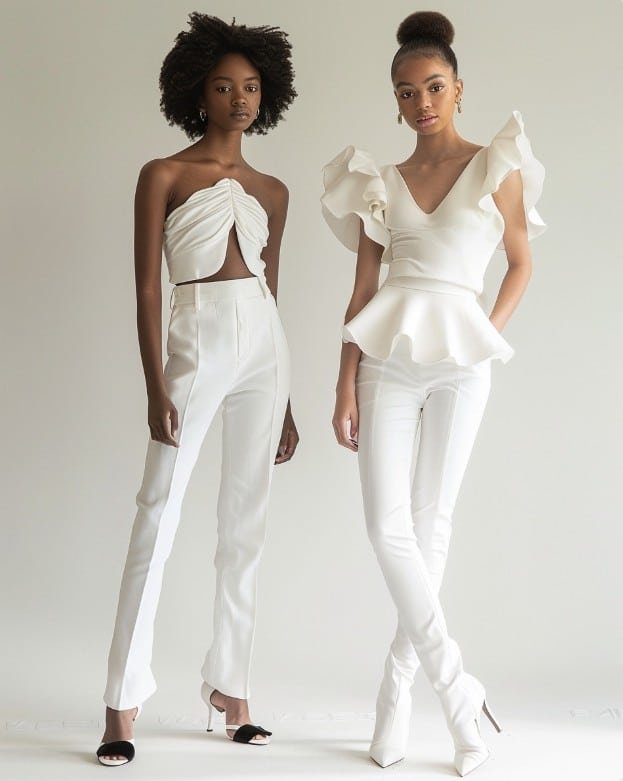
What the Eye Actually Sees
| Element | Babydoll Top | Peplum Top |
|---|---|---|
| Seam Position | Under bust | Natural waist |
| Visual Emphasis | Upper torso | Waistline |
| Volume Movement | Downward drop | Outward flare |
| Body Illusion | Elongated torso, softened midsection | Defined waist, emphasized hips |
| Comfort Signal | Relaxed | Structured |
The babydoll interrupts the torso higher. That shortens the upper body slightly but elongates the lower visual line because the fabric falls vertically. The peplum, on the other hand, highlights the narrowest part of the torso and then expands outward, increasing horizontal contrast.
Different math. Different message.

Vertical vs Horizontal Energy
Babydoll = vertical softness.
Peplum = horizontal definition.
That distinction affects how you style everything around it:
- Babydoll pairs better with slim or structured bottoms to prevent overwhelming width.
- Peplum pairs best with sleek silhouettes to avoid stacking volume at hip level.
When people say, “This top makes me look wider,” it’s usually not about body size — it’s about volume direction.
A Subtle but Important Proportion Detail
If you have a shorter torso:
- Babydoll can exaggerate that shortness if the seam is too high.
- Peplum can actually balance it if the waist placement is precise.
If you have a longer torso:
- Babydoll can create youthful lift.
- Peplum sharpens and refines the midsection.
This isn’t about “body type rules.” It’s about understanding visual geometry.
Why They Feel So Different Emotionally
There’s also psychology in silhouette.
Babydoll communicates:
- ease
- movement
- softness
- approachability
Peplum communicates:
- control
- intention
- polish
- precision
Clothes speak before you do. Seam placement is language.
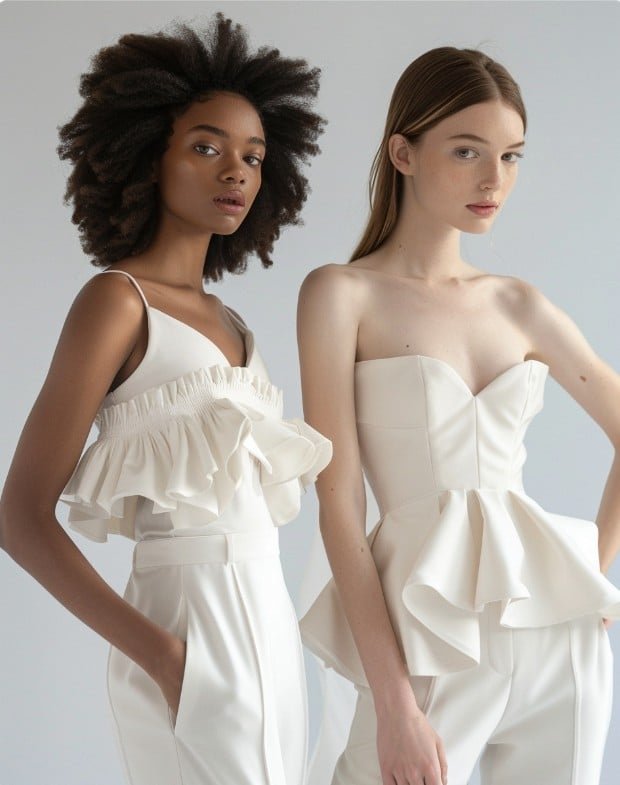
Now let’s go deeper into what truly separates them beyond silhouette — fabric behavior and construction logic, where the difference becomes even more obvious.
Fabric & Construction: Where the Difference Really Lives
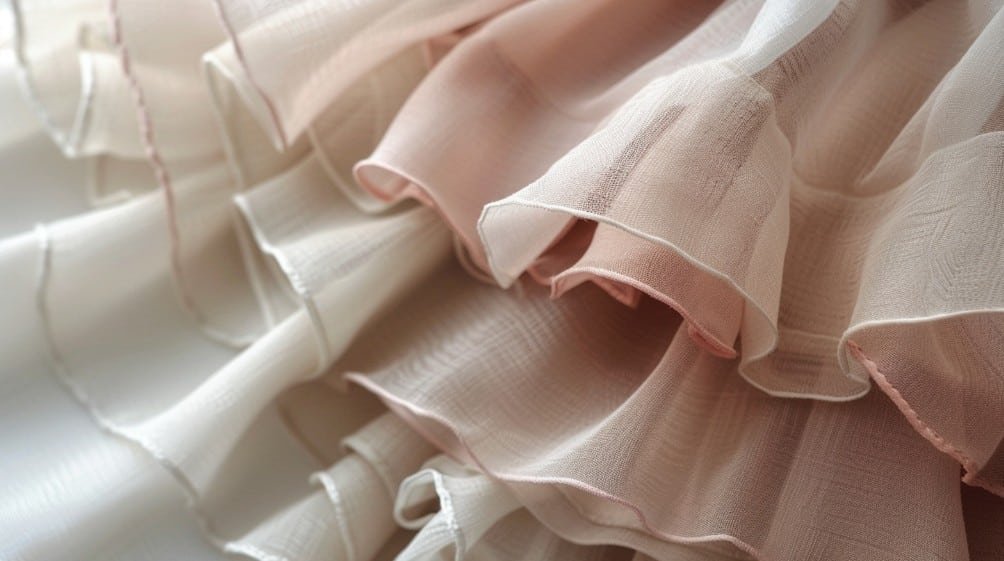
If silhouette is the idea, fabric is the execution.
Two tops can share a similar outline on a hanger — but once fabric enters the conversation, everything shifts. This is where babydoll and peplum truly separate.
Because here’s the thing:
You can fake a silhouette visually. You cannot fake fabric behavior.
Drape vs Tension
Babydoll thrives on drape.
Peplum depends on tension.
A babydoll cut from fluid viscose moves with the body. It reacts to air, steps, posture. The fabric hangs from the raised seam like gravity is part of the design.
A peplum, however, requires resistance. The waist seam must hold shape. That means either internal structure (interfacing, thicker weave) or a fabric that naturally maintains flare.
If you reverse them?
- A stiff babydoll becomes boxy.
- A flimsy peplum collapses and loses authority.
Wrong fabric = wrong story.
Breathability & Seasonal Logic
Babydoll is inherently warm-weather friendly because:
- The fabric doesn’t cling to the stomach.
- Air circulates under the flare.
- Sweat isn’t trapped at the waist seam.
Peplum, by contrast:
- Compresses at the midsection.
- Layers less comfortably.
- Feels better in transitional or structured settings.
You’ll rarely reach for a tight-waisted peplum during a humid commute. You might reach for a babydoll without thinking twice.
Comfort isn’t accidental. It’s engineered.
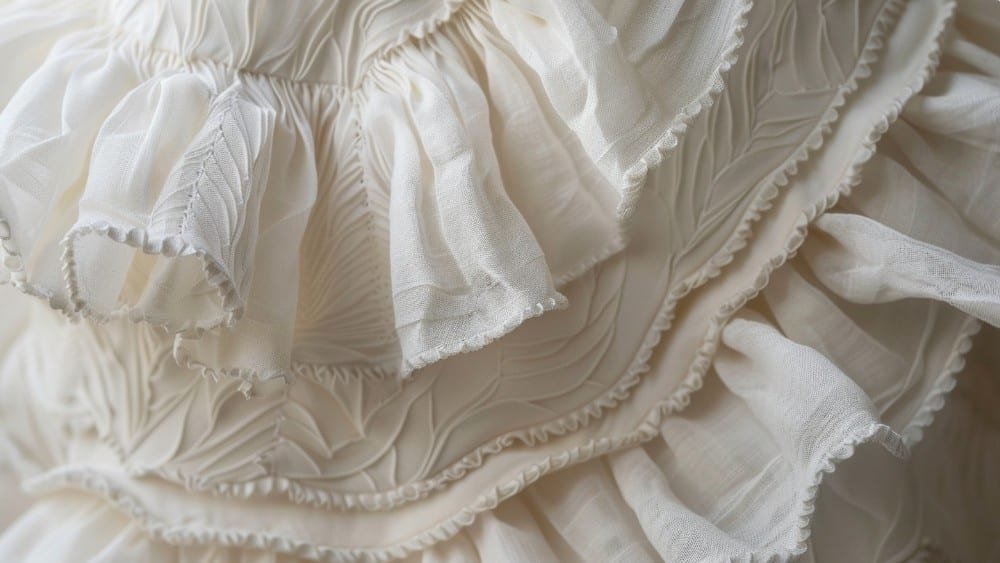
Construction Details Most People Don’t Notice
Let’s zoom in.
Babydoll construction details:
- Gathered seam under bust
- Often minimal internal reinforcement
- Light stitching tension
- Sometimes lined only at bodice
Peplum construction details:
- Fitted bodice with darts or princess seams
- Reinforced waist seam
- Structured hem to maintain flare
- Often heavier lining or facing
The peplum bodice does real work. It shapes. It holds. It sculpts.
Babydoll bodice mainly anchors volume.
What Happens Over Time
This part rarely gets discussed.
Babydoll:
- Soft fabrics age gracefully.
- Slight wrinkling often enhances texture.
- Seam stress is minimal.
Peplum:
- Waist seams experience pressure.
- Cheap fabric loses flare definition quickly.
- Stretch fibers can relax and distort the silhouette.
A well-made peplum lasts. A poorly made one looks tired fast.
What to Avoid
For Babydoll:
- Thick scuba fabric
- Overly shiny synthetics
- Excessive gathers that bulk at the bust
For Peplum:
- Thin clingy jersey
- Overly stiff canvas-like cotton
- Extremely short flare that cuts awkwardly at hip widest point
It’s not about trend. It’s about physics.
Next, let’s talk about styling in real life — how shoes, bags, and layering either support or sabotage these silhouettes.
Styling in Real Life: Shoes, Bags, and Balance
Silhouettes don’t exist in isolation.
They react to everything you pair them with.
This is where most outfit mistakes happen — not in the top itself, but in what surrounds it.

Footwear: Visual Weight Matters
Babydoll has softness and downward flow. To ground it:
- Chunky loafers
- Structured ankle boots
- Minimal sneakers
- Even ballet flats if the bottom half is clean
The goal is balance. A heavy shoe stabilizes the airy upper half.
Peplum is different. It already creates a horizontal flare at the waist. Adding heavy footwear can feel bottom-heavy.
Peplum works best with:
- Pointed flats
- Slim heels
- Sleek boots
- Anything that elongates rather than anchors
Think vertical line continuation.
Bag Proportions (Underrated Detail)
Here’s something most people overlook:
Bag length and strap drop can interrupt waist seams.
With babydoll:
- Crossbody bags work beautifully because there’s no strict waist to disturb.
- Slouchy shoulder bags enhance the relaxed feel.
- Oversized totes can look intentional and modern.
With peplum:
- Crossbody straps often cut awkwardly across the waist seam.
- Structured top-handle bags look cleaner.
- Mid-size bags preserve the silhouette’s polish.
If the bag distorts the waist, the entire design logic collapses.
Layering Reality Check
Babydoll loves contrast layering:
- Cropped jackets
- Oversized denim
- Soft cardigans
- Even long coats — the vertical drop still works
Because it doesn’t depend on waist precision, it’s adaptable.
Peplum, on the other hand, is temperamental.
- Long blazers hide the waist seam → silhouette disappears.
- Oversized outerwear competes with the flare.
- Thick sweaters layered over it? Forget it.
Peplum wants to be seen clearly. It doesn’t share space easily.
Bottom Pairing Strategy
Babydoll:
- Straight-leg denim
- Tailored shorts
- Slim trousers
- Even mini skirts for playful contrast
Avoid pairing it with equally voluminous wide-leg pants unless you understand proportion extremely well.
Peplum:
- High-waisted trousers
- Pencil skirts
- Slim cigarette pants
Wide, pleated, or voluminous bottoms can exaggerate hip width unintentionally.
A Quick Styling Comparison
| Styling Element | Babydoll | Peplum |
|---|---|---|
| Best Shoe Energy | Grounding | Elongating |
| Best Bag Style | Relaxed / slouchy | Structured |
| Layering Flexibility | High | Low |
| Bottom Silhouette | Balanced slim | Streamlined |
Styling either one is less about rules and more about respecting what the garment is trying to do.
Babydoll wants freedom.
Peplum wants clarity.
Let’s close this with something more practical — which one actually fits your life, not just your mirror.

Which One Actually Works for Your Life (Not Just Your Body)
We’ve talked structure, seam placement, volume logic. But here’s the more honest question:
Which one survives your day?
Not your mirror selfie. Not your Pinterest board. Your real, moving, sitting, commuting life.
Movement & Daily Function
If your day includes:
- walking long distances
- sitting at a desk
- commuting in warm weather
- layering unpredictably
Babydoll usually integrates more naturally. There’s no midsection compression, no flare flipping upward when you sit, no waistband conflict. It adapts.
Peplum requires posture. It likes intention. It performs beautifully when you’re upright and composed — less so when you’re rushing for a train.
That doesn’t make it impractical. It just means it’s deliberate.
Climate & Temperature
Babydoll = airflow.
Peplum = containment.
In heat, the difference is obvious. Fabric trapped at the waist feels heavier than fabric released from under the bust. If you live somewhere humid, you’ll feel that immediately.
In cooler months, peplum layers more cleanly under tailored coats because the waist definition aligns with structured outerwear — but only if the coat isn’t oversized.
Babydoll under heavy tailoring? It becomes invisible.
Professional vs Casual Settings
Babydoll reads:
- relaxed
- creative
- modern-casual
- sometimes romantic
Peplum reads:
- structured
- intentional
- polished
- occasionally formal
If your environment leans corporate or occasion-focused, peplum integrates seamlessly. If your lifestyle leans creative, mobile, or comfort-prioritized, babydoll tends to feel more authentic.
The Honest Take
Babydoll is forgiving — in proportion, in comfort, in styling flexibility.
Peplum is precise — in silhouette, in visual impact, in waist definition.
Neither is “better.” But one may align more naturally with how you move through your day.
And that alignment is more important than trend cycles.
Choosing Softness or Structure
The difference between a babydoll top and a peplum top isn’t about flare. It’s about philosophy.
Babydoll softens the body’s outline and releases pressure. It creates space — visually and physically. When done well, it feels modern, not juvenile.
Peplum sharpens the waist and builds contrast. It’s architectural. It’s intentional. It demands cleaner styling and stronger structure to succeed.
One isn’t outdated. One isn’t overly trendy.
They simply express different relationships to the body — one embraces ease, the other defines it.
The real decision isn’t which silhouette is “flattering.”
It’s which one reflects how you want to feel dressed.
FAQ
What is the main difference between a babydoll and a peplum top?
A babydoll top releases volume from under the bust and flows downward, while a peplum top defines the waist and flares outward from a fitted bodice.
Which is more flattering: babydoll or peplum?
Neither is universally “better.” Babydoll softens the midsection and feels relaxed. Peplum sharpens waist definition and creates a sculpted silhouette.
Are peplum tops outdated?
No. Peplum tops feel modern when cut with clean structure and paired with streamlined bottoms. Fabric and proportion matter more than trend cycles.
Are babydoll tops only for summer?
Not exclusively, but they thrive in warm weather due to airflow and comfort. In colder seasons, layering requires more intention.
Can you wear peplum casually?
Yes — if styled with minimal footwear and relaxed fabrics. However, peplum naturally reads more polished than babydoll.