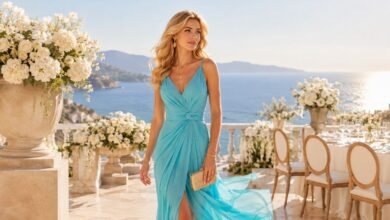
Black Tie Optional Wedding Guest Dresses: What to Wear When a Gown Is Welcome but Not Required

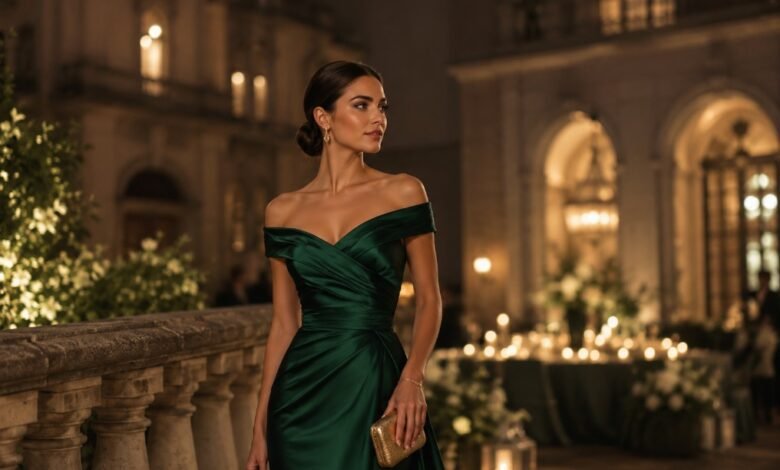
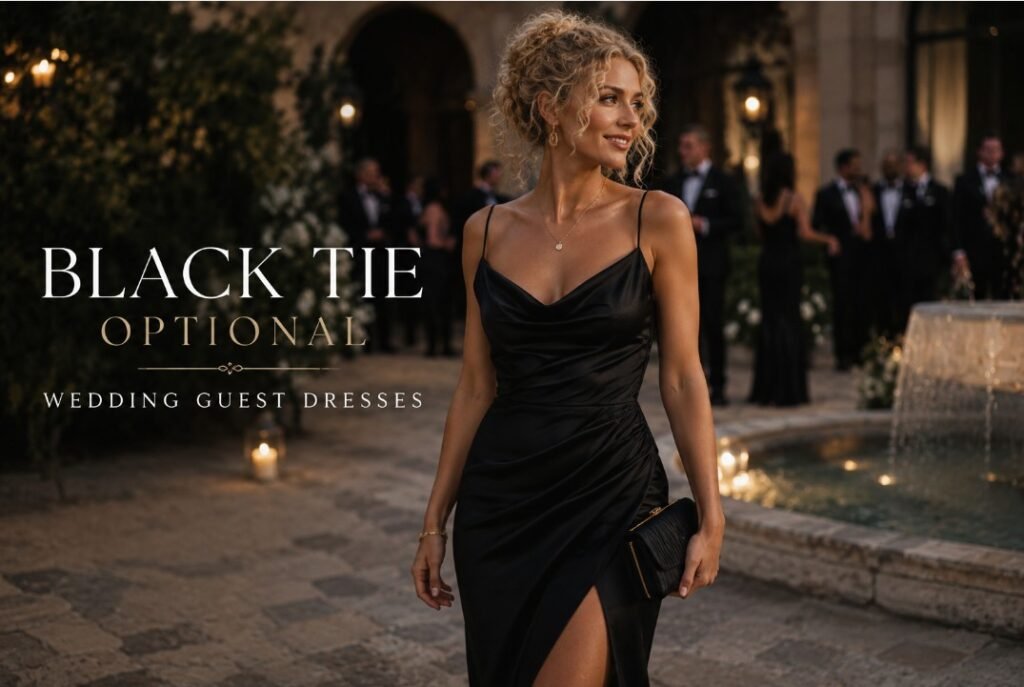
Black tie optional wedding guest dresses live in a very specific formal zone: elegant, evening-ready, polished, and clearly special, but not as strict as traditional black tie. A floor-length gown is welcome. A very dressy midi can work. A sleek ankle-length dress can be perfect. The goal is not to decode the couple’s psychology for three hours; it is to look formal enough that you belong beside tuxedos, candlelight, tall centerpieces, and a room that probably has better lighting than your apartment.
The short answer
For black tie optional, choose the most elevated dress you can wear comfortably without looking bridal, costume-like, or underdressed. If you own a beautiful gown, this is a good time for it. If you do not want a gown, choose a dressy midi or ankle-length dress in a formal fabric with evening accessories.
The mistake people make
They hear “optional” and focus only on the permission to be less formal. The smarter reading is: black tie is the reference point. You are allowed some flexibility, but the room will still lean formal. Dress like you understood that generosity, not like you found a loophole.
What black tie optional actually means for women
Black tie optional means the couple is creating a formal wedding atmosphere, but they are not requiring every guest to follow the strictest version of black tie. Men may wear tuxedos or dark suits. Women may wear floor-length gowns, formal midi dresses, elegant cocktail dresses, dressy evening separates, or refined jumpsuits depending on the venue and time.
The key word is still formal. A black tie optional wedding guest dress should not feel like normal cocktail-hour dressing unless the dress itself is unusually polished. It should have evening fabric, a refined silhouette, thoughtful accessories, and enough presence to stand comfortably in a room where some guests will be in gowns.
The formality spectrum: where your outfit should land
Think of black tie optional as a staircase. You do not need to stand on the top step, but you should not be waiting outside on the sidewalk either. The safest looks sit between elegant formal and elevated evening.
Do you have to wear a gown?
No. That is the whole “optional” part. But the non-gown option still has to look formal. A dressy midi can absolutely work for black tie optional if the fabric, shape, styling, and accessories feel elevated. A navy satin midi with sculptural earrings and sleek heels can look much more appropriate than a cheap floor-length dress that wrinkles badly and fits poorly.
If the wedding is in a luxury hotel, grand ballroom, historic estate, formal club, museum, or evening venue, a gown is the safest and most elegant choice. If the venue is formal but not grand, a refined midi or ankle-length dress can be completely appropriate. The more glamorous the venue, the more your dress should lean gown or near-gown.
Floor-length gown
The safest option for a traditional evening black tie optional wedding. Choose clean lines, beautiful fabric, and a color that does not compete with the bride.
Dressy midi
Works when the fabric is formal: satin, crepe, jacquard, velvet, or structured chiffon. The styling must be evening-ready, not daytime pretty.
Ankle-length dress
A chic compromise between gown and midi. It feels formal without going full gala, especially in a column, slip, or soft A-line silhouette.
Formal cocktail dress
Possible, but only if it is very polished. Think elegant black satin, rich jewel tones, refined lace, or sculptural shape — not a party mini.
Evening jumpsuit
A tailored jumpsuit can work when it feels sleek and expensive. Add strong earrings, a clutch, and heels so it does not look business casual.
Dressy separates
Harder but possible. A formal silk skirt with an elegant top can work, but the result must feel like eveningwear, not dinner outfit improvisation.
The Diana rule: dress for the most formal version of the room
If the invitation says black tie optional, assume the couple would be happy to see guests dressed up. You do not need to outshine anyone. You do not need to buy a dramatic gown just to survive one reception. But you should choose the version of your outfit that feels more polished, not less.
Black tie optional vs black tie vs formal
These dress codes overlap, which is why guests panic. The differences are not always dramatic, but they matter. Black tie is the strictest of the three. Formal is elegant but slightly broader. Black tie optional sits between them: it points toward black tie, then gives guests permission to interpret.
Most formal
Floor-length gowns are expected. The styling should be evening, refined, and polished. Cocktail dresses are usually too casual unless exceptionally formal.
Formal with flexibility
A gown is ideal, but a dressy midi, ankle-length dress, formal cocktail dress, or elegant jumpsuit can work if styled beautifully.
Elegant but wider
Long dresses, dressy midis, and polished evening looks are appropriate. It is formal, but usually less tuxedo-and-gown coded than black tie.
The best fabrics for black tie optional wedding guest dresses
Fabric is the difference between “nice dress” and “formal enough.” Black tie optional needs materials that catch evening light, hold their shape, or move with grace. This is not the moment for thin cotton, casual jersey, beach linen, or flimsy fabrics that look exhausted after ten minutes in a car.
Colors that look right for black tie optional
Black tie optional usually looks best in colors with depth. This does not mean everything must be dark, but pale shades need more caution because the setting is formal and wedding photography is unforgiving. The safest palette feels rich, elegant, and clearly guest-appropriate.
Silhouettes that feel formal without looking like a bridesmaid
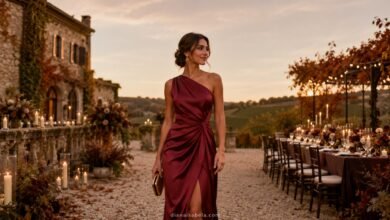
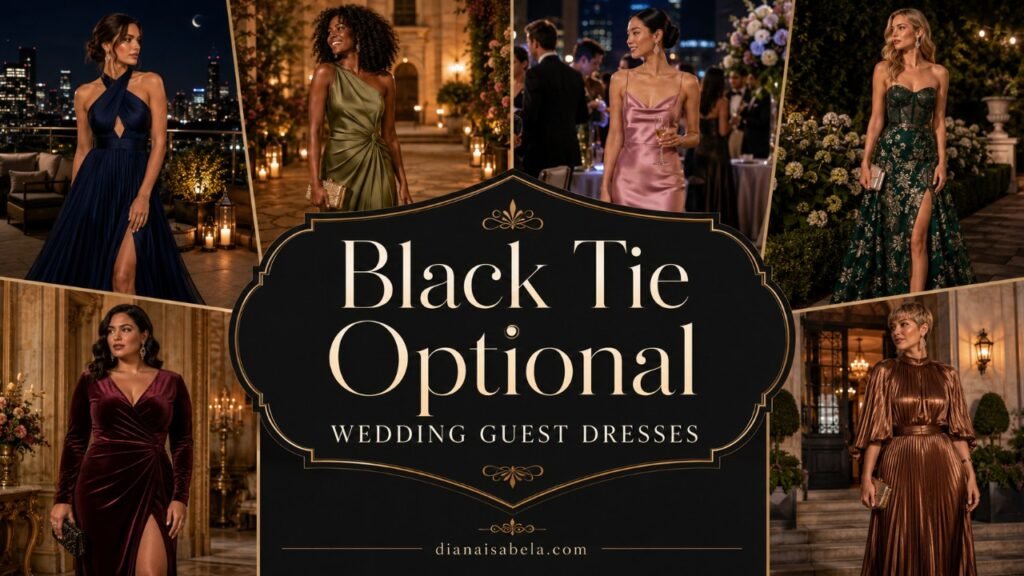
The best black tie optional silhouettes have elegance without costume energy. A column gown, one-shoulder dress, draped midi, halter gown, off-the-shoulder crepe dress, velvet wrap gown, or sleek slip dress can all work beautifully. The shape should feel grown-up, intentional, and comfortable enough to wear through dinner and dancing.
Be careful with dresses that look exactly like bridesmaid dresses in pale satin, especially if the color is blush, champagne, sage, or dusty blue. Those colors can still work, but the styling should make the dress feel like a guest outfit: modern jewelry, a distinctive clutch, a stronger shoe, or a less bridal hairstyle.
Accessories: how to make a dressy midi look black tie optional
If you choose a gown, the dress does much of the work. If you choose a midi, the accessories matter more. They need to pull the outfit upward so it reads formal, not cocktail-lite. This is where a sleek clutch, evening heels, refined jewelry, and polished hair become the difference between “almost” and “yes.”
Emerald satin gown + metallic clutch + drop earrings
A classic black tie optional formula. It feels formal enough for a ballroom but not bridal or overcomplicated.
Black crepe midi + slingbacks + sculptural cuff
This works when the dress has structure and the accessories feel evening. Keep the bag small and the beauty look polished.
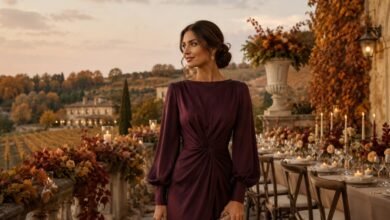
Burgundy velvet dress + sheer tights + elegant coat
Velvet gives instant formality. Choose a coat that looks intentional, because arrivals still count.
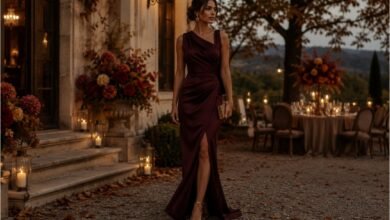
Chocolate column dress + gold earrings + clean low bun
Minimal but rich. The trick is luxurious fabric and a silhouette that looks deliberate from every angle.
Shoes for black tie optional weddings
Choose shoes that look elegant and can survive the venue. For indoor hotel, ballroom, museum, restaurant, or estate weddings, heeled sandals, pointed pumps, slingbacks, kitten heels, or sleek platforms can work. For outdoor formal weddings, choose a block heel or thicker heel that will not sink into grass.
Black tie optional is not the moment for casual wedges, beach sandals, worn flats, office pumps, or shoes that look too daytime. A dressy flat can work only if it is truly polished: satin, metallic, embellished, pointed, or delicate enough to look evening.
What to wear by venue
The invitation gives the dress code, but the venue gives the volume. A black tie optional wedding in a grand hotel should push you toward a gown. A formal restaurant reception may allow a dressy midi. A vineyard estate could go either way depending on the time and styling.
Ballroom or grand hotel
Choose a gown or a very formal ankle-length dress. This is the safest place to lean elegant and dramatic.
Museum or historic estate
A sleek gown, architectural midi, or formal crepe dress fits the setting. Avoid anything too casual or too beachy.
Restaurant reception
A dressy midi can work well here, especially in satin, velvet, or crepe with evening accessories.
Vineyard or garden estate
Try a softer gown, dressy floral chiffon, or elegant midi. Choose shoes that handle outdoor paths.
City wedding
Black, navy, chocolate, or metallic accents look chic. Sleek silhouettes usually feel more modern than princess shapes.
Destination formal
Pack fabric that travels well. Lightweight satin, crepe, and chiffon are better than heavy gowns that wrinkle dramatically.
What not to wear to a black tie optional wedding
Most mistakes happen because guests dress for the word “optional” instead of the phrase “black tie.” You do not need to wear the most formal dress in the room, but your outfit should never look like you ignored the black tie part completely.
Where this dress code sits in the Diana wedding guest universe
Black tie optional is one of the most formal dress codes in the main wedding guest dresses guide. If the invitation feels stricter, compare it with black tie wedding guest dresses. If it sounds formal but not tuxedo-level, the formal wedding guest dresses guide is the closest softer reference.
The confidence check before you RSVP to the mirror
Ask yourself whether the outfit would still feel appropriate if half the room arrived in gowns. If the answer is yes, you are probably safe. Then ask whether the outfit would pull focus from the couple. If the answer is also yes, edit it down. Black tie optional is not about being the most dramatic person in the room; it is about looking like you understood the invitation with taste.
The best black tie optional wedding guest dresses have quiet certainty. They do not apologize for being dressed up. They do not rely on confusion. They simply look formal, beautiful, and appropriate — which is usually the chicest answer available.
When in doubt, choose the elegant version
Black tie optional gives you flexibility, not permission to underdress. A gown is always safe, but a formal midi, ankle-length dress, or sleek evening jumpsuit can work when the fabric and styling are strong. Choose richer color, better texture, smaller evening accessories, and shoes that feel intentional. The result should whisper formal, not shout panic.
FAQ
What are black tie optional wedding guest dresses?
Black tie optional wedding guest dresses are formal dresses that work for a wedding where gowns are welcome but not strictly required. Good options include floor-length gowns, formal midi dresses, ankle-length dresses, elegant cocktail dresses, dressy jumpsuits, and evening dresses in satin, crepe, chiffon, velvet, or jacquard.
Do women have to wear a gown to a black tie optional wedding?
No, women do not have to wear a gown to a black tie optional wedding. A floor-length gown is the safest choice, but a very dressy midi dress, formal cocktail dress, ankle-length dress, or elegant jumpsuit can also work if the outfit looks polished and evening-appropriate.
Can I wear a midi dress to a black tie optional wedding?
Yes, you can wear a midi dress to a black tie optional wedding if it is formal enough. Choose elevated fabrics like satin, crepe, velvet, jacquard, or structured chiffon, and style the dress with evening shoes, a small clutch, polished jewelry, and elegant hair.
Can I wear a cocktail dress to a black tie optional wedding?
A cocktail dress can work for black tie optional if it is refined and formal, not casual or too short. Choose a dress in a rich color, luxe fabric, and sophisticated silhouette, then elevate it with heels, a clutch, and evening jewelry.
What colors are best for black tie optional wedding guest dresses?
The best colors include black, navy, emerald, burgundy, plum, chocolate, deep teal, wine, and metallic accents. Softer colors like dusty blue, mauve, rose, and sage can also work if the fabric and styling feel formal.
Is black appropriate for a black tie optional wedding?
Yes, black is very appropriate for a black tie optional wedding, especially for evening events. A black satin gown, crepe midi, velvet dress, or sleek column dress can look elegant and guest-appropriate.
What should you not wear to a black tie optional wedding?
Avoid casual sundresses, jersey dresses, office dresses, denim, flip-flops, daytime cotton florals, very short party minis, white or ivory dresses, bridal lace, and anything that looks too casual for a formal evening wedding.
What shoes should I wear to a black tie optional wedding?
Good shoe options include elegant heels, heeled sandals, slingbacks, pointed pumps, kitten heels, sleek platforms, or polished dressy flats. For outdoor venues, choose a thicker heel or block heel so the shoe works on grass or uneven paths.
What is the difference between black tie and black tie optional?
Black tie usually expects a floor-length gown or very formal eveningwear. Black tie optional still leans formal, but guests have more flexibility and may wear a gown, dressy midi, formal cocktail dress, elegant jumpsuit, or ankle-length evening dress.
Is a jumpsuit okay for a black tie optional wedding?
Yes, a jumpsuit can be okay for a black tie optional wedding if it looks formal and tailored. Choose an evening fabric, elegant shape, refined color, and polished accessories so the outfit does not look business casual.