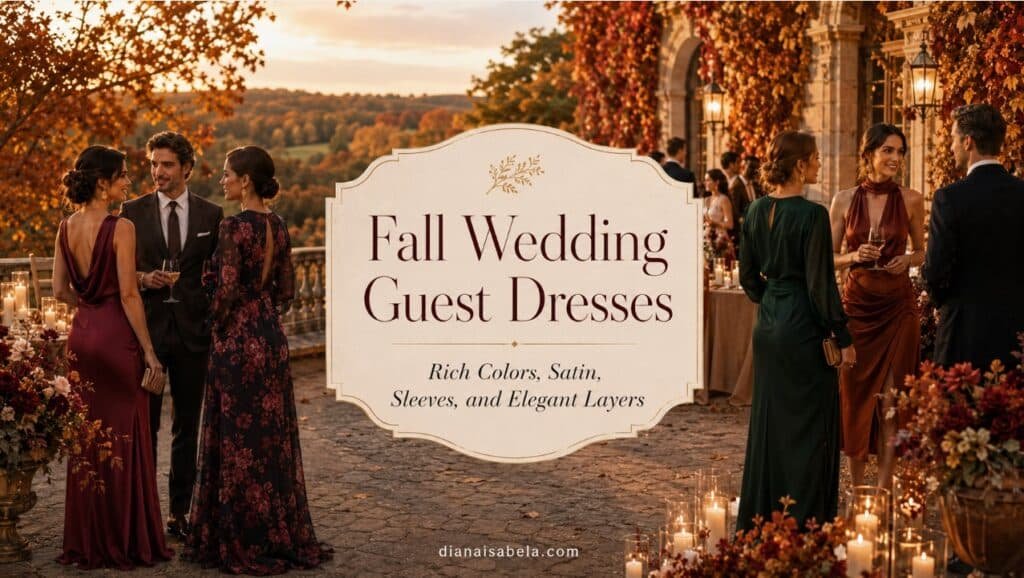
Fall Wedding Guest Dresses: Rich Colors, Satin, Sleeves, and Elegant Layers

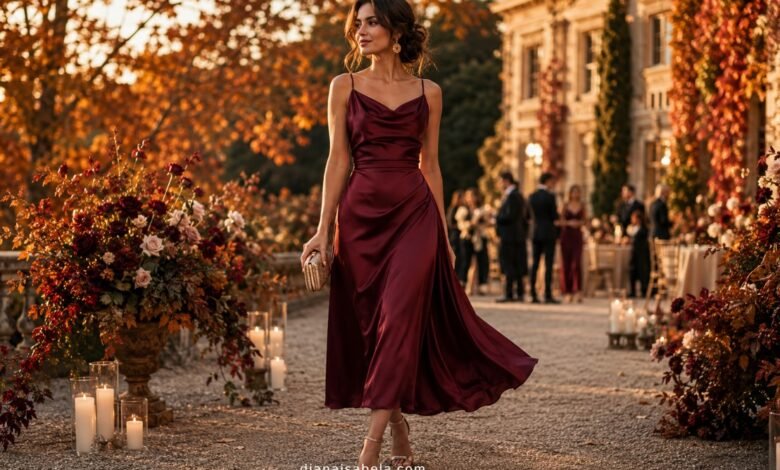
Fall wedding guest dresses are where romance gets richer, darker, and more cinematic.
Fall weddings have a different kind of atmosphere. The light turns golden, the venues feel warmer, the flowers become moodier, and colors like burgundy, rust, chocolate, olive, plum, and navy suddenly look exactly right. But autumn dressing is not just “wear a dark dress.” The best fall wedding guest dresses have depth without heaviness, drama without costume, and enough practical sense for vineyards, estates, damp grass, city hotels, candlelit rooms, and cool evening air.
The fall formula: rich color, fluid fabric, elegant layers, and shoes that understand leaves, stone, and grass.
This is the season for burgundy satin, chocolate wrap dresses, olive velvet, dark florals, rust midis, plum pleats, navy chiffon, copper satin, gold jewelry, polished clutches, and layers that look like styling rather than weather panic.
Fall by month
September, October, and November are all fall, but each one has a different fashion temperature.
September still remembers summer, so the dresses can be fluid, warm, and terrace-ready. October is the cinematic center of fall: vineyards, plum, rust, chocolate, dark florals, candlelight, and richer textures. November gets moodier and more formal, moving toward midnight blue, black satin, velvet, coats, and winter-adjacent polish. Use the month guides below when you want the outfit to match the actual date, not just the general word “autumn.”
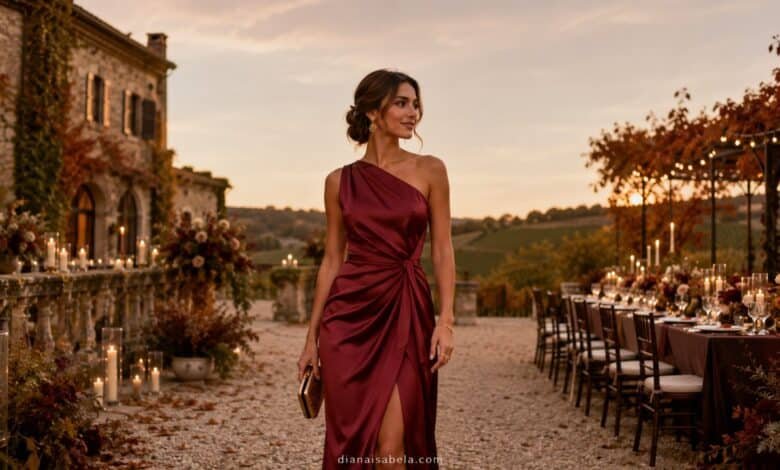
September Wedding Guest Dresses
Burgundy, olive, terracotta, satin, vineyard terraces, warm days, cooler evenings, and summer-to-fall elegance.
Open September ideas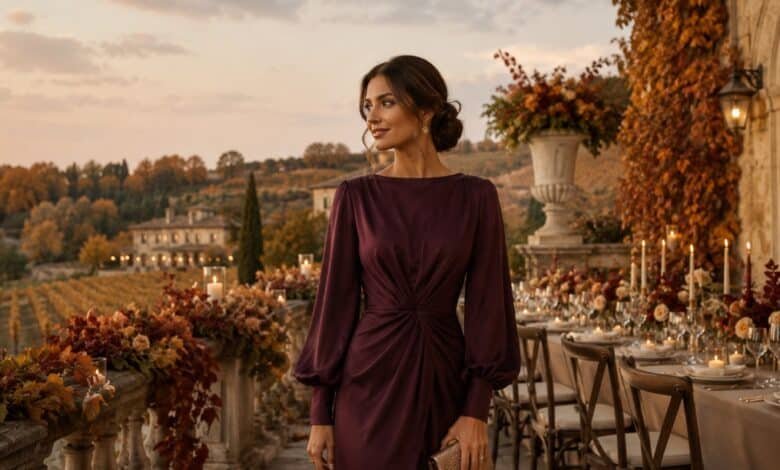
October Wedding Guest Dresses
Plum, chocolate, rust, forest green, velvet, satin, winery venues, dark florals, and candlelit reception styling.
Open October ideas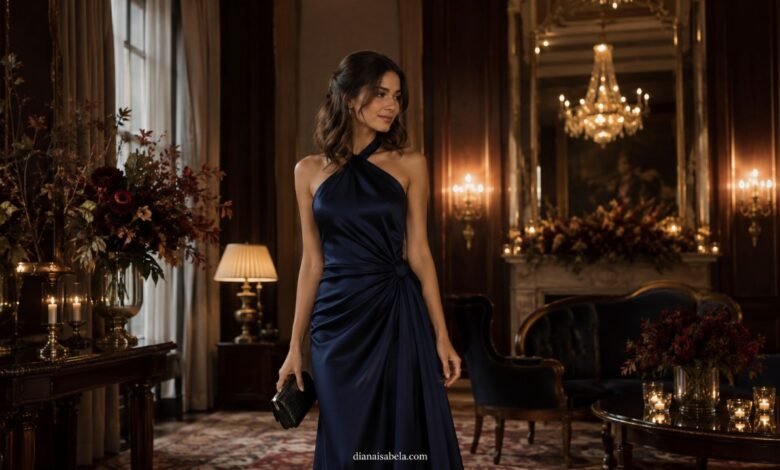
November Wedding Guest Dresses
Midnight blue, burgundy, black satin, velvet, hotel receptions, formal coats, and richer evening texture.
Open November ideasVisual inspiration
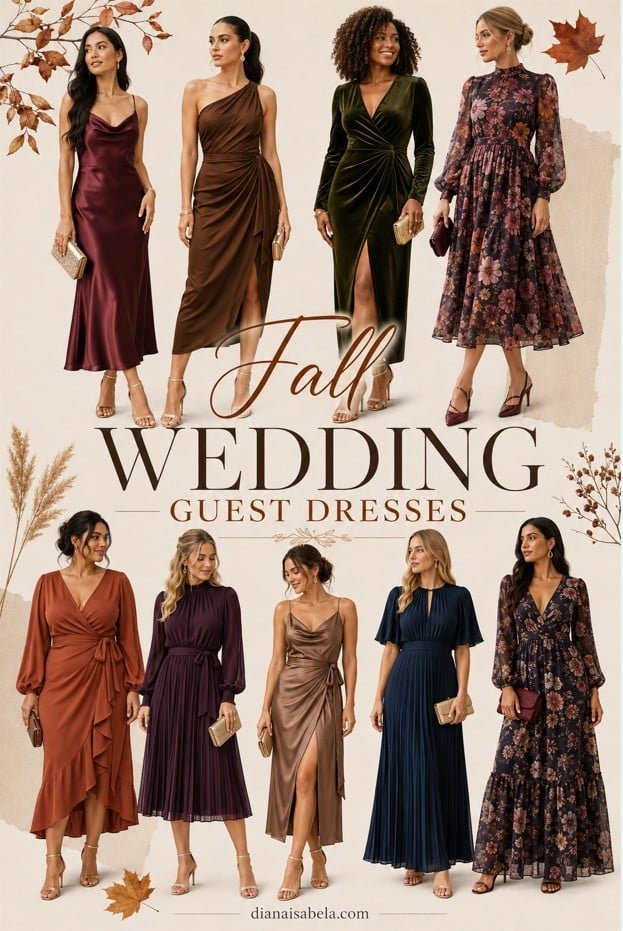
Fall dress ideas at a glance: burgundy satin, chocolate, olive velvet, rust, plum, navy, and dark florals.
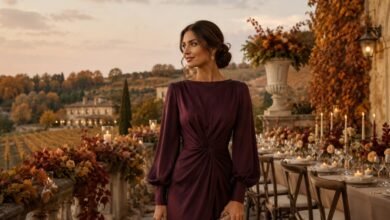
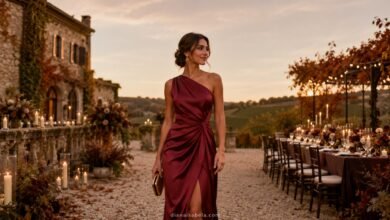
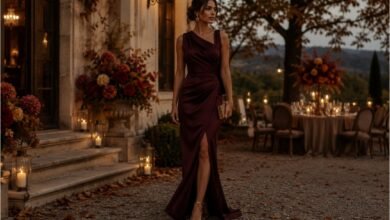
This collage gives the fast visual mood of autumn wedding style: richer color, deeper fabrics, long sleeves, wrap shapes, pleats, dark florals, gold clutches, pointed heels, autumn leaves, and dresses that look good near vineyards, stone terraces, candlelit rooms, and old estate walls.
The fall mood
Fall weddings want atmosphere, not a costume from the pumpkin aisle.
Autumn gives you permission to go richer. That does not mean everything has to be heavy, dark, or overly themed. A fall wedding guest dress should feel like candlelight would be kind to it: satin that catches low light, crepe that moves cleanly, velvet that feels intentional, floral prints with darker depth, and accessories that warm the look without making it look decorated.
The strongest fall looks usually have one main character detail: a burgundy satin drape, a chocolate wrap silhouette, an olive velvet texture, a plum pleated skirt, a navy chiffon sleeve, a rust color story, or a dark floral print. Choose the detail, then let everything else behave.
Diana’s rule: fall style should look like old libraries, golden leaves, candlelit rooms, and excellent perfume — not like you dressed as a seasonal centerpiece.
Fall color palette
Autumn colors should have depth, glow, and a little restraint.
Burgundy, rust, chocolate, olive, plum, navy, copper, forest green, espresso, deep rose, and dark florals are the heart of fall wedding guest style. They work because the light is warmer and lower, and venues often become more textural: vineyard stone, hotel velvet, estate wood, candlelit tables, golden leaves, and evening glassware.
The fall dress edit
The best autumn dresses look rich in motion, not heavy on the hanger.
When choosing fall wedding guest dresses, think about light, movement, and temperature. The outfit may need to work for an outdoor ceremony, a warm dinner room, a cool terrace, and a dance floor. Satin, crepe, chiffon, dark florals, velvet-touch textures, pleats, and long sleeves can all work when the fabric is not too thick.
Burgundy satin midi
Burgundy satin is the classic fall wedding answer: romantic, rich, and easy to style with gold, bronze, black, or champagne accessories.
Chocolate wrap dress
Chocolate feels expensive in fall, especially in satin or crepe. A wrap silhouette gives shape without looking too formal or stiff.
Olive velvet dress
Olive velvet works beautifully for cooler weddings, especially in October and November. Keep the cut clean so the texture stays chic.
Dark floral midi
Dark florals are perfect for fall because they bring softness without losing depth. Choose wine, plum, navy, rust, or chocolate bases.
Plum pleated dress
Plum pleats feel romantic and slightly unexpected. They work well for evening receptions, candlelit rooms, and October weddings.
Navy chiffon sleeve dress
Navy is polished for late fall, and chiffon sleeves make it feel softer than a basic dark dress. Add metallic or pearl accessories.
Outfit formulas
Fall looks that know the difference between moody and gloomy.
Fall outfits work best when the dress has atmosphere and the accessories add light. A dark dress usually needs shine, texture, jewelry, or a strong silhouette. A warm dress may need calmer accessories. A floral dress needs editing so it does not become too busy.
Burgundy satin for a vineyard reception
Best for September and October weddings, terraces, wineries, candlelit dinnersA burgundy satin midi catches autumn light beautifully without needing much extra drama. Keep the accessories warm and polished.
Olive velvet for an estate wedding
Best for late October, November, formal gardens, old stone venuesOlive velvet looks seasonal without becoming predictable. Choose a clean neckline and let the fabric carry the richness.
Dark floral for a garden ceremony
Best for outdoor fall weddings, estate gardens, romantic daytime eventsA dark floral midi gives autumn softness without pastel sweetness. Keep the shoes stable and the jewelry quiet.
Chocolate satin for quiet luxury
Best for city hotels, restaurant receptions, late-fall dinnersChocolate satin feels modern, warm, and expensive. It is especially strong with gold jewelry and cream or camel layers.
Layers and weather
The autumn layer should look invited, not borrowed from another outfit.
Fall is when layering becomes part of the styling. A wrap, blazer, shawl, coat, cape, or jacket can make a dress more elegant if it matches the fabric and formality. The mistake is throwing a random coat over a polished dress and hoping the venue lighting forgives it.
Best fall layers
Choose the layer according to the month and venue, not just the temperature.
How to match the layer
Satin looks good with structure. Dark florals work with solid coats or wraps. Velvet needs cleaner outerwear because the texture already has authority. Rust and copper love warm neutrals. Burgundy can handle black, camel, cream, or bronze. Navy looks sharp with silver, black, champagne, or burgundy details.
If the layer looks like an apology, replace it. Fall style should feel composed, not improvised in the parking lot.
Shoes, bags, jewelry, hair
Autumn accessories should add warmth, shine, and a little discipline.
Fall accessories can be richer than summer accessories. Gold, bronze, pearl, espresso, burgundy, champagne, tortoiseshell, velvet bags, satin clutches, and pointed heels all work beautifully. The key is choosing one direction instead of making every detail compete.
What not to wear
Fall mistakes usually happen when the pieces do not agree with each other.
Autumn outfits rarely fail because the dress is ugly. They fail because the dress, layer, shoes, venue, and weather are all telling different stories. The best fall guest outfit feels like one complete sentence.
The fall answer
Dress like the light is golden, the room is candlelit, and the weather might change its mind.
The best fall wedding guest dresses feel rich but not heavy, romantic but not theatrical, warm but not costume-like. They understand vineyards, city hotels, estates, candlelit halls, outdoor gardens, cool evenings, and the quiet glamour of a dress that looks better as the light gets lower.
Choose color with depth, fabric with movement, shoes with realism, and a layer that belongs to the outfit. Burgundy satin, chocolate wrap dresses, olive velvet, rust midis, plum pleats, navy chiffon, copper satin, and dark florals can all work when styled with intention.
For the year-round cluster, return to the main wedding guest dresses guide, then use September, October, and November when the autumn date needs sharper styling.
FAQ
What are the best fall wedding guest dresses?
The best fall wedding guest dresses include satin midis, long-sleeve floral dresses, velvet-touch dresses, wrap dresses, structured crepe dresses, and elegant maxis in rich autumn colors.
What colors are best for fall wedding guest dresses?
Burgundy, emerald, navy, chocolate, plum, copper, rust, olive, deep rose, espresso, and dark florals are excellent fall wedding guest colors. Softer warm tones can work for early fall.
Can I wear black to a fall wedding?
Yes, black can work well for a fall wedding, especially for evening, formal, city, or hotel venues. Add texture, jewelry, warm accessories, or a softer silhouette so the look feels elegant rather than severe.
What should I wear over a fall wedding guest dress?
A tailored coat, cropped blazer, elegant wrap, shawl, cape-style layer, or refined jacket can work over a fall wedding guest dress. The layer should match the dress code and look intentional in photos.
What shoes work best for a fall wedding guest outfit?
Block heels, pointed pumps, slingbacks, refined ankle-strap heels, and polished closed-toe shoes often work well for fall weddings. Choose shoes based on the venue, ground, and weather.