Green Wedding Guest Dresses: Sage, Emerald, Olive, and Garden-Ready Looks

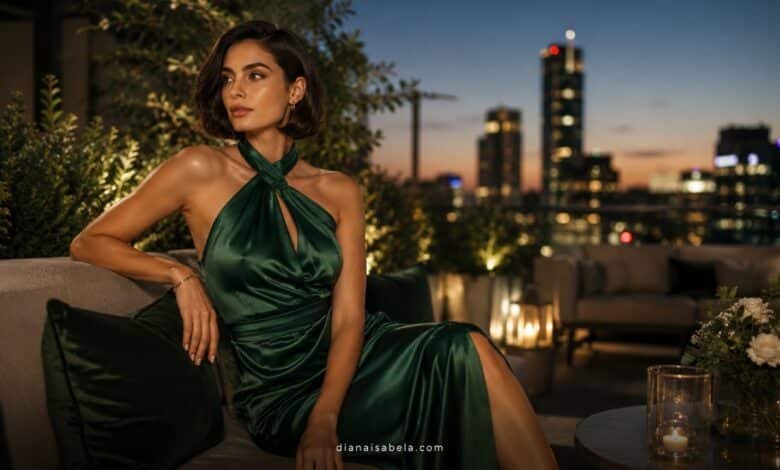
Green wedding guest dresses are the quiet luxury color story everyone underestimates.
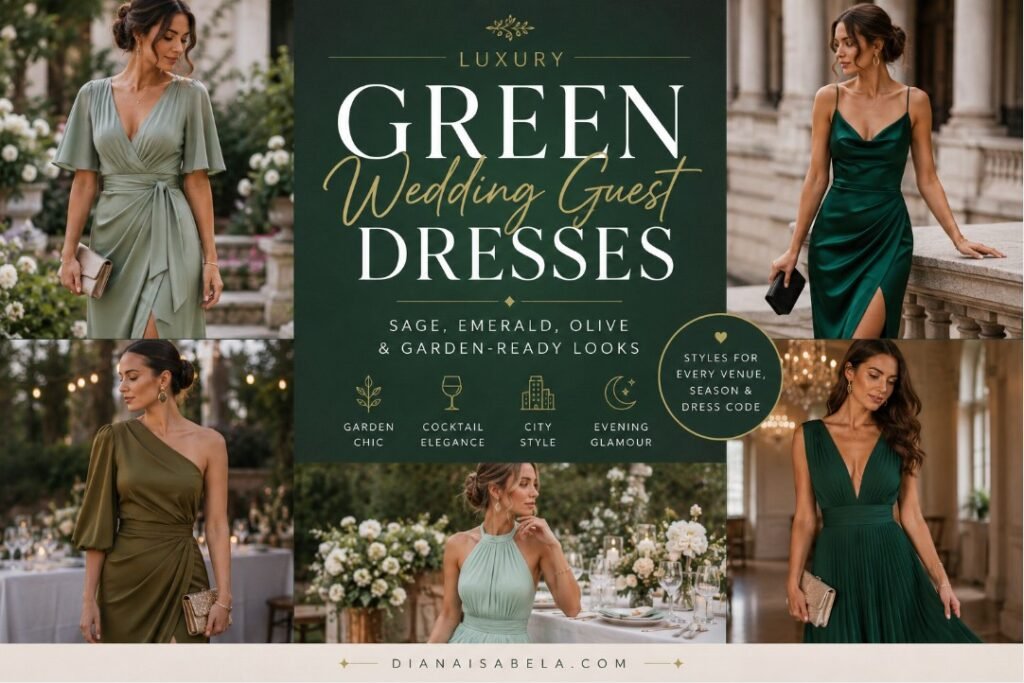
Pink is romantic, black is chic, red is dramatic — but green has range. Sage can look soft enough for a garden ceremony, emerald can look expensive at a black-tie reception, olive can make fall weddings feel cinematic, and mint can be fresh without looking childish. The secret is choosing the right green for the venue, season, dress code, and your own little main-character mythology.
Green wedding guest dresses are not one mood. They can be soft, regal, earthy, tropical, sleek, modest, romantic, or slightly dangerous in that excellent old-movie way. A sage chiffon midi says “garden ceremony with good manners.” An emerald satin gown says “I know exactly where the best lighting is.” An olive slip dress says “fall wedding, excellent taste, probably reads essays for fun.”
For the full wedding guest wardrobe map — seasons, dress codes, venues, colors, and silhouettes — start with our main guide to green wedding guest dresses. This article focuses only on the green universe: sage, emerald, olive, mint, forest, pistachio, and all the little styling decisions that make green look intentional instead of accidental.
First, choose your green like you are choosing a character
The word “green” is too vague to be useful. It is like saying “book” when you could mean Jane Austen, a glossy coffee-table fashion archive, or a fantasy novel with a dragon and unresolved emotional tension. The shade decides the entire personality of the dress.
A green dress can whisper, glow, sharpen, or dominate. That is why the color should be chosen before you obsess over neckline or shoes. Once the shade is right, the rest of the outfit becomes much easier.
The green hierarchy
Soft greens belong to daylight, gardens, brunch receptions, and romantic ceremonies. Deep greens belong to evening, formal invitations, candlelight, velvet chairs, and satin that catches the room like a secret. Earthy greens belong to fall, vineyards, countryside venues, and weddings where the scenery is part of the dress code.
Sage Green
Soft, romantic, and garden-ready. Beautiful for spring, outdoor ceremonies, bridesmaid-adjacent palettes, and modest midi dresses.
Emerald Green
Formal, rich, photogenic, and dramatic. Excellent for evening receptions, black tie optional, winter weddings, and satin gowns.
Olive Green
Earthy and sophisticated. Best for fall weddings, vineyards, rustic venues, city dinners, and minimal accessories.
Mint Green
Fresh and delicate. Works best in spring or summer when the dress has structure, contrast, or elegant accessories.
Forest Green
Deep, classic, and slightly mysterious. A strong choice for winter, formal, church, or evening weddings.
Green is almost always better when it understands the venue
Some colors fight the setting. Green usually wants to collaborate with it. That is why green can be so powerful for wedding guest style: it looks natural around flowers, stone, vineyards, beaches, old hotels, candlelit rooms, country clubs, and churches. The mistake is assuming every green works everywhere.
A sage dress at a garden wedding feels poetic. The same sage dress at a very formal evening ballroom may feel too soft unless the fabric is elevated. An emerald satin dress at a hotel wedding looks expensive. The same emerald satin dress at a barefoot beach ceremony may look like it took a wrong turn on the way to the opera.
Garden weddings
Sage, pistachio, mint, soft olive, and botanical prints feel naturally romantic. Choose block heels, delicate jewelry, and fabrics with movement.
Beach weddings
Seafoam, palm green, lime-softened green, or breezy mint can work beautifully. Avoid heavy velvet, dark formal satin, and stiff gowns near sand.
Vineyard weddings
Olive, moss, deep sage, and eucalyptus green look expensive against vines, stone, and golden-hour light. Satin or crepe works especially well.
City weddings
Emerald, forest, chartreuse accents, or sleek olive dresses feel modern. Add architectural heels, a sharp clutch, and polished hair.
Church weddings
Forest, sage, olive, or emerald with sleeves, midi lengths, higher necklines, or a refined wrap feels respectful without being plain.
Formal hotels
Emerald, deep teal-green, and forest gowns are the strongest choices. Think satin, velvet, draping, column shapes, and restrained jewelry.
If your wedding is outdoors, our garden wedding guest dresses guide is especially useful because green often overlaps with floral venues, grass-friendly shoes, and soft romantic styling.
How to wear green for every level of formality
Green can move from casual to black tie, but it changes its manners along the way. A casual green dress can be linen, cotton, wrap-style, printed, or breezy. A formal green dress needs stronger fabric and cleaner structure. A black-tie green dress should look deliberate from across the room.
| Dress Code | Best Green Dress | What Makes It Work |
|---|---|---|
| Casual Wedding | Soft sage wrap dress, mint midi, olive sundress, botanical print | Keep it polished with neat sandals, a small bag, and jewelry that says guest, not errands. |
| Cocktail Wedding | Emerald midi, satin slip dress, one-shoulder olive dress, structured mini | The length can be playful, but the finish should be clean: refined heels, sleek bag, intentional hair. |
| Semi-Formal Wedding | Sage chiffon midi, forest crepe dress, olive satin midi | A balanced middle: not too grand, not too relaxed. Fabric matters more than drama. |
| Formal Wedding | Emerald satin maxi, forest green column dress, long-sleeve green gown | Choose longer lengths, richer fabric, and accessories that look evening-ready. |
| Black Tie Optional | Emerald gown, velvet forest dress, deep green draped maxi | Go elegant and grown-up. This is where green becomes almost royal if you let it. |
For a stricter invitation, green gets better when it gets deeper. Emerald, forest, and deep teal-green carry formality better than pale mint or pistachio. If you are dressing for a formal event, you may also want our formal wedding guest dresses guide for fabric, length, and evening styling rules.
Green wedding guest dresses by season
Green is seasonal in the most satisfying way. It does not need to be forced. It already belongs to leaves, gardens, velvet evenings, olives, moss, sea glass, forest shadows, spring stems, and winter jewels. The trick is matching the green to the light of the season.
Spring: sage, mint, pistachio, botanical green
Spring green should feel fresh and gentle. Sage chiffon, mint satin, and soft botanical prints are beautiful for garden ceremonies and daytime receptions. Avoid greens that are too neon unless the wedding is intentionally playful or destination-focused.
Summer: seafoam, palm, lime-soft, tropical green
Summer allows brighter greens, especially for beach, resort, and outdoor weddings. Choose light fabrics and easy silhouettes: slip dresses, halter maxis, wrap midis, airy pleats, and breathable crepe.
Fall: olive, moss, eucalyptus, deep sage
Fall green is where the color becomes quietly expensive. Olive satin, moss crepe, deep sage sleeves, and earthy green florals look beautiful with gold jewelry, brown sandals, burgundy nails, or a bronze clutch.
Winter: emerald, forest, velvet green, dark teal-green
Winter green wants richer fabric and sharper styling. Emerald satin, forest velvet, and deep green gowns look gorgeous with black heels, crystal earrings, metallic clutches, and soft evening makeup.
My favorite seasonal trick: use green as the bridge between your dress and the landscape. Sage for spring gardens, seafoam for summer coasts, olive for autumn vineyards, emerald for winter candlelight. It sounds simple because it is. Good style often is.
How to style a green wedding guest dress without making it heavy
Green has one tiny flaw: if the accessories are wrong, it can turn heavy quickly. Dark green with dark shoes, dark bag, dark makeup, and severe hair can look more like a mysterious governess arriving at Thornfield Hall than a wedding guest. Which is a gorgeous literary mood, obviously, but maybe not for your cousin’s garden reception.
The styling goal is contrast. Add light, glow, polish, or texture depending on the green.
Sage green styling
Pair with nude, champagne, soft gold, pearl, or warm beige. Keep makeup fresh and hair soft. Sage loves delicacy, but not clutter.
Emerald green styling
Use gold, black, crystal, silver, or deep metallic accessories. Emerald can handle drama, but it looks best when the silhouette stays clean.
Olive green styling
Try bronze, espresso, nude, antique gold, or burgundy details. Olive looks expensive when the palette feels warm and edited.
Mint green styling
Add structure: pointed heels, a defined clutch, sleek jewelry. Mint needs grown-up accessories so it does not feel too sweet.
Forest green styling
Balance the depth with luminous jewelry, satin texture, or a bare neckline. Forest green can look severe if everything else is too covered.
Bright green styling
Let the color be the event. Choose simple sandals, minimal jewelry, and a tiny bag. Do not add ten more opinions to the outfit.
Best shoe colors with green wedding guest dresses
- Gold: the easiest choice for sage, olive, emerald, mint, and tropical greens.
- Nude or skin-tone: clean and soft, especially for spring and daytime weddings.
- Black: chic with emerald, forest, and city wedding looks, but too heavy for some pale greens.
- Brown or espresso: elegant with olive, moss, and fall green dresses.
- Silver: beautiful with cool emerald, mint, and winter green satin.
- Burgundy: unexpected and gorgeous with olive or deep sage, especially in fall.
Best bag colors
Gold, champagne, pearl, nude, espresso, black, bronze, and silver all work. For sage and mint, choose lighter or warmer bags. For emerald and forest, metallic or black evening bags look polished. For olive, try bronze or chocolate brown if you want the outfit to feel very “old library, expensive perfume, knows things.”
Six green outfit formulas that look finished
A green dress becomes easier when you build it like an outfit board, not a panic decision. Start with the shade, then choose one clear accessory mood: soft gold, city black, warm bronze, pearl garden, or evening crystal.
- Sage chiffon midi + champagne block heels + pearl drop earrings.
- Emerald satin gown + black strappy heels + crystal studs.
- Olive slip dress + bronze clutch + espresso sandals.
- Mint structured midi + nude heels + gold hoops.
- Forest velvet dress + silver clutch + sleek low bun.
- Seafoam halter maxi + flat gold sandals + woven mini bag.
The mirror test
Before you leave, ask the mirror five questions. Not in a dramatic fairy-tale way. Although if your mirror answers back, please write that novel immediately.
1. Does the green fit the wedding?
Sage for gardens, emerald for formal evenings, olive for fall, seafoam for beach — the setting should make the color feel logical.
2. Does the fabric match the dress code?
Thin jersey can make green look casual. Satin, crepe, chiffon, velvet, and structured fabrics make it more wedding-ready.
3. Are the accessories lifting the dress?
If the look feels heavy, add light: gold, pearl, nude, crystal, or softer hair. If it feels too sweet, add structure.
4. Is the dress comfortable enough to sit, dance, and breathe?
Beauty that only works while standing still is not fashion. It is architecture with anxiety.
5. Does it photograph well?
Green can shift under flash. Check the dress in daylight and evening light if you can.
Sage green wedding guest dresses
Sage green is the romantic diplomat of the green family. It is soft, calm, and almost impossible to make aggressive. This is why it works so well for spring weddings, garden ceremonies, bridesmaid-friendly palettes, and daytime receptions.
The challenge with sage is that it can become too muted. If the dress is very simple, add texture: chiffon movement, satin sheen, pleats, a square neckline, puff sleeves, a wrap waist, or delicate draping. Sage needs one beautiful detail so it does not disappear into the scenery like a very polite leaf.
For shoes, champagne, nude, pearl, pale gold, and soft beige are usually strongest. Black can feel too harsh unless the dress has a modern city silhouette. Jewelry should be delicate but visible: gold hoops, pearl drops, or a tiny pendant if the neckline allows it.
Emerald green wedding guest dresses
Emerald green is the drama queen, but she has excellent posture. It is one of the best colors for formal wedding guest dresses because it looks rich without needing sequins, loud prints, or complicated styling. Emerald already has presence.
Choose emerald for evening weddings, winter weddings, black tie optional invitations, hotel ballrooms, candlelit receptions, and city venues. Satin, velvet, crepe, and draped jersey can all work, but the dress should look intentional. A messy emerald dress can look heavy. A clean emerald dress looks expensive.
Gold accessories make emerald warm and regal. Silver makes it cooler and sharper. Black makes it evening-ready. Crystal earrings can be beautiful, but avoid overloading the look with statement necklace, statement earrings, statement bag, statement shoes. Emerald is already speaking. Let her finish the sentence.
Olive green wedding guest dresses
Olive green is underrated because it is not immediately “pretty” in the obvious way. That is exactly why it can look so chic. Olive has restraint. It feels editorial, earthy, grown-up, and slightly European, like someone who knows how to order coffee in a city where the streets are older than your entire group chat.
Olive is excellent for fall weddings, vineyard weddings, countryside venues, rustic-but-elegant receptions, and city ceremonies with a less sugary palette. It works beautifully in satin slip dresses, long-sleeve midis, wrap dresses, crepe columns, and minimalist silhouettes.
Style olive with bronze, antique gold, espresso brown, burgundy, cream, or nude accessories. If the dress feels too casual, sharpen it with a structured clutch and better jewelry. If it feels too earthy, add satin, gold, or a sleeker hairstyle.
Mint and light green wedding guest dresses
Mint is charming, but it needs supervision. Too soft, and it can look childish. Too pale, and it can look washed out in photos. Too casual, and it becomes brunch instead of wedding. The solution is simple: choose a more grown-up cut.
A mint green wedding guest dress looks best when the silhouette is refined: a structured midi, a halter maxi, a bias-cut slip, a pleated dress, a square neckline, or a clean column shape. Avoid overly frilly details unless the wedding is deliberately romantic or garden-themed.
Mint works beautifully with gold, nude, white-gold, pearl, and soft silver. Makeup should have enough warmth or definition so the outfit does not look too pale overall. A rosy lip, soft bronzer, or defined lashes can make the color feel fresh instead of sleepy.
Diana’s rule: green should look like you chose it because it belongs to the wedding’s atmosphere. Not because it was the only dress left in your closet after three rejected options and a small emotional crisis.
Green wedding guest dress mistakes to avoid
Green is elegant, but it does have traps. Most of them come from ignoring either the undertone or the weight of the outfit. A green dress can turn dull, costume-like, too casual, or too heavy if the styling is not edited.
Choosing a shade that fights your skin tone
Some greens are warm, some are cool, and some are very yellow. If the color makes you look tired, try sage, emerald, olive, or teal-green instead.
Going too casual with fabric
A green dress in thin jersey, basic cotton, or limp fabric may look less wedding-ready. Upgrade with satin, crepe, chiffon, pleats, or structure.
Making emerald too heavy
Emerald with heavy shoes, dark makeup, and chunky accessories can feel severe. Add light through skin, shine, or delicate jewelry.
Letting sage disappear
Sage can be too quiet if the dress has no shape. Look for drape, sleeves, texture, neckline, or elegant accessories.
Wearing beach green to a ballroom
Seafoam and tropical greens are lovely, but they may feel too relaxed for formal evening venues unless the silhouette is elevated.
Forgetting the shoe reality
Green often appears at outdoor weddings. If grass, gravel, or stone paths are involved, choose block heels, wedges, or stable sandals.
What jewelry works best with green?
Gold is the easiest answer, but not the only answer. Yellow gold warms sage, olive, moss, and emerald. Silver sharpens mint, forest, teal-green, and cool emerald. Pearls soften sage and garden green. Crystal makes emerald evening-ready. Bronze is gorgeous with olive and fall greens.
The neckline matters too. A high-neck green dress usually looks better with earrings instead of a necklace. A deep V or square neckline can handle a pendant, but keep it delicate if the dress has shine. One-shoulder green dresses often need only earrings and a bracelet. Halter green dresses look best with earrings and no necklace, because the neckline is already doing geometry.
If the dress has a strong color and a strong cut, let the jewelry be quiet. If the dress is simple sage or olive, jewelry can add the little flicker of ceremony that makes the outfit feel finished.
Can green look too bridesmaid?
Sometimes, yes — especially sage green. Sage has become a popular wedding-party color, so a very simple sage satin or chiffon dress can accidentally look like you belong in the bridesmaid lineup. This is not always a problem, but it is worth noticing.
To avoid the bridesmaid effect, choose a dress with a more personal silhouette: a printed green dress, a wrap shape, a pleated midi, a modern neckline, a darker green, or styling that does not match a typical bridal-party palette. Add accessories with personality: a sculptural clutch, gold statement earrings, or shoes that are elegant but not identical to bridesmaid styling.
The key is not to avoid sage. The key is to make sage look like fashion, not assignment.
Can green be too bold for a wedding?
Most greens are not too bold. Neon green, bright lime, and very saturated chartreuse are the exceptions. They can work at fashion-forward, summer, destination, or cocktail weddings, but they need restraint. A simple silhouette is essential. No chaotic print, no excessive cutouts, no accessories competing for attention.
Emerald is bold in a formal way, so it rarely feels inappropriate unless the dress itself is too revealing or too dramatic for the invitation. Olive is bold only if the cut is bold. Sage is almost never too bold. Mint can be delicate, not loud. In other words, green usually behaves — unless you choose the one shade that looks like a highlighter and then add rhinestones. Please do not make the highlighter suffer.
The final green dress edit
Choose sage if the wedding is romantic, outdoor, spring, or garden-based. Choose emerald if the wedding is formal, evening, winter, or hotel-based. Choose olive if the wedding is fall, vineyard, countryside, or quietly stylish. Choose mint if the wedding is soft, sunny, and not too formal. Choose forest if you want elegance with a little mystery.
The best green wedding guest dresses do not scream for attention. They make the whole outfit feel composed. They understand the flowers, the venue, the invitation, the season, and the fact that you still need to sit through dinner without fighting your own zipper.
Green is not just “safe.” Green can be romantic, expensive, clever, earthy, formal, and beautifully photogenic. It is the color of gardens, old velvet, summer leaves, winter jewels, and main characters who arrive late but somehow look like the plot was waiting for them.
FAQ
Can you wear green to a wedding?
Yes, green is a beautiful and appropriate color for wedding guests. Sage, emerald, olive, mint, forest, and seafoam green can all work depending on the season, venue, and dress code.
What shade of green is best for a wedding guest dress?
Sage green is best for spring and garden weddings, emerald green is ideal for formal and evening weddings, olive green works beautifully for fall, and mint or seafoam green is lovely for summer and beach weddings.
Is emerald green okay for a wedding guest?
Yes, emerald green is one of the best colors for formal wedding guest dresses. It looks elegant in satin, velvet, crepe, or draped maxi silhouettes, especially for evening or winter weddings.
What shoes go with a green wedding guest dress?
Gold, nude, champagne, black, brown, silver, and burgundy shoes can all work with green wedding guest dresses. Gold is the easiest choice for most green shades, while black works best with emerald and forest green.
Can sage green look too much like a bridesmaid dress?
It can, especially if the dress is very simple satin or chiffon. To avoid a bridesmaid look, choose a more individual silhouette, print, texture, or accessories with personality.
What accessories look best with green wedding guest dresses?
Gold jewelry works beautifully with sage, olive, and emerald. Silver suits cooler greens, pearls soften garden looks, bronze is elegant with olive, and crystal accessories can elevate emerald or forest green for evening weddings.