Winter Wedding Guest Dresses: Velvet, Black Satin, Jewel Tones, and Formal Looks

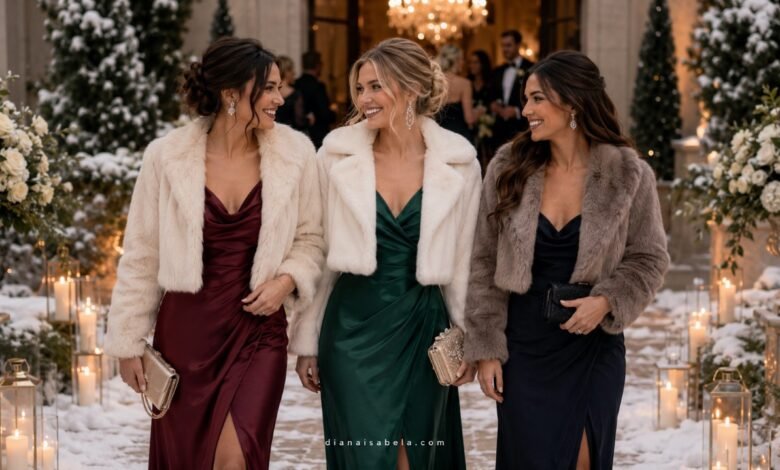
Winter wedding guest dresses should look like candlelight, cold air, and good decisions all met in one outfit.
Winter weddings have a special kind of glamour. The rooms are warmer, the light is softer, the coats become part of the entrance, and fabrics like velvet, satin, crepe, lace, and jacquard suddenly make perfect sense. But winter also has no patience for lazy styling. A beautiful dress still needs a layer, shoes, fabric weight, and a plan for cold air, polished floors, church steps, hotel lobbies, snowy photos, and that dramatic walk from the car where everyone pretends they are not freezing.
The winter formula: jewel tones, real fabric, elegant warmth, and a coat that belongs to the look.
This is the season for emerald velvet, navy satin, burgundy crepe, black evening dresses, silver satin, plum wraps, chocolate columns, dark florals, faux-fur accents, crystal earrings, structured clutches, and closed-toe heels that look intentional rather than apologetic.
Winter by month
December, January, and February are all winter, but they do not ask for the same dress.
Winter wedding guest style changes more than people think. December can carry festive drama and jewel-tone velvet. January looks cleaner, sharper, and more quietly luxurious after the holiday noise fades. February becomes softer and more romantic, with wine satin, plum, rose, candlelight, and winter layers that still feel emotional. Use the month guides below when you want the outfit to match the exact winter mood.
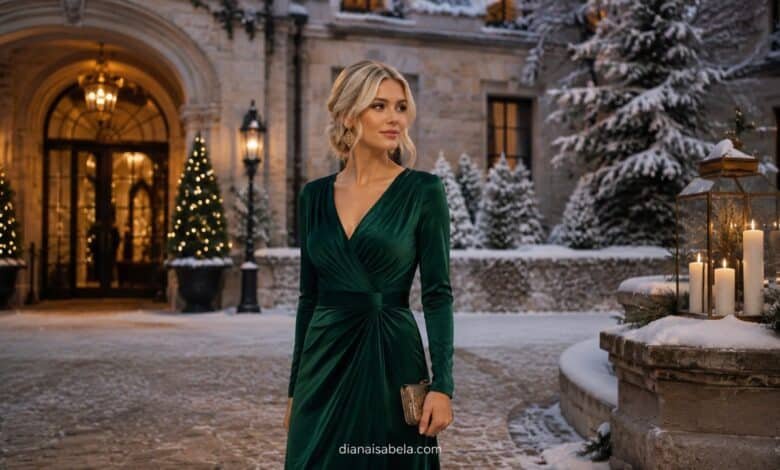
December Wedding Guest Dresses
Emerald velvet, jewel tones, candlelight, snowy venues, holiday-adjacent glamour, and polished restraint for winter celebrations.
Open December ideas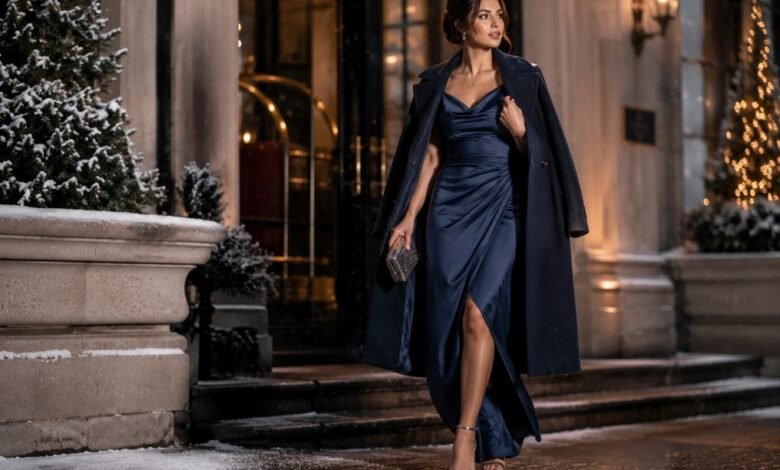
January Wedding Guest Dresses
Navy satin, black velvet, slate, plum, tailored coats, closed-toe heels, and quiet winter elegance for hotel and city weddings.
Open January ideas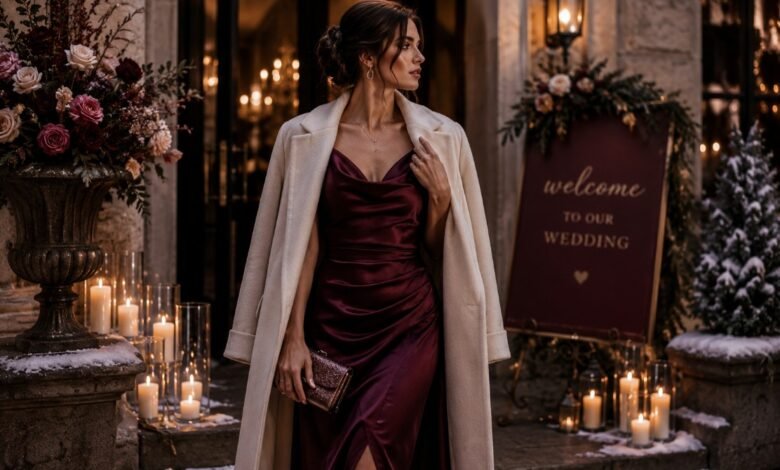
February Wedding Guest Dresses
Wine satin, plum crepe, black velvet, rose jacquard, candlelit venues, romantic winter layers, and cold-weather softness.
Open February ideasVisual inspiration
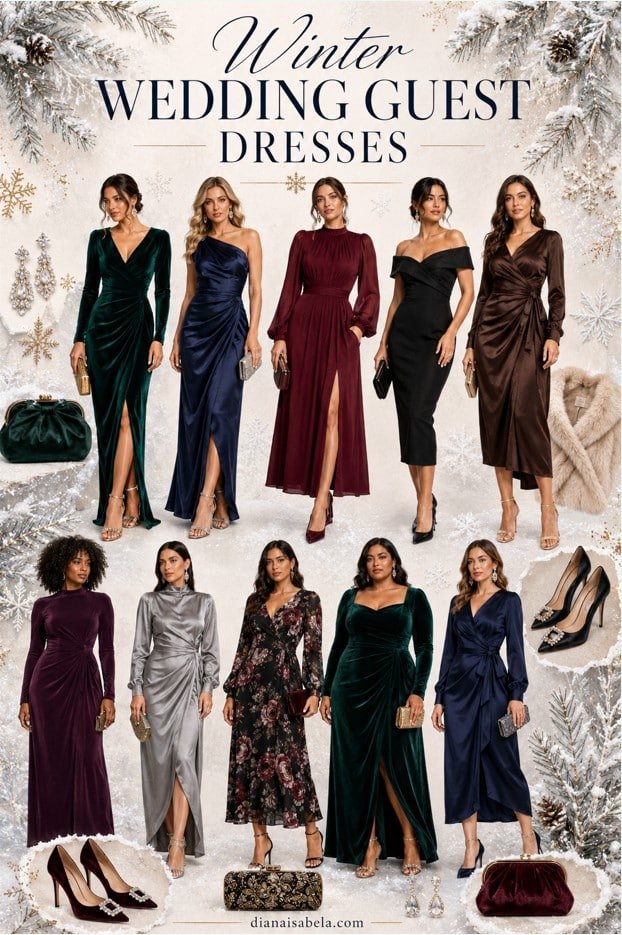
Winter dress ideas at a glance: velvet, satin, jewel tones, dark florals, faux fur, and crystal details.
This winter collage is the quick visual mood board for the season: emerald velvet, navy satin, burgundy, black, chocolate, silver, plum, dark floral dresses, evening clutches, jewel earrings, snowy texture, and formal cold-weather polish.
The winter mood
Winter weddings want drama, but not costume drama.
Winter gives you permission to wear richer textures and deeper colors. That does not mean every detail needs to perform. A little velvet, a little satin, a jewel-tone dress, a crystal earring, a faux-fur wrap, a dark lip, and a dramatic coat can become magnificent — or it can become a novel about a duchess returning to reclaim the estate. The difference is editing.
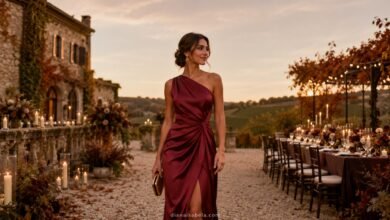
The best winter wedding guest dresses have controlled richness. They feel warm, polished, and evening-ready without looking heavy. A black satin midi with pearl earrings. A burgundy velvet dress with a clean neckline. An emerald wrap dress with a tailored coat. A navy satin dress with silver shoes. A dark floral midi with a small velvet clutch. Not twelve winter ideas at once.
Diana’s rule: winter glamour should feel intentional from coat to clutch. The dress may be the main event, but the layer is the entrance scene.
Winter color palette
Jewel tones work because winter light loves depth.
Winter colors should feel rich without becoming heavy. Emerald, burgundy, navy, black, plum, chocolate, silver, champagne, deep teal, and dark florals all belong here. Pale tones can work too, but they need structure and contrast so they do not look bridal, fragile, or unfinished.
The winter dress edit
The dress should have enough presence to stand up to the season.
Winter wedding guest dresses work best when fabric and silhouette do some of the styling for you. A thin dress may look lovely in a product photo and completely wrong in a candlelit winter venue. Look for weight, lining, drape, texture, sleeves, richer color, or a layer plan that makes the outfit feel complete.
Emerald velvet midi
Emerald velvet is winter glamour with excellent manners. Choose a wrap, column, square-neck, or long-sleeve midi and keep accessories polished.
Navy satin dress
Navy satin looks sleek in winter and softer than black. It works beautifully with silver shoes, pearl earrings, or a charcoal coat.
Burgundy long sleeve
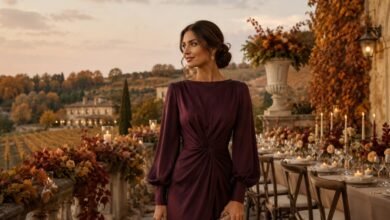
A burgundy long-sleeve dress gives warmth and romance without relying on sparkle. Crepe, velvet, or chiffon sleeves all work.
Black off-shoulder midi
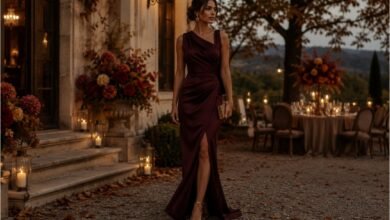
Black can be striking in winter when the neckline, fabric, or accessories give it dimension. Add crystal, pearl, satin, or gold details.
Silver satin column
Silver satin can look icy and elegant if the cut is clearly guest-appropriate and not bridal. Anchor it with black, navy, or charcoal.
Dark floral midi
Dark florals give winter dresses softness without losing seasonality. Choose black, plum, navy, wine, or chocolate bases.
Outfit formulas
Winter looks that stay elegant after the coat comes off.
The mistake is letting the coat carry the entire outfit. Once you arrive indoors, the dress still needs shape, texture, polish, and proportion. Build the whole look as a complete winter system: dress, coat, shoes, bag, jewelry, and warmth that does not look random.
Emerald velvet with crystal detail
Best for formal winter weddings, hotel receptions, holiday-adjacent eventsAn emerald velvet midi or maxi needs very little help. Keep the jewelry clean, the clutch small, and the coat elegant.
Navy satin for a city hotel wedding
Best for January weddings, formal hotels, evening receptionsNavy satin is polished without feeling harsh. It looks especially good with silver, pearl, black, or pewter accessories.
Burgundy romance with a tailored coat
Best for candlelit dinners, church ceremonies, February weddingsBurgundy gives winter warmth without needing sequins. Choose crepe, velvet, or satin and pair it with a coat that feels deliberate.
Black satin with pearl restraint
Best for cocktail, black-tie optional, city restaurantsBlack satin becomes elegant when it has shape and light. A pearl earring, crystal shoe, or satin clutch can keep it from feeling flat.
Dark floral for softer winter venues
Best for country houses, intimate receptions, winter garden roomsA dark floral dress is useful when full velvet feels too heavy. Keep the base deep and the accessories grounded.
Coats and cold-weather styling
The winter layer is not optional. It is part of the outfit.
A winter coat can either make the outfit look expensive or destroy the silhouette before you even reach the venue. The safest options are long wool coats, tailored black coats, cream coats, camel coats, cape coats, faux-fur stoles, structured wraps, and dressy evening jackets. A casual puffer may be warm, but it rarely belongs in the arrival photo.
Best winter layers
Use layers that match the dress code and fabric, not just the temperature.
How to match the layer
Velvet likes cleaner outerwear. Satin likes structure. Dark florals need solid coats. Silver and icy shades need contrast. Burgundy and emerald can handle cream, camel, black, or charcoal. If the wedding is less formal, a soft cashmere layer can work before or after the ceremony, but it should still look styled.
The best winter layer looks like it was chosen in the same mirror as the dress.
Shoes, bags, jewelry, tights
The small details become very visible in winter.
Winter accessories carry more weight because the palette is darker and the fabrics are richer. Shoes, tights, earrings, and clutches need to look like part of the same story. Sheer black tights can work with black, navy, burgundy, plum, and dark floral dresses. Opaque tights are more difficult and can make formal dresses feel casual. Shoes should respect the floor, the weather, and the level of dress code.
What not to wear
Winter mistakes usually happen when warmth and glamour are not speaking to each other.
A winter wedding outfit can be beautiful and still fail if the layer is wrong, the tights flatten the dress, the shoes cannot survive the entrance, or the fabric looks cheap under warm lights. The goal is not to suffer for style. The goal is to make warmth look elegant.
The winter answer
Winter glamour should be beautiful, warm, and completely intentional.
The best winter wedding guest dresses understand the whole evening: the cold entrance, the coat, the candlelit ceremony, the reception lighting, the photos, the shoes, the bag, and the moment the layer comes off. They do not pretend winter is summer with darker lipstick.
Choose velvet when the setting is rich. Choose satin when the night is sleek. Choose jewel tones when the room needs glow. Choose black when the cut is beautiful. Choose a coat that respects the dress. Choose shoes that respect the floor.
For the year-round cluster, return to the main wedding guest dresses guide, then use December, January, and February when the winter date needs more precision.
FAQ
What are the best winter wedding guest dresses?
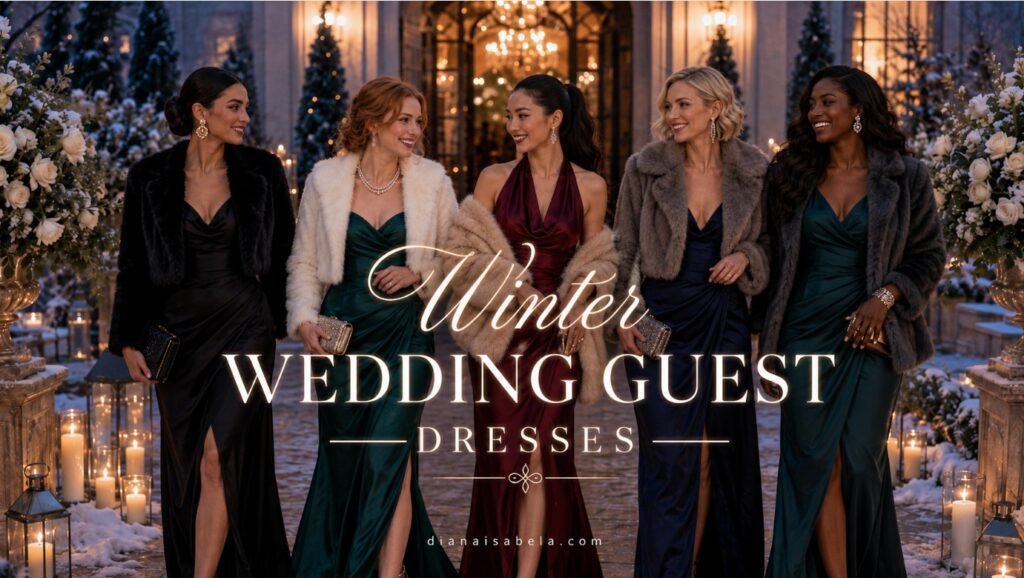
The best winter wedding guest dresses include velvet midis, black satin dresses, jewel-tone long-sleeve dresses, dark floral dresses, structured crepe dresses, and formal maxis with elegant layers.
What colors are best for winter wedding guest dresses?
Emerald, burgundy, ruby, navy, plum, forest green, black, midnight blue, champagne, chocolate, and deep teal are strong winter wedding guest colors.
Can I wear black to a winter wedding?
Yes, black is very appropriate for many winter weddings, especially evening, city, formal, cocktail, and black-tie events. Choose satin, velvet, crepe, or a strong silhouette so the look feels elegant rather than flat.
What should I wear over a winter wedding guest dress?
A tailored wool coat, faux-fur stole, evening wrap, cape-style coat, cropped blazer, or refined long coat can work over a winter wedding guest dress. The layer should match the dress code and feel intentional.
Can I wear tights with a winter wedding guest dress?
Yes, tights can work with winter wedding guest dresses, especially sheer black tights with darker dresses. Keep the shoes elegant and make sure the tights match the formality of the outfit.