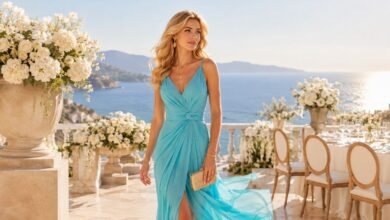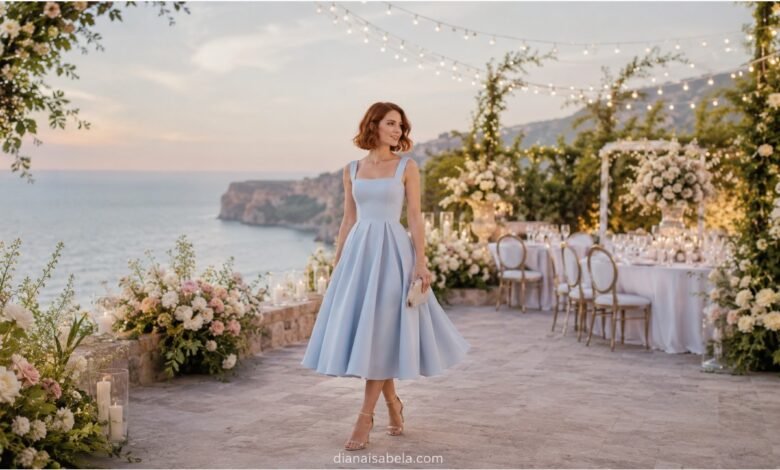
Pastel wedding guest dresses can be dreamy in the best way: blush in garden light, lavender at a spring reception, powder blue by the coast, sage at an outdoor ceremony, mint at a summer dinner. They are gentle, romantic, and easy to love.
They are also surprisingly easy to get wrong. Too pale, and the dress drifts toward bridal. Too sweet, and it feels bridesmaid. Too flimsy, and it becomes baby shower. A pastel wedding guest dress needs polish, not just prettiness.
Diana’s pastel rule: the softer the color, the stronger the styling needs to be. Pastel should look intentional, not accidental, and definitely not like you were assigned a color palette by the bride.
If you are still working out the full outfit from dress code to shoes, start with the wider wedding outfit guide. Pastel shades depend on venue, season, bridal-party colors, lighting, and fabric more than people think.
Pastel is not one mood
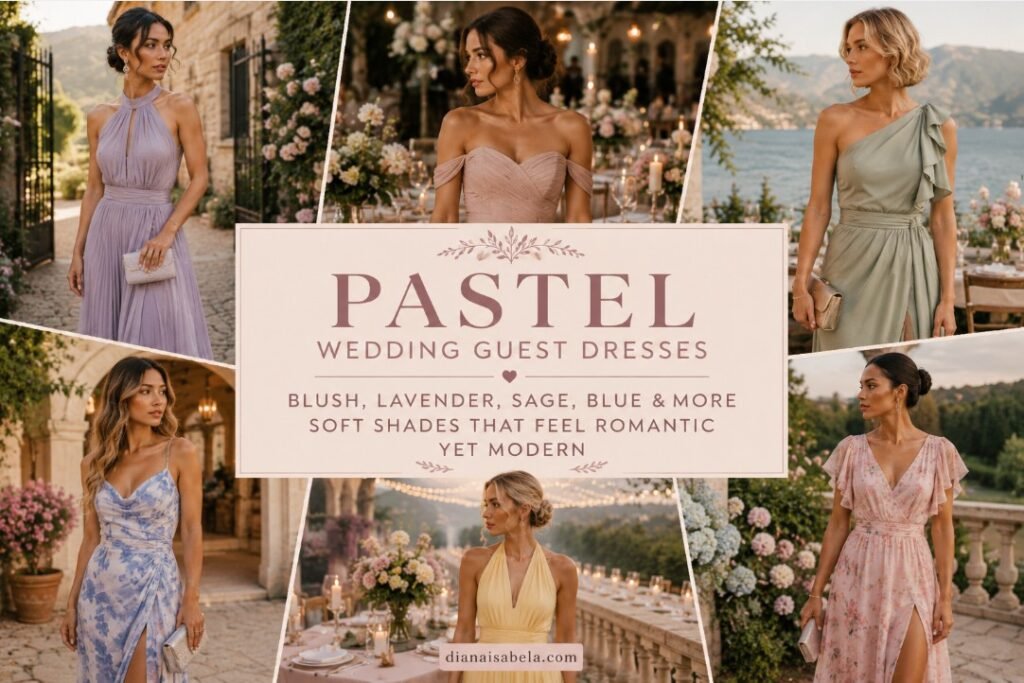
Pastel can mean blush, dusty pink, lavender, lilac, powder blue, sage, mint, butter yellow, peach, soft aqua, pale green, or barely-there mauve. Some pastels feel elegant and modern. Some feel too young. Some are beautiful in person and disappear in photos.
The best pastel wedding guest dresses have a clear color, a polished fabric, and enough structure to read as dressed. The weakest ones are pale, floaty, shapeless, and styled with delicate everything.
The pastel shade ledger
Choose the shade by the wedding mood, not just by what looks pretty on the hanger. Pastels change dramatically with daylight, florals, and venue color.
Romantic and easy for spring, garden, and semi-formal weddings. Add structure so it does not look bridesmaid or too sweet.
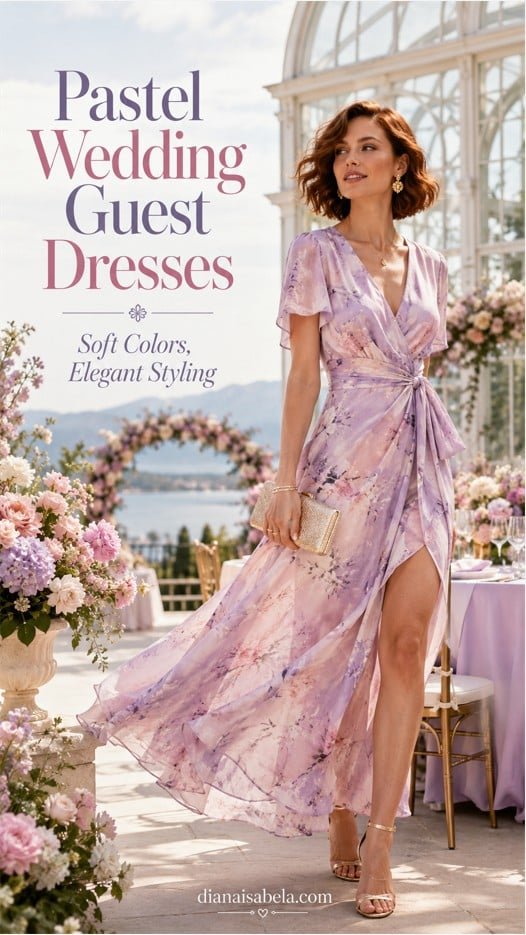
Soft but distinctive. Beautiful for spring, garden, and outdoor receptions, especially with silver, pearl-gray, or soft gold accessories.
Clean and elegant for coastal, church, garden, and daytime weddings. It needs crisp accessories so it does not feel too innocent.
Fresh and modern when the fabric has movement. Very strong for garden, outdoor, and summer weddings, but avoid looking like the bridal party.
For more specific shade direction, compare pastel pink with softer pink guest outfits, or use lavender styling ideas if the dress leans purple rather than blush.
The bridesmaid problem
Pastels are popular bridal-party colors. That does not make them forbidden, but it does mean you need to check the wedding palette. Blush, sage, dusty blue, lavender, champagne, and mint are all common bridesmaid shades.
If the bridesmaids are in the same color family, choose another shade. Not “slightly different.” Different. Wedding photos do not care that your dress is technically “soft mauve” and theirs is “dusty rose.”
The pastel risk check
A pastel dress is safest when it has visible color, modern shape, texture, or contrast. It becomes risky when it is pale, romantic, long, floaty, and styled with bridal-soft accessories.
Pastel should feel like a guest chose elegance, not like she accidentally joined the bridal lineup.
Dusty shades, textured fabrics, midi lengths, structured necklines, prints, modern accessories, and clearly non-bridal styling.
Pale blush, very light blue, mint chiffon, lavender satin, soft peach, and any shade close to bridesmaid palettes.
Very pale floor-length chiffon, bridal lace, ivory-pastel blends, pearl-heavy styling, and anything matching the wedding party.
If you are unsure whether a pastel dress is too bridal-party, use the guest etiquette check before you buy it. Pastel mistakes are cute until the group photos happen.
Where pastel dresses look best
Pastels love air, flowers, sunlight, and romantic settings. They work beautifully when the wedding mood is soft but still polished.
Blush, lavender, sage, powder blue, and soft yellow all belong here. Choose shoes that handle grass and fabric that moves. For the full setting logic, see garden-ready outfit ideas.
Pastels can look respectful and pretty, especially in midi lengths, sleeves, or polished silhouettes. Keep necklines and fabrics refined.
Powder blue, mint, soft aqua, and peach can feel natural near water. Avoid overly pale dresses that wash out against bright scenery.
Pastels work well in breathable fabrics, but they need shape. A limp pastel dress in heat can look tired very quickly.
Fabric decides whether pastel looks elegant or childish
Pastels are delicate, so fabric has to do real work. Satin gives them shine. Crepe gives them maturity. Chiffon gives movement. Organza can be beautiful if the cut is modern. Cheap tulle can turn the look into “junior bridesmaid with adult shoes.”
The goal is not to make pastel serious in a boring way. The goal is to keep it charming without letting it become costume-soft.
Great for cocktail, semi-formal, and evening weddings if the shade is not too pale. Works especially well in slip dresses, wrap midis, and draped cuts.
The most grown-up choice. Crepe makes blush, blue, lavender, and sage feel cleaner, calmer, and less bridesmaid.
Beautiful for garden and outdoor weddings, but risky in floor-length bridesmaid-like silhouettes. Choose print, texture, or a modern neckline.
Often safer than solid pale colors because print creates separation from bridal-party looks. Keep the print elegant, not nursery-wallpaper sweet.
How to make pastel look polished
Pastel needs a little edge, even if it is a soft edge. That can be a sharper shoe, a structured clutch, a metallic accent, sleek hair, a modern neckline, or jewelry that does not look borrowed from a bridesmaid kit.
My favorite pastel formula: soft color, clean shape, one metallic accent, and a shoe with some structure. It keeps the romance but removes the “too sweet” problem.
Gold, silver, nude, taupe, soft metallic, clear straps, white only with caution, and block heels for lawns or gardens.
Structured metallic clutch, pearl-gray, taupe, soft gold, silver, or a deeper neutral. Avoid matching pastel-on-pastel unless the outfit has strong shape.
Gold warms blush, peach, and sage. Silver sharpens lavender and blue. Pearls can work, but too many pearls can make pastel look bridal-party.
Fresh skin, defined lashes, rose or peach blush, soft berry lips, or a clean bun. Pastel loves polish, not heavy glam.
Pastel by dress code
Pastel is easiest when the dress code is daytime, semi-formal, garden, or cocktail. It becomes trickier for black tie unless the fabric and silhouette are elevated.
Pastel midi dresses, soft satin wraps, floral chiffon, and crepe styles work well. Keep the look neat, not overly casual.
A pastel satin midi, structured mini, printed dress, or modern one-shoulder style can work beautifully. For dressier proportion, compare with cocktail-level styling notes.
Choose richer pastel shades, better fabric, and a cleaner silhouette. Pale floaty gowns can look bridesmaid, so structure matters.
Powder blue, mint, peach, and soft yellow can work near water. Avoid pastel dresses that are too sheer, too pale, or too bridal-airy.
Pastel wedding guest dresses by season
This is pastel’s strongest season. Blush, lilac, sage, powder blue, peach, and soft yellow all feel natural. Just check bridesmaid colors first.
Pastels work well in breathable fabrics and outdoor settings. Choose stronger accessories so the outfit does not disappear in bright sun.
Use dustier pastels: mauve, dusty blue, muted sage, soft terracotta-pink, or lavender-gray. Candy pastels can feel off-season.
Pastels can work for indoor formal weddings if the fabric is luxe: satin, velvet-touch fabric, jacquard, or structured crepe. Add metallic or darker accessories.
Where pastel goes wrong
Pastel mistakes usually come from too much softness. Soft color, soft fabric, soft hair, soft shoes, soft bag, soft everything. At some point the outfit becomes a macaron with legs.
If the color matches the bridal party, do not wear it. Pastel shades are especially risky here because they are common wedding palette colors.
Very sweet pastel cuts, bows, puff sleeves, and soft accessories can look too cute for a wedding. Add structure or choose a more mature silhouette.
Pastel can disappear on camera if the shade is too close to your skin tone or the wedding lighting is very bright. Add contrast near the face.
Very pale blush, icy blue, cream-lilac, and near-white pastel shades can photograph too close to bridal. Choose visible color.
Pastel vs blush, lavender, sage, and blue
Pastel is the wider family. The specific shade decides the styling direction.
- Pastel vs blush
- Blush is romantic and bridal-party adjacent. Pastel includes blush, but also blue, lavender, sage, mint, peach, and yellow. If your dress is pink-based, compare with the pink-specific guide.
- Pastel vs lavender
- Lavender feels more distinctive and less bridal than pale blush, but it can still look bridesmaid if the cut is too soft. Use cleaner accessories and a more modern silhouette.
- Pastel vs sage
- Sage is one of the most modern pastels and works well for outdoor weddings. If your dress leans green, compare with soft green guest styling.
- Pastel vs powder blue
- Powder blue can feel crisp and elegant, especially for church, coastal, and daytime weddings. It needs structure so it does not look too innocent.
So, can you wear pastel to a wedding?
Yes, pastel wedding guest dresses can be beautiful, especially for spring, summer, garden, church, coastal, semi-formal, and cocktail weddings. The safest pastel dresses have visible color, polished fabric, and enough structure to avoid looking too bridal-party or too sweet.
Check the bridesmaid colors, avoid near-white pastels, and add contrast through shoes, jewelry, bag, beauty, or silhouette. Pastel should look soft and elegant — not like the dress code was “please blend into the flower arch.”
The pastel mirror test
Ask yourself: does this look elegant and soft, or just cute?
If it looks elegant and soft, wear it. If it only looks cute, add structure, swap the accessories, choose a dustier shade, or pick a fabric that gives the color more authority.
FAQ
Can you wear pastel to a wedding?
Yes, pastel wedding guest dresses can be very appropriate, especially for spring, summer, garden, church, coastal, semi-formal, and cocktail weddings. Choose a visible pastel shade, polished fabric, and accessories that keep the look guest-appropriate.
Are pastel dresses too bridesmaid for wedding guests?
They can be. Blush, sage, lavender, dusty blue, mint, and champagne-pastel shades are common bridesmaid colors. If the bridal party is wearing a similar shade, choose a different color.
What pastel colors are best for wedding guests?
Blush, dusty pink, lavender, lilac, sage, mint, powder blue, peach, soft yellow, and muted mauve can all work. Dustier or more defined pastels are usually safer than very pale shades.
What shoes go with pastel wedding guest dresses?
Gold, silver, nude, taupe, soft metallic, and clear-strap shoes can work with pastel dresses. For garden or outdoor weddings, block heels or stable sandals are usually better than thin heels.
Can pastel dresses look too bridal?
Yes, especially if the shade is very pale, close to white, or styled with bridal details like pearls, lace, floaty chiffon, or soft ivory accessories. Choose visible color and add contrast.
How do you make pastel wedding guest dresses look more elegant?
Choose better fabric, cleaner silhouettes, and structured accessories. Satin, crepe, floral chiffon, jacquard, and modern necklines can make pastel dresses feel more polished and less childish.
Are pastel dresses good for formal weddings?
Pastels can work for formal weddings if the fabric and silhouette are elevated. Choose richer pastel tones, satin, crepe, jacquard, or a structured gown. Avoid pale floaty bridesmaid-style dresses.
What bag should I wear with a pastel dress?
A structured metallic clutch, taupe bag, pearl-gray clutch, soft gold bag, silver bag, or deeper neutral works well. Avoid matching every accessory in the exact same pastel shade.
Are pastel dresses better for spring or summer weddings?
Pastels are strongest for spring and summer weddings, especially garden, church, coastal, and outdoor receptions. For fall or winter, choose dustier pastels or richer fabrics.
Is sage considered a pastel wedding guest color?
Soft sage can count as a pastel, especially in lighter fabrics. It is one of the most modern pastel choices for garden and outdoor weddings, but check the bridesmaid palette before wearing it.