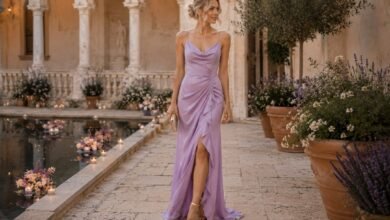
Champagne Wedding Guest Dresses: How to Wear the Shade Without Looking Bridal

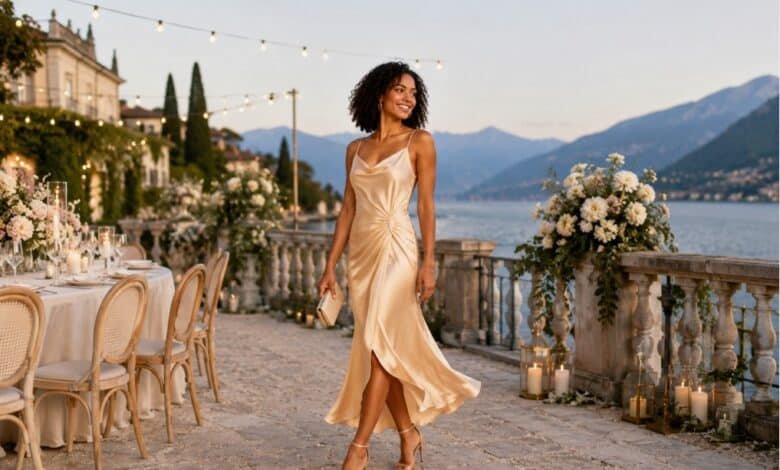
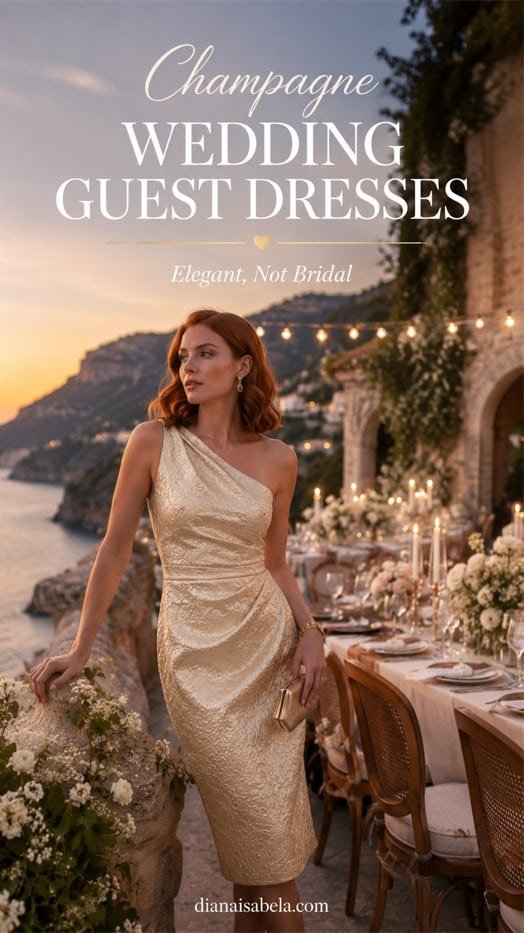
Champagne wedding guest dresses are beautiful, expensive-looking, and just risky enough to deserve a serious conversation. The shade can feel soft, polished, and perfect for evening weddings. It can also look suspiciously bridal if the fabric is pale, shiny, long, and styled with delicate accessories.
So the question is not simply “Can I wear champagne to a wedding?” The real question is: does this champagne dress clearly read as guest, not bride, not bridesmaid, and not “I own a veil but left it in the car”?
Diana’s champagne rule: champagne is safest when it has contrast, warmth, or structure. If the dress is pale ivory-champagne, floor-length, glossy, and romantic, step away from the checkout button and go make tea.
If you are still comparing colors, dress codes, and venue rules, start with the main guide for guest outfits first. Champagne depends heavily on context, so the wedding setting matters as much as the dress itself.
The champagne problem: elegant or too bridal?
Champagne sits close to ivory, beige, gold, nude, and pale taupe. That is exactly why it can be gorgeous — and exactly why it can become awkward at a wedding. A deeper golden champagne satin midi can look refined. A very pale champagne gown with a soft train can look like it wandered away from the bridal suite.
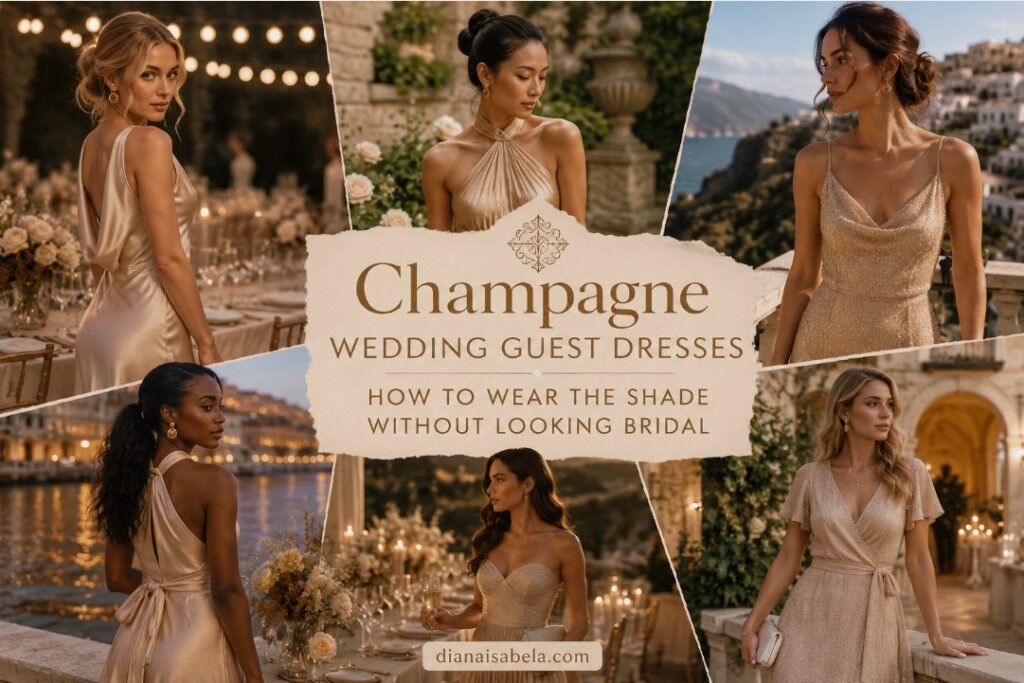
The safest champagne wedding guest dresses have at least one clear guest signal: a shorter length, darker undertone, modern cut, visible print, metallic texture, structured silhouette, or styling that does not mimic bridal softness.
The bridal-risk meter
Before wearing champagne, check how close the dress is to bridal codes: pale color, glossy fabric, romantic length, delicate sparkle, pearls, soft waves, and barely-there shoes. One or two can be fine. All of them together? That is where the alarm starts ringing politely.
Champagne is not automatically forbidden. It just needs boundaries.
Deeper champagne, bronze-champagne, gold-beige, midi length, structured neckline, print, texture, or darker accessories.
Light satin, slip silhouette, pale shimmer, delicate sandals, or a soft romantic hairstyle. Add contrast and avoid bridal styling.
Ivory-champagne gown, bridal satin, floor length, pearl accessories, soft white clutch, or anything that could photograph like a wedding dress.
For the etiquette side, use the guest dress rules as a final check. Champagne is one of those shades where “technically not white” is not always enough.
When champagne works beautifully
Champagne works best when the wedding is polished enough to support the shine. Formal evening receptions, black-tie optional weddings, hotel venues, cocktail celebrations, rooftop dinners, and elegant destination events are the safest settings.
It is harder at casual daytime weddings, garden ceremonies with a very bridal palette, beach ceremonies where everything is pale and airy, or any wedding where bridesmaids might be in champagne, nude, gold, or beige.
The safest wedding settings for champagne
Think evening, polish, and contrast. Champagne needs a setting that makes it look intentional rather than bridal-adjacent.
A deeper champagne gown or structured satin midi can work when the event is clearly formal and the styling includes contrast. Compare with more elevated guest styling before choosing a very pale dress.
Champagne can look elegant here if the shade leans gold, bronze, or taupe instead of ivory. Keep the silhouette sleek rather than bridal-romantic.
A champagne midi, textured mini, jacquard dress, or gold-beige satin style is usually safer than a long pale gown. Cocktail length gives the color more guest energy.
Warm champagne can be gorgeous for villa terraces, city rooftops, and resort receptions. Add bronze or gold accessories so the look feels sunlit, not bridal.
Fabric is where champagne becomes dangerous
Champagne changes completely by fabric. Satin makes it luminous. Sequins make it festive. Crepe makes it calmer. Jacquard adds texture. Chiffon can be romantic, but very pale champagne chiffon can get too close to bridesmaid or bridal-party styling.
If the fabric looks like bridal satin, treat it with suspicion. Not panic. Suspicion. We are fashionable, not reckless.
Beautiful for evening, but safest in midi, draped, structured, or deeper gold-champagne shades. Very pale floor-length satin can look bridal fast.
Good for festive evening weddings, black-tie optional receptions, and holiday-season events. Keep the cut clean and avoid anything too revealing.
Less shiny and more controlled. A good option if you want champagne warmth without the bridal glow of satin.
Pretty but risky when pale and floaty. It needs print, darker accessories, or a very guest-coded silhouette to avoid bridal-party energy.
Champagne by dress code
Champagne becomes easier when the dress code is clear. The more formal the wedding, the more the shade can look intentional. The more casual and daytime the wedding, the more likely champagne will feel too close to bridal neutrals.
The dress code filter
Use formality to decide how much shine, length, and softness the outfit can handle.
A champagne midi, textured mini, jacquard dress, or bronze-champagne satin style can work well. For proportion and polish, compare with cocktail-ready outfit ideas.
Choose deeper champagne, gold-beige, taupe-champagne, or structured satin. Avoid pale gowns that could photograph close to ivory.
Champagne can be elegant if the fabric is elevated and the shade has warmth. A sleek column dress is safer than a romantic pale gown.
Be careful. Pale champagne near sand, white florals, and airy styling can read bridal. Warmer gold-beige or bronze-champagne is safer than ivory-champagne.
The styling trick: add contrast
Champagne needs contrast more than most wedding guest colors. Without contrast, the whole outfit can become a soft pale blur. That blur is exactly where bridal risk lives.
Contrast does not have to mean harsh black. It can be bronze sandals, a gold clutch, espresso liner, warm makeup, sculptural earrings, a deeper bag, or a modern neckline. The point is to make the outfit read styled, not bridal.
My favorite safe champagne formula: deeper champagne midi, bronze or gold sandals, sculptural earrings, warm makeup, and a structured clutch. It keeps the glow but removes the bridal softness.
Gold, bronze, espresso, taupe, metallic brown, black for evening, or deep nude. Avoid white, ivory, or extremely pale satin shoes.
Gold, bronze, espresso, black satin, tortoiseshell, metallic taupe, or a structured warm neutral clutch. Skip bridal-looking pearl clutches.
Gold and bronze are easiest. Sculptural earrings feel more modern than tiny bridal pearls. Diamonds can work, but keep them clean and not princessy.
Warm skin, bronze eyes, soft brown liner, peach or rose lips, and polished hair. Avoid styling that feels too bridal-soft from head to toe.
Champagne by season
Champagne is seasonless in theory, but not in practice. It looks very different under spring daylight, summer sun, fall candlelight, and winter evening lighting.
The seasonal map
The question is not only “Is champagne okay?” It is “What kind of champagne belongs in this season?”
Riskier if the wedding palette is pale, floral, or romantic. Choose deeper champagne, texture, print, or a midi length. Avoid anything too close to ivory.
Warm champagne can work for evening receptions and destination weddings. In bright daylight, choose bronze-champagne or gold-beige instead of very pale satin.
Champagne looks beautiful with bronze, chocolate, burgundy, espresso, and warm florals. This is one of the easiest seasons for deeper champagne tones.
Sequins, satin, and metallic champagne can feel festive and elegant. Add black, gold, or espresso accessories for evening contrast.
Where champagne goes wrong
Champagne does not usually fail because it is ugly. It fails because it is too close to bridal styling. A dress can be technically beige and still look like a wedding dress in photos.
If the dress looks pale ivory in natural light, do not wear it. Wedding photos are not the place to debate undertones.
Long pale champagne satin with a romantic silhouette is the danger zone. It may be gorgeous, but gorgeous is not the same as guest-appropriate.
Pearl bag, pearl earrings, delicate sandals, soft waves, pale dress. Suddenly the outfit is whispering “bridal suite.”
Champagne, gold, nude, and beige are common bridal-party colors. If the bridesmaids are in that family, choose a different shade.
Champagne vs gold, silver, nude, and beige
These colors overlap, but they do not behave the same at a wedding.
- Champagne vs gold
- Gold is usually clearer and more festive. Champagne is softer and more bridal-risky. If you want shine with less ambiguity, compare with warmer gold dress styling.
- Champagne vs silver
- Silver feels cooler, sharper, and more evening. Champagne feels warmer and softer. Silver is often safer for formal night weddings when you want metallic polish without ivory undertones.
- Champagne vs nude
- Nude can disappear into skin tone and feel underwhelming if the styling is flat. Champagne has more glow, but also more bridal risk.
- Champagne vs beige
- Beige is quieter and more neutral. Champagne is dressier, shinier, and more event-coded. That makes champagne prettier — and riskier.
Champagne outfit ideas by wedding setting
Use these as safe directions. The goal is to keep champagne elegant without letting it drift into bridal territory.
Champagne jacquard midi, bronze heels, sculptural gold earrings, and a structured espresso clutch. Texture keeps the shade guest-coded.
Deep champagne column dress, black satin clutch, gold cuff, and sleek hair. The darker accessories give the look enough separation from bridal styling.
Bronze-champagne slip dress, metallic sandals, warm makeup, and a small gold bag. Keep the cut clean and avoid bridal softness.
Champagne sequins, black sandals, minimal earrings, and a clean clutch. Festive, polished, and clearly not a wedding dress.
Choose gold-beige or taupe-champagne with a simple silhouette. Avoid pale floaty chiffon, ivory accessories, and anything that looks like bridal resortwear.
So, can you wear champagne to a wedding?
Yes, but carefully. Champagne wedding guest dresses can be elegant for cocktail, formal, black-tie optional, evening, destination, and festive winter weddings when the shade is warm enough, the styling has contrast, and the dress does not look bridal in photos.
The safest champagne dresses lean gold, bronze, taupe, or textured rather than ivory. Choose a guest-coded length or silhouette, add stronger accessories, and avoid bridal details. Champagne should feel polished and intentional — not like a very polite attempt to steal soft-focus lighting.
The champagne mirror test
Ask yourself: if this photo were cropped next to the bride, would anyone wonder who was getting married?
If the answer is yes, choose another dress. If the answer is no, and the look has contrast, polish, and a clear guest mood, champagne can be beautiful.
FAQ
Can you wear champagne to a wedding?
You can wear champagne to a wedding if the dress clearly looks like guest attire, not bridalwear. Choose warmer champagne, bronze-champagne, gold-beige, textured fabrics, midi lengths, or structured silhouettes, and avoid pale ivory tones.
Is champagne too close to white for a wedding guest?
Champagne can be too close to white if it is very pale, glossy, or ivory-toned. It becomes especially risky in long satin, chiffon, or romantic silhouettes. When in doubt, choose a deeper gold, bronze, taupe, or another color.
What shoes go with a champagne wedding guest dress?
Gold, bronze, espresso, taupe, metallic brown, deep nude, and black evening shoes can work with champagne dresses. Avoid white, ivory, or pale satin shoes because they can make the outfit look more bridal.
Can I wear a champagne satin dress to a wedding?
A champagne satin dress can work if it is not too pale or bridal-looking. Midi lengths, draped cuts, structured necklines, and deeper champagne tones are safer than long ivory-champagne satin gowns.
What jewelry looks best with champagne dresses?
Gold, bronze, and sculptural jewelry usually look best with champagne dresses. Pearls can be risky if the dress is already pale and romantic, because the full look may become too bridal.
Is champagne appropriate for a formal wedding?
Champagne can be appropriate for a formal wedding when the shade leans warm, gold, bronze, or taupe and the silhouette is clearly guest-appropriate. A pale champagne gown that photographs like ivory is not a safe choice.
Can champagne wedding guest dresses work for beach weddings?
Champagne is tricky for beach weddings because pale sand, white florals, and airy fabrics can make the outfit look bridal. Choose warmer gold-beige or bronze-champagne and avoid pale floaty chiffon.
What bag should I wear with a champagne dress?
A champagne dress pairs well with gold, bronze, espresso, black satin, tortoiseshell, metallic taupe, or structured warm neutral bags. Avoid pearl or ivory clutches if the dress is already pale.
How do you make champagne look less bridal?
Add contrast. Choose bronze or gold accessories, a structured clutch, warm makeup, a modern neckline, textured fabric, or a midi length. Avoid pearls, ivory shoes, romantic bridal hairstyles, and very pale satin.
Is champagne better than gold for wedding guests?
Gold is usually clearer and more festive, while champagne is softer and more subtle. Champagne can look elegant, but it has higher bridal risk. Gold may be safer if you want a metallic dress without looking close to ivory.