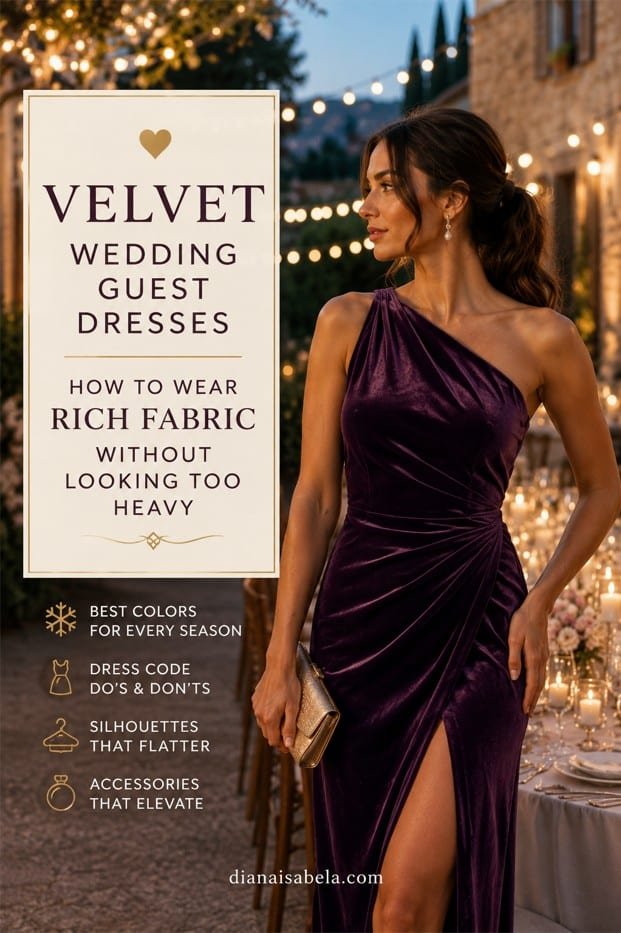
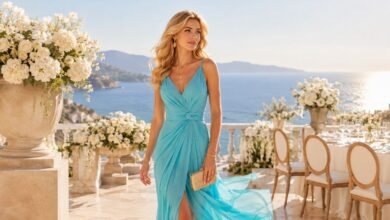
Velvet Wedding Guest Dresses: How to Wear Rich Fabric Without Looking Too Heavy

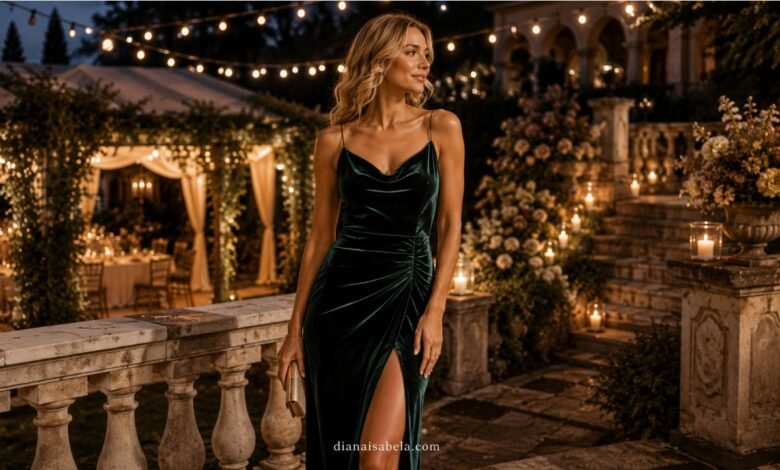
Velvet wedding guest dresses have a way of making an outfit feel expensive before you even add earrings. The fabric catches light, gives color depth, and instantly makes a winter hotel reception or fall candlelit wedding feel more dressed-up.
But velvet is not a year-round miracle. It has weight. It has warmth. It has drama. Wear it in the right setting and you look elegant. Wear it at a sunny July garden ceremony and you may look like you are emotionally committed to overheating.
Diana’s velvet rule: velvet should look intentional, seasonal, and touchable. If the wedding setting cannot support the fabric’s richness, choose something lighter and let velvet stay home with its dramatic personality.
If you are still deciding how dressed-up the whole event should feel, start with the broader guide to guest outfits. Velvet depends on season, venue, dress code, and time of day more than most fabrics.
Velvet is a fabric with a season
Velvet works because it feels rich, warm, and dimensional. It gives color a deeper finish than satin or chiffon, which is why burgundy, emerald, navy, chocolate, plum, and black velvet all look so good in evening light.
The same richness can also become too heavy. A velvet dress should usually belong to fall, winter, early spring evenings, formal indoor settings, hotel receptions, candlelit dinners, holiday-season weddings, and black-tie optional celebrations.
The velvet temperature test
Before choosing velvet, ask what the wedding will feel like physically, not just aesthetically. Is the venue air-conditioned? Is the ceremony outdoors? Will there be a lot of walking? Is the reception after sunset?
Velvet is beautiful, but it is not breathable optimism.
Cool weather, evening receptions, indoor venues, formal dinners, hotel ballrooms, winter weddings, and candlelit settings.
Early spring evenings, breezy fall outdoor weddings, black-tie optional events, and destination weddings in cooler climates.
Hot summer ceremonies, humid beach weddings, casual daytime gardens, sunny lawns, and venues where you will sit outside for hours.
The best velvet colors for wedding guests
Velvet makes color look deeper. That is its gift. Burgundy becomes wine-rich, emerald becomes jewel-like, navy becomes midnight, brown becomes chocolate, and plum becomes moody without looking flat.
Light velvet can work too, but it is harder. Pale blush velvet, champagne velvet, and pastel velvet can look precious or bridal-party unless the silhouette is very modern.
The velvet color theatre
Choose velvet colors that match the setting. The more formal and evening-based the wedding, the darker and richer the color can be.
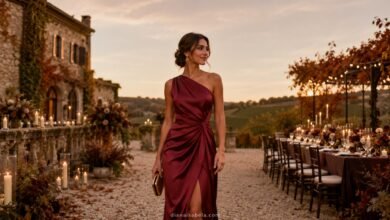
Romantic, wine-rich, and excellent for fall and winter weddings. For a color-specific breakdown, compare with wine-red guest styling.
Elegant and festive without needing much else. Beautiful for winter, formal, hotel, and holiday-season weddings.
Polished, serious, and safe for formal evenings. Navy velvet works especially well when black feels too expected.
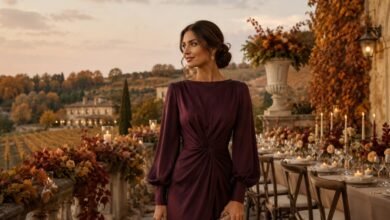
Warm, refined, and more unexpected than black. A strong choice for candlelit dinners and fall hotel receptions.
For deeper neutral styling, warm brown outfit ideas are useful because chocolate and espresso tones behave beautifully in velvet.
Where velvet looks most expensive
Velvet needs a setting with depth. It loves low light, architecture, candles, rich florals, formal tables, and cooler air. It does not love plastic chairs on a sunny lawn. Neither do I, but that is a separate essay.
Velvet is very strong here. A velvet midi, column dress, or long-sleeve style can look polished against chandeliers, marble, and evening lighting.
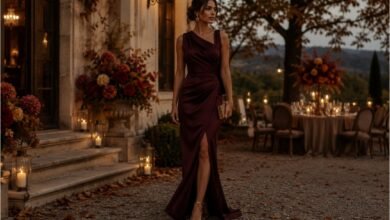
This is velvet’s natural home. Dark jewel tones, gold accessories, and structured silhouettes look rich without trying too hard.
Velvet can work for a cool-weather vineyard reception, but consider terrain. For shoes and outdoor practicality, check wine-country outfit guidance.
Long sleeves, midi lengths, and deeper colors can feel respectful and elegant. Keep the neckline controlled and the accessories refined.
Silhouette matters because velvet has weight
Velvet is not a fabric that floats away politely. It has presence. That means the silhouette needs to be clean enough to keep the look elegant, not bulky.
The best velvet wedding guest dresses usually have one strong shape: a wrap midi, column gown, long-sleeve mini with balance, square-neck midi, slip dress, off-shoulder style, or softly draped silhouette. Too many gathers, ruffles, bows, and thick seams can make velvet look heavy.
The easiest option for most weddings. A midi length keeps velvet elegant without turning every outfit into a gala moment.
Beautiful for formal and black-tie optional weddings, especially in navy, emerald, black, burgundy, or chocolate. The cut should be sleek.
Perfect for winter and church weddings. Balance the coverage with a clean neckline, polished earrings, or a defined waist.
Modern and less heavy when the velvet is soft and the dress is not too clingy. Add a tailored coat or sleek accessories for evening.
Velvet by dress code
Velvet naturally reads dressy, so the invitation has to support it. If the wedding is casual, velvet can feel like it arrived with a personal spotlight.
A velvet midi, wrap dress, slip dress, or structured mini can work beautifully. Keep the accessories sharp so the fabric does not feel old-fashioned.
Velvet gowns and column dresses are strong choices for evening. If you need a broader dress-code baseline, compare with more elevated guest looks.
Velvet is one of the best fabrics for this dress code when the color is rich and the silhouette is clean. Avoid casual short velvet dresses here.
Choose a softer velvet midi or simple wrap dress. Dark velvet gowns may feel too formal unless the event is evening-based.
Accessories: velvet already has texture
Velvet does not need a complicated accessory committee. The fabric already gives depth. The best styling adds shine, structure, and clean lines.
My favorite velvet formula: deep velvet dress, gold or crystal earrings, sleek clutch, and simple heels. Let the fabric look expensive. Do not make it compete with a necklace that can be seen from the parking lot.
Gold, black, bronze, silver, espresso, deep nude, or velvet-matching shoes in a clean shape. Avoid chunky casual shoes unless the dress is very modern.
Satin clutch, metallic minaudière, structured black bag, bronze clutch, or deep neutral evening bag. Avoid oversized bags with velvet.
Gold for burgundy, brown, and emerald. Silver or crystal for navy, black, and cool plum. Keep jewelry intentional, not crowded.
Tailored wool coat, faux fur stole, sleek evening coat, or structured blazer. Avoid casual cardigans that flatten the whole mood.
Velvet wedding guest dresses by season
Velvet works beautifully in burgundy, olive, chocolate, navy, plum, and forest green. It looks especially good for evening, vineyard, hotel, and candlelit receptions.
This is velvet’s strongest season. Jewel tones, long sleeves, gowns, and richer silhouettes feel natural. Add metallic accessories for light.
Velvet can work only in cooler weather or evening settings. Choose lighter colors carefully and avoid anything too heavy for daytime.
Usually no. A small velvet detail may be fine, but a full velvet dress at a warm outdoor wedding is rarely comfortable or seasonally right.
Where velvet goes wrong
Velvet mistakes are usually about weight. Too heavy for the weather. Too dark for the venue. Too much fabric in the cut. Too many accessories. The dress is not bad; it is just overdressed for the room.
If the ceremony is outdoors in warm weather, velvet becomes a personal sauna with prettier lighting.
Velvet plus puff sleeves, chokers, dark lipstick, ornate jewelry, and dramatic hair can turn romantic into theatrical very quickly.
A velvet gown at a relaxed semi-formal wedding can look like you misread the invitation and brought your own orchestra.
Velvet shows pressure marks, dust, and lint. Steam carefully, transport it well, and keep a lint roller nearby. Glamour has admin.
If you are unsure whether velvet is too formal, too seasonal, or too heavy for the event, run it through the wedding guest etiquette check before committing.
Velvet vs satin, chiffon, and sequins
Fabric changes the entire message of the dress. Velvet is rich and warm. Satin is fluid and glossy. Chiffon is light and romantic. Sequins are festive and attention-grabbing.
- Velvet vs satin
- Satin works across more seasons and has a smoother shine. Velvet feels heavier, warmer, and more evening-based. Choose velvet when the wedding setting can handle richness.
- Velvet vs chiffon
- Chiffon is better for garden, summer, and outdoor ceremonies. Velvet is better for winter, formal, and candlelit venues.
- Velvet vs sequins
- Sequins sparkle; velvet glows. Velvet is usually quieter and more elegant, while sequins feel more festive. Choose based on how much attention the dress should carry.
- Velvet vs crepe
- Crepe is cleaner and more understated. Velvet is more romantic and dimensional. If the dress code is conservative, crepe may feel easier; if the event is evening, velvet can look richer.
Velvet outfit ideas by wedding setting
Use these as styling directions. Velvet needs the right room, the right temperature, and the right amount of restraint.
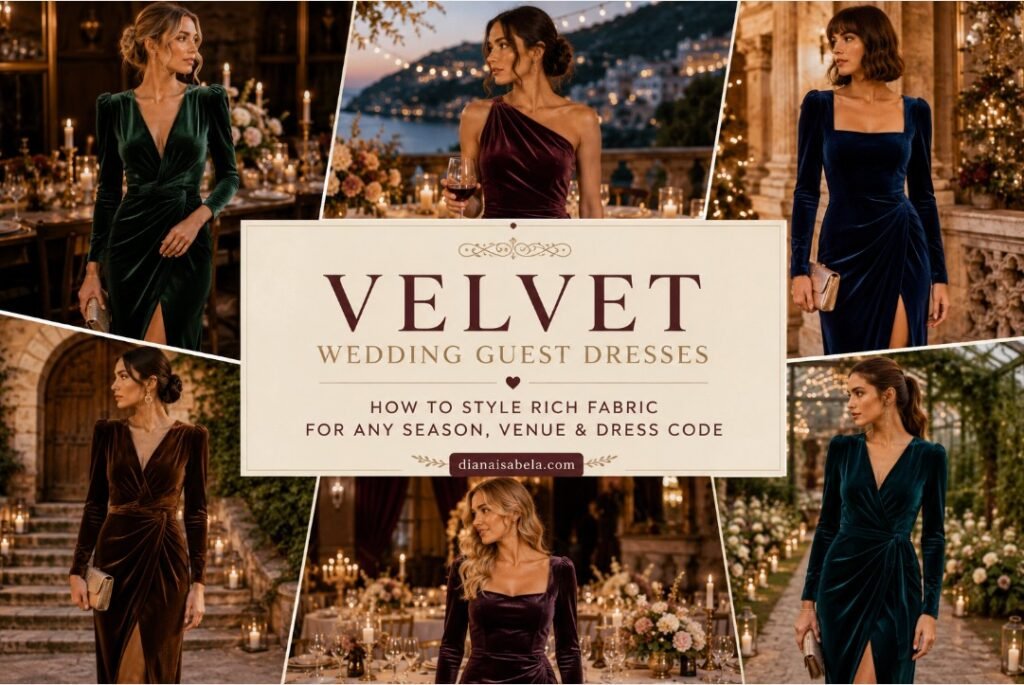
Emerald velvet midi, gold earrings, black satin clutch, and sleek sandals. Rich, polished, and not trying too hard.
Burgundy velvet wrap dress, bronze block heels, warm makeup, and an espresso clutch. Romantic, but still practical for the setting.
Navy velvet column dress, silver earrings, structured clutch, and clean hair. Quiet luxury with actual temperature awareness.
Long-sleeve plum velvet midi, closed-toe heels, small gold hoops, and a tailored coat. Respectful, warm, and elegant.
Chocolate velvet slip dress, gold cuff, black evening bag, and softly defined makeup. Festive without becoming ornament decor.
So, can you wear velvet to a wedding?
Yes, velvet wedding guest dresses can be gorgeous for fall, winter, formal, black-tie optional, hotel, church, vineyard evening, and candlelit weddings. They work best when the weather is cool, the setting is elevated, and the dress has a clean silhouette.
The key is season and restraint. Velvet already brings texture, richness, and mood. Keep the shape polished, the accessories clean, and the color appropriate for the venue. Velvet should look luxurious, not like it is fighting the thermostat.
The velvet room test
Ask yourself: does this dress belong in the actual room where the wedding is happening?
If the answer is yes, velvet can be one of the most elegant choices you can wear. If the answer is no, save it for a colder evening and choose a lighter fabric that does not need its own climate strategy.
FAQ
Can you wear velvet to a wedding?
Yes, velvet can be beautiful for weddings, especially fall, winter, formal, black-tie optional, hotel, church, and evening receptions. It works best in cooler weather and elevated settings.
Is velvet too hot for a summer wedding?
Usually yes. A full velvet dress can feel too warm and heavy for summer, especially for outdoor or humid weddings. Choose satin, chiffon, crepe, or another lighter fabric instead.
What color velvet dress is best for a wedding guest?
Burgundy, emerald, navy, chocolate, plum, forest green, black, and deep brown are strong velvet wedding guest colors. They look rich in evening light and work well for fall and winter weddings.
Can I wear a velvet dress to a formal wedding?
Yes. Velvet is an excellent fabric for formal weddings when the silhouette is clean and the color feels elevated. Velvet gowns, column dresses, and polished midis can look very elegant.
What shoes go with a velvet wedding guest dress?
Gold, black, bronze, silver, espresso, deep nude, and simple evening heels work well with velvet. For vineyard or outdoor weddings, choose block heels or stable shoes instead of thin stilettos.
Is velvet appropriate for a spring wedding?
Velvet can work for a cool spring evening wedding, but it may feel too heavy for daytime or warm outdoor ceremonies. Choose lighter colors carefully and keep the silhouette simple.
How do you style a velvet dress without looking too dramatic?
Keep the accessories clean. Choose one strong element, such as gold earrings, a sleek clutch, or polished shoes. Avoid piling on heavy jewelry, dark lipstick, ornate details, and theatrical styling.
Can velvet look too formal for a wedding guest?
Yes, especially at casual or semi-formal daytime weddings. A velvet gown may feel overdressed if the venue is relaxed. A simple velvet midi or wrap dress is safer for less formal invitations.
Is velvet good for a vineyard wedding?
Velvet can work for a cool-weather vineyard reception, especially in burgundy, olive, plum, chocolate, or forest green. Choose practical shoes because vineyards often involve gravel, grass, or stone paths.
What outerwear works with velvet wedding guest dresses?
A tailored wool coat, sleek evening coat, faux fur stole, or structured blazer works well. Avoid casual cardigans because they can make velvet look less polished.