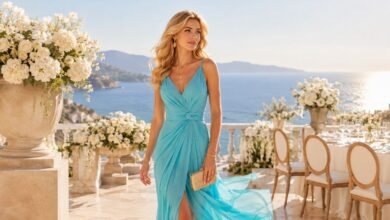
What to Wear to a Black Tie Optional Wedding: A Guest Outfit Guide

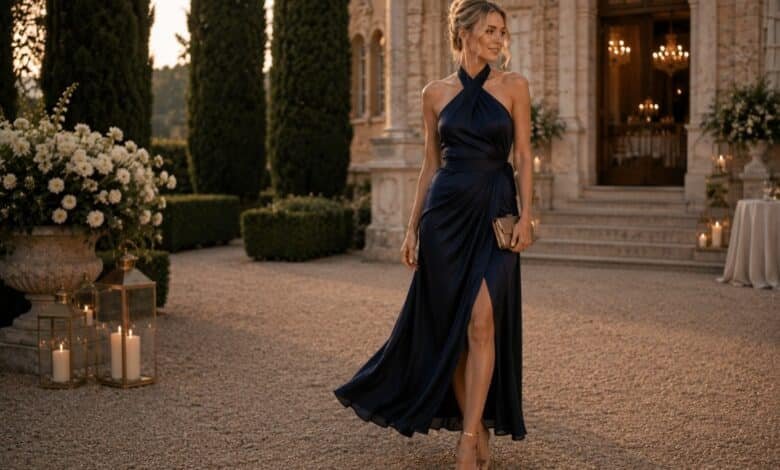
Black tie optional means formal enough for the room, with just enough flexibility to breathe.
If a wedding invitation says black tie optional, the couple is not asking for casual elegance. They are asking for a formal wedding mood, but they are giving guests a little more flexibility than strict black tie. A tuxedo is excellent. A dark formal suit can work. A floor-length gown is safe. A refined formal dress, elegant midi, or polished jumpsuit may also be right if the styling is elevated enough.
The word “optional” is the dangerous part. It sounds relaxed. It is not. It only means guests have options inside a formal dress code — not permission to arrive in a cute cocktail dress that belongs at a different wedding.
Think elegant evening. Beautiful fabric. Intentional accessories. Shoes that understand the assignment. A small bag. Hair and makeup that look finished. No “I thought optional meant whatever” energy.
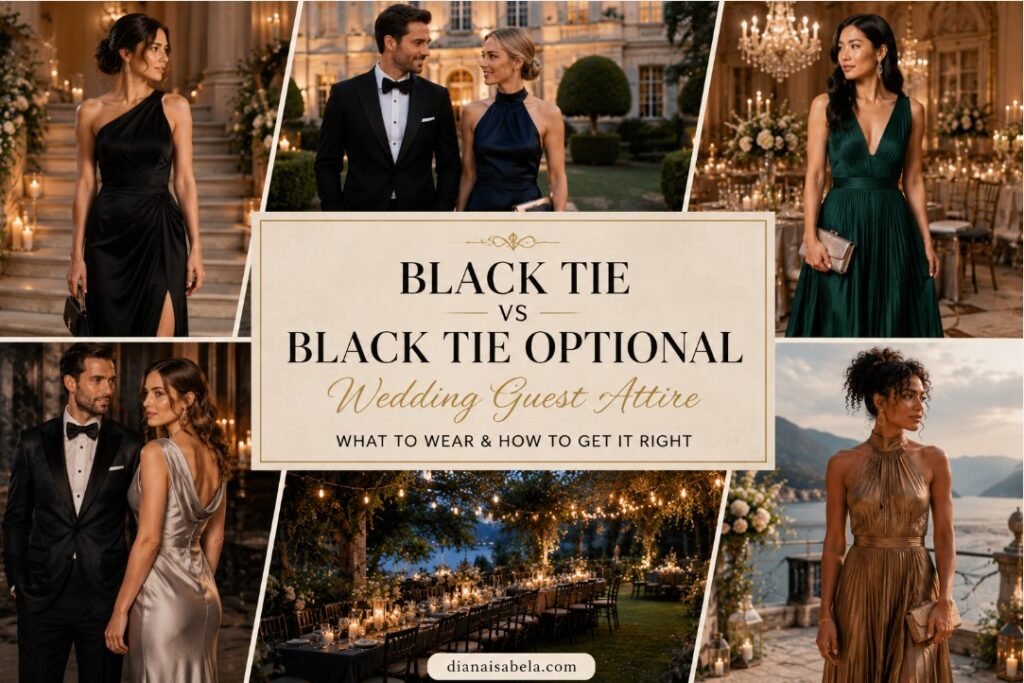
For women, wear a gown, formal midi, elegant ankle-length dress, or polished jumpsuit. For men, wear a tuxedo if possible, or a dark formal suit. Everyone should look like they belong in a very dressed-up evening photo.
So what should you actually wear?
The safest black tie optional outfit is one that would not look underdressed next to a tuxedo. That does not mean you have to wear the most dramatic gown in the room. It means your outfit should have evening formality: fabric with weight or polish, a refined silhouette, dressy shoes, and accessories that feel deliberate.
A floor-length dress is always safe. But black tie optional also allows some elegant alternatives, especially when the venue is modern, the couple is stylish rather than traditional, or the dress itself feels expensive enough to hold the room.
A floor-length gown in satin, silk, crepe, velvet, chiffon, or refined evening fabric with formal shoes and a small evening bag.
A formal midi, ankle-length dress, elegant jumpsuit, tuxedo-inspired women’s suit, or rich fabric column dress styled with evening accessories.
A tuxedo. If not, a dark formal suit with a crisp shirt, tie, polished dress shoes, and accessories that feel evening-ready.
Casual cocktail dresses, daytime maxis, light office suits, beachy fabrics, casual shoes, large totes, and anything that looks like a nice dinner outfit rather than formal wedding attire.
The easiest mirror test: would your outfit still make sense if several guests around you were in tuxedos and gowns? If yes, good. If you would suddenly feel like you came from a different event, dress it up.
This is close to black tie, but not identical
For the exact comparison between the two dress codes, use the guide to black tie and black tie optional guest attire. This page is the practical closet version: what to actually put on when the invitation says black tie optional.
Best dress choices for women
Black tie optional gives women more room than strict black tie, but the dress still needs polish. A simple gown in excellent fabric can look more appropriate than a sparkly short dress that is trying too hard. Length helps, but fabric and styling decide the final result.
If you do not want a full gown, choose a dress that looks clearly formal: rich color, refined neckline, elegant drape, structured shape, or evening fabric. The outfit should not rely on accessories to become formal. The dress itself needs to be doing some of the work.
The safest choice. It can be sleek, minimal, romantic, satin, velvet, crepe, chiffon, one-shoulder, long-sleeve, or softly draped.
Works when the fabric is rich and the styling is elevated. Think satin, velvet, jacquard, refined lace, structured crepe, or a dramatic neckline.
A very good middle option. It feels more formal than a casual midi but less dramatic than a full gown.
Can be chic if the tailoring is sharp, the fabric is fluid or structured, and the accessories are unmistakably formal.
A women’s tuxedo suit or satin-trim evening set can work beautifully at modern black tie optional weddings.
When a gown is the smartest choice
Choose a gown when the venue is grand, the invitation is very formal, the wedding starts in the evening, or the couple’s style feels traditional. A hotel ballroom, historic estate, museum, country club, opera-house-style venue, or candlelit villa all point toward the dressier end of the code.
For gown-specific inspiration, the page on black tie guest dresses is useful even if the invitation says optional, because many of the same silhouettes, fabrics, and colors still apply.
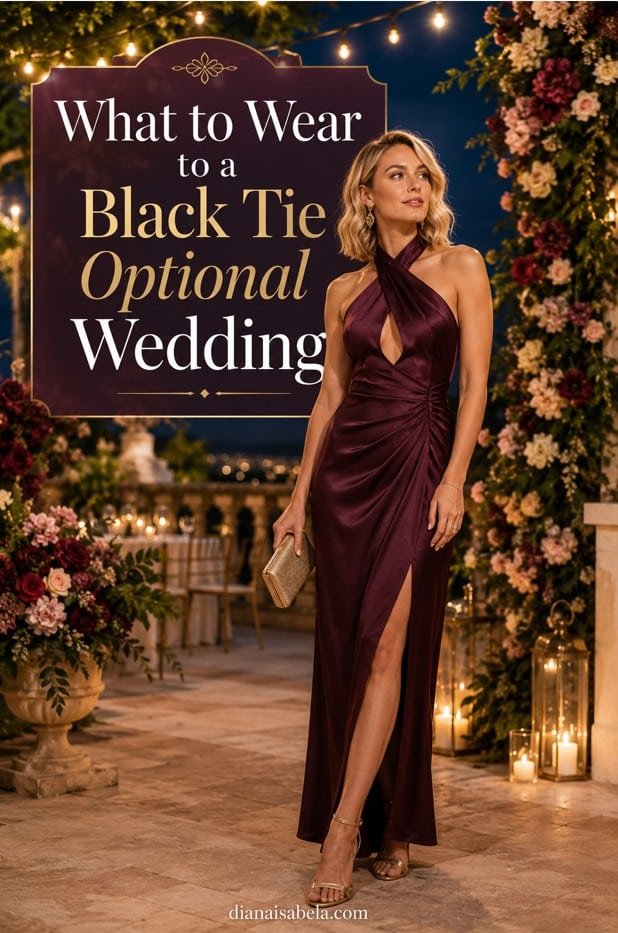
Best gown direction: elegant over dramatic. A sleek navy gown, black satin column, emerald velvet dress, burgundy crepe gown, or metallic evening dress can look perfect without trying to own the room.
Be careful with: white, ivory, bridal champagne, pale lace, huge trains, pageant sparkle, or anything that looks like it has a personal lighting crew.
Black tie optional is not about being the fanciest person there. It is about being formal enough that nobody wonders whether you read the invitation.
Best colors and fabrics
Black tie optional loves depth. Black, navy, emerald, burgundy, plum, chocolate, deep red, forest green, midnight blue, silver, gold, bronze, and refined metallics can all work. Softer shades can work too, but pale colors need caution because they can drift toward bridal territory in formal fabrics.
Fabric should feel like evening: satin, silk, crepe, velvet, chiffon, jacquard, refined lace, tasteful sequins, beading, or structured formal fabric. If the fabric looks like daytime, the whole outfit starts sliding down the dress-code ladder.
Classic and safe
Black satin gown, navy crepe dress, emerald velvet, burgundy chiffon, plum silk, or a dark formal midi with gold or silver accessories.
Modern and elegant
One-shoulder column dress, draped ankle-length satin, tuxedo jumpsuit, sculptural neckline, or minimalist gown with strong earrings.
Soft but formal
Dusty blue chiffon gown, mauve satin, deeper rose, champagne bronze, or floral jacquard if it does not read bridal.
High-risk choices
Pale champagne satin, ivory shimmer, casual florals, jersey maxis, beach fabrics, or anything too close to a bridal reception look.
What men should wear
For men, black tie optional is easier to decode but still easy to underdo. A tuxedo is ideal and always appropriate. A dark formal suit is acceptable if it is genuinely formal: dark color, crisp shirt, tie, polished shoes, good fit, and evening-level styling.
A business suit can be technically dark and still feel wrong. The suit should look like it came to a formal wedding, not like it left the office and found a boutonniere.
Tuxedo with formal shirt, bow tie, polished dress shoes, and clean finishing.
Dark formal suit in black, charcoal, or deep navy with a dress shirt, tie, polished shoes, and a refined belt or pocket square.
Light casual suit, no-tie office look, sneakers, relaxed blazer, open collar with no polish, or shoes that say “commute.”
Do not accidentally drop into cocktail attire
Cocktail looks can be beautiful, but most are not formal enough for black tie optional. If you are comparing the lower dress-code level, read the guide to cocktail wedding attire and then dress one clear level above that for black tie optional.
Shoes, bag, jewelry, hair: the finishing matters here
This is not the dress code where finishing can be random. Shoes should be polished. The bag should be small and evening-appropriate. Jewelry should look intentional. Hair and makeup do not need to be dramatic, but they should feel complete.
A formal dress with casual shoes becomes less formal instantly. A beautiful gown with a giant tote looks confused. A dark suit with scuffed shoes loses authority. Details are not decoration here; they are part of the dress code.
Dressy sandals, pumps, slingbacks, elegant platforms, refined flats, metallic heels, or polished low heels depending on the venue.
Small clutch, satin bag, metallic mini bag, beaded evening bag, structured small bag, or elegant chain bag. No day tote.
Gold, silver, pearls, diamonds, crystals, sculptural earrings, or one beautiful statement piece. Not every sparkle you own at once.
Polished skin, defined eyes, sleek hair, soft waves, low bun, red lip, berry lip, nude lip — choose a finish that supports the outfit.
What not to wear to a black tie optional wedding
The main mistake is treating the phrase like a softer cocktail invitation. It is not. Anything too casual, too daytime, too bridal, too revealing, or too office-like will feel off.
Too casual
Cotton sundresses, jersey maxis, casual linen, beachy dresses, flat everyday sandals, oversized totes, and relaxed office pieces.
Too bridal
White, ivory, pale champagne, bridal lace, wedding-gown silhouettes, or anything that could look like a reception dress.
Too nightclub
Very short, very sheer, extreme cutouts, bodycon shine, or styling that feels more after-party than formal ceremony.
Too business
Work dresses, office suits, practical pumps, big bags, plain blazers, and anything that feels like a meeting with better lighting.
For a wider boundary check, especially around bridal colors and underdressing, use the guide to wedding guest outfit mistakes before you commit.
The venue should decide how far you go
A black tie optional wedding at a grand hotel or historic estate should be treated very close to black tie. A modern gallery, rooftop, or elegant restaurant may allow a formal midi or jumpsuit. A countryside estate can work with velvet, satin, darker florals, or rich seasonal colors, but still needs evening polish.
Venue is the secret decoder. If the room has chandeliers, marble, candlelight, formal service, or tuxedos in the photos, dress up. If the room is modern and less traditional, you have more styling flexibility — but not enough to abandon formality.
The final outfit checklist
Before leaving, do one full-length mirror check. Does the outfit look formal from head to toe? Does the fabric belong at an evening wedding? Are the shoes dressy enough? Is the bag small enough? Would the outfit still make sense beside tuxedos and gowns?
For the bigger dress-code map, start from the main wedding guest dress guide and then narrow by formality, venue, season, and color.
Choose the more formal option. Slightly overdressed is usually safer than visibly underdressed at a formal wedding.
Choose the longer or more polished dress unless the shorter option has genuinely formal fabric and styling.
Choose the dressier pair that you can still walk in. Formal misery is still misery.
Black tie optional is flexible, not relaxed.
You do not have to wear the most dramatic gown or rent a tuxedo if the invitation says optional. But you do need to look formal, polished, and ready for an elegant evening wedding.
Choose good fabric, refined shape, dressy shoes, a small bag, and accessories that finish the look. That is the sweet spot: formal enough for the room, comfortable enough for the night, and stylish enough that nobody has to ask whether you understood the invitation.
FAQ
What should I wear to a black tie optional wedding?
Wear a formal outfit that feels elegant enough for an evening wedding. Women can wear a gown, formal midi, ankle-length dress, elegant jumpsuit, or tuxedo-inspired suit. Men can wear a tuxedo or a dark formal suit with polished shoes and refined accessories.
Does black tie optional mean I need a gown?
No, a gown is not always required, but it is the safest option. A formal midi, ankle-length dress, or polished jumpsuit can work if the fabric, shoes, bag, and accessories feel evening-appropriate.
Can I wear a cocktail dress to a black tie optional wedding?
A regular cocktail dress may be too casual. A very elegant cocktail-length dress can work only if the fabric, silhouette, and styling feel formal enough for the venue.
Can men wear a suit to a black tie optional wedding?
Yes, men can wear a dark formal suit to a black tie optional wedding. A tuxedo is ideal, but a black, charcoal, or deep navy suit can work with a crisp shirt, tie, polished shoes, and sharp tailoring.
What colors work for black tie optional wedding guest attire?
Black, navy, emerald, burgundy, plum, chocolate, deep red, forest green, silver, gold, bronze, and other rich evening tones work well. Avoid white, ivory, pale champagne, and anything too bridal.
Can I wear a jumpsuit to a black tie optional wedding?
Yes, a formal jumpsuit can work if it has elegant fabric, sharp tailoring, dressy shoes, jewelry, and a small evening bag. It should look like eveningwear, not officewear.
Can I wear a cocktail dress to a black tie optional wedding?
A regular cocktail dress may be too casual. A dressy cocktail look can work only if the dress is very elegant, the fabric feels formal, and the accessories are evening-ready.
What colors are best for black tie wedding guest attire?
Black, navy, emerald, burgundy, plum, chocolate, deep red, gold, silver, and elegant jewel tones usually work well. Avoid white, ivory, bridal champagne, or anything that looks too close to the bride.
Can I wear a jumpsuit to a black tie optional wedding?
Yes, a formal jumpsuit can work for black tie optional if the fabric, tailoring, shoes, jewelry, and bag feel elevated. It should look like eveningwear, not officewear.
What should I avoid wearing to a black tie or black tie optional wedding?
Avoid casual fabrics, sundresses, denim, office suits, large day bags, beachy dresses, bridal colors, overly revealing outfits, and anything that feels too casual for a formal evening wedding.