Wedding Guest Accessories Guide: Bags, Jewelry, Shoes, Layers, and Styling Details

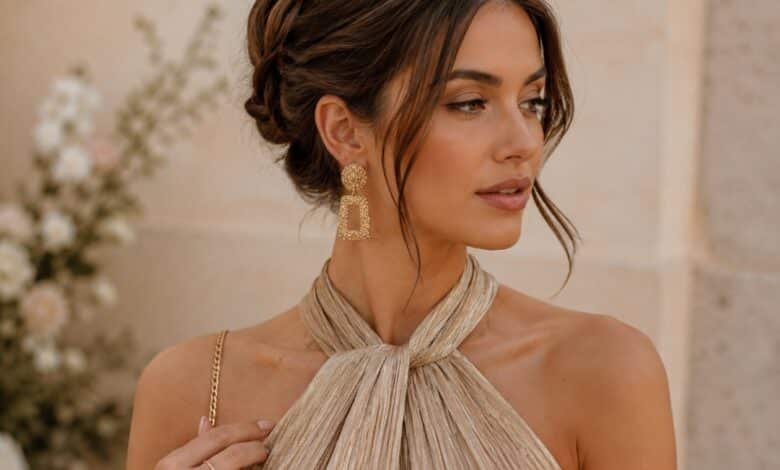
A wedding guest accessories guide should not just list cute bags and earrings. The real question is how to style the finishing details so the outfit looks intentional, balanced, expensive, and right for the room. Accessories are not decoration. They are direction.
The same dress can become romantic, modern, formal, soft, city-chic, beach-ready, or completely confused depending on the accessories. This guide is about the styling logic: one focal point, correct jewelry scale, coordinated metals, intentional bag choice, polished hair details, and the kind of restraint that makes an outfit look quietly expensive.
Quick answer: the best wedding guest accessories follow one clear styling idea. Choose one focal point, match jewelry to the neckline, keep the bag small and intentional, coordinate metals instead of forcing everything to match, and let shoes, hair, and layers support the dress. Accessories should make the outfit look more polished — not busier.
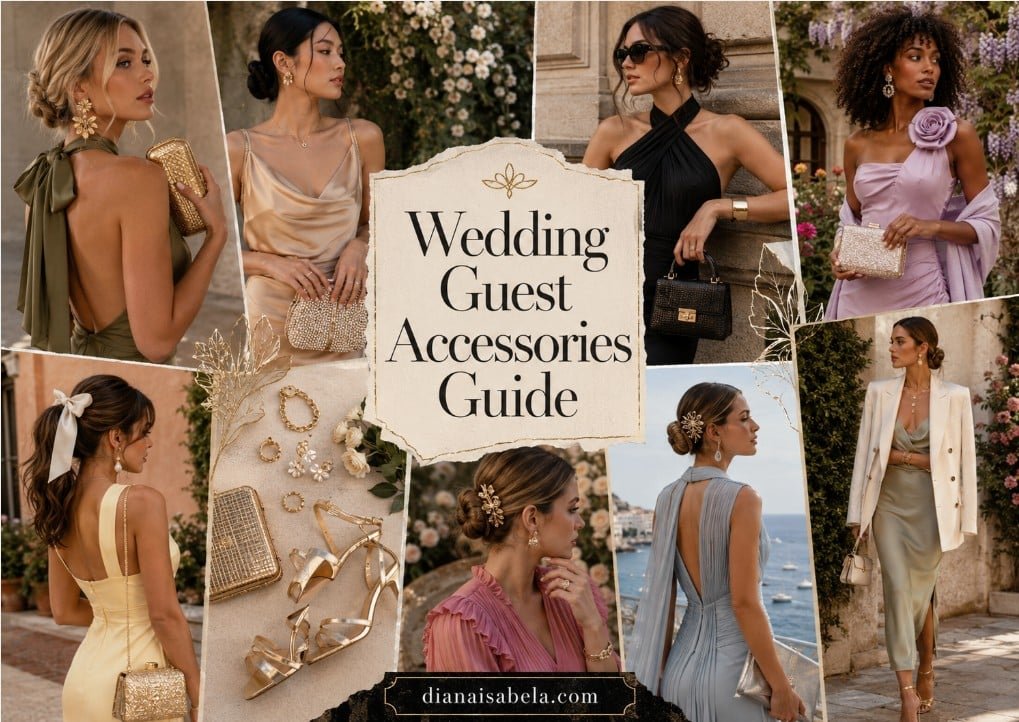
Let one detail lead: earrings, bag, shoes, neckline, lip, hair accessory, or the dress itself.
Choose jewelry for the neckline before choosing sparkle. The dress shape decides the jewelry scale.
Shoes, bag, and jewelry do not need to match exactly. They need to belong to the same outfit mood.
If removing one accessory makes the outfit cleaner, remove it. That is not losing detail. That is taste.
The editorial rule: accessories should finish the dress, not start a new outfit
The most elegant wedding guest looks feel like one sentence. Dress, bag, jewelry, shoes, hair, makeup, and layer all speak the same language. The mistake is when every piece tries to introduce a different personality: romantic dress, edgy shoe, beach bag, office blazer, statement earrings, glitter clutch. Suddenly the outfit has a committee and no editor.
Accessories should clarify the dress. If the dress is simple, they can add personality. If the dress is dramatic, they should calm the room. If the dress is pale, they can add contrast. If the dress is dark, they can add light. If the dress is floral, they can pull one color from the print. If the dress is satin, they should respect the shine instead of fighting it.
This is why this page is different from the full wedding guest shoes and accessories guide. That page is the practical shoe-and-finish guide by venue, dress code, and dress type. This page is the styling rulebook: how to choose the right accessory mood without overworking the outfit.
Diana’s accessory thesis: a wedding guest outfit should have one star, one supporting role, and several polite background characters. If every piece is auditioning for attention, the look stops feeling styled and starts feeling negotiated.
The one-focal-point rule
This is the fastest way to make wedding guest accessories look expensive. Choose one element to lead, then let the rest support it. You can still be glamorous. You can still be interesting. You simply do not need the earrings, necklace, clutch, shoes, hair clip, lipstick, and dress to all shout at the same time.
Choose quieter jewelry, a clean bag, and elegant shoes. Let the color, silhouette, print, or fabric do the main work.
Skip a loud necklace, keep the bag controlled, and style hair so the earrings have room to be seen.
A beaded, pearl, metallic, or sculptural clutch works best with a cleaner dress and simpler jewelry.
Keep the hemline and dress shape in mind. Let a metallic sandal, satin heel, or bold color shoe add personality.
A red, berry, or deep rose lip can finish the outfit beautifully. Keep jewelry and bag cleaner so the beauty detail feels intentional.
A bow, clip, pin, or headband should look elegant and guest-appropriate, not bridal, costume-like, or too youthful for the dress.
The accessory equation that almost always works
Think of accessories as a small styling equation. You do not need a complicated stack. You need balance. The goal is not “more.” The goal is clearer.
The bag should make the outfit feel more finished. A clutch, mini bag, wristlet, satin pouch, metallic bag, or structured mini usually works. A large everyday tote usually breaks the spell.
Jewelry should support the neckline, hairstyle, and face. It should not simply fill empty space because you felt the collarbone looked lonely.
Shoes decide whether the outfit feels casual, cocktail, formal, romantic, city, or outdoor-ready. For detailed shoe logic, use the main shoes-and-accessories page.
A wrap, shawl, blazer, jacket, or coat can make the outfit more appropriate for church, weather, evening, or family formality. It should look planned.
A clip, bow, barrette, headband, pin, or sleek hairstyle can shift the whole outfit. Romantic, polished, modern, soft, or formal — hair tells the room what the dress means.
Jewelry: choose the mood before the sparkle
Wedding guest jewelry should finish the neckline, not fight it. The easiest mistake is adding a necklace because the neck area looks “empty,” when the dress actually needs earrings, hair polish, or a better bag. Empty space can be elegant. Not every collarbone requires a committee.
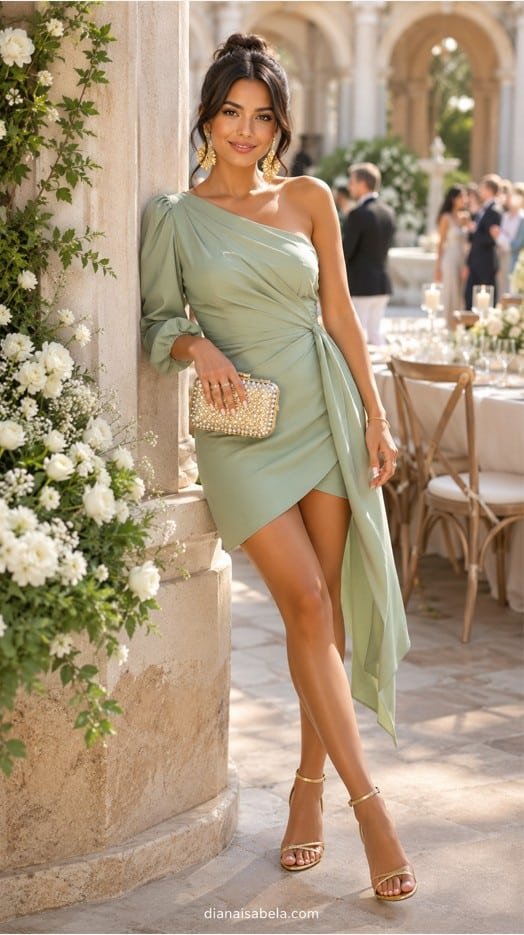
The right jewelry depends on three things: neckline, hairstyle, and fabric. A high neckline with a necklace can look crowded. A strapless dress without any face-framing detail can look unfinished. A heavily printed dress may need less jewelry than a clean satin midi. A one-shoulder dress usually wants earrings and a bare neckline. This is not restriction. It is proportion.
Skip the necklace. Choose earrings, bracelets, rings, or a clean hair detail. The neckline already creates structure.
Try statement earrings, pearl drops, a delicate necklace, or a choker. Do not make both earrings and necklace equally loud.
Earrings are usually best. A necklace can interrupt the line and make the dress look less intentional.
A pendant, fine chain, or soft layered necklace can work. If the neckline is already dramatic, earrings may be enough.
Delicate chains, small pearls, sculptural earrings, or a soft pendant can look beautiful without crowding the frame.
Usually better with earrings and no necklace. Let the neckline stay clean and use hair to show the jewelry.
Jewelry rule: neckline first, sparkle second. Jewelry should look like it belongs to the dress, not like it wandered in from another evening.
Bags: the accessory that decides whether the outfit feels intentional
A wedding guest bag should be small, polished, and useful enough to survive the event. It does not need to carry your entire life. It does need to look like it belongs with the dress. A huge everyday bag can make a beautiful outfit feel unfinished; a too-tiny novelty clutch can become annoying if it holds nothing except one mint and regret.
For this page, think of the bag as mood, not storage. Satin adds softness. Metallic adds light. Pearl adds romance. Beading adds texture. A structured mini adds polish. Raffia adds warm-weather ease. Velvet adds winter depth. The wrong bag does not just look off — it changes the whole outfit’s story.
Choose the bag by mood, not only color
Pearl clutch, satin pouch, soft blush mini, delicate beading, or a small shoulder bag with feminine detail.
Structured mini bag, black clutch, geometric handle, clean metallic finish, or sculptural small bag.
Satin clutch, crystal clasp, velvet evening bag, metallic minaudière, or a polished box clutch.
Soft mini bag, pearl detail, refined woven texture, pastel clutch, or a bag that pulls one color from the dress.
Black mini top-handle, metallic clutch, sharp shoulder bag, croc-effect texture, or a clean structured silhouette.
Packable mini bag, elevated woven clutch, soft metallic pouch, or one neutral bag that works with multiple event outfits.
Gold, silver, pearl, bronze, black: how to choose the right accent
Metals and neutrals are the quiet architecture of styling. Gold warms. Silver cools. Pearl softens. Bronze deepens. Champagne adds glow. Black sharpens. Nude elongates. Brown grounds. The wrong accent can make a beautiful dress look slightly off without explaining why.
Gold, pearl, silver, crystal, champagne, red lip, or metallic shoes add dimension. Black needs light or texture so it feels wedding-ready rather than severe.
Gold, silver, pearl, champagne, burgundy, crystal, or soft blush accents work beautifully. Navy is flexible and quietly expensive.
Gold, champagne, pearl, black, bronze, or deep brown feels rich. Avoid adding too many competing jewel tones.
Gold, pearl, nude, rose gold, champagne, tan, cocoa, or soft brown usually works. Add structure if the outfit feels too sweet.
Pull one color from the print or keep accessories neutral. Florals already have visual movement, so the accessories should not add more noise.
Use gold, pearl, tan, cocoa, soft metallics, or clean neutral bags to keep the look polished instead of sugary.
Should wedding guest accessories match?
No — they should coordinate. Matching everything exactly can look stiff, dated, or bridesmaid-adjacent. Modern wedding guest styling works better when the accessories share a temperature, texture, or mood rather than an identical color.
A gold earring can connect with a gold sandal. A pearl clutch can soften a satin dress. A black bag can sharpen a pastel outfit. A bronze shoe can warm up navy or emerald. A silver earring can cool down blue, lavender, gray, or icy pink. The pieces should feel related, not cloned.
Gold earrings with gold sandals, silver earrings with silver clutch detail, pearl earrings with a pearl clasp.
Romantic accessories with chiffon, sharper accessories with satin, refined texture with crepe, soft sparkle with evening dresses.
Black bag with pale dress, metallic sandal with dark dress, structured clutch with romantic dress.
Pull a shade from a floral print, invitation mood, dress undertone, or lipstick rather than matching every piece.
Hair accessories, clips, bows, and beauty details
Hair and beauty details are accessories too. They can make a simple dress feel styled or make an already-detailed outfit feel too busy. A bow, clip, barrette, pin, headband, sleek bun, red lip, or soft wave changes the whole dress.
The most important rule: avoid anything that looks bridal unless the dress is very clearly guest-coded. White floral pins, pearl headbands, tiara-like pieces, veils, and bridal combs can push a look into risky territory. Wedding guest hair accessories should feel polished, charming, or modern — not like you are rehearsing a second ceremony.
Soft clips, pearl drops, low buns, polished waves, delicate pins, or a small bow can work. Keep one clean detail so the look does not become too sweet.
Slick bun, straight hair, sculptural earrings, minimal barrette, clean eyeliner, or a sharper lip can make the outfit feel modern.
Polished hair matters. Low bun, controlled waves, tucked bob, elegant clip, or old-Hollywood softness can make the look feel complete.
Let the print lead. Choose smaller earrings, soft hair, or one color-aware accessory rather than adding another decorative story.
How to make wedding guest accessories look expensive
Expensive-looking styling is not about wearing the most expensive pieces. It is about restraint, clean proportion, good texture, and accessories that look chosen rather than collected. A simple dress with beautiful earrings, a structured bag, and clean shoes can look more luxurious than an outfit covered in sparkle.
The secret is editing. Remove the accessory that makes the look noisy. Replace casual pieces with polished ones. Match the formality. Keep the metal story clean. Use texture carefully. Let one detail lead.
The expensive-looking accessory rules
One beautiful earring can do more than a full stack of unrelated jewelry.
Satin, pearl, metal, velvet, beading, leather, and structured texture usually read more polished than casual fabric.
A formal dress needs formal accessories. A garden dress needs elegance with ease. A beach dress needs light polish.
Adding shine everywhere rarely makes the outfit richer. It usually makes it louder.
The wrong bag can cheapen the whole outfit faster than almost any other accessory.
Empty space can be elegant. Not every wrist, neckline, finger, and hairline needs an accessory.
Accessory formulas by outfit mood
These formulas are not rigid rules. They are styling directions you can adapt to the dress, venue, dress code, and season.
Floral or chiffon midi, pearl drops, soft clutch, block heels, glowy makeup, and polished waves. Keep everything light but not childish.
Black or jewel-tone dress, sculptural earrings, sleek clutch, sharp heel, clean hair, and one stronger beauty detail.
Satin or crepe gown, metallic clutch, refined earrings, polished hair, and an evening layer that looks intentional.
Sage, dusty blue, rose, or navy midi with delicate jewelry, small bag, low heel, and a softer beauty look.
Packable jewelry, one versatile mini bag, refined sandals, humidity-friendly hair, and accessories that work across multiple events.
Clean dress, one sculptural earring or cuff, structured bag, polished shoe, and hair that looks deliberate.
What wedding guest accessories should you avoid?
Accessory mistakes usually happen when the outfit is almost right and then someone panics. The dress feels simple, so everything gets added. The wedding feels fancy, so sparkle appears in three places. The venue feels casual, so the accessories become too relaxed. The answer is not more. The answer is better editing.
Huge everyday totes, laptop bags, backpacks, or anything that makes the outfit look like a weekday appointment.
Statement earrings, statement necklace, glitter clutch, loud shoes, and dramatic hair piece all together.
White, ivory, floral, pearl-heavy, or tiara-like hair accessories that look bridal instead of guest-appropriate.
Casual rubber sandals, work shoes, office bags, random cardigans, and layers that look like emergency solutions.
Accessories that are too trendy for the dress, too heavy for the fabric, or too loud for the venue.
Exact-match everything if it makes the outfit feel stiff. Coordination is usually more elegant than cloning.
For the larger safety check — white, bridal styling, overly casual pieces, or outfit choices that pull focus — use what not to wear to a wedding. That page handles the etiquette boundaries; this page handles the accessory styling decisions.
The tiny details that quietly make everything better
Clean the shoes. Check the bag chain. Test the earrings for weight. Try the hair clip before the wedding day. Make sure your clutch fits your phone. Steam the dress. Sit down in the outfit. Photograph the full look. Check the accessories in natural light and evening light if the event is later.
This is the unglamorous work behind glamorous outfits. Nobody sees it, which is exactly the point. The look should feel easy because you handled the annoying details before they became visible.
The final accessory check
Before leaving, put on the full look: dress, shoes, bag, jewelry, layer, hair, and makeup. Then ask these questions before the outfit leaves the mirror and enters the wedding photos.
One star is enough. The rest should support it.
If the jewelry crowds the dress, simplify it.
If it looks like your everyday purse, switch it.
They do not need to match exactly, but they should feel related.
Be careful with ivory, white, pearl-heavy, floral, or tiara-like hair details.
If yes, remove it. Editing is elegance doing its job.
The best wedding guest accessories sharpen the outfit
A good accessory choice makes the dress look more intentional, the styling more polished, and the whole outfit more expensive. It does not create extra problems, compete with the bride, or turn a beautiful dress into a crowded mood board.
Choose one focal point. Choose jewelry for the neckline. Choose a bag that belongs to the event. Coordinate metals instead of forcing exact matches. Let hair and makeup support the mood. Then stop at the moment the outfit feels finished.
The most elegant accessory is often knowing when not to add another one.
FAQ
What accessories should a wedding guest wear?
A wedding guest can wear a small clutch or mini bag, polished jewelry, appropriate shoes, and a styled layer such as a wrap, blazer, shawl, or cropped jacket if needed. The best accessories should match the dress code, venue, neckline, and dress style.
How do I choose jewelry for a wedding guest dress?
Choose jewelry based on the neckline and mood of the dress. High necklines and halter dresses usually work well with earrings. V-neck, sweetheart, square, and strapless dresses can work with a necklace, but avoid making both earrings and necklace too bold at the same time.
What bag should I bring to a wedding as a guest?
Bring a small clutch, wristlet, mini shoulder bag, structured mini bag, satin pouch, or evening bag. It should hold essentials like your phone, card, lipstick, tissues, and a small emergency item without looking like an everyday tote.
Can wedding guests wear statement earrings?
Yes, wedding guests can wear statement earrings if the rest of the outfit stays balanced. Statement earrings work especially well with simple dresses, pulled-back hair, strapless styles, high necklines, or minimalist silhouettes.
What accessories should wedding guests avoid?
Wedding guests should avoid huge everyday bags, bridal-looking white hair accessories, overly casual sandals, loud accessories that compete with the dress, and too many statement pieces at once. Accessories should support the outfit, not overpower it.
Should wedding guest accessories match exactly?
No, wedding guest accessories do not need to match exactly. They should coordinate in tone, formality, and mood. For example, gold jewelry can pair with a warm clutch, while silver or crystal details may work better with cooler colors.
What layer should I wear over a wedding guest dress?
A wedding guest can wear a tailored blazer, cropped jacket, silk wrap, elegant shawl, pashmina, light coat, or evening bolero. The layer should match the dress code and look intentional with the dress, not like an emergency cover-up.
How can accessories make a wedding guest outfit look expensive?
Choose fewer, better accessories: a structured bag, refined shoes, jewelry scaled to the neckline, and a polished layer if needed. Expensive-looking styling usually comes from restraint, good materials, clean proportions, and accessories that fit the venue.