January Wedding Guest Dresses: Chic Winter Outfits for Cold-Weather Weddings

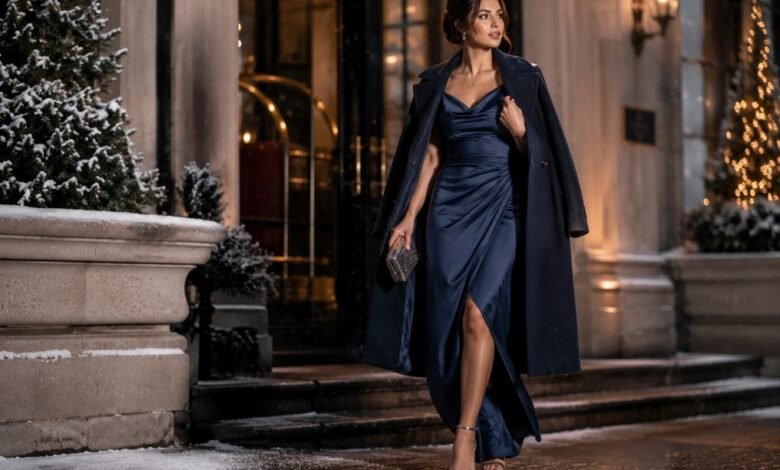
January wedding guest dresses should feel calm, sharp, and quietly luxurious.
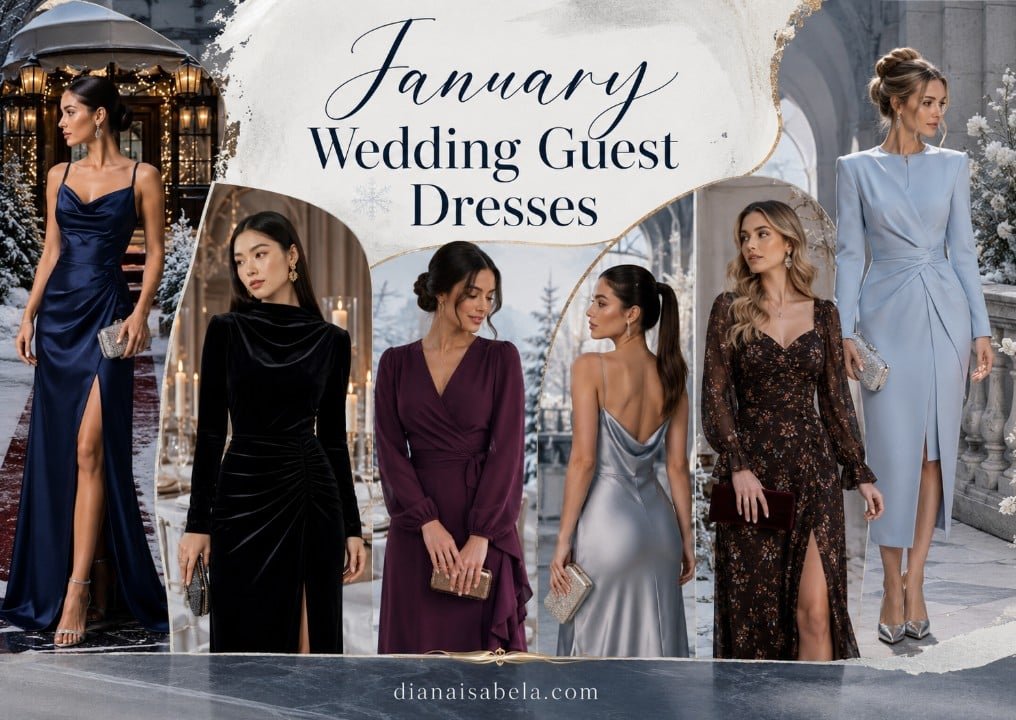
January wedding guest dressing has a very specific personality. The holiday glitter is over, the weather is still rude, and the best outfits feel like a deep breath after December: navy crepe, black velvet, slate satin, plum wrap dresses, icy metallics, structured coats, closed-toe heels, and styling that looks composed instead of festive by accident.
Think winter minimalism with texture: elegant fabric, clean color, smart coverage.
January does not need the obvious sparkle of party season. It looks best when the dress has weight, the palette feels cool or deep, and the layers look intentional. The goal is not “warm enough somehow.” The goal is beautiful enough for the room and practical enough for the street outside.
The January difference
January style is winter dressing after the decorations come down.
December can handle ruby velvet, pine green, candlelit drama, and a little holiday theater. January is cleaner. It still belongs to winter, but the mood is more city hotel than Christmas party, more gallery opening than ornament box, more quiet confidence than festive sparkle. A January wedding guest dress should look chosen for the ceremony, not rescued from a New Year’s Eve emergency pile.
That does not mean boring. A navy crepe dress with a sculptural shoulder can look incredible. A black velvet midi can feel sleek and expensive. A plum satin wrap dress can be romantic without looking loud. A slate jacquard cocktail dress can carry texture without screaming for attention. January’s best outfits are not plain — they are edited.
Diana’s rule: if the outfit feels like “holiday party, part two,” remove one shiny thing. January wedding guest style should have intention, not leftover glitter with better manners.
The dress edit
Choose fabric with weight, not volume.
The strongest January wedding guest dresses have structure, lining, or texture. Thin summer satin can look fragile in cold light, and floaty beach fabrics usually feel disconnected from winter venues. Crepe, velvet, satin with weight, jacquard, ponte, and lined chiffon are safer because they hold their shape and make the outfit feel seasonally correct. For the wider cluster, the main wedding guest dresses guide is the best starting point when you want to compare seasons, dress codes, and venue ideas.
Navy crepe midi
Navy is perfect for January because it feels formal without being severe. A long-sleeve navy crepe midi with a wrap waist, draped neckline, or subtle slit works for hotel weddings, church ceremonies, and restaurant receptions. Add silver earrings, pearls, or a small black clutch.
Black velvet column
Black velvet stays beautiful in January when the styling is cleaner than December. Choose a square neckline, long sleeve, soft shoulder, or simple column shape. Keep accessories sharp: black satin heels, pearl drops, silver hoops, or a small pewter clutch.
Slate satin midi
Slate, pewter, ice blue, and steel satin can look stunning for January if the dress is clearly guest-appropriate and not bridal. A bias-cut midi or softly draped satin dress feels fresh with a charcoal coat, metallic shoes, and understated jewelry.
Plum wrap dress
Plum is the underrated winter wedding color. It is softer than black, moodier than burgundy, and very flattering in crepe, velvet, or satin. A plum wrap midi can work for semi-formal, cocktail, church, or intimate evening weddings.
Jacquard cocktail dress
Jacquard is ideal when the invitation asks for polish but not a gown. Look for charcoal florals, navy brocade, muted silver, dark berry patterns, or black-on-black texture. It gives the outfit shape without relying on obvious sequins.
Dark floral winter midi
A floral dress can work in January if the print has a deep base and a restrained palette. Navy with gray blooms, black with plum flowers, or chocolate with muted ivory details can feel romantic for country-house venues and intimate receptions.
The January palette
Less holiday jewel box, more winter city window.
January colors can still be rich, but they often look best when slightly cooler, quieter, or more architectural. Navy, black, slate, pewter, plum, wine, chocolate, ice blue, and soft metallics feel elegant after the holiday season. If you want a light color, make it icy or silvery rather than bridal.
Venue dressing
The colder the month, the more the building matters.
A January wedding can be a luxury hotel evening, a quiet church ceremony, a courthouse dinner, a snowy estate weekend, or a restaurant reception with candlelight and very good wine. The same dress will not behave the same in every room. Dress for the architecture, the temperature, and the invitation.
City hotel
Choose a navy satin midi, black velvet column, slate crepe dress, or plum one-shoulder style. A city hotel can handle shine, but January shine should be cool and refined rather than loud.
Church ceremony
Long sleeves, a higher neckline, or a tailored coat will make the look feel more considered. A navy crepe midi, dark floral dress, or plum wrap style can be elegant without looking severe.
Courthouse dinner
January courthouse weddings often look best with sharp, quiet outfits: a black midi, slate satin dress, tailored coat, or chocolate crepe style. Keep the outfit chic but not overly grand.
Snowy estate
A winter estate can handle richer texture: velvet, jacquard, heavy satin, wool-blend outerwear, and darker colors. This is where black velvet, deep plum, navy brocade, or chocolate satin looks especially good.
Outfit formulas
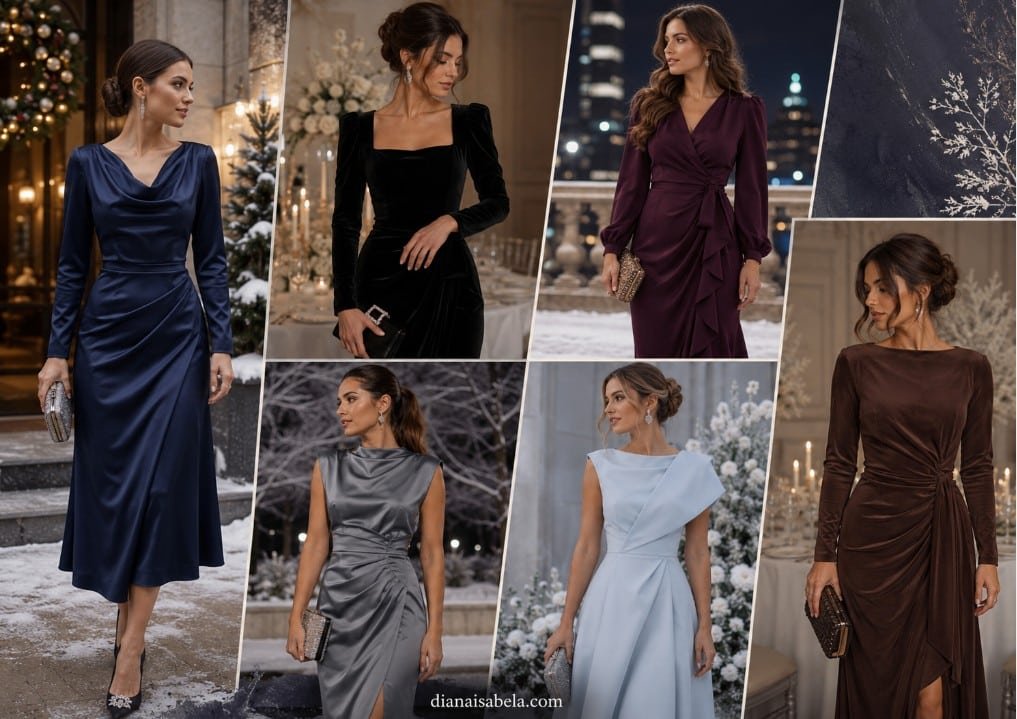
Seven January wedding guest looks that feel intentional, not improvised.
January outfits should be built as a full route: cold entrance, ceremony, photos, dinner, dancing, and leaving the venue when the air is doing something dramatic and unnecessary. The dress matters, but the coat, shoes, bag, and hair decide whether the look survives the month.
Navy crepe city polish
Best for hotel receptions, church ceremonies, restaurant weddingsA navy crepe midi with long sleeves or a draped neckline is one of the safest beautiful choices for January. It feels formal without looking heavy, and it works with silver, pearls, black accessories, or a charcoal coat.
Black velvet winter column
Best for formal evening, black-tie optional, luxury hotel venuesA black velvet column dress gives January that quiet old-movie energy without becoming costume. Look for a square neck, long sleeve, clean shoulder, or elegant slit. If the invitation is clearly elevated, the guide to formal wedding guest dresses can help you decide whether to go midi, maxi, or gown-level.
Slate satin with silver light
Best for modern venues, city dinners, evening cocktail weddingsA slate satin midi looks fresh in January because it catches winter light without becoming party glitter. Keep the dress weighty and the styling clean. Add a charcoal coat, silver earrings, and shoes that feel sleek rather than delicate.
Plum wrap dress romance
Best for semi-formal, church, intimate reception, country-house weddingsPlum is a January secret weapon. It has depth, but it is softer than black and less expected than navy. A plum wrap dress in crepe or velvet can look romantic with gold earrings, a cream coat, and dark brown or black heels.
Chocolate satin restraint
Best for restaurant receptions, evening dinners, candlelit venuesChocolate satin is underrated and extremely elegant in January. It feels warm without becoming autumnal if you style it with black, cream, gold, or pewter. Choose a midi or column shape rather than something too slinky and thin.
Dark floral winter softness
Best for country house, snowy estate, garden room, intimate weddingA winter floral dress should look like it belongs beside candlelight and dark wood, not beside a beach brunch. Choose a deep base, muted print, long sleeves, and grounded accessories. Navy, black, plum, or chocolate bases are easiest.
Ice blue without bridal danger
Best for modern winter venues, daytime ceremonies, polished city weddingsIce blue can be beautiful in January, but it needs structure and contrast. Avoid anything too pale, sheer, bridal, or delicate. A structured satin midi or crepe dress in icy blue looks more guest-appropriate with navy, charcoal, black, or pewter accessories.
Layering without ruining the look
The January coat is not an accessory. It is the opening scene.
January wedding guest outfits need an arrival plan. A dress can be perfect indoors and still look wrong if the outerwear is random, bulky, or too casual. Think of the coat as the first photograph: stepping out of the car, entering the church, waiting outside the hotel, or walking into a restaurant reception while pretending the wind is not personally attacking you.
Best January layers
A long wool coat in black, charcoal, camel, cream, navy, or chocolate is the easiest answer. For dressier weddings, a cape coat, faux-fur stole, or cropped evening jacket can look beautiful. A fine cashmere layer can also be useful before or after the formal part of the day; if you are unsure how to judge quality, this guide to what a cashmere sweater is explains the fabric in a simple, stylish way.
How to match the layer to the dress
Over velvet, choose something smoother: wool, faux fur, or a clean cape. Over satin, use structure so the shine has a frame. Over dark florals, keep the coat solid. Over icy or pale colors, add contrast with charcoal, navy, black, or plum so the outfit does not drift into bridal territory.
The coat does not need to be dramatic. It needs to look like it belongs to the outfit. A neat long coat with strong shoulders often looks more expensive than a flashy layer trying too hard.
Shoes, bags, jewelry, hair
January accessories should look crisp, not busy.
Closed-toe heels usually make the most sense for January wedding guest dresses. Satin pumps, suede heels, velvet platforms, metallic slingbacks, and elegant block heels are all stronger choices than very bare sandals. If the venue involves snow, wet pavement, gravel, outdoor photos, or polished hotel floors, choose stability over fantasy. The fantasy can resume once you are safely indoors.
January styling rewards restraint. If the dress is simple, jewelry can have more personality. If the dress has shine, keep the accessories clean. If the neckline is high, try a sleek bun or statement earrings. If the dress is strapless or one-shoulder, make the coat and hair part of the plan so the outfit does not look unfinished between rooms.
What not to wear
The January mistakes are subtle, which makes them more annoying.
Most January outfit mistakes happen when the dress belongs to another season or the styling belongs to another event. A winter wedding does not require you to look severe, but it does ask for fabric, coverage, and color that make sense in cold weather.
The January answer
Dress like winter is part of the invitation.
The best January wedding guest dresses are calm, polished, and quietly rich. They do not chase holiday sparkle. They understand cold air, hotel lighting, church steps, dinner reservations, formal invitations, and the fact that a coat can either save the outfit or betray it completely.
Choose a dress with weight, a color with intention, shoes that can move through real weather, and accessories that look edited rather than busy. A navy crepe midi, black velvet column, plum wrap dress, slate satin style, chocolate satin dress, or dark floral winter midi can all be perfect when the styling is thoughtful.
January does not need fashion noise. It needs a guest who looks like she understood the room before she arrived.
January wedding guest dresses should feel calm, sharp, and quietly luxurious.
January wedding guest dressing has a very specific personality. The holiday glitter is over, the weather is still rude, and the best outfits feel like a deep breath after December: navy crepe, black velvet, slate satin, plum wrap dresses, icy metallics, structured coats, closed-toe heels, and styling that looks composed instead of festive by accident.
Think winter minimalism with texture: elegant fabric, clean color, smart coverage.
January does not need the obvious sparkle of party season. It looks best when the dress has weight, the palette feels cool or deep, and the layers look intentional. The goal is not “warm enough somehow.” The goal is beautiful enough for the room and practical enough for the street outside.
The January difference
January style is winter dressing after the decorations come down.
December can handle ruby velvet, pine green, candlelit drama, and a little holiday theater. January is cleaner. It still belongs to winter, but the mood is more city hotel than Christmas party, more gallery opening than ornament box, more quiet confidence than festive sparkle. A January wedding guest dress should look chosen for the ceremony, not rescued from a New Year’s Eve emergency pile.
That does not mean boring. A navy crepe dress with a sculptural shoulder can look incredible. A black velvet midi can feel sleek and expensive. A plum satin wrap dress can be romantic without looking loud. A slate jacquard cocktail dress can carry texture without screaming for attention. January’s best outfits are not plain — they are edited.
Diana’s rule: if the outfit feels like “holiday party, part two,” remove one shiny thing. January wedding guest style should have intention, not leftover glitter with better manners.
The dress edit
Choose fabric with weight, not volume.
The strongest January wedding guest dresses have structure, lining, or texture. Thin summer satin can look fragile in cold light, and floaty beach fabrics usually feel disconnected from winter venues. Crepe, velvet, satin with weight, jacquard, ponte, and lined chiffon are safer because they hold their shape and make the outfit feel seasonally correct. For the wider cluster, the main wedding guest dresses guide is the best starting point when you want to compare seasons, dress codes, and venue ideas.
Navy crepe midi
Navy is perfect for January because it feels formal without being severe. A long-sleeve navy crepe midi with a wrap waist, draped neckline, or subtle slit works for hotel weddings, church ceremonies, and restaurant receptions. Add silver earrings, pearls, or a small black clutch.
Black velvet column
Black velvet stays beautiful in January when the styling is cleaner than December. Choose a square neckline, long sleeve, soft shoulder, or simple column shape. Keep accessories sharp: black satin heels, pearl drops, silver hoops, or a small pewter clutch.
Slate satin midi
Slate, pewter, ice blue, and steel satin can look stunning for January if the dress is clearly guest-appropriate and not bridal. A bias-cut midi or softly draped satin dress feels fresh with a charcoal coat, metallic shoes, and understated jewelry.
Plum wrap dress
Plum is the underrated winter wedding color. It is softer than black, moodier than burgundy, and very flattering in crepe, velvet, or satin. A plum wrap midi can work for semi-formal, cocktail, church, or intimate evening weddings.
Jacquard cocktail dress
Jacquard is ideal when the invitation asks for polish but not a gown. Look for charcoal florals, navy brocade, muted silver, dark berry patterns, or black-on-black texture. It gives the outfit shape without relying on obvious sequins.
Dark floral winter midi
A floral dress can work in January if the print has a deep base and a restrained palette. Navy with gray blooms, black with plum flowers, or chocolate with muted ivory details can feel romantic for country-house venues and intimate receptions.
The January palette
Less holiday jewel box, more winter city window.
January colors can still be rich, but they often look best when slightly cooler, quieter, or more architectural. Navy, black, slate, pewter, plum, wine, chocolate, ice blue, and soft metallics feel elegant after the holiday season. If you want a light color, make it icy or silvery rather than bridal.
Venue dressing
The colder the month, the more the building matters.
A January wedding can be a luxury hotel evening, a quiet church ceremony, a courthouse dinner, a snowy estate weekend, or a restaurant reception with candlelight and very good wine. The same dress will not behave the same in every room. Dress for the architecture, the temperature, and the invitation.
City hotel
Choose a navy satin midi, black velvet column, slate crepe dress, or plum one-shoulder style. A city hotel can handle shine, but January shine should be cool and refined rather than loud.
Church ceremony
Long sleeves, a higher neckline, or a tailored coat will make the look feel more considered. A navy crepe midi, dark floral dress, or plum wrap style can be elegant without looking severe.
Courthouse dinner
January courthouse weddings often look best with sharp, quiet outfits: a black midi, slate satin dress, tailored coat, or chocolate crepe style. Keep the outfit chic but not overly grand.
Snowy estate
A winter estate can handle richer texture: velvet, jacquard, heavy satin, wool-blend outerwear, and darker colors. This is where black velvet, deep plum, navy brocade, or chocolate satin looks especially good.
Outfit formulas
Seven January wedding guest looks that feel intentional, not improvised.
January outfits should be built as a full route: cold entrance, ceremony, photos, dinner, dancing, and leaving the venue when the air is doing something dramatic and unnecessary. The dress matters, but the coat, shoes, bag, and hair decide whether the look survives the month.
Navy crepe city polish
Best for hotel receptions, church ceremonies, restaurant weddingsA navy crepe midi with long sleeves or a draped neckline is one of the safest beautiful choices for January. It feels formal without looking heavy, and it works with silver, pearls, black accessories, or a charcoal coat.
Black velvet winter column
Best for formal evening, black-tie optional, luxury hotel venuesA black velvet column dress gives January that quiet old-movie energy without becoming costume. Look for a square neck, long sleeve, clean shoulder, or elegant slit. If the invitation is clearly elevated, the guide to formal wedding guest dresses can help you decide whether to go midi, maxi, or gown-level.
Slate satin with silver light
Best for modern venues, city dinners, evening cocktail weddingsA slate satin midi looks fresh in January because it catches winter light without becoming party glitter. Keep the dress weighty and the styling clean. Add a charcoal coat, silver earrings, and shoes that feel sleek rather than delicate.
Plum wrap dress romance
Best for semi-formal, church, intimate reception, country-house weddingsPlum is a January secret weapon. It has depth, but it is softer than black and less expected than navy. A plum wrap dress in crepe or velvet can look romantic with gold earrings, a cream coat, and dark brown or black heels.
Chocolate satin restraint
Best for restaurant receptions, evening dinners, candlelit venuesChocolate satin is underrated and extremely elegant in January. It feels warm without becoming autumnal if you style it with black, cream, gold, or pewter. Choose a midi or column shape rather than something too slinky and thin.
Dark floral winter softness
Best for country house, snowy estate, garden room, intimate weddingA winter floral dress should look like it belongs beside candlelight and dark wood, not beside a beach brunch. Choose a deep base, muted print, long sleeves, and grounded accessories. Navy, black, plum, or chocolate bases are easiest.
Ice blue without bridal danger
Best for modern winter venues, daytime ceremonies, polished city weddingsIce blue can be beautiful in January, but it needs structure and contrast. Avoid anything too pale, sheer, bridal, or delicate. A structured satin midi or crepe dress in icy blue looks more guest-appropriate with navy, charcoal, black, or pewter accessories.
Layering without ruining the look
The January coat is not an accessory. It is the opening scene.
January wedding guest outfits need an arrival plan. A dress can be perfect indoors and still look wrong if the outerwear is random, bulky, or too casual. Think of the coat as the first photograph: stepping out of the car, entering the church, waiting outside the hotel, or walking into a restaurant reception while pretending the wind is not personally attacking you.
Best January layers
A long wool coat in black, charcoal, camel, cream, navy, or chocolate is the easiest answer. For dressier weddings, a cape coat, faux-fur stole, or cropped evening jacket can look beautiful. A fine cashmere layer can also be useful before or after the formal part of the day; if you are unsure how to judge quality, this guide to what a cashmere sweater is explains the fabric in a simple, stylish way.
How to match the layer to the dress
Over velvet, choose something smoother: wool, faux fur, or a clean cape. Over satin, use structure so the shine has a frame. Over dark florals, keep the coat solid. Over icy or pale colors, add contrast with charcoal, navy, black, or plum so the outfit does not drift into bridal territory.
The coat does not need to be dramatic. It needs to look like it belongs to the outfit. A neat long coat with strong shoulders often looks more expensive than a flashy layer trying too hard.
Shoes, bags, jewelry, hair
January accessories should look crisp, not busy.
Closed-toe heels usually make the most sense for January wedding guest dresses. Satin pumps, suede heels, velvet platforms, metallic slingbacks, and elegant block heels are all stronger choices than very bare sandals. If the venue involves snow, wet pavement, gravel, outdoor photos, or polished hotel floors, choose stability over fantasy. The fantasy can resume once you are safely indoors.
January styling rewards restraint. If the dress is simple, jewelry can have more personality. If the dress has shine, keep the accessories clean. If the neckline is high, try a sleek bun or statement earrings. If the dress is strapless or one-shoulder, make the coat and hair part of the plan so the outfit does not look unfinished between rooms.
What not to wear
The January mistakes are subtle, which makes them more annoying.
Most January outfit mistakes happen when the dress belongs to another season or the styling belongs to another event. A winter wedding does not require you to look severe, but it does ask for fabric, coverage, and color that make sense in cold weather.
The January answer
Dress like winter is part of the invitation.
The best January wedding guest dresses are calm, polished, and quietly rich. They do not chase holiday sparkle. They understand cold air, hotel lighting, church steps, dinner reservations, formal invitations, and the fact that a coat can either save the outfit or betray it completely.
Choose a dress with weight, a color with intention, shoes that can move through real weather, and accessories that look edited rather than busy. A navy crepe midi, black velvet column, plum wrap dress, slate satin style, chocolate satin dress, or dark floral winter midi can all be perfect when the styling is thoughtful.
January does not need fashion noise. It needs a guest who looks like she understood the room before she arrived.
FAQ
What should I wear to a January wedding as a guest?
For a January wedding, choose a dress that feels elegant, winter-appropriate, and polished enough for the venue. Navy crepe midis, black velvet dresses, plum wrap dresses, slate satin midis, jacquard cocktail dresses, chocolate satin dresses, and dark floral winter dresses all work well. Add a tailored coat, closed-toe heels, and refined jewelry so the outfit looks intentional in cold weather.
What colors are best for January wedding guest dresses?
The best January wedding guest colors are cool, deep, and refined. Navy, black, slate gray, pewter, plum, wine, chocolate, ice blue, and dark silver are strong choices. January usually looks more elegant with restrained winter tones than bright holiday colors. If you choose a lighter color, make sure it is not too close to white, ivory, or bridal champagne.
Can I wear black to a January wedding?
Yes, black can be very chic for a January wedding when the dress has texture, shape, or evening detail. A black velvet column, black crepe midi, satin wrap dress, or black dress with lace sleeves, draping, or a sculptural neckline can look polished and winter-appropriate. Add pearls, silver jewelry, a metallic clutch, or a beautiful coat so the outfit feels like eveningwear rather than everyday black.
Is velvet appropriate for a January wedding?
Velvet is very appropriate for a January wedding, especially for evening receptions, hotel venues, snowy estates, and formal invitations. To make velvet feel January rather than holiday-party, choose cleaner styling and less festive color combinations. Black, navy, plum, wine, chocolate, and deep green velvet can all work beautifully with simple jewelry and structured outerwear.
Can I wear satin to a January wedding?
Satin can work beautifully for a January wedding if the fabric has enough weight and the color feels winter-appropriate. Slate, pewter, navy, chocolate, plum, wine, and deep champagne satin are better choices than very thin or summery satin. Pair satin with a structured coat, closed-toe heels, and understated accessories so the outfit feels polished instead of fragile.
What shoes should I wear to a January wedding?
Closed-toe heels are usually the best choice for a January wedding. Black pumps, suede heels, velvet platforms, metallic slingbacks, elegant block heels, and refined ankle boots can all work depending on the venue. If the wedding involves snow, rain, wet pavement, gravel, or outdoor photos, choose a stable heel instead of delicate stilettos.
What coat should I wear over a January wedding guest dress?
A long wool coat is the easiest and most elegant layer for a January wedding. Black, charcoal, camel, navy, cream, chocolate, and gray coats work well with most winter dresses. For formal venues, a cape coat, faux-fur stole, or cropped evening jacket can also look beautiful. The coat should feel like part of the outfit, not a random practical layer.
Can I wear a floral dress to a January wedding?
Yes, a floral dress can work for a January wedding if the print feels wintery. Choose a dark base such as navy, black, plum, chocolate, or deep green with muted floral details. Long sleeves, a high neckline, heavier chiffon, velvet accents, and darker accessories help the floral dress feel seasonal rather than spring-like.
Can I wear sequins to a January wedding?
Sequins can work for a January wedding if the dress code is cocktail, formal, black-tie optional, or evening-focused. The key is restraint. Choose refined sparkle in black, navy, pewter, champagne, or deep plum rather than a loud New Year’s Eve party dress. If the dress is sparkly, keep shoes, bag, jewelry, and hair simple.
What should I avoid wearing to a January wedding?
Avoid thin summer fabrics, bright vacation prints, overly pale bridal-looking dresses, casual coats, unstable shoes, and outfits that look like leftover holiday party looks. January wedding guest style should feel cold-weather appropriate, venue-aware, and polished. A good rule is to choose winter fabric, a deeper or cooler color, elegant coverage, and accessories that look refined rather than busy.
FAQ
What should I wear to a January wedding as a guest?
For a January wedding, choose a dress that feels elegant, winter-appropriate, and polished enough for the venue. Navy crepe midis, black velvet dresses, plum wrap dresses, slate satin midis, jacquard cocktail dresses, chocolate satin dresses, and dark floral winter dresses all work well. Add a tailored coat, closed-toe heels, and refined jewelry so the outfit looks intentional in cold weather.