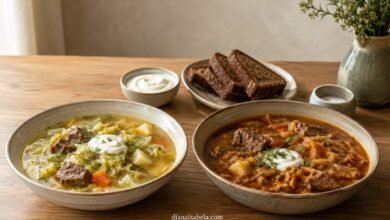
Easy Russian Recipes at Home: Cozy, Practical Dinners You Can Actually Cook

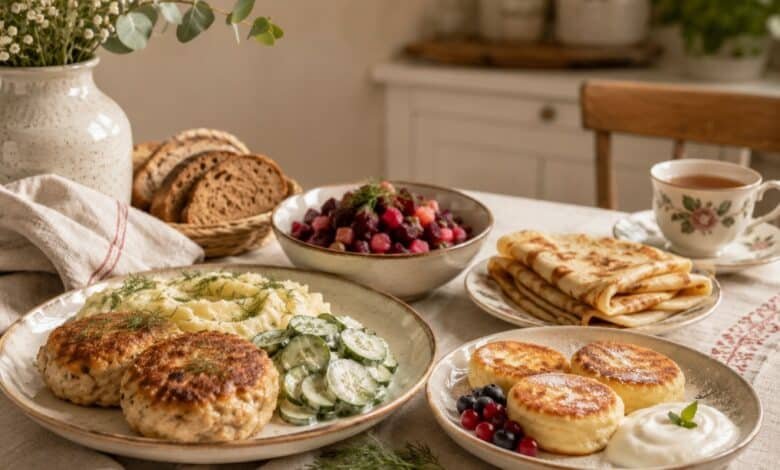
Easy Russian recipes at home should not feel like a museum assignment. I do not want you standing over a stove at 9 p.m. wondering if dinner requires a grandmother, a snowstorm, three kinds of cabbage and a personality transplant. Russian-style home food can be deeply traditional, yes, but the part I love most is how practical it can be: potatoes, cabbage, eggs, beets, mushrooms, cucumbers, sour cream, pickles, dumplings, bread, tea, preserves, fish, herbs and one good pan.
This is not a tiny list of “five classics.” We are building a real food atlas: cutlets, salads, soups, dumplings, pies, stuffed vegetables, fish, festive dishes, drinks, cakes, jams, pickles, pantry helpers and the little table details that turn a dish into dinner. I want you to understand the rhythm, not just copy a recipe. Russian-style cooking is about contrast: warm and cold, creamy and sharp, soft and crunchy, rich and fresh, everyday and festive.
Some nights you need kotleti and mashed potatoes. Some nights you need cold okroshka because the kitchen is hot and everyone is dramatic. Some nights you want pelmeni without pretending you handmade the dough. Some nights you want a table of pickles, smoked fish, marinated mushrooms, rye bread and tea because that is dinner too. And sometimes you want a cake that looks like it came from a family celebration, even if the rest of the week was toast and coffee.
So I’m writing this as Diana’s Russian home-cooking wardrobe. Not stiff. Not fake. Not “cook for twelve hours or you failed.” A useful, cozy, stylish guide for real kitchens: small apartments, busy families, first attempts, curious beginners, food-loving readers, homesick cravings and anyone who wants comfort food that still feels edited.
Start with the Russian dinner mood, not the perfect recipe
When people search for easy Russian recipes at home, they often imagine one perfect dish that explains everything. That is not how home cooking works. A cuisine is not one dish. It is a rhythm. It is what people cook when there are potatoes to use, when guests are coming, when the fridge has leftovers, when someone bought too much dill, when the weather is rude, when the table needs something warm, sharp, creamy and honest.
The best Russian-style dinner is usually assembled, not performed. You choose one main dish. Add one potato, grain, bread or dough element. Add something bright: pickles, sauerkraut, cucumber salad, vinegret, marinated mushrooms, lemon, herbs. Add something creamy if the dish asks for it: sour cream, mushroom sauce, yogurt, butter, soft cheese. Then you make tea, put the food in real bowls, and stop apologizing for not creating a banquet.
Diana’s kitchen note: If a Russian-style plate feels too heavy, it usually does not need a new recipe. It needs contrast. Add cucumber, pickles, beet salad, cabbage, herbs, lemon, rye bread or a cold drink. Comfort food needs a little wit.
If your first craving is specifically kotleti, my Russian kotleti search and dinner guide is the natural deep dive. For this page, though, kotleti are just one beautiful piece of a bigger table.
The pantry that makes Russian recipes easier
You do not need a dramatic pantry. You need ingredients that repeat across many meals. A good Russian-style kitchen is like a good wardrobe: practical basics, strong textures, a few bold accents, and something you can pull out when guests appear with no warning.
The core comfort dishes: where I would begin
If you are new to Russian-style cooking, begin with dishes that teach the structure of the table. A warm main. A potato or grain. A salad. A pickle. A sauce. A drink. That is the grammar. Once you know that grammar, the recipes stop feeling intimidating.
1. Kotleti with potatoes and cucumber salad
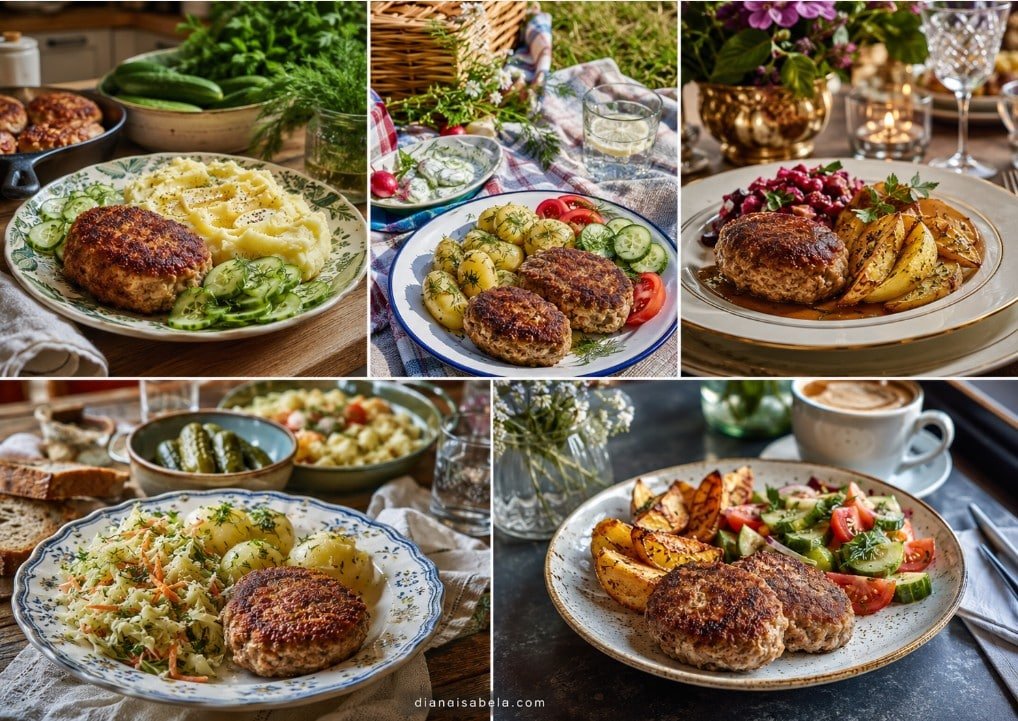
Kotleti are the dish I would teach first because they are practical, forgiving and instantly dinner-like. They are usually made with minced meat, grated onion, egg, soaked bread or breadcrumbs, salt, pepper and sometimes garlic. You shape them into oval patties, brown them well, then finish them gently so they stay juicy inside.
The important part is not only the cutlet. It is the plate around it. Mashed potatoes make kotleti cozy. Boiled potatoes with dill make them simple and clean. Roasted potatoes give them a little edge. Cucumber-dill salad wakes them up. Pickles save them from beige sadness. If you want a deeper serving guide, my kotleti pairing guide is useful for sides, sauces and restaurant-style plates.
2. Pozharsky cutlets, the elegant cousin of everyday kotleti
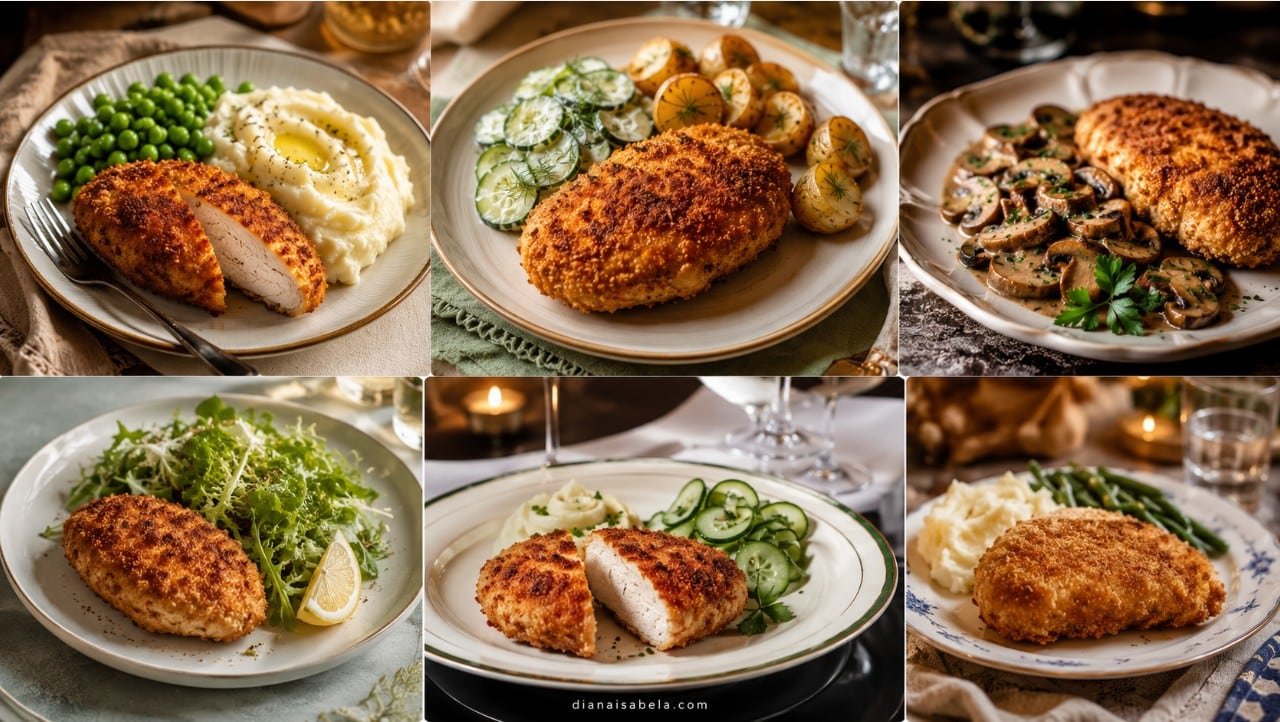
Pozharsky cutlets are what I would make when I want cutlet comfort but with a little restaurant whisper. They are usually associated with chicken, a tender interior and a crisp golden crumb. The trick is texture: juicy meat inside, crisp outside, and sides that do not compete.
Serve them with mashed potatoes, baby potatoes, cucumber salad, peas, mushrooms or a light herb salad. This is not the moment for a heavy plate with three creamy sides. Let the cutlet be the polished center. Add lemon if the plate needs brightness. Add dill or parsley because Russian-style food without herbs is like an outfit without shoes.
3. Tefteli in tomato-sour cream sauce
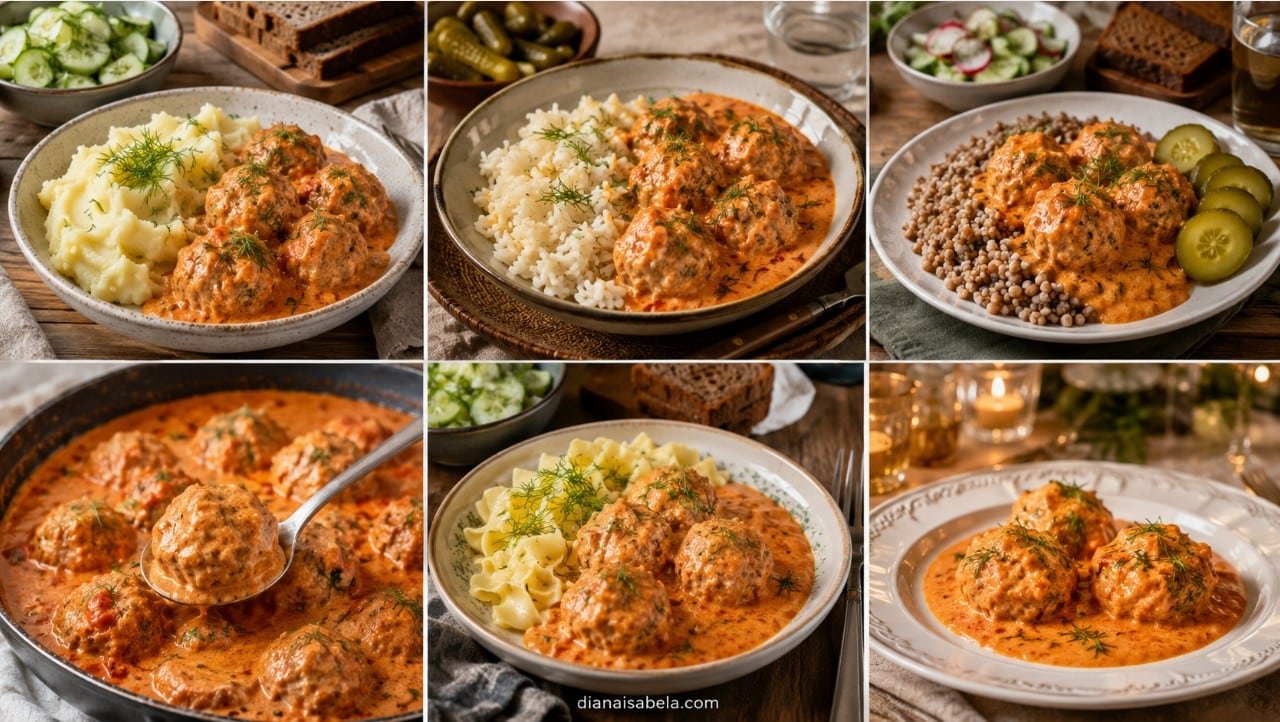
Tefteli are Russian-style meatballs, often softer than pan-fried cutlets because they are simmered in sauce. Many versions mix cooked rice into the meat, which makes them tender and stretches the meal. Tomato-sour cream sauce gives them that warm orange color and gentle tang.
Make them when you want dinner to be soft and generous. Serve with mashed potatoes if you want comfort, rice if you want practicality, buckwheat if you want a more earthy plate, or noodles if you want something very family-table. Add cucumber salad or pickles so the sauce does not make the plate too sleepy.
4. Beef Stroganoff when you want a restaurant classic without restaurant drama
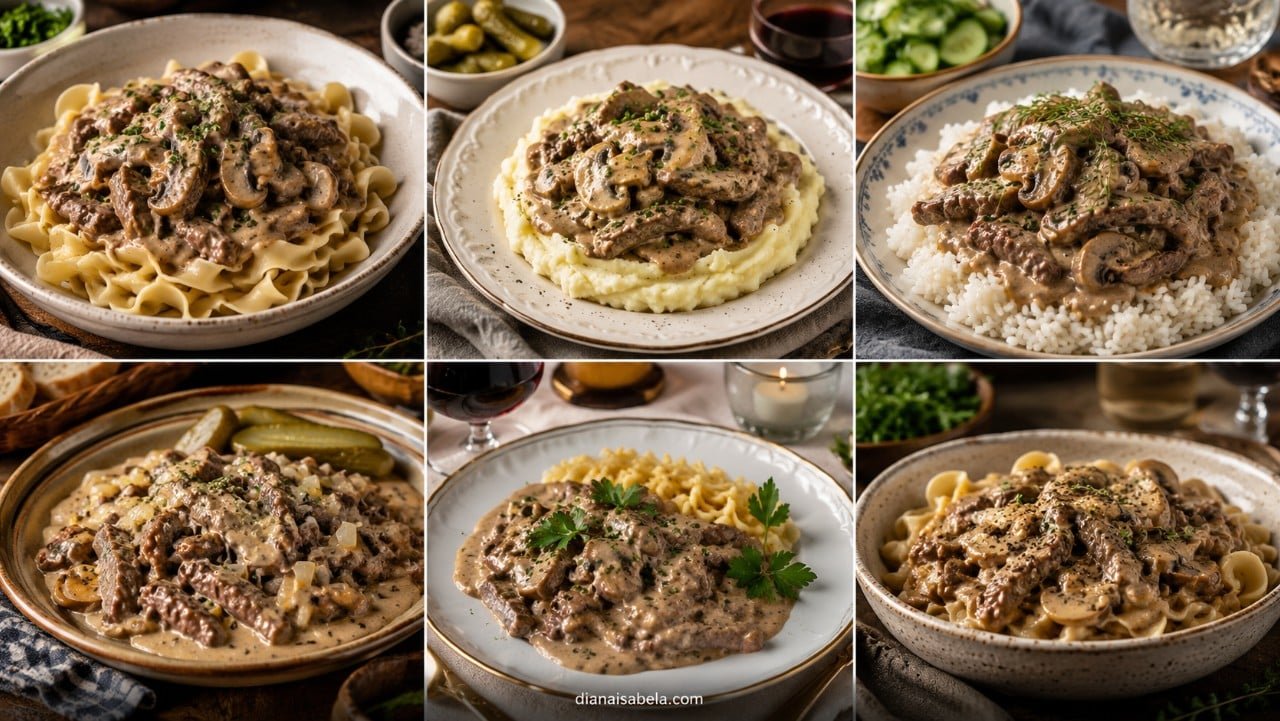
Beef Stroganoff is famous enough that many people meet it before they meet any other Russian dish. At home, I like it best when it is not overcomplicated: tender strips of beef, mushrooms, onions, a creamy sauce with a little tang, and a side that catches everything. Egg noodles are classic for many modern tables, but mashed potatoes, rice and even buckwheat can work.
The danger is making it too heavy. Do not drown the beef in a bland cream blanket. Brown the mushrooms properly. Let the onion soften. Season confidently. Add sour cream toward the end, not at a violent boil. Serve with pickles or cucumber salad. Suddenly the dish feels rich but not flat.
5. Zharkoye in clay pots
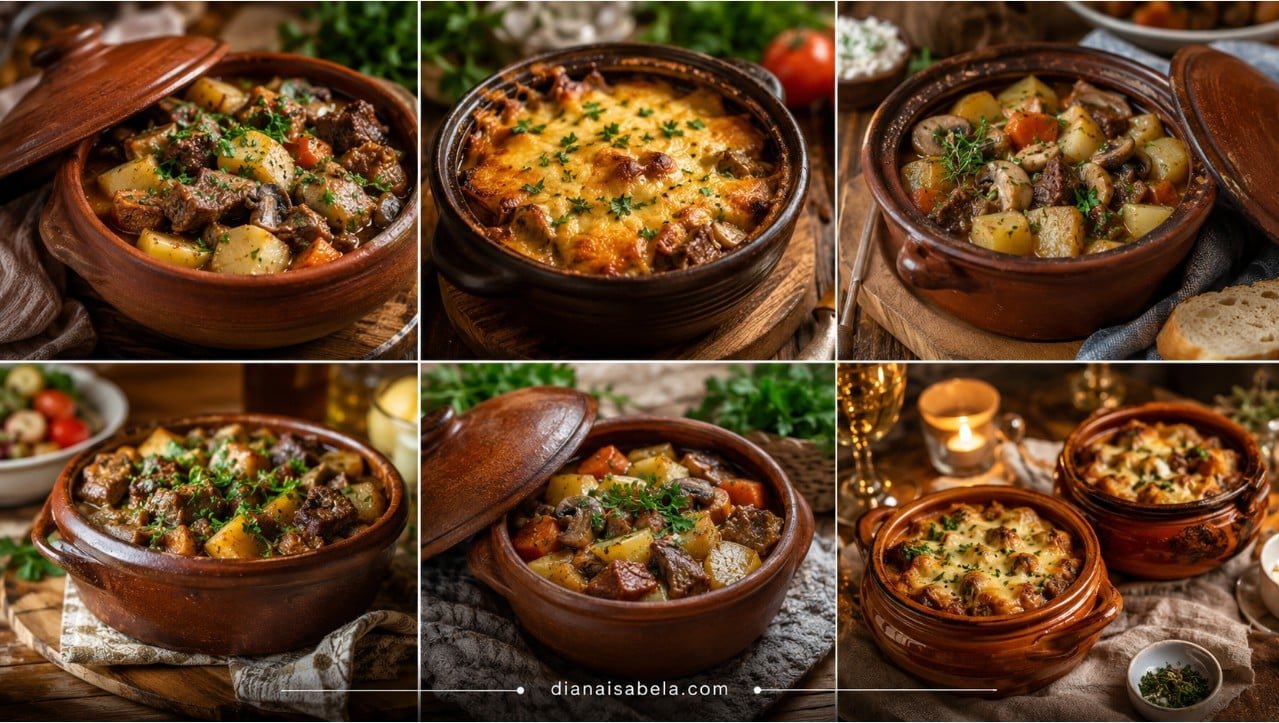
Zharkoye is a rustic meat-and-potato dish that feels made for cold nights and slow ovens. In clay pots, it becomes especially charming: beef or pork, potatoes, carrots, mushrooms, onions, herbs and a little broth or sauce baked until tender. Some versions get a creamy or cheesy top, which is not light, but sometimes dinner does not need to be light. It needs to be satisfying.
Serve it directly in the pot if you have them. It feels warm and generous with almost no styling effort. Add pickles, a cabbage salad or rye bread. This is the dish for people who want comfort but do not want to stand at the stove flipping anything.
Soups that carry the table
Russian-style cooking has a strong soup personality. Not every soup is delicate. Some are sharp, some are smoky, some are cold, some are practical, some are built from leftovers that suddenly look intentional. Soup is not a starter here. Soup can be dinner.
6. Shchi, the cabbage soup that asks for very little
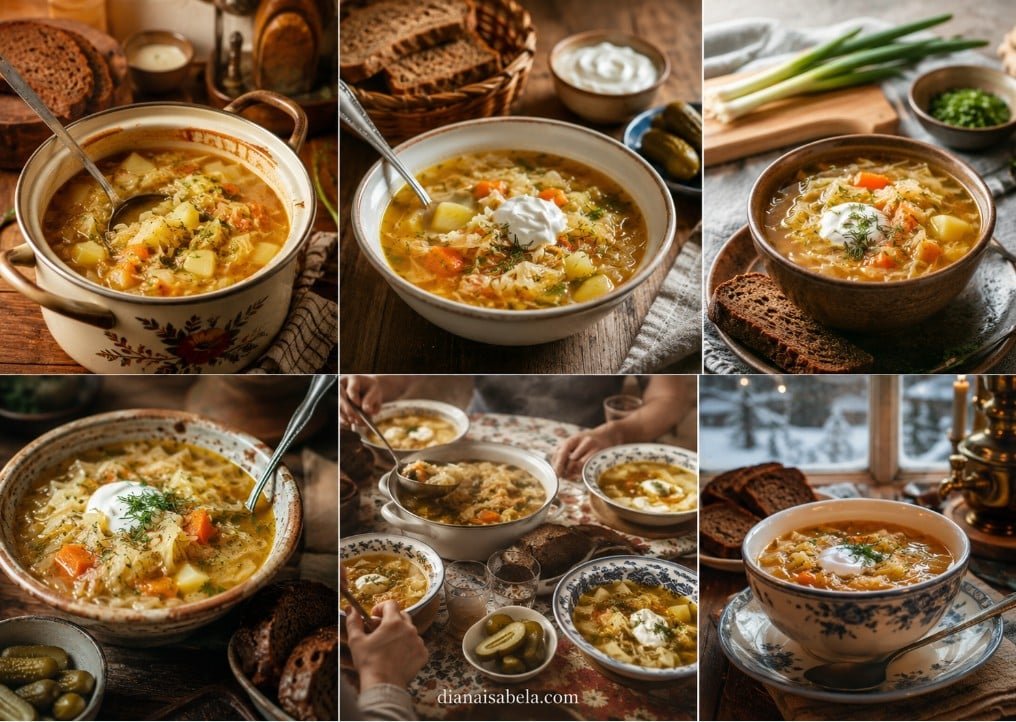
Shchi is cabbage soup, and it is more useful than it sounds if you have only met boring cabbage. Fresh cabbage makes it gentle. Sauerkraut makes it sharper. Potatoes give it body. Carrots and onions give sweetness. Meat is optional, but bread and sour cream are not optional in spirit.
Make shchi when the fridge looks modest but not hopeless. It improves after resting, which is exactly the kind of recipe a busy person deserves. Serve it with rye bread, pickles and dill. If the soup tastes shy, it probably needs salt, acidity or time.
7. Rassolnik, the pickle soup that makes leftovers feel intentional
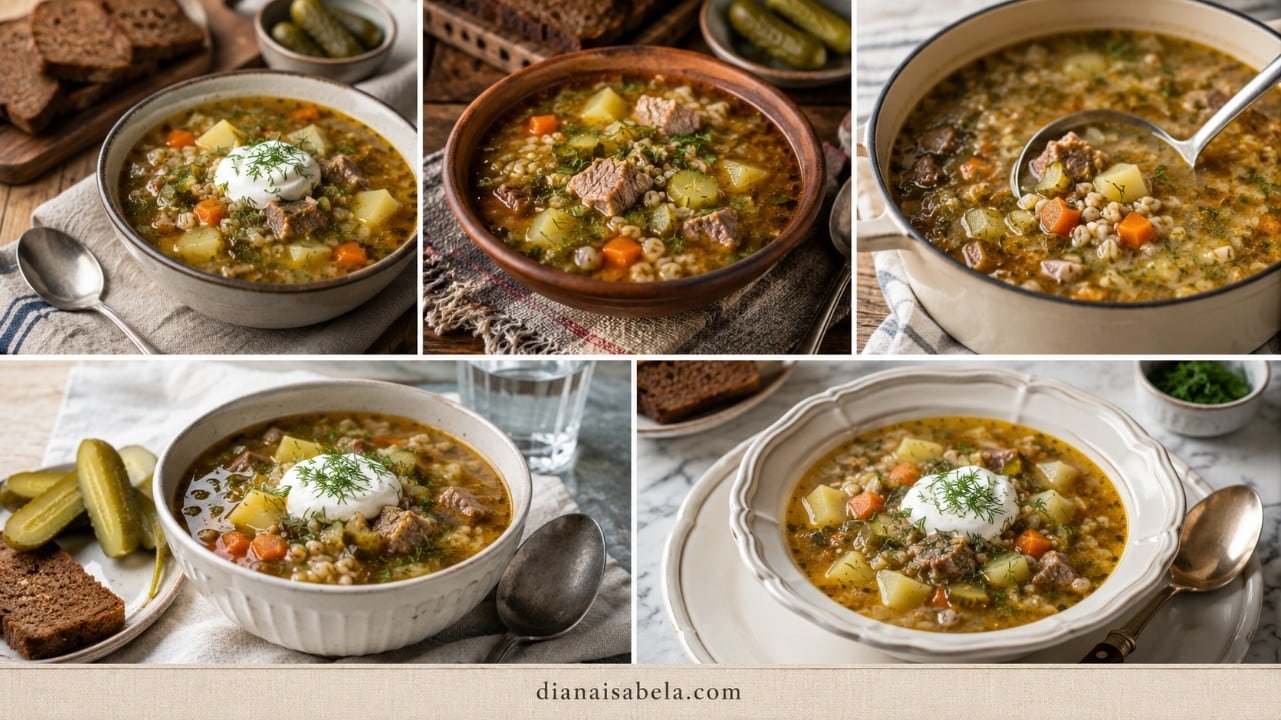
Rassolnik is a pickle soup, usually with barley, potatoes, carrots, onion, herbs and often meat or broth. It is a wonderful example of Russian-style flavor logic: instead of making soup rich with cream, it uses pickles and brine for sharpness. The result is filling but lively.
Make it when you have leftover meat, broth or cooked grains and want something that tastes like a plan. Add sour cream at the table. Serve with rye bread. Keep extra pickles nearby for people who understand joy.
8. Solyanka, the bold soup with lemon and smoke
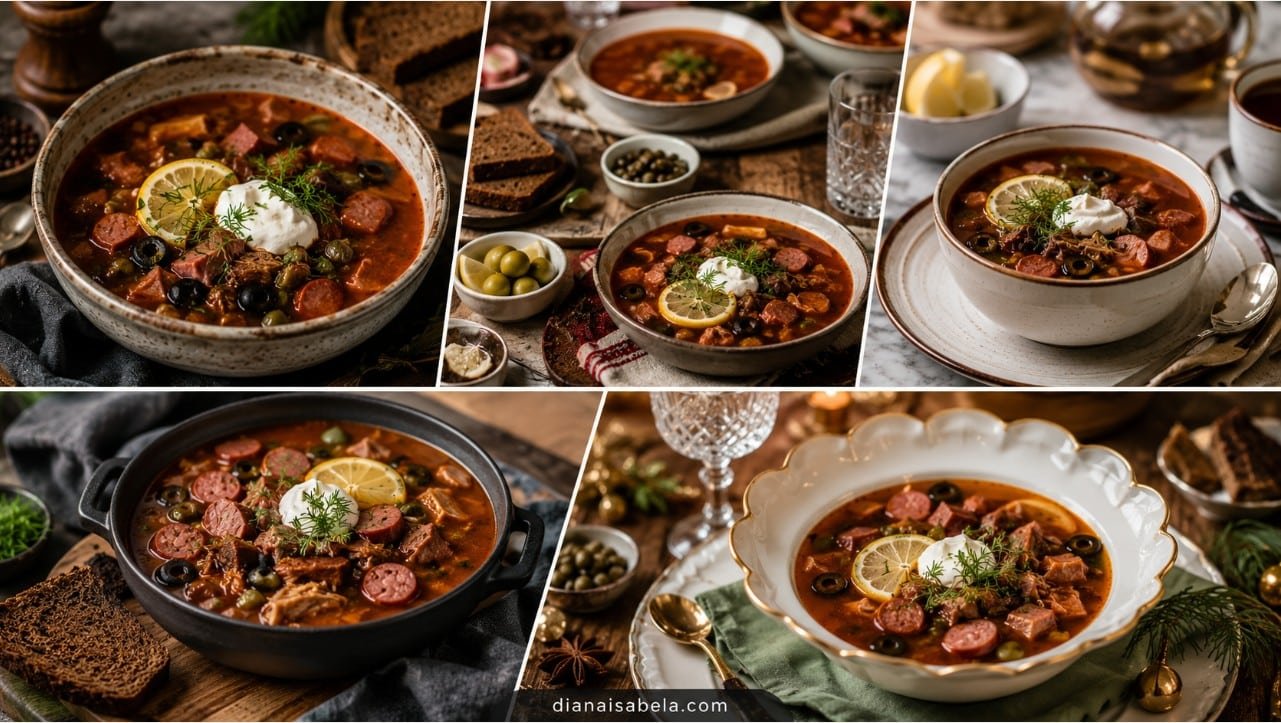
Solyanka is not a quiet soup. It usually brings together smoked meats or cured meats, pickles or olives, tomato, lemon, herbs and sour cream. It is rich, salty, sour and strong. If shchi is the soft cardigan, solyanka is the leather jacket.
The key is balance. Too much meat and it becomes heavy. Too much sourness and it becomes loud. You want broth that feels deep, a little smoky, a little tangy, and finished with lemon. Serve with rye bread and sour cream. A small bowl can be more satisfying than a huge one.
9. Okroshka for hot days when comfort food needs to chill
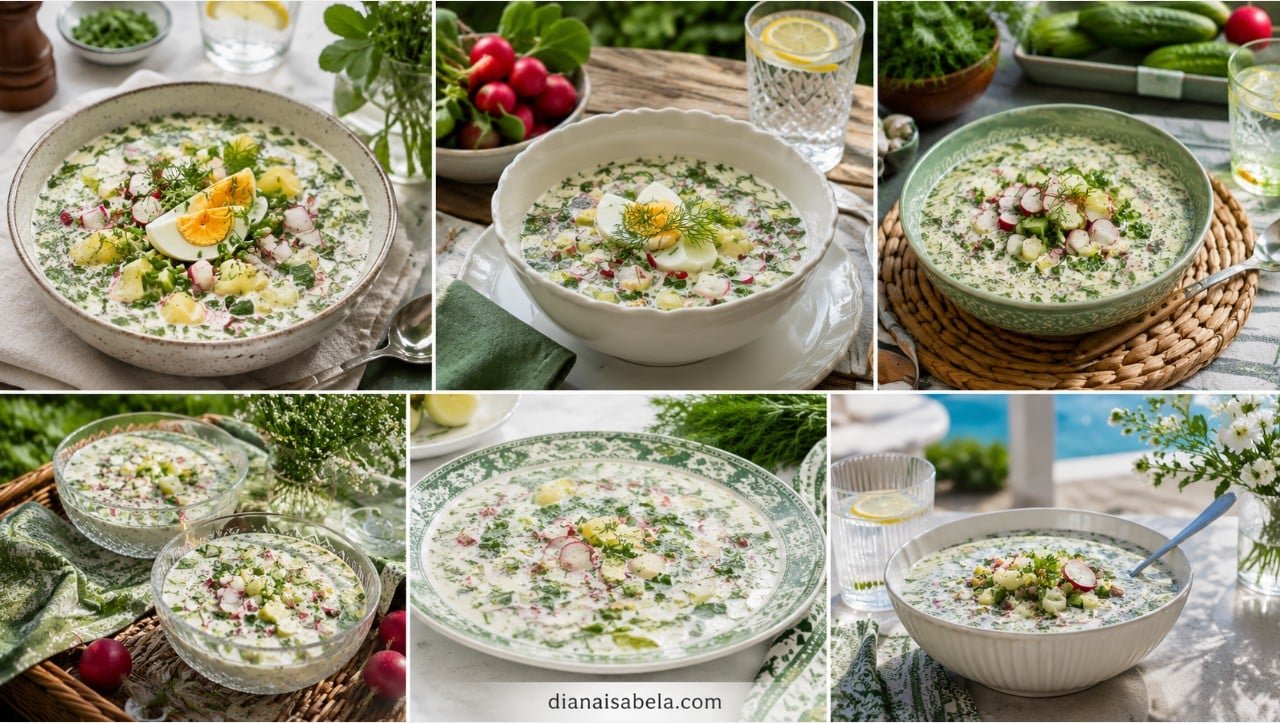
Okroshka is a cold soup, usually made with chopped potatoes, eggs, cucumbers, radishes, herbs and a liquid base such as kefir or kvass depending on style and preference. It is one of those dishes that can confuse people at first — cold soup? diced salad in liquid? — and then suddenly make perfect sense on a hot day.
The beauty is freshness. Chop everything neatly. Use plenty of herbs. Keep it cold. Do not make it too thick or too watery. Serve with extra dill, green onion and maybe boiled eggs on top. This is not winter comfort. This is garden comfort.
Salads and cold sides that save the heavy dishes
Russian-style salads are not always leafy. Some are full meals disguised as salads. Some are bright vegetable sides. Some are layered, creamy, festive and unapologetic. The trick is not to eat them all at once with three creamy mains. Use them like styling pieces on the table: one rich, one sharp, one fresh.
10. Olivier salad when you want a make-ahead classic
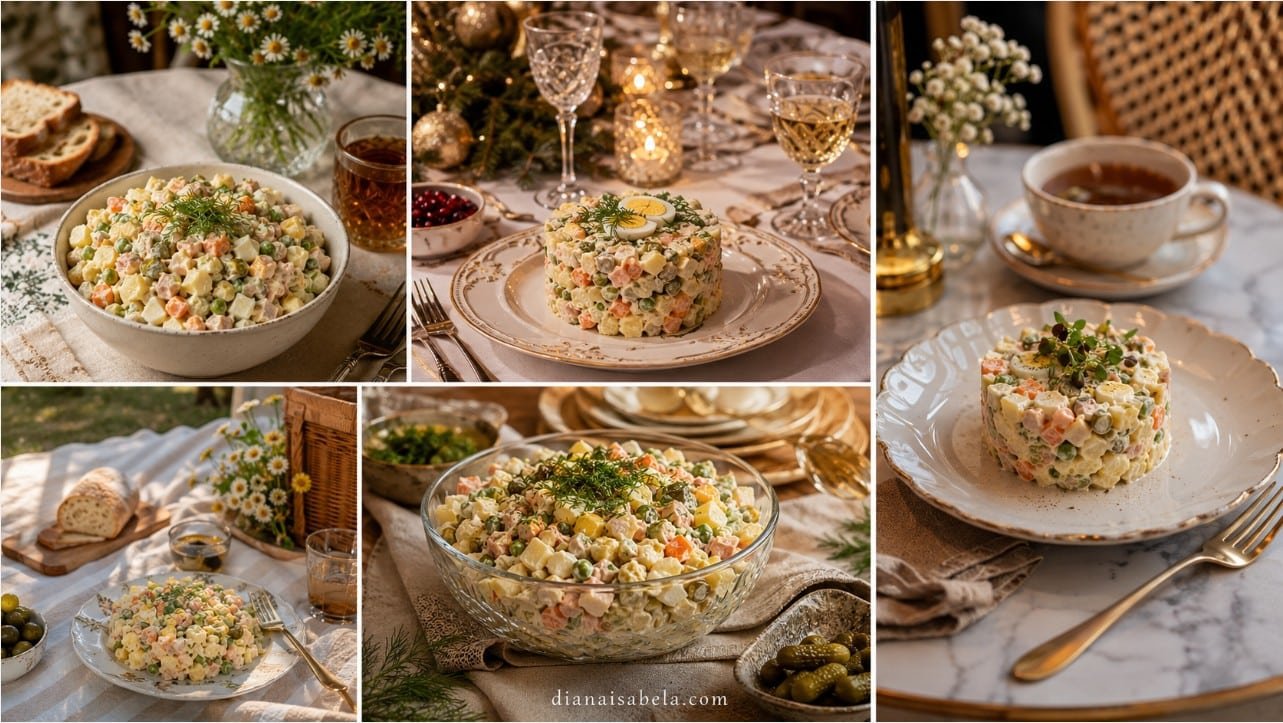
Olivier is the famous diced potato salad with eggs, carrots, pickles, peas, mayonnaise and usually cooked meat or sausage, though home versions vary. The key is the dice. If the pieces are huge, the salad feels clumsy. If the pieces are neat, every spoon has potato, egg, pickle, pea and creamy dressing in balance.
Make it ahead. It needs time in the fridge to become itself. Serve it with bread, tea, kotleti, roasted meats or as part of a festive table. If you want it lighter, reduce the mayonnaise and add a little yogurt or sour cream, but do not turn it into diet sadness. Olivier should still feel like Olivier.
11. Vinegret, the beet salad that saves heavy dinners
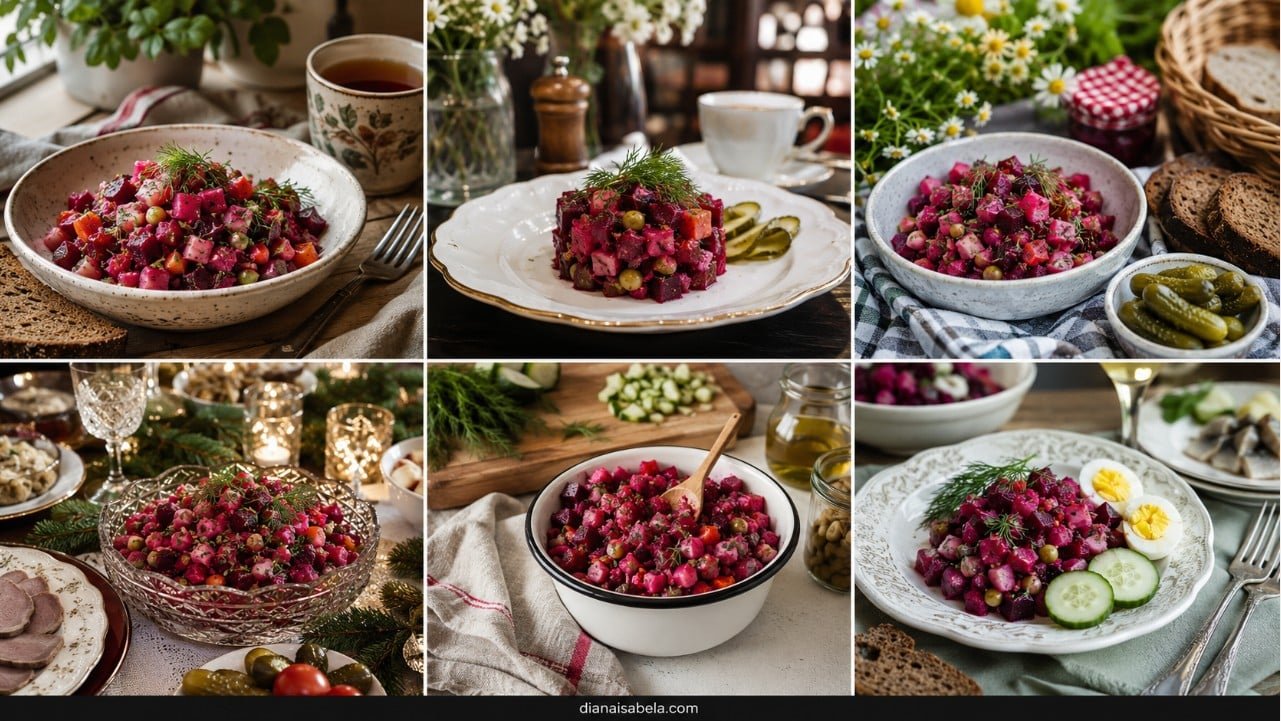
Vinegret is a cold beet salad with potatoes, carrots, pickles, sometimes sauerkraut, peas or beans, and oil instead of creamy dressing. It is the salad I would put next to anything rich. It makes a plate feel fresher without becoming a boring green pile.
Roast or boil the vegetables, cool them, dice them neatly, add pickles, season well and dress with oil. If the salad tastes too earthy, add more pickle, a touch of vinegar or sauerkraut. It is excellent with kotleti, pelmeni, fish, rye bread, boiled eggs or even as a lunch bowl.
12. Shuba, the layered beet salad
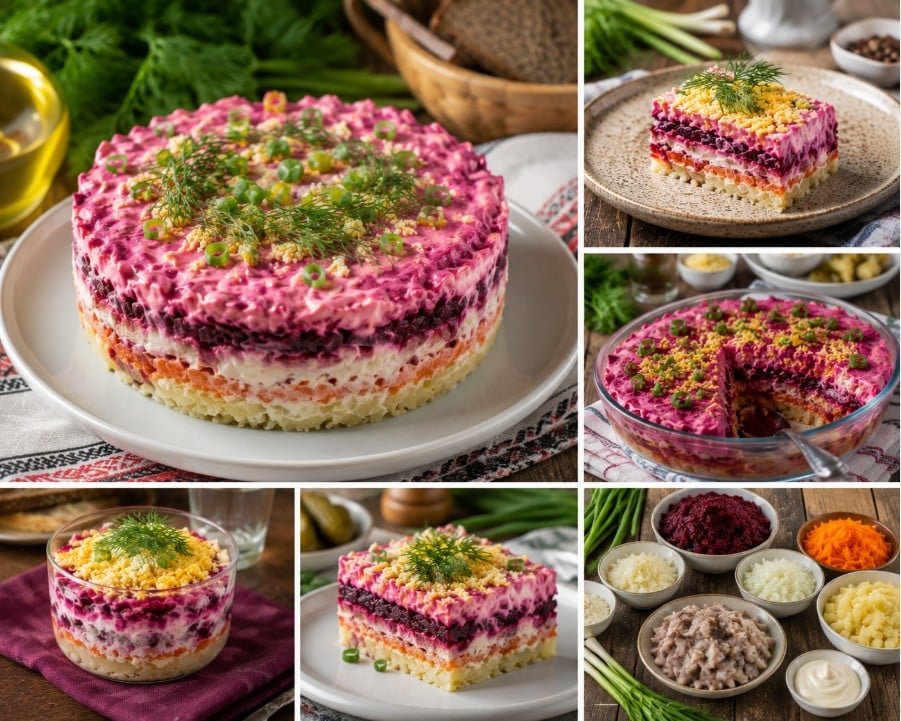
Shuba, often known as “herring under a fur coat,” is a layered salad with herring, potatoes, carrots, beets, eggs and mayonnaise. It is not casual in the way cucumber salad is casual. It is a centerpiece salad. The color is bold, the layers are visible, and the flavor is salty, earthy, creamy and sweet all at once.
Make shuba when you want a cold dish that looks special without needing to be served hot. It should rest before serving so the layers settle. Slice cleanly if you can, but do not panic if the first piece collapses a little. Many delicious things are not architectural miracles.
13. Quick cucumber-dill salad
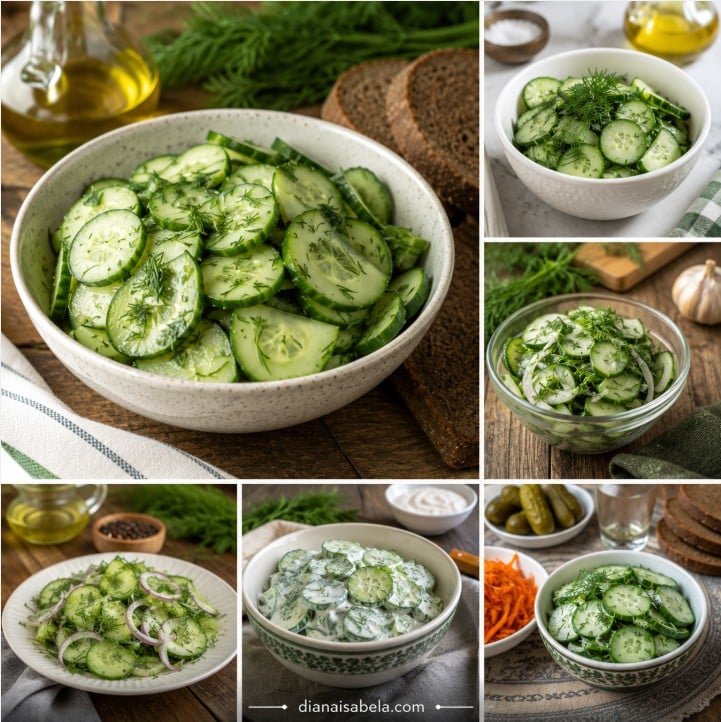
This salad is barely a recipe, which is exactly why it belongs in real life. Slice cucumbers thinly. Add dill, salt, pepper and sour cream or yogurt. Or use oil and vinegar if you want it lighter. Add red onion if you want bite. Add garlic only if the table can handle it.
It belongs next to kotleti, tefteli, pelmeni, fried fish, potatoes, stuffed vegetables and anything creamy. When a plate looks too brown, too beige or too heavy, cucumber-dill salad is the fashion editor who walks in and fixes the whole outfit.
14. Pickled vegetables and fermented sides
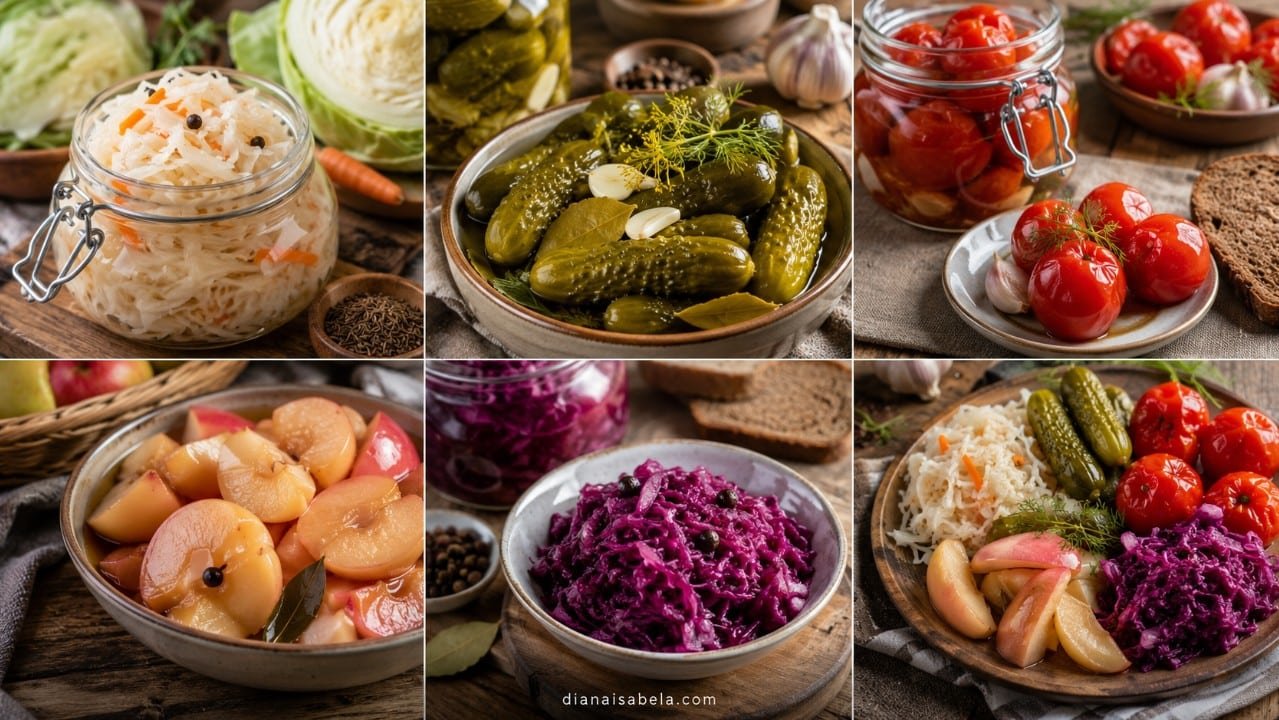
Pickled and fermented sides are one of the reasons Russian-style comfort food works. A plate of meat and potatoes becomes much more interesting with sauerkraut, pickled cucumbers, tomatoes, fermented apples or red cabbage. They bring crunch, salt, acidity, color and appetite.
Use them generously but intelligently. A few pickles next to kotleti. Red cabbage with roasted meat. Sauerkraut with potatoes. Pickled tomatoes with sausage or fish. Fermented apples on a festive table. This is where the table starts to feel alive.
15. Marinated mushrooms
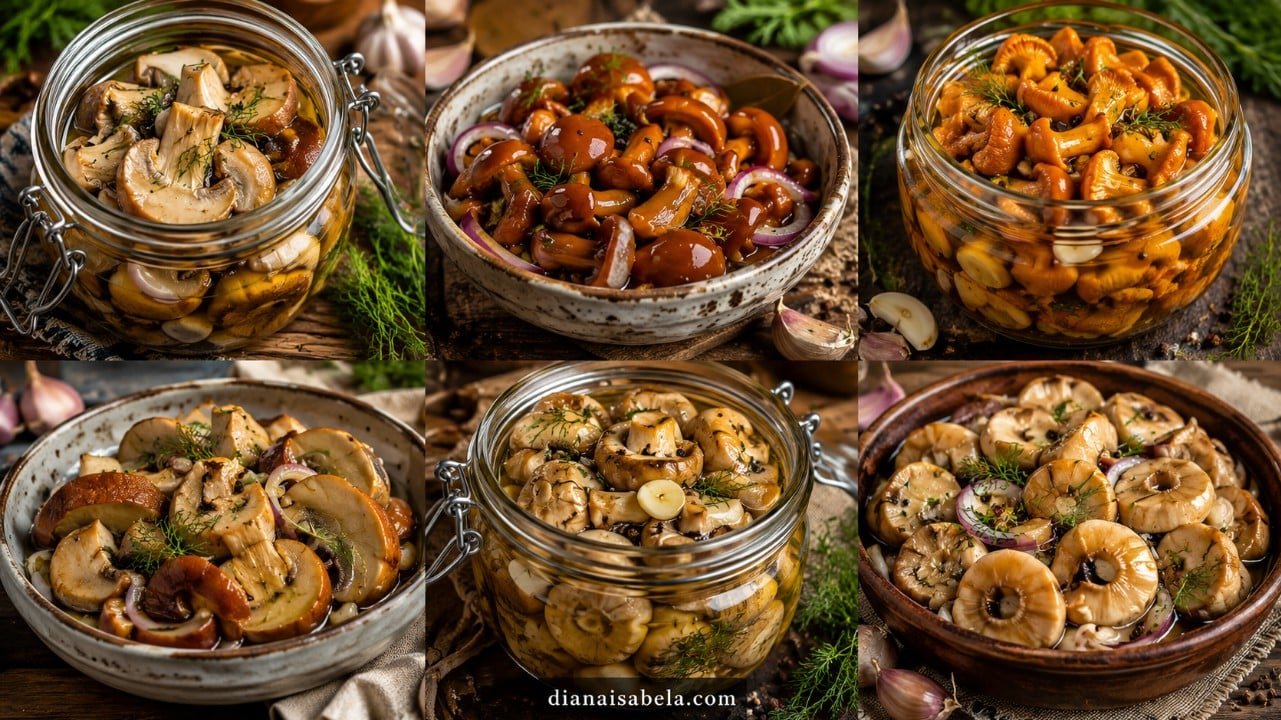
Marinated mushrooms can be made with different varieties: porcini, honey mushrooms, chanterelles, slippery jack mushrooms, champignons, milk mushrooms and others depending on what is available and safe. On the table, they work as an appetizer, a side, a snack with potatoes, or a bright partner for sausage and rye bread.
Serve them with onion, dill, garlic, oil and black pepper. They are especially useful when you want a table to feel abundant without cooking another hot dish. A bowl of marinated mushrooms says, “Yes, there is more food,” but in a very composed voice.
Dough, dumplings and pies: the cozy architecture of the table
Dough is where Russian-style cooking becomes emotional. Dumplings, blini, pirozhki, rasstegai, kulebyaka, sweet buns — these dishes do not just feed people. They make the kitchen feel like an event. But not every dough moment has to be a heroic from-scratch production. Sometimes the shortcut is the reason dinner happens.
16. Pelmeni night without pretending you handmade everything
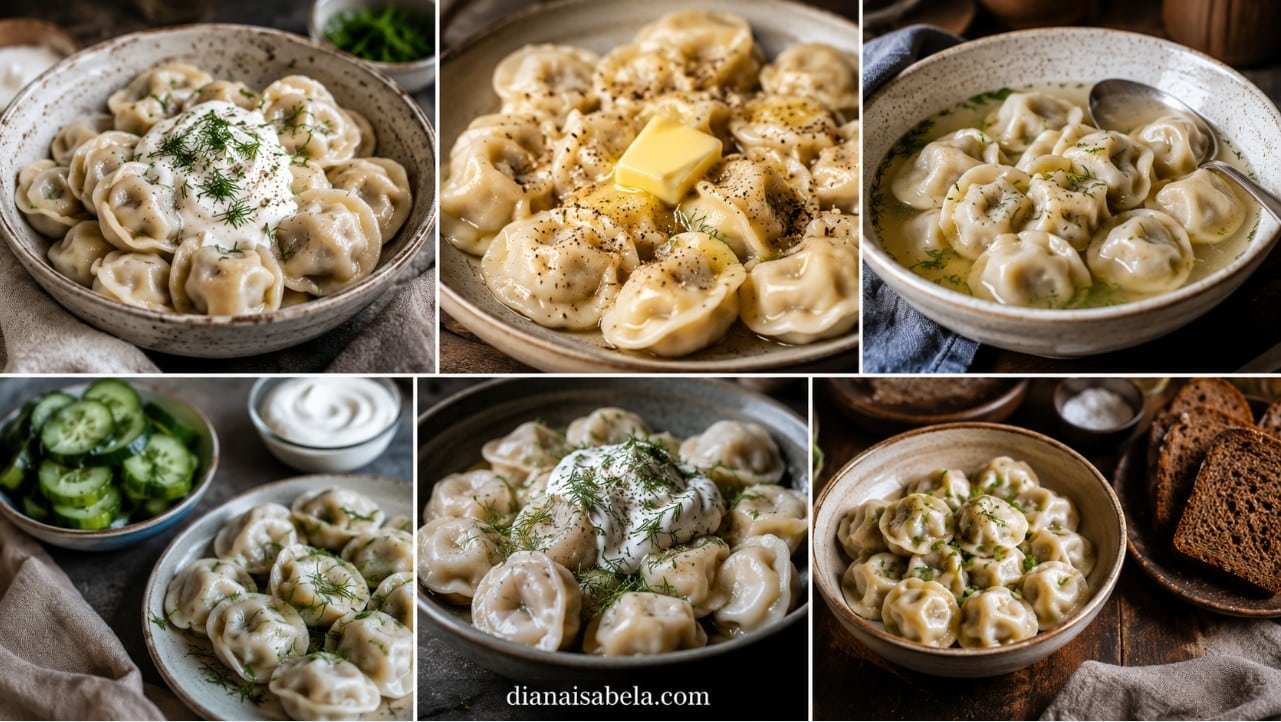
Frozen pelmeni are one of the best shortcuts in Russian-style home cooking. You can make them by hand if you want a project, but you can also buy good frozen dumplings and still make dinner feel cared for. Boil them properly. Do not overcook them into sadness. Serve with sour cream, butter, vinegar, black pepper, dill or broth.
The difference between “I boiled dumplings” and “I made dinner” is usually one side dish. Add cucumber salad, pickles, vinegret, sauerkraut or broth. Put them in a good bowl. Suddenly the freezer has taste.
17. Blini for a table that feels more generous than the effort
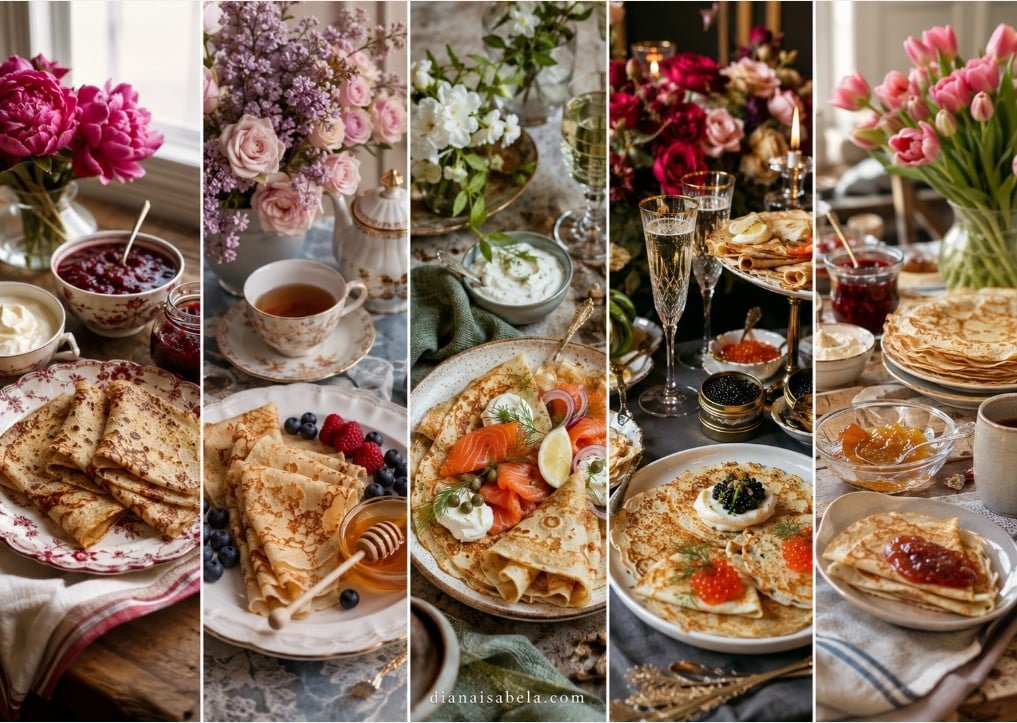
Blini are thin pancakes that can go sweet or savory. A simple batter of milk, eggs, flour, salt, a little sugar and oil can become a table that feels abundant. Serve with sour cream, jam, honey, berries, mushrooms, smoked fish, herbs or caviar if the day is feeling expensive.
The smart move is to make one stack and several toppings. You are not cooking six different dishes. You are giving people choices. This is dinner theatre without the kitchen meltdown.
18. Oladyi, the little pancakes for when dinner can be soft
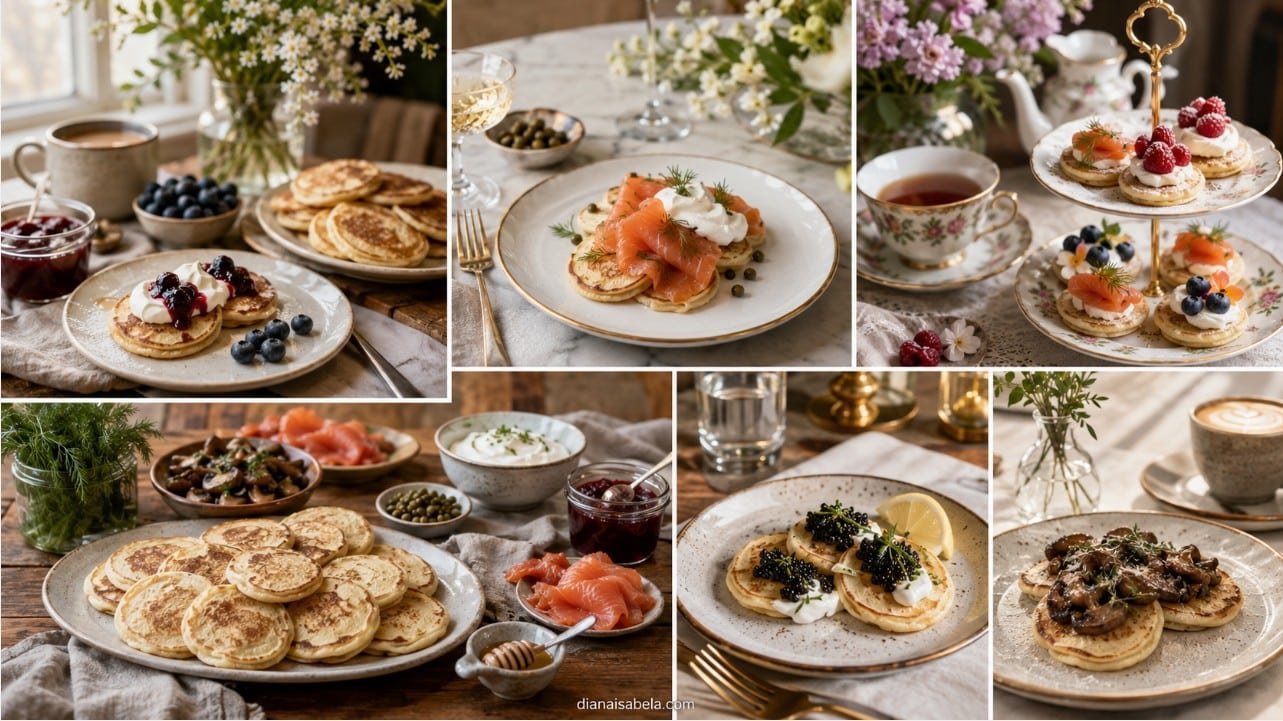
Oladyi are small, thicker pancakes, often made with kefir or yogurt. They are less elegant than blini and more cuddly. Serve them with sour cream, jam, berries, honey or apples. You can also push them savory with mushrooms or smoked fish if the batter is not too sweet.
They are ideal when you want a warm table but not a serious dinner. Sometimes comfort food should be soft around the edges.
19. Pirozhki shortcut with store-bought dough
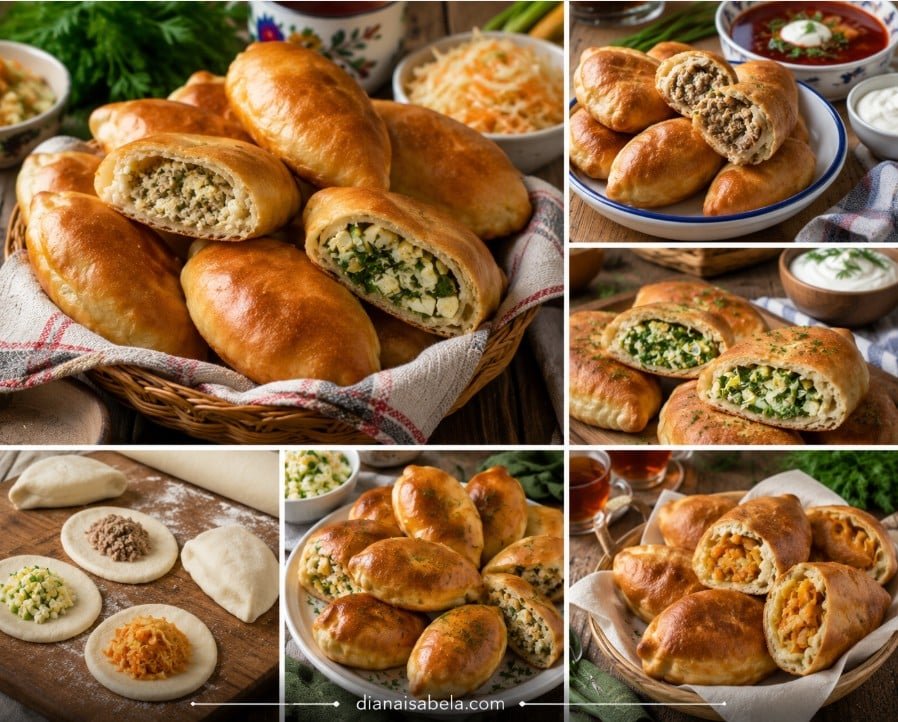
Pirozhki are small filled pastries, and yes, homemade dough is wonderful. But for an easy Russian recipes at home guide, I am absolutely allowing store-bought dough. Fill with cabbage and egg, potato and mushrooms, minced meat, rice, herbs, or sweet cheese. Bake or pan-fry depending on the dough and your mood.
The filling should be flavorful before it goes into the dough. Bland filling does not magically become charming in the oven. Season it. Add herbs. Let it cool before filling. Serve with soup, tea or salad.
20. Kulebyaka shortcut when you want a Russian pie without losing the day
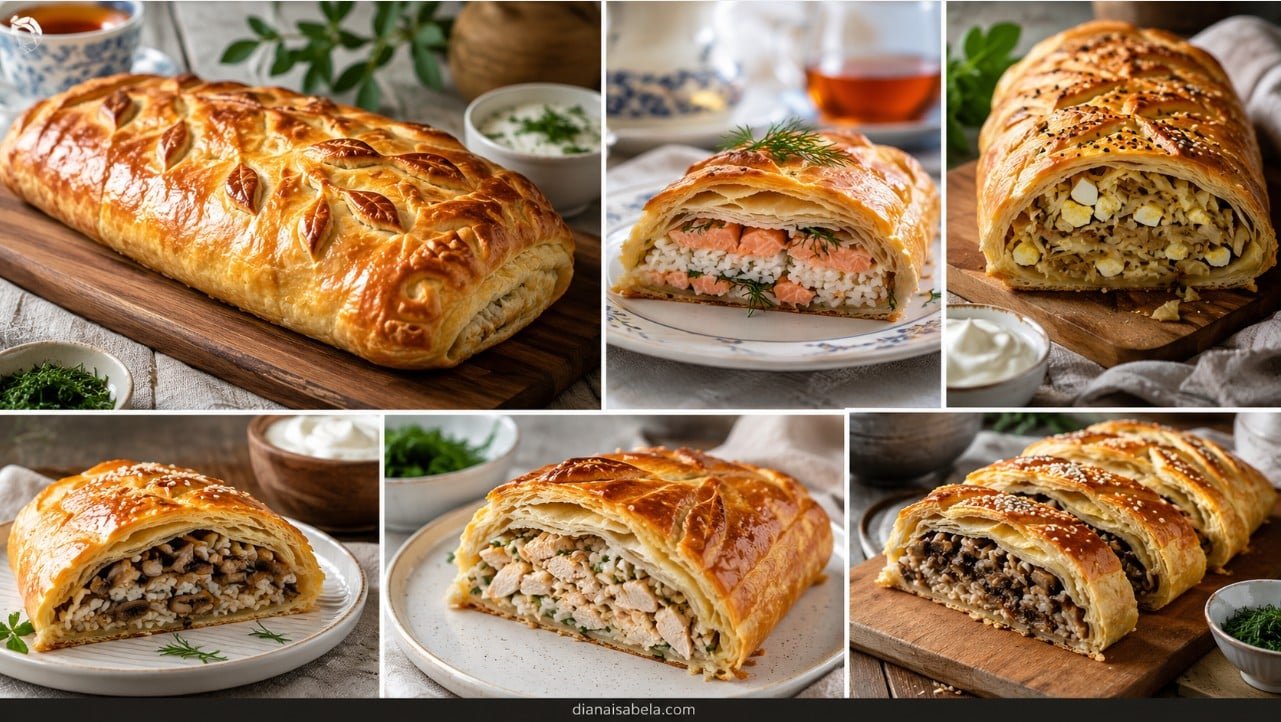
Kulebyaka is a savory Russian pie that can include fish, rice, mushrooms, cabbage, eggs and herbs. Traditional versions can be elaborate, but the home shortcut is gorgeous: use prepared puff pastry or good store-bought dough, make a well-seasoned filling, wrap, decorate lightly and bake until golden.
Salmon with rice and dill feels classic and elegant. Mushrooms with rice feel earthy. Cabbage and egg feels cozy and budget-friendly. Serve with sour cream, broth, salad or tea. This is the dish for when you want drama but not a full emotional collapse.
21. Rasstegai, the open Russian pies
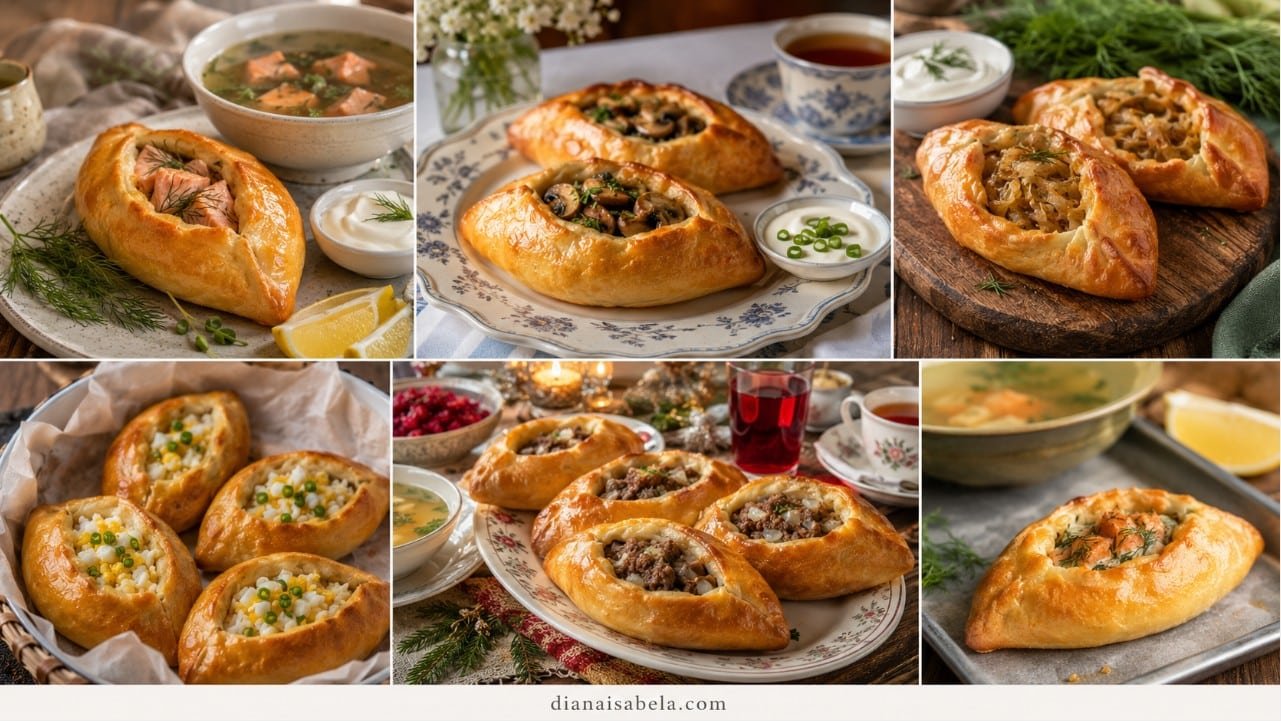
Rasstegai are open pies, often made with fish, rice, mushrooms or cabbage fillings. The open center gives them their charming shape and makes them feel more special than everyday pirozhki. They are excellent with fish soup, broth, tea or a salad table.
If you are nervous about dough, make a simplified version first. Use a reliable dough, keep the filling moist but not wet, and do not overstuff. A good rasstegai should look abundant, not like the filling is trying to escape the country.
Fish, cold cuts and festive savory plates
Russian-style tables often include fish, preserved foods, cold appetizers and meat plates that feel especially good for holidays, guests or long weekend meals. Not every dish here is a quick Tuesday dinner, but each one gives the article a fuller, more traditional table language.
22. Fried fish varieties: sterlet, sturgeon, smelt, crucian carp and catfish
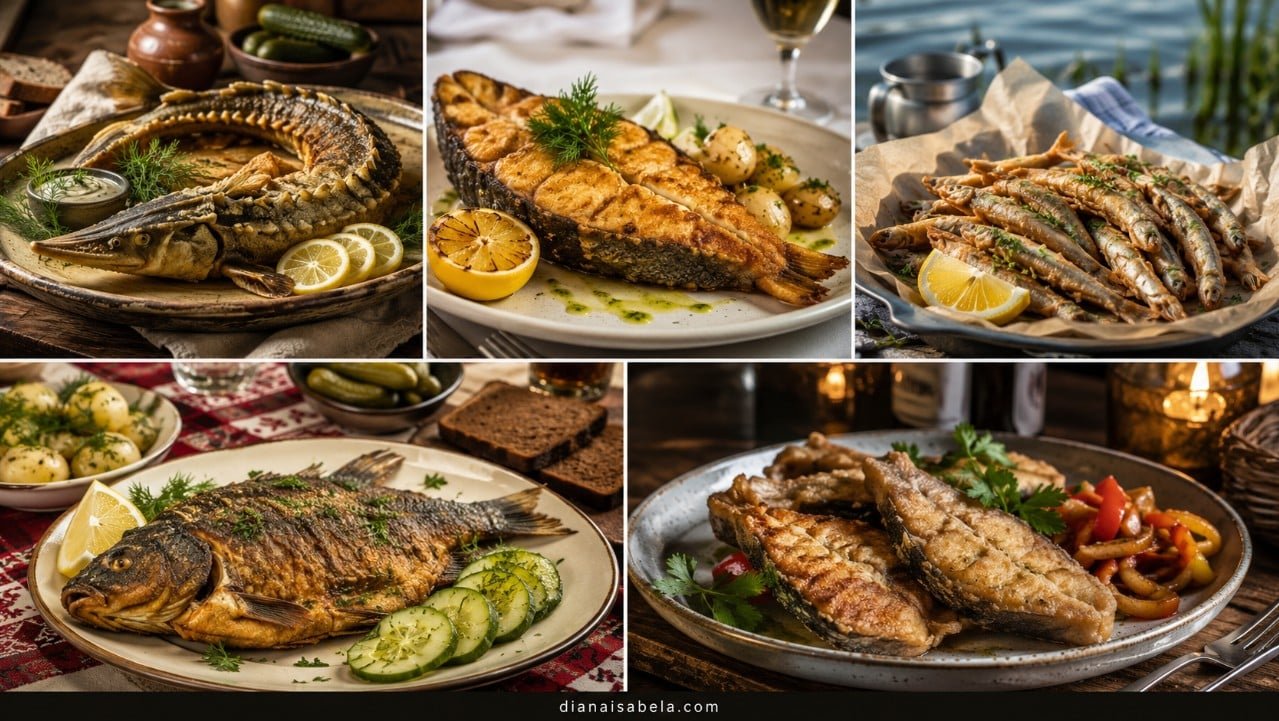
Fried fish can be humble or festive depending on the fish and the table. Sterlet and sturgeon feel more special. Smelt feels snackable. Crucian carp and catfish feel rustic and homey. The method changes with the fish, but the table logic stays the same: lemon, dill, potatoes, cucumber salad, pickles and bread.
Do not overcomplicate the plate. Good fried fish wants crisp edges, enough salt, something acidic and something fresh. If the fish is rich, add cucumber or cabbage. If it is delicate, keep the sides gentle.
23. Stuffed fish for a beautiful homemade centerpiece
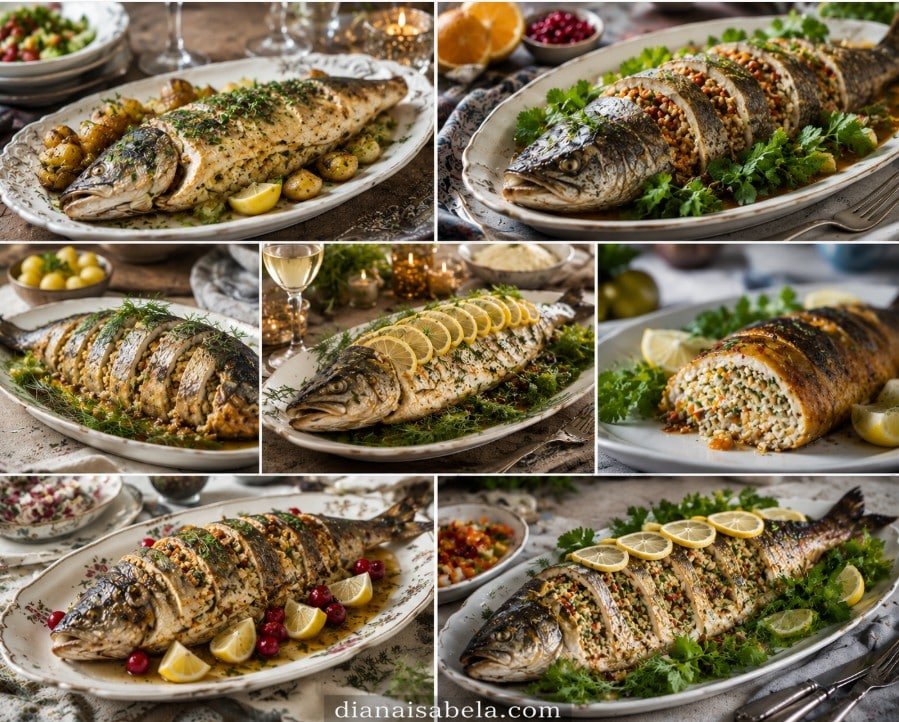
Stuffed fish feels festive because it arrives whole and dramatic. The filling can include rice, vegetables, herbs, mushrooms or other savory additions depending on the version. Serve with lemon, potatoes, fresh greens and a salad that does not fight the fish.
This is not the dish I would cook on a rushed weeknight. But for a family table, it gives you that “centerpiece” feeling without needing a giant roast. Keep the garnish fresh and do not bury the fish under chaos.
24. Salted, smoked and dried fish
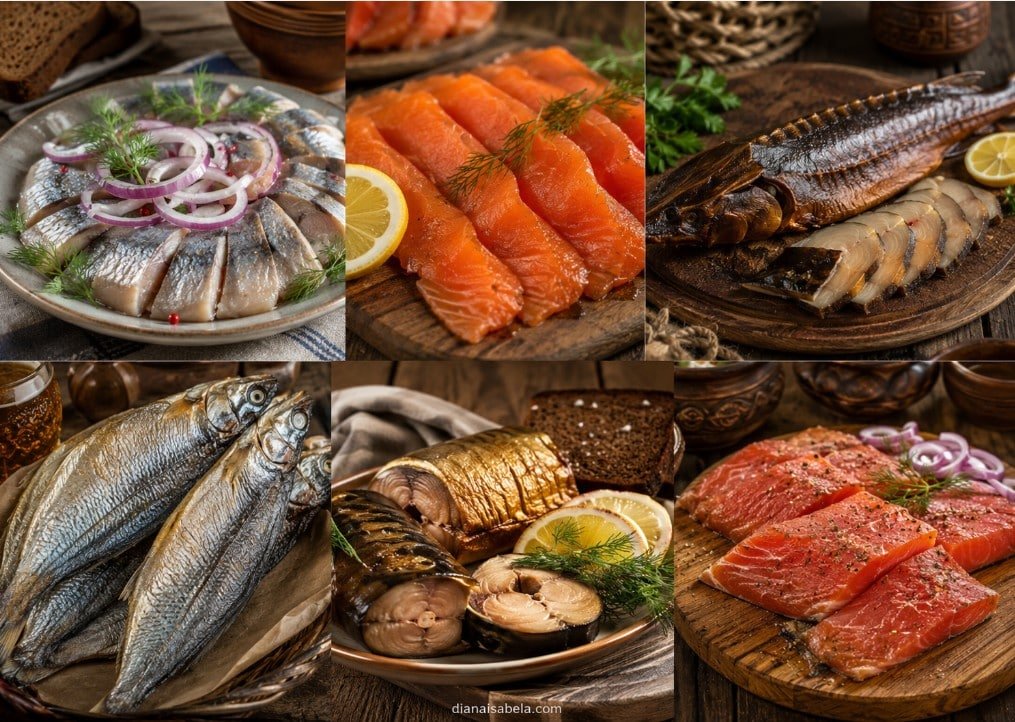
Salted herring, pink salmon, smoked sturgeon, salted salmon, carp, sazan and dried fish bring a strong preserved-fish tradition to the table. These are not background foods. They are salty, flavorful and best served with restraint: onion, lemon, dill, rye bread, potatoes, butter or pickles.
For a modern home table, I would serve a smaller fish platter with good bread, cucumber, pickles and marinated mushrooms. It feels abundant without becoming heavy. The point is flavor, not volume.
25. Kholodets and fish aspic
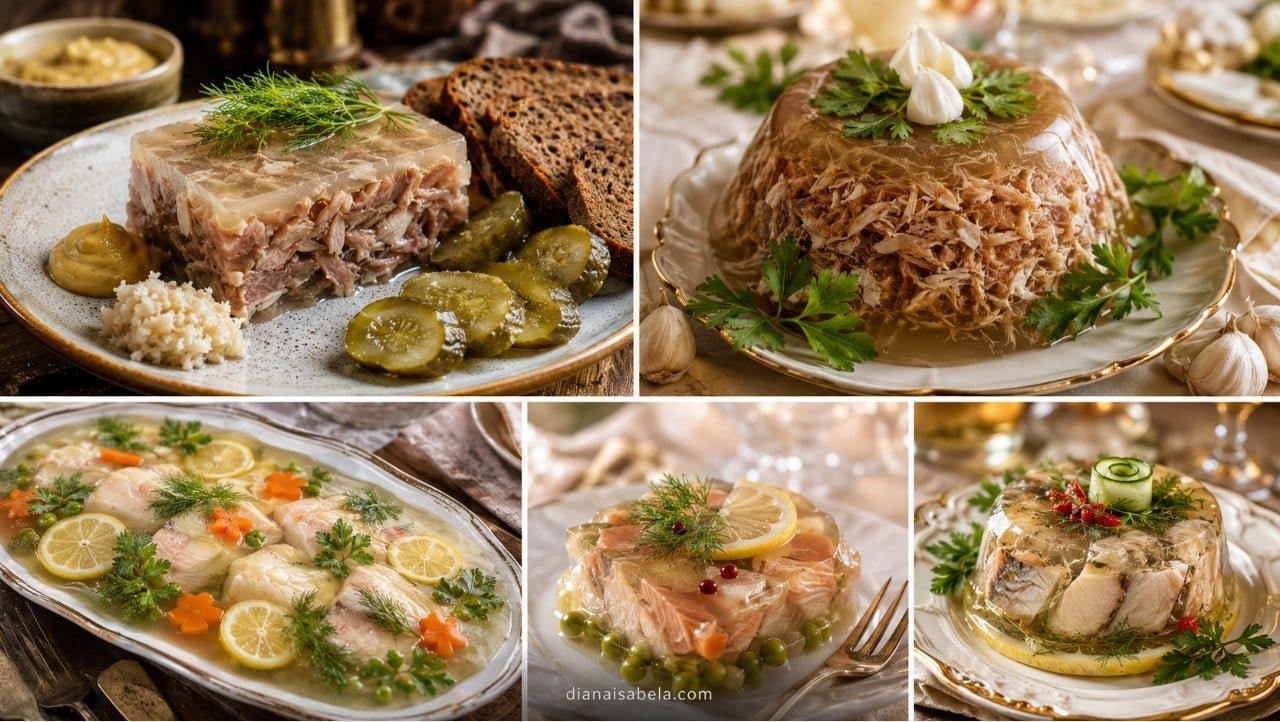
Kholodets and fish aspic are not for every beginner, but they are important to the broader table. Kholodets is a chilled meat jelly, often served with mustard or horseradish. Fish aspic is lighter visually, with fish, clear jelly, herbs, carrots, peas or lemon. These dishes are about patience, clarity and serving cold.
If you include them in a home menu, pair them with rye bread, sharp mustard, horseradish, pickles and fresh herbs. They work best as part of a spread, not as a lonely main dish.
26. Homemade sausages, krovyanka, saltison, zeltz, hunter sausages, basturma and beef tongue
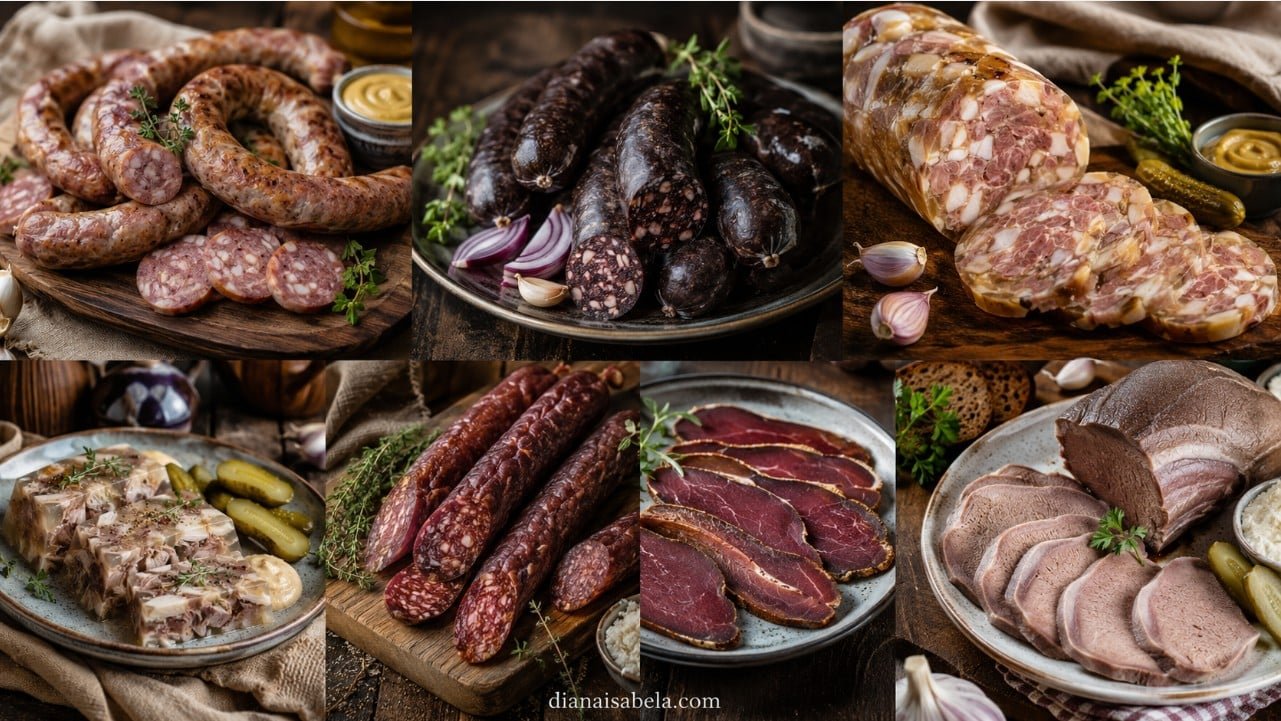
This is the hearty cold-table category: homemade sausage, krovyanka, saltison, zeltz, hunter sausages, basturma and sliced beef tongue. Some are more Russian, some broader Eastern European or post-Soviet table, but together they help readers understand the savory appetizer mood.
Serve in thin slices, not giant slabs. Add mustard, horseradish, pickles, garlic, rye bread and herbs. The plate should feel rustic and generous, but not messy. This is not a snack board from a random grocery run. It should look like someone chose each piece on purpose.
Vegetables, potatoes and stuffed dishes that make dinner feel complete
Potatoes and stuffed vegetables are the quiet backbone of many Russian-style meals. They are not always glamorous, but they are the reason dinner feels grounded. Learn these, and the rest of the table becomes easier.
27. Potato serving ideas: baked, fried, boiled, fire-roasted and mashed

Potatoes are not just a side; they are the foundation. Mashed potatoes love kotleti and tefteli. Fried potatoes love pickles and mushrooms. Boiled potatoes with dill love fish and sour cream. Fire-roasted potatoes have a picnic soul. Baked potatoes can become dinner with sour cream, herbs and salad.
If you do not know what to serve with a Russian-style main, potatoes are usually the answer. Just make sure the plate has something sharp or fresh nearby. Potatoes without contrast can become too comfortable with themselves.
28. Stuffed peppers, stuffed zucchini, stuffed eggplants and cabbage rolls
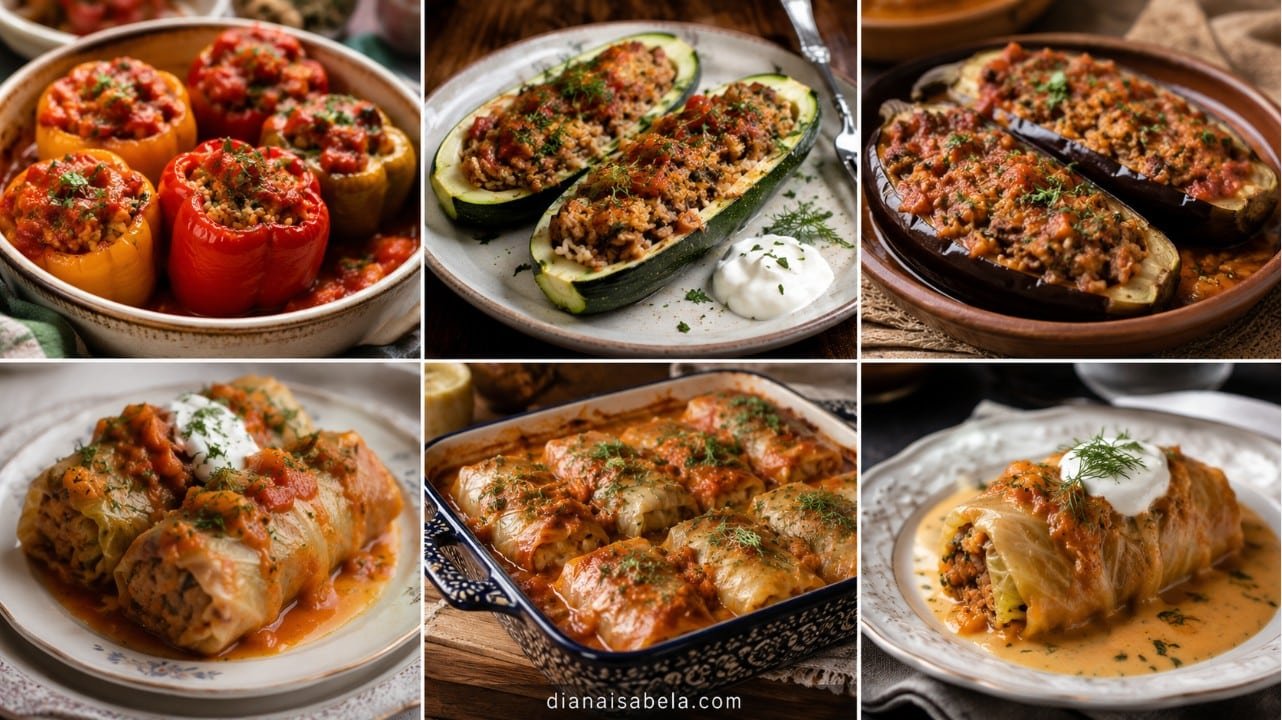
Stuffed peppers, zucchini, eggplants and cabbage rolls all live in the same cozy family of food: vegetables filled with rice, minced meat, herbs and seasoning, baked or simmered in tomato sauce, sometimes finished with sour cream. They are filling, colorful and forgiving.
Classic cabbage rolls can take time, so if you are busy, make a tray of stuffed peppers or zucchini boats instead. If you want the flavor without the ceremony, lazy cabbage rolls are the shortcut. The common rule: season the filling well and do not let the sauce be bland.
29. Lazy cabbage rolls when you want golubtsy energy without the ceremony
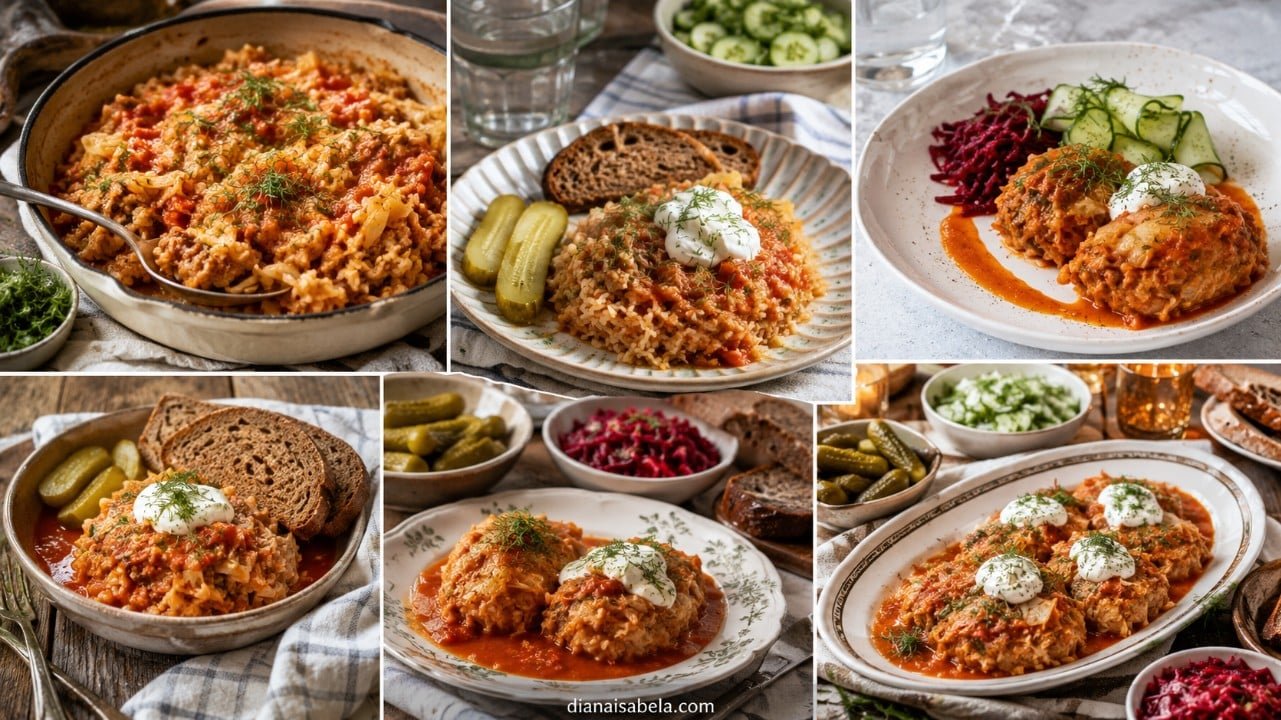
Lazy cabbage rolls are for people who love the flavor of golubtsy but do not have the patience for rolling every leaf. Chopped cabbage, rice, meat, tomato sauce, sour cream, herbs — the comfort is still there. The ceremony is reduced. I approve.
Serve with pickles, rye bread or a light cucumber salad. This dish reheats well, which makes it especially useful for real life. A recipe that tastes better tomorrow is a recipe with manners.
Breakfast, sweets, tea-table baking and desserts
Russian-style sweet food is not only dessert after dinner. It can be breakfast, tea, holiday, pantry, comfort or guest table. Syrniki with sour cream, jam with tea, layered cakes, sweet buns, porridge with nuts — this is where the table softens.
30. Syrniki for breakfast, brunch or emotional repair
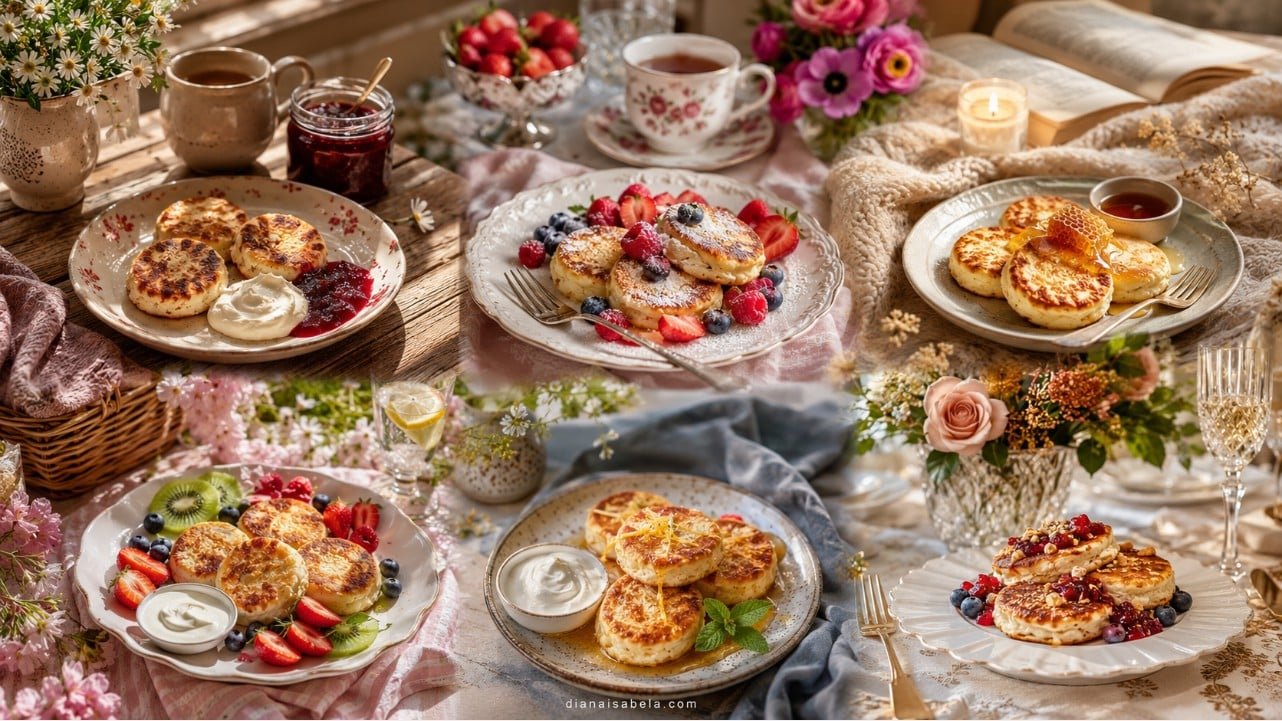
Syrniki are farmer-cheese pancakes, usually made with tvorog or a similar dry cheese, egg, flour, a little sugar and salt. They should taste like cheese first, pancake second. If the mixture is too wet, they collapse. If you add too much flour, they become boring.
Serve with sour cream, jam, berries, honey or fruit. They are perfect for weekend breakfast, brunch or a soft dinner when the day has been dramatic and nobody needs another serious plate.
31. Guryev porridge, the old-fashioned dessert breakfast
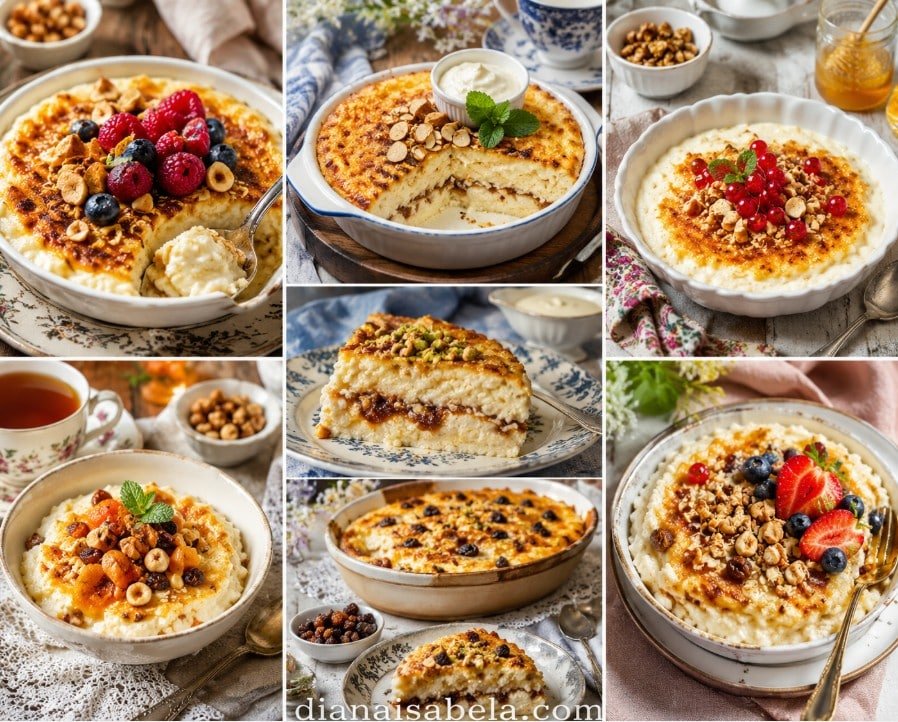
Guryev porridge is one of the more interesting classic Russian sweet dishes: creamy semolina, nuts, fruit, berries, dried fruit and rich caramelized milk notes. It feels old-fashioned in the best way, like something from a dining room with heavy curtains and excellent tea.
For a simplified home version, focus on texture and toppings. Creamy base, toasted nuts, berries or dried fruit, honey, and a caramelized or baked finish if you want drama. It is not the quickest breakfast, but it is a memorable one.
32. Vatrushki, poppy seed buns and cinnamon buns

Vatrushki are sweet buns with a cottage cheese or farmer-cheese center. Poppy seed buns bring that glossy swirl and deep filling. Cinnamon buns may not be exclusively Russian, but they fit the broader homemade tea-table mood beautifully, especially for readers who want familiar baking next to more traditional sweets.
Serve them with tea, jam, honey or fruit. These pastries are ideal for a weekend baking section because they make the house smell like someone had a plan.
33. Russian-style cakes and tea-table desserts
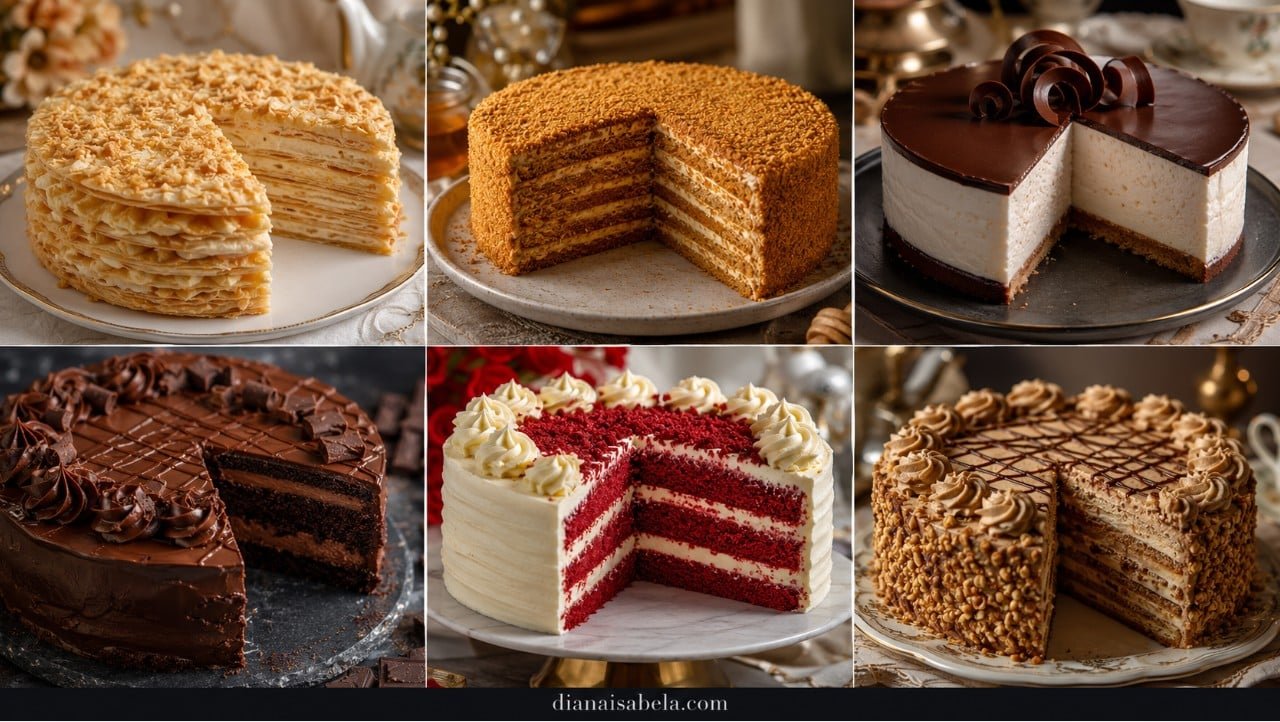
A Russian-style tea table can be very serious about cake. Napoleon with many delicate layers. Medovik with honeyed crumbs. Ptichye Moloko with its soft soufflé-like mood. Prague cake with chocolate depth. Leningradsky with nutty, layered richness. Red Velvet is more of a modern imported favorite, but it fits many contemporary celebration tables.
You do not need to make all of them. Choose one cake and serve it well. Good tea, clean slices, maybe berries or fruit, and enough time for everyone to sit down. Cake is not only dessert here. It is conversation architecture.
34. Homemade jam and preserves
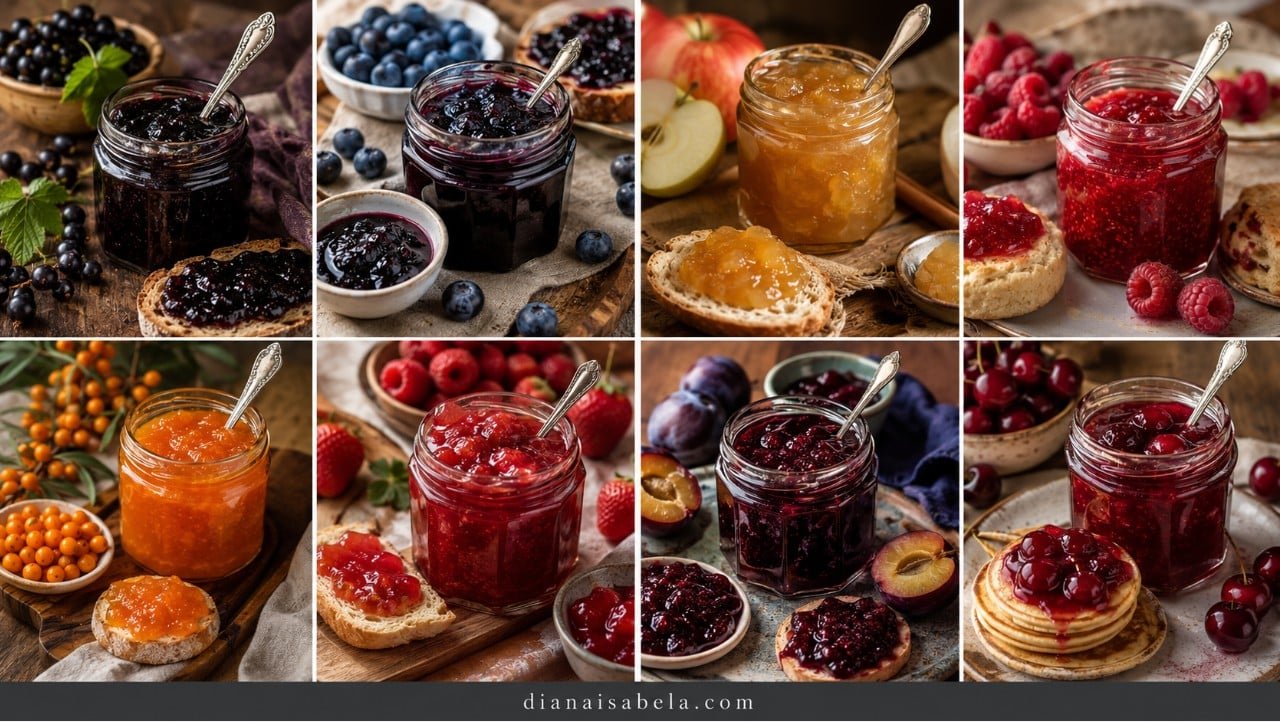
Homemade jam belongs in this article because it is part of the table culture. Black currant jam with tea. Raspberry jam when someone feels unwell. Apple jam on bread. Sea buckthorn for brightness. Strawberry, plum, cherry and blueberry for pancakes, syrniki, porridge or cakes.
Even if you do not make jam from scratch, choose good preserves and use them intentionally. A spoon of jam can turn syrniki, oladyi, blini or porridge into something charming in ten seconds.
35. Paska, kulich and korovai
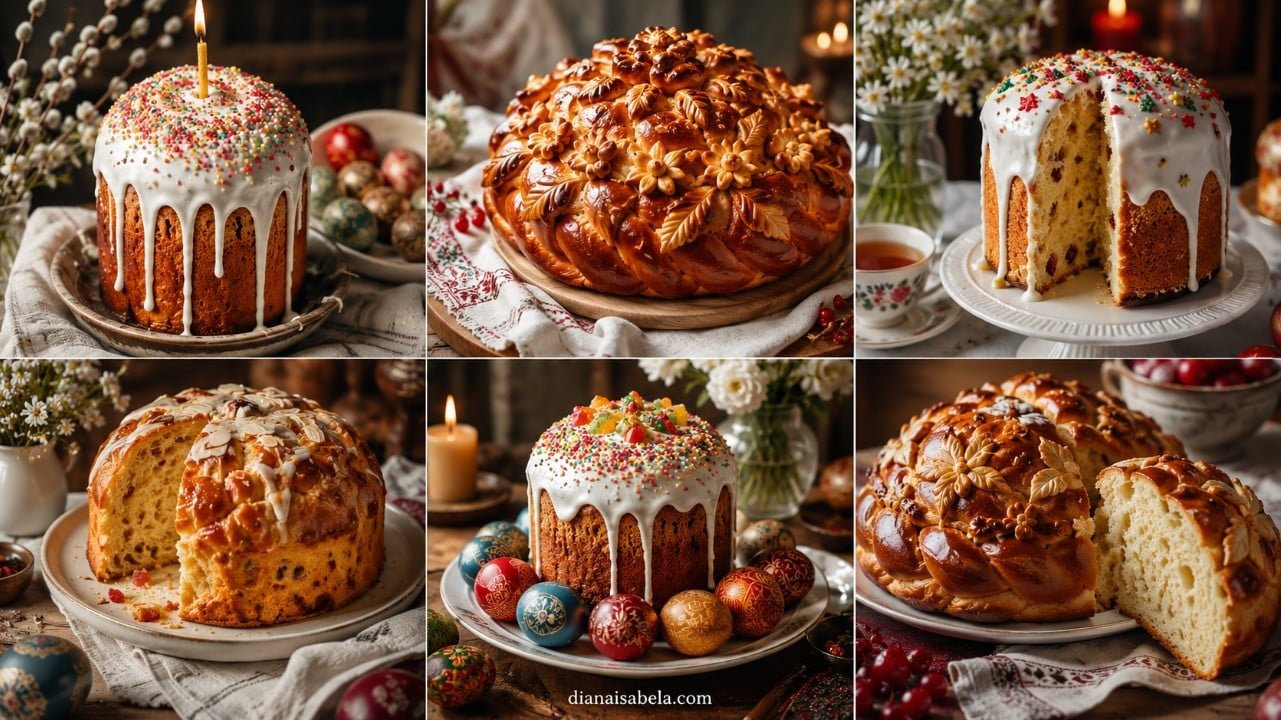
Paska, kulich and korovai are celebration breads, and they carry cultural meaning beyond everyday cooking. Paska and kulich belong to Easter tables in different traditions and regions; korovai is a ceremonial bread often connected with weddings and special occasions. For this article, they serve as the festive baking chapter: not the fastest recipes, but important table ideas.
If you include them, present them as special-occasion baking rather than weeknight food. The visual matters: glaze, sprinkles, braided decorations, painted eggs, tea, candles, flowers. These breads are not just eaten. They are placed at the center.
Drinks that make the table feel finished
36. Kissel, uzvar, kompot and kvass
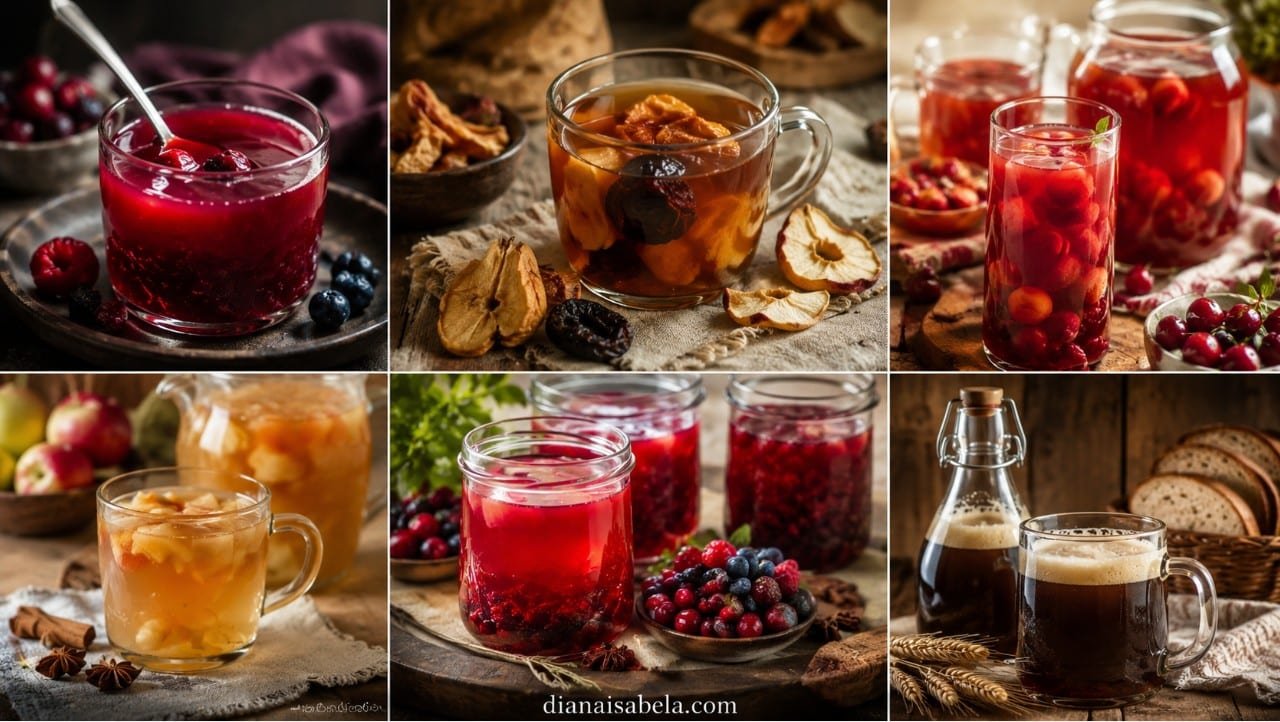
Kompot is a fruit drink made by simmering fruit with water and sugar. Kissel is thicker, often berry-based and gently dessert-like. Uzvar is made from dried fruits and has a deep, cozy flavor. Kvass is a fermented drink with a bread-like, tangy character. Together, they show that drinks can be part of the recipe story, not an afterthought.
Make kompot with apples, cherries, berries or plums. Serve kissel in small glasses or bowls. Pair uzvar with festive baking. Use kvass with summer food, especially okroshka if that is your style. A table with a homemade drink feels more complete, even when the food is simple.
The “Diana dinner” method: choose fewer dishes, but make the table smarter
With so many recipes, it is tempting to cook like you are preparing for a historical drama with twenty cousins arriving by train. Do not. The smarter table is edited. One warm main. One soft base. One sharp side. One fresh thing. One drink. Maybe one sweet. That is enough.
For example: kotleti, mashed potatoes, cucumber salad, pickles, tea and jam. Or rassolnik, rye bread, marinated mushrooms, sour cream and kompot. Or blini, smoked fish, sour cream, mushrooms, berries and tea. Or stuffed vegetables, vinegret, pickled tomatoes and kvass.
Russian-style food feels best when the table has contrast. If everything is creamy, add pickles. If everything is fried, add cucumber. If everything is cold, add soup. If everything is brown, add beets, herbs or red cabbage. If everything is too serious, make syrniki.
What to cook depending on the kind of night you are having
| Kitchen situation | Best recipe direction | How to make it feel complete |
|---|---|---|
| I need dinner fast | Pelmeni, cucumber salad, pickles | Add sour cream, dill, black pepper and a small bright side. |
| I want classic comfort | Kotleti, mashed potatoes, cucumber salad | Add pickles or vinegret so the plate does not feel too soft. |
| I want a soup dinner | Shchi, rassolnik or solyanka | Serve with rye bread, sour cream, herbs and one cold side. |
| I have guests | Blini, Olivier, fish platter, marinated mushrooms | Let people build plates with toppings, salads and pickled sides. |
| I want something special | Kulebyaka, stuffed fish, roasted goose or Pozharsky cutlets | Choose one centerpiece and keep the sides clean. |
| I want tea-table comfort | Syrniki, oladyi, vatrushki, jam, cake | Serve with tea, berries, sour cream or preserves. |
Three realistic menus from this atlas
When to buy instead of cook everything
There is no prize for making every single thing from scratch, especially if the result is exhaustion. Buy the dumplings. Buy the pickles. Buy the rye bread. Buy marinated mushrooms from a good store if that is what gets dinner moving. Buy prepared beets. Buy smoked fish. Buy a cake sometimes. The secret is knowing where homemade matters and where shortcuts are smart.
Homemade matters most for the dish you are centering: kotleti, soup, stuffed vegetables, syrniki, pirozhki, kulebyaka, potatoes, tefteli. Shortcuts are wonderful around it: pickles, bread, frozen pelmeni, prepared fish, jarred mushrooms, preserves, tea-table sweets. If you live near a Russian, Ukrainian, Polish or Eastern European store, use it with intention. My Russian store shopping guide can help you decide what is worth buying instead of bringing home random jars because the labels look charming.
If you are looking for restaurants, delis or prepared dishes near you, my Russian food near me guide gives a broader view of what to search for. But at home, the strategy is simple: cook one good thing, buy the supporting pieces, make the table look cared for.
How to make Russian recipes feel stylish, not old-fashioned
There is a difference between nostalgic and dusty. Russian-style food can look beautiful if you stop treating it like a beige pile of comfort. Use contrast. Put sour cream in a small bowl. Slice bread neatly. Add dill like you mean it. Use pickles visibly. Let beets bring color. Serve fish with lemon. Put tea in proper cups. Do not leave every jar on the table unless the table is intentionally rustic.
A plate of kotleti, potatoes, cucumber salad and pickles already has a palette. A bowl of rassolnik with rye bread and sour cream already has mood. Shuba has color. Blini have movement. Kulebyaka has shape. Marinated mushrooms have shine. Cakes have layers. The style is already inside the food; you just have to let it breathe.
And because this is Diana Isabela, yes, I care about the dinner mood beyond the plate. If you are hosting a dumpling or kotleti dinner, wear something comfortable but intentional. A soft knit, easy dress, relaxed trousers, earrings that do not compete with cooking, hair that will not fall into the sour cream. My dumpling and kotleti dinner outfit ideas make sense when food and style meet at the same table.
Easy Russian recipes at home are really about building a table
The best Russian recipes are not difficult because they are mysterious. They feel difficult when you approach them like a performance. At home, they are friendlier. Boil potatoes. Chop cucumbers. Pan-fry kotleti. Stir sour cream with dill. Open pickles. Make tea. Warm pelmeni. Let soup rest. Slice cake. Put marinated mushrooms in a bowl. Add lemon to fish. Sit down.
That is the beauty of it.
Russian-style home cooking is not only about the dish. It is about the way the dish becomes a meal. Kotleti become dinner with potatoes and pickles. Pelmeni become dinner with sour cream and salad. Vinegret becomes lunch with eggs and bread. Rassolnik makes leftovers look intentional. Blini turn toppings into a gathering. Kulebyaka turns pastry into a centerpiece. Jam makes tea feel like a small ceremony.
Start small. Choose one dish. Add one side. Repeat ingredients across the week. Use shortcuts without shame. Make the plate bright. Keep herbs around. Respect pickles. Do not let beige food happen without a fight.
And when the table finally has something warm, something sharp, something creamy, something fresh and something sweet waiting for tea, you will understand why these recipes last. They are not just old-fashioned comfort food. They are practical elegance in a bowl, a pan, a jar, a pot, a plate and a kitchen that smells like dinner actually happened.
FAQ: Easy Russian Recipes at Home
What are the easiest Russian recipes to make at home?
Start with kotleti, pelmeni, cucumber-dill salad, syrniki, blini, Olivier salad, vinegret, shchi, buckwheat with mushrooms and simple potato dishes. These recipes teach the core Russian home-cooking rhythm without requiring advanced technique.
What should I cook first if I am new to Russian food?
Cook kotleti with mashed potatoes, cucumber-dill salad and pickles. It is simple, cozy and balanced: warm meat, soft potatoes, fresh cucumber, sharp pickles and a creamy or savory finish.
Can I make Russian recipes without a Russian grocery store?
Yes. Many recipes use regular supermarket ingredients: potatoes, eggs, cabbage, beets, carrots, cucumbers, mushrooms, onions, minced meat, flour, sour cream, yogurt, herbs and pickles. A Russian or Eastern European grocery helps with pelmeni, rye bread, buckwheat, farmer cheese, smoked fish, preserves and specialty pickles, but it is not required for every dish.
What Russian recipes are good for weeknight dinners?
Pelmeni with sour cream, buckwheat with mushrooms, kotleti, tefteli, shchi, rassolnik, lazy cabbage rolls and fried potatoes are good weeknight choices. Add cucumber salad, pickles or sauerkraut to keep the meal balanced.
Are Russian recipes always heavy?
No. They can feel heavy when the plate has only soft, creamy foods. Balance richer dishes with cucumber salad, vinegret, pickled vegetables, sauerkraut, herbs, lemon, cold soups or fresh vegetables.
What are good Russian-style recipes for guests?
Blini with toppings, Olivier, shuba, marinated mushrooms, salted or smoked fish, pirozhki, kulebyaka, stuffed fish, Pozharsky cutlets, roasted goose with apples and a cake like Napoleon or Medovik all work well for guests. Choose dishes that can be partly prepared ahead so you are not trapped in the kitchen.
What can I serve with Russian kotleti?
Serve kotleti with mashed potatoes, boiled potatoes with dill, roasted potatoes, cucumber salad, cabbage salad, vinegret, pickles, rye bread, sour cream or mushroom sauce. The best plate has something soft, something fresh and something sharp.
Can frozen pelmeni still make a good dinner?
Absolutely. Boil them properly, then serve with sour cream, butter, dill, black pepper or broth. Add cucumber salad, pickles, vinegret or sauerkraut so the meal feels complete instead of like emergency freezer food.
Which Russian soups are easiest at home?
Shchi, rassolnik and solyanka are practical home soups if you understand their flavor roles. Shchi is cabbage-based and gentle, rassolnik is tangy with pickles and barley, and solyanka is richer with smoked meats, lemon and sour cream.
What Russian dishes are good for a tea table?
Syrniki, oladyi, blini with jam, vatrushki, poppy seed buns, cinnamon buns, Guryev porridge, homemade preserves, Napoleon, Medovik, Ptichye Moloko, Prague cake, Leningradsky cake, paska and kulich all work beautifully with tea.
How do I make Russian food taste less bland?
Use enough salt, brown onions and mushrooms properly, add dill or parsley, include pickles or vinegar-based salads, and do not skip contrast. Many Russian-style dishes are not built on strong spice; they are built on balance: creamy with sharp, soft with crunchy, warm with fresh.
What is a simple Russian dinner menu for beginners?
A simple beginner menu is kotleti, mashed potatoes, cucumber-dill salad, pickles, rye bread and tea. Another easy menu is pelmeni with sour cream, vinegret and kompot. Both feel complete without requiring a complicated cooking day.