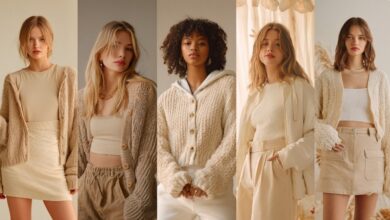
Shopping new arrivals is supposed to feel fun. A little thrill, a little discovery, maybe a piece that makes your closet wake up and apologize for being boring last week.
But somehow, new arrivals can also turn into a tiny emotional emergency. The page refreshes. The sizes are disappearing. The model looks perfect. The brand says “just dropped,” your group chat says “wait this is cute,” and suddenly you are considering a skirt you would not have noticed if it were quietly hanging in the clearance section next to a questionable belt.
This is not a lecture about never buying anything new. I love a good drop. I love a fresh piece that makes old outfits feel alive again. I love the drama of discovering something before everyone else starts wearing it. But I do not love panic shopping. Panic shopping is how cute girls end up with closets full of almost-good pieces and nothing to wear.
So this is the teen guide to shopping new arrivals without losing your taste, your budget, or your entire personality to a countdown timer.
New arrivals are designed to make you feel late
The first thing to understand is that new arrivals are not neutral. They are styled to feel urgent. The photos are fresh. The page layout is clean. The first few pieces are usually the strongest. The model is wearing the top with perfect jeans, perfect hair, perfect lighting, and an expression that says she has never once regretted overnight shipping.
That is the fantasy. It is not evil. It is fashion marketing.
The problem starts when your brain mistakes “new” for “necessary.” A piece being new does not mean it fills a gap. A piece being popular does not mean it fits your style. A piece being low in stock does not mean it belongs in your life. Sometimes it only means other people are also confused, excited, or bored on the internet.
Before you shop, remind yourself: you are not late. You are looking. There is a difference.
Diana’s first rule: never let a website create a deadline for your taste. If you need to panic to buy it, pause before you pay for it.
The “real closet” test comes before the wishlist
Most shopping mistakes happen before the item is even in the cart. They happen at the moment you look at a piece as a fantasy instead of as part of your real life.
Fantasy you has brunch every Saturday, perfect weather, a clean room, no dress code, no school backpack, no awkward shoes, and a photographer following her around golden-hour streets. Real you has mornings where one sock disappears, a hoodie on the chair, a bus to catch, a parent asking if that is really what you are wearing, and maybe six minutes to decide if the outfit is cute or suspicious.
So when you see something new, do not ask, “Is this cute?” That is too easy. Many things are cute. Ask, “Where would I wear this by next month?”
If you cannot name a real setting, slow down. Not everything beautiful has to become your responsibility.
The five-question pause before you add to cart
- Can I style it with three things I already own? If every outfit requires five more purchases, the item is not a piece. It is a project.
- Would I still like it if it were not trending? Remove the hype. Keep the shape, color, fabric, and fit. Do you still care?
- Does it match my real schedule? A sequin mini may be gorgeous, but if your next month is school, errands, and one cousin’s birthday lunch, be honest.
- Is this my style or just my mood today? Mood shopping can be fun, but it is also how closets become confused.
- Would I be annoyed if it arrived tomorrow? Sometimes the fantasy is more exciting than the package.
The difference between a good impulse and a bad one
Not every quick buy is a mistake. Sometimes you see a piece and instantly know it belongs to you. You can picture the shoes. You know the jacket. You already understand the vibe. Your body almost relaxes because the item makes sense.
That can be a good impulse.
A bad impulse feels more like pressure. You are not imagining outfits. You are imagining missing out. You are not thinking about your closet. You are thinking about someone else wearing it first. You are not excited in a calm way. You are frantic, slightly sweaty, and weirdly willing to ignore the fact that the fabric description says “unlined.”
Fashion should give you energy. It should not make you feel hunted.
The good impulse
You see a cream cardigan, black mini skirt, or perfect sneaker and immediately know three outfits. You understand the fit. It solves a styling problem. You would still want it tomorrow.
The risky impulse
You only want it because it says “selling fast,” everyone online is commenting, or the campaign makes it look like a life upgrade. You cannot imagine wearing it without copying the exact product photo.
Do not confuse brand excitement with personal style
Some brands are very good at becoming part of your identity. They do not just sell a top. They sell a mood, a friend group, a vacation, a mirror selfie, a weekend version of you who drinks iced matcha and never has a weird outfit day.
That is powerful. It is also why shopping new arrivals can get messy.
When a brand has a strong personality, you may start wanting things because you want to be near the world the brand created. That does not mean the item itself is wrong. It means you need to separate the piece from the performance around it.
If you want to understand this better, read how a brand becomes a personality, not just a logo. Once you see the trick, you can still enjoy the brand, but you stop handing it the steering wheel.
The “three outfits, three moods” method
Here is the method I use before trusting a new arrival: I make the item prove it can live more than one life.
One outfit is not enough. One outfit may only mean the product photo was good. Three outfits means the item has range. Even better, three different moods.
Say you are looking at a new satin skirt. Do not just picture it with the exact top from the brand’s website. Picture it casual with sneakers and a baby tee. Picture it dressed up with a fitted cardigan and ballet flats. Picture it with a jacket for a birthday dinner or a family event. If it works in only one highly specific fantasy, it may be a beautiful trap.
The same rule works for jeans, bags, dresses, hoodies, boots, sweaters, ballet flats, little tops, even accessories. A piece does not need to match everything. But it should do more than sit there looking expensive in your imagination.
Run this closet scan before buying new arrivals
- Color scan: does the piece match at least two colors you already wear often?
- Shoe scan: do you already own shoes that make it look finished?
- Weather scan: can you wear it in the actual season you are shopping for?
- Comfort scan: can you sit, walk, eat, and move without babysitting the outfit?
- Repeat scan: would you be happy wearing it again after the first photo?
- Identity scan: does it feel like you, or like someone you are temporarily jealous of?
Limited stock is not a personality test
Limited stock language is one of the easiest ways to make normal shopping feel dramatic. “Only a few left.” “Selling fast.” “Almost gone.” Suddenly you feel like you are not choosing a shirt. You are entering a moral crisis with free returns.
Take the sentence seriously, but not personally.
If the item is genuinely perfect for you and the return policy is safe, then yes, buying before it sells out can make sense. But if the only reason you want it is because it might disappear, let it disappear. A piece vanishing from a website is not a tragedy. It is sometimes the universe doing closet management on your behalf.
I wrote more about the psychology of urgency in why limited editions feel so urgent, because fashion loves pretending that scarcity equals destiny. Sometimes it does. Often it equals marketing with better lighting.
The size problem nobody wants to discuss
New arrivals often sell out unevenly. Your size disappears first, or only one size is left, or the brand shows “low stock” and suddenly you are considering a size you know is wrong because you are “between sizes” in a way that sounds suspiciously like denial.
Please do not buy the wrong size as a motivational speech.
Clothes are supposed to fit your body. Your body is not supposed to negotiate with a garment that arrived late and overconfident. If the waist is wrong, the bust pulls, the shoulders sit strangely, or the length makes you uncomfortable, the item is not a bargain. It is a future return, closet guilt, or a donation bag with tags still attached.
If reviews say “runs small” and you already hate tight waistbands, listen. If the model is tall and the dress already looks short, use your brain before your heart. If the fabric has no stretch and the comments mention weird armholes, believe the girls. They suffered so you do not have to.
The mirror version of you should get a vote
Online you can imagine anything. In the mirror, your real posture, movement, height, proportions, comfort level, and confidence all join the conversation.
Before you commit, imagine the arrival day
You open the package. You try it on with your actual hair, actual shoes, actual lighting, actual room, actual mood. Does the piece still make sense?
If yes, good. If you immediately think, “Maybe if I buy a different bra, different shoes, different bag, and become a different person,” that is not styling. That is a hostage negotiation.
Shop for outfit solutions, not emotional decoration
There is nothing wrong with wanting something pretty. Pretty matters. Beauty matters. A little unnecessary sparkle can be spiritually important on a Tuesday.
But when you are shopping new arrivals, the smartest pieces usually solve a problem. They make your jeans look better. They make your skirts wearable. They make your school outfits less boring. They make your birthday dinner outfit easier. They give your sneakers a reason. They make your favorite jacket feel new.
A closet full of statement pieces with no connectors is exhausting. It looks exciting but works badly. You need the pieces that carry the outfit quietly: fitted tops, clean trousers, wearable skirts, better shoes, a bag that goes with more than one aesthetic, a cardigan that fixes awkward proportions, jewelry that polishes a simple look.
This is why a smaller, smarter closet often beats a chaotic one. If your wardrobe needs more structure, start with building a closet that does not depend on every drop. It is much easier to enjoy new arrivals when your existing clothes already know how to behave.
The “best piece” is not always the loudest piece
Every drop has a loud piece. Maybe it is the dramatic dress, the weird bag, the patterned jeans, the tiny top, the color everyone is suddenly naming like it is a celebrity baby. Loud pieces get attention first.
But the best piece may be quieter.
It might be the black top with the perfect neckline. The cream skirt that works with sneakers and flats. The cardigan that looks good open and buttoned. The soft pants that can survive school, coffee, errands, and a casual dinner. The belt that makes five outfits look finished. The simple bag that does not fight your clothes.
Quiet pieces are not boring when they do their job. They are the reason your louder pieces look intentional instead of desperate for company.
If your closet is mostly basics
Use new arrivals for one interesting shape, color, or accessory. Do not suddenly buy a whole aesthetic. Add tension, not chaos.
If your closet is already loud
Look for connectors: solid tops, cleaner shoes, neutral bags, and pieces that help your statements breathe instead of compete.
If your style changes weekly
Buy pieces with flexible styling power. Avoid anything that only works for one micro-trend or one very specific online mood.
How to handle influencer pressure without being boring
Influencers are useful when they show movement, fit, real styling, and how a piece looks outside the brand’s controlled photos. They are less useful when every post feels like a shopping alarm.
If an influencer makes you want something, wait until you can describe why.
Not “because she looks cute.” That is not enough. Is it the color? The neckline? The way the pants sit? The way the shoe changes the outfit? The styling formula? The fact that the piece works with clothes you already own?
When you can name the reason, you are shopping with taste. When you cannot, you may be borrowing someone else’s confidence and paying shipping for it.
The cart should get edited like an outfit
Your cart is not a promise. It is a dressing room with better lighting and worse impulse control.
Add what you like. Then edit. Remove the duplicate. Remove the fantasy-life piece. Remove the item that needs new shoes, new confidence, and a new climate. Remove the piece you only added because the model looked expensive. Remove the color you never wear but suddenly trust because the campaign had flowers.
Then look at what remains. If the cart has a clear mood, good. If it looks like five different girls got into a fight, pause.
The strongest cart usually has balance: one fun item, one useful item, maybe one small accessory. You do not need to buy the entire drop to participate in the mood.
The 24-hour rule, but make it realistic
I know. Sometimes waiting 24 hours means the piece sells out. That is annoying. But not every decision needs a full day.
Try a shorter version: save the item, close the tab, do something else for fifteen minutes. Eat something. Wash your face. Answer a text. Walk away from the glow of the product page. Then come back.
If the piece still feels useful and exciting, keep considering it. If the spell breaks instantly, congratulations. You just saved money with skincare-level discipline.
New arrivals for school, weekends, birthdays, and real plans
For school, buy pieces that can handle repetition. A cute top that only works once is less useful than a cardigan, sneaker, skirt, or bag that can appear in many outfits without announcing itself every time.
For weekends, you can take more risks. This is where a statement skirt, interesting jacket, playful bag, or trendier shoe makes sense. Weekend clothes can have more personality because they are not fighting lockers, dress codes, and cafeteria lighting.
For birthdays, dinners, and photos, choose pieces with a clear visual payoff: neckline, color, texture, shape, shine, or movement. But still ask if you would wear the piece again. A birthday piece does not need to become everyday clothing, but it should not become closet furniture after one night.
For travel, avoid pieces that wrinkle easily, require complicated underwear, or only look good standing still. A new arrival is not impressive if it becomes luggage drama before the first photo.
When to buy immediately
Buy quickly when the piece is genuinely aligned with your closet, your size is likely to sell out, the return policy is clear, and you already know how you would style it. That is not panic. That is decisiveness.
Also buy quickly when it is a replacement for something you already wear constantly. If your favorite black flats are dying and a better pair appears, that is not hype. That is wardrobe maintenance with better shoes.
Another good reason: the piece is rare in a way that actually matters to you. A perfect length, a hard-to-find color, a cut that suits your body, a modest neckline you like, a petite-friendly trouser, a size-inclusive fit, a fabric you have been waiting for. Real rarity is specific. Fake rarity just screams “last chance” in a banner.
When to let it sell out
Let it sell out when you are trying to talk yourself into the size. Let it sell out when you need to buy three more things to make it work. Let it sell out when you are buying it because someone you envy looked good in it. Let it sell out when the return policy feels like a legal threat.
Let it sell out when you know, deep down, that you only want the version of yourself in the campaign photo, not the actual item.
There will be other drops. There will be other skirts. There will be other tops. Fashion is dramatic, but it is also repetitive. Most “once in a lifetime” pieces have a cousin arriving in four weeks.
Build a wishlist with standards, not panic
A wishlist should not be a graveyard of every cute thing you almost bought. It should be a pattern detector.
If you keep saving the same kind of item, pay attention. Maybe you actually need better everyday tops. Maybe you are craving color. Maybe your shoes are ruining your outfits. Maybe you want more feminine pieces but keep buying sporty ones because they feel safer. Maybe you keep saving dresses because your closet has no “I need to look cute tonight” option.
Your wishlist can teach you more than your cart. The cart shows what you almost did. The wishlist shows what your style keeps asking for.
The teen shopping rule I trust most
Do not buy for the girl you think you are supposed to become by Friday.
Buy for the girl who actually has to wear the piece, wash it, style it, sit in it, walk in it, repeat it, and feel like herself in it.
That girl deserves nice things. She also deserves clothes that do not make her feel like she failed the fantasy. New arrivals can be gorgeous, but they should meet you in your real life. They should not demand a full personality transplant just to justify the checkout page.
The cart can wait for your taste to catch up
Shopping new arrivals without panic buying is not about being strict, boring, or immune to pretty things. It is about staying in charge of the story.
You can love fashion drops and still question them. You can enjoy a trend and still skip the piece that does not fit your life. You can shop early without shopping emotionally. You can let something sell out and still have style the next morning.
The best new arrival is not the one everyone grabs first. It is the one that makes your closet better after the hype gets quiet.
FAQ
How do I shop new arrivals without panic buying?
Start by pausing before you add anything to your cart. Ask where you would wear the piece, what you already own that works with it, and whether you would still want it if it were not new or almost sold out.
Are new arrivals worth buying right away?
Sometimes. If the item fits your real wardrobe, your correct size is available, the return policy is clear, and you already know how to style it, buying early can make sense. If you only feel rushed because the site says “selling fast,” wait.
What is the biggest mistake teens make when shopping new arrivals?
Buying for a fantasy version of their life. A piece may look amazing online, but it still has to work for school, weekends, weather, comfort, shoes, and the clothes already in the closet.
How many outfits should I imagine before buying something new?
Three is a strong test. If you can picture three real outfits with pieces you already own, the item has a better chance of being useful instead of becoming a one-time purchase.
How can I tell if a trend piece will actually work for me?
Look at the shape, color, fabric, and styling needs. A trend piece works better when it connects to your existing style instead of forcing you to buy a completely new wardrobe around it.
Should I buy something if my size is almost sold out?
Only if it is truly your correct size and the item already makes sense for you. Do not buy the wrong size because of urgency. Clothes should fit your body, not pressure you into future discomfort.
What should I check before buying from a new drop?
Check the fabric, sizing notes, return policy, product photos from different angles, and whether the piece can be styled with clothes and shoes you already have.
How do I avoid influencer shopping pressure?
Name exactly why you like the item. If you only want it because someone else looked good in it, pause. If you can explain why the color, fit, shape, or styling works for your life, the interest is more grounded.
Is it better to buy basics or statement pieces from new arrivals?
It depends on your closet. If you already have many statement pieces, look for basics that connect outfits. If your closet feels too plain, one trend piece or interesting accessory can make everything feel fresher.
What should I do if a piece sells out before I decide?
Let it go. Most sold-out items are not the end of your style life. Save what you liked about it, such as the color, neckline, fabric, or shape, and look for a better version later.