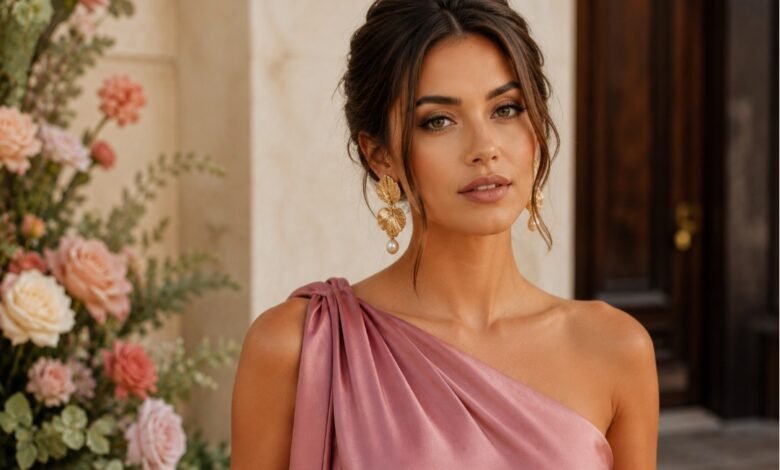
A wedding guest dress color is never just a color. It is lighting, location, etiquette, and photographs all conspiring together.
The same blush dress can look romantic in a garden, too pale at a beach ceremony, perfect at a vineyard, and suspiciously bridal in bright marble photos. That is why choosing wedding guest dress colors by venue matters. A good shade understands the setting before it tries to be pretty.
Color changes the whole message of the dress
A wedding guest dress color can make the outfit feel softer, more formal, more expensive, more seasonal, more relaxed, or more dramatic. It can also make a perfectly decent dress suddenly look wrong. Too pale in the wrong light? Bridal. Too dark in a soft garden at noon? Heavy. Too neon at a church ceremony? Loud in the least elegant way. Too beige at city hall? Possibly office, possibly bride-adjacent, depending on the fabric.
This is not about being afraid of color. I love color. I also love not being the guest people whisper about near the dessert table.
The trick is to choose color with context. Venue first. Light second. Dress code third. Then mood. That order saves lives, or at least outfits.
Read the light before you choose the shade
Wedding photos are not taken in one magical neutral lighting box. They happen in sun, shade, golden hour, candlelight, church interiors, hotel lobbies, beach glare, vineyard dusk, and rooftop city light. Color behaves differently in all of them.
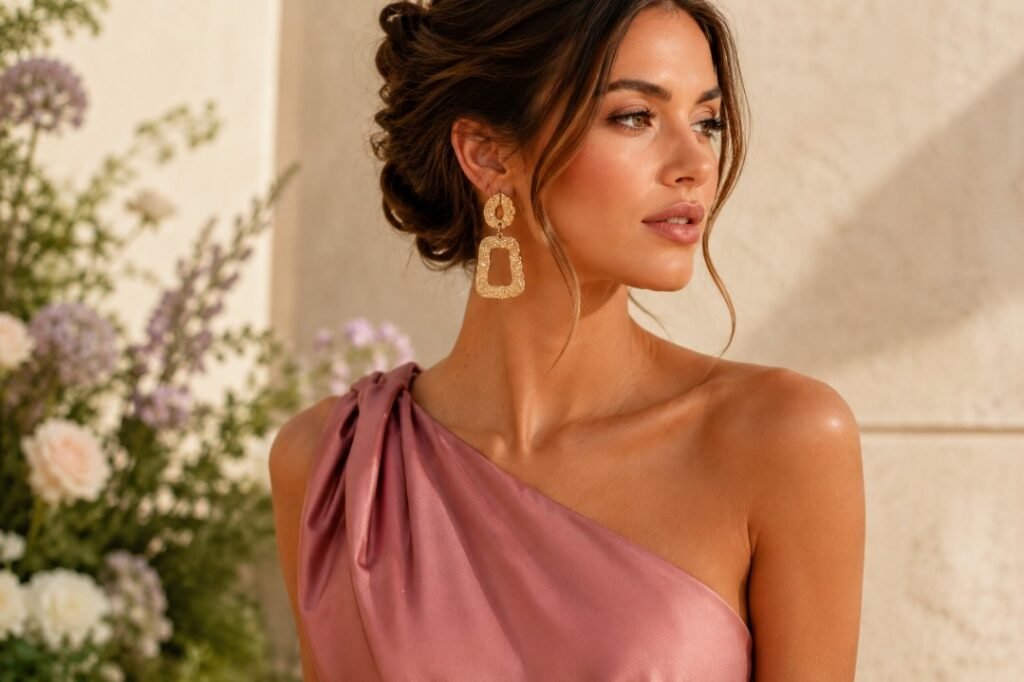
Pale colors look paler. Satin shines more. Ivory, cream, champagne, and very light beige can become risky fast. Choose color with enough depth: dusty rose, sage, blue, terracotta, coral, lavender, or richer neutrals.
Soft colors look romantic here, especially florals, sage, rose, butter yellow, and muted blue. Very dark shades can work, but they may feel heavier unless the dress has movement.
Deep tones, elegant mid-tones, and refined prints usually photograph well. Avoid anything too neon, too sheer, too bridal, or too loud against traditional architecture.
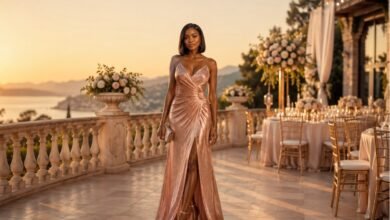
Warm shades become gorgeous: bronze, wine, olive, terracotta, cocoa, rose, soft gold, and deep green. Pale champagne can also become dangerously bridal, so be careful.
Black, navy, espresso, silver, deep wine, and metallic accents can look chic. Just add texture or jewelry so the look feels wedding-ready, not dinner-after-work.
The dangerous colors are not always obvious.
Everyone knows not to wear white. The sneakier problem is the family of almost-white colors: ivory, cream, porcelain, pale champagne, very light silver, bridal blush, and some beige satin. These can look harmless on a product page and then suddenly photograph like you have feelings about being the bride.
Venue palettes that make sense
These are not strict laws. They are color directions that usually look right in the setting, photograph well, and avoid the usual wedding guest traps.
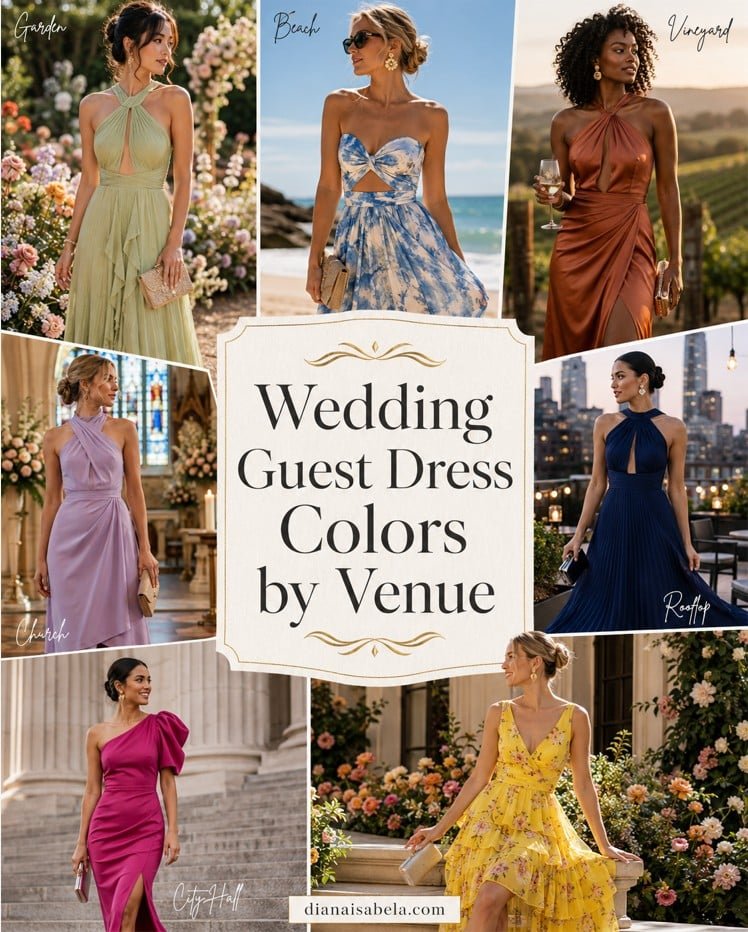
Garden wedding colors
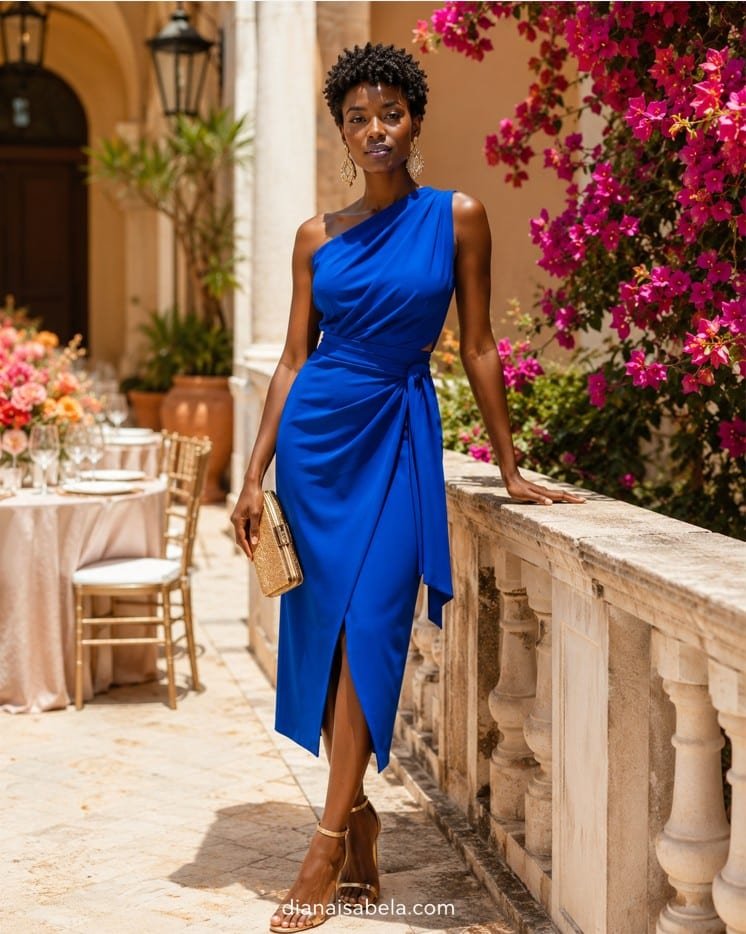
Garden weddings love gentle color, but not every floral dress has to look like a tablecloth with ambition. Choose romantic shades that sit naturally beside greenery and flowers: rose, sage, lavender, blue, peach, butter yellow, or soft prints. For full outfit styling, see garden wedding guest dresses.
Beach wedding colors
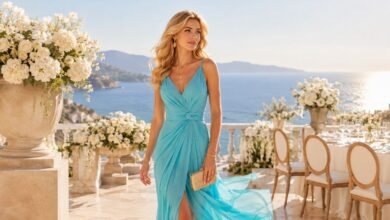
Beach weddings can handle breezy colors, but avoid looking like resort staff or a runaway bridal shell. Blue, coral, soft orchid, terracotta, seafoam, warm taupe, and tropical prints can work. Keep white, ivory, and pale champagne far away unless the invite specifically requests a white guest palette. More help: beach wedding guest dresses.
Church wedding colors
Churches usually prefer elegance over spectacle. Navy, mauve, wine, forest green, dusty blue, warm taupe, and refined prints look respectful without becoming dull. Neon, ultra-sheer pale shades, and loud club colors feel out of place. For coverage and ceremony styling, use church wedding guest dresses.
Vineyard wedding colors
Vineyards are made for warm, grown-up color: wine, olive, bronze, rose, navy, espresso, terracotta, and soft florals. These shades love golden hour and do not fight gravel paths, vines, or countryside texture. More outfit ideas: vineyard wedding guest dresses.
Rooftop and city wedding colors
City venues can take sharper color: black, navy, espresso, silver, cocoa, deep green, wine, bronze, and muted metallics. The trick is texture. A black dress with good jewelry feels chic. A plain black office-looking dress feels like you came from a meeting with better lipstick. For skyline styling, see rooftop wedding guest dresses.
Destination wedding colors
Destination weddings depend on climate and location. Villas, resorts, islands, mountain venues, and city trips all ask for different shades. I like color that travels well visually: coral, teal, orchid, terracotta, warm neutrals, blue, and prints with movement. Packing logic matters too; the destination wedding guest dresses guide goes deeper.
Black can be chic. It can also be lazy.
Black wedding guest dresses are not forbidden. In many city, rooftop, cocktail, evening, and formal settings, black can look incredibly elegant. The question is whether it feels like a wedding outfit or just “I own a black dress.”
Use fabric and accessories to make it intentional: satin, crepe, velvet, lace with restraint, sculptural earrings, metallic sandals, or a beautiful clutch. If the venue is a bright garden at noon, black may still work, but soften it with movement or warm accessories.
When black works best
Color mistakes guests make without realizing
Most color mistakes are not dramatic. They are tiny misreads: the shade is too pale, too loud, too flat, too casual, too close to the bridesmaids, or wrong for the light. The outfit may not be “bad,” but it feels off.
Risky choices
Better moves
For the bigger etiquette line — especially white, bridal-looking shades, and colors that might pull focus — use the wedding guest dress etiquette guide. If you are already suspicious of the outfit, compare it with what not to wear to a wedding.
How to choose color when the invite gives no dress code
No dress code is not freedom. It is homework. The venue, time, season, and couple’s style become your clues.
Morning garden wedding? Soft and fresh. Evening rooftop? Deeper and sharper. Church ceremony with family? Refined and respectful. Beach destination? Airy but not bridal. Vineyard dinner? Warm, romantic, and sunset-friendly. The color should help you look like you understood the day, not like you chose the first dress with two-day shipping.
Quick no-dress-code color compass
Color outfit menus for real wedding settings
Here are starting points that feel specific without becoming strict. Swap the silhouette based on dress code, but keep the color logic.
Where this fits in the bigger wedding guest outfit plan
Color is only one decision, but it affects everything: shoes, bag, jewelry, hair, makeup, and how formal the dress feels. If you are still choosing the main silhouette, dress code, or season direction, start with the full wedding guest dresses guide. Then come back to color and venue, because the right shade can make a simple dress look much more expensive.
And if your color is good but the accessories feel unfinished, the wedding guest accessories guide will help you sharpen the whole look without adding chaos.
The best wedding guest color looks like it belongs in the room, the light, and the photo.
That is the real test. Not whether the shade is trendy. Not whether it looked pretty online. Not whether everyone on TikTok is suddenly wearing butter yellow. The right color belongs to the venue, respects the couple, flatters the dress, and photographs clearly as guest — not bride, not bridesmaid, not confused background object.
Choose color with intention. Then let the dress do the charming part.
FAQ
What are the best wedding guest dress colors by venue?
The best wedding guest dress colors depend on the venue and light. Gardens work well with rose, sage, lavender, and soft blue. Beaches suit coral, sea blue, teal, and warm taupe. Churches often look best with navy, mauve, wine, deep green, or refined prints. Vineyards love wine, olive, bronze, and terracotta. Rooftops and city venues can handle black, navy, espresso, metallics, and deep jewel tones.
What colors should wedding guests avoid?
Wedding guests should usually avoid white, ivory, cream, pale champagne, and any shade that could photograph bridal. Very pale blush, silver satin, or beige can also be risky depending on the fabric and venue light.
Can I wear black to a wedding as a guest?
Yes, black can be chic for many weddings, especially city, rooftop, cocktail, evening, formal, and winter weddings. To make it feel wedding-appropriate, choose elegant fabric, jewelry, a polished bag, and shoes that suit the venue.
What colors are best for a garden wedding guest dress?
Garden weddings look beautiful with dusty rose, sage, lavender, powder blue, peach, soft yellow, and romantic floral prints. Choose colors that feel fresh beside greenery without competing too loudly with the flowers.
What color should I wear to a beach wedding?
Good beach wedding guest colors include sea blue, coral, turquoise, soft orchid, terracotta, warm taupe, and tropical prints. Avoid white, ivory, cream, and pale champagne unless the couple specifically asks guests to wear light colors.
Are champagne dresses okay for wedding guests?
Champagne dresses can be risky because many bridal gowns and reception dresses come in champagne tones. A darker bronze or warm gold may be safer than pale champagne, especially in satin or bright outdoor light.
What colors work for a church wedding guest dress?
Navy, mauve, wine, deep green, dusty blue, warm taupe, plum, and elegant prints work well for church weddings. The color should feel respectful and polished, not neon, bridal, or overly attention-grabbing.
How do I choose a wedding guest dress color if there is no dress code?
Use the venue, time, and season as clues. Soft colors work well for morning or garden weddings, richer shades for sunset and vineyard weddings, deeper tones for evening or city venues, and breathable brighter shades for destination or beach settings.