What to Wear Over a Dress to a Fall Wedding: Elegant Layers That Don’t Ruin the Outfit

Deciding what to wear over a dress to a fall wedding is where many beautiful outfits quietly fall apart. The dress is elegant. The shoes are chosen. The earrings are behaving. Then the temperature drops, and someone reaches for a random cardigan, a puffer jacket, or a wrap that refuses to stay on the shoulders, and suddenly the whole look has left the wedding and joined a school pickup line.
I say this with love because autumn weddings are tricky. They can start with soft afternoon sun, move into a chilly ceremony, become warm again during dinner, then punish everyone during the walk back to the car. A layer is not optional for many fall weddings. But the layer has to look like it belongs to the outfit, not like it was grabbed during panic weather negotiations.
The best fall wedding layers keep you warm, respect the dress code, flatter the dress shape, survive photos, and still look chic when you are standing near candles, stone steps, garden florals, a vineyard path, or a hotel entrance. A good layer is not an apology. It is part of the styling.
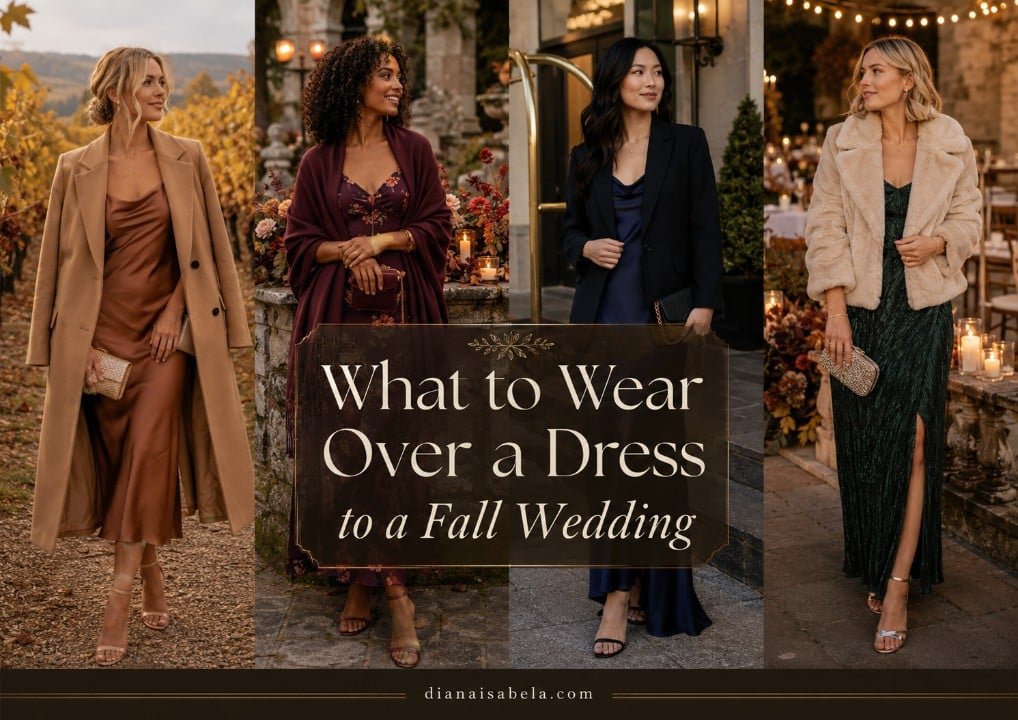
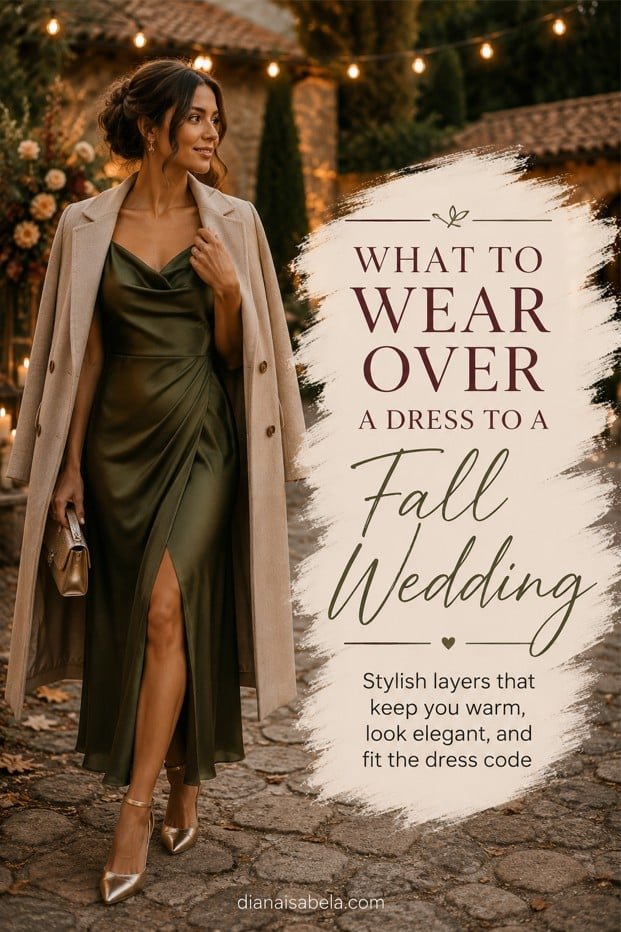
The best things to wear over a dress to a fall wedding are a tailored coat, wool coat, elegant wrap, pashmina, shawl, structured blazer, cropped jacket, faux-fur jacket, soft trench, or dressy cape depending on the venue and dress code. For formal weddings, choose polished coats, wraps, faux fur, or capes. For semi-formal or outdoor weddings, a blazer, soft trench, pashmina, cropped jacket, or tailored coat can work. Avoid casual cardigans, bulky puffers, denim jackets at dressy venues, and anything that makes the dress look unfinished.
The layer has to belong before the weather arrives
The biggest mistake is treating the layer like a backup item. A fall wedding layer should be chosen before the wedding day, not discovered in the back seat on the way there. If the dress is romantic, the layer should respect that. If the dress is sleek, the layer can bring texture. If the wedding is formal, the layer needs polish. If the venue is outdoors, the layer needs to actually keep you warm enough to enjoy yourself.
There is a difference between a layer and outerwear. Outerwear gets you from the car to the venue. A layer stays in the outfit. Sometimes one piece can do both, like a beautiful wool coat or elegant wrap. Sometimes you need a practical coat for travel and a prettier layer for photos or the ceremony. That is not overthinking. That is how you avoid shivering in a thin satin dress while pretending the wind is “refreshing.”
A layer also changes the silhouette. A long coat over a midi dress can look expensive. A cropped jacket over a full skirt can look charming. A blazer over a slip dress can make it modern. A bulky cardigan over a satin gown can make it sad. The layer is not neutral. It has power.
My rule: if the layer looks like you would never choose it in the mirror, do not expect it to become chic just because the temperature dropped.
If you are still choosing the actual dress, start with the broader autumn wedding guest outfit guide. The dress and layer should be planned together, not forced into a last-minute friendship.
Coats are the most elegant answer when the wedding is truly cool
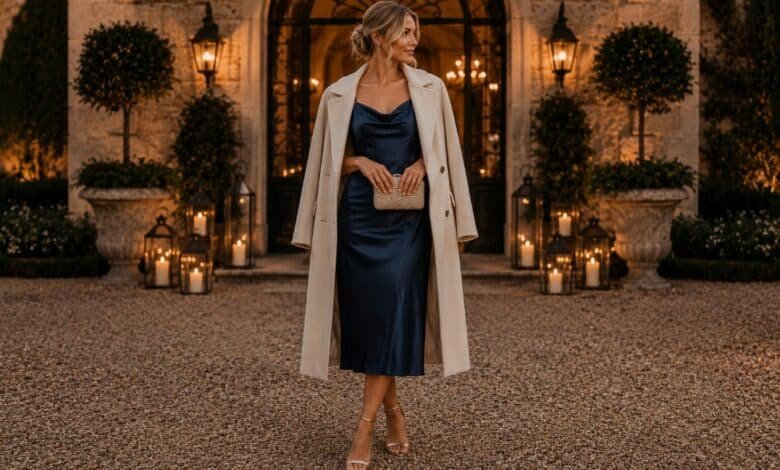
A tailored coat is the easiest way to make a fall wedding outfit look intentional. It gives structure, warmth, and polish without fuss. Over a satin midi, a wool coat looks expensive. Over a long-sleeve dress, it looks refined. Over a floral dress, it keeps the outfit from feeling too light for the season.
The coat should be cleaner than your everyday coat. It does not need to be new or designer, but it should have shape. A sharp wool coat, belted coat, long tailored coat, wrap coat, or elegant double-breasted coat can work beautifully. The length should make sense with the dress. A midi dress usually looks best with a coat that is slightly longer than the dress, similar in length, or clearly cropped in a deliberate way. A coat that ends at a strange place across the widest part of the skirt can make everything look accidental.
The polished wool coat
A wool coat is my most trusted fall wedding layer for outdoor ceremonies, church weddings, hotel arrivals, estate venues, and late-fall receptions. Camel, chocolate, black, navy, ivory that is clearly outerwear, charcoal, burgundy, and deep green can all look elegant.
For wedding guest styling, I prefer clean lines over too many buttons, zippers, sporty seams, or casual hardware. The coat should look like it understands the dress.
The wrap coat or belted coat
A wrap coat is beautiful over dresses because it follows the waist instead of fighting it. It works well with midi dresses, long-sleeve dresses, satin styles, crepe dresses, and elegant florals. The belt gives the outfit shape even when the coat is closed.
Just check the fabric. A robe-like coat can be luxurious, but a too-soft coat with no structure may look like loungewear if the venue is formal.
For dressier autumn outfits, a coat is especially useful with formal fall wedding guest looks, where the layer should feel as polished as the dress.
Wraps, shawls, and pashminas are useful, but they need styling discipline
A wrap can be elegant. It can also become a slippery rectangle you adjust for four hours. I like wraps for church ceremonies, formal dinners, sleeveless dresses, satin gowns, and weddings where you need coverage without a full coat. But the wrap has to look deliberate.
The best wraps have enough weight to stay put. Silk, cashmere, wool, velvet, satin-lined shawls, or dressy pashminas can work. Very thin scarves often look flimsy and keep sliding. A huge blanket scarf can look cozy, but cozy is not always the same as wedding-ready.
Color matters. A wrap should either harmonize with the dress or create an elegant contrast. Black wrap with black dress can look severe unless the textures differ. Champagne wrap with a pale dress can drift bridal. A bronze, burgundy, chocolate, navy, or soft metallic wrap can be beautiful with fall colors.
Silk or satin wrap
Best for formal or cocktail weddings where you need light coverage. It looks elegant over satin, crepe, lace, and evening dresses, but it will not keep you very warm outside for long.
Cashmere or wool pashmina
Best when you need real warmth without a heavy coat. It works for church ceremonies, outdoor cocktail hours, vineyard receptions, and chilly dinners.
Velvet shawl
Best for evening or late-fall weddings. Velvet feels rich under candlelight, but keep the dress from becoming too heavy if the color is dark.
Dressy scarf
Possible, but tricky. It should look like an intentional wrap, not like your everyday winter scarf joined the reception uninvited.
If the dress already has sleeves, compare the layer with my sleeved fall wedding guest dress ideas. Sleeves plus a wrap can be beautiful, but too much fabric around the upper body can get heavy fast.
Blazers can look modern, but they are not all wedding blazers
A blazer over a dress can be very chic. It can also look like you came from work and changed only half the outfit. The difference is cut, fabric, and styling. A structured blazer over a satin slip dress can feel modern and cool. A boxy office blazer over a floral midi may look like two different calendars collided.
For fall weddings, I like blazers when the venue has a city, restaurant, hotel, gallery, courtyard, or polished semi-formal mood. A blazer works best over sleeker dresses: slip dresses, satin midis, crepe dresses, minimal sheaths, column dresses, and clean wrap dresses. It is harder over full skirts, ruffles, very romantic florals, or dresses with dramatic sleeves.
Tailored, slightly cropped, satin, velvet, or tuxedo-inspired
These can look intentional and wedding-ready. A black tuxedo blazer over a satin midi, a velvet blazer over a slip dress, or a cropped tailored blazer over a crepe dress can feel sharp without looking corporate.
Office cuts, stiff shoulders, dull fabric, awkward length
If the blazer looks like it belongs with trousers and a laptop, it may not belong over the dress. Wedding blazers need polish, softness, or evening detail.
For less dressy autumn invitations, a blazer can work especially well with the kind of outfits in my semi-formal autumn wedding guest edit.
Cropped jackets solve proportion problems
A cropped jacket can be the right answer when a long coat overwhelms the dress or a wrap feels too formal. Cropped layers work especially well with fit-and-flare dresses, tea-length dresses, midi dresses, slip dresses, and dresses that already have a clear waist.
The key is making the cropped jacket dressy enough. A cropped faux-fur jacket can look glamorous for evening. A cropped velvet jacket can feel romantic. A cropped satin or structured jacket can work for cocktail attire. A short tailored jacket can sharpen a soft dress. A casual denim jacket, however, belongs only at very relaxed weddings and even then needs care.
I also like cropped jackets because they let the dress stay visible in photos. A long coat may hide the whole outfit until you take it off. A cropped jacket keeps the silhouette alive. It says, “Yes, I planned this,” not “I am wearing my commute layer until further notice.”
Best over full skirts: a cropped jacket that ends near the waist so the dress keeps its shape.
Best over slip dresses: a short faux-fur jacket, velvet jacket, or tailored cropped blazer that adds structure.
Best for evening: cropped faux fur, velvet, satin, or a polished structured jacket with a small clutch.
Faux fur can be glamorous or extremely loud
Faux fur is one of those layers that can either make a fall wedding guest outfit look cinematic or make it look like the coat is the main guest. I love it for evening weddings, late-fall receptions, formal venues, city weddings, hotels, and candlelit settings. I do not love it when the dress is already dramatic, the jewelry is loud, the makeup is heavy, and the faux fur arrives like a character.
A cropped faux-fur jacket in cream, champagne, taupe, black, chocolate, or soft blush can be beautiful over a simple dress. A faux-fur stole can work for formal events. A longer faux-fur coat can be glamorous, but it needs a sleek dress and enough venue drama to support it. A very shaggy or oversized faux fur can quickly feel costume-like.
Texture needs breathing room. If the layer is fluffy, keep the bag smaller and the jewelry cleaner. If the dress has sequins, heavy lace, or velvet, be careful adding more texture. Autumn styling should feel layered, not crowded.
Faux fur is strongest when it looks like punctuation, not the entire paragraph.
Trenches and leather jackets need the right wedding mood
A trench coat can be elegant for early fall, city weddings, restaurant weddings, garden ceremonies, and daytime events. The dressier the trench, the better. A soft trench in beige, taupe, olive, chocolate, navy, or black can look chic over a midi dress. A wrinkled casual trench with sporty details may look too everyday.
Leather jackets are more specific. A sleek leather jacket can work for a city wedding, restaurant reception, barn wedding, or cool semi-formal setting. It can look modern over a satin slip dress or floral midi. But at a formal church wedding or elegant estate ceremony, it may feel too casual or too edgy unless the whole outfit supports that mood.
Denim jackets are the hardest. I would only use denim for a very casual outdoor wedding, backyard wedding, or relaxed barn setting, and even then, it has to look intentional. Most fall weddings deserve something more polished.
Soft trench
Best for early fall, daytime ceremonies, city venues, garden weddings, and semi-formal outfits. Choose a clean fabric and avoid anything too utilitarian.
Leather jacket
Best for modern, city, rustic, or less formal weddings. It works when the dress is sleek or romantic enough to balance the edge.
Denim jacket
Only for very relaxed weddings. If the invitation says formal, semi-formal, cocktail, church, estate, or hotel, denim is usually not the answer.
Utility jacket
Almost never my first choice for a wedding guest dress. It can look practical, but practical is not the same as styled.
If the venue is outdoors and the layer decision depends on terrain and weather, my outdoor fall wedding outfit notes will help you match the layer to the whole setting.
Cardigans are risky because they change the mood too quickly
I know cardigans are comfortable. I know they are easy. I also know they can ruin a wedding guest dress faster than almost any other layer. A casual cardigan over satin, chiffon, lace, or a formal midi can make the outfit look unfinished. It softens the look in a way that is not always romantic. Sometimes it just makes the dress look less dressed.
That does not mean cardigans are forbidden forever. A fine-gauge cropped cardigan, a pearl-button knit, a dressy cashmere cardigan, or a fitted cardigan in a beautiful color can work for a relaxed wedding, daytime garden ceremony, or dressy casual event. But it has to look chosen, not borrowed.
The cardigan should not be pilling, oversized, slouchy, or office-basic. It should not cover the dress in a way that kills the shape. If you wear one, keep the rest of the outfit polished: good shoes, small clutch, intentional jewelry, and hair that says wedding, not errands.
The cardigan that works
Fine knit, cropped or fitted, clean color, dressy buttons, soft cashmere, and styled with a polished dress. It should look like a gentle layer, not a comfort blanket.
The cardigan that hurts the outfit
Oversized, casual, pilled, office-like, too long, too chunky, or randomly colored. If it makes the dress look less special, it is not the right layer.
The dress neckline and sleeves decide how much layer you can add
A layer does not sit on a blank canvas. It sits on neckline, sleeves, shoulders, straps, ruching, bows, lace, pleats, and fabric. This is why the same wrap looks elegant over one dress and messy over another.
Strapless dresses love wraps, cropped jackets, faux fur, and structured coats. Spaghetti-strap slip dresses can handle blazers, faux fur, shawls, and long coats. Long-sleeve dresses usually need simpler outer layers because the sleeves already add visual weight. High-neck dresses often look better with coats than with wraps that crowd the neckline. One-shoulder dresses are tricky because many layers hide the best part of the dress.
Strapless dress: wrap, shawl, faux fur, cropped jacket, or tailored coat works beautifully.
Slip dress: blazer, long coat, faux fur, soft trench, or pashmina can make it feel more autumnal.
Long-sleeve dress: choose a cleaner coat or light wrap so the upper body does not feel crowded.
One-shoulder dress: consider a coat for outside and remove it indoors, because wraps often fight the neckline.
For neckline and coverage questions, the church wedding guest dress guide is useful because ceremony settings often decide how much coverage feels appropriate.
Dress code changes the layer more than the dress does
A black blazer may be perfect for semi-formal and too casual for formal. A faux-fur jacket may be glamorous for evening and ridiculous at a relaxed backyard ceremony. A wool coat may work almost anywhere if it is tailored well. The dress code decides how polished the layer must be.
Formal
Choose a tailored wool coat, elegant wrap, faux-fur jacket, dressy cape, velvet shawl, or polished long coat. Avoid casual cardigans, denim, utility jackets, and anything sporty.
Semi-formal
A blazer, wrap, pashmina, soft trench, cropped jacket, or tailored coat can work. The layer should feel polished but not overly dramatic.
Cocktail
Try a cropped jacket, faux fur, satin blazer, velvet blazer, tailored coat, or chic wrap. Cocktail layers can have more personality as long as they do not fight the dress.
Dressy casual
A soft trench, refined cardigan, cropped jacket, blazer, or lighter coat can work. Keep the shoes and bag polished so the outfit still reads wedding guest.
If you are balancing a not-too-dressy invitation, use the semi-formal fall wedding guest page as the calibration point. The layer should match the level of the whole outfit, not just the weather.
Layer color should frame the dress, not compete with it
The safest layer colors for fall weddings are usually camel, chocolate, black, navy, ivory outerwear, charcoal, taupe, burgundy, deep green, bronze, champagne-beige, and soft blush when the dress is clearly not bridal. But “safe” depends on the dress color.
A camel coat over burgundy looks warm and expensive. A black coat over emerald looks sharp. A navy coat over a floral dress can be elegant. A chocolate wrap over rust can look rich. A cream faux-fur jacket over a dark dress can be glamorous. But a cream layer over a pale champagne dress may push the whole look too close to bridal. A black cardigan over a soft floral dress may make it feel heavier than intended.
Warm layer colors
Camel, chocolate, bronze, espresso, warm taupe, burgundy, and rust-toned layers work beautifully with autumn dresses in wine, brown, olive, terracotta, emerald, navy, and dark florals.
Cool layer colors
Black, navy, charcoal, pewter, deep plum, and cool gray layers work well with navy, black, emerald, plum, dark floral, and cooler-toned dresses. Add jewelry or a clutch so the look does not become too severe.
When the color pairing feels confusing, my fall wedding guest dress color guide can help you decide whether the layer should warm up, soften, or sharpen the outfit.
Fabric is why one layer looks expensive and another looks like an errand
The fabric of the layer matters as much as the dress fabric. Wool looks polished. Cashmere looks soft and luxurious. Velvet feels evening-ready. Satin can be glamorous. Faux fur adds drama. Leather adds edge. Cotton knits can look casual. Polyester fleece should not be in the same sentence as wedding guest styling unless we are discussing what not to do.
Fall weddings love texture, but the textures have to cooperate. Satin dress with wool coat? Beautiful. Lace dress with soft wrap? Romantic. Velvet dress with faux fur? Possible, but careful. Floral chiffon with a heavy leather jacket? Maybe, if the wedding is modern and relaxed. Otherwise, the dress and layer may look like they met at different parties.
Wool
Best for tailored coats, wrap coats, and dressy outerwear. It gives warmth and structure without looking casual.
Cashmere
Excellent for pashminas, wraps, and fine cardigans. It feels soft, elegant, and useful for chilly ceremonies.
Velvet
Beautiful for shawls, blazers, cropped jackets, or evening layers. Best when the dress is not already overloaded with texture.
Outdoor weddings need a layer that can move through the whole day
Outdoor fall weddings are where layers become non-negotiable. A vineyard ceremony might start warm and end cold. A garden reception may have damp grass and a breeze. A barn wedding may have heaters in one area and cold air in another. An estate lawn can look romantic and feel like the temperature dropped just to humble everyone.
For outdoor fall weddings, I like tailored coats, warm wraps, pashminas, soft trenches, cropped jackets, and wool coats. The layer should allow walking, sitting, standing, and holding a drink without constant rearranging. It should also pair with practical shoes. A pashmina and block heels can look elegant. A faux-fur coat and rugged boots may send mixed messages unless the whole outfit is very deliberate.
If the ceremony is outdoors but the reception is indoors, you may only need the layer for ceremony and photos. In that case, choose something that looks beautiful in pictures even if it comes off later. If the reception is also outdoors, prioritize warmth more seriously. There is no award for being the coldest stylish person near the dessert table.
Outdoor layer pairings I would trust
Vineyard ceremony: burgundy chiffon midi, bronze block heels, warm pashmina, and a small metallic clutch.
Garden reception: dark floral dress, cropped tailored jacket, low block heels, and soft gold earrings.
Barn wedding: chocolate crepe midi, refined ankle boots, wool coat, and a textured clutch.
Estate lawn: navy satin midi, camel wrap coat, pointed flats or block heels, and pearl earrings.
For shoes that work with these layers, my fall wedding shoe guide keeps the outfit practical from the ground up.
The layer should survive photos
Wedding layers live in photos. That matters. You may think the coat is only for warmth, but if it is on during arrivals, ceremony, outdoor portraits, cocktail hour, or candid photos, it becomes part of the outfit story.
A layer that photographs well usually has shape, texture, or a clean line. Tailored coats photograph beautifully because they frame the body. Wraps can look elegant if they are arranged neatly. Faux fur adds drama in evening light. Blazers look sharp when the fit is good. Oversized cardigans, bulky puffers, and random scarves often photograph like afterthoughts.
Check the back too. A coat or wrap may look fine from the front and awkward from behind. Wedding photos are not loyal to your preferred angle. If the layer bunches, pulls, slides, or hides the best part of the dress, it may not be the one.
If the dress has a beautiful neckline: choose a layer that can open cleanly or come off easily for photos.
If the dress has a dramatic back: use a coat for warmth, then remove it for key photos instead of fighting the design.
If the dress is simple: let the layer bring texture through wool, cashmere, velvet, faux fur, or a polished blazer.
Layers that usually make the outfit worse
Not every warm thing deserves to attend the wedding. Some layers are useful in life and wrong in photos. The goal is not to be uncomfortable. The goal is to choose warmth that still respects the outfit.
The casual comfort trap
Oversized cardigans, pilled knits, fleece jackets, casual hooded coats, utility jackets, and denim layers can make a wedding guest dress look unfinished unless the wedding is extremely relaxed.
The bulky coat problem
Puffers, parkas, sporty coats, and heavy winter outerwear may be necessary for travel, but they usually should not be the layer you plan to wear during the event or in photos.
There are exceptions for weather, of course. If it is freezing, wear the warm coat to arrive and leave. But if you need a visible event layer, bring something more elegant to wear over the dress once you are inside the wedding setting.
My coatroom test before I leave the house
Before I trust a layer for a fall wedding, I test it with the actual dress. Not a similar dress. Not “I think it will work.” The actual dress, shoes, bag, and jewelry. The layer has to pass the full outfit test.
I check whether the layer changes the waist, hides the neckline, fights the sleeves, wrinkles the fabric, makes the dress look casual, or creates a strange color story. Then I move. I sit. I hold a clutch. I imagine ceremony photos. I imagine being cold outside and warm inside. I imagine taking the layer off and having somewhere to put it that does not involve dragging it around like a decorative pet.
The Diana layer check
Ask four things: does it match the dress code, does it flatter the dress, does it work in photos, and does it actually help with the weather? If it only solves one of those problems while creating three new ones, it is not the right layer.
A wedding layer should make the outfit smarter. Warmer, yes. But also more complete.
What to wear over a dress to a fall wedding FAQ
What can I wear over a dress to a fall wedding?
You can wear a tailored coat, wool coat, wrap, pashmina, shawl, blazer, cropped jacket, faux-fur jacket, soft trench, or dressy cape. The best choice depends on the dress code, venue, temperature, and the shape of your dress.
Can I wear a cardigan over a wedding guest dress?
Sometimes, but choose carefully. A fine-gauge cropped cardigan, cashmere cardigan, or dressy fitted cardigan can work for relaxed or daytime weddings. Avoid oversized, pilled, casual, or office-like cardigans that make the outfit look unfinished.
What jacket looks good over a wedding guest dress?
A cropped jacket, tailored blazer, velvet jacket, satin jacket, faux-fur jacket, or structured short coat can look good over a wedding guest dress. Match the jacket to the mood of the dress: sleek dresses can handle structure, while romantic dresses usually need softer layers.
Is a blazer appropriate over a dress for a fall wedding?
A blazer can be appropriate, especially for semi-formal, city, restaurant, gallery, or cocktail weddings. Choose a blazer that looks polished rather than corporate. Tuxedo-inspired, velvet, satin, cropped, or well-tailored blazers usually work better than office blazers.
Can I wear a leather jacket to a fall wedding?
A sleek leather jacket can work for a modern, city, rustic, or less formal fall wedding. It is usually not the best choice for formal, church, hotel, or elegant estate weddings unless the outfit is intentionally styled around that edge.
What should I wear over a formal dress in fall?
For a formal fall wedding, choose a tailored wool coat, elegant wrap, velvet shawl, faux-fur jacket, dressy cape, or polished long coat. Avoid casual sweaters, denim jackets, utility jackets, and sporty outerwear.
Are shawls and wraps still stylish for weddings?
Yes, if they look intentional. Silk, satin, cashmere, wool, velvet, or dressy pashmina wraps can look elegant. Very thin scarves or oversized blanket scarves can feel less polished unless the wedding is relaxed.
What color layer should I wear over a fall wedding guest dress?
Camel, black, navy, chocolate, taupe, charcoal, burgundy, deep green, ivory outerwear, bronze, and soft metallic tones can all work. Choose a color that frames the dress rather than competing with it.
Can I wear a denim jacket to a fall wedding?
Only for a very relaxed wedding, such as a casual backyard or rustic daytime event. For formal, semi-formal, cocktail, church, hotel, or estate weddings, denim usually looks too casual.
What should I avoid wearing over a dress to a fall wedding?
Avoid bulky puffers, fleece jackets, casual hoodies, oversized cardigans, sporty coats, rugged utility jackets, and layers that hide the dress in an unflattering way. If you need a warm coat for travel, bring a prettier event layer too.
The best layer looks like part of the outfit
A fall wedding layer should not feel like a compromise. It should make the outfit warmer, more polished, and more appropriate for the setting. The right coat, wrap, blazer, shawl, or cropped jacket can make a dress look more expensive instead of less special.
Choose the layer with the same care as the dress. If it flatters the silhouette, respects the venue, works in photos, and keeps you comfortable when autumn starts acting dramatic, that is the one.