Wedding dress codes are not written for normal people. Let’s translate them.
Some invitations are clear. Some say “garden formal” and expect you to understand whether that means silk midi, floral maxi, wedge sandals, or a gentle emotional breakdown in front of your closet. The point of a dress code is simple: match the formality of the wedding without dressing like you are trying to become the evening’s surprise plot twist.
Start with three clues before you choose the dress
The dress code is only one clue. The venue, time of day, and invitation style matter just as much. A black tie wedding in a grand hotel is not the same energy as “formal” at a vineyard. Cocktail on a rooftop is not cocktail in a church hall. Beach formal is not an excuse to wear flip-flops unless the couple specifically says the ceremony is on sand and everyone has surrendered to physics.
Read the invitation like a tiny detective novel with better shoes.
Black tie: elegance with real structure
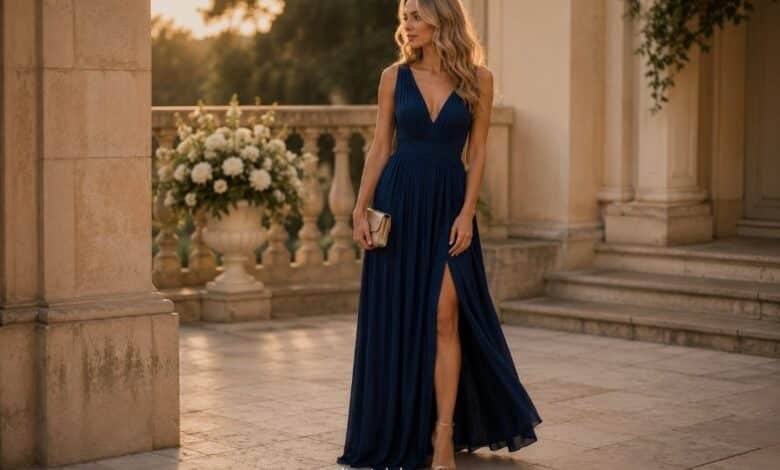
Black tie means the wedding is formal and evening-leaning. A floor-length gown is the safest choice, but a very refined midi or dressy cocktail dress can work when the cut, fabric, and styling are elevated enough.
Think satin with weight, crepe, velvet, silk blends, refined pleating, architectural necklines, or a dress that moves like it knows the photographer is nearby. Add polished heels, a small clutch, and jewelry that looks intentional, not random.
White tie: do not improvise
White tie is rare, very formal, and not the moment for “I found this cute mini.” Choose a full-length gown, elegant evening accessories, and a very polished beauty look. The outfit should feel ceremonial.
If you are unsure, ask. White tie is one of the few dress codes where guessing can become expensive and awkward.
The dress code dictionary guests actually need
Here is the translation from invitation language to closet language. Not every wedding follows these rules perfectly, but this gives you the safest stylish lane.
Formal or black tie optional
Dressy but flexibleThis is elegant, but not as strict as black tie. A full-length gown works, but so does a refined midi, dressy column dress, polished satin slip dress, or chic evening jumpsuit if the styling is elevated.
Cocktail attire
The elegant middleCocktail is one of the most common wedding dress codes because it gives you room. A midi dress is usually perfect. A short dress can work if it feels polished, not nightclub. A jumpsuit can be excellent when the fabric and accessories are sharp.
Semi-formal
Polished, not grandSemi-formal is the dress code that causes the most closet staring. It is dressier than casual, softer than formal, and usually best solved with a midi dress, wrap dress, polished floral dress, elegant slip dress, or tailored jumpsuit.
Dressy casual
Relaxed but still invitedDressy casual does not mean casual. It means comfortable polish. You can wear a pretty midi, a soft maxi, a skirt-and-top outfit, or a simple dress with better shoes and a small bag.
Festive attire
Personality allowedFestive means the couple wants color, texture, shine, or personality. This is where you can bring a bright dress, interesting print, metallic shoe, sculptural earring, or dramatic sleeve.
Beach formal is not beach casual wearing lip gloss
Beach formal still means dressed up. The difference is fabric, movement, and shoe logic. Choose a flowy maxi, elegant midi, polished halter dress, soft column dress, or dressy set in a fabric that moves well.
Skip stilettos if there is sand. Choose block heels, flat metallic sandals, wedges, or dressy sandals that will not turn walking into a public performance.
Garden party dress codes love softness, but not laziness
Garden weddings can handle florals, pastels, romantic sleeves, soft draping, and pretty movement. But the look should still be finished. A garden dress can be dreamy without looking like a picnic blanket with straps.
For more setting-specific styling, the main wedding guest dresses guide is useful when the invitation wording and venue are pulling in different directions.
When the invitation gives you almost nothing
Sometimes the dress code is missing, vague, or written by someone who thinks “nice” is a category. Here is the rescue formula.
The dress code mistakes that make guests look confused
Most wedding guest mistakes are not dramatic. They are small mismatches. A dress that is too casual for a ballroom. A gown that feels too grand for a backyard. A shoe that cannot survive the venue. A color that photographs closer to bridal than anyone wants to discuss.
Do not ignore the no-white zone
White, ivory, cream, pale champagne, and bridal-looking light tones are risky. If the dress could make someone ask, “Is that too close to the bride?” choose another color. The wedding guest dress etiquette guide goes deeper on this.
Do not treat shoes as an afterthought
Dress code and venue both affect shoes. Formal ballroom? Elegant heel. Garden lawn? Block heel. Beach? Sand-friendly sandal. Outdoor floor chaos? Read the outdoor wedding shoe guide before committing to a stiletto tragedy.
Accessories translate the dress code, too
A simple dress can become cocktail with metallic heels and a clutch. A formal gown can become softer with delicate jewelry. A garden dress can become more polished with pearl earrings and a structured mini bag.
The trick is not adding everything. It is choosing the detail that clarifies the outfit. For more help, use the wedding guest accessories guide.
When in doubt, make it look more intentional
Steam the dress. Choose a real bag, not your everyday tote. Wear shoes that match the formality and venue. Make the hair look deliberate. Add one polished accessory. That alone solves half of wedding guest panic.
If your goal is to make a simple outfit feel elevated, the guide on how to make a wedding guest dress look expensive will help you refine the final details.
The Diana translation before you leave the house
Ask one question: would this outfit make sense standing next to the venue, the invitation, and the couple’s level of formality?
If yes, you are probably dressed correctly. If the dress only works when you explain it, that is usually the sign to change something. Wedding guest style should not require a speech.
When the outfit is right, it feels easy. Not boring. Easy. The dress belongs, the shoes behave, the bag is small enough to be civilized, and nothing looks like it is trying to steal the bouquet.
A dress code is not a fashion prison. It is a map.
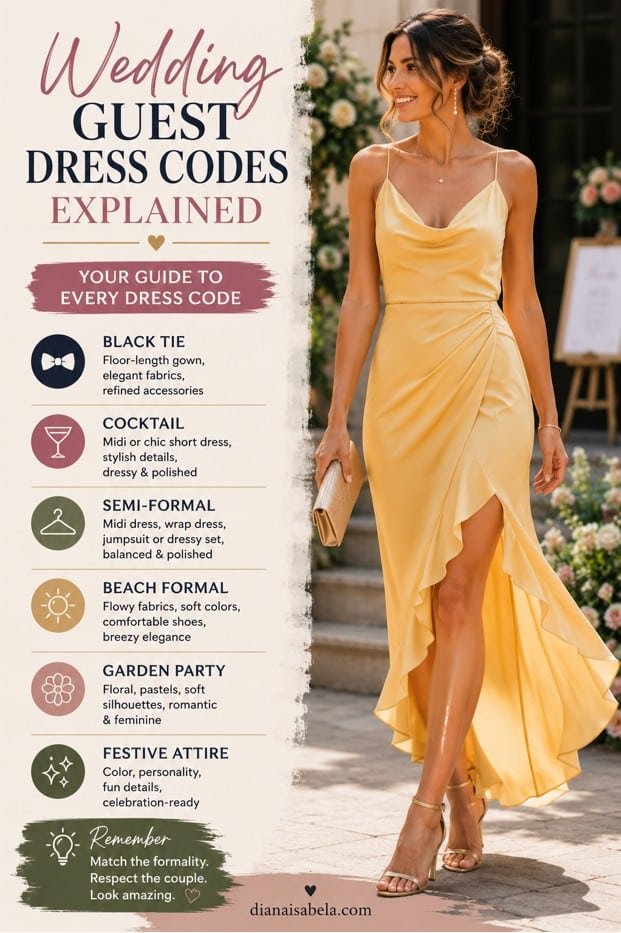
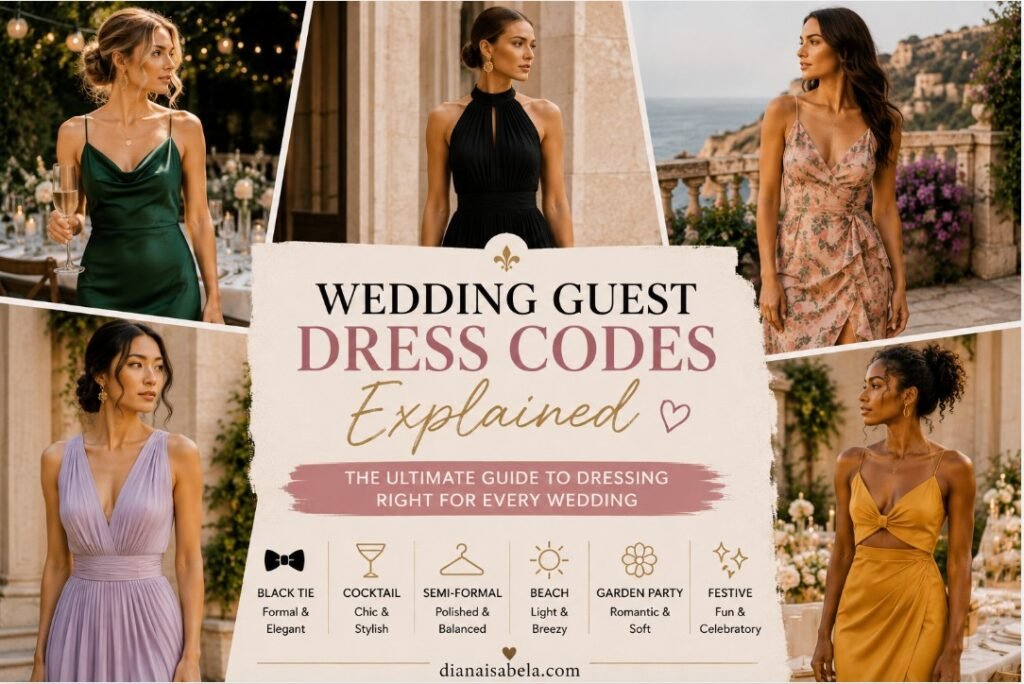
Once you understand the level of formality, the venue, and the time of day, choosing a wedding guest dress becomes much easier. Black tie wants elegance. Cocktail wants polish. Semi-formal wants balance. Beach formal wants movement. Garden party wants romance with structure. Festive wants personality with manners.
The best outfit is not the loudest interpretation. It is the one that looks beautiful, appropriate, comfortable, and clearly chosen on purpose.
FAQ
What does wedding guest dress code mean?
A wedding guest dress code tells guests how formal the outfit should be. It helps you choose the right dress length, fabric, shoes, accessories, and overall level of polish for the wedding.
What should I wear to a black tie wedding as a guest?
A floor-length gown is the safest choice for black tie. A very elegant midi or formal cocktail dress may work in some cases, but the fabric, shoes, bag, jewelry, and beauty styling should feel evening-appropriate and polished.
Is cocktail attire formal enough for a wedding?
Yes, cocktail attire is a common wedding dress code. A polished midi dress, refined short dress, satin dress, dressy jumpsuit, or sleek column dress can work well. The look should feel elegant and party-ready, not casual.
What is semi-formal wedding guest attire?
Semi-formal wedding guest attire sits between casual and formal. A midi dress, elegant wrap dress, polished floral dress, slip dress, or tailored jumpsuit usually works. Avoid anything that feels too everyday, too beachy, or too close to office wear.
Can I wear a short dress to a wedding?
A short dress can work for cocktail, semi-formal, dressy casual, or festive weddings if it looks polished and appropriate. Avoid very tight, very revealing, or club-style mini dresses unless the wedding clearly has that kind of party dress code.
What is beach formal wedding attire?
Beach formal means dressed up, but practical for sand, wind, heat, and movement. A flowy maxi, elegant midi, polished halter dress, or soft column dress can work. Choose shoes that make sense for the ground.
What should I wear if the invitation has no dress code?
Look at the venue, time of day, invitation style, and couple’s wedding website. A polished midi dress with elegant shoes, a small bag, and intentional accessories is usually a safe choice when the dress code is unclear.
Are jeans acceptable for a wedding dress code?
Usually no. Jeans are rarely appropriate unless the couple clearly says the wedding is very casual and denim is welcome. Even then, choose something polished and respectful.