Formal Wedding Guest Dresses: Elegant Looks Without Looking Like the Bridal Party

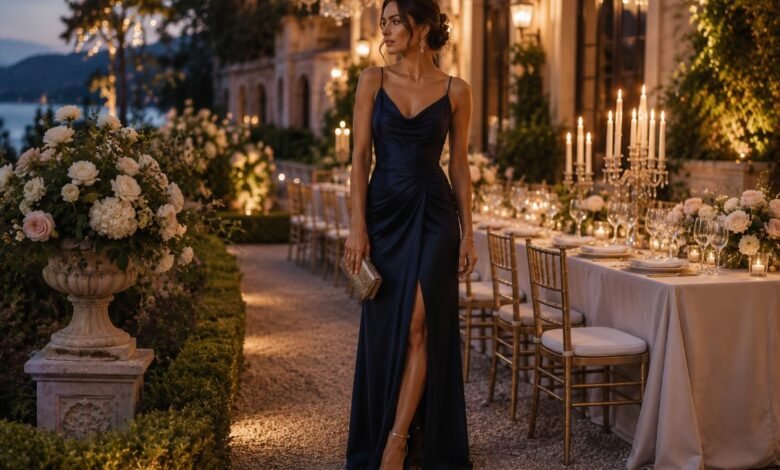
Formal wedding guest dresses live in the dangerous little corridor between elegant and “why is she dressed like she owns the venue?”
A formal wedding is not the time for casual pretty. It wants polish. It wants better fabric, cleaner lines, more intentional accessories, and the kind of dress that looks calm under chandeliers. But there is a trap: formal does not mean bridal-party energy, gala cosplay, or a gown so dramatic the photographer starts wondering if you are secretly in the program.
The goal is refined presence. A satin maxi that glides. A structured midi that looks expensive. A black dress with softness. A jewel-tone gown that feels rich without shouting. A look that says, “I understood the invitation,” not “I have arrived to audition for the role of mysterious second wife in a limited series.”
The formal brief: dress like the room has chandeliers, not like you are the chandelier
Formal wedding guest attire usually asks for a dressier silhouette, a richer fabric, and more deliberate styling than cocktail or semi-formal. That does not always mean floor-length, but it does mean elevated. A formal midi can work if the fabric is elegant and the cut is refined. A maxi can work beautifully if it does not look bridal. A black dress can be perfect if it has texture, drape, or jewelry to make it feel alive.
The invitation may say formal, black-tie optional, evening attire, or formal garden. Each one has a slightly different temperature. Formal is polished. Black-tie optional leans more elevated. Evening attire wants candlelight and good fabric. Formal garden wants elegance without ballroom heaviness. The dress should be chosen for the exact room, not for the vague fantasy of being “fancy.”
If you are still trying to understand the dress code before choosing the exact silhouette, start with Diana’s guide to what to wear to a wedding as a guest. Formal becomes easier once you know whether the couple means elegant midi, evening gown, or something closer to black tie.
The silhouettes that work for formal weddings
Formal dresses do not need to be complicated. In fact, the best ones are often suspiciously simple. A perfect neckline. A clean waist. A fabric that falls correctly. A hemline that makes sense. A sleeve that adds shape instead of drama. Elegance is rarely loud; it is usually just extremely well edited.
A mini can work for some formal cocktail weddings, but it needs extremely polished fabric and styling. A casual short dress with heels does not become formal because the heel is shiny. A floor-length gown can work beautifully, but avoid anything with bridal lace, pale champagne drama, train energy, or bridesmaid uniform softness.
Formal colors: black, navy, burgundy, emerald, plum, chocolate, champagne accents
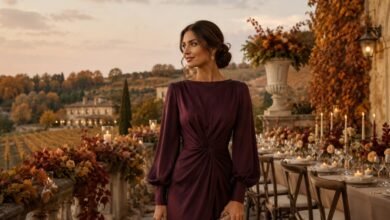
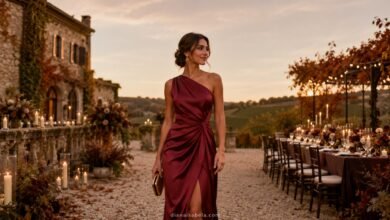
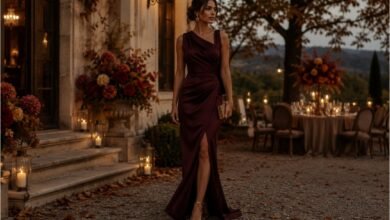
Formal weddings love depth. Black, navy, burgundy, emerald, plum, midnight blue, chocolate, deep teal, ruby, and forest green all feel elegant without trying too hard. These colors photograph well at night, work with metallic accessories, and usually avoid the bridal danger zone.
Champagne, silver, gold, and pale blush are trickier. They can look gorgeous as accessories, but as dress colors they may drift too close to bridal, bridesmaid, or mother-of-the-bride territory depending on the fabric and venue. If the dress is pale, the cut and styling must clearly say guest, not bridal echo.
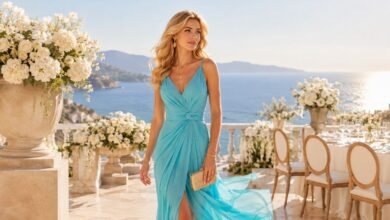
For seasonal formal weddings, let the season slightly shift the palette. Spring formal can handle dusty blue, lilac, rose, and soft sage. Summer formal can use coral, teal, sky blue, or light satin if the dress code allows. Fall formal loves burgundy, olive, rust, emerald, chocolate, and dark florals. Winter formal is the kingdom of velvet, black satin, jewel tones, and deep metallics.
The fabric salon: satin, crepe, chiffon, velvet, and why cheap shine is a crime
Formal weddings are fabric-sensitive. You can feel the difference immediately. A good satin dress moves like water. A bad satin dress crinkles like a snack wrapper with ambition. Crepe looks polished and sculptural. Chiffon can feel graceful if the dress has enough structure. Velvet can be gorgeous in cooler seasons. Mesh sleeves can be elegant when they look intentional, not like the dress was designed during a panic.
Fabric also decides whether the dress fits the venue. A satin maxi belongs in a hotel ballroom. A chiffon floral can work for formal garden. A velvet midi loves winter. A crepe dress is the quiet genius for city weddings. Choose fabric like you are choosing tone of voice.
How to look formal without looking like the bridal party
This is the delicate part. Formal weddings often have bridesmaids in long satin, chiffon, or matching jewel tones. You want to look polished without accidentally blending into the lineup. If the wedding colors are obvious from the invitation or website, avoid wearing the exact shade in a very bridesmaid-like silhouette.
A long satin dress in dusty rose, sage, champagne, or pale blue can look suspiciously bridesmaid depending on the wedding. That does not mean you can never wear those colors. It means the cut, styling, and accessories need to separate you from the bridal party. A more modern neckline, darker tone, printed fabric, structured silhouette, or distinctive accessory can help.
- Avoid the uniform effect: long chiffon, matching pastel, simple straps, and identical soft styling can make you look like you missed rehearsal.
- Add a guest detail: sculptural earrings, a darker clutch, a modern shoe, a wrap, or a silhouette the bridal party probably is not wearing.
- Watch pale satin: champagne, blush, and light gold can look bridal under flash or candlelight.
- Choose depth: wine, navy, emerald, plum, chocolate, or black usually separates you from bridesmaid palettes.
Accessories: one sparkle, not a jewelry parliament
Formal accessories should feel edited. A strong earring. A beautiful clutch. A delicate necklace. A metallic heel. A pearl detail. A sculptural cuff. Pick the piece that supports the dress, then let the others behave. The most common formal styling mistake is adding more because the event feels fancy. More is not always formal. Sometimes more is just nervous.
If the dress has a high neckline, focus on earrings and a clutch. If the dress has an open neckline, a delicate necklace can work. If the dress is black, jewelry gives dimension. If the dress is jewel-toned, metallics can add evening polish. If the fabric is already shiny, keep the accessories cleaner. If the dress is simple, one bold accessory can create the whole mood.
- With black satin: gold hoops, pearl drops, silver heels, crystal clutch, or a red lip can all work.
- With emerald: gold, champagne, pearl, black, or deep brown accessories feel refined.
- With burgundy: gold, bronze, nude, espresso, black, or soft metallics look elegant.
- With navy: silver, gold, pearl, champagne, burgundy, or crystal details can add light.
- With florals: choose one color from the print and echo it gently in the bag, shoe, or lip.
Shoes need to match both formality and venue. A formal garden wedding may require block heels. A hotel wedding can handle delicate sandals or pumps. A winter formal wedding may need closed-toe elegance. The shoe should finish the dress, not drag it into a different story.
Formal venue notes: ballroom, estate, garden, city hotel, church, museum
A formal dress should respect the venue. A ballroom can take more drama. A garden needs elegance with air. A city hotel wants polish. A church asks for coverage and restraint. A museum wedding can handle architectural silhouettes. An estate wedding loves romance, but not costume.
Ballroom wedding
Choose a satin maxi, jewel-tone gown, velvet dress in colder months, or a structured formal midi. Add refined jewelry and a small evening bag. This is the place where candlelight and fabric do half the work.
Formal garden wedding
Go lighter than ballroom but more polished than casual garden. Chiffon maxis, formal florals, satin midis, and elegant tea-length dresses work well. Choose shoes that survive grass. Glamour is less glamorous when sinking.
City hotel wedding
Black satin, navy crepe, emerald, burgundy, one-shoulder dresses, sharp midis, and sleek maxis all fit. Hair can be polished. Accessories can be more modern. The look should feel clean and confident.
Church wedding
Consider sleeves, a wrap, a higher neckline, or a more modest silhouette. A formal dress can still feel stylish with coverage. Think drape, texture, jewelry, and a good coat if the season requires it.
Museum or gallery wedding
Architectural dresses, clean necklines, sculptural earrings, black, ivory-adjacent accessories, deep jewel tones, and minimalist silhouettes can look stunning. Just avoid looking like part of the installation unless that is explicitly the brief.
For the full cluster of seasons, dress codes, colors, and venue-specific ideas, Diana’s formal wedding guest dresses guide is the main hub to use when one invitation has created a small fashion emergency.
Formal wedding guest mistakes that quietly ruin the look
Formal wedding mistakes are rarely about being underdressed in an obvious way. They are usually about tone. A dress is technically fancy but too bridal. A gown is expensive-looking but too dramatic. A midi is chic but too cocktail. Accessories are pretty but fighting each other. The outfit has pieces, but no discipline.
- Too bridal: white, ivory, pale champagne, bridal lace, long pale satin, trains, and anything that could confuse the photographer.
- Too bridesmaid: soft pastel chiffon maxi with simple styling, especially if the wedding palette is similar.
- Too casual: jersey, sundress fabric, daytime cotton, beachy silhouettes, or shoes that do not match the event.
- Too dramatic: giant slits, extreme cutouts, heavy sequins, trains, or gowns that feel like gala competition.
- Too flat: dark dress with no texture, jewelry, shape, or polish. Formal black needs dimension.
- Too many accessories: sparkle on dress, shoes, bag, earrings, necklace, and hair at once. The eye needs a resting place.
The formal mirror check: lighting, movement, bride safety, guest energy
Try the whole outfit together before the wedding. Dress, shoes, bag, jewelry, layer, hair, lipstick. Formal looks depend on the total picture. A dress can look beautiful alone and wrong with the wrong shoe. Earrings can change the neckline. A clutch can make the dress feel evening-ready. A coat can either elevate the look or commit quiet sabotage.
Check the dress in natural light and evening light if possible. Pale dresses can look bridal under flash. Cheap satin can become loud in harsh lighting. Black can disappear if it has no texture. Sequins can overwhelm. The goal is to look refined from every angle, not just in one carefully chosen mirror position.
- Does it respect the dress code? Formal means elevated, not just pretty.
- Does it avoid bridal energy? No pale gown confusion, no lace danger, no train drama.
- Does it avoid bridesmaid energy? Make sure the color, fabric, and shape feel like guest style.
- Can you move in it? Walk, sit, hug, dance, and survive photos.
- Does one detail lead? Fabric, color, neckline, or accessory. Not all of them demanding a solo.
If the outfit passes those tests, stop asking seven people. Group chats are useful until they become a parliament of panic. Put on the earrings and go.
Formal, but with taste and oxygen
The best formal wedding guest dresses feel elegant without looking like they are trying to win the wedding. They have polish, but not desperation. They understand the room, the couple, the photographer, the lighting, the ceremony, and the fact that being stylish does not require stealing emotional real estate.
Choose rich fabric. Choose color with intention. Choose a silhouette that moves well. Keep accessories edited. Avoid bridal shades, bridesmaid softness, and gala-level drama unless the dress code truly asks for it.
A formal wedding guest look should make people think, “She looks incredible,” and then immediately return their attention to the couple. That is the art. Beautiful, respectful, and just a little dangerous in the Diana way.
FAQ
What are the best formal wedding guest dresses?
The best formal wedding guest dresses include satin maxis, structured midis, black evening dresses, jewel-tone gowns, one-shoulder dresses, long-sleeve formal dresses, and polished crepe silhouettes.
Can I wear a black dress to a formal wedding?
Yes, a black dress can be very elegant for a formal wedding, especially in satin, crepe, velvet, or a refined evening silhouette. Add jewelry, texture, or a soft neckline so the look does not feel severe.
Do formal wedding guest dresses have to be floor-length?
Not always. Floor-length dresses are appropriate for many formal weddings, but a polished midi or tea-length dress can also work if the fabric, cut, and styling feel elevated enough for the venue and dress code.
What colors are best for formal wedding guest dresses?
Black, navy, burgundy, emerald, plum, ruby, midnight blue, chocolate, forest green, and deep teal are strong formal wedding guest colors. Be careful with white, ivory, pale champagne, and very bridal-looking neutrals.
How do I avoid looking like a bridesmaid at a formal wedding?
Avoid wearing the exact wedding palette in a bridesmaid-like silhouette, especially long pastel chiffon or satin. Choose deeper colors, stronger accessories, a distinctive neckline, or a more modern silhouette to look clearly like a guest.