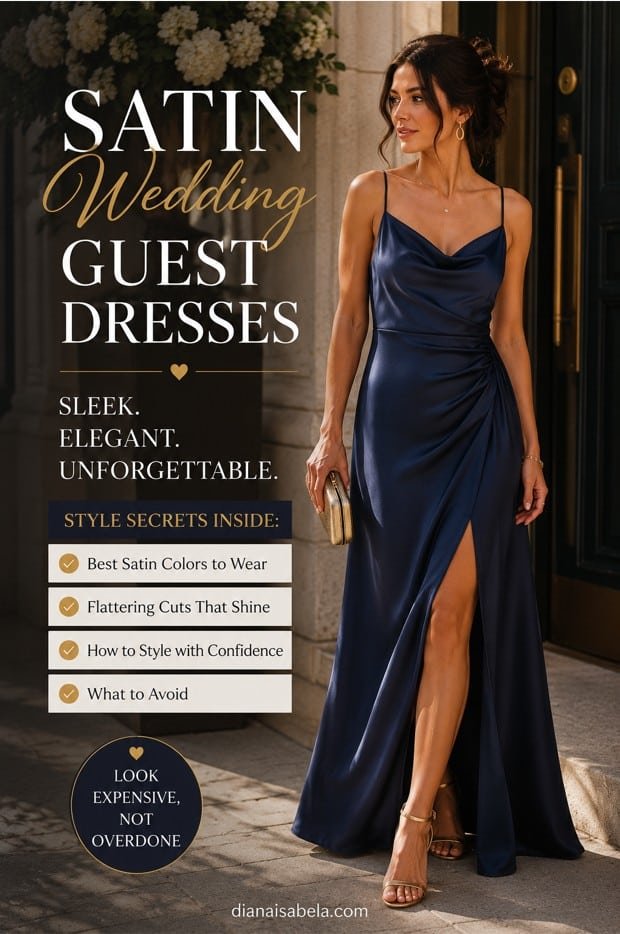
Satin wedding guest dresses are beautiful, but satin does not lie.
A satin dress can make a wedding guest outfit look sleek, romantic, and quietly expensive with almost no effort. The fabric catches candlelight, moves beautifully in photos, and gives even a simple silhouette that polished “I know exactly what I’m doing” feeling.
But satin also has opinions. It shows wrinkles. It shows poor fit. It shows cheap seams. It can look bridal in pale shades, lingerie-like in the wrong cut, or overdressed in the wrong venue.
The goal is not to avoid satin. The goal is to choose satin that moves well, fits cleanly, and feels like a wedding outfit — not sleepwear that accidentally met a pair of heels.
Satin is gorgeous when it has enough weight, the right drape, and styling that calms the shine. If the dress is already glossy, everything else needs a little discipline.
The shine has to look soft, not plastic
Satin is not one fabric mood. Some satin looks pearly and soft. Some looks liquid and dramatic. Some looks so shiny it might start reflecting the seating chart. For wedding guests, the most elegant satin usually has glow, not glare.
Thicker satin, satin crepe, charmeuse with good drape, and lined bias-cut dresses usually look more expensive than thin fabric that pulls across the body or wrinkles the moment you breathe near it.
Best for romantic, daytime, garden, spring, and summer weddings. It feels pretty without looking too formal.
Perfect for cocktail, hotel, rooftop, city, destination, and evening weddings. It gives movement without stiffness.
Works beautifully for formal weddings, winter weddings, and black-tie optional celebrations when the dress has structure and polish.
Use carefully. It can look glamorous, but it needs a clean silhouette, minimal accessories, and a setting that can handle the drama.
The best satin colors for wedding guests
Color becomes stronger in satin because shine makes every shade more noticeable. Pale tones become more bridal. Bright colors become louder. Dark colors become richer. That is why satin color choice matters more than people think.
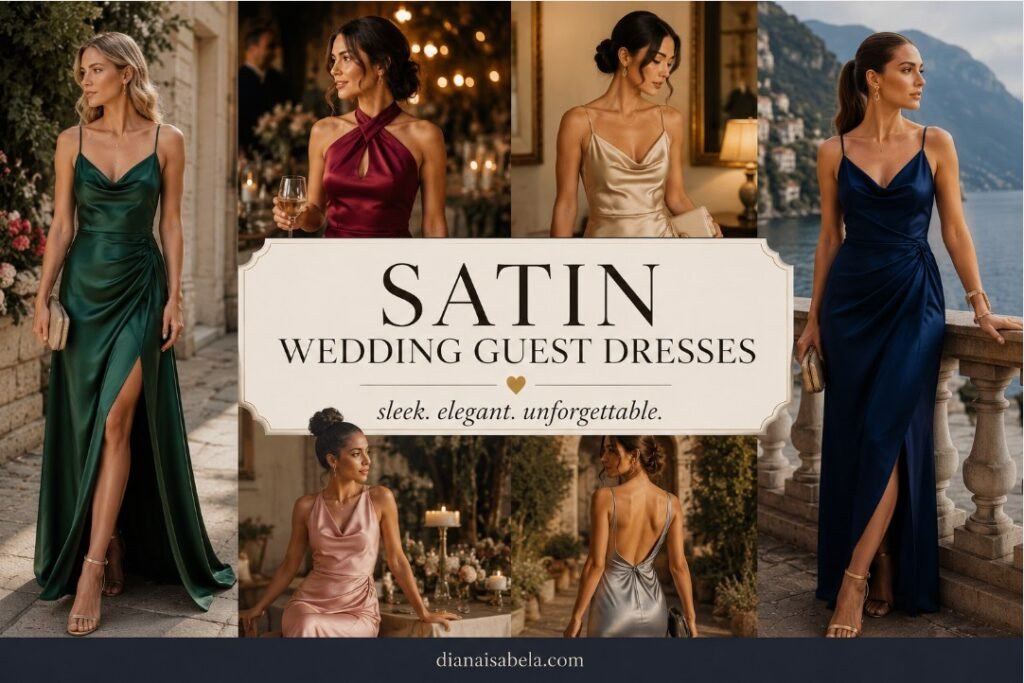
If you are unsure, jewel tones, deeper neutrals, and rich seasonal shades are the safest way to make satin look elegant.
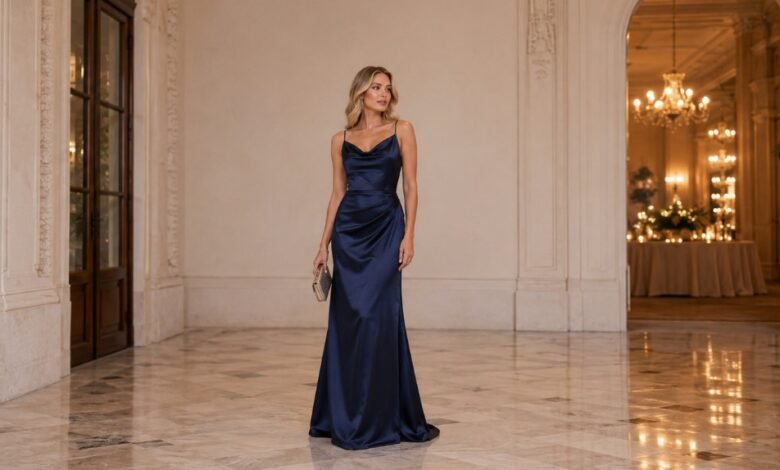
Calm, polished, and very useful for evening, formal, city, and cocktail weddings.
Rich and elegant for fall, winter, vineyard, hotel, and formal celebrations.
Romantic and grown-up. These shades make satin feel expensive instead of overly sweet.
Modern, warm, and quietly glamorous, especially with gold, bronze, or minimal black accessories.
Very chic for evening and city weddings. Keep the styling polished so it does not drift into clubwear.
Soft and pretty, but choose a more interesting shape so it does not feel too bridesmaid.
Beautiful for summer and destination weddings when the dress feels light, fluid, and easy.
Risky. If the shade is close to ivory, cream, pearl, or bridal gold, skip it unless the couple clearly allows it.
The fit should glide, not cling
Satin can skim the body beautifully, but it should not look stretched, strained, or nervous. If you see pulling across the hips, chest, stomach, or back, the dress is not wrong because of your body. The cut is wrong for the fabric.
A bias-cut satin dress can be stunning because it follows the body with movement. It should fall smoothly, not grab at every curve like it is collecting evidence.
A satin slip dress needs styling to feel wedding-ready. Add refined shoes, intentional jewelry, a polished bag, and a layer if the ceremony is more traditional.
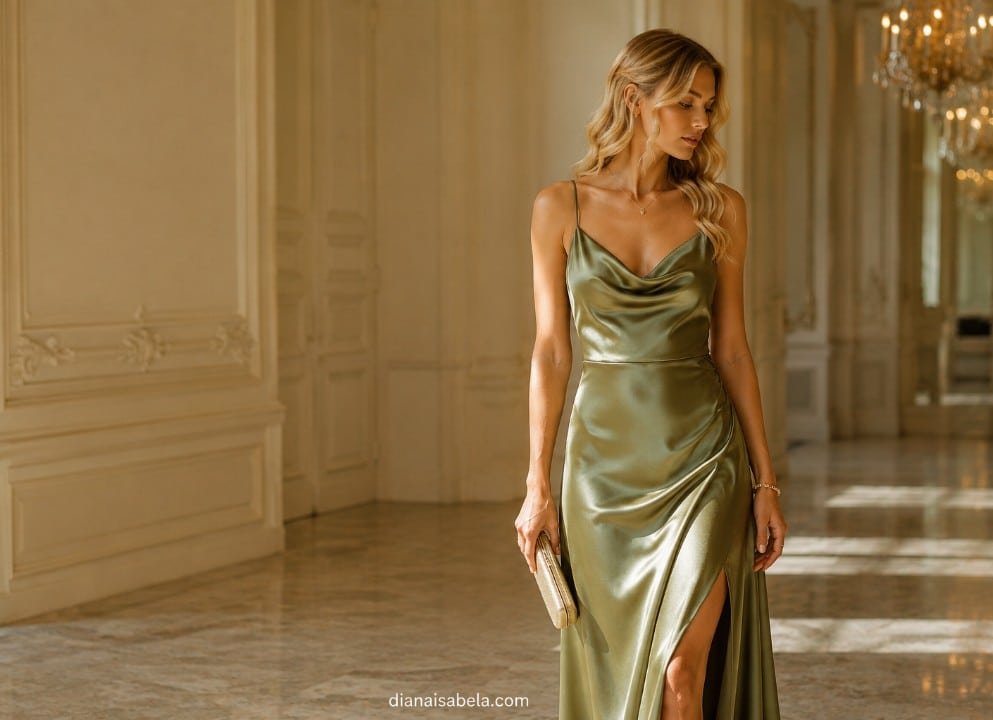
A cowl neckline lets satin drape instead of cling. It is one of the easiest ways to make the fabric look soft, flattering, and a little 90s in the best way.
Satin wrap dresses can be gorgeous for cocktail or semi-formal weddings. Check the neckline and slit when sitting, walking, hugging, and dancing.
A satin column gown is elegant for formal events, but tailoring matters. The hem, lining, seams, and undergarments become part of the outfit.
Match the satin to the invitation before you fall in love with the shine
Satin can work for many wedding dress codes, but the length, color, and structure should match the event. A fluid satin midi may be perfect for cocktail wedding guest dresses, while a floor-length satin gown fits more naturally with formal wedding guest dresses.
If you are still comparing venues, seasons, and dress codes, start with the main wedding guest dresses guide before deciding that one shiny dress is your entire personality for the weekend.
Where satin looks expensive — and where it gets fussy
Satin loves controlled environments: hotel ballrooms, evening receptions, rooftop dinners, city weddings, country clubs, candlelit restaurants, and formal indoor venues. It looks best where the lighting is soft, the floor is even, and the dress is not fighting weather, grass, or humidity.
Outdoors, satin can still work, but it needs a smarter version. Choose darker colors, lighter fabric, prints, wrap shapes, or dresses with movement for garden, vineyard, beach, and destination weddings.
Best settings for satin
Evening weddings, hotel receptions, cocktail events, formal celebrations, rooftop weddings, winter weddings, city hall dinners, and polished country club weddings.
Satin looks especially good with candlelight, marble, dark wood, mirrors, city lights, and elegant indoor rooms.
Proceed carefully
Beach ceremonies, hot outdoor weddings, rustic barns, casual backyard celebrations, and destination events where the dress has to survive a suitcase.
This does not mean no satin. It means choose satin that can handle real life.
The mistakes that make satin look cheap
Satin is already visually active because it reflects light. The styling should support it, not add more chaos. Too much shine, too tight a fit, too pale a color, or too many sparkly extras can make a good dress look less expensive than it is.
Choosing fabric that is too thin
Thin satin can wrinkle, cling, and show every seam. Look for enough weight to let the dress fall smoothly.
Wearing pale satin that looks bridal
Ivory, cream, pearl, soft white, and pale champagne satin are risky because they can photograph close to bridal shades.
Leaving a slip dress unfinished
A satin slip needs a full styling plan. Shoes, bag, jewelry, hair, and possibly a layer make it feel like an outfit instead of a base piece.
Ignoring wrinkles
Steam the dress, hang it properly, and do not crush it under a weekend bag. Satin and wrinkles have a very dramatic friendship.
Making every accessory shiny
Satin dress, metallic shoes, crystal earrings, glossy bag, shimmer makeup — choose carefully. You want glow, not a reflective emergency.
Shoes, bags, and jewelry that make satin behave
Satin usually looks best when accessories add contrast. If the dress is glossy and fluid, choose shoes in suede, soft leather, matte metallic, delicate straps, or a clean pointed shape. The texture difference makes the outfit feel more considered.
Jewelry depends on the neckline. A cowl neck rarely needs a heavy necklace. A strapless satin dress can look beautiful with earrings and a bracelet. A high neckline usually wants sleek hair and stronger earrings.
For soft satin
Try nude sandals, pearl earrings, a small clutch, and fresh makeup. Keep it romantic, not bridesmaid catalog.
For dark satin
Gold, bronze, espresso, black, and deep metallic accessories make the look rich and evening-ready.
For bright satin
Let the color lead. Choose simple shoes, minimal jewelry, and hair that feels polished rather than overworked.
A quick satin dress check before you buy
Try the dress in motion. Stand, sit, walk, turn, raise your arms, and look at it in daylight. Satin can be gorgeous on a hanger and then become very dramatic once life begins.
If the dress only works when you stand perfectly still in soft lighting, it is not a wedding guest dress. It is a photo with terms and conditions.
The dress should skim, not pull. Horizontal tension lines usually mean the cut or size is wrong.
Midi and maxi lengths usually make satin feel more wedding-appropriate. Minis need a very polished setting and styling.
Avoid shades that can read bridal in photos. Jewel tones, rich neutrals, and deeper seasonal colors are safer.
If it wrinkles badly after ten minutes of normal life, imagine it after the ceremony, dinner, speeches, and dancing.
The satin rule worth keeping
A satin wedding guest dress should look graceful in motion, elegant in photos, and appropriate in the room. Not just pretty in your cart. Not just glamorous in theory.
Choose a shade that respects the wedding, a cut that lets the fabric move, and accessories that calm the shine instead of competing with it. That is when satin stops being tricky and starts looking expensive.
FAQ
Are satin dresses good for wedding guests?
Yes, satin dresses can be excellent for wedding guests when the fabric has a good drape, the fit is smooth, and the color does not look too bridal. Satin works especially well for cocktail, formal, evening, hotel, rooftop, and winter weddings.
Can I wear a satin slip dress to a wedding?
You can wear a satin slip dress to a wedding if it is styled as a complete outfit. Choose an elegant length, refined shoes, polished jewelry, and a wrap, blazer, or shawl if the ceremony is more formal or traditional.
What color satin dress is best for a wedding guest?
Navy, emerald, burgundy, wine, chocolate, black, mauve, coral, and deeper jewel tones are strong choices for satin wedding guest dresses. Be careful with ivory, cream, pearl, and pale champagne satin because they can look too bridal in photos.
Is a champagne satin dress okay for a wedding guest?
Champagne satin can be risky because the shine may make it look close to bridal ivory or gold. If the shade is clearly deeper, warmer, or not bridal, it may work, but pale champagne satin is usually safer to avoid unless the couple approves it.
Do satin wedding guest dresses wrinkle easily?
Many satin dresses wrinkle, especially thinner fabrics. A thicker satin, satin crepe, or better-lined dress usually holds up better. Steam the dress before the event and hang it carefully instead of folding it tightly in a bag.
What shoes should I wear with a satin wedding guest dress?
Satin dresses look good with delicate sandals, pointed pumps, slingbacks, block heels, or refined flats. Matte leather, suede, soft metallics, nude, gold, bronze, black, and espresso shoes can all work depending on the dress color and venue.
Can I wear satin to a summer wedding?
Yes, but choose lighter satin, a breathable cut, and a color that suits the season. For very hot outdoor weddings, avoid heavy satin gowns and choose a fluid midi, slip dress, wrap dress, or satin with movement.
Can satin look too much for a wedding?
Satin can look too much if the dress is very shiny, very tight, very short, or styled with overly dramatic accessories. To keep it elegant, balance the shine with a clean silhouette, simple jewelry, and polished shoes.
What jacket or cover-up works with a satin wedding guest dress?
A soft shawl, tailored blazer, cropped evening jacket, light wrap, or elegant coat can work with a satin dress. Choose a layer that complements the shine rather than adding bulky texture or casual fabric.
Are satin dresses formal or semi-formal?
Satin can work for both formal and semi-formal weddings. A satin gown or structured midi feels more formal, while a satin slip dress, wrap dress, or simple midi can work for cocktail or semi-formal dress codes.