How to Dress Elegantly in Hot Weather Without Wearing Less and Less

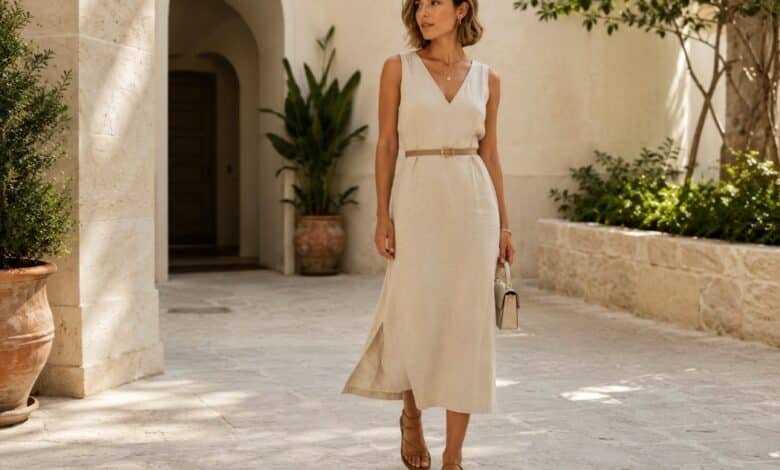
There is a particular kind of summer morning when getting dressed starts to feel mildly personal. The forecast says ninety degrees. The humidity has already done something ambitious to your hair. Your car will be an oven, your office will be an icebox, and at some point someone will suggest eating outside as though the sun has not been behaving like an industrial appliance.
That is usually when elegant dressing becomes confused with wearing as little fabric as possible. The result is often an outfit that feels tolerable for twelve minutes and strangely unfinished for the rest of the day.
I do not believe hot-weather style should require choosing between dignity and circulation. The better approach is not simply to remove clothing. It is to become more selective about fabric, fit, weight, proportion and the tiny finishing decisions that make a loose outfit look intentional rather than defeated.
To dress elegantly in hot weather, prioritize breathable fabrics, relaxed but controlled silhouettes, strategic skin exposure, light layers and polished accessories. Clothes should skim rather than cling, allow air to move and still create a visible shape through the shoulder, waist, hem or neckline. A long airy dress can feel cooler and look more sophisticated than a tight mini dress, while wide trousers and a sleeveless top may be more comfortable than denim shorts and a fitted tee.
Elegant in July does not mean dressed like it is October
One reason summer outfits go wrong is that we try to recreate cool-weather elegance using thinner versions of the same pieces. We search for a lightweight blazer, a lighter fitted trouser, a thinner long-sleeve blouse and a more delicate closed shoe. Technically, everything is seasonal. Emotionally, the outfit is still asking too much of us.
Warm-weather elegance has its own language. It is less dependent on layers and more dependent on line. A clean neckline matters more. The fall of a trouser matters more. The quality of a sandal matters more. When an outfit contains fewer visible pieces, every detail receives more attention.
A winter outfit can hide a mediocre T-shirt beneath a coat. A summer outfit cannot hide a neckline that curls, a white fabric that becomes transparent in sunlight, shorts that creep upward when you walk or a dress that loses its entire shape after ten minutes of sitting.
This does not mean summer dressing needs to become precious. It means the outfit should have one or two clear structural decisions. Perhaps the shoulders are defined. Perhaps the waist is suggested rather than squeezed. Perhaps the dress has a strong column shape. Perhaps the trousers move beautifully and the top stays simple.
I think of it as edited ease: enough room for the body to breathe, but enough intention for the clothes to look chosen.
Diana’s heat rule: if every part of an outfit is loose, soft, pale and unstructured, add one element with definition. A leather belt, angular bag, shaped neckline, crisp cuff or polished shoe is often enough.
The outfit has to survive more than the parking lot
A hot-weather outfit rarely experiences one consistent climate. It moves through a series of small weather emergencies: outdoor humidity, a freezing car vent, direct sunlight, an aggressively air-conditioned office, warm pavement, a restaurant terrace and perhaps an evening thunderstorm that appears without consulting anyone.
Choosing an outfit only for the hottest ten minutes creates new problems later. A nearly backless top may feel perfect outside and miserable in an office chair. A heavy maxi dress may look breezy in a mirror but become exhausting during a long walk. A fitted synthetic jumpsuit can seem efficient until the first serious bathroom visit or temperature change.
Humidity, car heat, walking and the first test of whether the fabric clings.
Air conditioning exposes every outfit that has no layering plan.
Light, transparency, sweat marks and uncomfortable shoes become obvious.
The same outfit should still feel presentable, not thoroughly endured.
Before getting dressed, ask one question that is much more useful than “Is this cute?”
Where will my body be uncomfortable today?
Maybe the answer is your shoulders in direct sun. Maybe it is your waist while sitting. Maybe it is your feet after four hours. Maybe you are always cold indoors. Solve that specific discomfort first. An outfit feels elegant partly because the person wearing it is not constantly pulling, adjusting, sweating, limping or apologizing to a rebellious strap.
Choose the fabric before falling in love with the shape
In hot weather, fabric is not a technical detail hidden inside a product description. It determines whether the silhouette you loved online still looks good after movement, humidity and contact with an actual human body.
Natural fibers are often excellent in heat, but “natural” does not automatically mean light, cool or easy. A heavy cotton sweatshirt remains a heavy sweatshirt. Thick linen can feel substantial. Silk may breathe beautifully but reveal moisture quickly. A viscose dress can feel cool and fluid, yet some versions wrinkle or stretch dramatically when damp.
Fiber content matters. So do weave, thickness, lining, color and cut.
| Fabric | Why it can work | What to inspect | Best use |
|---|---|---|---|
| Linen | Breathable, dry-feeling and beautifully relaxed. | Scratchiness, transparency, excessive stiffness and how much it wrinkles at pressure points. | Shirts, wide trousers, dresses, tailored shorts and lightweight jackets. |
| Cotton | Familiar, washable and available in many weights. | Whether it is crisp poplin, soft voile, dense jersey or heavy twill. They behave very differently. | Shirts, dresses, skirts, tops and relaxed trousers. |
| Silk | Light, elegant and temperature adaptable. | Sweat visibility, delicacy, static and care requirements. | Blouses, scarves, loose dresses and evening layers. |
| Viscose or rayon | Fluid, cool to the touch and excellent for movement. | Cling, shrinkage, thinness and whether the garment becomes misshapen when wet. | Flowing dresses, soft trousers, skirts and draped tops. |
| Lyocell | Smooth, breathable and often less rumpled than linen. | Water spotting, weight and whether the fabric is too fluid for the intended silhouette. | Shirts, dresses, wide trousers and soft tailoring. |
| Light blends | Can combine breathability with better shape retention. | The percentage of synthetic fiber and whether it makes the garment feel warmer or less absorbent. | Travel pieces, office trousers and garments that need structure. |
I am not offended by every synthetic fiber. A small amount can help a garment recover its shape, resist severe wrinkling or stretch comfortably. The problem begins when a supposedly breezy summer piece is primarily polyester, fully lined in polyester and cut close to the body. At that point, the dress is not clothing so much as a personal greenhouse.
Read beyond the first line of the label
If the outer fabric is linen but the lining is synthetic, the garment may feel very different from the impression created by the product title. A lined white skirt may be more wearable because it is opaque, but a thick non-breathable lining can cancel the cooling advantage of the outer fabric.
For unlined pieces, hold the fabric against light. For online shopping, enlarge product images and look at the garment where it overlaps itself. Read reviews for words such as “sheer,” “scratchy,” “heavy,” “clingy,” “wrinkles immediately” and “runs hot.” Those phrases tell you more about real wear than a paragraph describing the piece as effortless.
The site already has a broader guide on how to make affordable clothes look more polished, but in summer, fabric behavior becomes even more important because fewer layers are available to disguise a weak material.
The most flattering summer fit includes a little air
There is a difference between oversized and ventilated.
Oversized clothing can be dramatic, modern and comfortable, but it can also create unnecessary bulk. Ventilated clothing is cut with enough distance from the body to allow movement and air circulation while preserving a readable silhouette.
The most useful space is usually found around the torso, underarm, upper thigh and back. These are areas where cling quickly becomes visible and uncomfortable.
Loose clothing looks polished when the volume has a direction. A wide trouser creates a vertical line. A boxy shirt ends at a deliberate point. A full skirt begins at a defined waist. A column dress follows the body without gripping it.
When the volume has no direction, the outfit can look accidental. Long oversized shirt, wide trousers, large tote, chunky sandal, loose hair and no visible point of structure? That is a lot of fabric holding a committee meeting.
Choose where the volume lives. If the trousers are wide, the top can be shorter, tucked, sleeveless or defined at the shoulder. If the dress is full, show the collarbone, wrist, ankle or waist. If the shirt is oversized, roll the sleeves and pair it with a cleaner lower half.
Showing more skin is not the only route to feeling cooler
Some of the coolest garments are long. A loose ankle-length dress can protect the skin from direct sun and create air movement as you walk. A lightweight long-sleeve linen or cotton shirt can feel better outdoors than a tight sleeveless synthetic top. Wide full-length trousers can prevent bare legs from sticking to hot chairs, car seats and one another.
The question is not simply how much skin is visible. It is which areas are open and whether air can circulate.
Open necklines, sleeveless armholes that are not too tight, split hems, side vents, loose cuffs and breathable back details can make a garment feel significantly cooler without requiring it to become tiny.
Use one open zone and one controlled zone
A deep neckline with an extremely short hem and a very open back may feel less elegant for daytime because the eye has nowhere to rest. A better balance often comes from choosing one main area of exposure.
A sleeveless high-neck dress can look striking. So can a long-sleeve shirt with several buttons open at the collar. A midi skirt with a side slit feels lighter without becoming impractical. A back-detail dress can keep the front beautifully simple.
This is not a moral rule about how much anyone should show. It is a styling rule about visual concentration. When one feature is intentional, it looks more sophisticated than several competing for attention.
Summer color can be quiet without becoming beige wallpaper
Light colors are popular in summer for obvious reasons, but an entirely pale outfit can lose definition, especially when every fabric has a soft texture. Cream linen shirt, cream trousers, tan sandal and beige bag can look beautiful—or as though the outfit has not finished loading.
The solution is not necessarily brighter color. It can be tonal contrast.
Try ivory with tobacco brown. Stone with black. Pale blue with dark chocolate. Soft olive with bone. White with deep burgundy accessories. Sand with navy. These combinations keep the ease of a warm-weather palette while giving the outfit an edge.
Dark colors are not forbidden in heat. A black loose dress in breathable fabric may feel much cooler than a pale polyester dress that clings. Navy, espresso, charcoal and dark olive also disguise sweat marks and can move more easily from day to evening.
The sweat-mark question nobody puts in the campaign photographs
Mid-tone gray, dusty rose, muted blue and certain saturated brights can reveal moisture quickly. That does not make them impossible to wear, but the garment should have enough room under the arms and across the back.
Patterns, texture, darker colors and white can be more forgiving. Before buying, consider where you personally tend to feel heat. A beautiful fitted sage-green blouse may be an excellent purchase for someone else and a permanent source of self-consciousness for you.
A summer color is only practical when you can wear it during summer behavior: walking, sitting, carrying a bag, entering sunlight and existing near other people without spending the day inspecting yourself in reflective windows.
The outfit begins with what nobody is supposed to notice
Hot-weather elegance can collapse because of the wrong bra, visible underwear edges, a slip that twists, shapewear that traps heat or a camisole that adds one unnecessary layer too many.
Start with the garment rather than your usual undergarment habit.
A white shirt may need a skin-tone bra rather than a white one. A low armhole may work better with a smooth bralette or a bra with narrower side wings. A lightweight trouser may require seamless underwear in a color close to your skin. A loose dress might need anti-chafing shorts—not because anything is wrong with your legs, but because comfortable people enjoy their day more.
Shapewear is optional, not a membership requirement for wearing fitted clothing. In high heat, heavy compression can create more discomfort than confidence. A light slip short, breathable smoothing brief or properly lined garment may be enough.
Check white clothes twice
White fabric should be inspected in daylight, not only beneath flattering fitting-room lighting. Put a hand behind the fabric. Look at pockets, seams and lining edges. Sit down, because fabric often becomes more transparent when stretched.
A white piece can still be worth buying if it is sheer by design, but then it needs a clear styling plan: a tonal camisole, a deliberate bralette, a slip or beach use. “I will solve it later” is how many beautiful white garments spend two summers in a closet.
The right summer trousers are almost suspiciously useful
Shorts are not the automatic answer to every hot day. They can ride up, expose skin to hot seats, feel too casual for work and create more styling decisions than a good pair of trousers.
A truly useful summer trouser has three qualities: movement, breathability and a waistband you can tolerate after lunch.
Wide-leg trousers
Wide-leg trousers allow air to move and create a long clean line. The hem should nearly reach the top of the foot without dragging. If the fabric is very soft, a slightly higher rise and defined waistband prevent the silhouette from looking like sleepwear.
Pair them with a fitted tank, sleeveless knit, tucked shirt or cropped boxy blouse. The top does not need to be tight. It simply needs to reveal where the torso ends and the trouser begins.
Relaxed straight trousers
This shape is often easier for commuting and office wear. Look for a leg that falls from the hip without hugging the thigh. A crease, flat front or tailored pocket can give a soft fabric more authority.
Pull-on trousers
An elastic waist can be elegant. The problem is usually not the elastic; it is everything surrounding it. Thin fabric, bulky gathering, a visible drawstring, drooping pockets and an uncertain hem can push the garment toward pajama territory.
Choose a smoother waistband, substantial fabric and a clean leg shape. If there is a drawstring, tuck it inward or cover it with the top when the setting is more polished.
For a quick final check, use the site’s three-point outfit method: inspect proportion, one intentional detail and whether the full outfit makes sense for the actual destination.
The best hot-weather dress gives you space without losing you inside it
A summer dress seems like the easiest possible outfit. One garment, one pair of shoes, finished. Yet dresses are where fabric, lining and proportion can become surprisingly complicated.
A good warm-weather dress should look convincing from the front, side and back. It should work while standing and sitting. It should not require an elaborate undergarment engineering project unless the result is genuinely worth it.
The column dress
A straight or slightly shaped column creates an elegant vertical line and can be exceptionally comfortable when it skims the body. Side slits, a back vent or a fluid fabric improve movement.
Watch the underarm fit and the placement of pockets. Heavy side pockets can pull a light dress outward and create strange volume at the hip.
The waist-defined midi
This shape works beautifully when the waist is suggested with elastic, seaming, a tie or a gently fitted panel. The most comfortable versions leave some room through the rib cage and stomach rather than forcing all definition through tightness.
The shirt dress
A shirt dress has built-in structure through the collar, placket and cuff. It can move between office, lunch and travel more easily than many casual sundresses.
Check whether the buttons pull when seated. A slightly loose shirt dress can always be shaped with a belt, but a tight button placket will spend the day negotiating with gravity.
The full trapeze dress
This can be airy, modern and wonderfully easy. To keep it from overwhelming the body, look for a strong shoulder line, clean neckline or hem that shows the ankle. A sleek sandal and structured bag also help.
The restaurant-chair problem
Before wearing a new summer dress for an entire day, sit in it at home on a smooth chair and then on a textured chair. Some light fabrics cling, twist or rise dramatically. Others spread so widely that they become part of neighboring furniture. This is useful information to discover before dinner.
The office is apparently located in a different climate zone
Outdoor summer dressing and indoor office dressing often seem to have been designed by people who refuse to communicate.
The answer is not carrying a heavy blazer everywhere. A better layer is light enough to transport, visually compatible with the outfit and easy to remove without exposing a completely different dress code underneath.
The oversized cotton or linen shirt
Wear it open over a sleeveless dress, fitted tank or tonal top. Roll the sleeves outdoors and button it partially indoors. It provides coverage without the psychological weight of formal tailoring.
The fine cardigan
A fine-gauge cotton, silk-blend or lightweight merino cardigan can work even in summer because it is intended for the refrigerated part of the day. Choose a compact version that fits in your bag without emerging shaped like a household rag.
The unlined soft jacket
A relaxed unlined jacket gives more authority to a simple top and trouser. Look for a breathable fabric, some shoulder definition and enough room to push or roll the sleeves.
The large scarf
A silk or cotton scarf can cover the shoulders, protect from cold air and add color without becoming a full garment. It is particularly useful for travel, restaurants and events where the temperature changes abruptly.
The layer should feel like part of the outfit rather than emergency equipment. Match it to the color story, repeat a texture or use it as the one darker element in a pale look.
A polished outfit cannot rescue shoes that are actively harming you
Summer shoes have an unfair assignment. They need to look elegant, survive heat, permit walking, avoid blisters and remain presentable after meeting hot pavement, sudden rain and a foot that has expanded since breakfast.
A sandal with several thin straps may look delicate but become torturous if one strap sits across the widest part of the foot. A flat slide may seem comfortable but require the toes to grip all day. A closed ballet flat can feel polished indoors and unbearably warm outside.
Look for secure elegance
The best hot-weather shoe usually holds the foot in at least two places. A back strap, adjustable ankle strap or well-shaped upper reduces the amount of unconscious gripping required while walking.
A small heel or supportive sole can be more comfortable than a paper-thin flat. Cushioning should not be visible from space, but your feet should not be able to identify every pebble beneath them.
Four shoe types that work repeatedly
The minimal leather sandal: clean enough for dresses and trousers, provided the straps are secure.
The refined fisherman sandal: practical, covered enough for the city and more interesting than a basic slide.
The breathable loafer or woven flat: useful for offices and settings where open shoes feel too casual.
The low block heel: excellent for dinner, events and outfits that need a little lift without becoming unrealistic.
Brown footwear is especially useful in a summer wardrobe because it softens white, cream, blue, olive and black. The brown shoe styling guide has more combinations if black shoes keep making your light outfits feel too severe.
Accessories should sharpen the outfit, not increase its temperature
Summer outfits need accessories because they often contain fewer clothing elements. But this does not mean piling on everything that looks vaguely coastal.
A large necklace can feel heavy against warm skin. Multiple bracelets may become annoying when the wrist swells. A giant leather tote adds physical weight and can trap heat against the body. A dark felt hat may be beautiful but completely wrong for the climate.
Choose accessories that create definition efficiently.
A structured medium-size bag gives a soft outfit shape. A narrow belt can clarify a loose dress. Medium hoops or sculptural earrings add polish without covering the neckline. Sunglasses with a strong frame can become the intentional element in an otherwise simple look.
Texture is often better than extra decoration
Woven leather, smooth wood, straw, raffia, shell, polished metal and softly grained leather all introduce visual interest. The key is using one or two textures rather than assembling an entire souvenir shop.
A raffia bag with shell earrings, a rope belt, woven hat and espadrilles may be too literal unless the destination is genuinely coastal. In the city, combine one summery texture with something sharper: raffia bag plus leather sandals, linen dress plus metal earrings, woven flat plus structured trousers.
Six outfit formulas for days that begin hot and become complicated
These are not fantasy outfits built for standing beside a white wall. Each one has enough movement, coverage and adaptability for a real summer day.
Do not buy a summer outfit until it passes the warm-body test
Fitting rooms are usually cool. Your body is relatively still. The lighting is controlled. This is an excellent environment for selling a garment and a poor environment for predicting how it will behave in August.
You cannot recreate full humidity inside a store without alarming security, but you can perform a more realistic test.
Online shopping needs a different kind of imagination
Do not only imagine the item in an ideal outfit. Imagine it after sitting in the car. Imagine the back after carrying a shoulder bag. Imagine the color in direct sun. Imagine whether you can wash it after wearing it on a very hot day.
Look at the model’s pose. If the garment is shown only while standing, with one hand lifting the fabric away from the body, you still do not know how it hangs naturally. If every photo hides the waist, side seam or back, pay attention to what is missing.
Product photography should answer questions, not merely create desire.
The summer styling mistakes I would correct first
Buying everything one size larger
Sizing up can add comfort, but it can also lower armholes, distort necklines, lengthen shoulders and place darts in the wrong location. Look for garments designed with ease rather than automatically buying a larger size.
Assuming thin fabric is cool fabric
A very thin synthetic fabric may trap heat and cling more than a slightly heavier breathable weave. Thickness is only one part of the equation.
Using a heavy bag with every light outfit
A large dark tote can visually and physically weigh down an airy look. Edit the contents or choose a medium-size bag with enough structure to look intentional.
Choosing shoes only for the first ten steps
Many summer shoes feel comfortable inside the house. Heat, swelling and distance reveal the truth. Secure straps and a supportive sole matter.
Making every component relaxed
Loose shirt, loose trouser, soft tote, soft shoe and soft hair can become visually sleepy. Add one defined edge.
Saving good clothes for cooler days
If the garment is supposedly part of your summer wardrobe but cannot tolerate sweat, washing, sitting, sunlight or movement, it may be a special-event piece rather than an everyday one. That is fine. It simply should not occupy the role of practical clothing.
Treating wrinkles as a moral failure
Linen wrinkles. Cotton creases. A seated body leaves evidence. The goal is not to appear vacuum-sealed at 5 p.m. The goal is for the garment to wrinkle in a way that still looks natural and attractive.
Wrinkles become more distracting when the piece is too tight, when one area is severely crushed or when every other element also looks unconsidered. A slightly rumpled linen shirt with clean trousers, polished sandals and a structured bag reads very differently from a completely collapsed outfit.
A summer wardrobe becomes easier when each piece has a job
The most useful warm-weather wardrobe is not necessarily the smallest. It is the one in which pieces solve different real problems.
You need a dress that can handle a long day. Trousers that do not cling. A top that works alone. A shirt or light layer for air conditioning. Shoes for actual walking. A bag that does not make the entire outfit hotter. Perhaps a second dress that is less practical but makes dinner feel like an occasion.
That is already a wardrobe with personality. It does not need twenty nearly identical beige basics to qualify as thoughtful.
When deciding whether a new garment belongs, ask:
That last question has saved me from many imaginary vacations and several highly theoretical brunch outfits.
The goal is not to defeat summer
No outfit will make ninety-degree humidity feel like a private Mediterranean breeze. We should be suspicious of any article promising that.
But clothing can stop making the situation worse.
Elegant summer dressing comes from respecting the climate rather than pretending it does not exist. Choose fabric that behaves well. Leave room for air. Give loose shapes one point of definition. Test garments while moving and sitting. Plan for cold indoor spaces. Wear shoes that allow you to remain a pleasant person.
Most importantly, do not confuse discomfort with sophistication. A polished outfit should help you move through the day with less self-consciousness—not give you a second full-time job managing straps, hems, wrinkles and circulation.
The best hot-weather style does not look as though you tried to wear less. It looks as though you understood exactly what the day required.
Questions and answers
What fabrics are best for elegant outfits in hot weather?
Linen, lightweight cotton, silk, lyocell and breathable viscose can all work well. The weave, thickness, lining and fit matter as much as the fiber name. A loose cotton poplin shirt may feel cool, while a heavy cotton twill garment may not.
Can long sleeves be comfortable in hot weather?
Yes. Loose long sleeves in lightweight linen, cotton voile or another breathable fabric can protect the skin from direct sun and sometimes feel cooler than a tight sleeveless top. Avoid narrow armholes, tight cuffs and heavy synthetic fabrics.
How can I look polished without wearing a blazer in summer?
Use another structured element: a crisp shirt, defined shoulder, tailored trouser, shaped neckline, leather belt, polished sandal or structured bag. An outfit does not need a blazer when its proportions and finishing details already look intentional.
Are linen wrinkles considered sloppy?
Normal linen creasing is part of the fabric’s character. It looks less polished when the garment is too tight, severely crushed in one area or combined with several other careless-looking elements. A softly wrinkled linen piece can still look elegant with clean shoes, a good bag and controlled proportions.
What should I wear to a cold office during a hot summer?
Begin with a breathable sleeveless or short-sleeve base and carry a lightweight layer such as an oversized cotton shirt, fine cardigan, unlined jacket or large scarf. The layer should coordinate with the outfit so it looks intentional when worn indoors.
Do dark clothes make you much hotter in summer?
Dark colors can absorb more heat in direct sunlight, but fabric and fit remain extremely important. A loose black linen dress may feel more comfortable than a pale polyester dress that traps heat and clings to the body.
How do I stop loose summer clothes from looking shapeless?
Create definition in one area. Show the waist with a partial tuck or belt, choose a strong shoulder line, expose the ankle or wrist, add a structured bag, or pair a wide lower half with a cleaner top. Every part of the outfit does not need to be fitted.
What shoes look elegant but are still comfortable in summer?
Look for minimal leather sandals with secure straps, refined fisherman sandals, woven flats, breathable loafers or low block heels. The shoe should hold the foot securely and provide more support than an extremely thin flat sole.
How can I prevent white summer clothes from looking transparent?
Check the garment in daylight and while seated, because stretching can increase transparency. Skin-tone underwear is usually less visible than white underwear. Depending on the garment, a breathable slip, tonal camisole or light lining may also help.
What is the easiest elegant outfit for a very hot day?
A breathable column or shirt dress with secure sandals, a structured bag and simple earrings is one of the easiest options. Another reliable formula is wide-leg trousers, a fitted breathable tank and an open lightweight shirt that can be added indoors.