Some foods need a translation. Kotleti need a search strategy.
Because the moment you type kotleti near me, you are not just looking for a dish. You are entering a small, delicious maze of spellings, cultures, deli counters, family recipes, restaurant menus, and slightly chaotic online translations that may or may not understand your craving.
Kotleti can be Russian. They can be Ukrainian. They can look Polish-adjacent, especially if the menu says kotlety mielone. They can be chicken, beef, pork, turkey, fish, lamb, buckwheat, carrot, cabbage, or vegetable. They can be pan-fried, baked, breaded, soft, crisp-edged, saucy, plain, elegant, cafeteria-looking but secretly amazing, or presented in a restaurant case like they are auditioning for a very glamorous buffet.
And they may not be called kotleti at all.
Diana note: Kotleti are the kind of food that can disappear from search results simply because one restaurant spells them differently. This is why we are not searching like amateurs. We are searching like a woman who knows the right dinner may be hiding behind one missing letter.
If you want the bigger main guide for finding the dish locally, start with my Russian kotleti near me guide. This page is the more specific little detective map: what to type, what the names mean, and how not to miss kotleti just because the menu decided to be mysterious.
The Word Kotleti Is Doing More Than One Job
Kotleti usually means cutlets or patties, often made from ground meat and cooked until golden outside and tender inside. But the word travels. It changes shape depending on language, country, restaurant, family, and menu writer.
In one place, kotleti may mean classic Russian-style meat patties with mashed potatoes. In another, Ukrainian kotlety may come with buckwheat, salad, or pickles. On a Polish menu, kotlety mielone may point you toward a related ground-meat cutlet. In an old-school Russian restaurant, you may see Pozharsky cutlets, which usually refers to a delicate chicken cutlet with a more specific culinary history and a softer, refined texture.
Then there are the English menu translations. Homemade cutlets. Meat patties. Chicken cutlets. Russian patties. Fried cutlets. House-style cutlets. Eastern European cutlets.
Chic? Not always. Useful? Very.
The craving says kotleti. The menu may say cutlets. The deli case may say nothing at all. That is why your search needs range.
A Tiny Name Glossary Before You Open Google Maps
Before you search, it helps to know what each name may be trying to tell you. Not in a dry dictionary way. More like checking labels in a vintage store: similar silhouettes, different origins, and the details matter.
Kotleti: The common English transliteration many people use when searching for Russian or Eastern European meat patties.
Kotlety: Another spelling you may see, especially in Ukrainian, Polish, or broader Slavic food contexts.
Russian kotleti: A helpful search phrase when you want the classic Russian-style comfort food plate.
Ukrainian kotlety: A useful search if your area has Ukrainian delis, bakeries, restaurants, churches, community markets, or grocery stores.
Kotlety mielone: Polish ground-meat cutlets; not identical to every kotleti recipe, but very relevant if you want a cozy cutlet dinner.
Pozharsky cutlets: A more specific chicken cutlet, often associated with Russian cuisine and a softer, more delicate texture.
Homemade cutlets: The plain English phrase that may hide exactly what you want on a restaurant or deli menu.
This is why a single search is not enough. If you only search “kotleti near me,” you may miss a Polish deli selling beautiful kotlety mielone. If you only search “Russian cutlets,” you may get random chicken cutlets. If you only search “Russian restaurant,” you may miss the tiny grocery store with the best prepared-food counter in the neighborhood.
The dish is not the issue. The vocabulary is.
The Search Wardrobe: What to Type Depending on Your Mood
I think of kotleti searches like building a dinner outfit. You need the main piece, then the alternate version, then the clever accessory that saves the whole look when the first plan fails.
When you want the exact thing
Search:
kotleti near me
This is the cleanest version. It is useful if local restaurants, delis, or food blogs in your area already use the word kotleti. It may work especially well in cities with Russian, Ukrainian, Polish, Baltic, Georgian, Armenian, or broader Eastern European food communities.
When Google looks confused
Search:
kotlety near me
That tiny spelling shift can matter. Some menus and food posts use kotlety instead of kotleti. If the first search is weak, this one is worth trying immediately.
When you want the Russian restaurant route
Search:
Russian kotleti near me
This helps narrow the intent. It tells the search engine you are not looking for just any cutlet, not a chicken sandwich, not a generic breaded piece of meat. You want the Eastern European comfort food version.
When the deli might be better than the restaurant
Search:
Russian deli kotleti or Eastern European prepared food near me
This is where many people find the real treasure. Delis may sell kotleti hot, cold, by weight, in trays, or as part of a prepared dinner plate. They may not have an elegant website. They may not photograph beautifully. They may still have the cutlets you wanted all along.
The Restaurant Menu Is Not Always Honest at First Glance
A menu can hide kotleti in plain sight.
Look for sections called “Hot Entrées,” “Home-Style Dishes,” “Prepared Foods,” “Main Dishes,” “Meat Dishes,” “Daily Specials,” or “Chef’s Specials.” Kotleti are often too practical to live under a glamorous title. They appear where real dinner happens.
Also look at the sides. This is one of my favorite search clues. If a menu has mashed potatoes, buckwheat, cabbage salad, beet salad, pickles, rye bread, mushroom sauce, sour cream, borscht, pelmeni, or vareniki, keep reading. The restaurant may understand the world kotleti come from.
If the menu says “homemade cutlets with buckwheat,” I do not need a violin soundtrack. I understand the plot.
Sometimes the menu will simply say “cutlets.” That is annoying, but not hopeless. Click the photos. Read the reviews. Look for customer mentions. Search the restaurant name plus “kotleti.” The dish may be there even if the menu translation is giving no effort.
The Deli Counter Method
Restaurants are lovely, but the deli counter is often where kotleti become practical, generous, and dangerously easy to bring home.
At a Russian or Eastern European deli, kotleti may appear in trays beside stuffed cabbage, baked fish, buckwheat, fried potatoes, Olivier salad, beet salad, marinated mushrooms, pickled vegetables, cabbage salad, and rye bread. The whole display may look like someone understood that dinner should have options.
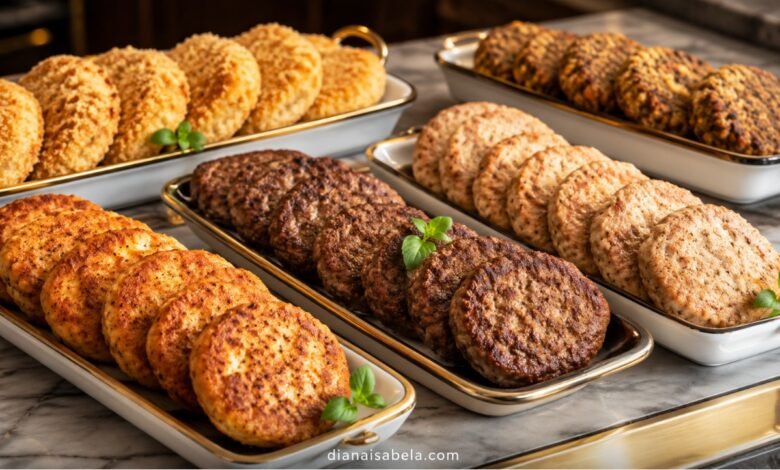
This is also where you may see more variety than at a restaurant. One tray might be chicken kotleti. Another beef. Another fish. Another vegetable. Another buckwheat or carrot version. The labels may be handwritten. The person behind the counter may know exactly what was made that morning.
Ask. Nicely. Directly.
Ask if they have kotleti today. Prepared foods can change by day.
Ask what kind they are. Chicken, beef, pork, turkey, fish, vegetable, buckwheat, or mixed meat all change the experience.
Ask if they are sold hot or cold. Some are ready to eat, others are meant to be reheated.
Ask what sides go best. A good deli worker may casually build your whole dinner better than a menu ever could.
Kotleti, Kotlety, and Kotlety Mielone: The Difference That Matters for Searching
Let’s make this useful without turning dinner into a lecture.
Kotleti is the spelling many English-language searchers use for Russian-style or broadly Eastern European cutlets. Kotlety is another spelling you may see across Slavic-language contexts. Kotlety mielone is Polish and usually refers to ground-meat cutlets, often home-style, comforting, and absolutely relevant if your goal is a tender patty with proper sides.
Are they exactly the same? Not always.
Are they close enough that a hungry person should search all of them? Absolutely.
Search logic: If you are in a city with Polish delis or restaurants, do not ignore “kotlety mielone.” If you are near Ukrainian food spots, search “Ukrainian kotlety.” If you are near Russian delis, search both “kotleti” and “kotlety.” The spelling is not just grammar. It is a doorway.
This is especially helpful when traveling. In some places, “Russian food” may not be the strongest local label. A Ukrainian deli, Polish restaurant, Eastern European grocery store, or Slavic market may be more useful than a direct Russian restaurant search.
Pozharsky Cutlets: The More Polished Cousin
Pozharsky cutlets deserve their own small moment because they can show up when you search for kotleti, especially on more traditional or upscale menus.
They are often associated with chicken, a tender texture, and a more refined style than everyday kotleti. Think less “quick deli dinner” and more “old restaurant dish that knows it has a history.”
If you see Pozharsky cutlets on a menu, do not assume they are the same as every homemade kotleta. They may be lighter, softer, and more delicate. Still, they belong in the same search universe. A person looking for kotleti may absolutely want to know this name.
Everyday kotleti are the cozy sweater. Pozharsky cutlets are the silk blouse. Same dinner family, different mood.
How to Use Photos Like a Person With Standards
Food photos are not just decoration. They are evidence.
When you search kotleti near me, open the photos before you commit. Look at customer photos on Google Maps, Yelp, delivery apps, restaurant websites, Facebook pages, and local food posts. A menu may say “cutlets,” but the photo will often tell you whether those cutlets are the soft ground-meat patties you wanted or something else entirely.
Look for shape first. Kotleti are usually oval or roundish patties, not thin flat strips of breaded chicken breast. Then look at texture. Some are smooth and lightly browned. Some are crumb-coated. Some are darker and more rustic. Some look tender and juicy. Some look dry enough to require emotional support. Choose accordingly.
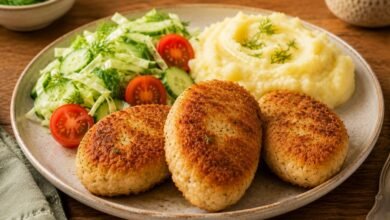
Then look at the plate around them. Good kotleti rarely travel alone. They usually have potatoes, buckwheat, salad, pickles, cabbage, sauce, soup, or bread nearby. The supporting cast tells you whether the kitchen understands comfort food or just added a patty to a plate and hoped for applause.
The Version You Want Depends on the Dinner You Need
Not all kotleti moods are the same. This is important.
Sometimes you want chicken kotleti because they feel lighter and soft, especially with salad or soup. Sometimes you want beef or beef-pork kotleti because the day has been rude and dinner needs structure. Turkey kotleti can be gentle and practical. Fish kotleti are a quieter choice, lovely when done well, terrible when neglected. Vegetable, carrot, cabbage, or buckwheat kotleti can be excellent if you want the shape and comfort of the dish without meat.
This is why a good kotleti search should not stop at “restaurant near me.” You are looking for a specific version of comfort.
Chicken kotleti: Soft, lighter, often easy to pair with potatoes, salad, or soup.
Beef kotleti: Richer, deeper, better when you want a full dinner that feels serious.
Turkey kotleti: A practical middle ground; cozy but not too heavy.
Fish kotleti: Best when fresh and well-seasoned; look for good reviews before ordering.
Vegetable kotleti: Useful at delis and markets, especially when made with cabbage, carrot, potato, or mixed vegetables.
Buckwheat kotleti: Earthy, old-school, and very good when you want something more interesting than a basic patty.
The Review Phrases That Actually Matter
Reviews are messy, but they are useful if you know what to notice.
Search inside reviews for “kotleti,” “kotlety,” “cutlets,” “homemade,” “prepared food,” “hot bar,” “deli counter,” “comfort food,” “traditional,” “fresh,” “grandma,” “potatoes,” “buckwheat,” and “salads.” People may not use the exact word you searched, but they may describe the world around it.
I trust reviews that mention freshness more than reviews that only mention decor. Decor is nice. I love a lamp. I respect a velvet banquette. But a lamp cannot save a dry kotleta.
Diana review rule: when three different people mention “homemade food,” “fresh prepared dishes,” and “great cutlets,” I keep the place on the list. When everyone only says “cute interior,” I proceed with caution and lipstick.
Also pay attention to negative reviews. Someone complaining that the food is “too traditional” may accidentally be pointing you toward exactly what you want. Someone saying the portions are “heavy” may not be wrong, but they may not be your dinner personality either.
When Delivery Apps Are Not Enough
Delivery apps can help, but they are not the whole search.
Many of the best delis and prepared-food counters do not list every item online. A deli may have kotleti in the case and still not show them on a delivery app. A small restaurant may post daily specials on Facebook instead of updating a formal menu. A grocery store may have prepared foods that only locals know about.
So use delivery apps as one layer, not the entire closet.
Search Google Maps. Search the restaurant name with “kotleti.” Check photos. Check social media. Call if needed. Ask if they have cutlets today. This is not being difficult. This is having taste.
What to Order Around Kotleti
A kotleti order is stronger when the sides make sense. You are not just buying patties. You are building a plate.
For a classic dinner, choose mashed potatoes or buckwheat. If the kotleti are rich, add cabbage salad, pickles, or beet salad for contrast. If there is mushroom sauce, consider it. If the restaurant has borscht, starting with soup can make the whole meal feel more complete.
For deli takeout, I like one warm side and one sharp side. That is the formula. Warm gives comfort. Sharp gives balance. This works whether the kotleti are chicken, beef, turkey, or vegetable.
Best plate logic: kotleti + buckwheat or potatoes + something pickled or cabbage-based + one colorful salad. Not complicated. Just correct.
If You Are Traveling, Search by Community, Not Just Cuisine
When you are in a new city, “kotleti near me” may or may not work. The better method is to search around food communities.
Try Russian deli, Ukrainian grocery, Polish restaurant, Eastern European market, Slavic food, Balkan grocery, international deli, European prepared food, or homemade Eastern European food. Then scan photos and menus for cutlets, patties, kotlety, kotleti, mielone, or prepared hot dishes.
This is especially useful in cities where communities are mixed or where restaurants avoid narrow labels. A place may not advertise itself as Russian but still sell kotleti. Another may be Polish but have the closest version to what you want. Another may be Ukrainian and serve kotlety that feel deeply familiar to anyone searching this dish category.
Travel teaches you this quickly: the best meal is not always under the name you expected.
The “Near Me” Mistake I Would Fix First
The mistake is searching one phrase, getting weak results, and assuming the food does not exist.
Do not do that.
Search the dish name. Search the alternate spelling. Search the cuisine. Search the deli. Search the grocery. Search the prepared-food counter. Search the side dishes. Search the restaurant photos. Search the reviews. Call once if the craving is serious.
This is not overthinking. This is the difference between a random dinner and the dinner you actually wanted.
The smarter search: Use “kotleti near me” as the starting point, not the entire plan. The best result may appear under kotlety, Russian cutlets, Ukrainian kotlety, kotlety mielone, homemade cutlets, or prepared Eastern European food.
The Page to Save Before You Get Hungry
Kotleti are not difficult food. They are not precious. They are not trying to be a trend. But finding them online can be oddly complicated because the names keep changing.
That is the whole trick.
If you remember nothing else, remember the name family: kotleti, kotlety, Russian cutlets, Ukrainian kotlety, Polish kotlety mielone, Pozharsky cutlets, homemade cutlets, meat patties, chicken kotleti, prepared food counter.
Once you know the words, the search gets better.
And once the search gets better, dinner gets better.
Which is honestly the kind of self-improvement I support.
FAQ
What does kotleti mean?
Kotleti usually refers to cutlets or patties, often made from ground meat and pan-fried. In Eastern European cooking, kotleti can be made with beef, pork, chicken, turkey, fish, vegetables, buckwheat, or mixed ingredients.
Is kotleti the same as kotlety?
They are very closely related search terms. “Kotleti” is a common English transliteration, while “kotlety” appears in Ukrainian, Polish, and other Slavic food contexts. For local search, try both spellings.
How do I search for kotleti near me?
Start with “kotleti near me.” Then try “kotlety near me,” “Russian kotleti near me,” “Russian cutlets near me,” “Ukrainian kotlety,” “Polish kotlety mielone,” “Russian deli near me,” and “Eastern European prepared food near me.”
What are kotlety mielone?
Kotlety mielone are Polish ground-meat cutlets. They are not always identical to Russian kotleti, but they are close enough that anyone searching for a cozy Eastern European cutlet dinner should know the term.
What are Pozharsky cutlets?
Pozharsky cutlets are a more specific style of chicken cutlet associated with Russian cuisine. They are often softer, more delicate, and more refined than everyday homemade kotleti.
Why do some menus not say kotleti?
Many restaurants translate the dish into English as homemade cutlets, meat patties, chicken cutlets, house cutlets, or Russian-style cutlets. Delis may not list them online at all, especially if they are part of the daily prepared-food counter.
Where can I usually find kotleti?
Russian restaurants, Russian delis, Ukrainian delis, Polish restaurants, Eastern European grocery stores, Slavic markets, and prepared-food counters are all worth checking.
Are kotleti always made with meat?
No. Many kotleti are meat-based, but there are also fish, vegetable, cabbage, carrot, potato, and buckwheat versions. Delis and buffet-style prepared-food counters often show the widest variety.
What should I order with kotleti?
Buckwheat, mashed potatoes, cabbage salad, beet salad, pickles, mushroom sauce, rye bread, sour cream, or borscht all work well. For takeout, choose one warm side and one sharp or pickled side.
Are kotleti good for takeout?
Usually, yes. Kotleti hold up well because they are sturdy and reheat better than many delicate foods. Ask whether they are sold hot or cold, and choose sides that travel well.