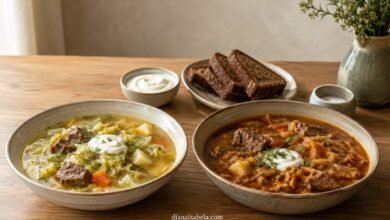
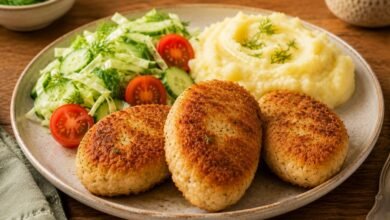
Russian Deli Near Me: Where to Find Kotleti, Salads and Takeout Comfort Food

A Russian deli is not just a place to buy food. It is a small theatre of dinner possibilities.
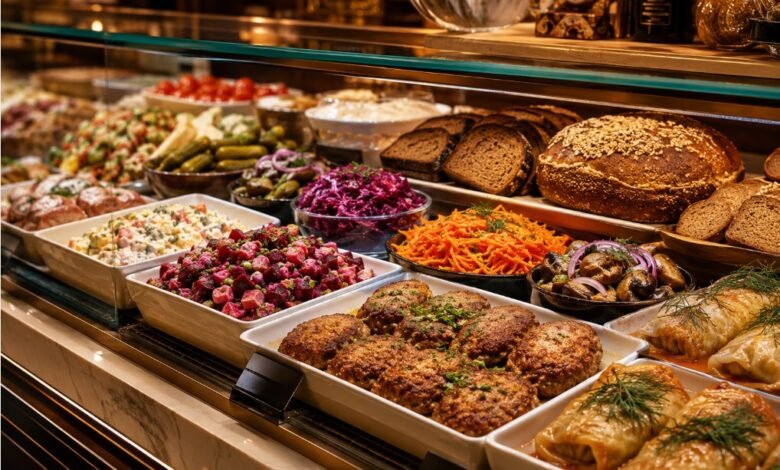
You walk in for “something quick,” which is always how the story begins. Then you see the prepared food counter glowing behind glass: golden kotleti, beet salads, cabbage salads, marinated mushrooms, stuffed peppers, rye bread, maybe a tray of potatoes that looks more emotionally reliable than half the people in your phone.
Suddenly, “something quick” becomes a whole dinner plan.
If you are searching Russian deli near me, you are probably not looking for a formal restaurant. You want the shortcut version of comfort food: the place where someone else already cooked, the trays are full, the portions are generous, and dinner can come home in neat little containers like a very practical love letter.
Diana note: A good deli is not glamorous in the obvious way. It is glamorous because it solves dinner. And honestly, that is a luxury category people underestimate.
If your main craving is kotleti specifically, keep my Russian kotleti near me guide open too. This deli guide is the next layer: what to look for when the best kotleti are not on a restaurant menu, but sitting behind glass at a prepared food counter.
The Deli Moment: When Dinner Is Already Waiting
A restaurant asks you to sit down, read the menu, commit to a mood, and wait. A deli is different. A deli says: look, choose, point, ask, taste with your eyes, build the plate.
That is why Russian delis are so useful for “near me” searches. Many people think they need a Russian restaurant, but what they actually need is a prepared food counter. Restaurants are for the full evening. Delis are for the moment when you want real food without negotiating with a reservation app.
The best ones feel dense with possibility. Not polished in a fake way. Alive. A little busy. Someone buying bread. Someone ordering salad by weight. Someone asking if the kotleti are chicken or beef. Someone else clearly knows exactly what they are doing and should probably be followed discreetly for educational purposes.
A Russian deli is where “I have nothing for dinner” becomes kotleti, salad, bread and a plan.
Start at the Prepared Food Counter, Not the Aisles
The prepared food counter is the heart of a Russian deli. This is where you usually find the dishes that make the search worth it: kotleti, stuffed cabbage, baked fish, potatoes, buckwheat, salads, soups, cutlets, mushrooms, pickles, and sometimes whole trays of food that look like somebody’s aunt took control of your evening.
Do not rush this part.
Stand back for a second and scan. What looks fresh? What is being replaced often? What are other people ordering? Which trays are half-empty because everyone knows they are good? Which dishes have handwritten labels? Which foods look like they were made that morning, not emotionally abandoned yesterday?
This is not overthinking. This is visual literacy.
If three people before me order the same salad and the woman behind the counter does not even need to ask what side they want with the cutlets, I pay attention. Local regulars are a better algorithm.
What to Buy First If You Came for Kotleti
Kotleti are often the reason people end up at a Russian deli. They may be sold hot, chilled, by weight, by piece, or packed in trays. Some delis have one type. Better ones may have several: chicken, beef, pork, turkey, fish, vegetable, buckwheat, cabbage, carrot, or mixed varieties.
If you are new, ask what kind they are. Do not guess by color alone. A golden patty could be chicken. A darker one could be beef. A lighter one could be turkey or fish. A crumb-coated one may be baked or fried. A vegetable one might look rustic but taste wonderful with the right sauce.
Chicken kotleti: Usually softer and lighter, good with mashed potatoes, cabbage salad or soup.
Beef or mixed-meat kotleti: Richer, deeper and better when you want a serious dinner, not a snack pretending to be a meal.
Turkey kotleti: Practical, gentle, good for takeout and easy to pair with salads.
Fish kotleti: Worth trying if the deli looks fresh and busy; ask when they were made.
Vegetable or buckwheat kotleti: Excellent when you want the comfort-food shape without the heavy meat mood.
For a full kotleti search by name, spelling and menu variation, my Kotleti Near Me guide explains the difference between kotleti, kotlety, Ukrainian kotlety, Polish kotlety mielone and Pozharsky cutlets. In a deli, those names matter because one small label can completely change what you find.
The Art of Buying Food by Weight
Food by weight is one of the most useful things about Russian delis. It is also one of the things that can confuse people the first time.
You do not always have to buy a giant container. You can ask for a little. A half pound. A small portion. Two pieces. Enough for one dinner. Enough for two people. Enough for “I am pretending this is for tomorrow but we both know I will eat it tonight.”
The beauty is control. You can build a plate instead of committing to one restaurant entrée.
Deli order idea: two kotleti, a small scoop of buckwheat, a little beet salad, a little cabbage salad, three pickles, rye bread. This is dinner. This is also taste.
If you are unsure, ask: “Can I get a small amount?” Most prepared food counters are used to this. If the food is priced by pound, they will weigh it. If it is priced by piece, they will tell you. It is not complicated once you do it once.
And yes, you can absolutely point. Deli pointing is a legitimate communication style.
The Salad Counter Is Not a Side Character
In a Russian deli, salads are not the sad little lettuce situation Americans sometimes call a side. They are part of the architecture of the meal.
You may see beet salad, cabbage salad, carrot salad, cucumber salad, Olivier salad, vinegret, eggplant salad, marinated mushrooms, pickled vegetables, or creamy salads with peas, potatoes, eggs, herbs and enough nostalgia to fill a small novel.
Some salads are bright and sharp. Some are creamy and rich. Some are vinegary. Some are sweet-earthy. Some are there to balance kotleti, not compete with them.
How I choose: If the kotleti are rich, I want something crisp or acidic beside them. Cabbage salad, pickles, beet salad or marinated mushrooms can make the whole plate feel smarter.
A good deli dinner is about contrast. Golden cutlet, soft side, sharp salad, dark bread. Texture is the styling. Color is the accessory. The plate should not be beige unless life has truly defeated everyone involved.
Rye Bread Is the Quiet Luxury
Do not leave without looking at the bread.
Russian rye bread, Borodinsky-style bread, dark seeded loaves, sliced rye, and dense sour breads can turn deli takeout into a proper meal. Bread is not just filler here. It is part of the culture of the plate: something to eat with salad, soup, fish, pickles, or cold leftovers the next day.
Dark rye with kotleti and pickles is not trendy. It does not need to be. It has survived many trends and looks at them calmly.
My deli rule: if the bread smells deep, dark and slightly sweet, buy it. You will find a reason. People always find a reason for good bread.
If you are building takeout for home, bread also makes the meal feel intentional. A container of kotleti and salad becomes dinner when there is bread, tea, maybe soup, and a plate that is not plastic if you have the energy.
Frozen Kotleti: The Backup Dinner Wardrobe
Prepared food is for tonight. Frozen kotleti are for the future version of you who will be tired, hungry, and grateful.
Check the freezer section. Some Russian and Eastern European delis sell frozen kotleti, pelmeni, vareniki, blini, stuffed cabbage, fish patties, meat patties, and other ready-to-cook or ready-to-heat foods. This is not the same as restaurant takeout, but it is very useful.
Frozen kotleti are especially good if you live far from the deli and do not want to make the trip every time the craving appears. Buy a pack, check the cooking instructions, and keep it for a night when your standards are high but your energy is low.
Check the ingredients: Look for the type of meat, fillers, seasoning and whether the cutlets are raw or fully cooked.
Check the cooking method: Some need pan-frying, some need baking, some only need reheating.
Check the date: Frozen does not mean immortal.
Buy sides too: Frozen kotleti are better when you also have buckwheat, pickles, rye bread or salad at home.
This is the deli version of having a good black dress in your closet. Not exciting every day, but deeply valuable when needed.
The Takeout Dinner That Actually Feels Like Dinner
Russian deli takeout can be much better than random delivery because you control the plate. You are not trapped by one entrée and one sad side. You can choose pieces, textures, flavors and portions.
For one person, I would order two kotleti, one warm side, one salad, something pickled, and bread. For two people, get a little more variety: kotleti, stuffed cabbage or fish, buckwheat or potatoes, two salads, pickles, rye bread, maybe something sweet.
If you are feeding a family, the deli becomes even more useful. Buy a tray of kotleti, a container of salad, bread, maybe soup, and suddenly dinner is handled without everyone eating a different sad thing over the sink.
Takeout from a good Russian deli does not feel like giving up. It feels like outsourcing wisely.
How to Tell If the Deli Is Worth It
Not every deli is great. Some are excellent. Some are tired. Some are beloved because they are truly good. Some are beloved because the neighborhood has no other option. You have to read the room.
Look for turnover. A busy counter is usually a good sign because prepared food should not sit forever. Look for customers who seem confident. Look for fresh trays, clear labeling, clean display cases, and staff who can answer simple questions about what is inside the food.
Read reviews, but read them carefully. Search for phrases like prepared food, hot bar, deli counter, fresh salads, kotleti, cutlets, rye bread, catering, frozen food, homemade, and takeout. A review that says “great selection of prepared foods” is more useful than one that only says “nice store.”
Green flag: customers mention specific foods by name. “Good kotleti,” “fresh salads,” “great rye bread,” “best prepared food counter.” Specific praise is more trustworthy than vague compliments.
Photos matter too. Look at the display case. Does the food look fresh? Are the trays full but not neglected? Do the salads have color? Do the kotleti look moist, golden, textured? Does the bread section look active?
A deli does not need to look like a luxury hotel. But it should look cared for.
What to Ask So You Do Not Buy the Wrong Thing
There is no shame in asking questions. The counter is there for that. Also, asking questions is how you avoid buying a full container of something you thought was one thing and is absolutely another.
Ask what was made today. Freshness matters most at the prepared food counter.
Ask which kotleti are chicken, beef, turkey, fish or vegetable. They may look similar under warm lights.
Ask what people usually buy with them. This often gets you better pairing advice than the internet.
Ask if the food is sold hot, cold, by piece or by weight. It saves confusion at checkout.
Ask if they do catering trays. If the food is good, you may want this information later.
Be polite. Be direct. Do not perform helplessness. Just ask. The deli counter rewards clarity.
Catering: The Secret Weapon Nobody Talks About Enough
Russian delis can be very useful for catering, especially if you want food that feels abundant, homemade and different from the usual sandwich tray. Many delis offer trays of kotleti, salads, stuffed cabbage, cold appetizers, breads, pastries, fish, dumplings, or mixed platters.
This can work for family gatherings, office lunches, school events, holiday tables, small parties, or “I want to host but I do not want my kitchen to become a crime scene.”
The key is to ask early. Prepared trays may need notice. Some dishes may only be available certain days. Some delis have printed catering menus; others handle it more informally. Ask what they recommend for your number of guests and whether items are priced by tray, by pound, or by piece.
Hosting thought: A tray of kotleti, two salads, rye bread, pickles and a dessert can look generous without trying too hard. That is the whole point. Effortless is often just well-planned.
The Grocery Aisles Still Matter
Once you finish at the prepared food counter, do not ignore the aisles. This is where you can build the rest of the meal or stock your kitchen for later.
Look for rye bread, mustard, horseradish, pickles, marinated vegetables, buckwheat, sour cream, tea, jam, frozen pelmeni, frozen vareniki, frozen kotleti, smoked fish, cookies, honey cake, wafers, mineral water, and little things that make dinner feel more complete.
A Russian deli is often part grocery, part takeout counter, part bakery, part frozen-food emergency plan, and part cultural archive. That is why it is more useful than a regular restaurant search when you want options.
I always check the tea, bread and freezer section. This is not random. This is how you build a future dinner for the version of yourself who will be hungry and dramatic on a Tuesday.
A First-Time Russian Deli Order I Would Actually Recommend
If you are overwhelmed, order like this.
Get kotleti first. Choose chicken if you want something lighter, beef or mixed meat if you want a richer dinner, vegetable or buckwheat if you want something different. Then choose one warm side: buckwheat, potatoes, rice, or whatever looks fresh. Then choose one salad with brightness: cabbage salad, beet salad, cucumber salad, carrot salad, or pickles.
Add rye bread.
If you want dessert, look for honey cake, layered cakes, cookies, poppy seed pastries, or whatever looks like someone’s grandmother would have an opinion about it.
Easy first order: chicken kotleti, buckwheat, cabbage salad, pickles, rye bread and tea. Simple, balanced, cozy, and very hard to regret.
That is enough. You do not need to buy the whole deli on the first visit, although spiritually I understand the temptation.
When “Russian Deli Near Me” Gives Weak Results
Search engines do not always understand food communities. If “Russian deli near me” gives you poor results, widen the terms.
Try Eastern European deli, Ukrainian grocery, Polish deli, Slavic market, European food store, international grocery, Russian grocery, prepared food counter, European bakery, or homemade Eastern European food. Then check photos and reviews for prepared foods, salads, breads, frozen items and catering.
If you already know you want the cutlet family specifically, the related guide on Russian cutlets near me can help you search when a menu uses English names instead of kotleti.
The important thing is not to stop after one phrase. Delis can be badly categorized online. A place may be listed as a grocery store but have an excellent prepared food counter. Another may be called a European market but sell exactly the kotleti, salads and rye bread you want.
The Deli Lesson
A Russian deli teaches you that dinner does not always need a reservation, a printed menu, or a perfect caption. Sometimes dinner is waiting behind glass, priced by weight, surrounded by salads, bread, pickles, frozen foods and the quiet confidence of people who already know what to order.
That is what makes the search worth it.
You are not only looking for a store. You are looking for a place that can solve dinner in layers: something hot, something cold, something sharp, something soft, something for tonight, something frozen for later, something sweet because life is short and deli dessert cases know things.
So search Russian deli near me, but search with range. Check the prepared food counter. Ask about kotleti. Buy the rye bread. Look at the salads. Take home more than one container if the mood is right.
A good deli is not just where you find food.
It is where dinner stops being a problem.
FAQ
What is a Russian deli?
A Russian deli is usually a food shop that may sell prepared dishes, salads, breads, frozen foods, imported groceries, sweets, drinks and sometimes catering trays. Many Russian delis also carry Eastern European foods from nearby culinary traditions.
What should I buy at a Russian deli?
Start with the prepared food counter. Look for kotleti, salads, stuffed cabbage, buckwheat, potatoes, soups, pickles, marinated mushrooms and rye bread. If the deli has a freezer section, check for frozen kotleti, pelmeni and vareniki too.
Can I find kotleti at a Russian deli?
Often, yes. Russian delis are one of the best places to find kotleti because they may sell them hot, chilled, frozen, by piece, by tray or by weight. Ask what kind they have that day.
What does food by weight mean?
It means the deli prices certain foods by the pound or another weight amount. You can usually ask for a small portion, a half pound, a full pound, or a specific number of pieces if the item is sold individually.
Are Russian deli salads different from regular salads?
Very different. Russian deli salads are often prepared dishes rather than plain lettuce salads. You may see beet salad, cabbage salad, Olivier salad, carrot salad, marinated mushrooms, cucumber salad, vinegret and creamy potato-based salads.
Is rye bread important at a Russian deli?
Yes. Rye bread is one of the best things to check because it pairs beautifully with kotleti, soups, salads, pickles and smoked foods. A good loaf can make a deli takeout meal feel much more complete.
Do Russian delis sell frozen food?
Many do. Frozen kotleti, pelmeni, vareniki, blini, stuffed cabbage and other ready-to-cook foods are common in some Russian and Eastern European delis. Always check whether the item is raw, fully cooked or meant only for reheating.
Is Russian deli food good for takeout?
Yes, that is one of the biggest reasons to go. You can build a full dinner from prepared foods: kotleti, one warm side, one salad, pickles and bread. It usually travels better than many restaurant dishes.
Can Russian delis do catering?
Some Russian delis offer catering trays for parties, office lunches, holidays and family gatherings. Ask in advance about kotleti trays, salad trays, stuffed cabbage, breads, cold appetizers, pastries and pricing by tray or by pound.
What if there is no Russian deli near me?
Try searching for Eastern European deli, Ukrainian grocery, Polish deli, Slavic market, European food store, international grocery or prepared food counter. Some places are not labeled “Russian” online but still carry similar foods.