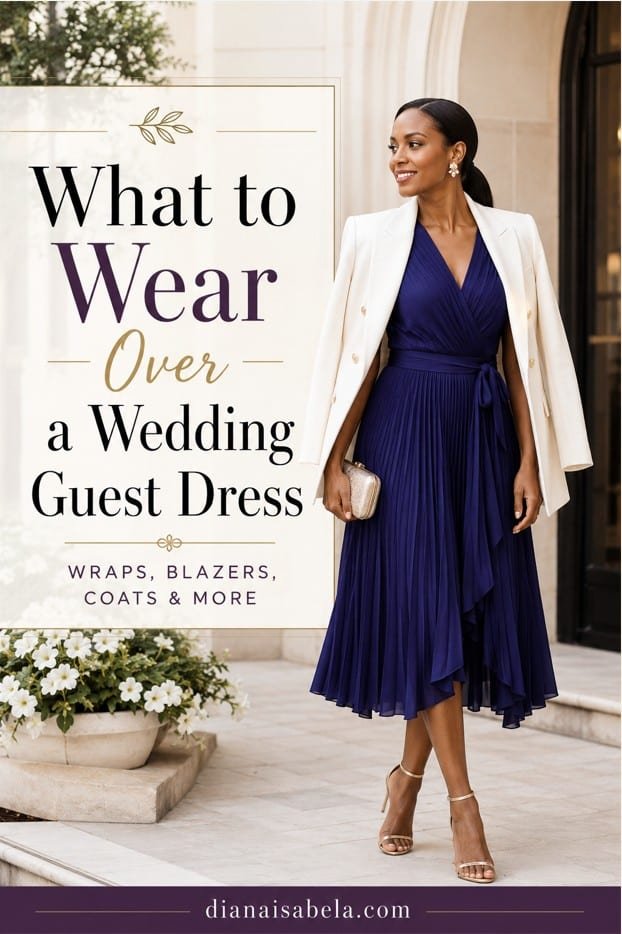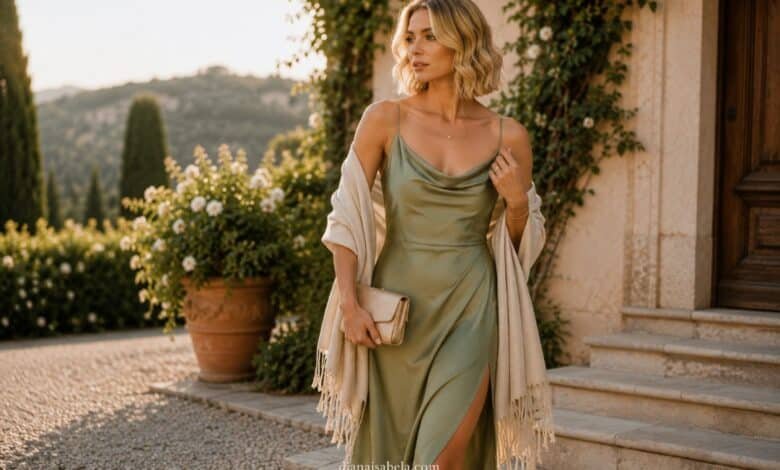
The layer over your wedding guest dress should look intentional, not like weather panic.
A beautiful dress can lose half its magic under the wrong jacket. The little denim jacket you love on Saturdays, the cardigan that lives on your office chair, the emergency coat you grabbed from the closet because “it might get cold” — all of these can make a wedding guest outfit look less polished than it deserves.
The good news: the right layer can make the dress look even better. It can add structure, warmth, modesty, texture, color, or evening polish. The trick is choosing the layer that matches the dress, the venue, the season, and the formality of the wedding.
Start with the dress, not the weather app
The biggest mistake is choosing the layer only because you are cold. Practical, yes. Stylish, not always. A layer has to solve the temperature problem without creating a new visual problem.
Look at your dress first. Is it sleek or romantic? Printed or solid? Formal or relaxed? Does it have sleeves, straps, a low back, a high neck, a slit, a lot of volume, or a very clean shape? The layer should support that design instead of fighting it.
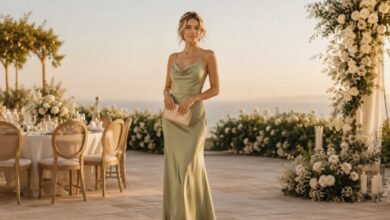
A satin slip dress usually wants something clean: a tailored blazer, silk wrap, faux fur stole, or long coat. A floral garden dress can handle a soft shawl, cropped cardigan, linen-blend blazer, or delicate wrap. A formal gown often needs something elegant enough to stay in the same room as the dress.
The easiest answer: a wrap that looks like it belongs
A wrap is the classic wedding guest solution because it does several jobs at once. It gives warmth, covers shoulders for a ceremony, adds softness to a dress, and can be removed without ruining the outfit.
But not every wrap is elegant. The fabric matters. Choose silk, satin, chiffon, cashmere, fine wool, velvet, or a soft pashmina-style texture. Avoid anything too thin, too shiny, too wrinkled, or too obviously “I bought this near the checkout line.”
How to choose the color
If your dress is printed, choose one color from the print and make the wrap quieter. If your dress is solid, you can either match the tone for a clean look or add contrast with a rich neutral.
Champagne, taupe, soft gold, blush, navy, cocoa, olive, silver, charcoal, wine, and dusty blue can all work beautifully. Just be careful with ivory, cream, and very pale champagne because wedding photos are dramatic little liars. For safer color logic, use the wedding guest dress colors by venue guide.
The main layers that actually work over wedding guest dresses
There is no single perfect layer. The right answer changes with dress code, fabric, season, and venue. Here is the honest fashion-editor breakdown.
The layer should respect the dress code
A layer can quietly change the formality of your outfit. This is useful if you do it on purpose and dangerous if you do it by accident.
What to wear over a sleeveless wedding guest dress
Sleeveless dresses are easy to layer because the shoulder line is clean. A wrap is the most graceful option. A blazer makes it modern. A cropped jacket keeps the waist visible. A cape adds ceremony.
If the dress has a strong neckline, keep the layer simple. A halter dress does not need a busy scarf tangling around the neck. A strapless dress can look beautiful with a structured blazer or soft stole. A one-shoulder dress is trickier; choose a wrap or coat that does not compete with the asymmetry.
What to wear over a long wedding guest dress
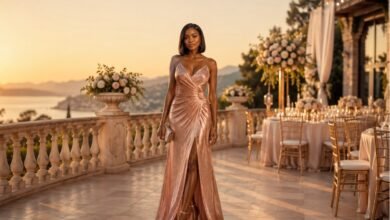
A long dress usually needs a longer layer. Tiny jackets can cut the outfit in a strange place unless the dress has a defined waist and the jacket is deliberately cropped. For formal gowns, choose a long coat, cape, stole, or elegant wrap.
For flowy maxis, a soft shawl or relaxed but polished blazer can work. The key is proportion. If the dress has volume, avoid a bulky layer. If the dress is sleek, you can add more structure on top.
Season decides how serious the layer needs to be
A summer layer is usually about ceremony coverage or air conditioning. A winter layer is survival with lipstick. The strategy changes.
Choose a soft wrap, cropped blazer, light trench-style coat, romantic cardigan, or silk shawl. Spring weather is dramatic, so make the layer pretty enough to be seen.
A chiffon wrap, silk scarf, lightweight shawl, or barely-there blazer works for air-conditioned venues and evening breezes. Avoid heavy layers that make the outfit look seasonally confused.
This is the best season for richer layers: velvet wraps, suede-like textures, wool-blend coats, tailored blazers, and jewel-tone shawls. Fall weddings love depth.
Use an actual coat. A good one. Long wool coat, faux fur stole, velvet cape, dressy wrap coat, or elegant evening layer. Freezing in a spaghetti-strap dress is not chic; it is just cold with mascara.
Outdoor weddings need layers that can handle the venue
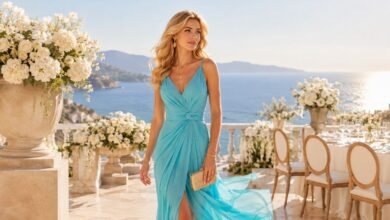
Garden, vineyard, beach, barn, backyard, and rooftop weddings all have different layer problems. A beach wedding may need a soft wrap for wind. A vineyard wedding can take a warm shawl or tailored coat. A rooftop wedding may look glamorous in photos and feel like a weather experiment after sunset.
The layer should match the venue’s texture. A silk wrap looks beautiful at a garden ceremony. A linen-blend blazer can make sense for a coastal wedding. A velvet shawl belongs at a cool evening vineyard. For the full outfit, including shoes, the outdoor wedding shoe guide helps keep the look practical without ruining it.
Church ceremonies may need more coverage
If the wedding ceremony is in a church or a more traditional setting, a wrap, shawl, blazer, bolero, or capelet can make a sleeveless or low-neckline dress feel more appropriate.
This does not mean hiding the outfit. It means making the outfit feel respectful for the ceremony and then easy to adjust for the reception. The best layer is the one you can wear in the ceremony without feeling like you borrowed it from someone’s aunt in a panic.
Layers that usually make a wedding guest dress look less expensive
Some pieces are not impossible, but they are dangerous. They require extremely specific styling to work. Most of the time, there is a better option.
The everyday cardigan
Soft? Yes. Useful? Yes. Wedding-elevated? Not always. If it has pilling, stretched cuffs, casual buttons, or the personality of office air conditioning, skip it.
The random denim jacket
A denim jacket can work for a very casual, rustic, or playful wedding, but it often pulls a dress down. If the dress code says cocktail, formal, or black tie optional, denim is usually not the move.
The bulky winter coat
Sometimes you need warmth. Fine. But arrive in the coat and remove it. Do not rely on it as part of the look unless it is elegant enough to belong.
The office blazer
A blazer can be chic. An office blazer can look tired. The difference is fabric, cut, styling, and whether it looks like it has ever been trapped in a conference room.
How to match the layer to your accessories
If your layer adds texture, keep accessories cleaner. If your layer is simple, accessories can carry more interest. A satin wrap with pearl earrings feels classic. A tailored blazer with sculptural earrings feels modern. A faux fur stole with tiny delicate jewelry feels more expensive than adding every sparkle you own.
The bag matters too. A layer can make the outfit feel heavier, so a small clutch or mini bag keeps the look refined. If accessories are the part that always gets messy, the wedding guest accessories guide will save you from the “too many nice things at once” problem.
How to keep the outfit from looking overdressed
Layers can add formality fast. That is useful when the dress is simple, but risky when the dress is already dramatic. A sequin dress plus faux fur plus chandelier earrings plus metallic heels can become a lot. Sometimes the chicest answer is a clean coat and quiet jewelry.
Check the invitation. Black tie can handle drama. Cocktail wants polish. Semi-formal likes balance. Dressy casual does not need a cape unless you are attending a wedding in a novel. For dress code translation, use the wedding guest dress codes explained guide.
The emergency formula when you do not know what to bring
You are leaving soon. The ceremony is outside. The reception is inside. The invitation is vague. Your dress is cute, but your shoulders are cold. Here is the least chaotic answer.
The final mirror test
Put on the full outfit with the layer. Not just the dress. Not just the layer held vaguely near your shoulders. The whole thing: dress, shoes, bag, jewelry, hair, and layer.
Now ask: does the layer make the outfit look more finished, or does it look like the weather bullied you?
If it hides the best part of the dress, changes the formality in the wrong direction, clashes with the color, or looks like everyday clothing, change it. If it adds polish, warmth, ceremony coverage, or a more intentional silhouette, keep it.
A good wedding guest layer does not steal the outfit. It edits it.
The best thing to wear over a wedding guest dress is the layer that keeps the outfit in the same story.
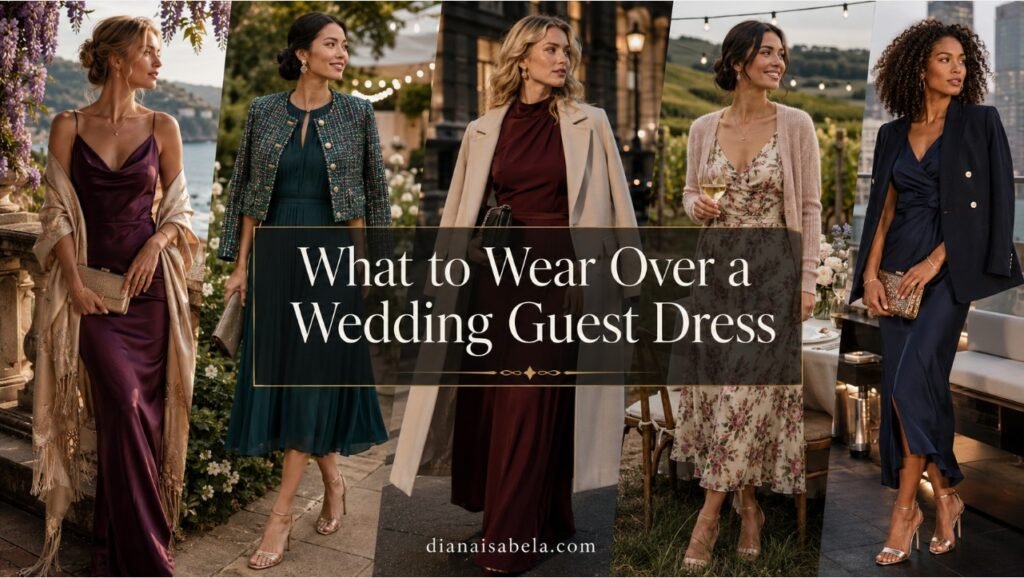
A silk wrap, tailored blazer, elegant shawl, evening coat, cropped jacket, cape, or refined cardigan can all work. The right choice depends on the dress, season, venue, and dress code.
The mistake is treating the layer as separate from the look. It is not separate. It is part of the outfit people see when you arrive, sit through the ceremony, walk to cocktail hour, and appear in photos you did not approve first. Choose accordingly.
FAQ
What should I wear over a wedding guest dress?
A silk wrap, elegant shawl, tailored blazer, cropped jacket, evening coat, cape, or refined cardigan can work over a wedding guest dress. The best choice depends on the dress code, venue, season, and shape of your dress.
Can I wear a blazer over a wedding guest dress?
Yes, a blazer can look very chic over a wedding guest dress if it feels intentional. Choose a softly tailored blazer in a refined color and fabric. Avoid office-looking blazers that make the outfit feel like workwear.
What can I wear over a sleeveless wedding guest dress?
A wrap, shawl, blazer, bolero, cropped jacket, capelet, or elegant coat can work over a sleeveless wedding guest dress. For church ceremonies or formal settings, choose something polished enough to stay on during photos.
Can I wear a cardigan over a wedding guest dress?
A cardigan can work for dressy casual, garden, daytime, or semi-formal weddings if it is refined. Choose a fine knit, cropped shape, delicate buttons, and a color that complements the dress. Avoid everyday cardigans that look too casual.
What do you wear over a wedding guest dress in winter?
For winter weddings, choose a long wool coat, faux fur stole, velvet wrap, cape, evening coat, or dressy shawl. The layer should be warm enough to function and elegant enough to match the formality of the outfit.
What jacket looks good over a wedding guest dress?
A tailored blazer, cropped jacket, bolero, structured evening jacket, or elegant coat can look good over a wedding guest dress. Match the jacket length to the dress shape so the outfit does not look cut in the wrong place.
Can I wear a denim jacket over a wedding guest dress?
Usually, a denim jacket is too casual for cocktail, formal, or black tie optional weddings. It may work for a very relaxed rustic, backyard, or casual wedding, but only if the invitation and venue clearly support that mood.
What color wrap should I wear with a wedding guest dress?
Choose a wrap that matches, softens, or gently contrasts with your dress. Champagne, taupe, blush, navy, cocoa, wine, dusty blue, gold, and charcoal can work. Avoid white, ivory, cream, and very pale bridal-looking tones.
Should my layer match my dress or my shoes?
It does not have to match exactly. The layer should belong to the outfit’s color story. It can match the dress, echo the shoes or bag, or introduce a soft neutral that ties everything together.
What should I wear over a formal gown for a wedding?
For a formal gown, choose an evening coat, silk wrap, velvet shawl, cape, faux fur stole, or refined long coat. Avoid casual jackets, everyday cardigans, and bulky coats that make the gown look less polished.