Georgian Food for Girls Who Believe Bread and Cheese Can Be a Love Language

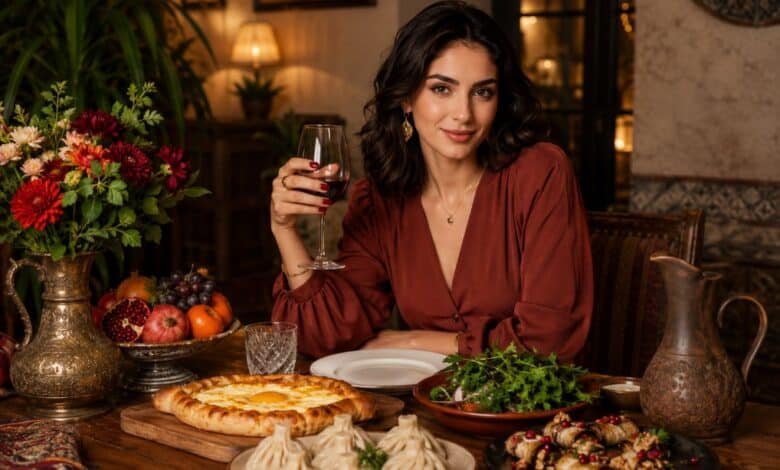
Georgian food is what happens when dinner stops acting polite and becomes generous, warm, dramatic, herby, cheesy, wine-friendly, and deeply unserious about tiny portions. It is bread that arrives like a declaration. Dumplings that require technique. Walnut sauces that taste like someone’s grandmother had better priorities than counting calories. Herbs everywhere. Cheese everywhere. A table that says, “Please sit down, you are staying longer than you planned.”
This Georgian food guide is for the girl who wants to order confidently, understand the table, and not stare at the menu like it just asked her a philosophy question. If you are going for your first Georgian dinner, start with khachapuri, khinkali, a walnut-based appetizer, something grilled, something herby, and one sweet ending. That is already a beautiful table.
The first thing to understand: Georgian food is built for sharing
Georgian food is not really a “one person, one sad plate” situation. The magic is in the middle of the table: bread, dumplings, sauces, grilled meat, vegetables, pickles, herbs, cheese, wine, conversation, and someone reaching across you for one more piece of khachapuri like the night depends on it.
If you already love the cozy, table-heavy feeling in Eastern European comfort food, Georgian food will feel familiar in spirit but completely different in flavor. It has warmth and comfort, yes, but also bright herbs, walnut sauces, sour plum, pomegranate, coriander, garlic, and that very specific “this dinner is becoming an event” energy.
Khachapuri is the dish everyone talks about — and honestly, they are correct
Khachapuri is Georgian cheese bread, but that description is almost rude because it sounds too small. The famous Adjarian version arrives shaped like a little boat, filled with melted cheese, butter, and often an egg yolk in the center. You mix the filling while it is hot, tear pieces from the bread edges, dip, and suddenly you understand why people develop emotional attachments to carbohydrates.
There are different kinds of khachapuri depending on region and style. Some are round and filled with cheese inside. Some are layered. Some are more bread-forward, some are more molten. The version most people recognize is Adjarian khachapuri, but do not ignore the simpler versions if the restaurant offers them. They can be less theatrical and sometimes easier to share.
Diana note: if you order only one dish because you are “just trying Georgian food,” make it khachapuri. If you order two, make the second khinkali. If you order three, congratulations, you are becoming my kind of person.
Khachapuri is best when eaten hot. Not warm. Hot. This is not the dish to order and then spend twelve minutes adjusting the lighting for a photo while the cheese starts having trust issues. Take your picture quickly, then eat. The content can survive. The cheese cannot.
Khinkali: the dumplings that punish overconfidence
Khinkali are Georgian soup dumplings, usually filled with spiced meat, herbs, and broth. They are twisted at the top into a little knot, and the correct way to eat them is to hold the top, bite carefully, sip the broth, then eat the dumpling. The top knot is often left behind because it can be doughy and helps you keep count of how many you ate. This is useful information if you enjoy evidence.
Do not cut khinkali with a knife and fork unless you want the broth to run away from you like it has other plans. Pick one up, lean slightly forward, bite gently, and respect the soup. Khinkali are not hard, but they do require a little attention. They are the dinner equivalent of wearing a white silk blouse near red sauce: possible, but not the time to be chaotic.
The classic filling is meat, but some places offer mushroom, cheese, potato, or herb versions. If you are new, order a mixed round if the restaurant allows it. The meat version gives you the traditional experience; mushroom khinkali can be earthy and beautiful; cheese khinkali feels softer and more comfort-food coded.
Badrijani
Badrijani are eggplant rolls filled with walnut paste, garlic, herbs, and spices, often finished with pomegranate seeds. They are rich but not heavy, elegant but not fussy, and very good if you want something pretty on the table before the bread-and-dumpling situation begins.
Pkhali
Pkhali are vegetable and walnut spreads, often made with spinach, beet, beans, or other vegetables. They usually arrive shaped into small portions and decorated with pomegranate. Order them when you want something bright, earthy, and shareable.
Lobio
Lobio is a Georgian bean dish, usually warm, hearty, and deeply comforting. It can be served in a clay pot and often pairs beautifully with cornbread or bread. It is humble in the best way: not trying to be glamorous, still completely memorable.
Mtsvadi
Mtsvadi is Georgian grilled meat, often skewered and cooked simply so the smoke, salt, and meat do the work. If your table has khachapuri, khinkali, and walnut dishes already, mtsvadi adds that satisfying “real dinner” center.
The walnut sauces are not a side character
One of the most beautiful things about Georgian food is how seriously it takes walnuts. They are not just sprinkled for decoration. They become sauces, fillings, pastes, and the creamy base of dishes that feel rich without tasting flat. Walnut, garlic, coriander, vinegar, spices, herbs — the result is earthy, tangy, and surprisingly elegant.
If you usually order the most obvious dish and ignore the appetizers, do not do that here. Georgian appetizers can be the best part of the table. Badrijani, pkhali, and walnut-rich vegetable dishes bring color, texture, and that slightly mysterious “what is in this?” flavor that makes dinner more fun.
This is also where Georgian food feels very different from the softer café mood of a cozy European café. A café lunch might be about a pretty plate and a cappuccino. Georgian dinner is more layered: warm bread, strong herbs, sour accents, garlic, walnuts, grilled things, and a table that keeps getting more interesting with every dish.
How I would build a Georgian table for a first dinner
If the menu feels big, do not panic. Georgian food is easier when you think in table zones, not individual plates. You want bread, dumplings, something vegetable-walnut, something smoky or saucy, and a sweet finish if you have room.
- Choose one khachapuri. Adjarian if you want the famous cheese boat moment; another style if you want something easier to share.
- Add khinkali. Meat is classic, but mushroom or cheese can be excellent depending on the restaurant.
- Order one cold appetizer. Badrijani or pkhali makes the table prettier and balances the heavier dishes.
- Pick one main with smoke or sauce. Mtsvadi, shkmeruli chicken, or another house specialty gives dinner structure.
- Do not forget herbs and acidity. Pickles, tkemali sauce, fresh cilantro, parsley, and pomegranate are part of the Georgian personality.
- Leave room for curiosity. If the server recommends something regional or homemade, listen. Georgian restaurants often hide their best charm in the less famous dishes.
Shkmeruli, tkemali, and the sauces that make the table flirt back
Shkmeruli is a Georgian chicken dish often served in a garlicky milk or cream-based sauce. It is rich, fragrant, and perfect if you want something cozy but not boring. It is also the sort of dish that makes bread necessary, because leaving sauce behind would be spiritually incorrect.
Tkemali is a sour plum sauce, usually served with meat, potatoes, or savory dishes. It brings sharpness and brightness to the table, especially when the meal leans rich. If khachapuri is the warm hug, tkemali is the friend who tells you the truth and fixes your lipstick before the photo.
Georgian sauces matter because the cuisine is not only heavy comfort food. It has balance: fat and acid, cheese and herbs, meat and sour plum, walnuts and vinegar, bread and fresh greens. That balance is what keeps the table exciting instead of sleepy.
The dinner mood
Georgian dinner feels best when you are not rushing. It is a long-table mood: friends, dates, family, a birthday dinner that somehow becomes louder than expected, or a cozy restaurant night where you order too much and still feel proud of yourself.
It is not delicate little bites. It is generous.
What to order depending on the night
- For a first date: khachapuri, badrijani, and a few khinkali. Fun, shareable, not too chaotic.
- For friends: go bigger — khachapuri, khinkali, pkhali, grilled meat, lobio, and dessert.
- For a cozy family-style dinner: add shkmeruli or another saucy main so the table feels complete.
- For a stylish restaurant night: order color and texture: pkhali, eggplant, herbs, pomegranate, cheese bread, dumplings, and wine.
Georgian wine belongs in the conversation
Georgia has one of the oldest wine cultures in the world, and many Georgian restaurants take wine seriously. You may see amber wine, qvevri wine, Saperavi, Rkatsiteli, or house selections that feel different from the usual restaurant list. If you drink wine, ask what pairs well with khachapuri, khinkali, or grilled meat. A good server will usually have thoughts.
Amber wine can be especially interesting if you like something textured, slightly tannic, and food-friendly. Red Saperavi can work beautifully with grilled meat and richer dishes. But you do not need to become a wine scholar before dinner. Ask for a recommendation, taste if possible, and choose what actually feels good with the food.
If you do not drink alcohol, Georgian food still gives you plenty of table drama. Sparkling water, tart juices, tea, or soft drinks can still work because the dishes themselves bring so much personality.
What to wear if the Georgian dinner is also a little bit of a scene
This is where the food and fashion worlds shake hands. A Georgian dinner is not the night for a skin-tight dress that makes sitting, reaching, and eating feel like a competitive sport. You want something comfortable enough for bread, but polished enough for the photos that will absolutely happen when khachapuri lands on the table.
I would wear a soft midi dress, a silk blouse with relaxed trousers, a knit top with a long skirt, or dark jeans with a beautiful jacket. Add earrings, a good lip color, and shoes you can sit in for two hours without becoming a different person emotionally.
If you want more restaurant-outfit logic, the cozy dinner styling in what to wear to a dumpling and kotleti dinner has the same core idea: dress like you respect the table, not like you are trying to survive it. And if the night is more Mediterranean vacation than cozy city dinner, the table energy in Greek tavern food gives a lighter, sunnier contrast.
For Georgian food specifically, I love warm colors: chocolate, cream, black, olive, burgundy, paprika red, deep green, camel, soft gold. Nothing too precious. Nothing that panics near sauce. A good Georgian dinner is not a museum visit. It is dinner.
The sweet ending: churchkhela, honey, nuts, and “just one bite” lies
Churchkhela is one of the most recognizable Georgian sweets: nuts threaded onto a string and dipped in thickened grape juice, then dried until chewy and glossy. It can look unusual if you have never seen it before, but the flavor is simple in a lovely way: grape, nuts, chew, sweetness, energy.
Some restaurants may offer honey cakes, walnut desserts, pastries, or seasonal sweets. Georgian desserts are not always the huge finale that French pâtisserie can be; sometimes the real dessert is tea, fruit, nuts, or one more small sweet while everyone insists they are full and then keeps eating.
If you are the kind of person who loved the glamorous little-dinner mood of Italian aperitivo food, Georgian dessert may feel less polished and more ancient-table beautiful. Less “spritz at golden hour,” more “walnuts, grapes, honey, tea, and everyone still talking.” Both are chic. Just different shoes.
Little mistakes that can make Georgian food less fun
Most Georgian dinner mistakes are not dramatic. They just make the table less balanced.
- Ordering only khachapuri and khinkali. Delicious, yes, but you miss the herbs, walnuts, vegetables, sauces, and grilled dishes that make the meal complete.
- Letting khachapuri sit too long. Eat it while the cheese is hot and soft.
- Cutting khinkali immediately. You lose the broth, which is half the point.
- Skipping the walnut dishes. Badrijani and pkhali are not filler; they are part of the Georgian flavor story.
- Under-ordering for a group. Georgian food is built for sharing. A too-small table feels sad, and we are not doing sad tables here.
- Wearing something painfully tight. Respect the khachapuri. Respect yourself.
How Georgian food feels different from other cozy European dinners
Georgian food has comfort, but it is not quiet comfort. It has a louder heartbeat. Compared with Eastern European comfort food, it often feels brighter because of herbs, walnuts, sour plum, coriander, pomegranate, and wine. Compared with Greek tavern food, it feels warmer, heavier, and more bread-and-cheese centered. Compared with Italian aperitivo, it is less about small elegant bites and more about a table that grows in waves.
The best way to understand Georgian food is to stop trying to make it fit into one familiar box. It is not simply “dumplings.” It is not only “cheese bread.” It is not only “grilled meat.” It is a table culture, and the dishes make the most sense when they are ordered together.
If I had to explain Georgian food in one sentence, I would say: order the bread, order the dumplings, order the walnut dishes, order something smoky, and do not pretend this is going to be a light snack.
My favorite first Georgian dinner order
For two people, I would order one khachapuri, one round of khinkali, badrijani, pkhali, and maybe a saucy chicken or grilled meat dish if you are hungry. For four people, add lobio, another khachapuri style, more khinkali, something pickled or herby, and dessert if the table still has ambition.
For a date, keep it playful. Share khachapuri, try khinkali, laugh when someone eats one wrong, and order one pretty appetizer with pomegranate so the table has color. Georgian food is romantic in a very specific way: not candlelit whisper romance, but warm, generous, “I want you to eat well” romance.
And honestly? That might be better.
Georgian Food FAQ
What is Georgian food known for?
Georgian food is known for khachapuri, khinkali, walnut sauces, grilled meats, fresh herbs, sour plum sauce, pomegranate, pickles, and generous shared tables. The food is warm and comforting, but it also has bright flavors from herbs, vinegar, fruit, garlic, and spices.
What should I order first at a Georgian restaurant?
Start with khachapuri, khinkali, badrijani, and one vegetable-walnut dish like pkhali. If you want a fuller dinner, add grilled meat, shkmeruli chicken, lobio, or a house specialty recommended by the server.
Is khachapuri the same as pizza?
No. Khachapuri is Georgian cheese bread, not pizza. Some versions are round, some are filled, and the famous Adjarian khachapuri is shaped like a boat with melted cheese, butter, and egg. It is richer, breadier, and more cheese-focused than pizza.
How do you eat khinkali?
Hold the top knot, bite carefully into the dumpling, sip the broth, then eat the rest. Try not to cut it open first because the broth will spill out. Many people leave the doughy top behind.
Is Georgian food good for a date night?
Yes, especially if you like sharing food. Georgian dinner is cozy, interactive, and fun without feeling stiff. Just avoid ordering only messy dishes if you are nervous; balance khinkali with khachapuri, badrijani, pkhali, and a simple grilled or saucy main.
What does Georgian food taste like?
It can taste cheesy, garlicky, herby, nutty, smoky, tangy, and deeply savory. Walnut sauces, sour plum sauce, coriander, garlic, cheese, bread, and grilled meat are common flavor directions, but the exact taste depends on the dish.
Is Georgian food heavy?
Some dishes are rich, especially khachapuri and meat-filled khinkali. But Georgian food also includes vegetables, herbs, walnut spreads, pickles, beans, sour sauces, and fresh accents that keep the table balanced.
What should I wear to a Georgian dinner?
Wear something polished but comfortable enough for a real meal: a midi dress, relaxed trousers with a silk blouse, dark jeans with a chic jacket, or a knit top with a skirt. Avoid anything painfully tight or too precious around sauce, cheese, and long sitting.
What dessert should I try after Georgian food?
Try churchkhela if it is available. It is made with nuts and thickened grape juice. Some restaurants may also offer honey, walnut, fruit, pastry, or tea-based sweets.