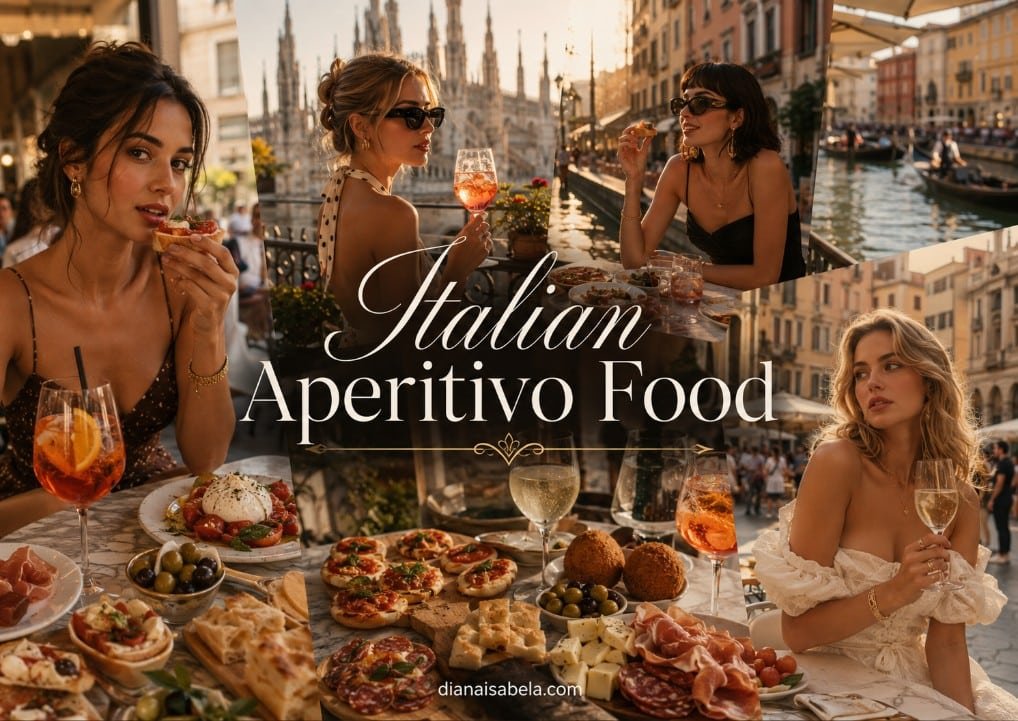
Italian aperitivo is the art of making “before dinner” feel like an outfit.
It is not exactly dinner. It is not exactly a snack. It is that golden hour where the table gets olives, little bites, something crisp, something creamy, something salty, and everyone pretends this is light because the plates are small.
Adorable lie.
Aperitivo food can absolutely become a stylish little dinner if you know how to order. And honestly, sometimes that is the whole point. You sit outside. The light is warm. The drink is cold. The table is slowly filling with bruschetta, crostini, focaccia, arancini, burrata, cured meats, cheeses, olives, pizzette, maybe a tiny bowl of chips that somehow feels more glamorous in Italy than it has any right to feel.
This is not eating because you are starving.
This is eating because the evening has begun.
Italian aperitivo food is the stylish pre-dinner ritual where small plates, good bread, salty bites and golden-hour confidence become the whole mood.
Aperitivo is not dinner, but it knows how to flirt with dinner
There are food moments that announce themselves loudly. A steak dinner. A wedding banquet. A holiday table. A giant bowl of pasta arriving like the plot twist.
Aperitivo is quieter.
It begins with something in a glass and something little on a plate. Then another little thing appears. Then someone orders focaccia. Then the olives arrive. Then a dish of arancini appears, innocent as if fried rice balls filled with cheese or ragù are not capable of changing the room. Suddenly you are not sure whether this is still “just a drink” or if dinner has entered through the side door wearing sunglasses.
That is the charm.
Italian aperitivo works because it lets hunger stay elegant. You do not attack a plate. You graze. You reach. You taste. You say, “just one more,” which is usually how civilization gets into trouble but also how the best evenings happen.
The first plate should wake up your appetite, not bury it
The opening move matters.
You do not need to start with the heaviest thing on the menu. Aperitivo is about appetite, not a food coma with better shoes.
Start with salt, crunch and brightness: olives, marinated vegetables, taralli, little chips, almonds, anchovy toast, tomato bruschetta, pickled things, artichokes, or a tiny plate of cheese. These are not filler foods. They are mood-setting foods. They tell your body dinner is near, but nobody needs to panic.
Then bring in the soft things.
Burrata. Stracciatella. Ricotta with honey or herbs. Mozzarella with tomatoes. Creamy spreads. Something that makes bread feel necessary, not optional.
Bread is not “carbs” at aperitivo. Bread is infrastructure.
The chic starter lane
Olives, taralli, crostini, marinated artichokes, tomato bruschetta, almonds, anchovy toast, grilled vegetables and a little cheese.
This is for when you want aperitivo to stay elegant and not immediately become a negotiation with your waistband.
The hungry girl lane
Focaccia, burrata, arancini, pizzette, tramezzini, salumi, cheeses, fried zucchini flowers, small meatballs, or anything warm and shareable.
This is for when you smiled politely at “just drinks” but your stomach requested legal representation.
Bruschetta is simple until it is excellent
Bad bruschetta is just wet tomato on bread having a crisis.
Good bruschetta is a small miracle of timing: toasted bread, ripe tomatoes, garlic, basil, olive oil, salt, maybe a little anchovy or creamy cheese depending on the version. It should taste bright, juicy, crunchy and alive.
At aperitivo, bruschetta is perfect because it looks casual but still feels intentional. It gives color to the table. It gives tomato energy. It lets you eat with your hands without losing elegance, assuming the tomato behaves, which it sometimes does not. That is what napkins are for.
Bruschetta is also a good test of the place.
If they can make bread, tomatoes and olive oil feel exciting, pay attention. The kitchen knows restraint. Restraint, in food and fashion, is only beautiful when the quality is there.
Crostini are tiny, but they have opinions
Crostini are little toasted bread pieces with toppings, and they are dangerously easy to underestimate.
You might see chicken liver pâté in Tuscany, mushrooms, anchovies, tomato, whipped cheese, vegetables, prosciutto, truffle, beans, artichokes, or spreads that look modest until you take the bite and immediately understand why Italians do not need giant portions to make a point.
Crostini are especially useful when you are with people who want to try several things. They make the table feel curated, not chaotic. A few crostini, a bowl of olives, a small cheese plate and a drink can feel like a fashion editor’s snack board: edited, sharp, charming, and not pretending to be a full banquet.
Diana’s aperitivo truth: small food only feels chic when there is enough of it.
Three olives and a lonely cracker is not aperitivo. It is evidence.
Focaccia is the friend who makes everyone relax
Focaccia belongs on the aperitivo table because it makes everything easier.
Plain with olive oil and rosemary. Stuffed with cheese. Topped with tomatoes. Cut into pieces with mortadella. Served with stracciatella. Used to swipe through olive oil, cheese, tomato juice or whatever beautiful mess the table has created.
Focaccia is not shy. It is soft, salty, oily in the correct way, and practical without being boring.
If your aperitivo is replacing dinner, focaccia helps. It gives the table structure. Otherwise you end up with five tiny salty things, one drink, and a sudden emotional need for pasta at 9:40 p.m.
Which is also a valid path. Just know what path you are on.
Arancini and supplì are where the evening gets serious
Fried rice balls have no business acting innocent.
Arancini, often associated with Sicily, can be filled with ragù, peas, mozzarella, ham, mushrooms, pistachio, or regional variations that deserve their own little fan club. Supplì, especially in Rome, are often smaller, tomato-rice-centered, with mozzarella inside that stretches when you break them open.
These are not “just bites.” These are little golden declarations.
Once arancini or supplì are on the table, the aperitivo becomes more than a casual drink. The food has weight. Warmth. Crunch. Cheese. Interior drama. You cannot order fried rice with melted cheese and keep saying you are “not really eating.”
Please respect the evidence.
You want something filling, warm, crisp outside and comforting inside. Best when aperitivo is becoming a small dinner.
You want a Roman-style snack with tomato rice and mozzarella pull. Eat while hot, because cheese drama has a short window.
The table needs something fun, easy and shareable. Tiny pizza energy is still pizza energy, and nobody is above it.
You want soft, elegant little sandwiches that feel light but still make the drink less dangerous.
Burrata can make the table look more expensive immediately
Burrata is a visual cheat code.
Place it on a plate with tomatoes, basil, olive oil, grilled vegetables, figs, prosciutto, peaches, pesto, or just good bread, and suddenly the table looks like it knows an art director.
But burrata is not only pretty. It gives aperitivo that creamy, soft, generous center that makes salty foods taste better. Olives taste sharper. Prosciutto tastes silkier. Tomatoes taste brighter. Bread becomes important. Everyone reaches in carefully at first, then less carefully after the first bite.
This is normal.
Burrata has that effect on civilized people.
The cured meats and cheese situation should feel edited
A salumi and cheese plate can be wonderful or lazy.
Wonderful: prosciutto, mortadella, salame, bresaola, speck, pecorino, Parmigiano-Reggiano, gorgonzola, fresh cheese, figs, honey, fruit, olives, good bread.
Lazy: a crowded plate where everything tastes like refrigerator and nobody had a point of view.
At aperitivo, you do not need the largest board. You need contrast. Salty meat, creamy cheese, something sharp, something sweet, something crisp. Think of it like styling an outfit: not every accessory at once, please. A little tension is better than a pile.
Best balance: one creamy cheese, one aged cheese, one cured meat, olives or vegetables, bread or focaccia, and something sweet like figs, honey or fruit.
Too much: five meats, four cheeses, no bread, no freshness, and everyone quietly needing a salad.
Best rescue: add tomatoes, arugula, grilled vegetables, artichokes, citrus, or a small green salad so the table does not become a salt museum.
Aperitivo is where Italian food and fashion understand each other
Aperitivo dressing is its own category.
It is not a full evening gown. It is not errand clothing. It is that polished, relaxed, “I may have plans after this or I may simply become the plan” outfit zone.
A slip skirt with a tank and blazer. A black dress with flat sandals and gold hoops. White jeans with a silk shirt. A linen vest and trousers. A soft off-shoulder top. A simple cardigan worn like you know what you are doing. A red lip if the food is not too tomato-chaotic. Sunglasses on the table even after sunset because the mood requires them.
If you love clean, sharp, city-cool outfits, the Acubi fashion guide can actually work for aperitivo styling: simple lines, low effort, a little distance, good proportions. If you want softer romance, a pretty top from the babydoll tops guide can work, but keep the rest edited so it does not become too sweet for the city.
The aperitivo outfit should look like you could order olives, flirt with focaccia, walk three blocks, and still be available for an unexpected second location.
Regional mood changes everything
Italian aperitivo is not identical everywhere.
In Milan, aperitivo may feel sleek and social, tied to the after-work hour, with fashionable crowds and polished little plates. In Venice, cicchetti culture gives you small bites with seafood, spreads, baccalà mantecato, anchovies, vegetables and tiny sandwiches eaten with a glass of wine in busy little bars. In Rome, supplì and pizza al taglio energy might creep in beautifully. In Sicily, arancini and richer snacks can make aperitivo feel like it brought luggage.
That is why the best move is to look at what the place does well.
If everyone around you is ordering cicchetti, do not demand a random burrata fantasy. If the bar is known for arancini, listen. If the table beside you has focaccia that makes you stop mid-sentence, be humble and follow the evidence.
Aperitivo is local before it is aesthetic.
When aperitivo becomes dinner, order with more structure
There is nothing wrong with letting aperitivo become dinner.
But you need enough food with enough substance. Otherwise you will end the night hungry, slightly dramatic, and blaming the olives for not being pasta.
Build a table with rhythm: bread or focaccia, one fresh thing, one creamy thing, one warm thing, one protein or cheese-heavy thing, one salty little snack, and something sweet if the evening deserves a soft landing.
Light aperitivo: olives, crostini, bruschetta, almonds, a small cheese plate and one drink.
Little dinner aperitivo: focaccia, burrata, arancini or supplì, salumi, grilled vegetables, olives and a shared dessert.
Girls’ table aperitivo: bruschetta, pizzette, burrata, tramezzini, artichokes, cured meats, cheeses, something fried, and enough bread for everyone to stop pretending.
Romantic aperitivo: fewer plates, better quality, one creamy cheese, one warm bite, olives, bread, something sparkling, and a dessert you do not split evenly because romance has limits.
Do not let the drink choose all the food
Aperitivo culture is strongly tied to drinks, but the food still deserves a brain.
A bitter spritz wants salt, citrus, fried things, olives, cheese and bread. Wine can work with almost everything if you do not make the table too chaotic. Sparkling water with lemon is completely valid if you want the ritual without alcohol. Coffee is not really the classic aperitivo move, but if you are in your own little life and need caffeine, I support survival.
The important thing is balance.
If the drink is bitter, add salty or fatty food. If the table is heavy with cheese and fried things, add something fresh. If the food is mostly bread, add protein or vegetables. If everyone has gone silent because the arancini are excellent, do not interrupt with a lecture about balance. Some moments are sacred.
The sweet ending is optional, but emotionally persuasive
Aperitivo does not always need dessert.
But Italy is not exactly a country that struggles with endings.
Tiramisu, cannoli, gelato, panna cotta, biscotti, fruit, little pastries, a chocolate bite, something almond, something lemony — dessert can be small and still make the evening feel finished.
If aperitivo was light, dessert might be the perfect final note. If aperitivo became a full dinner wearing a small-plate disguise, maybe gelato on a walk is smarter. A seated dessert after burrata, arancini, focaccia, salumi and pizzette may be heroic, but check in with your dress first.
Fashion and digestion are not enemies.
They just need communication.
Italian aperitivo belongs in Diana’s Food Diary because it is lifestyle food
Some food is about hunger. Some food is about place. Aperitivo is about timing.
It is the hour between day and night when everyone becomes a little better lit. It is when a tiny table feels like a stage, when a plate of olives looks cinematic, when focaccia becomes a social event, when the outfit matters but should not look like it tried too hard.
That is why this belongs in the Food Diary cluster. It is not a recipe post. It is not a restaurant review. It is a guide to a food ritual: how to order it, understand it, dress for it, enjoy it, and know when the small plates have officially become dinner.
If you want the broader city-café version of this mood, read the European café food guide for girls who need more than coffee. If you want real dinner energy, go to the guide for girls done pretending salad is dinner. For a sunny table with another Mediterranean feeling, visit the Greek tavern food guide.
The final olive
Italian aperitivo food is not about eating as much as possible.
It is about beginning beautifully.
Olives to wake the appetite. Bruschetta for brightness. Crostini for charm. Focaccia for structure. Burrata for softness. Arancini for the moment when everyone stops pretending this is only a drink. Pizzette for joy. Salumi and cheese for salt and pleasure. Something sweet if the evening asks politely.
It is dinner’s flirtier cousin.
A little more casual. A little more golden. A little more dangerous because small plates make people brave.
And that is the whole point.
You do not always need a huge dinner to feel like you had an evening. Sometimes you need good bread, a small table, warm light, the right outfit, and enough Italian aperitivo food to make “just one drink” sound like the charming fiction it always was.
Read next: For more European food mood, read Cozy European Café Food for Girls Who Need More Than Coffee or Greek Tavern Food for Girls Who Want Sunshine, Feta and Real Dinner.
For outfit ideas that match an aperitivo evening, use cool-girl Acubi styling for a sleek city version, or romantic babydoll top inspiration for a softer summer look.
FAQ
What is Italian aperitivo food?
Italian aperitivo food is the small food served before dinner with drinks. It can include olives, chips, nuts, bruschetta, crostini, focaccia, cheeses, cured meats, arancini, pizzette, tramezzini, vegetables and other small bites.
Is aperitivo the same as dinner?
Not always. Aperitivo is traditionally a pre-dinner ritual, but it can turn into a light dinner if you order enough substantial food like focaccia, burrata, arancini, salumi, cheeses, pizzette and vegetables.
What should I order for aperitivo in Italy?
Start with olives, crostini or bruschetta, then add one or two stronger plates such as focaccia, burrata, arancini, supplì, salumi, cheese or pizzette. If you are actually hungry, do not rely on tiny snacks alone.
What is the difference between arancini and supplì?
Arancini are Sicilian-style fried rice balls that can have fillings like ragù, peas, cheese or mushrooms. Supplì are often Roman, usually made with tomato rice and mozzarella inside. Both are best eaten warm.
Is burrata good for aperitivo?
Burrata is excellent for aperitivo because it pairs beautifully with bread, tomatoes, grilled vegetables, prosciutto, figs, pesto or olive oil. It makes the table feel more generous without needing a heavy main course.
What should I wear to Italian aperitivo?
Wear something polished but relaxed: a slip skirt, simple dress, linen set, silk shirt, blazer, flat sandals, gold jewelry or a sleek city outfit. Aperitivo style should feel effortless, not overdressed.
Can aperitivo be non-alcoholic?
Yes. You can still enjoy the ritual with sparkling water, non-alcoholic spritz, tonic, juice-based drinks, soda, or another alcohol-free option. The food and atmosphere matter just as much as the drink.
What are good vegetarian aperitivo foods?
Vegetarian options often include olives, bruschetta, focaccia, burrata, mozzarella, cheeses, grilled vegetables, artichokes, mushroom crostini, pizzette, tomato dishes, nuts, taralli and some arancini or supplì depending on the filling.
How do I make aperitivo filling enough?
Add structure. Order bread or focaccia, one creamy item like burrata, one warm item like arancini or pizzette, one fresh vegetable plate, and one salty snack such as olives or cheese. That feels much more like a small meal.
What dessert goes well after aperitivo?
Gelato is the easiest ending. Tiramisu, cannoli, panna cotta, biscotti, lemon desserts or a small pastry can also work if the aperitivo was not too heavy.