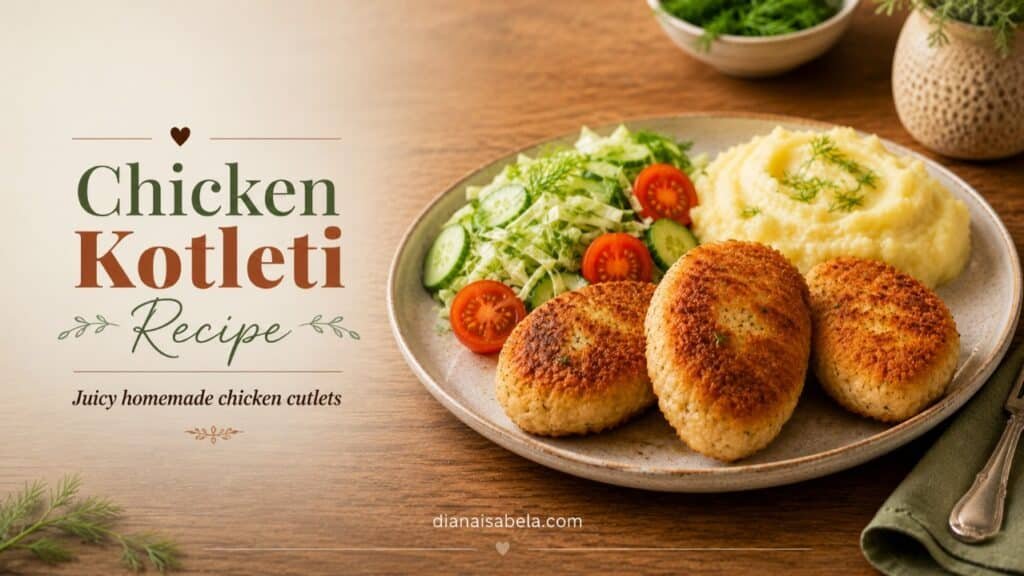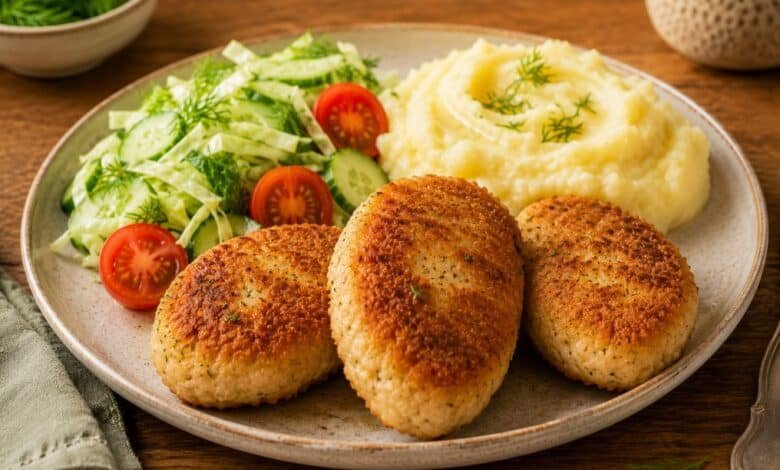
My mother used to pack these tender chicken kotleti in my school lunchbox, and the girls at our cafeteria table always wanted to know what smelled so good.
Now I make them myself: soft ground-chicken cutlets with milk-soaked bread, onion, sour cream and a light breadcrumb coating. They are golden outside, juicy inside and useful far beyond a school lunchbox. I serve them for an ordinary family lunch, a quick weeknight dinner and even on a holiday table, where a thoughtful sauce and beautiful sides turn familiar chicken kotleti into something more special.
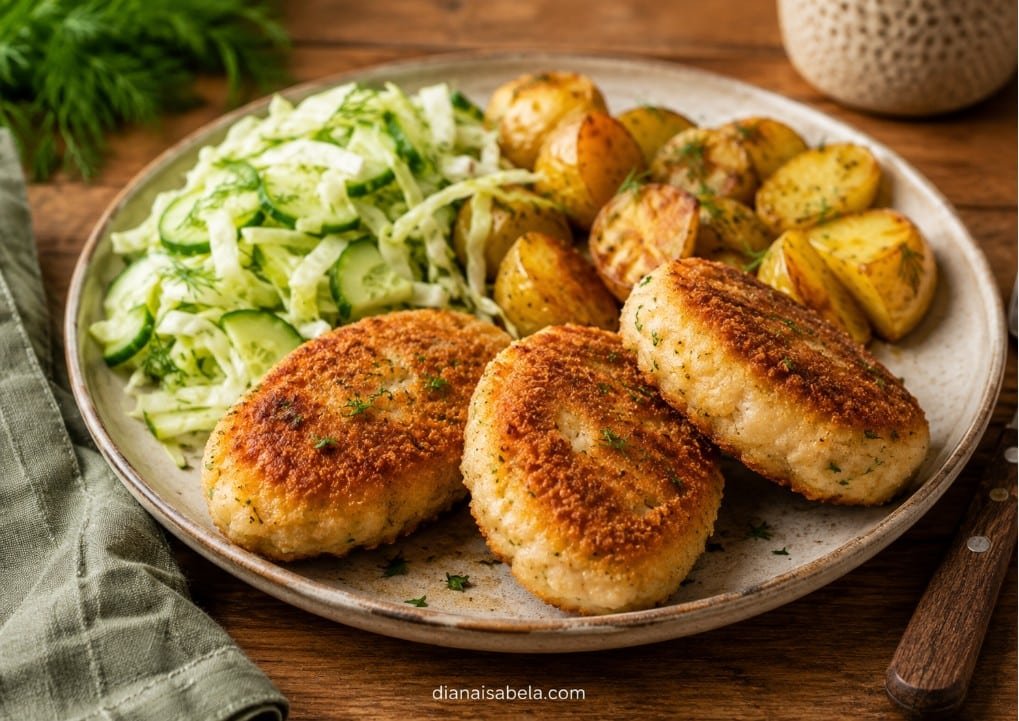
Chicken kotleti are tender Eastern European-style ground chicken cutlets made with onion and softened bread. This version also includes sour cream for moisture, then uses a light breadcrumb coating before pan-frying.
The lunchbox smell that made everyone look over
When I was at school, my mother often packed lunch for me instead of sending me with the usual sandwich. Some days it was pasta or potatoes, but the lunches I remember most were the ones with chicken kotleti.
By lunchtime, the cutlets were no longer hot, but they still smelled like home: chicken, onion, a little butteriness from the bread and milk, and the browned crust from the pan. The girls who sat with me in the cafeteria would look over before I even opened the container properly.
Someone always asked what they were. Then someone wanted to try one. After that, the question was no longer “What is that?” but “Did your mom pack the chicken cutlets again?”
As a child, I thought these soft golden cutlets simply appeared because mothers knew how to make everything. Now I know the tenderness came from the small details: moist bread, grated onion, a little sour cream, gentle shaping and not leaving them in the pan too long.
I eventually learned to make them myself, and this is the version I return to when I want something nostalgic but still practical. It works for dinner, leftovers and lunchboxes, and it is lighter than the classic beef-and-pork version without feeling dry or “diet-like.”
What surprised me most was how easily this childhood lunchbox food could grow with me. On a busy weekday, I put the kotleti beside mashed potatoes and a quick salad. For a relaxed family lunch, I add roasted vegetables, bread and a bowl of pickles for the table. When guests come, I make the cutlets slightly smaller, arrange them on a warm serving platter and add a mushroom, dill or lemon-herb sauce. The recipe stays familiar, but the presentation gives it a new level.
That flexibility is the reason I do not think of chicken kotleti as only children’s food. They are mild enough for picky eaters, satisfying enough for adults and elegant enough for a festive meal when the sides and serving style are chosen with care.
For the traditional mixed-meat method, see my classic Russian kotleti recipe. When you would rather order than cook, the Russian kotleti near me guide explains where to look in restaurants, delis and prepared-food counters.
Tender chicken kotleti with a light breadcrumb crust
A step-by-step ground chicken recipe with softened bread, onion, sour cream and herbs for cutlets that stay moist inside.
Ingredients
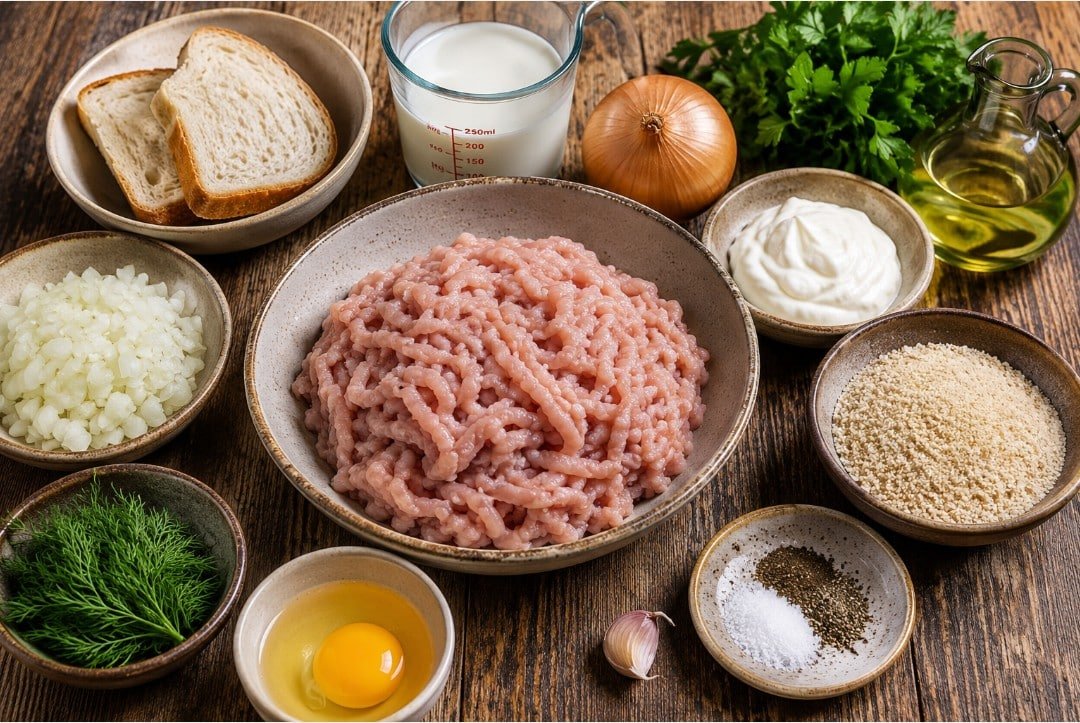
Equipment
Large mixing bowl, box grater or sharp knife, shallow plate for breadcrumbs, large skillet, flexible spatula, paper towels and an instant-read food thermometer.
Step-by-step method
Soften the bread
Put the torn bread in a small bowl and pour over the warm milk. Leave it for 5–7 minutes, until the bread is soft throughout.
Squeeze it gently. The bread should stay moist, but milk should not drip from it.
Add everything to the bowl
Place the ground chicken in a large bowl. Add the softened bread, grated onion, egg, sour cream, optional garlic, salt, pepper and herbs.
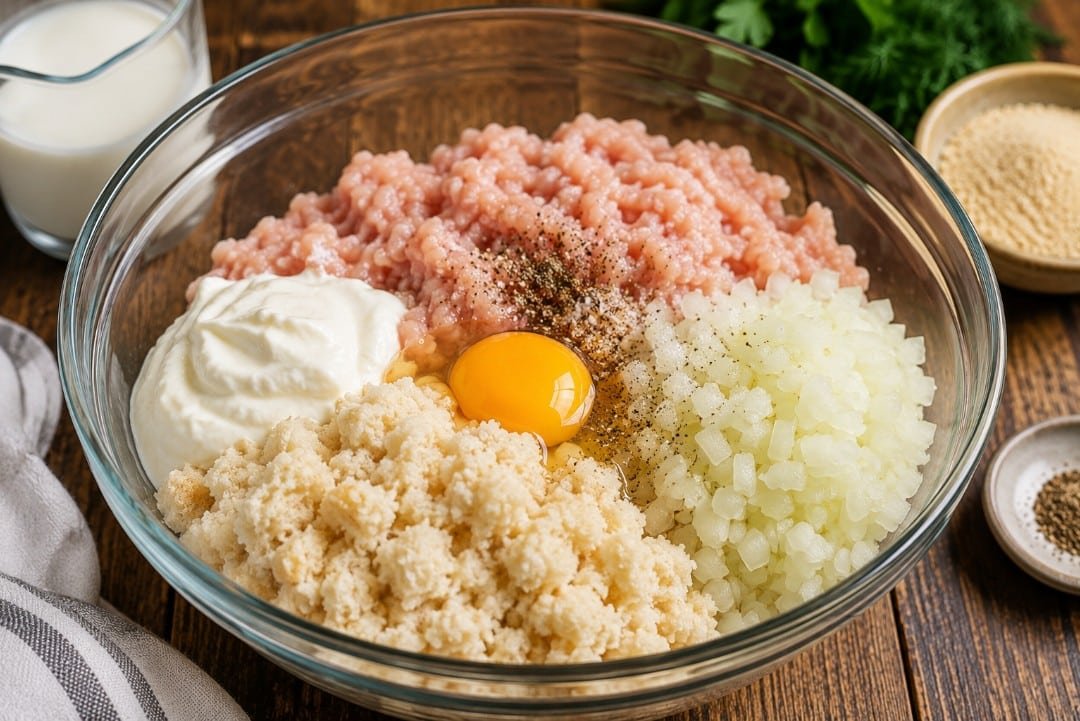
Mix until cohesive
Mix with a wooden spoon or one hand for 2–3 minutes, just until the ingredients are evenly distributed and the mixture looks moist and slightly sticky.
Do not keep kneading after it becomes cohesive. Overmixing makes chicken kotleti firmer.
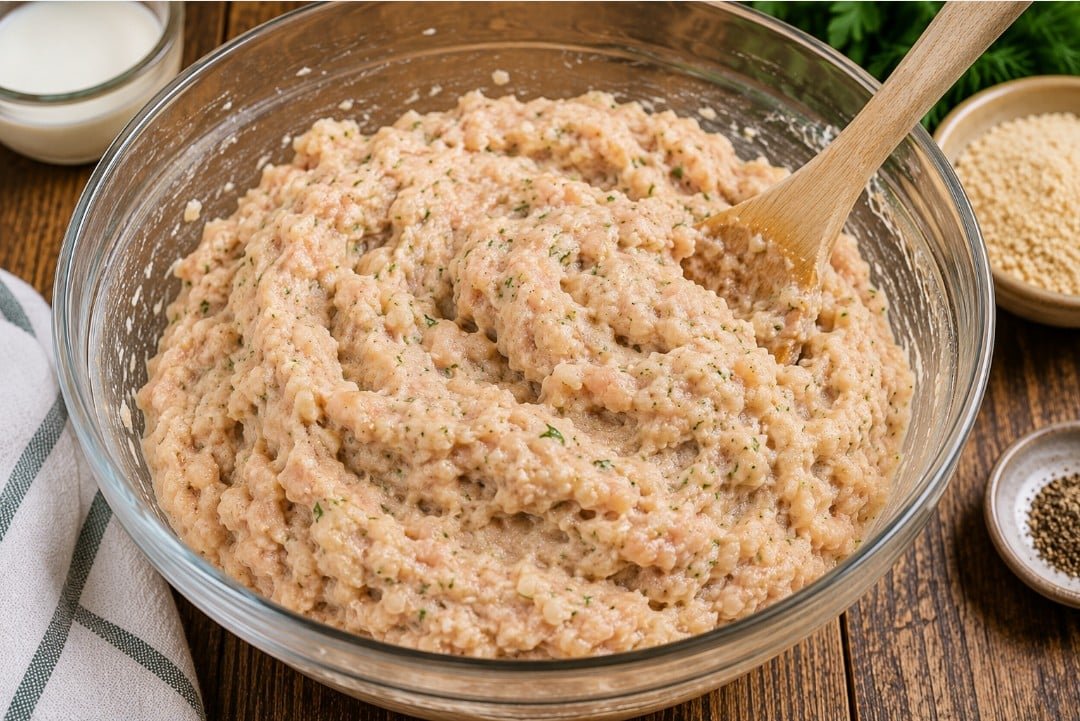
Shape eight oval kotleti
Wet your hands lightly with cold water. Divide the mixture into eight portions and shape each into a smooth oval about 2.5 cm thick.
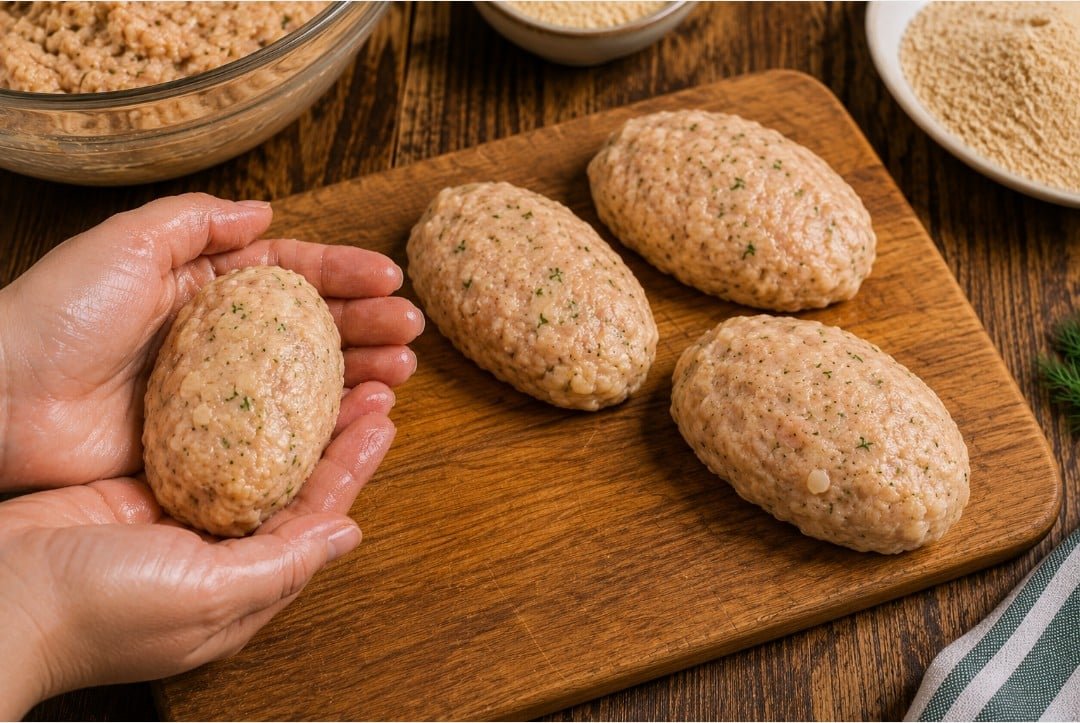
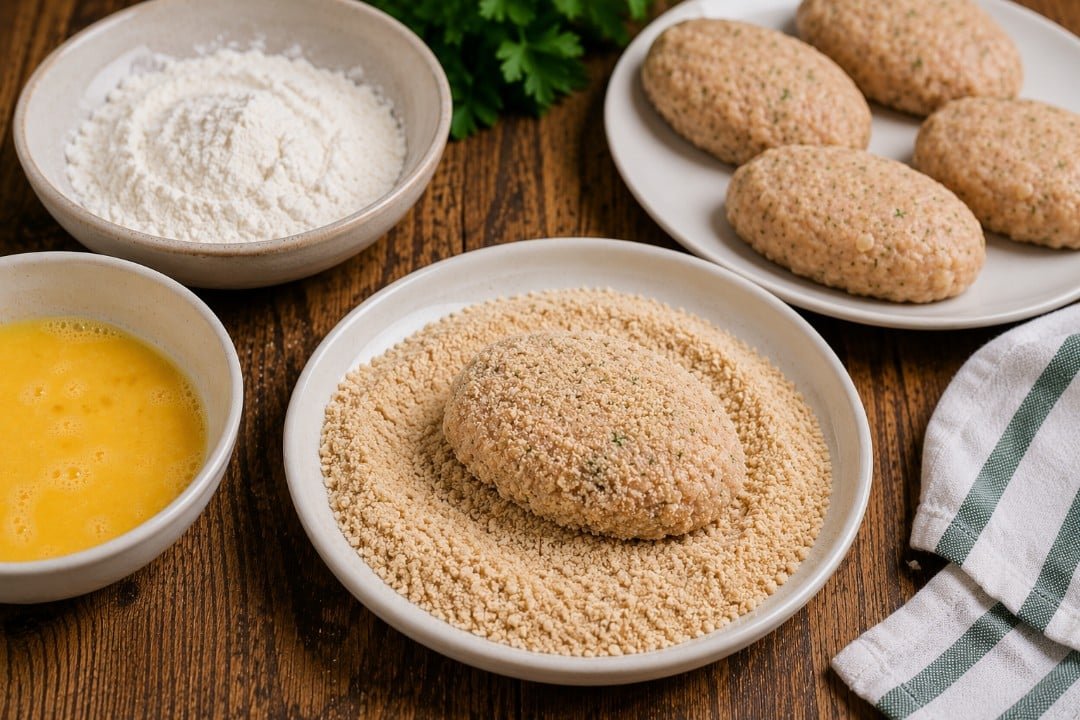
Coat lightly in breadcrumbs
Put the breadcrumbs on a shallow plate. Turn each kotleta in the crumbs and gently press a thin coating onto the top, bottom and sides.
No flour or separate egg wash is needed for this recipe.
Heat the skillet
Heat a large skillet over medium heat for 2–3 minutes. Add enough neutral oil to cover the base in a thin layer.
A pinch of breadcrumbs should sizzle steadily without turning dark immediately.
Fry the first side
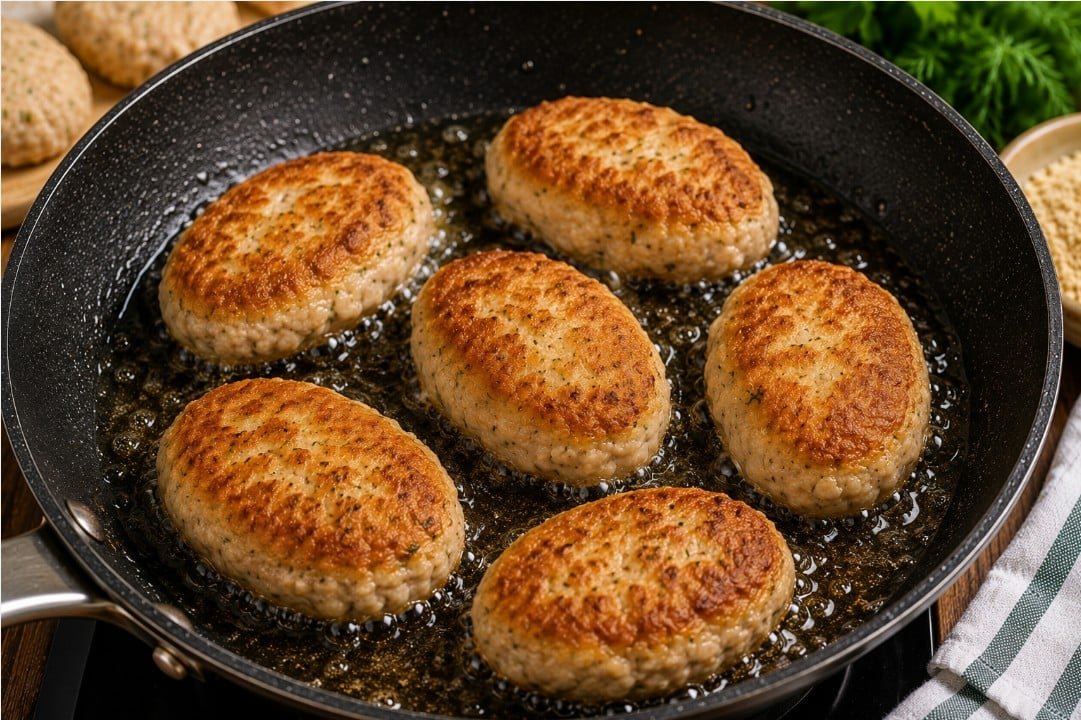
Add three or four kotleti without crowding the pan. Fry for about 4 minutes without moving them, until the first side is evenly golden.
Turn and finish gently
Turn the kotleti and cook the second side for 3–4 minutes. Lower the heat to medium-low and continue cooking until the centers reach 165°F / 74°C.
Insert the thermometer through the side into the thickest part of one cutlet.
Drain briefly
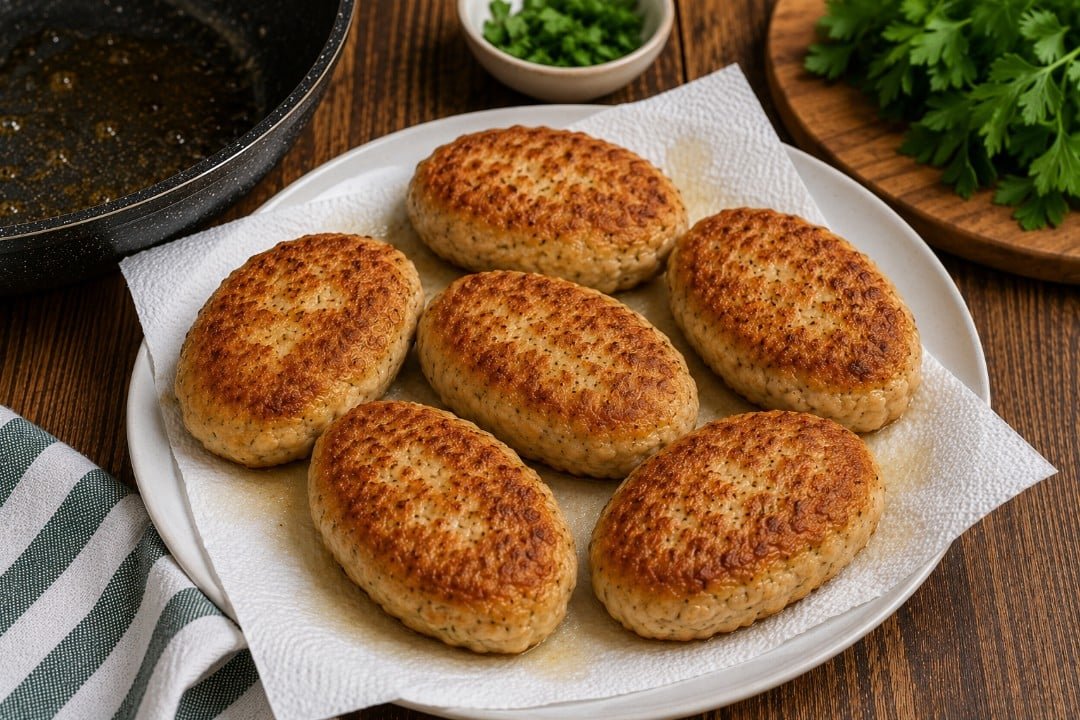
Transfer the finished kotleti to a plate lined with paper towels for 1–2 minutes, then move them to a clean plate so trapped steam does not soften the crust.
Rest and serve
Let the kotleti rest for 3–5 minutes before serving. This helps the juices settle and keeps the center tender.
Why this chicken kotleti recipe works
How to keep chicken kotleti juicy
Chicken is leaner than a beef-and-pork mixture, so the small moisture-saving steps matter more.
Use the right chicken
- A mix of breast and thigh meat gives the best balance.
- All-thigh chicken stays especially juicy.
- Extra-lean breast-only mince dries out faster.
Protect the moisture
- Keep the softened bread slightly moist.
- Use finely grated onion.
- Add the sour cream.
- Shape gently instead of compressing firmly.
- Cook to temperature rather than leaving them in “just in case.”
Ingredient choices that change the final texture
Chicken kotleti are simple, but each ingredient has a job. Understanding those jobs makes the recipe easier to adapt without accidentally creating dry, rubbery or fragile cutlets.
Chicken breast or chicken thighs?
Ground breast produces a lighter, firmer kotleta. Ground thigh has more natural fat and gives a softer, juicier result. My favorite balance is a mixture of the two.
- Use breast-only mince when you want a very mild flavor, but watch the cooking time closely.
- Use thigh-only mince for the richest and most forgiving result.
- Use a breast-and-thigh blend for everyday family meals.
Why bread belongs in kotleti
The softened bread is not simply a cheap filler. It holds moisture inside the meat mixture and helps the cooked center stay tender.
- White sandwich bread gives the softest texture.
- A soft roll works well after the crust is removed.
- Very dense whole-grain bread can make the mixture heavier.
What the sour cream does
Sour cream adds moisture and a gentle richness without making the cutlets taste strongly sour. It is especially useful when the ground chicken is lean.
Onion: grated or chopped?
Finely grated onion melts into the mixture and releases juice evenly. Very finely chopped onion gives a little more texture but must be cut small enough to soften during the short frying time.
Useful substitutions
Fix the most common chicken kotleti problems
What to serve with chicken kotleti
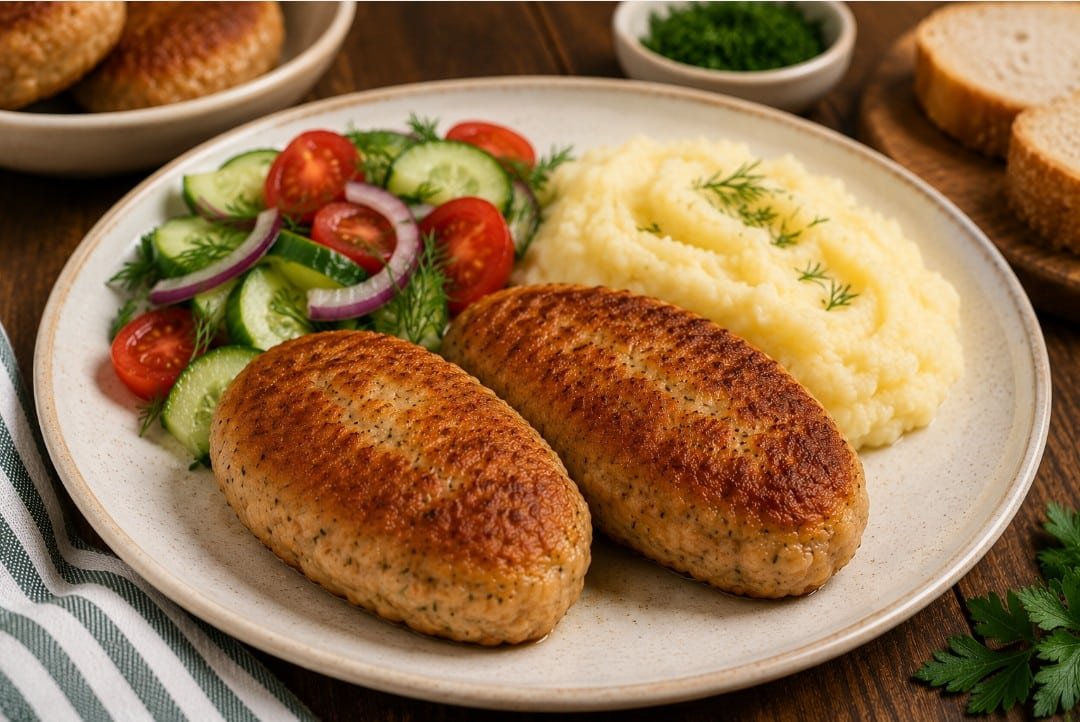
These cutlets work with the same comforting sides I remember from childhood, but they are also mild enough for fresher salads and lighter weeknight plates.
Three sauces that make chicken kotleti feel different
A sauce changes the mood of the whole plate. For a familiar family dinner, mix sour cream with dill, lemon and a little salt. For colder evenings, serve a warm mushroom-onion sauce. For a brighter holiday plate, use a light lemon-herb butter or a yogurt sauce with parsley and garlic.
How to serve chicken kotleti on a holiday table
Kotleti may be humble home cooking, but that does not make them unsuitable for guests. The secret is not to disguise them. It is to make the shape neat, choose elegant sides and serve everything deliberately.
Make them slightly smaller
Shape 10–12 smaller kotleti instead of eight large ones. They look more refined on a serving platter and are easier for guests to take alongside several other dishes.
Use a warm serving platter
Arrange the kotleti in overlapping rows rather than stacking them deeply. Add a few dill sprigs or parsley leaves around the edges, not on top of every cutlet.
Add one polished sauce
Serve mushroom sauce, dill cream sauce or lemon-herb yogurt in a separate bowl so the crust stays golden and guests can add as much as they like.
Choose contrasting sides
Pair the soft, savory kotleti with one creamy side and one fresh or colorful side: potato purée with roasted carrots, or a gratin with a bright cabbage and apple salad.
Yes. They are especially useful when a holiday table needs a warm main dish that children and adults will both eat. Smaller portions, neat presentation and a good sauce turn an everyday favorite into a generous family-style centerpiece.
Storage, freezing and lunchbox tips
Refrigerating cooked chicken kotleti
Cool the cooked kotleti and refrigerate them in a covered container for up to 3–4 days.
Reheating without drying them out
Warm them in a covered skillet over low heat with one or two teaspoons of water beside the cutlets. Remove the lid for the final minute.
Making the mixture ahead
Prepare the chicken mixture up to one day ahead and keep it tightly covered in the refrigerator. Shape and coat the kotleti shortly before frying so the breadcrumbs do not absorb too much moisture.
Preparing for guests
Fry the kotleti earlier the same day, cool them promptly and refrigerate. Reheat them covered in a low oven until hot, then uncover for the final few minutes to refresh the surface. Check that reheated leftovers reach 165°F / 74°C.
Freezing
Freeze raw shaped kotleti in a single layer before packing them with parchment between layers, or freeze fully cooked kotleti after cooling completely. Thaw raw kotleti in the refrigerator before coating and cooking.
Packing them for lunch
Chill cooked kotleti promptly and pack them in a cold lunchbox with an ice pack. They are good at room temperature for eating, but they should still be kept properly chilled until lunchtime.
Useful food-safety source
Check current official guidance when cooking ground poultry or packing cooked food for later.
Questions and answers about chicken kotleti
What are chicken kotleti made of?
Chicken kotleti are made with ground chicken, softened bread, onion, egg and seasonings. This recipe also uses sour cream for extra moisture and a light breadcrumb coating.
How do you keep chicken kotleti juicy?
Use some chicken thigh meat, keep the softened bread moist, add grated onion and sour cream, shape gently and stop cooking when the centers reach 165°F or 74°C.
Can I use only chicken breast for kotleti?
Yes, but breast-only ground chicken is leaner and dries out more easily. Keep the bread moist, use the sour cream and avoid overcooking.
Why is my chicken kotleti mixture too wet?
Ground chicken varies in moisture. Chill the mixture for 15–20 minutes first. If it is still too soft, add breadcrumbs one tablespoon at a time.
What temperature should chicken kotleti reach?
Ground chicken kotleti should reach 165°F or 74°C in the thickest part.
Do chicken kotleti need breadcrumbs on the outside?
No, but a light breadcrumb coating helps the cutlets hold their shape and develop a delicate golden crust.
Can chicken kotleti be baked instead of fried?
Yes. Arrange them on an oiled or parchment-lined tray and bake at 400°F or 205°C until the centers reach 165°F or 74°C.
What should I serve with chicken kotleti?
For a family meal, serve them with mashed potatoes, roasted potatoes, buckwheat or salad. For a holiday table, add mushroom or dill sauce, colorful roasted vegetables and fresh herbs.
Can I freeze homemade chicken kotleti?
Yes. Freeze raw shaped kotleti in a single layer before packing them with parchment between layers, or freeze fully cooked kotleti after cooling.
Are chicken kotleti good for lunchboxes?
Yes. Cool them promptly and pack them in a chilled lunchbox with an ice pack. They are tender and easy to eat even when no longer hot.