We could not find kotleti nearby, so we made the kind of dinner that starts with a refrigerator search and ends with everyone waiting beside the stove.
These homemade Russian kotleti combine ground beef and pork with milk-soaked bread, onion and a light breadcrumb coating. They fry into golden oval cutlets with a crisp surface and a tender, juicy center.
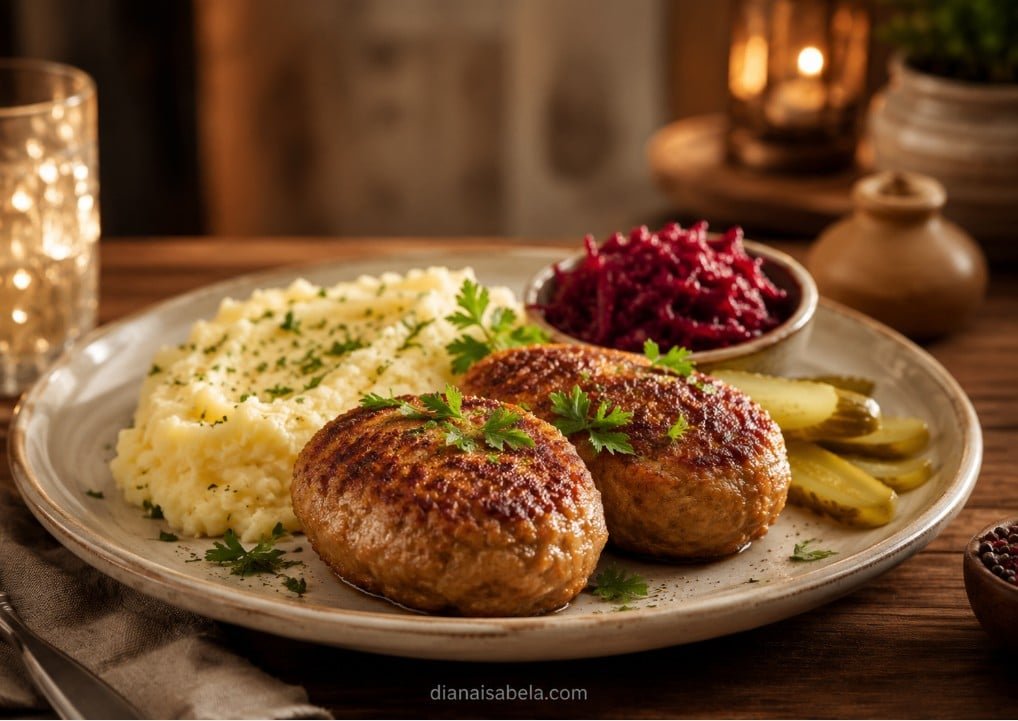
Russian kotleti are oval ground-meat cutlets mixed with onion and bread softened in milk or water. Unlike burger patties, the mixture is tenderized and seasoned throughout, shaped into compact ovals and often coated in breadcrumbs before pan-frying.
The craving arrived after the sensible dinner options had closed
We were staying with friends in New York, and the plan had been very adult: walk around, choose somewhere nice, order dinner and return home at a reasonable hour. New York heard the plan and ignored it completely.
By the time everyone admitted they were properly hungry, it was late. We searched menus, delivery apps and maps for kotleti. We found burgers, chicken sandwiches, dumplings, several glamorous salads that nobody wanted, and one promising restaurant whose kitchen had already closed.
Then someone said “kotleti,” and suddenly every person in the room could picture the same plate: golden outside, tender inside, something creamy or buttery beside it and a pickle sharp enough to wake up the entire dinner.
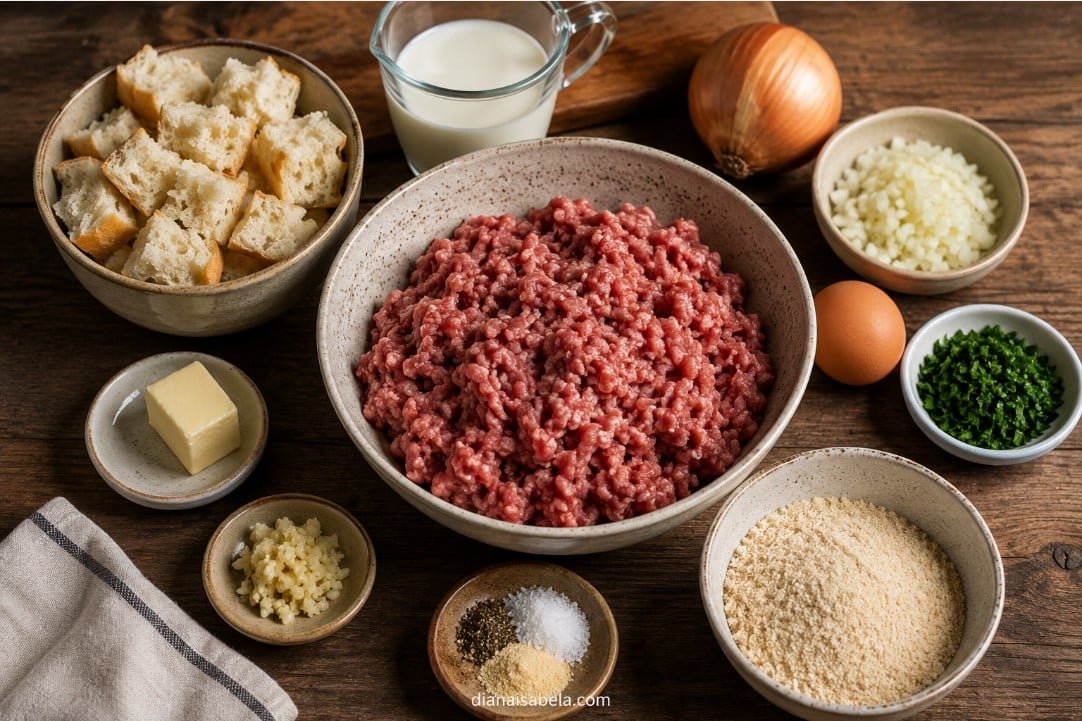
So we opened the refrigerator. There was ground beef, ground pork, an onion, one egg, milk, yesterday’s bread and a container of breadcrumbs. The kitchen was not empty. It was simply waiting for us to stop complaining.
I adapted the method from Gotuimo’s classic homemade minced meat cutlets to the ingredients already waiting in our friends’ kitchen.
What came out of that improvised late dinner was exactly what we had wanted: straightforward home-style kotleti with a soft onion-scented center, a browned breadcrumb crust and enough character to make everyone stand near the stove waiting for the next batch.
When you would rather order dinner than grate an onion, my guide to finding Russian kotleti nearby explains where they may be hiding on restaurant, deli and prepared-food menus.
Homemade Russian kotleti with breadcrumbs
A practical pan-fried recipe made with ground beef and pork, milk-softened bread, onion and a fine breadcrumb coating.
Ingredients
Equipment
Large mixing bowl, box grater or sharp knife, shallow plate for breadcrumbs, large skillet, flexible spatula, paper towels and an instant-read food thermometer.
Step-by-step method
Soften the bread in milk
Tear the bread into small pieces and place it in a bowl. Pour over the slightly warm milk and leave it for 5–7 minutes, until the bread is soft all the way through.
Lift the bread from the milk and squeeze it gently. It should remain moist, but milk should not run from it when pressed. Do not wring it dry—the moisture helps keep the kotleti tender.
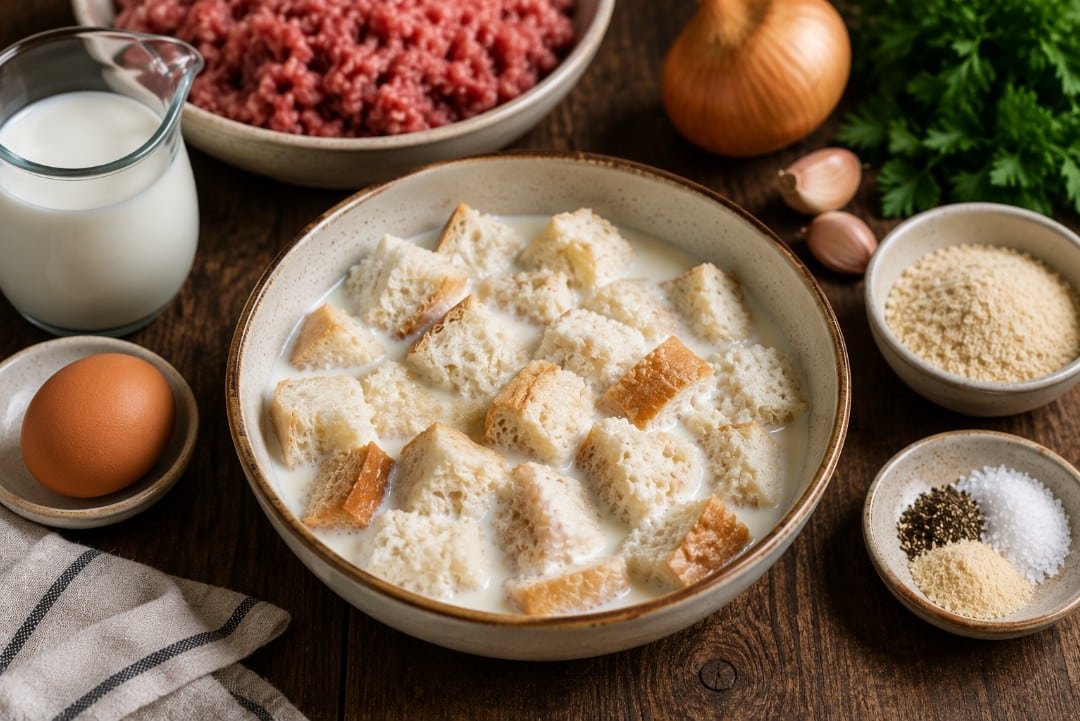
Build the kotleti mixture
Put the ground beef and pork into a large bowl. Add the softened bread, grated onion, egg, garlic if using, salt, black pepper and chopped herbs.
Mix with one hand for about 2–3 minutes, just until the ingredients are evenly distributed and the mixture begins to feel slightly sticky.
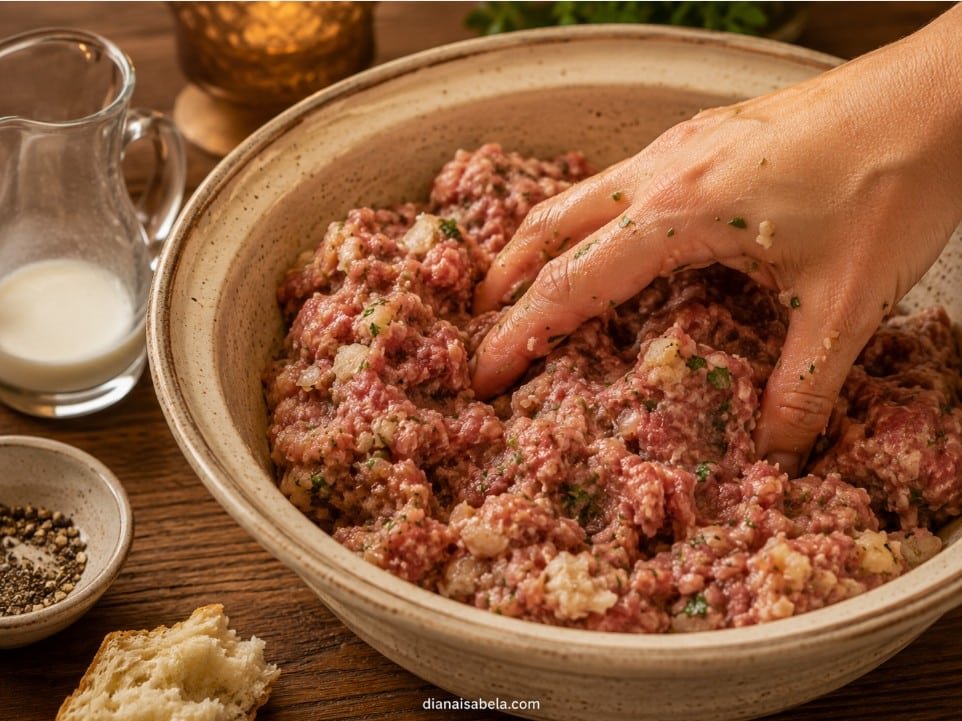
Rest the mixture briefly
Cover the bowl and let the mixture sit for 10 minutes. This allows the bread to distribute moisture through the meat and makes shaping easier.
If the kitchen is warm, place the bowl in the refrigerator during this rest.
Shape eight oval kotleti
Lightly wet your hands with cold water. Divide the mixture into eight portions, each weighing roughly 90–100 g.
Shape each portion into a compact oval about 10–11 cm long and roughly 2.5 cm thick. Smooth obvious cracks without squeezing the mixture too firmly.
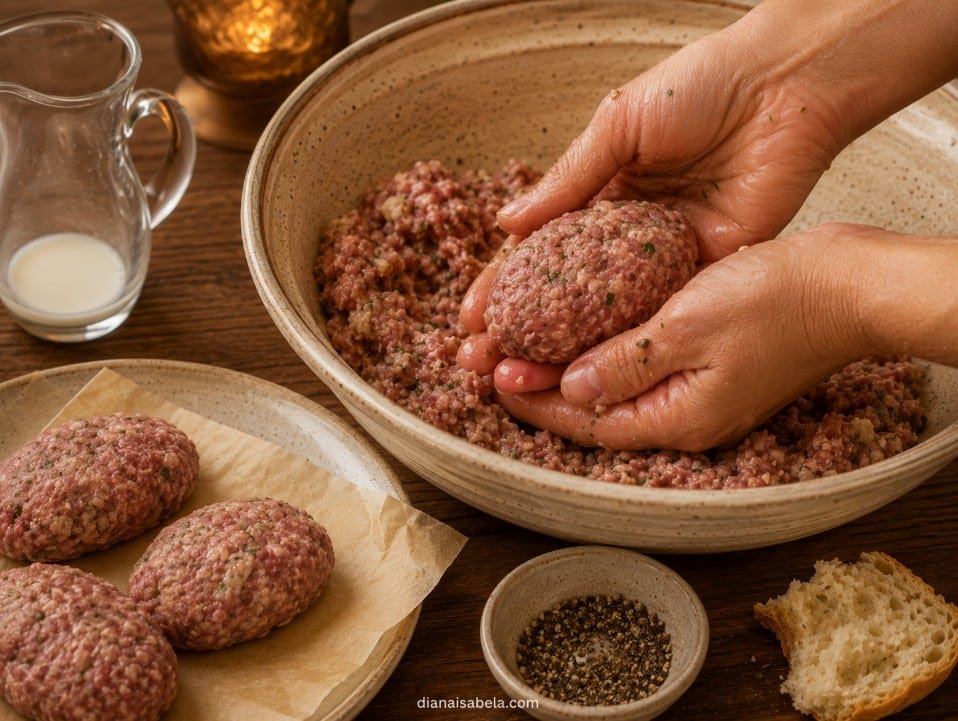
Coat each kotleta in breadcrumbs
Pour the fine breadcrumbs into a shallow plate. Turn each kotleta in the crumbs and gently press the coating onto the top, bottom and sides.
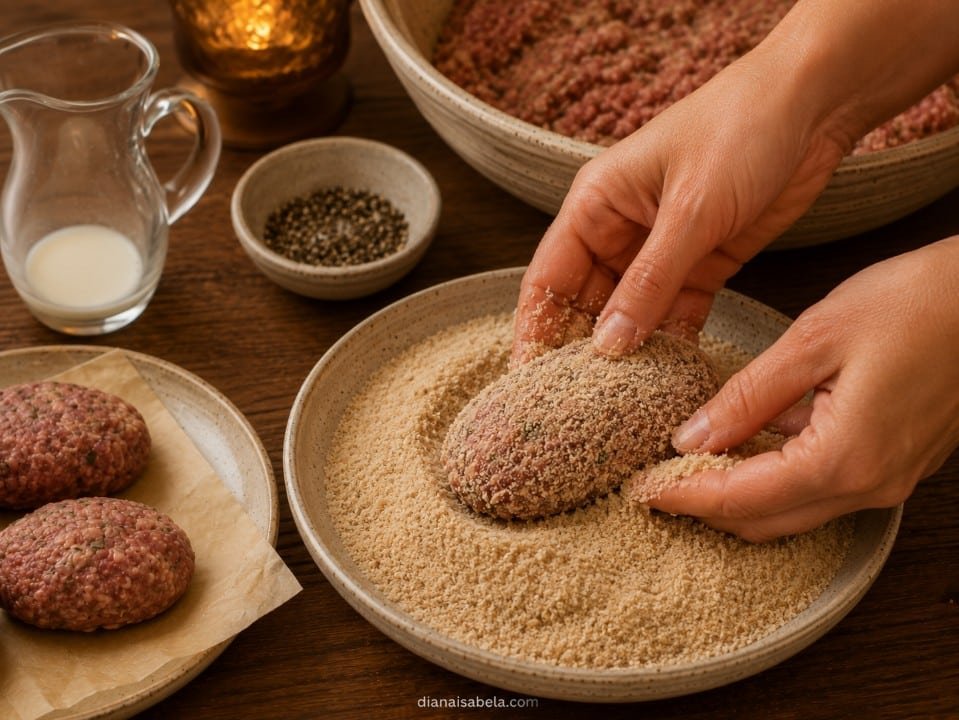
Heat the pan
Place a large skillet over medium heat for 2–3 minutes. Add enough neutral oil to cover the base in a thin layer.
A pinch of breadcrumbs should sizzle steadily without turning dark immediately.
Fry until golden
Place three or four kotleti in the skillet, leaving space between them. Fry without moving for 4–5 minutes, until the first side develops a deep golden crust.
Turn carefully and cook the second side for about 4 minutes.
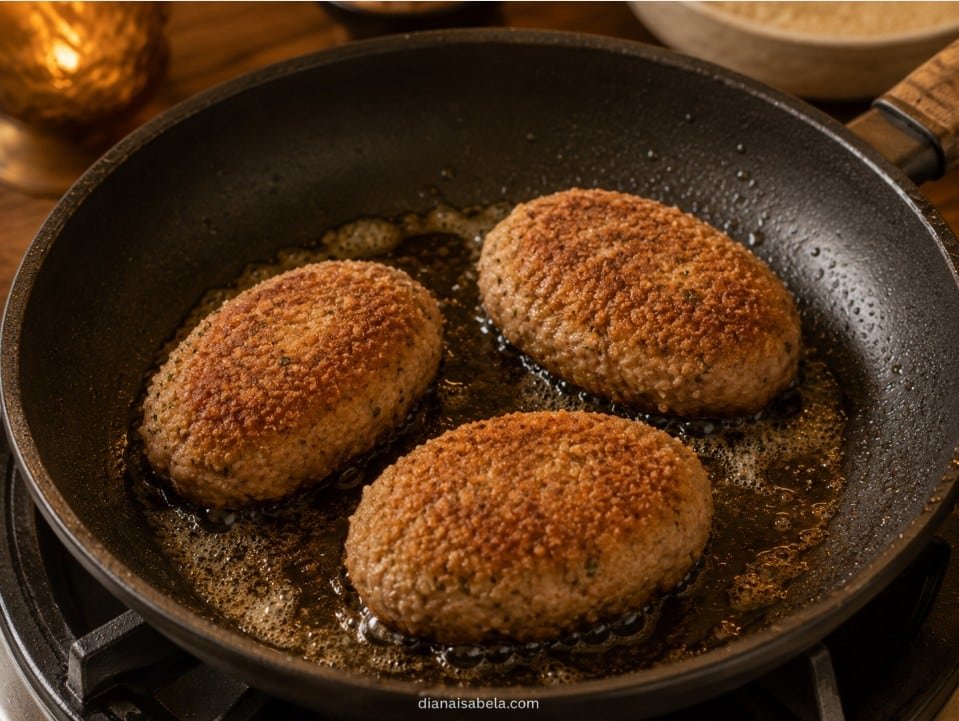
Finish the centers gently
Reduce the heat to medium-low and continue cooking for 3–5 minutes, turning once if needed, until the centers reach 160°F / 71°C.
Drain briefly
Transfer the finished kotleti to a plate lined with paper towels for 1–2 minutes, then move them to a clean serving plate.
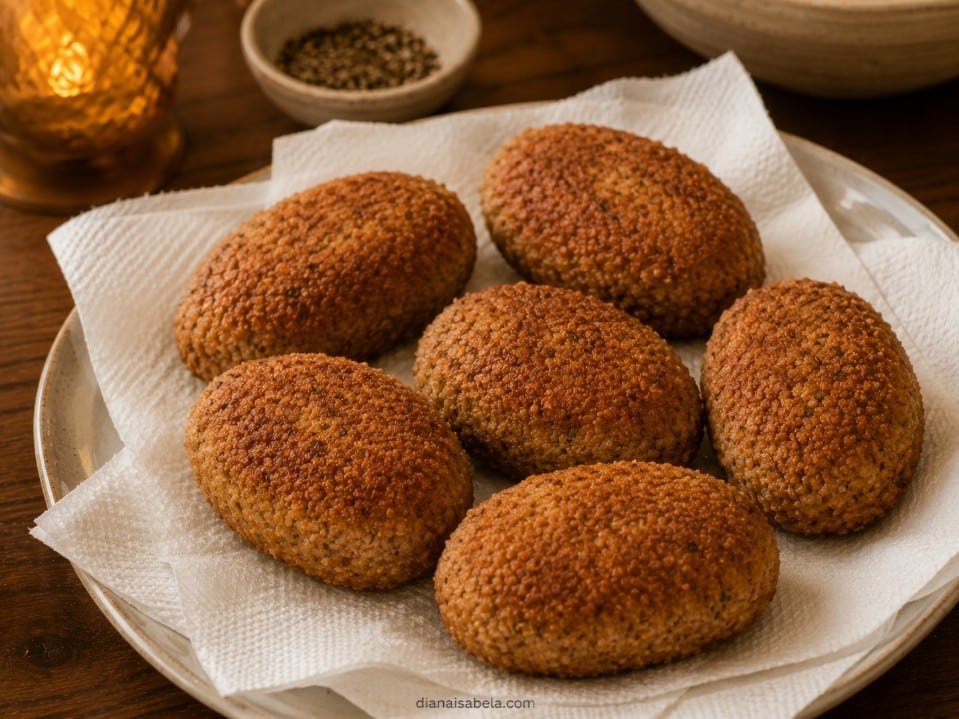
Check the center
Cut open one kotleta from the first batch. The center should be fully cooked, moist and cohesive, with soft pieces of onion and bread distributed through the meat.
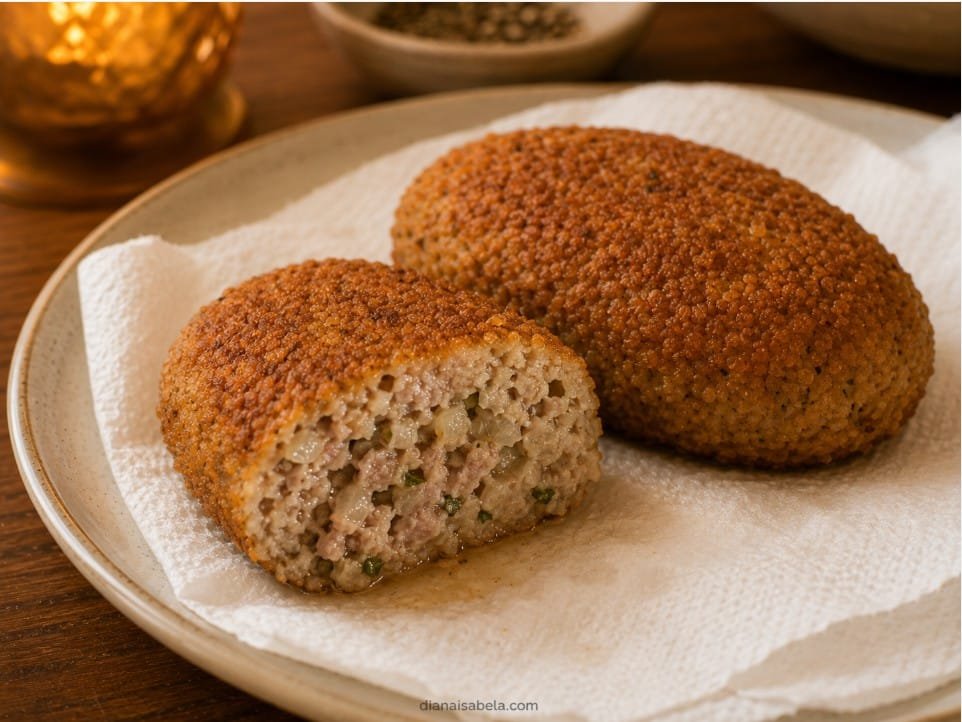
The difference between tender kotleti and compact little doorstops
The ingredient list is simple, so texture becomes the real technique. Most disappointing kotleti are ruined by too little moisture, too much pressure or too much heat.
What keeps the center juicy
- Meat with moderate fat.
- Bread that remains moist after soaking.
- Finely grated onion.
- Gentle shaping.
- Moderate cooking heat.
- A thermometer to avoid overcooking.
What gives the outside its crust
- Fine, dry breadcrumbs.
- A properly heated skillet.
- A thin, even layer of oil.
- Space between the kotleti.
- Waiting before the first turn.
If the pan starts arguing with you, fix this first
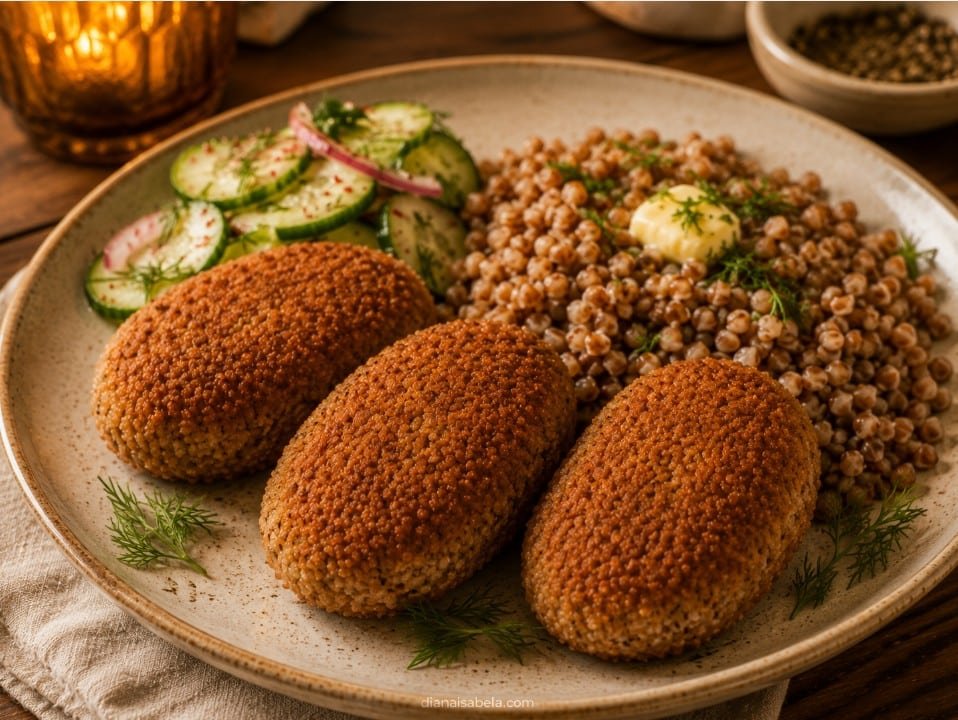
The first plate was mashed potatoes. The second plate became my favorite.
The classic answer is mashed potatoes, beet salad and pickles. For the final plate, I served the same golden breaded kotleti with buttery buckwheat and a crisp cucumber-dill salad.
What happens to the leftovers—assuming your friends leave any
Refrigerating cooked kotleti
Cool the cooked kotleti and transfer them to a covered container. Refrigerate for up to 3–4 days.
Reheating without drying them out
Warm them in a covered skillet over low heat. Add one or two teaspoons of water beside—not over—the kotleti, then remove the lid for the final minute.
Freezing
Freeze raw shaped kotleti in a single layer before packing them with parchment between layers, or freeze fully cooked kotleti after cooling.
Useful food-safety source
Check current official guidance when cooking ground meat or storing leftovers.
Questions and answers about Russian kotleti
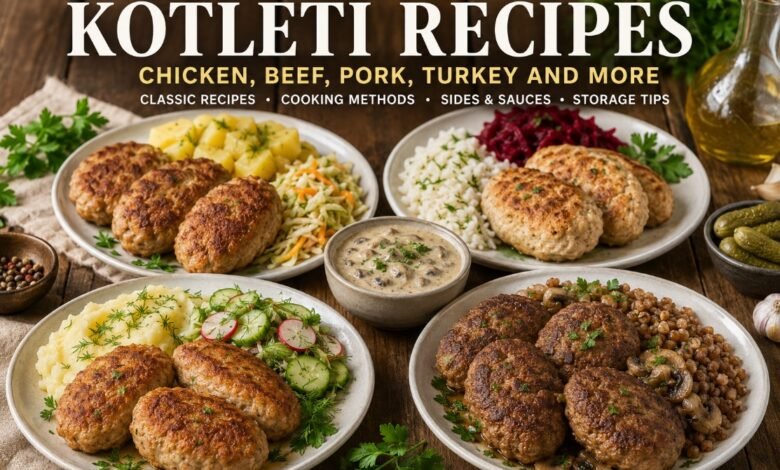
Looking for more ideas beyond this recipe? Explore my complete kotleti recipes guide to compare chicken, turkey, beef, pork, fish and vegetable kotleti, discover pan-fried, baked and air-fryer methods, and find practical side dishes, sauces, storage and freezing tips.
What are Russian kotleti made of?
Russian kotleti are usually made with ground meat, onion and bread softened in milk or water. This version uses equal amounts of ground beef and pork, one egg, seasoning and a light breadcrumb coating.
Why is bread added to kotleti?
Softened bread holds moisture inside the meat mixture and gives the cooked kotleti a tender texture. It should be soaked thoroughly and squeezed gently, not wrung completely dry.
What is the difference between Russian kotleti and burger patties?
Burger patties are usually shaped from seasoned ground meat with minimal additions. Kotleti normally contain onion and softened bread, are shaped into thicker ovals and may be coated in breadcrumbs before frying.
How do I keep kotleti from falling apart?
Mix the meat until it becomes slightly sticky, keep the mixture cool and shape compact ovals with damp hands. If the mixture is very wet, check whether the onion or softened bread is releasing too much liquid.
What temperature should beef and pork kotleti reach?
Kotleti made with ground beef and pork should reach 160°F or 71°C in the center. Check the thickest part with an instant-read food thermometer.
Can I make Russian kotleti without breadcrumbs on the outside?
Yes. The kotleti will have a smoother, softer exterior, but the filling can remain just as juicy.
Can Russian kotleti be baked instead of fried?
Yes. Bake them at 400°F or 205°C on an oiled or parchment-lined tray until safely cooked through.
What should I serve with Russian kotleti?
Mashed potatoes, buckwheat, pickles, beet salad, cabbage salad and cucumber-dill salad all work well.
Can I freeze homemade kotleti?
Yes. Freeze raw shaped kotleti in a single layer before packing them with parchment between layers, or freeze fully cooked kotleti after cooling.
Why did my kotleti turn out dry?
Dry kotleti usually come from very lean meat, bread that was squeezed too dry, overly firm shaping or excessive cooking.