Formal vs Black Tie Wedding Guest Attire: The Difference Between Elegant and Truly Formal

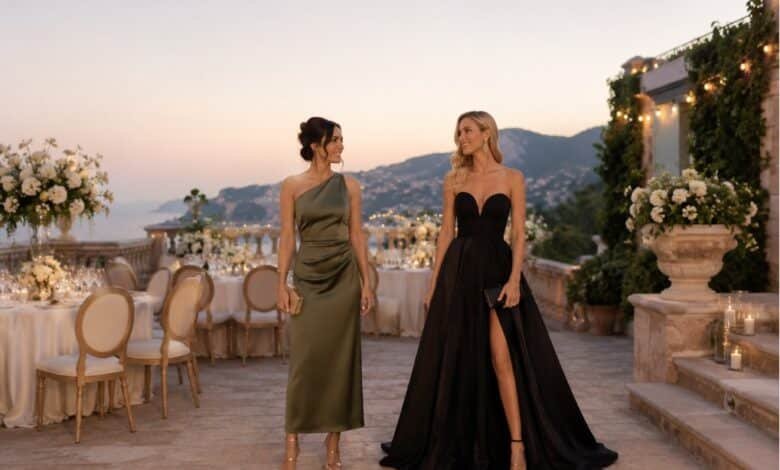
Formal vs black tie wedding guest attire is one of those style questions that looks simple until the invitation arrives and your closet suddenly becomes a courtroom. Both dress codes are elevated. Both require polish. Both are absolutely not the place for a casual sundress, office sheath, or “I added earrings, so it counts” logic. The difference is how strict the formality becomes: formal gives you elegant options, while black tie points much more clearly toward floor-length gowns, refined eveningwear, and a dress code that expects the full room to look dressed for the occasion.
The quick difference
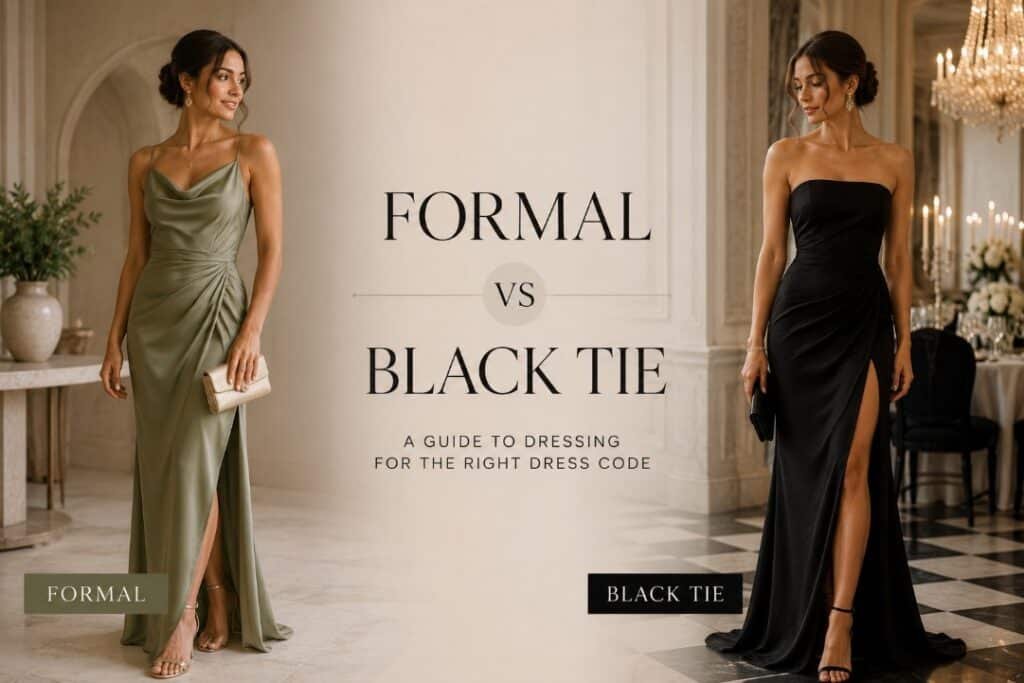
Formal wedding attire is elegant and elevated, but it gives guests more room: long dresses, dressy midis, refined cocktail-length dresses, polished jumpsuits, and rich fabrics can all work. Black tie is stricter. For women, a floor-length gown is the safest answer, and anything shorter has to look unmistakably formal.
The Diana translation
Formal says, “Look beautiful and polished.” Black tie says, “Look beautiful and polished enough to stand next to tuxedos without looking like you stopped at the wrong reception.” One is elegant. The other is ceremonial.
What formal wedding guest attire really means
Formal wedding guest attire asks for a dressed-up look that feels refined, intentional, and appropriate for an elegant venue. It usually works for evening weddings, hotel receptions, estate weddings, country clubs, upscale restaurants, museum spaces, and ceremonies where the couple wants a polished atmosphere without requiring strict black tie.
For women, formal can include a floor-length dress, but it does not always require one. A sophisticated midi in satin, crepe, chiffon, velvet, or jacquard can be completely appropriate. So can an ankle-length dress, a dressy jumpsuit, or a refined cocktail dress if the fabric, length, and accessories feel elevated enough.
If you need a full standalone guide for this side of the comparison, use the formal wedding guest dresses page as the deeper reference.
What black tie wedding guest attire really means
Black tie is more specific. It is one of the most formal wedding dress codes, especially for evening events. Men are usually expected to wear tuxedos, which tells you a lot about the level of the room. For women, the safest and most traditional choice is a floor-length gown in an evening fabric.
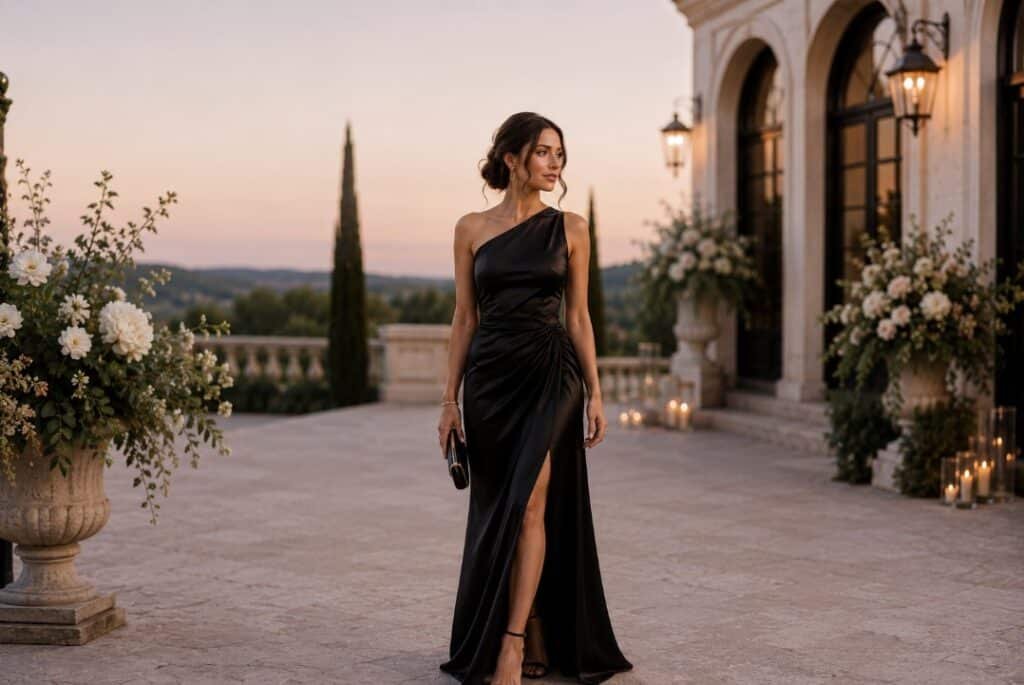
That does not mean every black tie outfit must be enormous or theatrical. The chicest black tie looks are often sleek: a black column gown, emerald satin dress, navy crepe gown, burgundy velvet silhouette, or minimal halter dress with strong earrings and a small clutch. Black tie is not always about volume. It is about unmistakable evening formality.
For a full dress-by-dress breakdown, the black tie wedding guest dresses guide is the more specific page to use.
The formality ladder: where formal ends and black tie begins
The difference becomes easier when you imagine a ladder. Formal sits high, but black tie is one step higher and more controlled. The higher you go, the less room there is for casual fabric, short hems, daytime prints, or “almost dressy” styling.
Formal vs black tie at a glance
The dress code difference is not only about long versus short. It is about how much formality the full outfit carries: fabric, jewelry, bag, shoes, hair, venue, and the emotional temperature of the dress.
Formal wedding guest attire
Formal is elegant but flexible. You can choose a gown, but you can also choose a dressy midi or ankle-length dress if it looks polished enough for the venue.
Black tie wedding guest attire
Black tie is stricter and more ceremonial. A gown is the safest choice, especially for evening ballroom, hotel, museum, or grand estate weddings.
Can you wear a midi dress to formal or black tie?
For formal weddings, yes — a midi dress can work beautifully if the fabric and styling are elevated. A satin midi, crepe column dress, velvet wrap midi, jacquard tea-length dress, or structured chiffon piece can feel formal when paired with refined heels, a clutch, and elegant jewelry.
For black tie, a midi is much riskier. It may work only if it looks unmistakably formal: luxe fabric, darker or richer color, sophisticated cut, evening accessories, polished hair, and a venue where the couple’s interpretation of black tie feels modern rather than ultra-traditional. If you are unsure, choose a gown.
Formal midi that works
Navy satin midi, black crepe dress, burgundy velvet midi, emerald jacquard tea-length, or a refined one-shoulder dress.
Black tie midi that might work
A dramatic black satin midi with evening jewelry, sculptural heels, a formal clutch, and a very polished beauty look.
Midi that does not work
Cotton sundress, office sheath, casual floral, jersey bodycon, lightweight daytime wrap dress, or anything that needs explaining.
The safest rule when you are unsure
If the invitation says formal, you can choose elegant. If it says black tie, choose evening. If it says black tie optional, you are standing between the two and should lean dressier than your first instinct. The mistake is not dressing beautifully; the mistake is dressing beautifully for the wrong level of ceremony.
Fabric is where the dress code tells on you
Fabric can make a simple dress look expensive, and it can make a beautiful silhouette look underdressed. Formal and black tie both prefer fabrics that hold the room: satin, crepe, velvet, chiffon, jacquard, silk-like blends, and refined lace. The difference is that black tie wants the fabric to feel more clearly evening.
Color: formal gives you range, black tie likes depth
Formal weddings allow a wider palette. You can wear navy, rose, emerald, wine, plum, chocolate, black, dusty blue, sage, or a refined print depending on the venue and season. Black tie usually looks strongest in deeper, richer, more evening-coded colors: black, navy, emerald, burgundy, espresso, plum, deep teal, or metallic accents that do not look bridal.
Soft colors are not forbidden for black tie, but they need formal fabric and a gown-level silhouette to avoid looking too bridesmaid, too spring daytime, or too close to bridal. Pale champagne, ivory, cream, and white remain risky for both unless the couple specifically requests them.
Let the venue settle the argument
When the wording feels vague, the venue usually tells the truth. A formal invitation at a grand hotel may behave like black tie. A black tie invitation at a relaxed outdoor venue may still require a gown, but the gown can be softer and less ballroom-heavy.
Shoes, bags, and jewelry: formal polish vs black tie finish
Accessories are where “nice dress” becomes “right dress code.” Formal allows more flexibility: heeled sandals, slingbacks, pointed pumps, kitten heels, elegant flats, a clutch, pearl earrings, gold hoops, or a polished bracelet can work depending on the dress.
Black tie wants the accessories to look more evening-specific. Think satin or metallic heels, refined sandals, a small clutch, drop earrings, sculptural cuffs, delicate diamonds, pearls, or one strong piece of jewelry. Avoid everyday bags, office pumps, casual wedges, heavy boots, or jewelry that turns the outfit into a costume.
Outfit formulas that make the difference obvious
When in doubt, build the outfit as a formula. Formal can be elegant with a little softness. Black tie needs a clearer evening signal from the dress itself.
Navy satin midi + slingbacks + pearl drops
Polished, elegant, and completely appropriate for a formal wedding that does not require gowns.
Black column gown + metallic clutch + sculptural earrings
Minimal but unmistakably formal. This works because the length, fabric, and styling all agree.
Emerald crepe ankle dress + heeled sandals + soft updo
A strong formal option for estate, hotel, restaurant, or evening receptions without going full black tie.
Burgundy velvet gown + delicate bracelet + evening heels
Rich, seasonal, and ceremonial. This is the kind of look that makes sense beside tuxedos.
What not to wear when the invitation says formal or black tie
The biggest mistake is assuming “dressy” is enough. Formal and black tie need more than an outfit you would wear to a nice birthday dinner. The more formal the dress code, the more obvious casual fabric, wrong shoes, and weak accessories become.
Where this comparison fits in the wedding guest universe
Formal and black tie both sit near the top of the wedding guest dresses dress-code ladder, but they are not interchangeable. Formal gives you elegant room to interpret; black tie is the stricter, more gown-focused version. If the invitation says “optional” instead, compare this with black tie optional wedding guest dresses, because that dress code lives between these two worlds.
The mirror question before you leave
Ask yourself: if half the room arrives in gowns and tuxedos, will I still look appropriate? If the answer is no, you are probably underdressed for black tie. If the room is elegant but not tuxedo-level, does my outfit still look polished without feeling like a gala costume? If yes, you are probably in formal territory.
The best dressed wedding guest is not the person who chose the most dramatic outfit. It is the person whose outfit understood the invitation, the venue, and the couple’s intended mood. That is the difference between simply wearing a pretty dress and looking correct.
Elegant is not always black tie
Formal and black tie share the same family, but they do not have the same rules. Formal wedding guest attire allows a gown, dressy midi, ankle-length dress, or refined evening look. Black tie strongly favors a floor-length gown and a more ceremonial finish. If you are torn, let the venue, time, and invitation language decide — then choose the version that looks polished, respectful, and unmistakably intentional.
FAQ
What is the difference between formal and black tie wedding guest attire?
Formal wedding guest attire is elegant but more flexible, allowing long dresses, dressy midis, ankle-length dresses, and refined jumpsuits. Black tie is stricter and usually calls for a floor-length gown or very formal eveningwear.
Do I have to wear a gown to a formal wedding?
No, you do not always have to wear a gown to a formal wedding. A dressy midi, ankle-length dress, elegant cocktail dress, or polished jumpsuit can work if the fabric and styling are refined enough.
Do I have to wear a gown to a black tie wedding?
A floor-length gown is the safest and most traditional choice for a black tie wedding. A shorter dress is riskier and should only be worn if it looks unmistakably formal and evening-appropriate.
Can I wear a midi dress to a formal wedding?
Yes, a midi dress can work for a formal wedding if it is made from elevated fabric such as satin, crepe, velvet, chiffon, jacquard, or refined lace and styled with polished shoes and accessories.
Can I wear a midi dress to a black tie wedding?
A midi dress is usually not the safest choice for black tie, but it may work if it is extremely formal in fabric, cut, color, and styling. When in doubt, choose a floor-length gown.
Is formal less dressy than black tie?
Yes, formal is usually less strict than black tie. Formal still requires an elegant outfit, but black tie expects a higher level of evening formality and usually favors gowns.
What colors work for formal and black tie weddings?
Good colors include black, navy, emerald, burgundy, plum, chocolate, deep teal, wine, rose, and metallic accents. Avoid white, ivory, cream, and bridal champagne unless the couple specifically requests them
What should you not wear to a formal or black tie wedding?
Avoid casual sundresses, denim, flip-flops, office dresses, cheap jersey, daytime florals, very short party minis, white dresses, bridal lace, and casual bags or shoes.
Are black dresses appropriate for formal and black tie weddings?
Yes, black dresses are usually appropriate for formal and black tie weddings, especially evening events. Choose an elegant silhouette, refined fabric, and polished accessories.
How do I know if my outfit is formal enough?
Check the venue, time of day, invitation language, fabric, length, shoes, and accessories. If the wedding is black tie, the outfit should look appropriate beside tuxedos and gowns.