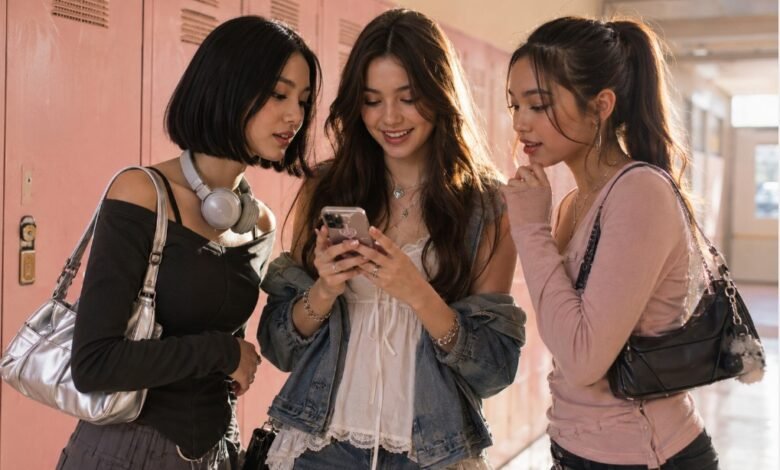
The most honest fashion reporting does not happen at runway shows. It happens after school, near lockers, on the stairs, in the group chat, beside the vending machine, and in that weird five-minute window when everyone is pretending to leave but actually comparing screenshots.
That is where brands become real. Not because a campaign says “iconic.” Please. A toaster could be called iconic if the marketing team had enough iced coffee. A brand becomes real when someone says, “Wait, where did you get that?” and three people suddenly lean closer like this is a police investigation.
So this is not a dry brand list. This is a corridor report: what people actually save, whisper about, send as birthday hints, stalk on TikTok, and pretend they discovered “randomly” even though the algorithm has been feeding it to them for six weeks like a stylish little raccoon.
“I saved it for the shape, not the brand.” Translation: the brand has successfully entered her brain. She may not buy it today. She may not even know the exact name. But the silhouette is now living rent-free beside her math homework and one dramatic song lyric.
What teens actually talk about
- Brands with a strong aesthetic, not just a logo.
- Small labels that feel like someone cool found them first.
- Pieces that work for school but still look like a saved post.
- Birthday gifts that feel personal without requiring detective-level sizing.
- Clothes that make a basic outfit look edited, not overdone.
The brand name matters less than the screenshot
Adults sometimes think teens talk about brands like tiny stock analysts. We do not. Nobody is standing by the lockers saying, “I appreciate their Q3 positioning in the youth accessories market.” If someone does, please offer them water and a chair.
The real language is screenshots. A saved hoodie. A close-up of a silver bag. A TikTok haul where the lighting is suspiciously perfect. A birthday wishlist with one item circled in red like evidence in a detective drama. A “would this look good with my jeans?” text sent at 11:48 p.m. with no greeting, because friendship has no office hours.
A brand becomes after-school famous when it gives people something easy to imagine themselves wearing. Not just “this is cute,” but “this could be me on Friday, but slightly upgraded and with better posture.”
The strongest teen brands do not always scream. Sometimes they just create one item everyone can picture inside their own life: a top, a bag, a sneaker, a charm, a hoodie, a dress, a pair of cargos that suddenly makes your old jacket look intentional.
The TikTok-save brands: tiny labels, big obsession energy
The brands people talk about most are not always the huge ones. Sometimes it is a small fashion label someone found at midnight while supposedly “just checking one thing.” Suddenly she has seven tabs open, three screenshots, and a moral crisis about shipping.
Small brands work because they feel discovered. There is a thrill in finding something that does not look like the same top everyone saw at the mall. It makes the outfit feel less manufactured and more like a secret. Even if the secret has 300,000 views and a discount code named after someone’s cat.
That is why indie and TikTok-famous brands keep coming up in conversation. They create pieces with identity: strange little tops, dreamy knits, graphic baby tees, handmade-looking accessories, ribbon details, metallic bags, sporty skirts, unusual cuts. Things that make someone say, “That is so you,” which is basically the highest compliment in teen fashion.
If you want more of that small-label rabbit hole, the guide to TikTok-famous small fashion brands is exactly the kind of page to open when your closet feels too predictable and your wishlist wants a plot twist.
Mini brand moodboard: what gets saved and why
Acubi brands win because they sell a mood, not just clothes
Acubi is one of those aesthetics that made people start looking at basic clothes like they were secret architecture. A white tank is not just a white tank anymore. It is a base layer. Cargos are not just cargos. They are shape. Silver jewelry is not just jewelry. It is the tiny metallic punctuation mark that makes the outfit speak correctly.
The brands that do well in this space understand restraint. They do not need every piece to shout. They give you muted colors, fitted tops, relaxed pants, cropped jackets, mesh, sporty layers, compact bags, and accessories that look like they belong in a slightly futuristic locker room.
That is why Acubi shows up in after-school conversations. It is wearable enough for real life, but still cool enough to feel like an upgrade. You can actually sit in it. Walk in it. Wear it to a café. Wear it to school. Wear it while pretending you did not notice someone noticing your outfit.
The deeper breakdown is already in Diana’s Acubi fashion guide, but the short version is this: Acubi brands survive because they make basics feel intentional, and intentional is fashion’s favorite little spell.
The birthday wishlist test
The funniest way to measure brand power is not by looking at ads. It is by watching what people hint at before their birthday. The birthday wishlist is society’s most honest document. More revealing than a diary. Less organized than a tax form. Emotionally dangerous.
Some brands become birthday-list material because they feel giftable. They are not impossible to understand. They do not require the giver to decode your entire body type, emotional history, and sleeve-length preferences. A bag, necklace, perfume, hoodie, claw clip, lip product, small accessory, or very specific top can become the kind of gift people actually remember.
| Wishlist clue | What it usually means | Best gift zone |
|---|---|---|
| “This bag is so cute” | She has already imagined three outfits with it. | Mini bags, shoulder bags, silver bags, charm bags. |
| “I need better basics” | She wants pieces that make outfits easier without looking boring. | Tanks, fitted tees, zip-ups, cargos, simple knits. |
| “This top is insane” | The top has entered the fantasy wardrobe. | Babydoll tops, corset-style tops, graphic baby tees, going-out tops. |
| “Should I get this?” | She is not asking. She is requesting emotional permission. | Anything saved more than once. |
The babydoll top comeback is very hallway-coded
Babydoll tops are having the exact kind of brand moment that spreads through screenshots first. They are soft, easy to notice, and dramatic without being loud. One friend finds a white lace one. Another finds a black version with jeans. Someone else says, “Wait, is this cute or too much?” and suddenly the group chat becomes a fashion jury with no legal training.
The reason babydoll tops work as brand conversation pieces is that they feel specific. A hoodie can be anonymous. A basic tee can disappear. But a babydoll top has shape. It enters the room with a silhouette. It says, “I am romantic, but please do not assume I am harmless.”
Brands that make good babydoll tops understand balance: not too costume, not too childish, not too stiff. The best ones look good with denim, boots, sneakers, silver jewelry, and one slightly unimpressed facial expression. If the top only works with perfect curls and a picnic basket, it may be beautiful, but it is not hallway-proof.
For more styling ideas around the trend itself, the babydoll tops guide is the page to keep open before buying one that looks angelic online and confusing with your actual jeans.
“Is this giving?” usually means: “Can I wear this without looking like I am in a school play, a bakery commercial, or someone’s Pinterest board from 2014?”
Logo brands still exist, but the vibe brands are louder now
There was a time when the logo did most of the talking. Big name, big placement, instant signal. That still happens, obviously. Fashion never completely throws away old habits; it just puts lip gloss on them and calls them archival.
But after school, the more interesting conversations are often about vibe. People talk about how a brand feels. Sporty. Romantic. Weird. Clean. Expensive-looking. Thrift-adjacent. Soft grunge. “Like something a cool girl in a rainy city would wear.” That last one is not a category, but it should be.
This is very different from old-school status dressing. Coco Chanel once said, “Fashion changes, but style endures.” I know that quote has been used so much it should probably be given a vacation, but it is still annoyingly true. A logo can get attention. A strong personal vibe gets remembered.
Diana’s not-very-scientific brand popularity test
A brand is really being talked about when it passes at least three of these tests:
Someone has it saved in a folder with a name like “fits” or “need.” Someone sends it with no context except “wait.” Someone says it is too expensive and then checks it again two days later. Someone asks for a dupe, but secretly still wants the original. Someone mentions it before a birthday. Someone says, “I saw a girl wearing this and it looked so good,” which is the teenage version of peer-reviewed research.
My final test is simple: can the brand make a normal day feel styled? Not runway styled. Not “I have a stylist and a black car outside” styled. Just slightly more awake. Slightly more you. Slightly more like your outfit has a point of view and did not simply happen to you before breakfast.
What makes a brand worth talking about after school?
It is not just price. Some expensive things are boring with confidence. Some affordable things have more personality than a whole luxury window display. And some brands, tragically, understand TikTok lighting better than fabric. We must remain vigilant.
The brands that keep coming up usually do one of four things well. They create a recognizable mood. They make outfits easier. They offer a piece that feels giftable. Or they give people a way to look a little different without needing to become a whole new character overnight.
That last part matters. Teens do not always want fashion that announces, “I have transformed.” Sometimes they want fashion that whispers, “I adjusted the vibe.” A better hoodie. A sharper bag. A prettier top. Cargos that finally sit right. A brand that gets the current mood without making you feel like you are wearing a costume labeled TREND.
The best brands become part of the conversation before they become part of the closet
By the time someone actually buys the thing, the brand has usually been through several emotional stages already: saved, compared, sent, doubted, re-saved, imagined with jeans, mentioned near a locker, placed on a birthday list, removed from the birthday list, added again with the seriousness of a royal decree.
That is how teen brand buzz really works. It is not only ads or influencers or shiny campaigns. It is tiny conversations. It is the “where did you find that?” It is the group chat vote. It is the screenshot you cannot delete. It is the piece that makes a friend say, “That looks like you,” and somehow that means more than any logo ever could.
After school, the brands people talk about are the ones that give them a version of themselves they can actually imagine wearing tomorrow.
FAQ
What fashion brands do teens talk about most?
Teens often talk about brands that feel aesthetic, wearable, and easy to save or share, especially small TikTok-famous labels, brands with strong basics, cool accessories, Acubi-inspired pieces, babydoll tops, bags, sneakers, and giftable items.
Why do small fashion brands become popular with teens?
Small fashion brands become popular with teens because they feel discovered, personal, and less predictable than mass-market pieces. They often create memorable tops, bags, accessories, and outfit details that look good in TikTok saves and real-life outfits.
What makes a brand popular on TikTok?
A brand often becomes popular on TikTok when it has a clear visual mood, easy-to-style pieces, strong silhouettes, recognizable accessories, and clothes that look good in short videos but can still work in real life.
Why are Acubi-inspired brands popular?
Acubi-inspired brands are popular because they make simple clothes feel styled. Muted colors, fitted layers, relaxed pants, cargos, silver accessories, sporty jackets, and compact bags create a cool-girl look that feels wearable outside the algorithm.
Are babydoll tops popular with teens?
Babydoll tops are popular because they are soft, noticeable, and easy to style with jeans, sneakers, boots, and jewelry. They feel romantic without needing a full dressy outfit, which makes them a strong wishlist and outfit piece.