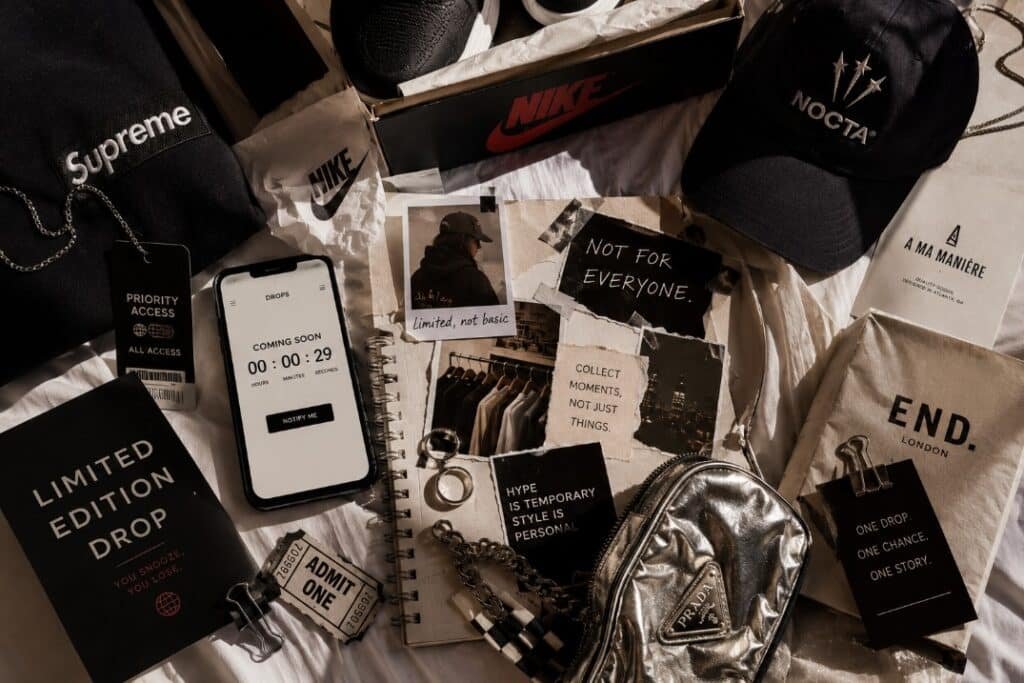
There is a very specific kind of panic that only happens when a brand announces a limited edition drop. Suddenly normal people become philosophers, economists, detectives, athletes, and emotionally unstable auctioneers. Someone who could not answer a text for three days is now refreshing a product page with the intensity of a NASA launch.
Limited editions make everyone dramatic because they turn shopping into a tiny emergency. The clock is ticking. The stock is “almost gone.” The collab is “iconic.” The group chat is screaming. Someone says, “I don’t even need it, but what if I regret not getting it?” and there it is — the official anthem of drop panic.
This is not a lecture about never buying cool things. Diana is not here wearing a gray cardigan of moral superiority. Fashion is allowed to be fun. Collabs can be brilliant. Limited pieces can become memories, collectibles, or the one jacket that makes every boring outfit suddenly have a passport. But we need to discuss why our brains become ridiculous the second a product has a countdown timer.
The defendant: one limited edition item. The charges: causing emotional sweating, suspicious budgeting, group chat chaos, and the phrase “I can style it with everything” when everyone knows that means three outfits max.
Limited does not always mean special. Special does not always mean useful. Useful does not always mean worth the price. And “everyone wants it” is not the same as “I will actually wear it after the internet calms down.”
The drop panic starts before the item even exists in your closet
A normal item waits politely. A limited edition item enters the room with sirens. It does not say, “Would this fit your life?” It says, “Decide now or suffer forever.” Very subtle. Very calm. Very emotionally healthy, obviously.
That is the first trick: urgency. Your brain hates losing options. Even if you were not thinking about buying a metallic sneaker, a strange hoodie, or a tiny bag shaped like an architectural mistake, the second it might disappear, it starts glowing. Not because it changed. Because the possibility of missing it changed.
Fashion psychology is not always glamorous. Sometimes it is just your nervous system seeing “limited stock” and behaving like a raccoon that found a credit card.
If you only want it because it might sell out, pause. Desire that depends on a countdown timer deserves cross-examination.
Exhibit A: scarcity makes ordinary things look enchanted
Scarcity is powerful because it changes the story around an object. A plain hoodie is a plain hoodie. A plain hoodie available for forty-eight hours becomes a cultural artifact, apparently. Add a famous logo, a collab partner, a few influencer posts, and suddenly people are discussing fleece like it contains lost royal documents.
This does not mean limited editions are fake. Some are genuinely creative. Some connect two worlds in a way that feels clever, funny, beautiful, or historically interesting. But scarcity can also sprinkle fairy dust on things that would look very ordinary if they were always available.
Collabs work because they make two myths hold hands
A collaboration is not just two logos standing beside each other like awkward cousins at a wedding. A good collab makes two brand worlds collide in a way that creates a third feeling. Sport meets luxury. Streetwear meets heritage. Cute meets weird. Clean meets chaotic. Archive meets TikTok. Suddenly the item feels like a conversation, not just a product.
That is why collabs can be exciting. They compress culture into one object. A sneaker can say something about music, sport, street style, status, nostalgia, irony, and who managed to check out before the website collapsed like a Victorian fainting couch.
The problem is that not every collab deserves the emotional fireworks. Some are brilliant. Some are lazy. Some feel like two brands genuinely created something new. Others feel like someone stapled two names together and charged extra because the internet has trust issues.
The whole Collabs & Limited Editions section is basically where these fashion experiments belong: the good, the weird, the overhyped, and the “why did this sell out in seven minutes?” cases.
The group chat turns shopping into theater
Limited drops are never just private decisions. They become social events. Someone sends the link. Someone says “need.” Someone else says “wait, that price is criminal.” A third person posts a screenshot of their cart like it is a medical update. Suddenly everyone is either enabling, judging, or pretending to be financially responsible.
The group chat adds heat. It makes the item feel bigger because other people are reacting in real time. Even hesitation becomes dramatic. If you say “I’m not sure,” someone will respond “it’s literally so you,” which is a dangerous sentence because it turns a purchase into destiny.
But friends can also save you. A good friend will say, “You already own three versions of that.” A very good friend will say, “Close the tab and drink water.” A legendary friend will remind you that last month you called that same color “depressing oatmeal.”
Diana’s little shopping tribunal: put the item on trial
Before you buy, imagine the item has been dragged into a tiny fashion courtroom. It is standing there under dramatic lighting. The judge is tired. The jury is your closet. The prosecutor is your bank account. The defense attorney is your delusion wearing lip gloss.
Ask the questions before the checkout button starts singing.
- Would I want this if it were not limited? If the answer is no, the hype is driving.
- Can I style it with clothes I already own? Not imaginary future clothes. Current clothes. The ones in your actual room.
- Do I like the piece or the story around the piece? Both can matter, but know which one you are paying for.
- Will I wear it when nobody recognizes the collab? This is the real test. If the logo is the only magic, the spell may fade.
- Is it financially boring in a safe way? Meaning: buying it does not create a mini tragedy later.
Worth it or not: the difference between hype and wardrobe power
A limited edition is worth it when it adds something your closet does not already have and your future self will still understand. It does not need to be “practical” in the dullest sense. Fashion is allowed to be dramatic. But it should be usable drama, not museum drama.
A piece has wardrobe power when it improves outfits without needing a long explanation. A great jacket. A sneaker shape you will wear constantly. A bag that makes simple clothes look sharper. A hoodie with quality fabric and a silhouette you actually love. A strange accessory that somehow belongs to you more than half the basics you own.
Hype feels loud before you buy. Wardrobe power feels useful after. Huge difference.
| The item feels… | Probably hype | Probably worth it |
|---|---|---|
| Exciting | Because everyone is posting it right now. | Because you can already imagine real outfits. |
| Rare | Rare but not really your style. | Rare and genuinely aligned with your wardrobe. |
| Expensive | You are justifying the price with panic. | The quality, use, and joy make sense together. |
| Iconic | Only because the internet said so loudly. | Because the design has a reason to exist. |
Nike x Supreme energy: the hype can be real and still need a filter
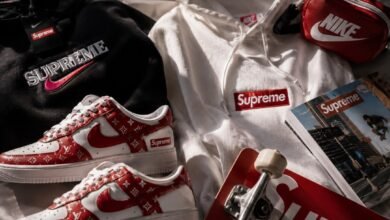
Some collabs become famous because they sit right at the crossroads of style, sport, streetwear, status, and nostalgia. Nike x Supreme is a perfect example of why people lose composure: both names carry culture, and together they create instant conversation. Even people who do not care suddenly have an opinion. That is brand chemistry doing cartwheels.
But the question is never just “is it hyped?” Of course it is hyped. The better question is: what part of the hype is design, what part is history, what part is resale fever, and what part is everyone wanting to be the person who got it?
The deeper breakdown of Nike x Supreme and what is worth the hype belongs exactly here, because some pieces are genuinely strong and others are mostly dramatic because the internet turned them into a scoreboard.
The resale market makes everyone act like fashion is a stock exchange with prettier shoes
Resale changes the energy. Suddenly people are not only asking, “Do I like this?” They are asking, “Will this go up?” “Will I regret not buying?” “Will people know it was hard to get?” “Can I justify this as an investment?” Please be careful with that word. Not every expensive thing is an investment. Sometimes it is just a financially ambitious sock.
Resale can make items feel even more desirable because it adds competition and future value. But it can also distort taste. If you start buying for imaginary resale glory, you may end up with a closet full of things you do not wear and a personality shaped like a receipt.
Fashion can be collectible. That is real. But collecting should come from knowledge, taste, and actual interest — not panic wearing a calculator costume.
The three types of limited pieces that are usually worth considering
Not every limited edition is a trap. Some are actually the kind of thing you will be glad you bought. The trick is knowing what kind of value it has beyond temporary noise.
The first is a piece with design value: the shape, color, material, or detail is genuinely special. The second is a piece with personal value: it connects to your taste, memory, favorite artist, sport, city, music, or style era. The third is a piece with wardrobe value: you will wear it again and again, not just worship it like a sacred object in your closet.
The best limited pieces hit at least two of those. The legendary ones hit all three. The suspicious ones hit zero but arrive with excellent photography and a countdown timer.
If the only thing special about the item is that other people might not get it, the piece is not rare. Your judgment is just under pressure.
How to survive a drop without becoming a tragic little checkout goblin
Before the drop, decide your maximum price. Not your fantasy price. Your real price. The price that does not make future-you stare into the fridge with regret. Decide what size you need, what color you actually want, and whether you will still want the piece if you miss it today.
Then give yourself a cooling-off ritual. Walk away for ten minutes if possible. Ask one honest friend, not the friend who treats shopping like a competitive sport. Look at your closet. Think of three outfits. If you cannot name three outfits, that is evidence. The tribunal accepts it.
And please remember: missing a drop is not a personal failure. You are not less stylish because a website said sold out. Fashion existed before that button and will continue after it. Annoying, but true.
- Set a budget before the adrenaline starts. Adrenaline is terrible at math.
- Never buy only because of resale screenshots. You are a person, not a warehouse.
- Check your actual closet. Imaginary styling does not count as evidence.
- Let one drop pass sometimes. Discipline is also style. Less sparkly, but powerful.
The real flex is knowing when not to buy
There is a quiet confidence in letting a hyped piece pass. Nobody talks about this because it does not make good unboxing content, but it is true. Style is not only what you collect. It is also what you refuse.
Every closet has a point of view, even if it is accidental. When you buy every exciting thing, your closet becomes a group chat where everyone is yelling. When you choose carefully, your closet starts sounding like you.
This is where general styling sense matters more than drop luck. The article on fashionable teen style hacks is useful because the best outfit upgrades often come from styling better, not panic-buying rarer.
Diana’s final ruling: drama is allowed, delusion is optional
Limited editions are fun because fashion is partly fantasy. We want the story. The chase. The tiny victory. The feeling that our closet has a secret. I understand that completely. I too have looked at an item and thought, “This could change everything,” when it was clearly a top.
But drama should stay decorative. It should not drive the car. The best limited piece is not the one that makes everyone jealous for five minutes. It is the one that still makes sense when the hype leaves, the posts slow down, the resale price changes, and you are just standing in your room trying to get dressed on a normal Tuesday.
If it still feels like you then, the item has a case.
Buy the piece, not the panic
Limited editions make people dramatic because they press all the shiny human buttons: scarcity, belonging, identity, competition, regret, status, story. A drop can make a normal product feel like a once-in-a-lifetime decision, which is impressive and also slightly rude.
The answer is not to become boring. The answer is to become harder to manipulate. Love fashion. Enjoy collabs. Study the story. Appreciate the design. Join the hype when the hype actually matches your taste. But do not let urgency wear your wallet as a costume.
Ask the better question: will this piece become part of my real style, or am I just trying to win a five-minute internet emergency?
Because the chicest person in the drop panic is not always the one who gets the item. Sometimes it is the one who closes the tab, fixes her lip gloss, and knows the outfit will still be good without it.
FAQ