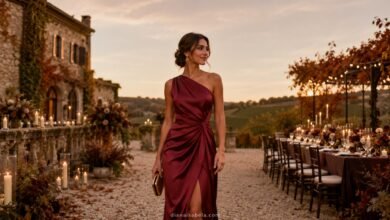
A wedding invitation looks sweet until it quietly asks you to solve fashion algebra.
You RSVP, you smile, you put the date in your calendar like a responsible little citizen of romance. Then the outfit question arrives wearing perfume and carrying a knife: what does “garden formal” mean, why does “cocktail” sound like it knows your weaknesses, and is your favorite dress elegant or accidentally main-character at someone else’s ceremony?
Darling, breathe. Wedding guest style is not about becoming invisible. It is about looking beautiful while understanding the room. The goal is polished, respectful, comfortable, photo-ready, and still very much you.
First, read the invitation like it is a tiny fashion prophecy
The invitation is not just a pretty card. It is a coded message from the couple, the venue, the season, and possibly a wedding planner who has seen crimes committed in satin. Before you even open your closet, look for three clues: the dress code, the time of day, and the location.
If the invitation says black tie, the outfit needs real polish: a floor-length gown, a formal midi in a rich fabric, or a sleek evening look that understands the assignment. If it says formal or black-tie optional, you still want elegance, but you have a little more breathing room. Cocktail usually means polished but not grand-opera dramatic. Semi-formal is the dangerous one because people hear “semi” and arrive like they are going to a cute lunch. Please do not.
Dressy casual is not “whatever you found on the chair.” It is relaxed but intentional: a pretty midi, an elegant slip dress, a refined two-piece set, or a soft tailored look. Beach formal does not mean a heavy gown sinking heroically into the sand like a doomed ship in a romantic tragedy. It means light fabrics, graceful movement, and shoes that understand gravity.
The best place to begin is not “what is trending?” It is “what level of formality is the room expecting?” Trends are cute, but respect is forever. Very Roman of us. Very decorum. Yes, I am bringing Latin into wedding outfits because somebody has to make dress codes sound less like tax forms.
Now put the outfit on trial: venue, weather, walking distance
Welcome to Fashion Court. The defendant is your outfit. The witnesses are the venue, the forecast, the ceremony seating, the dance floor, and the mysterious gravel path nobody mentioned on the wedding website.
Weather matters more than fantasy. A velvet dress in July can turn you into a tragic dessert. A tiny slip dress in December can make you spend the reception emotionally attached to a stranger’s heater. The outfit has to work in the actual atmosphere, not only in your Pinterest board’s climate-controlled imagination.
Do you have to wear a dress? No. But dresses are the easiest language.
You can wear a jumpsuit, a silky set, a tailored skirt outfit, or beautiful wide-leg trousers with an elegant top. Wedding guest style is not a dictatorship. Still, dresses remain the simplest solution because they create one clean line, one mood, one decision. Less styling math. More “I look lovely, where is the cake?”
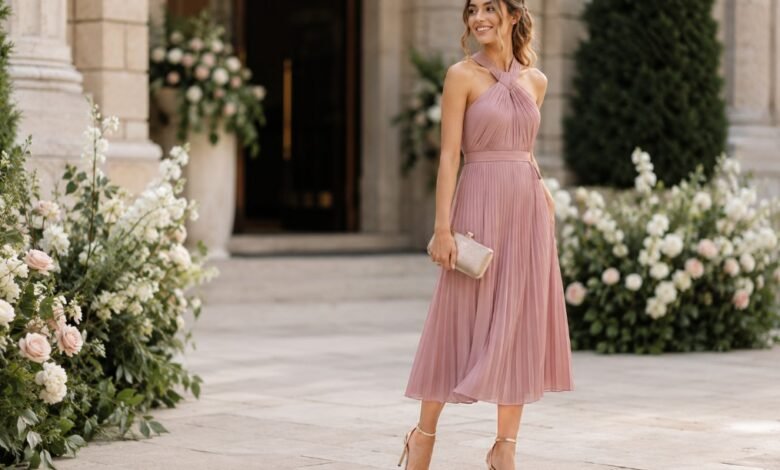
If you want the easiest path, start with a dress that fits the dress code and then build the rest around it. A satin midi can go cocktail. A floral chiffon dress can work for garden or spring. A sleek black maxi can handle city evening or formal. A soft pastel dress can look perfect for daytime, but it needs enough structure or color depth so it does not drift into bridesmaid territory.
A midi dress in a non-white color, with polished shoes, simple jewelry, and a bag that does not look like it came to carry your entire emotional history.
Choose one memorable detail: neckline, sleeve, texture, color, or movement. Not all five. An outfit should have a point of view, not a group chat argument.
If you are still choosing the main piece, Diana’s broader guide to wedding guest dresses is the natural place to compare silhouettes, colors, seasons, and dress-code ideas before you panic-buy something shiny at midnight.
The color politics: what is safe, what is dramatic, what is suspicious
Wedding colors are not just colors. They are tiny social signals. White is the obvious no unless the invitation specifically asks for it. Ivory, cream, champagne, and very pale blush can also be risky if they photograph too bridal. If you need to ask five friends, “Does this look too white?” the dress has already caused enough chaos.
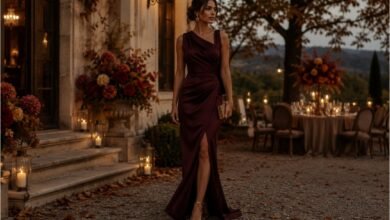
Black is often completely fine, especially for evening, city, formal, or winter weddings. The trick is styling. A black dress with delicate jewelry, soft makeup, or a romantic bag feels elegant. A black dress with severe everything can start looking like you came to avenge a family inheritance. Beautiful, yes. Possibly not the brief.
Red depends on the wedding, the culture, the family, and the exact shade. Deep wine, soft berry, or elegant ruby can be stunning. Fire-engine red with a bodycon silhouette and look-at-me energy may feel too loud for a ceremony where someone else is supposed to be the cinematic event.
Florals, blues, greens, pinks, lavender, navy, chocolate, sage, and jewel tones are generally easier. They give you style without demanding a legal defense. Prints are lovely when they feel intentional, not like a picnic blanket got promoted to guest of honor.
- Safest pretty colors: sage, dusty blue, rose, navy, lavender, emerald, chocolate, soft coral, muted florals.
- Use carefully: black, red, metallics, neon brights, very pale pastels, anything extremely close to white.
- Usually avoid: white, ivory, bridal lace, costume-level sparkle, and any dress that makes people whisper before the vows.
Shoes and accessories: the part that can save or ruin the whole thing
Wedding shoes are where fantasy often loses to physics. You need shoes that match the venue and survive the event. A gorgeous stiletto on a marble hotel floor? Lovely. A gorgeous stiletto in grass? A documentary about poor decisions. A delicate sandal at a beach wedding? Fine. A heavy platform at a garden ceremony? Maybe not unless the dress has enough attitude to carry it.
For garden or outdoor weddings, block heels, wedges, elegant flats, or low heels are your friends. For black tie, go polished: satin heels, metallic sandals, pointed pumps, or a refined evening shoe. For beach weddings, flat sandals, dressy slides, or wedges usually make more sense than anything thin and sharp.
The bag should be small enough to look intentional but large enough for the sacred objects: phone, lip product, tissues, card, tiny powder, emergency hair tie, and your will to survive small talk. Jewelry should finish the outfit, not fight it. If the dress is simple, jewelry can speak. If the dress is dramatic, jewelry can whisper.
The comfort clause nobody glamorous wants to admit
You will sit. You will stand. You may walk across gravel, grass, stairs, carpet, sand, old wood, or the emotional minefield of seeing someone from your past looking suspiciously good. You may dance. You may eat. You may pose for photos where somebody’s aunt says, “Just one more!” eleven times.
So the outfit has to move. Test it before the wedding. Sit down. Lift your arms. Walk. Check the fabric in daylight. Look at the back. Bend slightly. Dance for ten seconds like a normal person and then for five seconds like your best friend just dragged you to the center of the floor. If the dress betrays you during the test, it will not suddenly become loyal at the reception.
Comfort is not the enemy of style. Bad comfort is the enemy of style. The best wedding guest outfit is the one you forget about after the first compliment because it is doing its job quietly while you enjoy the party.
The Diana mirror test before you leave the house
Stand in front of the mirror and ask the questions that matter. Not “Do I look expensive?” Not “Would this go viral?” Not “Would a fictional Italian heiress wear this while being mysterious near a fountain?” Though honestly, sometimes yes.
If the answer is yes to all four, go. Put on the earrings, take the photo, sign the card, and stop overthinking. The outfit has passed court.
The real secret: dress for the wedding, not for the algorithm
What to wear to a wedding as a guest is not a single answer. It is a little equation made of dress code, venue, weather, culture, comfort, and taste. Once you understand those pieces, the panic gets quieter.
Choose something that feels celebratory but not competitive, polished but not stiff, pretty but not costume-like. Let the couple have the spotlight. Let yourself have the glow. That is the whole elegant trick.
And if anyone says you are overdressed? Smile gently. Some people have never experienced the joy of caring about fabric, proportion, and a good shoe. We must forgive them. Quietly. From a beautifully dressed distance.
FAQ
What should I wear to a wedding as a guest?
Start with the dress code, venue, season, and time of day. A polished midi dress, elegant maxi, formal jumpsuit, or refined two-piece outfit usually works when the fabric, color, and shoes match the wedding’s level of formality.
What colors should wedding guests avoid?
Guests should usually avoid white, ivory, cream, and anything that looks bridal in photos unless the invitation specifically says otherwise. Very pale blush, champagne, neon shades, and extremely attention-grabbing red can also be risky depending on the wedding.
Can I wear black to a wedding as a guest?
Yes, black is often appropriate for evening, city, formal, winter, and black-tie weddings. To keep it wedding-ready, soften the look with elegant jewelry, a refined bag, romantic makeup, or a graceful silhouette.
Do wedding guests have to wear dresses?
No. A guest can wear a jumpsuit, tailored trousers, a skirt set, or another polished outfit if it matches the dress code. Dresses are popular because they make styling easier, but they are not the only acceptable option.
What shoes are best for a wedding guest outfit?
Choose shoes based on the venue. Block heels, wedges, flats, or low heels work well for gardens and outdoor weddings. Satin heels, metallic sandals, or polished pumps suit formal venues. For beach weddings, flat sandals or wedges are usually more practical.