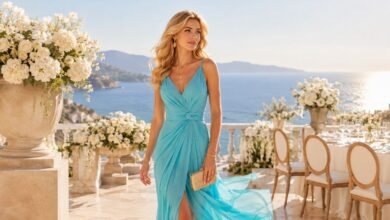
Black Tie Wedding Guest Dresses: What to Wear When the Invite Sounds Serious

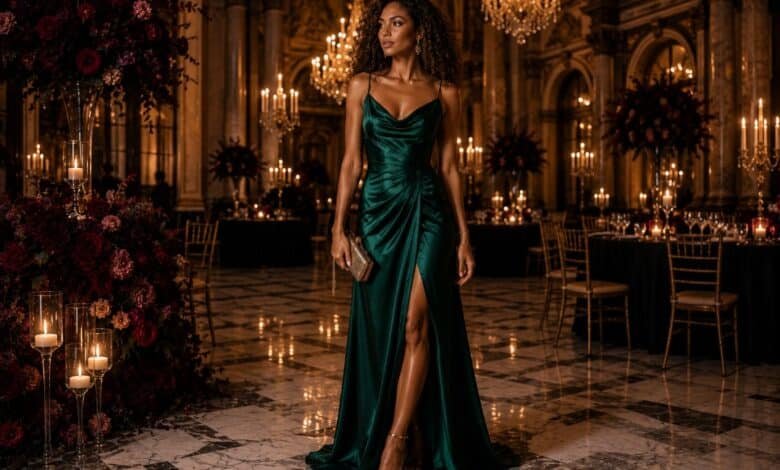
Black tie wedding guest dresses are not “just wear something fancy.” They are etiquette with better lighting.
The phrase black tie has a way of making everyone suddenly act like they have been summoned to a palace by a handwritten letter sealed with wax. It sounds serious because it is. Not scary-serious. Elegant-serious. The kind of serious where fabric matters, shoes matter, the hemline matters, and your casual cocktail dress cannot simply add earrings and pretend it has been knighted.
But black tie also does not mean you need to cosplay as a red carpet actress, a royal cousin, or a glamorous villainess who owns a vineyard and three secrets. A wedding is still about the couple. Your dress should honor the dress code without trying to become the evening’s main plot.
The translation: black tie means the wedding wants evening elegance
Black tie usually means formal evening attire. For women, the safest and most traditional choice is a floor-length gown. A very elevated formal midi can sometimes work in modern settings, but if the invitation clearly says black tie, a long dress is the easiest way to respect the room without playing dress-code roulette.
The dress should feel evening-ready. That means refined fabric, polished styling, and a silhouette with presence. Satin, crepe, chiffon, velvet, silk-like fabrics, elegant jersey when truly elevated, and structured evening fabrics can all work. Cotton sundress? No. Beach maxi? No. Club dress? Absolutely not; it has committed enough crimes already.
If you are still comparing formal, cocktail, black tie optional, and other dress-code phrases, Diana’s broader formal wedding guest dresses guide is the practical place to start before choosing a gown.
The black tie gown types that actually work
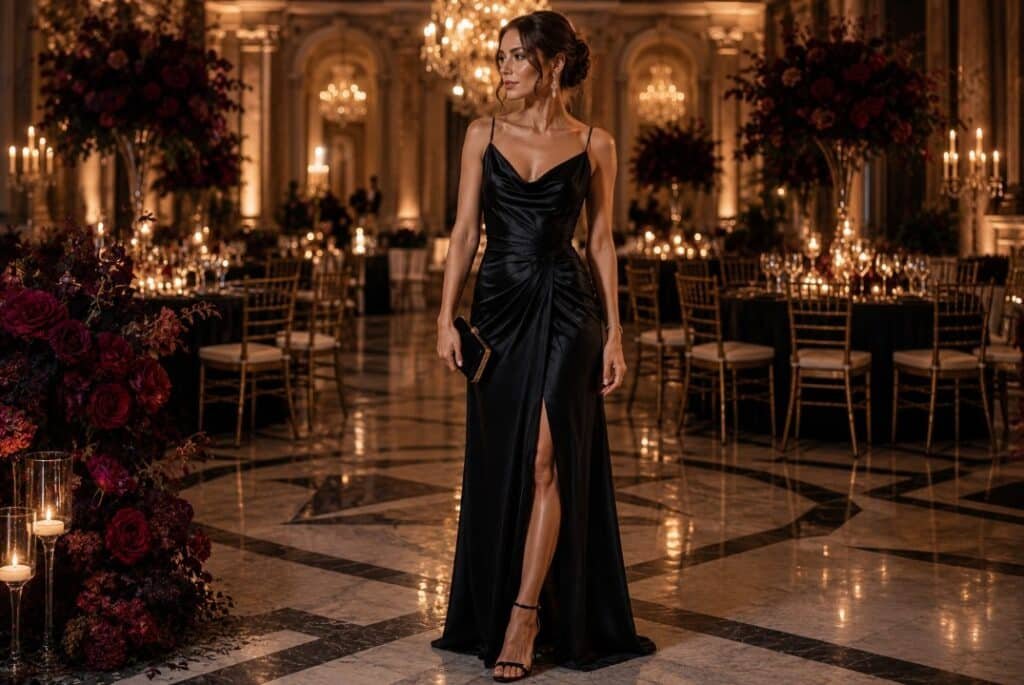
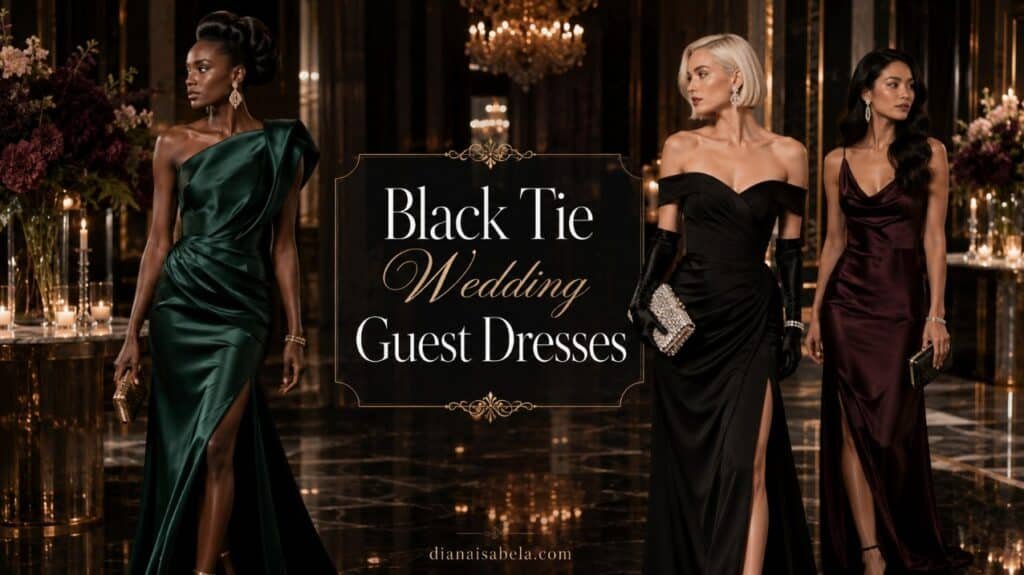
A black tie dress does not need to be complicated. In fact, the most elegant gowns are often calm in structure and powerful in fabric. A clean black satin gown. A burgundy velvet column dress. An emerald one-shoulder gown. A navy crepe dress with excellent drape. A plum chiffon gown with soft movement. The drama comes from the total effect, not from every detail yelling at once.
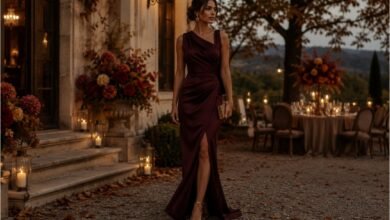
A high slit can work if the rest of the gown is elegant. Cutouts can work only when they are subtle, symmetrical, and not trying to become the evening’s scandal. Strapless can work beautifully with the right fit and fabric. A deep neckline can work if the gown remains polished. The point is balance. Black tie is not modest by default, but it is controlled.
The fabric test: black tie begins with material, not decoration
Formal fabric is the soul of a black tie look. You can have the right color, right length, and right shoe, but if the fabric is flimsy, casual, shiny in the wrong way, or obviously cheap, the outfit loses authority. A black tie dress should have weight, drape, softness, or structure. Preferably more than one.
The secret is to let fabric do the expensive work. A plain dress in excellent fabric will usually beat a decorated dress in poor fabric. This is annoying because it means the eye has to be trained, but darling, that is why we read fashion instead of trusting every product photo like innocent lambs.
Black tie colors: black, navy, emerald, burgundy, plum, metallics — and the bridal danger zone
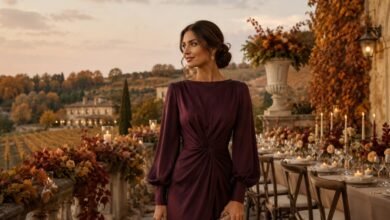
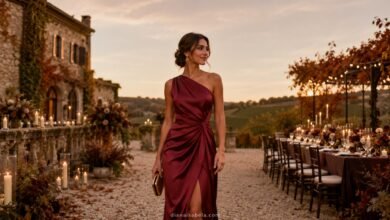
Black is perfectly appropriate for black tie weddings. Navy is elegant and slightly softer. Emerald photographs beautifully under warm light. Burgundy feels romantic and formal. Plum and aubergine are sophisticated without being predictable. Deep teal, midnight blue, ruby, chocolate, and forest green all work beautifully depending on the season.
Metallics can work if the dress is refined. Champagne, gold, and silver are gorgeous as accessories, but as gowns they become risky. Champagne satin, pale gold, ivory shimmer, and silver-white dresses can look bridal under flash or candlelight. Unless the couple requested metallics, approach pale sparkle like a suspiciously charming villain.
- Safest black tie colors: black, navy, emerald, burgundy, plum, midnight blue, deep teal, ruby, forest green, chocolate.
- Use carefully: champagne, pale gold, silver, blush satin, ivory florals, very pale blue, and anything close to bridal sparkle.
- Usually avoid: white, ivory, cream, bridal lace, full pale sequins, and anything that could be mistaken for a reception dress.
Accessories: the black tie finishing school
Black tie accessories should look intentional, not nervous. The dress is already formal. You do not need to prove the event is fancy by adding every shiny thing you own. A strong earring, a refined clutch, an elegant heel, and maybe one necklace or bracelet. That is often enough.
If the gown has a dramatic neckline, skip the necklace and choose earrings. If the gown is minimalist, one beautiful jewelry moment can elevate it. If the dress is black, jewelry adds light. If the dress is jewel-toned, metallics add polish. If the dress has embellishment, let the accessories whisper.
Drop earrings, pearls, sculptural gold, or crystal pieces work beautifully. Match the scale to the neckline and hair.
Choose satin, metallic, velvet, beaded, pearl, or structured evening bags. Your everyday shoulder bag has not been invited.
Strappy heels, satin pumps, metallic sandals, pointed heels, or elegant platforms can work depending on venue and dress.
A low bun, soft waves, sleek ponytail, side part, sculptural clip, or polished updo can make the gown feel finished.
For colder weddings, choose a formal coat, evening wrap, faux-fur stole, or cape-style layer. No casual jackets.
Choose one direction: glowing skin, red lip, smoky eye, soft glam, or polished neutral. Not every face feature needs a solo.
The accessory test is simple: if removing one item makes the outfit more elegant, that item was not helping. Fashion, like literature, benefits from editing. Imagine if Jane Austen had included every thought everyone ever had. Exactly.
Black tie optional: the phrase that causes group chats to collapse
Black tie optional means the couple would love black tie-level formality, but they are not forcing every guest into a tuxedo-and-gown situation. For women, a floor-length gown is still a strong choice, but a very formal midi, elegant cocktail dress, or refined dressy suit can also work depending on the venue.
The key word is optional, not casual. You can choose a slightly less formal look, but it still needs evening polish. A satin midi, structured black dress, jewel-tone column dress, or formal crepe midi can work. A casual floral dress, thin sundress, beach maxi, or party mini will not suddenly become appropriate because the word optional made you hopeful.
If the dress code says formal rather than black tie, Diana’s main black-tie wedding guest dress ideas hub can help you compare the stricter and softer sides of wedding guest style.
The “too casual” test: because black tie is not here to negotiate with your sundress
Some dresses are pretty but not black tie. This is not an insult. A dress can be lovely and still belong to brunch, vacation, graduation, date night, or a summer party. Black tie has a specific mood. It wants formality, evening polish, and a sense of occasion.
- Too casual: cotton sundresses, linen day dresses, jersey maxis, beach dresses, casual florals, and anything that looks like a resort dinner.
- Too short: most minis, unless the wedding is black tie optional and the dress is extremely polished, structured, and styled formally.
- Too club: bodycon cutouts, extreme slits, very sheer panels, shiny tight fabrics, and dresses made for nightlife instead of ceremony.
- Too bridal: pale satin, ivory lace, white sequins, champagne gowns, trains, and anything that looks like a second wedding dress.
- Too bridesmaid: long pastel chiffon with simple straps and soft styling, especially if it matches the wedding palette.
Black tie wedding guest mistakes that are painfully common
The biggest black tie mistake is thinking drama equals elegance. It does not. Drama can be elegant, but it has to be disciplined. A giant slit, huge sparkle, plunging neckline, open back, high shine, and loud color all together is not black tie sophistication. It is a dress having a panic attack.
Mistake one: confusing red carpet with wedding guest
A wedding is not an awards show. You can wear a stunning gown, but it should not feel like you are arriving for paparazzi. Avoid trains, costume-level embellishment, and anything designed to dominate photos.
Mistake two: underestimating fabric
Length alone does not make a dress black tie. A casual maxi is still casual. Fabric, structure, drape, and styling carry the formality.
Mistake three: forgetting the couple’s world
A black tie wedding at a luxury hotel may expect full glamour. A black tie optional garden wedding may feel slightly softer. Know the room. Then dress for the room, not just the phrase.
Mistake four: wearing almost-white
This is not the night to gamble with ivory, champagne, cream, or pale silver. If it could make someone squint and ask, “Is that bridal?” choose something else.
Mistake five: letting accessories fight
One beautiful jewelry moment is elegant. Five competing jewelry moments is a small monarchy with succession issues.
The final black tie mirror check
Put on the entire outfit: dress, shoes, clutch, jewelry, outerwear, hair, makeup. Black tie is a full composition. A gown alone is not enough if the shoes are wrong, the bag is daytime, the coat is casual, or the earrings are arguing with the neckline.
Look at the outfit in evening light if possible. Satin, velvet, sequins, and pale colors all change under warm lighting. Walk. Sit. Turn. Check the back. Hold the clutch. Practice stairs if the dress is long. Make sure the hem is safe enough that you can move without needing a tiny staff of assistants.
- Does it read formal immediately? No explanation required.
- Is it guest-appropriate? Elegant, but not bridal, bridesmaid, or red carpet excessive.
- Is the fabric worthy? Drape, weight, polish, or structure should be visible.
- Are the accessories edited? One main sparkle, not an entire diplomatic summit.
- Can you actually exist in it? Sit, walk, hug, dance, and survive dinner.
If the outfit passes, stop overthinking. Black tie is intimidating only until you understand its logic. Then it becomes one of the easiest dress codes, because it finally admits what it wants: elegance.
Black tie, but make it human
The best black tie wedding guest dresses are formal without being theatrical, glamorous without being selfish, polished without being stiff. They understand the invitation, the couple, the venue, and the tiny social contract of looking beautiful without stealing the story.
Choose a floor-length gown when in doubt. Choose fabric that moves well. Choose color with depth. Choose accessories like an editor, not a magpie. Avoid bridal shades, casual fabrics, club shapes, and red-carpet delusions.
Black tie is not a punishment. It is permission to dress with real elegance. And honestly, darling, sometimes it is nice when the invitation raises the standards for everyone.
FAQ
What should a woman wear to a black tie wedding?
A floor-length gown is the safest choice for a black tie wedding. Choose a formal fabric such as satin, crepe, chiffon, velvet, or silk-like drape, and style it with refined evening accessories.
Do black tie wedding guest dresses have to be long?
A long gown is the most traditional and safest option for black tie weddings. A very formal midi may work for black tie optional or modern venues, but for true black tie, floor-length is usually best.
Can I wear black to a black tie wedding?
Yes, black is very appropriate for a black tie wedding. Choose an evening fabric like satin, crepe, velvet, or chiffon, and add elegant jewelry, a clutch, and formal shoes so the look feels polished.
What colors are best for black tie wedding guest dresses?
Black, navy, emerald, burgundy, ruby, plum, deep teal, midnight blue, forest green, and chocolate are excellent black tie colors. Avoid white, ivory, cream, pale champagne, and bridal-looking metallics.
What should I not wear to a black tie wedding?
Avoid casual sundresses, jersey maxis, beach dresses, club minis, extreme cutouts, white or ivory gowns, bridal lace, trains, and anything that looks too casual, too bridal, or too red carpet for a wedding guest.