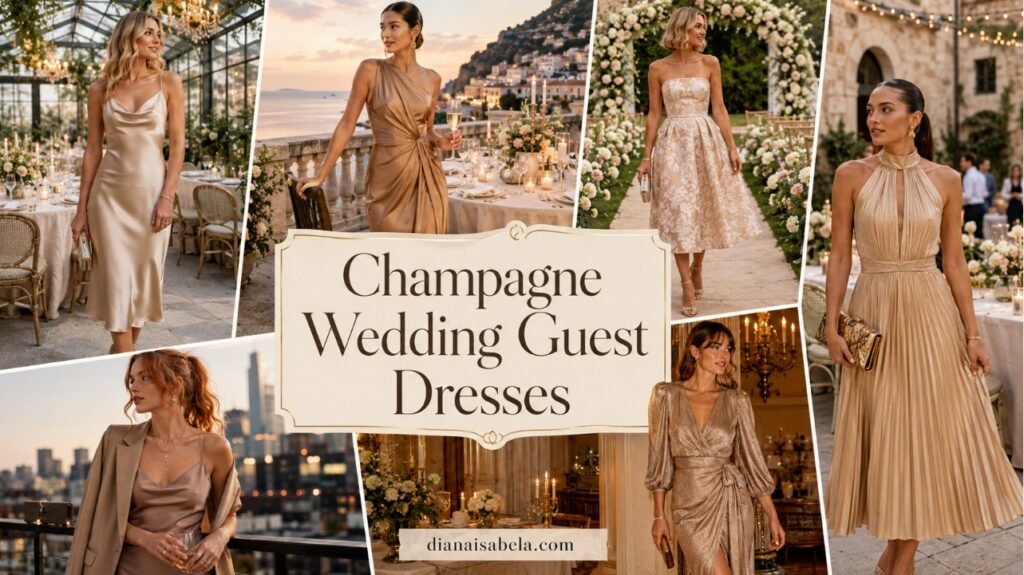
Champagne Wedding Guest Dresses: How to Wear the Shade Without Looking Bridal

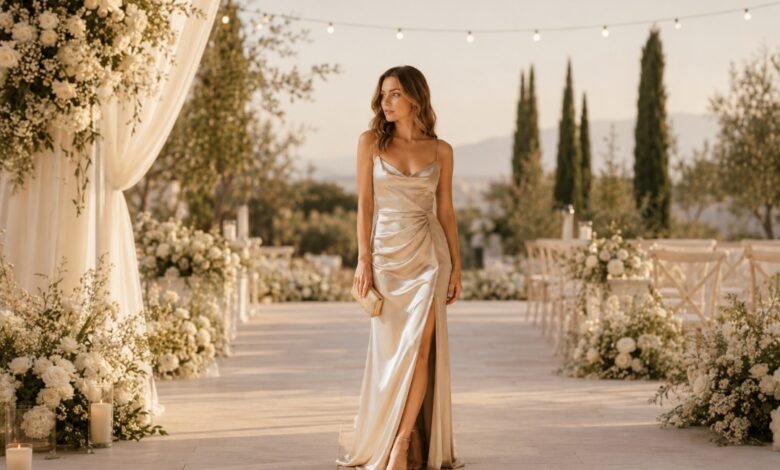
Champagne wedding guest dresses live in the most glamorous danger zone of the guest wardrobe. Done well, champagne looks polished, expensive, softly luminous, and very elegant. Done lazily, it can drift into bridal-adjacent territory faster than a satin train across a marble ballroom.
The trick is not to ban champagne completely. The trick is to choose the shade, fabric, silhouette, and styling so the outfit clearly says wedding guest, not bride, maid of honor, or “I accidentally walked out of the bridal suite.” Champagne can be beautiful at a wedding, but it needs context, contrast, and honest mirror time.
Quick answer: yes, you can wear a champagne dress to a wedding if it does not look too close to white, ivory, cream, or a bridal reception dress. The safest champagne wedding guest dresses have warmth, depth, texture, structure, or strong styling contrast. The riskiest ones are pale, glossy, floor-length, romantic, and styled with pearls, ivory shoes, or soft bridal accessories.
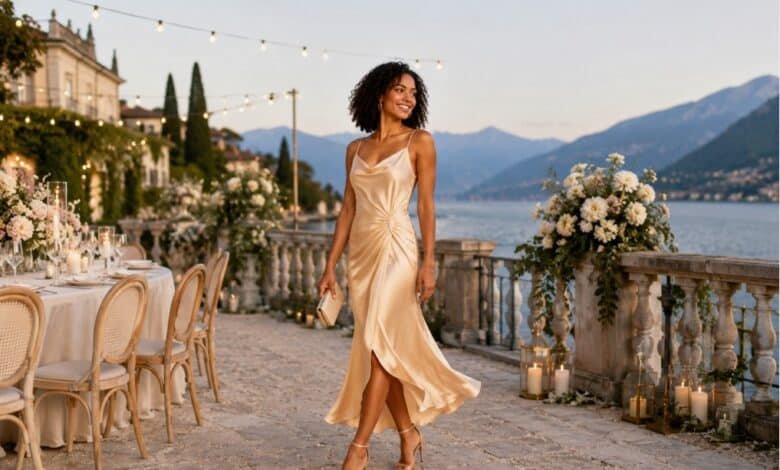
Warm champagne, bronze-champagne, oyster, gold-beige, taupe-gold, and deeper metallic neutrals are safer than pale ivory-champagne.
Pale satin, bridal shine, pearl shimmer, floaty chiffon, long minimal gowns, cream accessories, and anything that photographs close to ivory.
Formal evenings, black-tie optional receptions, hotel venues, cocktail parties, winter weddings, and polished city celebrations.
If you are still deciding whether champagne fits the invitation, start with the broader wedding guest dress guide first. Champagne depends heavily on the room, the time of day, the dress code, the bride’s style, the wedding palette, and the way the dress photographs. The same champagne slip dress can look chic under hotel lighting and suspicious at a pale garden ceremony.
The real champagne problem: elegant neutral or bridal-adjacent?
Champagne sits close to ivory, cream, nude, beige, gold, and pale taupe. That is why it feels so refined. It is also why it needs discipline. A deeper champagne midi with bronze heels can look like a perfect guest outfit. A pale champagne satin gown with soft waves, pearl earrings, and a cream clutch can look like the bride’s second dress.
The question is not simply “Is champagne allowed?” That is too vague. The better question is: does this specific champagne dress clearly read as guest attire in real wedding photos? Not in the online product photo. Not in perfect studio lighting. Not on a model standing against a gray wall. In actual wedding conditions: flash, white flowers, bright daylight, pale table linens, and someone’s aunt taking photos from an angle that should be illegal.
Champagne is trickier than gold because gold usually announces itself. Gold says metallic, festive, evening, party, celebration. Champagne whispers. Sometimes that whisper is chic. Sometimes it whispers, “Are we sure she is not the bride?” That is the line you are trying not to cross.
Diana’s rule: champagne needs at least one strong guest signal: a midi length, darker undertone, visible texture, modern neckline, structured silhouette, print, metallic finish, or accessories that add contrast. If everything about the look is pale, soft, shiny, delicate, and romantic, choose another dress.
The bridal-risk meter
Champagne is not automatically wrong for wedding guests, but some versions are much safer than others. Use this before buying, renting, packing, or trying to convince yourself that “almost white” is simply a lifestyle choice.
Bronze-champagne, gold-beige, textured jacquard, structured midi dresses, warm metallic finishes, darker accessories, modern necklines, and silhouettes that do not resemble bridalwear.
Light champagne satin, slip dresses, delicate shimmer, soft draping, pale shoes, romantic hair, or minimal silhouettes. These can work, but only with contrast and careful styling.
Ivory-champagne gowns, bridal satin, floor-length pale dresses, pearl-heavy styling, white or cream clutches, soft romantic chiffon, and anything that could photograph like a wedding dress.
For the wider etiquette line between safe and questionable wedding colors, use the wedding guest dress etiquette guide. Champagne is one of those shades where “not technically white” is not always enough. If guests have to debate the color, the dress is already causing more drama than a dress should.
When champagne wedding guest dresses work beautifully
Champagne works best when the wedding setting can support shine and polish. Think evening receptions, hotel ballrooms, rooftop dinners, museum venues, candlelit restaurants, black-tie optional celebrations, holiday-season weddings, and destination dinners with warm lighting. In those rooms, champagne looks like part of the atmosphere: glassware, low light, silk, gold hardware, expensive perfume, and the kind of clutch you hold as if your life is under control.
It becomes trickier at casual daytime weddings, beach ceremonies with pale sand and white florals, romantic garden weddings, backyard weddings, and any event where the bridesmaids might be wearing champagne, nude, gold, beige, oyster, or soft taupe. If the bridal party is already in that color family, do not try to be the most elegant person in the same palette. Choose something else and let the wedding photos breathe.
Also consider the bride’s style. If the bride is likely to wear a very simple satin gown, a minimalist reception dress, or a sleek second look, a pale champagne slip dress becomes more dangerous. It may not be a wedding gown, but it may photograph like one. That is the problem.
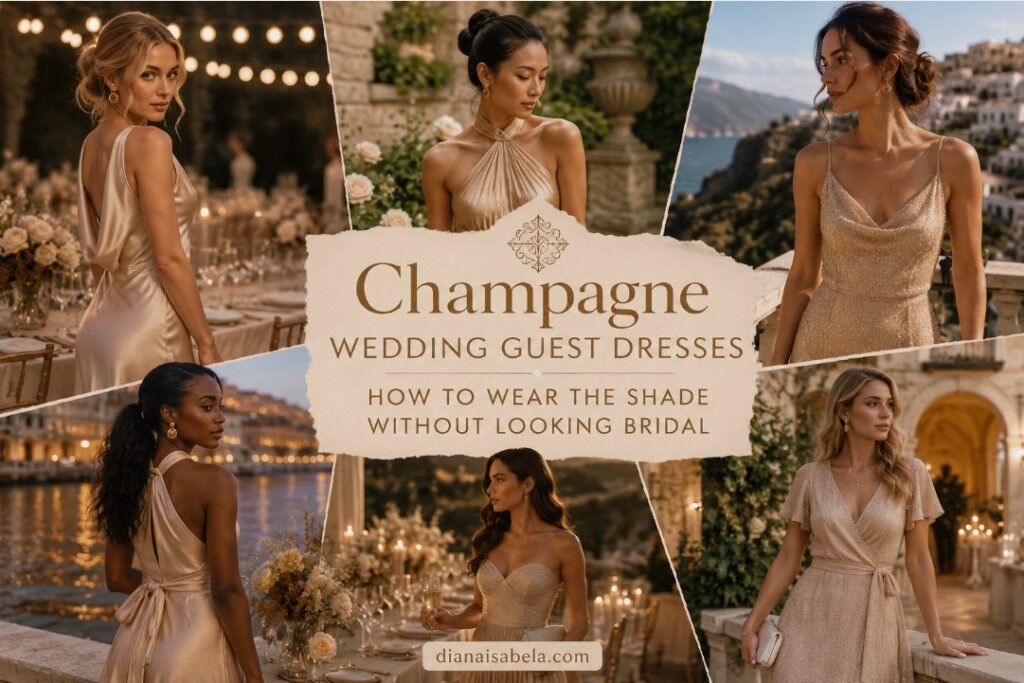
Which champagne dresses are safest?
The best champagne wedding guest dresses usually have shape, texture, warmth, or styling contrast. You do not need all four, but you need at least one. Otherwise, champagne can look too close to bridal minimalism.
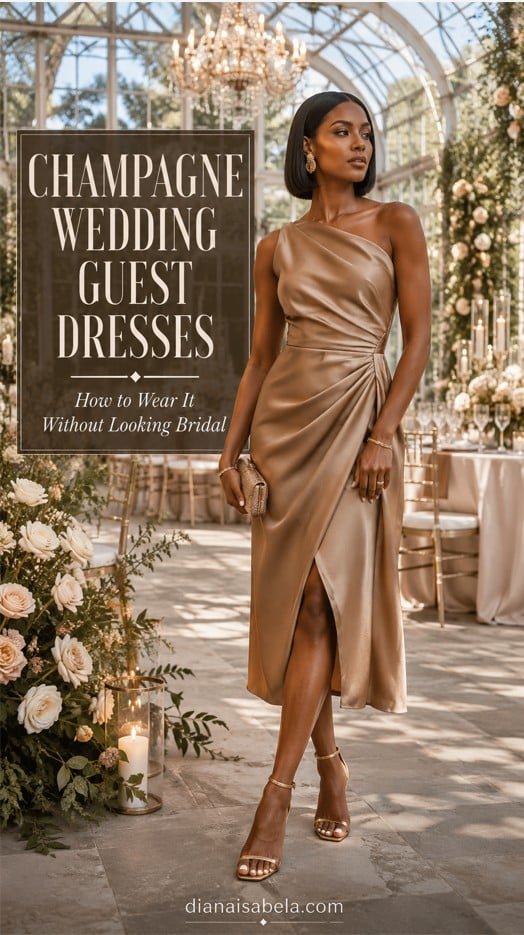
A champagne midi with a defined waist, sculpted neckline, tailored bodice, or clean shape feels more guest-like than a floaty pale gown. Midi length gives the color cocktail energy instead of aisle energy.
A slip dress can work if the tone is visibly warm, darker, or metallic enough. Add espresso, black, bronze, burgundy, or deep gold accessories so the outfit has grounding.
Woven texture, subtle pattern, or a non-bridal finish helps champagne feel intentional. Texture saves the shade from looking like plain bridal satin.
An asymmetrical neckline, sculptural strap, draped bodice, sharp slit, or sleek column shape can make champagne feel editorial rather than bridal-romantic.
Fabric is where champagne becomes dangerous
Champagne changes completely by fabric. Satin makes it luminous. Sequins make it festive. Crepe makes it calmer. Jacquard adds structure. Chiffon can feel romantic, but very pale champagne chiffon can get too close to bridesmaid or bridal-party styling. Fabric is not a small detail here; it is the difference between “beautiful wedding guest” and “why is she glowing like the ceremony candle?”
If the fabric looks like bridal satin, treat it with suspicion. Not panic. Suspicion. We are fashionable, not reckless.
Beautiful for evening, but safest in midi, draped, structured, or deeper gold-champagne shades. Very pale floor-length satin can look bridal fast, especially if the silhouette is simple and romantic.
Soft, liquid fabrics are elegant, but they also photograph lighter and more bridal than expected. A warm undertone and strong accessories are non-negotiable.
Good for festive evening weddings, black-tie optional receptions, winter events, and holiday-season celebrations. Keep the cut clean so the shine feels elegant, not costume-party loud.
Less shiny and more controlled. A strong option if you want champagne warmth without the bridal glow of satin or silk charmeuse.
One of the safest fabric choices because texture gives the color depth. Jacquard makes champagne look designed, not bridal-minimal.
Pretty but risky when pale and floaty. It needs print, texture, darker accessories, or a very guest-coded silhouette. Pale champagne chiffon at a garden wedding can easily look bridesmaid-adjacent.
The four-part champagne fit check before you buy
Before you fall in love with a dress, test the whole look. Champagne is not just a color decision. It is a total-outfit decision.
Is it clearly champagne, bronze, gold-beige, oyster, or taupe-gold? Or is it basically cream with a luxury product name? Product names lie. Photos tell the truth. Check the dress in daylight, indoor light, and flash if possible.
Matte crepe, jacquard, textured satin, and darker metallic finishes are easier than pale shiny satin, silk, or charmeuse. If the fabric glows like bridalwear, the rest of the styling has to work harder.
A tailored midi, cocktail dress, one-shoulder style, asymmetric hem, or modern drape is safer than a strapless pale column gown that could pass as a reception dress.
If the outfit includes pearls, nude satin heels, soft waves, delicate sparkle, and a cream clutch, it is walking toward bridal. Add contrast instead: black, espresso, bronze, oxblood, deep olive, or sculptural gold.
How to style champagne so it does not look like a wedding dress
The accessories are not decoration here. They are evidence. They prove the outfit belongs to a guest.
A champagne dress with barely-there nude heels and pearl earrings can look too bridal in photos. A champagne dress with espresso sandals, a dark clutch, gold cuffs, and a sharper hairstyle suddenly feels like an elegant guest who understood the assignment. The dress may be the same. The message is completely different.
The safest strategy is to remove sweetness. No pearl overload, no bridal curls, no soft cream everything, no delicate white satin accessories. Give the dress a little tension: a dark clutch, sharp sandal, clean bun, architectural earring, bronze eye makeup, or slightly unexpected bag color. Champagne needs a backbone.
Gold, bronze, espresso, chocolate, metallic brown, deep nude, taupe, and black evening sandals work well. Avoid white, ivory, and pale satin shoes because they can make the outfit look more bridal.
Black satin, espresso leather, bronze metallic, tortoiseshell, oxblood, deep olive, or structured warm neutral clutches add depth. Skip pearl and ivory bags if the dress is already pale.
Gold and bronze are easiest. Sculptural earrings, cuffs, and modern chains feel more guest-like than tiny bridal pearls or delicate princess sparkle.
Warm skin, bronze eyes, soft brown liner, peach or rose lips, sleek hair, or a clean bun. Avoid styling that feels too bridal-soft from head to toe.
My favorite champagne formula: a deeper champagne midi, bronze or espresso heels, sculptural gold earrings, warm makeup, and a structured clutch. It keeps the glow but removes the bridal softness.
Champagne by dress code
Champagne becomes easier when the dress code is clear. The more formal the wedding, the more the shade can look intentional. The more casual and daytime the wedding, the more likely champagne will feel too close to bridal neutrals.
Do not style champagne in a vacuum. A dress that feels gorgeous for black-tie optional may be too much for a backyard ceremony. A champagne midi that feels chic for cocktail may feel too pale for a traditional church wedding. The dress code is not a suggestion you read after checkout. It is the first filter.
The dress code filter
Use formality to decide how much shine, length, and softness the outfit can handle.
A champagne midi, textured mini, jacquard dress, or warm satin style is usually safer than a long pale gown. Cocktail length gives champagne more party energy and less bridal energy.
Choose deeper champagne, gold-beige, taupe-champagne, or structured satin. Avoid pale gowns that photograph close to ivory. If the gown looks bridal in flash, it is not the one.
Champagne can be elegant if the fabric is elevated and the shade has warmth. A sleek metallic column dress is safer than a romantic pale gown with bridal drape.
Be careful. Pale champagne near sand, white florals, and airy styling can read bridal. Bronze-champagne, gold-beige, or taupe-champagne is safer than ivory-champagne.
This is one of the trickiest settings. Champagne can look washed out in daylight and too close to cream against florals. Choose texture, print, or a darker tone.
Champagne can look excellent in a city setting when styled sharply: tailored shape, black clutch, sleek hair, modern jewelry, and no bridal softness.
If the invitation leans elevated, compare the outfit with formal wedding guest dresses before choosing a very pale champagne gown. If the dress code is cocktail, champagne is often easier because midi and shorter lengths naturally feel more guest-coded.
Champagne by season
Champagne is technically seasonless, but light changes everything. Spring daylight, summer sun, fall candlelight, and winter evening lighting all make the color behave differently. The question is not only “Is champagne okay?” It is “What kind of champagne belongs in this season?”
Spring champagne is riskier if the wedding palette is pale, floral, or romantic. Choose deeper champagne, texture, print, or a midi length. Avoid anything too close to ivory, especially in chiffon or satin.
Warm champagne works best for evening receptions and destination dinners. In bright daylight, choose bronze-champagne or gold-beige instead of very pale satin.
Fall is one of the easiest seasons for champagne. Pair it with bronze, chocolate, burgundy, espresso, warm florals, or dark metallics. The season naturally gives champagne more depth.
Sequins, satin, and metallic champagne can feel festive and elegant. Add black, gold, espresso, or deep red accessories for evening contrast.
Where champagne goes wrong
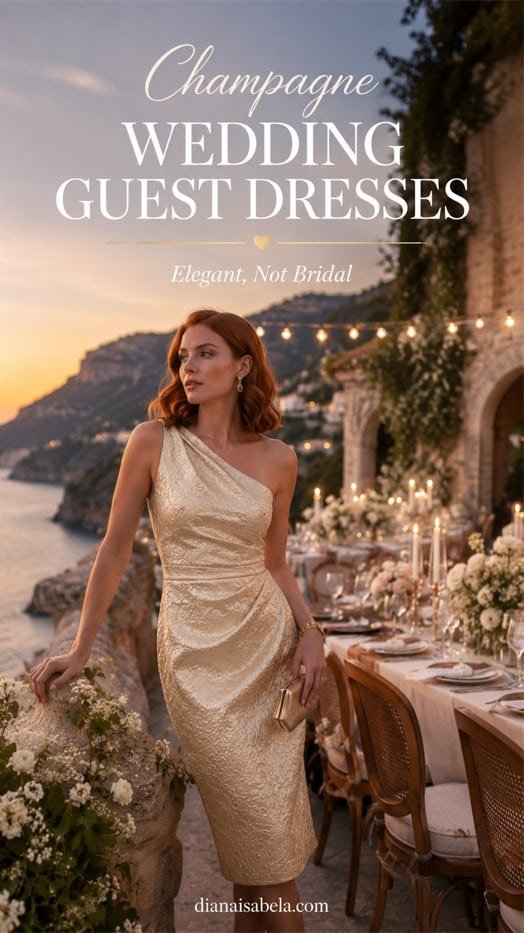
Champagne usually fails because the total outfit gets too close to bridal styling. A dress can be technically beige or champagne and still look like a wedding dress in photos. That is why you cannot judge only the hanger. You have to judge the full look: dress, shoes, jewelry, hair, bag, makeup, venue, dress code, and lighting.
The biggest champagne mistakes are rarely dramatic. They are quiet. A pale satin shoe here. A pearl clutch there. A soft wave. A delicate shimmer. Suddenly the whole outfit is whispering “bridal suite,” even if every individual piece looked innocent on its own.
If the dress looks pale ivory in natural light, do not wear it. Wedding photos are not the place to debate undertones. If you have to explain that the dress is actually champagne, the dress is already too close.
Long pale champagne satin with a romantic silhouette may be gorgeous, but gorgeous is not the same as guest-appropriate. It can easily look like a minimalist wedding gown or reception dress.
Pearl earrings, pearl clutch, pearl headband, delicate sandals, soft curls, and a pale dress can quietly turn into bridal-suite energy. Choose one soft element, not all of them.
Champagne, gold, nude, beige, oyster, and taupe are common bridal-party colors. If the bridesmaids are in that family, choose another shade. You do not want to look like an uninvited member of the lineup.
Some brides change into simple satin or sparkly champagne-toned second dresses. If your dress looks like it could be a bride’s after-party look, it is not the safest guest choice.
For more “please do not buy the dress with a train” guidance, read what not to wear to a wedding. Champagne is exactly the type of color where a small styling mistake can become very visible in group photos.
Champagne vs gold, silver, nude, beige, ivory, and cream
These shades overlap, but they do not behave the same at a wedding. The differences matter because wedding guest etiquette is often about how a color reads in photos, not only what it is called online.
- Champagne vs gold
- Gold is usually clearer, warmer, and more festive. Champagne is softer and more bridal-risky. If you want shine with less ambiguity, compare with gold wedding guest dresses.
- Champagne vs silver
- Silver feels cooler, sharper, and more evening. Champagne feels warmer and softer. Silver can be safer when you want metallic polish without ivory undertones, but it can also feel icy if the wedding palette is very soft.
- Champagne vs nude
- Nude can disappear into skin tone and look flat in photos. Champagne has more glow, but it also has more bridal risk. Nude is quieter; champagne is dressier and more event-coded.
- Champagne vs beige
- Beige is more neutral and less shiny. Champagne is prettier, more luminous, and more formal. That makes it more exciting — and more dangerous near bridal shades.
- Champagne vs ivory
- Ivory is too close to bridal for most wedding guests. Pale champagne can behave like ivory in photos, especially in satin or silk. If the shade looks ivory under flash, skip it.
- Champagne vs cream
- Cream is usually softer and more obviously bridal-adjacent. Champagne can be safer if it has gold, bronze, taupe, or oyster depth. Pale cream-champagne is not a safe loophole.
Best shoes for champagne wedding guest dresses
Shoes can rescue champagne. They can also make it look bridal in three seconds.
For a chic evening look, black strappy sandals create instant contrast. Espresso, chocolate, bronze, and deep nude heels feel softer but still grounded. Gold heels can work beautifully if they are warmer or more metallic than the dress. Taupe can work if it does not disappear completely into the dress. Silver is trickier; it can cool the outfit down and make pale champagne look icy or bridal depending on the fabric.
For outdoor weddings, avoid stilettos unless you enjoy sinking into grass like a glamorous lawn dart. Block heels, slim wedges, or sturdy sandals are safer. Champagne already feels delicate; your shoe should not make the whole outfit look fragile.
The shoe rule is simple: do not extend the dress into a pale, bridal-looking column. Break the softness. Add grounding. Add a color that looks intentional.
Best jewelry and bags for a champagne dress
Gold jewelry is the natural partner for champagne because it supports the warm tone. But keep it intentional. A sculptural gold earring, cuff bracelet, or modern chain can make champagne look editorial. Tiny pearls and soft bridal sparkle can make it look like you got lost on the way to the altar.
For bags, contrast is usually better than matching. Black satin, espresso leather, bronze metallic, oxblood, deep olive, tortoiseshell, or a structured warm neutral clutch can give champagne depth. A cream clutch with a champagne dress is usually where the outfit gets too quiet and too bridal at the same time. Yes, that is possible. Fashion loves a contradiction.
If you love pearls, use them carefully. A single modern pearl earring with a structured midi may work. A pearl headband, pearl bag, pearl bracelet, and pale satin dress? That is no longer styling. That is a bridal mood board.
Best champagne dress ideas by wedding mood
Instead of thinking about champagne as one color, think about it as a mood. There is city champagne, garden champagne, evening champagne, beach champagne, winter champagne, and cocktail champagne. Each one needs different styling.
Champagne outfit formulas by setting
Use these as safe directions. The goal is to keep champagne elegant without letting it drift into bridal territory.
Champagne jacquard midi, bronze heels, sculptural gold earrings, and a structured espresso clutch. Texture keeps the shade guest-coded, while the midi length makes the look festive rather than bridal.
Deep champagne column dress, black satin clutch, gold cuff, and sleek hair. The darker accessories separate the look from bridal styling and make the outfit feel grown-up and evening-ready.
Bronze-champagne slip dress, metallic sandals, warm makeup, and a small gold bag. Keep the cut clean and avoid bridal softness. Resort polish, not honeymoon wardrobe.
Champagne sequins, black sandals, minimal earrings, and a clean clutch. Festive, polished, and clearly not a wedding dress.
Choose gold-beige or taupe-champagne with a simple silhouette. Avoid pale floaty chiffon, ivory accessories, and bridal resortwear energy.
Try a champagne midi with a tailored shape, pointed slingbacks, a black clutch, and sleek hair. The city setting helps champagne feel polished instead of romantic.
Be careful. Champagne can look washed out in daylight and too close to cream against florals. If you still want the shade, choose a printed champagne dress, a darker oyster tone, or a textured midi.
Champagne can be elegant, but it needs serious discipline. Skip pale bridal satin. Choose rich metallic champagne, bronze-champagne, or a textured gown with evening accessories.
What not to wear with a champagne dress
Some champagne outfits fail not because of the dress, but because the styling pushes the whole look too close to the bride’s visual language. The dress may be fine. The total outfit may not be.
A pale champagne midi with bronze sandals might be lovely. The same dress with ivory satin heels, a pearl clutch, soft curls, and delicate diamond studs suddenly becomes questionable. Wedding guest dressing is rarely about one item. It is about the message created by all the pieces together.
Pearl headbands, white satin shoes, ivory shawls, bridal-style gloves, pale hair bows, and pearl clutches are all too close to wedding-day styling.
If it is pale, floor-length, silky, strapless, and minimal, it may look like the bride’s second dress. That is not a compliment you want.
Some weddings are more traditional about light colors. When in doubt, choose a deeper metallic, warm taupe, bronze, or another color entirely.
Champagne should look elegant, not competitive. If the dress feels like it wants its own aisle moment, leave it for another event.
How champagne should look in photos
This is the part many people forget. Wedding outfits are not judged only in real life. They are judged in photos, and photos are rude. Flash can lighten satin. Sun can wash out beige. White florals can make pale champagne look creamier. A champagne gown that seemed safe in your bedroom mirror can look alarmingly bridal next to a white tablecloth.
Before wearing champagne, take a photo in natural light and one with flash. Look at the dress next to something white. If the dress suddenly looks ivory, do not argue with the camera. The camera is telling you what the wedding album may tell everyone else.
The safest champagne looks have a visible difference from bridal white: warmer undertone, deeper metallic finish, texture, print, darker accessories, or a silhouette that would never be confused with bridalwear.
So, can you wear champagne to a wedding?
Yes, but not automatically. Champagne is a “check twice” color. It is not as obviously forbidden as white, but it is close enough to bridal shades that the dress needs to prove itself.
The safest champagne wedding guest dresses have warmth, depth, structure, texture, or strong styling contrast. The riskiest ones are pale, silky, minimal, romantic, and styled with ivory or pearl accessories. Beautiful? Yes. Safe? Not always.
Champagne should feel polished and intentional — not like a very polite attempt to steal soft-focus lighting. If your outfit has contrast, a clear guest silhouette, and enough depth to stay away from ivory in photos, champagne can be stunning. If the look is pale, glossy, long, and bridal-soft, choose another dress and save everyone the group-chat analysis.
The champagne mirror test
Ask yourself one question: would this dress still look clearly guest-like if the photo were blurry, bright, and taken beside the bride?
If the answer is yes, champagne can be gorgeous. If the answer is “maybe,” choose a darker tone, add contrast, or pick another color. The goal is not to disappear. The goal is to look elegant without creating a tiny etiquette scandal in the family group chat.
FAQ
Can you wear a champagne dress to a wedding?
Yes, you can wear a champagne dress to a wedding if it does not look too close to white, ivory, cream, or a bridal reception dress. Choose a warmer or deeper champagne shade, avoid bridal-style accessories, and make sure the silhouette clearly feels like a guest outfit.
Is champagne too close to white for a wedding guest?
Pale champagne can be too close to white, especially in satin, silk, or shiny fabrics that photograph lighter than they look in person. Warm champagne, oyster, bronze-champagne, and deeper beige-gold tones are usually safer than very pale champagne.
What color shoes go with a champagne wedding guest dress?
Black, bronze, espresso, chocolate, deep nude, and warm gold shoes work well with champagne dresses. For a safer guest look, choose shoes that add contrast instead of pale ivory or white shoes, which can make the outfit look too bridal.
Can I wear a champagne satin dress to a wedding?
A champagne satin dress can work, but it is one of the riskier options because pale satin often looks bridal in photos. Choose a darker champagne tone, a non-bridal silhouette, and modern accessories. If the dress looks like a possible reception gown, skip it.
What jewelry looks best with a champagne wedding guest dress?
Gold jewelry usually looks best with champagne because it supports the warm tone. Choose sculptural earrings, a cuff, or modern gold pieces. Avoid heavy pearl styling if the dress is pale, because pearls can push the outfit toward bridal.
Is champagne appropriate for a black-tie wedding guest?
Champagne can be appropriate for a black-tie wedding if the dress is clearly formal and not bridal. Deeper metallic champagne, bronze-champagne, or textured gowns are safer than pale, simple satin gowns. Add dark or metallic accessories for contrast.
What should I avoid with a champagne wedding guest dress?
Avoid ivory accessories, pearl headbands, white satin shoes, bridal-style gloves, pale shawls, and dresses that resemble a wedding gown or reception dress. Also avoid very pale champagne if the wedding is traditional or if the bride may wear a simple second dress.