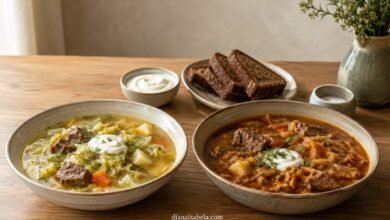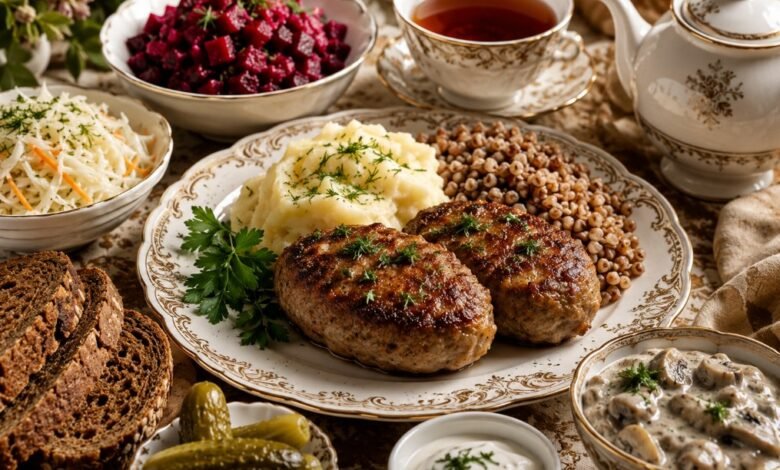
Russian kotleti are not difficult to love. The real question is what to put around them.
Because a kotleta by itself is nice. A kotleta with the right side dishes is dinner. And not “I technically consumed calories” dinner. I mean real dinner. The kind that has structure, contrast, warmth, a little sharpness, something soft, something dark, something pickled, and maybe tea at the end because some meals deserve a closing scene.
If you are wondering what to order with Russian kotleti, think of the plate like styling an outfit. The kotleti are the main piece. The sides are the texture, color, silhouette, contrast and accessories. One wrong side will not ruin everything, but the right combination makes the whole table look like it knows what it is doing.
Diana note: Kotleti are cozy, but they should not be lonely. A good plate needs softness, acidity, color, bread, and one little thing that wakes everything up. Pickles understand this assignment beautifully.
If you still need help finding the dish first, start with my Russian kotleti near me guide. If you already found the kotleti and now you are staring at the menu like it is a wardrobe before a dinner date, this guide is for the ordering part.
The Plate Has to Make Sense
Russian kotleti are usually tender, savory, pan-fried cutlets made from ground meat, though chicken, beef, pork, turkey, fish and vegetable versions all exist. They are warm and comforting, often golden on the outside and soft inside.
That means the rest of the plate should not copy the same mood over and over. If everything is soft, the dinner becomes sleepy. If everything is rich, it gets heavy. If everything is beige, I start worrying about the table’s emotional health.
The best kotleti plate usually has four things:
Something soft: mashed potatoes, buckwheat, rice, or another warm side.
Something sharp: pickles, cabbage salad, sauerkraut, marinated mushrooms, or a vinegary salad.
Something colorful: beet salad, carrot salad, cucumber tomato salad, borscht, or herbs.
Something grounding: rye bread, soup, tea, or a side that makes the meal feel complete instead of improvised.
This is why kotleti are such good comfort food. They are simple enough to pair with many things, but specific enough that the wrong plate feels unfinished.
Kotleti are the main character. The sides are the styling department.
Mashed Potatoes: The Soft Classic
Mashed potatoes are the obvious choice for a reason.
They are soft, buttery, familiar and generous. With kotleti, they create the kind of plate that feels like someone looked at your day and said, “You need to sit down.” If there is gravy or mushroom sauce, mashed potatoes become even more persuasive.
But here is the important part: mashed potatoes need contrast. If you order kotleti with mashed potatoes only, the plate can feel too soft. Add pickles, cabbage salad, beet salad or something acidic. The acidity keeps the dinner alive.
Best mashed potato plate: kotleti, mashed potatoes, mushroom sauce, pickles, and cabbage salad. Soft, rich, sharp, crunchy. Correct.
Mashed potatoes are especially good with beef, pork or mixed-meat kotleti. They also work with chicken kotleti, though I like adding a brighter salad so the plate does not become too gentle.
Buckwheat: The Side That Knows Things
Buckwheat is less glamorous on paper and much more interesting on the plate.
It has a nutty, earthy flavor and a texture that makes kotleti feel more Eastern European, more old-school, more like dinner that came from an actual food culture instead of a delivery algorithm. It is the side dish I trust when I want the meal to feel grounded.
With kotleti, buckwheat works beautifully because it does not compete. It absorbs sauce. It balances richness. It makes the meal feel serious without making it heavy.
Buckwheat is not trying to be cute. That is exactly why I respect it. Some sides flirt. Buckwheat pays the mortgage.
Order buckwheat when you want a plate that feels warm, practical and slightly more grown-up than potatoes. Add beet salad or pickles for color and acidity. If mushroom sauce is available, this is one of the best pairings.
Beet Salad: The Color Drama the Plate Needs
Beet salad is not just a side. It is the lipstick of the kotleti plate.
Deep red, earthy, sweet, sharp, sometimes creamy, sometimes vinegary, beet salad brings color and mood. It makes a brown-and-gold plate suddenly look styled. More importantly, it balances the richness of the cutlets.
There are different beet salad styles. Some are simple and vinegary. Some include potatoes, peas, pickles or carrots. Some are creamy. Some are more like vinegret. Most of them work with kotleti because beets bring the contrast the meat needs.
Ordering note: If your plate has kotleti and mashed potatoes, beet salad keeps it from looking and tasting too soft. It gives color, acidity and a little Eastern European drama, which I consider a public service.
Beet salad is especially useful for takeout because it holds well. It does not collapse in the container. It can survive the ride home and still look like it has standards.
Cabbage Salad: The Crunchy Little Genius
Cabbage salad is the side dish people underestimate until they need it.
Kotleti are warm and tender. Cabbage salad is crisp and sharp. Together they make sense. The cabbage cuts through the richness and gives the plate movement. It is not there to be decorative. It is there to keep the meal from becoming one long soft note.
Look for cabbage salad that has freshness, acidity and crunch. It might include carrot, cucumber, dill, vinegar, oil, herbs or a little sweetness. If it tastes bright, it will probably work.
Best cabbage pairing: chicken kotleti, cabbage salad, rye bread, pickles and tea. Light enough, still dinner.
If you are ordering from a deli, cabbage salad is often one of the safest sides. It travels well, holds texture, and does not need to be reheated. This matters if you are building takeout that still feels intentional.
Mushroom Sauce: When Dinner Wants a Coat
Mushroom sauce with kotleti can be beautiful.
It adds depth, warmth and a little restaurant feeling. If the kotleti are simple, mushroom sauce makes them feel more finished. If the side is buckwheat or mashed potatoes, even better. Those sides know what to do with sauce.
The only warning: do not let sauce drown the cutlets. Kotleti should still taste like themselves. Sauce should be a good coat, not a disguise.
Mushroom sauce is the cashmere coat of the plate: cozy, rich, and best when it fits properly.
Order mushroom sauce with beef, chicken or turkey kotleti. It is especially good when the plate also has buckwheat, potatoes, rye bread or a simple cabbage salad. The richness needs something sharp nearby.
Sour Cream: Small Scoop, Big Personality
Sour cream belongs at the Eastern European table because it knows how to soften everything without making it boring.
With kotleti, sour cream can be useful, but I would not treat it as the only sauce unless the plate is otherwise bright. Sour cream is creamy, cool and tangy. It works best with potato pancakes, dumplings, borscht and certain cutlets, especially when herbs or garlic are involved.
For kotleti, I like sour cream as a small accent rather than the whole story. A little with cabbage salad, potatoes, rye bread or pickles can work beautifully. Too much, and the plate loses definition.
Use sour cream with: potato pancakes, borscht, dumplings, chicken kotleti, lighter plates.
Balance it with: pickles, cabbage salad, beet salad, rye bread, dill or black pepper.
Avoid making it the only contrast: sour cream is lovely, but it is not a personality replacement for the whole plate.
Pickles: The Tiny Sharp Thing That Fixes Everything
Pickles are not optional in spirit.
They bring acidity, crunch, salt and brightness. They wake up the plate. They make kotleti taste richer without making the meal heavier. They also work with almost every version: chicken, beef, turkey, pork, fish, vegetable, buckwheat.
A plate with kotleti and no sharp side can feel unfinished. Add pickles and suddenly the dinner has a pulse.
If the plate feels too heavy, add pickles. If the plate feels too soft, add pickles. If the plate feels emotionally vague, add pickles. I do not make the rules; I simply respect them.
Pickled cucumbers are the classic. Pickled tomatoes, mushrooms, cabbage, peppers or mixed vegetables can also work. If you are ordering from a deli, get a small container. You will use them.
Rye Bread: The Thing You Think You Don’t Need Until You Do
Rye bread turns kotleti from a plate into a meal.
Dark, dense rye bread works with cutlets, salads, pickles, soups and leftover bites. It is especially good if you are ordering deli takeout, because it makes the whole meal feel less random. Suddenly your containers have a plan.
Rye bread also helps with texture. Soft kotleti, creamy potatoes, sharp salad, dark chewy bread — this is balance. This is why bread matters.
Best bread move: order rye bread if you are getting kotleti, beet salad, pickles or soup. It makes the meal feel complete and gives leftovers a second life.
If the place has Borodinsky-style bread or a dark seeded loaf, pay attention. Good bread is one of the easiest ways to tell whether a deli or restaurant understands the meal beyond the main dish.
Soup First: The Very Eastern European Way to Start
Soup before kotleti is not extra. It is elegant in a practical way.
Borscht is the obvious first choice: bright, earthy, warm, usually with sour cream and herbs. It makes the whole meal feel more complete. Mushroom soup, chicken broth, pickle soup, cabbage soup or barley soup can also work depending on the restaurant.
Soup first is especially good when you are ordering at a restaurant rather than doing quick takeout. It creates a rhythm: soup, then kotleti, then tea. A meal with chapters.
Restaurant move: If the place is known for borscht, order it before kotleti. A good soup tells you a lot about the kitchen. Also, it gives the dinner a beginning, which I appreciate as a person who likes both food and narrative structure.
If you are ordering takeout, soup can still work, but only if the packaging is reliable. A leaky soup container is not cozy. It is betrayal.
Tea at the End: The Soft Landing
Tea is not just a drink here. It is how the meal lands.
After kotleti, potatoes, buckwheat, salads, pickles and bread, tea gives the dinner a softer finish. Black tea, herbal tea, tea with lemon, tea with jam, tea with honey — it depends on the place and the mood.
If there is honey cake, poppy seed pastry, jam cookies, wafers or layered cake nearby, the tea becomes even more reasonable. I am not saying dessert is mandatory. I am saying some meals clearly ask for an epilogue.
Kotleti are dinner. Tea is the closing credits.
Three Plate Moods Depending on the Night
There is not one perfect kotleti order. There is the right order for the mood.
Some nights need softness. Some need brightness. Some need a full Eastern European table that makes you forget you ever considered eating a protein bar for dinner.
The classic comfort plate: Russian kotleti, mashed potatoes, mushroom sauce, pickles and rye bread.
The lighter deli plate: chicken kotleti, cabbage salad, beet salad, pickles and tea.
The serious dinner plate: beef or mixed-meat kotleti, buckwheat, borscht first, rye bread and black tea.
The colorful plate: kotleti, beet salad, cabbage salad, pickled vegetables and a small scoop of sour cream.
The takeout plate: kotleti, buckwheat or potatoes, one salad, one pickled item, rye bread for later.
If you are eating at a restaurant, order fewer items but let them be complete. If you are at a Russian deli, use the advantage of small portions and food by weight. A deli lets you build the plate like a tasting wardrobe: one warm, one sharp, one soft, one colorful.
What Not to Overdo
The issue is rarely ordering the wrong dish. It is ordering too many dishes with the same personality.
Kotleti with mashed potatoes and creamy salad and sour cream and no pickles can become too soft. Kotleti with heavy sauce and no fresh or acidic side can feel flat. Kotleti with bread and potatoes and no color can look like dinner gave up on accessorizing.
You do not need to be fussy. You just need contrast.
Fix the plate: too heavy needs pickles or cabbage salad. Too soft needs rye bread or crunch. Too beige needs beet salad. Too plain needs mushroom sauce or soup first.
This is the difference between a plate that fills you and a plate you remember.
How I Would Order at a Russian Restaurant
If I saw Russian kotleti on a restaurant menu, I would start by checking the soup. If the borscht looks serious, I order it. Then kotleti with either mashed potatoes or buckwheat. If mushroom sauce is available, I ask whether it comes with the cutlets or can be added.
Then I choose one sharp thing. Pickles, cabbage salad, beet salad, marinated mushrooms — something to keep the meal alive.
I would not order every side. I would build a clean plate. There is a difference.
My restaurant order: borscht first, kotleti with buckwheat, cabbage salad, pickles, rye bread if the bread looks good, and tea after. If honey cake appears, I will not pretend to be surprised.
This order gives you the full experience without turning the table into chaos. Soup, main, side, contrast, bread, tea. Elegant. Cozy. Not trying too hard.
How I Would Order at a Russian Deli
At a deli, I would do it differently.
I would get smaller portions of more things: two kotleti, a little buckwheat, a little beet salad, a little cabbage salad, pickles, and rye bread. If the deli has a good prepared food counter, this is where you can make the best plate because you are not limited to one entrée.
For a full deli strategy, my Russian Deli Near Me guide goes deeper into prepared food counters, food by weight, frozen kotleti, salads, bread, takeout and catering. But the short version is this: use the deli’s variety. That is the point.
A restaurant gives you a composed plate. A deli lets you compose your own.
If You Are New to Kotleti, Start Here
Start with chicken or mixed-meat kotleti if you want the most familiar introduction. Add mashed potatoes if you want softness. Add cabbage salad or pickles if you want balance. Add rye bread if you want the meal to feel more complete.
If you are more curious, choose buckwheat instead of potatoes. Add beet salad. Try mushroom sauce. Order borscht first. This will tell you much more about the cuisine than just eating a plain cutlet alone.
If you are still figuring out the dish names, my Kotleti Near Me guide explains the naming world: kotleti, kotlety, Ukrainian kotlety, Polish kotlety mielone and Pozharsky cutlets.
Beginner order: kotleti, mashed potatoes, cabbage salad, pickles and tea. It is simple, balanced and hard to regret.
The Dinner Logic to Remember
What you order with Russian kotleti depends on the kind of evening you want.
If you want comfort, choose mashed potatoes. If you want something more earthy and traditional, choose buckwheat. If the plate needs color, add beet salad. If it needs crunch, add cabbage salad. If it needs brightness, add pickles. If it needs depth, add mushroom sauce. If it needs a proper beginning, order soup first. If it needs a quiet ending, order tea.
That is the whole plate philosophy.
Kotleti are the center, but the sides decide the mood.
And honestly, that is very fashion-editor of them.
FAQ
What should I order with Russian kotleti?
A good order is Russian kotleti with mashed potatoes or buckwheat, plus something sharp like pickles, cabbage salad or beet salad. Rye bread, mushroom sauce, soup first and tea after can make the meal feel more complete.
Are mashed potatoes the best side for Russian kotleti?
They are the most classic soft side, especially with mushroom sauce or gravy. But mashed potatoes need contrast, so add pickles, cabbage salad or beet salad to keep the plate balanced.
Is buckwheat good with kotleti?
Buckwheat is excellent with kotleti. It has an earthy, nutty flavor and works especially well with mushroom sauce, pickles, beet salad or cabbage salad. It also makes the dinner feel more traditionally Eastern European.
What salad goes well with Russian kotleti?
Cabbage salad is great if you want crunch and acidity. Beet salad is better if you want color, sweetness and earthiness. Both work well because kotleti need something bright beside them.
Should I order soup before Russian kotleti?
If the restaurant has good borscht or mushroom soup, yes. Soup first makes the meal feel more complete and gives the dinner a proper beginning. For takeout, only order soup if the packaging is reliable.
What sauce goes with Russian kotleti?
Mushroom sauce is one of the best choices because it adds depth and warmth. Sour cream can also work, especially with lighter kotleti, potatoes, dumplings or potato pancakes, but it is better as an accent than the whole plate.
Do pickles really matter with kotleti?
Yes. Pickles add acidity, crunch and salt, which balances the richness of kotleti. They are especially helpful when the plate has mashed potatoes, creamy sauce or other soft sides.
Is rye bread necessary?
Not necessary, but very useful. Rye bread makes the meal feel more complete and pairs well with kotleti, salads, pickles and soup. It is especially good for deli takeout.
What should I order with chicken kotleti?
Chicken kotleti pair well with mashed potatoes, cabbage salad, beet salad, pickles, sour cream, rye bread and tea. If you want a lighter plate, choose cabbage salad and pickles instead of a heavy sauce.
What should I order with beef kotleti?
Beef kotleti work well with buckwheat, mashed potatoes, mushroom sauce, rye bread, pickles and borscht first. Because beef kotleti are richer, add something acidic like cabbage salad or pickles.