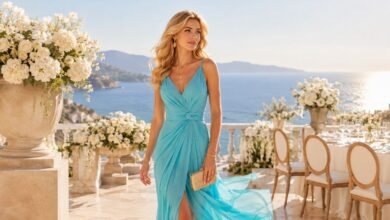
Fall Wedding Guest Dress Colors: The Shades That Look Elegant, Expensive and Right for Autumn Weddings

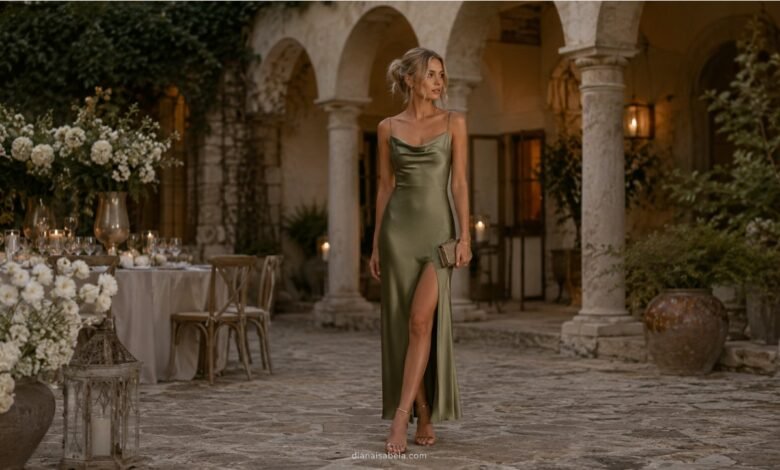
Fall wedding guest dress colors should do more than “match the season.” The right shade has to survive candlelight, outdoor photos, hotel ballroom lighting, church ceremonies, wine-country gravel, cool evening air and the quiet pressure of not looking bridal, bridesmaid, funeral, office-party or costume-adjacent. A lot for one dress, yes. But this is exactly why color matters.
The real rule: fall color should look intentional, not seasonal-costume
The mistake is thinking autumn automatically means pumpkin orange, leaf print and “cozy” everything. A fall wedding is still a wedding. The dress needs polish first, seasonal mood second. Burgundy works because it feels romantic, not because it screams cranberry sauce. Brown works when it has depth, shine or sharp tailoring, not when it looks like a sweater dress you found during a closet panic.
If you already have a general autumn wedding invitation and need the broader dress strategy, start with the main fall wedding guest dresses guide. This page is the color room: the place where we decide which shade actually deserves to come with you.
Diana’s quick answer: for most fall weddings, choose a rich but not loud color, then adjust the fabric and silhouette to the dress code. Satin makes brown feel expensive. Crepe makes burgundy feel clean. Velvet makes emerald feel formal. Chiffon softens plum. The color is only half the story; the texture decides whether it looks chic or accidental.
The best fall wedding guest dress colors, shade by shade
These are the colors I would actually pull from a rack first for an autumn wedding. Not because they are trendy for five minutes, but because they make sense with fall light, evening receptions, richer fabrics and more dressed-up venues.
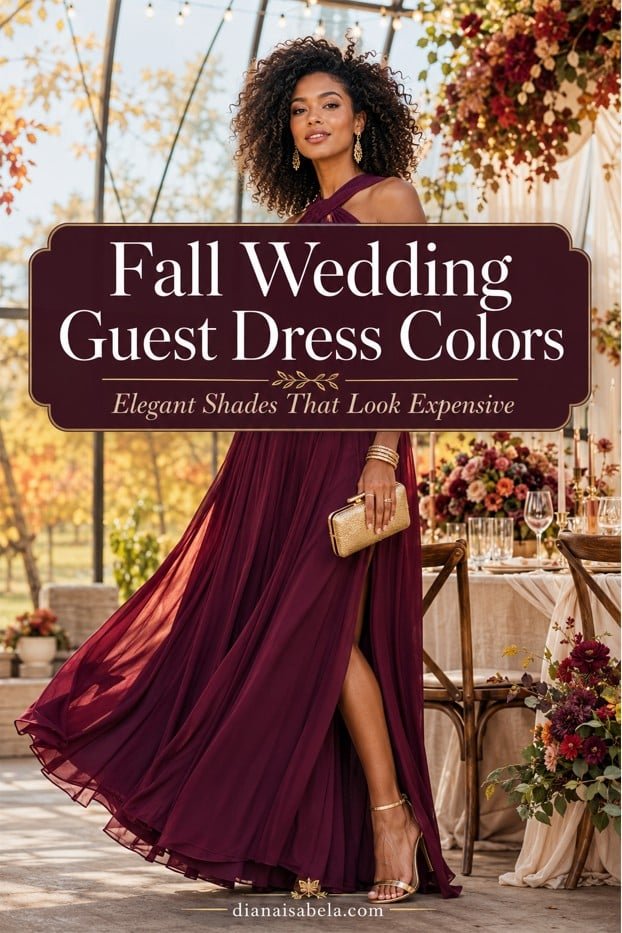
Burgundy and wine red
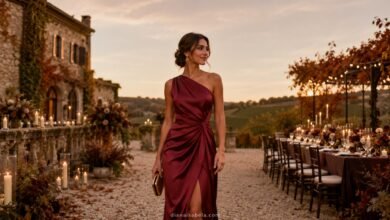
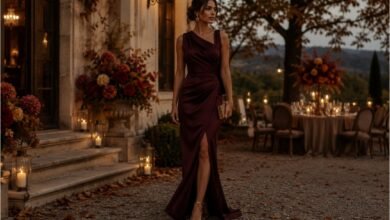
Burgundy is one of the easiest fall wedding guest colors to get right because it feels romantic without being sugary. It works beautifully for formal dinners, vineyard weddings, hotel receptions, evening ceremonies and cocktail dress codes. The best versions are wine, merlot, oxblood and deep berry.
Avoid anything too shiny and tight if the wedding is conservative. Burgundy satin can be gorgeous; burgundy satin plus a club silhouette can become a different event entirely.
Chocolate, espresso and mocha brown
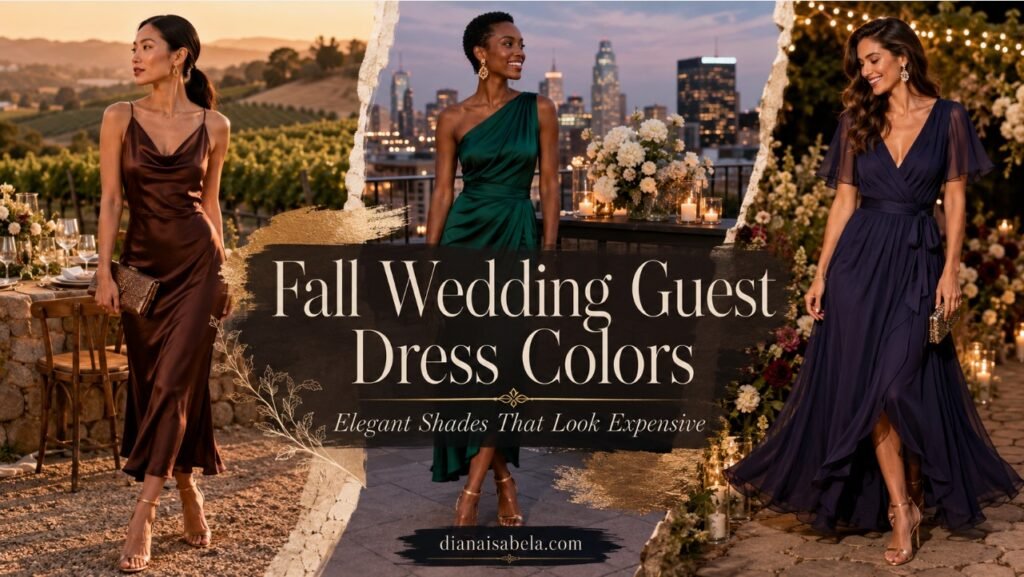
Brown is the quiet luxury shade of fall wedding dressing. Chocolate satin, espresso crepe, mocha chiffon and bronze-brown velvet can look expensive in a way black sometimes cannot. Brown is especially good for vineyard, barn, restaurant, rooftop and city weddings when you want warmth without looking overly sweet.
The danger is flatness. Choose brown with texture, drape, sheen, jewelry or a strong neckline so the look feels styled, not sleepy.
Emerald and deep green
Emerald green has that polished guest energy: festive, elegant, and flattering under evening light. It can go formal in velvet, cocktail in satin, softer in chiffon and modern in a sleek midi. Deep forest green and hunter green are slightly quieter than emerald and often easier for daytime fall weddings.
If the wedding party is wearing green, switch to navy, plum, brown or burgundy. Looking like you escaped the bridesmaid lineup is not the goal.
Plum, aubergine and deep purple
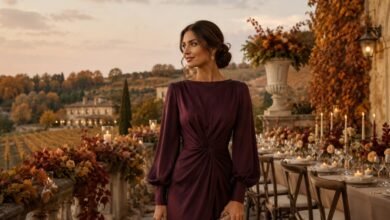
Plum is dramatic in the best way when the venue has candles, dark wood, stone walls, a formal dinner setting or late-afternoon light. It is richer than lavender and softer than black. For fall weddings, plum looks especially beautiful in chiffon, satin-back crepe, velvet and elegant long sleeves.
Keep the accessories clean. Plum plus too many sparkly extras can tip into costume. Let the color breathe.
Navy, midnight and ink blue
Navy is the responsible friend who still knows how to look expensive. It works for church ceremonies, country clubs, black tie optional weddings, family-heavy receptions and any event where you want elegance without drama. Midnight blue is especially good when black feels too severe but you still want a formal mood.
Choose jewelry carefully. Gold warms it up. Silver sharpens it. Pearl can look beautiful, but with a very classic navy dress it may feel a little mother-of-the-bride if the styling is too stiff.
Bronze, antique gold and warm metallics
Warm metallics can be stunning for fall, especially for evening receptions. Bronze, antique gold, copper-gold and muted champagne-gold can catch candlelight beautifully. The trick is keeping the shade clearly warm and guest-appropriate, not bridal-pale.
When in doubt, go deeper. A bronze dress is safer than a pale champagne dress that photographs close to ivory.
Red, brown, green and plum: which one should you choose?
If you are stuck between several fall shades, think about the role you want the dress to play. Burgundy says romantic and confident. Brown says modern and expensive. Emerald says polished and festive. Plum says moody and elegant. Navy says safe but still refined. Black says formal and sharp, but it needs styling warmth in fall so it does not feel severe.
For a bolder color story, explore red wedding guest dresses, especially if you are deciding between true red, berry, wine and burgundy. For a softer luxury mood, brown wedding guest dresses are one of the most underrated choices in the whole wedding guest closet.
And if your dress taste leans dramatic but not loud, plum wedding guest dresses deserve a serious look. Plum is what you wear when you want depth, not attention-seeking sparkle.
Choose the color by venue, not just by season
Fall color changes depending on where the wedding happens. The same burgundy dress can look perfect in a candlelit hotel and heavy at a sunny garden ceremony. The same pale gold dress can look dreamy at a black tie reception and suspiciously bridal in outdoor daylight. Venue is the filter.
Vineyard wedding
Choose wine, espresso, olive, bronze, plum or deep floral. These colors make sense with gravel paths, golden hour, barrels, stone patios and that “I know exactly what I’m doing” wine-country mood.
Church ceremony
Navy, burgundy, forest green, plum and chocolate are usually safer than neon, icy metallics or very pale neutrals. The color should feel respectful before it feels trendy.
Hotel ballroom
Emerald, midnight, burgundy, black, bronze and deep jewel tones look beautiful under ballroom lighting. This is where satin, velvet and polished crepe can work very hard for you.
Barn wedding
Brown, rust-burgundy, olive, deep florals and muted gold can be lovely, but avoid going full western costume unless the couple explicitly asks for that aesthetic.
Garden wedding
Try softened versions of fall colors: berry, moss, dusty blue, muted floral, cocoa, mauve-plum. Very dark velvet may feel too heavy if the wedding is sunny and daytime.
City wedding
Black, espresso, navy, oxblood, pewter and deep green feel sleek in a city setting. Add interesting earrings, a sculptural clutch or sharp heels so the outfit does not read office.
The fall colors that can go wrong
Most wedding guest color mistakes are not about the color alone. They happen when the shade, fabric, dress shape and venue all tell different stories. A pale champagne slip dress at an outdoor ceremony can look bridal. A black high-neck long-sleeve dress with heavy shoes can look too funeral. A bright orange mini can look more seasonal party than wedding guest.
Be careful with these shades
Ivory, cream and pale champagne
These are the obvious danger zone. In fall, people sometimes justify champagne because it feels “warm,” but if it photographs close to bridal, it is still a problem. If you want lightness, try taupe, cocoa, dusty rose, muted mauve or a print with enough color contrast.
Very pale gold or icy silver
Metallics are not automatically wrong. The issue is bridal shine. Pale gold, icy silver and pearl-toned satin can look too close to wedding gown territory, especially in photos. Antique gold, bronze and pewter are usually safer.
Neon brights
Neon pink, electric blue, acid green and highlighter orange rarely blend with fall wedding atmosphere. They pull the eye in every group photo. Unless the dress code is intentionally bold, let the couple have the visual spotlight.
Flat beige
Beige can work, but it needs shape, texture and contrast. A flat beige dress can look underdressed or too close to a casual office outfit. Camel satin, taupe crepe, mocha chiffon or bronze-brown are usually stronger choices.
Exact bridesmaid colors
If you know the bridal party is wearing sage, terracotta, champagne, navy, emerald or dusty rose, do not wear the same shade. Close cousins are fine; identical twins are awkward.
How fabric changes the color
Color does not live alone. Satin makes a shade look richer and more evening. Chiffon makes it softer and more romantic. Crepe makes it cleaner and more adult. Velvet makes it darker, heavier and more formal. Lace can either make a color look delicate or dated, depending on the cut. Sequins make everything louder, even navy.
This is why an emerald chiffon midi and an emerald velvet gown are not the same outfit. One belongs at a semi-formal garden wedding. The other may be ready for a formal evening reception. Same color, different message.
If you love deep green, the safest styling path is to treat it as a polished jewel tone rather than a holiday costume. The full emerald green wedding guest dresses guide goes deeper into when green looks formal, festive, romantic or too close to bridesmaid territory.
A color menu for different fall wedding dress codes
What color looks most expensive in fall wedding photos?
Deep, slightly muted colors usually photograph best for fall weddings. Espresso brown, wine, emerald, midnight blue, plum and bronze have enough depth to look elegant in both daylight and evening photos. They also do not fight with autumn backgrounds the way neon or overly pale shades can.
But “expensive” is not only dark. A taupe satin dress with beautiful earrings can look more refined than a cheap burgundy dress with bad seams. A navy crepe midi can look more elevated than a sequined emerald mini if the wedding is conservative. Color gives the first impression. Fit, fabric and styling decide whether that impression holds.
My personal fall wedding color shortlist: chocolate satin, deep wine crepe, emerald velvet, midnight blue column dress, plum chiffon, bronze metallic, olive silk, and a dark floral with enough negative space to look grown-up.
How to match accessories without making the outfit heavy
Fall outfits can get visually heavy fast. Dark dress, dark shoes, dark bag, dark wrap, dark lipstick — suddenly you are not attending a wedding, you are entering a dramatic novel. I support drama, but only when invited.
With burgundy, try gold, bronze, nude, espresso or soft black accessories. With brown, try gold, cream, tortoiseshell, bronze, dark green or black patent. With emerald, try gold, black, nude, navy or deep brown. With plum, try gold, pewter, black, espresso or soft metallics. With navy, try gold for warmth, silver for polish, or burgundy for a subtle color pairing.
If the dress is already shiny, keep the accessories quiet. If the dress is matte, you can add more glow. This is the easiest way to avoid looking either unfinished or over-decorated.
Should your fall dress match the wedding palette?
No. Your dress should harmonize with the setting, not cosplay the décor. If the invitation has terracotta, sage and cream details, you do not need to arrive as the floral arrangement. Choose a nearby shade: chocolate instead of terracotta, forest instead of sage, bronze instead of cream.
If you know the bridesmaids’ color, avoid matching it exactly. If you do not know it, do not panic. Most guests do not. The safer move is choosing a shade with enough personality that it feels intentional but not “bridal party uniform.”
For the widest wedding guest strategy beyond color, the main wedding guest dresses hub is the stronger starting point. Color is one decision. Dress code, venue, length, fabric and shoes still have to agree with it.
The final color edit
For a fall wedding, the best dress color is the one that feels rich without trying too hard, seasonal without becoming a costume, and elegant without looking bridal. Burgundy, chocolate, emerald, plum, navy, bronze and deep florals are the strongest places to start. From there, let the invitation decide the rest.
A candlelit formal reception can handle velvet, deep jewel tones and metallic warmth. A daytime garden wedding may need softer berry, cocoa, moss or floral. A church ceremony rewards respectful necklines and grounded colors. A vineyard wedding loves wine-country shades, but your shoes still need to survive the gravel.
The color should make the dress feel like it belongs in the room. Not louder than the bride. Not flatter than the napkins. Just elegant enough that when the photos come back, you look like you understood the assignment — and had taste while doing it.
Editorial note: Use this page as the color bridge between seasonal, dress-code and color-specific wedding guest guides. It supports fall wedding search intent while sending readers naturally toward deeper pages on autumn dresses, red, brown, plum, emerald and the main wedding guest hub.