Portuguese Food for Girls Who Came for Pastel de Nata and Stayed for Dinner

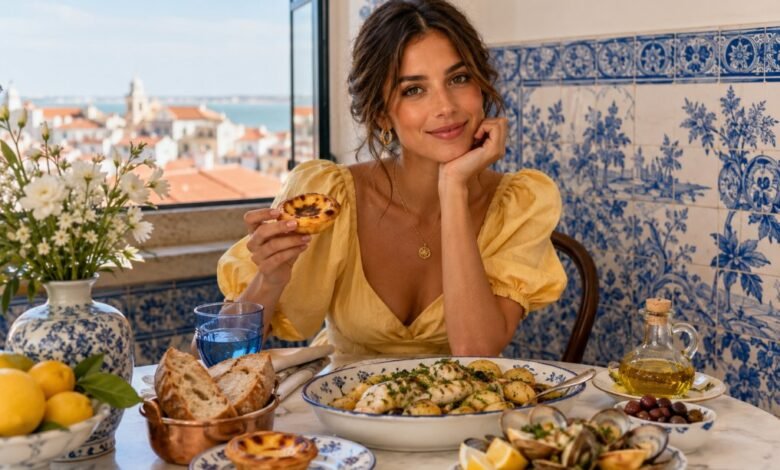
Portuguese food knows how to lure a woman in with pastry.
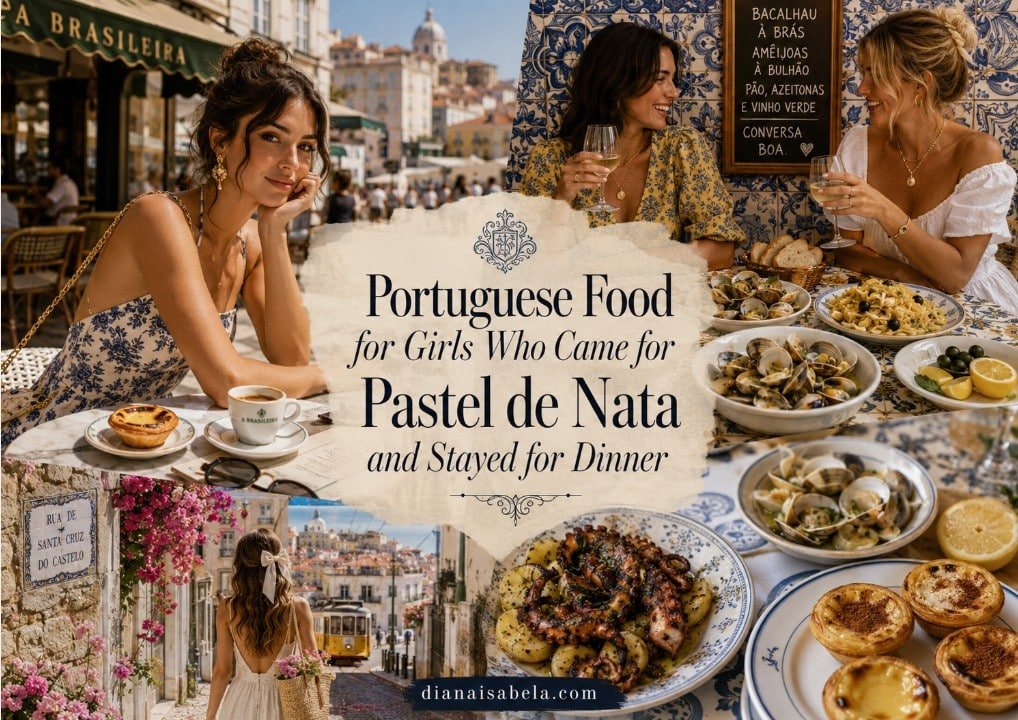
It starts innocently. You say you are only going for coffee. You say you just want one pastel de nata because everyone talks about it and you are a cultured person with priorities. Then the custard tart arrives warm, the pastry flakes into your lap, the top is blistered and glossy, the cinnamon is doing something persuasive, and suddenly Portugal has your full attention.
That is how it begins.
But Portuguese food is not only pastel de nata.
It is bacalhau in more versions than a wardrobe has excuses. It is bifana sandwiches eaten with the seriousness of a woman who did not plan lunch properly. It is caldo verde on a cooler evening. It is piri-piri chicken with heat and smoke. It is grilled sardines, seafood rice, cod cakes, francesinha, octopus, clams, custard, coffee, tiled cafés, seaside tables and the very specific appetite that appears when a city smells like salt, bread, garlic, pastry and rain on stone.
Portuguese food feels like sunshine with an old soul.
It is casual until it is emotional. Simple until you taste the history. Cozy without being heavy in the same way every other comfort food is heavy. There is bread, yes. There is fish. There are potatoes. There is pork. There is soup. There is pastry behaving like a national talent.
And if you came only for the tart, darling, dinner will find you anyway.
Portuguese food is a whole day of appetite: coffee and custard in the morning, a sandwich when the city makes you hungry, seafood when the table faces the water, and something warm when the blue tiles start to feel like evening.
The first bite is usually pastry, but the story does not end there
Pastel de nata gets the fame because it deserves fame.
I am not here to be contrarian about custard.
A good pastel de nata is a small architectural miracle: crisp laminated pastry, creamy custard, browned top, warm center, cinnamon or powdered sugar if you like the extra drama. It is sweet but not childish, rich but not gigantic, delicate but not weak. You can eat one standing at a counter and still feel like your morning has acquired style.
But the danger of the famous pastry is that people let it become the whole story.
Portugal has a bakery culture that understands small pleasures: pastéis de nata, pão de Deus, queijadas, travesseiros, bolos, almond sweets, custard things, coconut things, egg-yolk desserts that remind you Portuguese pastry has a long, serious relationship with convent traditions and sugar. A café counter in Portugal can make a person lose all sense of “just looking.”
Still, bakery food is not dinner.
It is the opening scene.
And Portuguese dinner, when you let it arrive properly, has depth: seafood, cod, pork, greens, beans, rice, smoke, garlic, olive oil, herbs, vinegar, broth, potatoes, bread that knows its job.
Bacalhau is not one dish. It is a national wardrobe.
Bacalhau means salted cod, and in Portugal it is not just an ingredient. It is a whole personality system.
You may see bacalhau à Brás with shredded cod, eggs, onions and matchstick potatoes. Bacalhau com natas, creamy and baked. Bacalhau à Gomes de Sá with potatoes, onions, eggs and olives. Bacalhau assado, roasted. Pastéis de bacalhau, cod cakes that are crisp outside and soft inside. Dishes with chickpeas, greens, olive oil, garlic, potatoes. Versions that feel homey. Versions that feel restaurant-worthy. Versions that make you realize salted fish can have more range than half the people at dinner.
The first thing to understand: bacalhau is not supposed to taste like fresh cod. It has its own texture and salt-cured depth. If you expect delicate white fish behaving quietly, you may be surprised. Bacalhau has history. It tastes like preservation, habit, travel, adaptation, family tables, holidays, everyday cooking and a country that made one ingredient endlessly useful.
If you are trying it for the first time, I would start with bacalhau à Brás or pastéis de bacalhau. They are friendly without being boring. The egg and potato soften the salt in bacalhau à Brás. The cod cakes give crisp, snackable confidence. Creamy baked versions are comforting but richer, better when you want something heavier and the evening is not pretending to be light.
If you want beginner-friendly bacalhau
Try bacalhau à Brás, pastéis de bacalhau or a simple roasted cod dish with potatoes and olive oil. These give you the flavor without making the first bite feel like a test.
Order a green side or salad if the table is leaning salty and rich.
If you want comfort
Bacalhau com natas is creamy, baked and satisfying. It is not the dish for a tiny appetite performance.
Wear the outfit that lets you sit. I have said this before because food keeps proving me right.
The bifana is a sandwich with no interest in being precious
A bifana is a Portuguese pork sandwich, often made with thin slices of marinated pork tucked into bread. It can be garlicky, juicy, spicy, simple, messy, perfect after walking too much, and exactly the kind of food that reminds you lunch does not need an elaborate personality to be memorable.
This is not a sandwich that wants to be photographed under studio lighting.
It wants to be eaten hot.
The bread matters. The pork matters. The sauce, marinade and seasoning matter. Some versions are more saucy, some more straightforward, some improved with mustard or piri-piri. You may eat it at a counter, at a casual spot, near a market, after a morning of walking up hills that looked romantic on maps and personal once your calves got involved.
The bifana is practical glamour.
No diamonds. No garnish trying to start a conversation. Just bread, pork, heat, hunger and the relief of ordering correctly.
A prego is another sandwich to know, usually made with beef. If you are in a casual Portuguese café or snack bar and you do not want to decode the whole menu, bifana and prego are useful words. They are not the entire cuisine, but they are excellent emergency intelligence.
Diana’s sandwich note: if the day has walking, hills, shopping, wind, delayed plans or one person who says “I am not that hungry” and then steals bites, order the sandwich.
Portuguese bread and hot filling can fix many itinerary mistakes.
Caldo verde is the soup that understands evenings
Caldo verde looks modest.
This is how soup fools people.
It is often made with potatoes, greens such as kale or collard-style cabbage, olive oil, onion and slices of chouriço or sausage depending on the version. The texture can be smooth from the potato base, with thin ribbons of greens and smoky, salty depth from sausage. It is simple, but simple in a useful way.
Order it when the weather cools down, when you want something comforting but not overly heavy, when the meal needs a warm beginning, or when you have been living on pastry and coffee and your body quietly asks for a vegetable with manners.
Caldo verde is not dramatic.
It is steady. It is the friend who brings a cardigan. It belongs before grilled meat, with bread, as part of a casual dinner, or alone when you need the evening to calm down.
Not every Portuguese dish has to be a seafood romance or a custard pastry situation.
Some dishes simply know how to take care of you.
Francesinha is not subtle, and nobody asked it to be
Francesinha is one of those dishes that arrives like it has a legal department.
Originally associated with Porto, it is a layered sandwich with meats, bread, melted cheese, and a rich sauce, often served with fries and sometimes an egg. It is intense. It is heavy. It is not trying to be your light lunch before a linen shopping appointment.
It is the dish you order when you want to understand how far a sandwich can go before it becomes architecture.
Do not order francesinha because you think every famous dish must be checked off like a museum list. Order it when you want comfort, salt, sauce, cheese, meat, fries and the kind of meal that may require a walk afterward not for fitness, but for emotional processing.
If you are sharing, it can be a fun table dish. If you are ordering alone, check your hunger honestly. This is not a “maybe I will nibble” situation. Francesinha does not respect nibbling. It respects commitment.
Order francesinha when: you are genuinely hungry, curious, not afraid of sauce, and willing to let the meal become the main plan.
Do not order it when: you have already eaten three pastries, a sandwich, cod cakes and a full seafood lunch. Even ambition needs timing.
Best styling advice: avoid pale silk. Some dishes are not enemies, but they are not safe around cream satin either.
Piri-piri chicken brings heat without making dinner complicated
Piri-piri chicken is the kind of food that makes a table smell like a decision has been made.
Grilled chicken, chili heat, garlic, citrus, smoke, char, sauce, fries or rice or salad nearby. The exact preparation varies, but the appeal is obvious: it is bold, direct and satisfying without being fussy.
This is a great order when you want Portuguese food that feels lively but not complicated. It also works beautifully if you are with people who do not want seafood or cod. Everyone understands chicken. Not everyone understands salted cod on the first meeting.
The heat level can vary, so ask if you are sensitive to spice.
I love a little heat at dinner. It wakes up the table. It makes bread useful. It gives the outfit a reason to be slightly more dramatic. Red nails near piri-piri chicken? Excellent. A white top and no napkin discipline? Less excellent.
There is a difference between being stylish and being reckless.
Portuguese seafood tastes best when the table stays honest
Seafood in Portugal can be deeply beautiful because the Atlantic is not a decorative concept.
Grilled sardines. Clams in garlic and cilantro. Octopus. Seafood rice. Fish stew. Prawns. Grilled whole fish. Cod in many forms. Mussels. Crab. Percebes if you are curious and brave. Simple plates where lemon, olive oil, salt, garlic and herbs do enough because the ingredient itself has a point of view.
The best seafood meals often do not need too much styling.
Good fish, potatoes, salad, bread, wine or sparkling water, a table by a window, maybe tiles, maybe the sound of dishes and conversation, maybe someone at the next table eating with the confidence of a local who knows exactly what the kitchen does well.
When you order seafood, look for clues. What is fresh? What is the restaurant known for? Are people ordering the same fish? Is the menu too broad in a suspicious way? Does the place smell like clean ocean and grilled food, or like disappointment trying to hide behind sauce?
Your senses are part of the menu.
Bacalhau may be famous, but octopus has dinner-date energy
Octopus can be one of the most elegant Portuguese dinner orders when it is cooked well.
Tender, grilled or roasted, with olive oil, garlic, potatoes, herbs, sometimes greens. It is lighter than francesinha, more dramatic than a sandwich, less familiar than grilled chicken, and often beautiful on the plate without trying too hard.
Bad octopus is rubber and sadness.
Good octopus is a reason to forgive the menu for being too long.
If you are nervous about seafood but want to try something beyond fish, octopus can be a wonderful choice at a restaurant that handles it well. It pairs nicely with a simple salad, potatoes, white wine, sparkling water with lemon, or a dress that makes you look like you made the reservation on purpose.
That matters.
Some foods make the outfit feel smarter.
The market lunch is where Portugal gets very useful
Food markets, casual counters and neighborhood places can be the best way to understand Portuguese food without turning every meal into an event.
You might find cod cakes, sandwiches, soups, seafood, grilled fish, pastries, cheese, cured meats, olives, bread, fruit, wine, coffee. A place where lunch feels alive because everyone is actually eating, not posing near a plate for a caption.
This is also where you learn the difference between tourist hunger and real hunger.
Tourist hunger says: I need to find the famous thing from the list.
Real hunger says: that sandwich looks hot, that soup smells good, that seafood rice just landed at the next table and I am not emotionally strong enough to ignore it.
Bifana, prego, cod cakes, soup, grilled sandwich, salad with seafood, or whatever the counter is moving quickly and confidently.
Grilled fish, octopus, seafood rice, clams, bread, potatoes, salad, dessert, coffee and the acceptance that the afternoon may now belong to the table.
Pastel de nata, pão de Deus, queijadas, almond sweets, custard pastries, coffee and the tiny lie that you are buying only one.
Caldo verde, piri-piri chicken, bacalhau, pork dishes, rice, potatoes, greens or a comfort plate when the day has been too much walking and not enough sitting.
Portuguese desserts do not stop at the custard tart
Pastel de nata may be the celebrity, but the dessert table has other people at the party.
Pão de ló, soft sponge cake. Queijadas, small cheese or custard-like tarts depending on the version. Travesseiros from Sintra, puff pastry filled with almond cream. Bolo de bolacha, a layered biscuit cake. Arroz doce, rice pudding with cinnamon. Toucinho do céu, almond and egg-yolk richness. Sericaia, regional eggy dessert, often tied to Alentejo. Almond sweets, coconut sweets, orange cakes, convent sweets with names that sound like they know secrets.
Portuguese desserts often use eggs, sugar, almonds, cinnamon, pastry and patience.
They can be intensely sweet, but many are small enough to invite curiosity instead of defeat. This is helpful because after cod, seafood, potatoes, bread, soup, or a sandwich that became an event, dessert should not always require a second personality.
The elegant move is to taste something local.
The realistic move is to also get another pastel de nata if it is warm.
I support both.
What to wear when Portuguese food becomes the whole afternoon
Portuguese food days often involve walking.
That changes the outfit.
Lisbon especially has hills, tiles, stairs, viewpoints, wind, sun, sudden shade, cafés that look too beautiful to pass, and cobblestones that do not care about your fragile sandals. So the outfit needs to look good sitting at a tiled café and survive the journey to the next pastry.
Think linen dress, soft blouse and skirt, wide-leg trousers, flat sandals with actual support, espadrilles you trust, a woven bag, gold jewelry, sunglasses, a light cardigan, blue-and-white details, warm neutrals, citrus colors, navy, tomato red, cream if you are not eating piri-piri with reckless confidence.
If your Portuguese food day is more city-cool, a clean silhouette from the sharper Acubi-style direction can work: simple top, good trousers, low-profile shoes, unfussy bag. If it is softer and vacation-romantic, a pretty romantic top with easy bottoms fits the tiled-café mood beautifully.
Just do not dress like you forgot food exists.
A white linen outfit can be stunning. A white linen outfit near grilled sardines, piri-piri sauce and custard flakes is a trust exercise.
The Portuguese food outfit should be pretty enough for a tiled café, comfortable enough for hills, and practical enough for pastry crumbs, seafood lunch and an unplanned dinner that starts with “maybe just soup.”
If you only have one day of Portuguese food, do not spend it all on pastry
I know.
The pastry is persuasive.
But if you only have one day, give the cuisine a full arc. Start with coffee and pastel de nata. Have a bifana or cod cake for lunch if the day is busy. Make room for a seafood meal if you are near the coast or a restaurant known for it. Try bacalhau in a friendly form. End with a dessert that is not the same custard tart unless the tart was so good that logic has left the building.
Portuguese food rewards curiosity.
It also rewards repetition. You can eat the same pastry twice and call it research.
But the full picture is better: bakery, sandwich, soup, fish, cod, chicken, dessert, coffee, market, tiles, water, hills, a table that looks casual until you realize you will remember it.
One-day Portuguese food mood: pastel de nata and coffee, bifana or cod cakes, seafood lunch, bacalhau or piri-piri chicken, then a local dessert.
Seafood-first version: coffee, bakery bite, clams or grilled fish, octopus or seafood rice, then custard or almond dessert.
Comfort-first version: caldo verde, bacalhau à Brás, piri-piri chicken or francesinha, then something sweet with coffee.
Portuguese food belongs in my Food Diary because it has texture, not noise
Some cuisines announce themselves loudly.
Portuguese food can be quieter at first. Then it stays with you.
The blue tiles. The custard tart. The seafood. The bread. The cod. The grilled sardines. The soup that looked simple and tasted like comfort. The sandwich you ordered because you were hungry and then thought about later. The octopus with potatoes. The coffee counter. The little paper napkin. The pastry flakes on your dress. The old restaurant with a handwritten menu. The market table that made lunch feel like the whole plan.
That is why I love this topic for a style-and-food diary. It is not only “what are Portuguese dishes?” It is how a day tastes when food keeps appearing at exactly the right time.
If you like European eating rituals, you may also love the Italian aperitivo mood before dinner or the Spanish tapas table when everyone wants one more plate. For a softer café route, the European café food guide is the cousin who orders quiche and pretends coffee was enough until lunch arrives.
Portugal is different.
It lets you arrive for something sweet and stay for something salty.
That is a very good way to travel through a menu.
The last crumb on the tiled table
Portuguese food begins with a custard tart if you are lucky.
But it does not end there.
Pastel de nata is the door. Bacalhau is the family library behind it. Bifana is the quick street-level truth. Caldo verde is the cardigan. Francesinha is the dramatic chapter from Porto. Piri-piri chicken brings heat. Grilled sardines bring smoke and salt. Clams bring garlic and lemon. Octopus brings elegance. Seafood rice brings a spoon and no interest in being rushed. Desserts bring eggs, almonds, cinnamon and sugar with historical confidence.
This is food for a girl who loves cafés but eventually needs dinner.
Food for a walk that becomes lunch.
Food for a city with hills, tiles, sea air, pastry cases and tables that look ordinary until the first plate arrives.
So yes, come for the pastel de nata.
But stay for dinner.
Portugal already planned it.
Read next: For another small-plate European mood, read Spanish Tapas for Girls Who Want to Order the Whole Table. For a golden-hour Italian table, visit Italian Aperitivo Food That Feels Like a Stylish Little Dinner.
For style that works with city cafés, seaside meals and walking between restaurants, use clean city-cool outfit ideas or soft romantic top inspiration, depending on whether the food day feels sharp, sunny or vacation-sweet.
Portuguese food FAQ
What is Portuguese food known for?
Portuguese food is known for seafood, salted cod, grilled fish, pork sandwiches, soups, piri-piri chicken, rice dishes, pastries and custard desserts. Pastel de nata is famous, but Portuguese cuisine has much more range than one pastry.
What should I try first if I am new to Portuguese food?
Start with pastel de nata, bacalhau à Brás, bifana, caldo verde, piri-piri chicken, grilled sardines or clams. Those dishes give you pastry, cod, sandwich, soup, spice and seafood without making the first meal too difficult.
What is bacalhau?
Bacalhau is salted cod, one of the most important ingredients in Portuguese cooking. It appears in many dishes, including bacalhau à Brás, bacalhau com natas, roasted bacalhau and cod cakes.
Is Portuguese food mostly seafood?
Seafood is a major part of Portuguese food, especially near the coast, but it is not the whole cuisine. You will also find pork, chicken, soups, rice, potatoes, beans, greens, sandwiches, pastries and rich desserts.
What is a bifana?
A bifana is a Portuguese pork sandwich, usually made with thin slices of seasoned or marinated pork served in bread. It is simple, savory and very useful when you need a real lunch without making a whole restaurant event out of it.
What is francesinha?
Francesinha is a rich Portuguese sandwich associated with Porto. It usually includes layers of meat, bread, melted cheese and a special sauce, often served with fries. It is filling, saucy and not shy.
What Portuguese food is good for a lighter meal?
Try caldo verde, grilled fish, clams, octopus with potatoes, a simple salad with seafood, cod cakes with greens, or a bifana if you want something quick but not too heavy. Seafood dishes can feel satisfying without being overly rich.
What desserts should I try besides pastel de nata?
Try pão de ló, queijadas, travesseiros, bolo de bolacha, arroz doce, almond sweets, orange cake or regional egg-based desserts. Portuguese sweets often use eggs, sugar, almonds, cinnamon and pastry in very memorable ways.
Is Portuguese food spicy?
Some dishes can be spicy, especially piri-piri chicken or dishes served with chili sauce. Many Portuguese foods are more about salt, garlic, olive oil, seafood, smoke, herbs and comfort than intense heat.
What should I wear for a Portuguese food day?
Wear something pretty but practical: a linen dress, soft blouse, wide-leg trousers, comfortable sandals, sunglasses, gold jewelry and a small bag. Portuguese food days often include walking, cafés, hills, markets and unplanned meals.
Can Portuguese food work for people who do not eat seafood?
Yes. Look for bifana, prego, piri-piri chicken, caldo verde, pork dishes, francesinha, vegetable soups, rice dishes, cheese, bread, pastries and desserts. Seafood is important, but it is not your only option.
What is a good Portuguese dinner order?
For a balanced dinner, try caldo verde or clams to start, then bacalhau, grilled fish, octopus, piri-piri chicken or seafood rice, with potatoes, salad or bread. Finish with pastel de nata, arroz doce, bolo de bolacha or another local dessert.