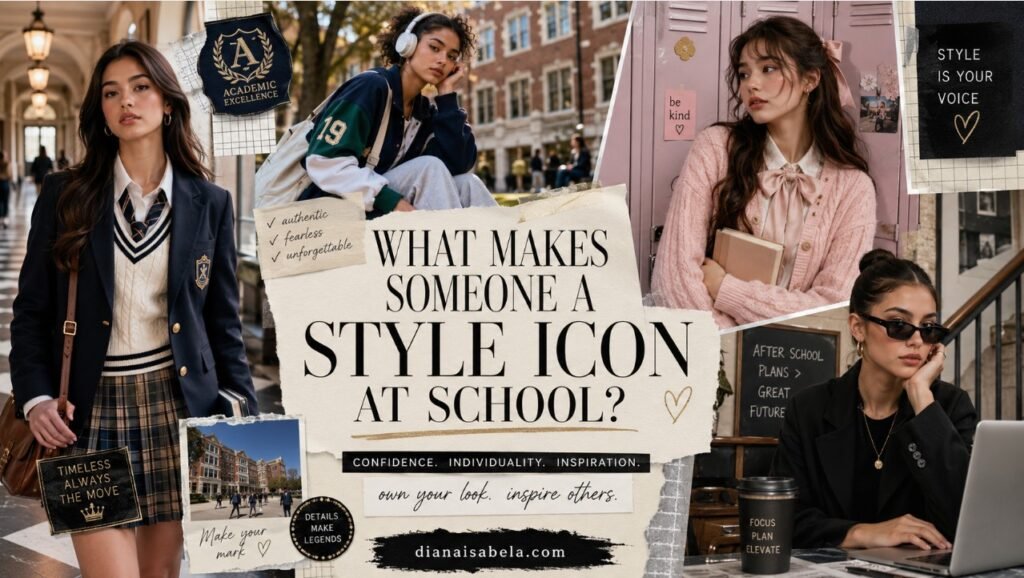
Every school has one.
Not always the loudest person. Not always the richest. Not always the girl wearing the newest sneakers, the boy with the most expensive hoodie, or the person who somehow has perfect hair before first period like they made a deal with the universe.
A school style icon is different. You notice them because their outfits make sense. Even when the look is simple, it feels like a decision. Even when the clothes are casual, there is a point of view. Even when they repeat pieces, the outfit still has personality.
That is the secret nobody says out loud: being a style icon at school is not about never repeating clothes. It is about making people remember the way you put things together.
The hallway is the real runway, and it is brutally honest
School style is not the same as editorial fashion. A runway outfit only has to survive photographers, lighting, and maybe one dramatic turn. A school outfit has to survive lockers, backpacks, cafeteria chairs, cold classrooms, humid hallways, stairs, presentations, teachers, dress codes, weather, lunch spills, and the emotional violence of fluorescent lighting.
So when someone looks stylish at school, that actually means something.
It means the outfit works in motion. It looks good sitting down. It still makes sense with a backpack. It is not so fragile that one bad hair moment ruins it. It has enough personality to be noticed, but not so much performance that it feels like the person is auditioning for a music video during algebra.
The hallway is honest because there is nowhere to hide. No perfect lighting. No carefully cropped mirror selfie. No background music. Just you, your outfit, and people walking past with suspiciously strong opinions for 7:42 in the morning.
Diana’s hallway rule: a school style icon is not the person wearing the most. It is the person whose outfit still has a clear mood after the backpack, the schedule, and the day itself get involved.
Style icons have a recognizable rhythm
A true school style icon does not dress randomly every day. Their outfits may change, but something about them repeats. Maybe it is the color palette. Maybe it is the shoes. Maybe it is the jewelry. Maybe it is the way they layer. Maybe it is always a little sporty, a little romantic, a little sharp, a little vintage, a little clean, a little chaotic but somehow still controlled.
That repetition is not boring. It is branding, but the human kind.
If someone wears a hoodie one day, a skirt the next, and jeans the day after, but every look still feels like them, that is rhythm. If every outfit feels like a completely different person from a different app, that is not range yet. That is a closet having an identity crisis.
At school, recognizable style matters because people see you repeatedly. You are not dressing for one photo. You are building a visual memory. People start connecting certain details with you: the sleek ponytail, the silver hoops, the soft cardigans, the wide-leg jeans, the tiny bag, the platform sneakers, the bows, the black boots, the perfect oversized jacket, the lip gloss, the academic sweater, the clean white socks, the dramatic sunglasses after school.
That is how school style becomes iconic. Slowly. Repeatedly. With better shoes.
The school style icon case file
Look past the “cute outfit” and you will usually find the same clues: consistency, confidence, clean details, proportion, and a sense that the person knows what they like.
The outfit does not have to be complicated
A style icon can wear jeans, a tee, and sneakers. The difference is that the jeans fit the mood, the tee has the right shape, the sneakers make sense, the hair is considered, and one detail finishes the look.
It is not magic. It is editing.
They know the difference between trendy and theirs
Trends move fast at school. One week everyone is suddenly wearing bows. Then cargos. Then tiny bags. Then silver headphones. Then a certain sneaker shape. Then a hoodie that appears in the hallway so often it deserves its own student ID.
Style icons notice trends, but they do not obey every single one.
That is the difference. A person with style can look at a trend and decide what part belongs to them. Maybe they take the color but not the silhouette. Maybe they take the shoe but not the full aesthetic. Maybe they take the idea of coquette but skip the overload of ribbons. Maybe they like Acubi layering but make it softer. Maybe they love sporty style but polish it with jewelry and a better bag.
The trend becomes part of their language instead of replacing their entire personality.
If you want to see this in real school-style terms, the page on what everyone is wearing before they admit it is a good example of how trends start moving before people even want to call them trends. The stylish person is not always the first to copy. Sometimes they are the first to translate.
Their clothes look lived in, not staged
This is a very underrated part of school style. Some outfits are beautiful online but look strange in real life because they are too staged. They need perfect angles. They need a clean wall. They need no backpack, no movement, and no actual schedule.
A school style icon looks good while doing normal school things. Walking fast. Carrying books. Sitting on the floor during a club meeting. Laughing in the hallway. Borrowing a pencil. Leaning against a locker. Running late. Pretending not to look for someone in the cafeteria. We see you.
The outfit feels integrated into their life. It does not look like a costume they are protecting from reality.
That matters because style is not only visual. It is behavioral. If someone looks uncomfortable, the outfit starts looking uncomfortable too. If someone keeps tugging, adjusting, hiding, pulling, and checking every reflective surface, the outfit may be cute, but it has too much emotional paperwork.
Iconic school style moves with the person. It does not hold them hostage.
What people actually notice in school outfits
- Shape: whether the outfit has balance between loose, fitted, long, short, structured, and soft.
- Shoes: because school outfits move, and shoes decide the mood faster than most people admit.
- Hair: not perfect hair, but hair that feels like it belongs to the outfit.
- Repeating details: a color, accessory, bag shape, jewelry tone, or layering habit that becomes recognizable.
- Confidence: the quiet kind, not the “please notice me” kind.
- Cleanliness: lint, wrinkles, dirty shoes, and tired bags lower an outfit faster than a non-designer label ever could.
- Originality: one detail that feels personal instead of copied directly from someone else’s saved folder.
Confidence is not loud, it is steady
Some people confuse confidence with being the most visible person in the room. That is not always true. A school style icon can be quiet. They can be shy. They can walk into class without performing for the hallway. Their confidence is not always volume. Sometimes it is steadiness.
Steady confidence looks like wearing something because you like it, not because you need everyone to approve it by lunch. It looks like repeating a favorite jacket without apologizing. It looks like not explaining every outfit choice. It looks like trying something new and not collapsing if one person does not understand it.
That kind of confidence changes the outfit.
A basic outfit worn with self-trust often looks better than an expensive outfit worn with panic. People feel that. They may not know why the look works, but they can sense that the person is not begging the outfit to make them worthy.
And if confidence feels like the hardest part, that is normal. Clothes can help, but they cannot do all the work. That is why I like connecting style to confidence that shows before the outfit does. The best style icons are not perfect. They just do not let every hallway opinion become a personal emergency.
The quiet style icon
She is not trying to be the loudest, but you remember her outfits. Clean sneakers, soft layers, neat hair, good jewelry, and a color palette that always feels calm. Her style says, “I know myself,” without needing a speech.
The dramatic style icon
She loves a moment. Big jacket, bold bag, printed skirt, red lip, unexpected shoe, maybe sunglasses after school like she is leaving a hotel instead of biology. It works because she commits fully.
The sporty style icon
Hoodies, sneakers, track pants, fitted tops, clean socks, headphones, and a bag that looks chosen. The secret is polish. Sporty style looks expensive when the details are crisp.
The romantic style icon
Bows, soft knits, pretty skirts, ballet flats, pearls, pastel cardigans, and delicate hair details. The danger is too much sweetness. The win is keeping one sharp detail so the outfit has backbone.
A school style icon repeats clothes without looking repetitive
Let’s end the myth that stylish people never repeat outfits. That idea is not only unrealistic, it is boring. Repeating clothes is normal. Repeating clothes well is style.
The same black jeans can look different with a fitted baby tee, oversized sweater, button-down, sporty zip jacket, or soft cardigan. The same skirt can go preppy, coquette, Acubi, casual, or dressy depending on the shoes and accessories. The same hoodie can look lazy or styled depending on the pants, hair, bag, and jewelry.
People with style do not need endless clothes. They need outfit intelligence.
That means understanding what each piece can do. Your favorite jeans are not just jeans. They are the base for school mornings, weekend plans, casual photos, and “I need to look cute but not like I tried for this person” days. Your cardigan is not just a cardigan. It can be soft, academic, romantic, clean, or slightly rich-aunt energy depending on what surrounds it.
Style icons repeat pieces because they know how to change the context.
If you want real examples of how school looks can feel lived-in instead of staged, real teen looks from school style diaries gives that kind of outfit energy. It is not about pretending every day is a photoshoot. It is about making everyday style feel like it has a point of view.
The outfit has to match the school-day version of you
There are outfits that look incredible in your room at night and then feel completely wrong at school the next morning. The lighting changes. The energy changes. Suddenly the skirt is too short for stairs, the shoes are too loud on the floor, the top needs constant adjusting, and the bag does not fit anything except lip gloss and delusion.
School style icons understand the setting.
They know when to save an outfit for a weekend. They know when to simplify. They know how to make a look cute without making the whole day uncomfortable. They know that style is not only about the first mirror check. It is also about hour four.
Before wearing something to school, ask: can I sit in this? Can I walk fast in this? Can I wear a backpack with this? Can I raise my hand without thinking about the neckline? Can I survive a cold classroom? Can I go from class to after-school plans without feeling like I need a full costume change?
That is not boring. That is advanced.
The backpack test
If the outfit only works without a backpack, it may be a photo outfit, not a school outfit. Adjust the jacket, straps, bag, or top so real life does not ruin the look.
The cafeteria test
If sitting down changes the entire outfit in a stressful way, rethink it. A style icon should be able to eat lunch without managing fabric like a legal case.
The weather test
Hot, cold, rain, humidity, and wind all have opinions. The best school outfits plan for at least one annoying weather surprise.
The small details make the “icon” part believable
Most school style icons are not wearing shocking outfits every day. The difference is in the small details.
Clean shoes. A good bag. Jewelry that matches the mood. A hair clip that feels intentional. A hoodie that is not swallowed by the rest of the outfit. A skirt balanced with the right shoe. A jacket that makes the silhouette stronger. A phone case, notebook, or keychain that accidentally becomes part of the aesthetic. A lip gloss shade that repeats the softness of the outfit. A belt that makes basic jeans look styled.
These things sound tiny until you remove them. Then the outfit suddenly loses its little soul.
At school, where people often wear similar basics, details are how style becomes personal. Two people can wear the same jeans and white top. One looks unfinished. The other looks like a school style icon because the hair, jewelry, shoes, bag, and posture complete the mood.
The details tell people you did not just get dressed. You edited.
They know when not to force the outfit
There is a quiet skill in knowing when to stop. Some outfits fail because the person kept adding things to make the look more interesting. More necklaces. More layers. More colors. More clips. More trend pieces. More “maybe this will fix it” energy.
Usually, if an outfit feels wrong, the answer is not always more. Sometimes the answer is fewer.
Remove the accessory that does not belong. Change the shoe. Switch the bag. Tuck the shirt differently. Pull the hair back. Trade the loud jacket for a cleaner one. Let one piece lead.
A style icon does not treat every outfit like it needs a plot twist. Sometimes the strongest school look is simple, but exact. A black top, good jeans, clean sneakers, gold hoops, hair up, and a bag that makes sense can beat a complicated outfit that looks like it had a committee meeting.
Restraint is not boring. Restraint is taste with self-control.
The school style icon checklist
- One recognizable detail: a color, shoe shape, jewelry tone, hair detail, bag, or layering habit people start associating with you.
- One practical reality check: the outfit works for walking, sitting, carrying a bag, and surviving the day.
- One personal twist: something that makes the outfit yours instead of a direct copy of a trend.
- One polished finish: clean shoes, neat hair, good accessory choice, or a jacket that pulls the look together.
- One honest comfort check: if you cannot move normally, the outfit will show it.
Being copied is not always the goal
A funny thing happens when someone becomes known for style at school: people start watching. Maybe they ask where you got something. Maybe they suddenly buy similar shoes. Maybe the girl who called your outfit “interesting” last month appears wearing the same silhouette three weeks later. Life is poetic.
But being a style icon is not about making everyone copy you.
Copying is not the highest compliment. Sometimes the better compliment is that your style gives people permission. Someone sees you wearing a skirt with sneakers and tries their own version. Someone sees you repeat a jacket and realizes repeating clothes is normal. Someone sees you wear a bold color and stops saving their favorite outfit for a mythical perfect day. Someone sees you look confident and decides their own style does not need committee approval.
That is influence. Not “everyone becomes you,” but “people become braver around you.”
The difference between attention and presence
Attention is when people look because the outfit is loud. Presence is when people remember because the outfit feels like the person.
You can get attention with almost anything. Neon, sequins, huge logos, extreme shapes, controversial shoes, a bag shaped like an object that should not be a bag. That can be fun, and I support harmless drama. But attention fades quickly if there is no style behind it.
Presence lasts longer.
Presence is the girl who always looks put together even in casual clothes. The boy whose sneakers, jacket, and hair always make sense. The person who wears thrifted pieces in a way that looks expensive. The friend who can make a simple outfit look like a mood. The quiet student with the best coats. The girl who wears ribbons without looking like she lost a fight with a gift bag. The one whose outfit you remember later when you are planning your own.
That is the goal. Not constant attention. Memorable presence.
School style icons understand proportion without using the word proportion
They may not say “proportion,” but they understand it in the mirror.
Big hoodie with fitted bottoms. Baggy jeans with a smaller top. Short skirt with a heavier shoe or a soft sweater. Wide-leg pants with a cropped jacket. Mini dress with a simple layer. Oversized jacket with sleeker hair. Tiny bag with a cleaner outfit. Chunky sneaker with a structured top.
That is why their outfits look balanced.
When a school outfit feels off, it is often not because the pieces are ugly. It is because the shapes are arguing. Everything is oversized, or everything is tight, or the shoes are too heavy, or the top is too long, or the bag is the wrong scale, or the hair adds width where the jacket already added width.
A style icon may not know the technical explanation. They just know when to change one thing.
They use “almost” as information, not a disaster
Stylish people still have bad outfit days. They just do not turn them into identity crises.
If an outfit is almost good, they adjust. If the shoes ruin it, they switch. If the hair fights the neckline, they change the hair. If the jacket makes the outfit too bulky, they remove it. If the bag is too casual, they grab another one. If the outfit feels like someone else, they admit it and move on.
This matters because becoming a style icon is not about never missing. It is about learning your own visual language.
Every “almost” outfit teaches you something. You learn that you like silver more than gold with black. You learn that low-rise jeans make you annoyed by third period. You learn that oversized hoodies need cleaner shoes. You learn that pastel looks need structure on you. You learn that bows work when the rest of the outfit is not also screaming “sweet.”
Bad outfits are not proof you have no style. They are research.
A tiny locker-room strategy for becoming more recognizable
Pick three style signatures for one month. Not a complete aesthetic prison. Just three repeating details.
Maybe your signatures are silver hoops, black shoulder bags, and soft layers. Maybe they are red accents, clean sneakers, and slick hair. Maybe they are bows, ballet flats, and cream cardigans. Maybe they are cargos, fitted tops, and narrow sunglasses. Maybe they are vintage jackets, gold jewelry, and dark denim.
Wear those details in different ways for a few weeks. Let your style become recognizable through repetition. Then watch what feels natural and what starts annoying you. Keep the details that feel like you. Retire the ones that feel like homework.
That is how personal style gets built: not in one dramatic makeover, but in small repeated choices that survive real life.
Style icons do not dress for everyone in the hallway
This may be the hardest part.
At school, it is tempting to dress for approval. Approval from friends. Approval from the person you like. Approval from people who barely know you but somehow have the confidence of professional judges. Approval from the version of yourself you think would get more attention if she dressed differently.
But if you dress for everyone, the outfit gets blurry.
A school style icon does not ignore context, but they also do not let the hallway vote on every detail. They know some people will not understand a look. They know some people only like what is already common. They know a new outfit can feel strange before it feels iconic. They know being slightly ahead of the vibe sometimes means looking “different” for two weeks before everyone catches up.
That is the price of having taste before the group chat approves it.
How to become more stylish without becoming fake
Start with observation. Notice what you actually wear when you feel good. Not what you save. Not what you wish looked right. What you reach for again and again. Your repeated choices are clues.
Then upgrade one category at a time. Better shoes. Better layers. Better accessories. Better hair routine. Better bag. Better basics. Better color palette. Better fit. Do not try to become a completely different person in one weekend. That is how people buy seven things and still feel lost.
Next, create outfit formulas that feel like you. Maybe your formula is fitted top, loose jeans, small jewelry, clean sneakers. Maybe it is skirt, cardigan, ballet flats, bow. Maybe it is hoodie, mini skirt, headphones, platform sneakers. Maybe it is trousers, baby tee, belt, shoulder bag. Formulas are not boring when they fit your personality. They make style easier to repeat.
Then add one risk. Not five. One. A new color. A different shoe. A stronger bag. A hair bow. A vintage jacket. A skirt length. A silver jewelry moment if you always wear gold. Let the risk have room to breathe.
That is how style grows without turning into a costume.
The most iconic school outfit is the one you can actually live in
Here is the part people do not romanticize enough: comfort has style value.
Not sloppy comfort. Not “I gave up and the hoodie knows it.” I mean the kind of comfort that lets you move normally, laugh normally, sit normally, and stop thinking about the outfit every seven seconds. When you are comfortable in a look, your posture changes. Your face relaxes. You stop babysitting the clothes. You become more interesting than the outfit.
That is when style works best.
The clothes support you. They do not steal the whole day.
The real answer: a school style icon has a point of view
So what makes someone a style icon at school?
Not money. Not perfection. Not a closet with unlimited new arrivals. Not copying every trend early. Not dressing like a celebrity every day. Not turning school into a runway in a way that makes everyone exhausted before second period.
A school style icon has a point of view.
You can see what they like. You can feel their confidence. Their outfits have rhythm. Their details repeat in a way that becomes memorable. They understand the setting. They know when to try and when to edit. They make clothes feel personal. They influence people without begging for attention.
And most importantly, they look like themselves.
That is the part you cannot fake for long. Trends can help. Accessories can help. Better shoes can definitely help. But the icon part comes from choosing what belongs to you and wearing it often enough that people start recognizing the story.
FAQ
What makes someone a style icon at school?
A school style icon has a clear point of view. Their outfits feel personal, recognizable, and confident, even when the clothes are simple. It is less about wearing the most expensive pieces and more about making outfits look intentional.
Do you need expensive clothes to be stylish at school?
No. Fit, styling, clean shoes, good accessories, and confidence matter more than price. A simple outfit can look memorable if the proportions, details, and mood are right.
How can I find my school style?
Start by noticing what you already wear when you feel most like yourself. Then choose a few repeating details, such as a color palette, jewelry tone, shoe style, bag shape, or layering habit. Personal style gets clearer when you repeat what actually works.
Can I be stylish at school and still be comfortable?
Yes, and honestly, you should be. A good school outfit needs to survive walking, sitting, backpacks, weather, and a full day of movement. If the outfit only looks good while standing still in your room, it may not be the best school look.
What are easy ways to make school outfits look better?
Clean your shoes, add simple jewelry, choose a better bag, fix the hair detail, balance loose and fitted pieces, and make sure one part of the outfit feels intentional. Small edits can change a basic outfit quickly.
How do I stand out without looking like I am trying too hard?
Choose one interesting detail instead of making every piece loud. A bold bag, cool shoes, strong jacket, pretty hair accessory, or clear color palette can stand out without making the whole outfit feel forced.
Is repeating outfits bad for school style?
No. Repeating clothes is normal. The stylish part is learning how to restyle the same pieces with different shoes, bags, layers, hair, and accessories so they feel fresh instead of identical.
What if people at school judge my outfit?
Some people will always have opinions, especially when you try something before everyone else does. Use judgment as information only when it is useful. Do not let random hallway comments become the boss of your closet.
What outfit details do people notice most at school?
Shoes, hair, bags, jewelry, fit, color coordination, and overall confidence usually get noticed first. People may not analyze every detail, but they can feel when an outfit has been edited with care.
How can I become more confident in my style?
Wear one small risk at a time. Try a new accessory, shoe, color, or silhouette before changing your whole look. Confidence grows when you give yourself proof that you can wear something different and still feel like yourself.