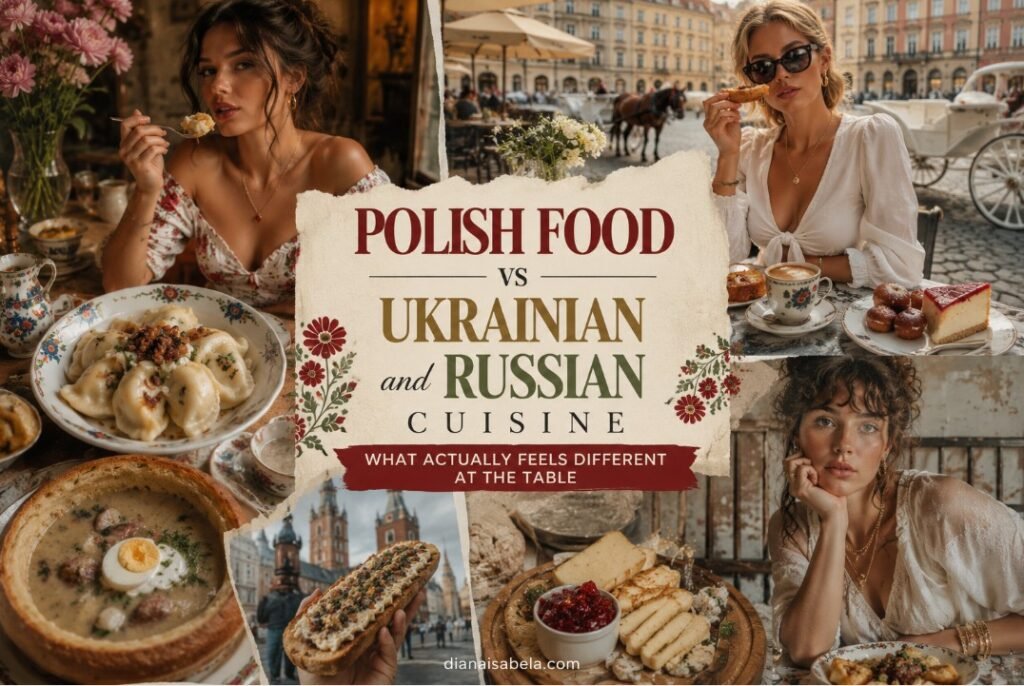
Polish Food vs Ukrainian and Russian Cuisine: What Actually Feels Different at the Table

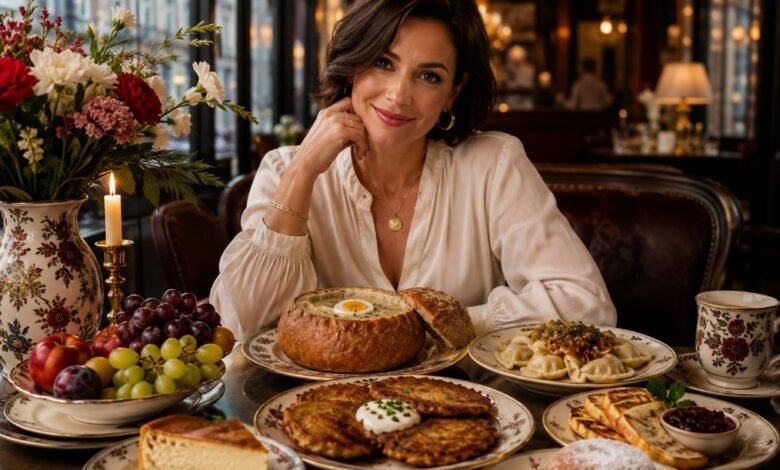
Polish food is sometimes placed at the same big “Eastern European comfort food” table as Ukrainian and Russian cuisine, and yes, there are family resemblances.
Dumplings. Soups. Cabbage. Potatoes. Sour cream. Pickles. Winter logic. Bread that clearly has responsibilities.
But if you stop there, you miss the point.
Polish food has its own appetite language. It can be sour in a very elegant way. It can be hearty without being dull. It knows how to use fermented flavors, smoked cheese, mushrooms, pork, cabbage, rye, poppy seeds, apples, plums, and pastry like a kitchen that has lived through weather and still decided dessert matters.
It is not just “similar to Ukrainian food” or “kind of like Russian food.” It has overlap, yes. But it also has a very specific personality: cozy, sharp, practical, festive, and occasionally so deliciously rich that your plans for “just a small lunch” collapse with dignity.
Polish food feels like a wool coat, a market square, a bakery window, a bowl of sour rye soup, and someone’s aunt insisting you are not leaving until you try one more thing.
The mistake is treating all Slavic food like one menu
Let us get this out of the way before anyone starts calling every dumpling a pierogi and every soup “basically borscht.”
Polish, Ukrainian and Russian cuisines share ingredients because geography, climate, history and migration do that. People living through cold seasons tend to become extremely intelligent about potatoes, cabbage, bread, soups and preserved foods. That is not a coincidence. That is survival becoming delicious.
But shared ingredients do not mean identical food.
A white blouse and a white wedding dress are both white. Nobody with taste says they are the same outfit.
Polish food often has a sharper sourness, a strong rye tradition, a deep love of mushrooms and cabbage, a beautiful pastry culture, and regional dishes that move from elegant old cafés to very practical milk bars to mountain markets with smoked cheese. Ukrainian food often feels deeply connected to varenyky, borscht, pampushky, deruny, holubtsi, syrnyky, seasonal fruit, bread and generous table culture. Russian food has its own restaurant language too: pelmeni, blini, shchi, solyanka, Olivier, pirozhki, kasha, medovik and more.
Same neighborhood of comfort.
Different apartments.
Sour rye, cabbage, mushrooms, smoked cheese, pierogi, bigos, potatoes, pork, pastries, café desserts and a confident use of tang.
Varenyky, borscht, pampushky, deruny, holubtsi, syrnyky, fruit, dill, bread and table warmth that feels generous without needing to perform.
Pelmeni, blini, soups, salads, cutlets, pirozhki, kasha, layered holiday dishes and a restaurant style that can move from homey to grand.
Pierogi are famous, but please do not make them carry the whole country
Pierogi are the Polish dish many people meet first, and I understand why. They are charming. They are soft. They are photogenic in a humble way. They can be filled with potato and cheese, sauerkraut and mushrooms, meat, sweet cheese, blueberries, strawberries, plums, or other fillings depending on tradition, season and kitchen.
They are also dangerously easy to oversimplify.
Calling pierogi “Polish dumplings” is useful for a beginner, but it is also like calling a couture gown “a dress.” Technically true. Spiritually lazy.
Pierogi ruskie, despite the name, are a Polish classic usually filled with potato, cheese and onion. The name can confuse people because it sounds like “Russian,” but it historically refers to Ruthenian/Rus’ connections, not a modern “Russian pierogi” label. This is exactly why food names deserve a little care and not just vibes with Google Translate.
Compared with Ukrainian varenyky, pierogi can feel like close cousins. Some fillings overlap. The comfort logic overlaps. But the cultural context, naming, toppings, regional habits and restaurant traditions differ. Pierogi may show up with fried onions, sour cream, butter, bacon bits, or sweet toppings. Varenyky may have their own Ukrainian identity, fillings and table role. Similar shape does not erase the passport.
Pierogi: Polish dumplings with a wide range of savory and sweet fillings, often served with onions, butter, sour cream, bacon bits or fruit toppings.
Varenyky: Ukrainian dumplings with savory or sweet fillings, deeply tied to Ukrainian food culture and often served with sour cream, butter, onions or fruit.
Pelmeni: Russian-style small meat dumplings, usually more compact and commonly served with sour cream, butter, broth, vinegar or herbs.
Żurek is where Polish food gets wonderfully specific
If pierogi are the friendly introduction, żurek is the plot twist.
Żurek is a sour rye soup, often made with fermented rye starter and served with sausage, egg, potatoes, marjoram and sometimes in a bread bowl if the restaurant wants to ruin your plans in the best way. It has tang. It has body. It has that “wait, why is this so good?” quality that makes you suddenly less interested in polite soup.
This is one of the dishes that makes Polish cuisine feel very different from the broader soup universe people may know from Ukrainian or Russian menus.
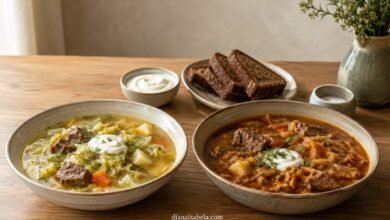
Ukrainian borscht is beet-red, vegetable-rich, often bright and earthy. Russian shchi can be cabbage-based and comforting. Solyanka is salty, sour, intense and meaty. But żurek has its own sour rye identity. It is not trying to be any of them.
It tastes like a kitchen that understands fermentation and is not afraid of personality.
Diana’s table note: If the menu has żurek and you are curious, order it. Even if you think you are “not a soup person.” Some soups are not appetizers. Some soups are character development.
Bigos is not just cabbage stew, and I will be difficult about this
Bigos is often described as hunter’s stew, usually made with sauerkraut, fresh cabbage, meats, sausage, mushrooms, spices and sometimes prunes or wine depending on the version. It is slow food. Cold-weather food. Food that tastes better when it has had time to become itself.
If someone says, “So it is just cabbage and meat,” you may calmly remove their speaking privileges for the duration of dinner.
Bigos is not elegant in a delicate china-cup way. It is elegant in the way a vintage leather jacket is elegant: layered, lived-in, confident, better with age, and not interested in being cute for approval.
Compared with Ukrainian cabbage dishes or Russian stews, bigos has a very Polish relationship with sauerkraut, meatiness and long-cooked sour depth. It is not the same as holubtsi. It is not the same as shchi. It is not “random cabbage.” It is a whole mood.
Gołąbki and holubtsi are relatives, not duplicates
Gołąbki are Polish cabbage rolls, usually filled with rice and meat, often served with tomato sauce or sometimes mushroom sauce. Ukrainian holubtsi and Russian golubtsy are related dishes, and the names even sound like cousins gossiping across a border.
But the details matter.
The sauce can differ. The filling can differ. The seasoning can differ. The restaurant style can differ. A Polish gołąbki plate may feel very close to something familiar if you know Ukrainian holubtsi, but it still belongs to its own food tradition.
Think of them like three women wearing similar coats in different cities. Same weather. Different lipstick.
Placki ziemniaczane and deruny: the potato pancake conversation
Every cuisine that respects itself eventually has a serious potato pancake.
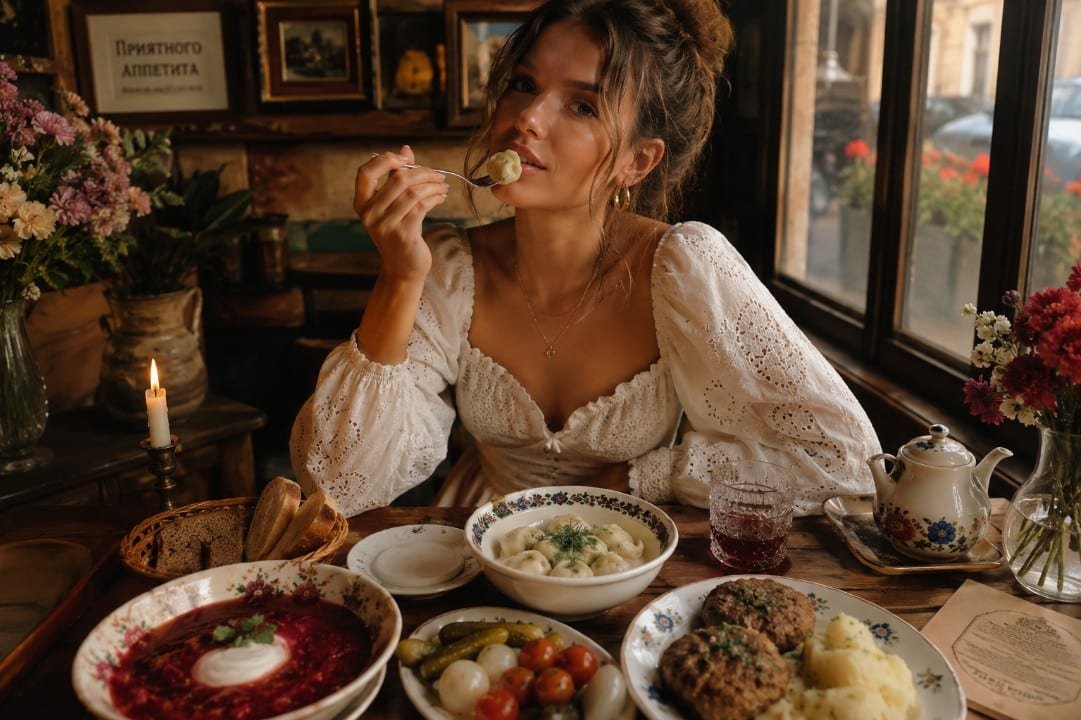
Polish placki ziemniaczane are potato pancakes, often crisp at the edges, tender inside and served with sour cream, mushroom sauce, goulash-style topping, sugar in some versions, or other regional twists. Ukrainian deruny also live in this golden potato-pancake universe, usually with sour cream and that immediate feeling that one plate may not be enough.
The resemblance is real.
But again, resemblance is not sameness. Polish versions may lean into certain toppings, restaurant styles or regional pairings; Ukrainian deruny have their own table identity and home-cooking memory. The important thing is not to make them compete like pageant contestants. The important thing is to order them while hot and respect the crisp edges.
A potato pancake going cold is a small tragedy. Prevent it.
Zapiekanka is Polish street food with excellent late-night energy
This is where Polish food gets more city-girl than people expect.
Zapiekanka is a long open-faced baguette-style street food, often topped with mushrooms, cheese and sauces, though modern versions can go in many directions. It is casual, filling, fast, and exactly the kind of thing you want after walking too long, shopping too much, or pretending you were not hungry because the outfit was cute.
It is not the same mood as pierogi or żurek.
It is not “grandmother’s table.” It is Kraków after dark, train-station hunger, market-square wandering, quick comfort with melted cheese. Every national cuisine has formal dining and everyday survival food. Zapiekanka is a reminder that Polish food is not only old recipes in cozy restaurants. It also has street life.
That is what makes it useful for a lifestyle food diary: you can write about Polish food as dinner, travel, city cravings, café culture, comfort, dessert, or street food.
Not every article needs the same soup-and-dumpling photo. Sometimes the story is a pastry window. Sometimes it is oscypek. Sometimes it is a messy zapiekanka that understands the assignment better than a tiny restaurant plate ever could.
Oscypek deserves its own little glamorous moment
Oscypek is a smoked sheep’s milk cheese associated with Poland’s mountain regions, especially the Tatra area. It is often grilled and served with cranberry sauce, and if that combination sounds simple, good. Simple things are allowed to be brilliant.
The flavor is smoky, salty, firm, warm when grilled, and beautifully balanced by the tart sweetness of cranberry. This is not a dish I would confuse with Ukrainian or Russian comfort food. It has a mountain-market personality. A cold-air, wooden-stall, scarf-and-boots energy.
It also photographs beautifully without needing to repeat the same bowl of red soup for the tenth time.
Noted.
Kiełbasa, kaszanka and the smoky side of the table
Polish sausage culture is its own world.
Kiełbasa is not one single sausage but a category with many varieties, flavors and regional uses. It can be smoked, grilled, sliced into soups, served with bread and mustard, cooked into stews, or eaten in the kind of setting where nobody is pretending dinner is delicate.
Kaszanka, a blood sausage made with buckwheat or barley and spices, is more specific and not for every beginner. But it belongs in the conversation because Polish food has depth beyond the friendly dishes everyone posts first.
If pierogi are the polite introduction, smoked and sausage dishes are where the cuisine says, “Now that you are comfortable, let us be honest.”
Śledź and the cold-table intelligence of Polish food
Herring dishes, or śledź, are important in Polish food culture, especially around holidays and cold starters. Herring may be served with onions, cream, oil, apples, pickles or other additions depending on style.
I know. Herring can make beginners nervous.
But cold fish dishes are part of the architecture of many Northern and Eastern European tables. They bring salt, sharpness, richness and appetite-opening contrast. They are not there to be everyone’s favorite immediately. They are there because the table understands range.
Would I order herring on a first date with someone who fears flavor? Maybe not.
Would I try it with friends and good bread? Absolutely.
Polish desserts are not an afterthought
This is where we need to stop pretending comfort food ends at dinner.
Polish desserts deserve serious attention: pączki, sernik, makowiec, szarlotka, kremówka, faworki, fruit cakes, yeast pastries, poppy seed rolls, cheesecakes, apple cakes. There is a bakery culture here that makes “just coffee” feel like an unfinished sentence.
Pączki are rich filled doughnuts, often associated with festive eating but beloved far beyond one day. Sernik is Polish cheesecake, often denser and more cheese-forward than American-style cheesecake. Makowiec is a poppy seed roll with a deep, sweet, nutty filling. Szarlotka is Polish apple cake or pie, perfect with coffee or tea and the belief that apples are a legitimate emotional support system.
Compared with Ukrainian syrnyky or Russian medovik, Polish desserts have their own bakery language. There may be overlap in ingredients, but the textures, holiday associations and café culture feel distinct.
Pączki: rich filled doughnuts that make ordinary doughnuts look undercommitted.
Sernik: Polish cheesecake with a more cheese-forward personality than many lighter dessert styles.
Makowiec: poppy seed roll, festive and deeply textured, the dessert equivalent of a brocade coat.
Szarlotka: apple cake or pie, cozy enough for a café and elegant enough for a slow afternoon.
Polish food vs Ukrainian food: where they feel close
The closeness often comes through ingredients and comfort logic.
Both cuisines know dumplings. Both respect cabbage. Both use potatoes with confidence. Both understand sour cream, soups, mushrooms, pork, bread, pickles and seasonal eating. Both can make a table feel generous without needing luxury ingredients.
Pierogi and varenyky are the obvious comparison. Gołąbki and holubtsi are another. Placki ziemniaczane and deruny belong in the same golden potato conversation. Barszcz and borscht share beet-soup territory, though the specific versions, cultural context and serving traditions can differ.
But Ukrainian food often feels more connected in global awareness to borscht, varenyky, pampushky, deruny, syrnyky, holubtsi and a very warm table identity. Polish food has pierogi, yes, but also żurek, bigos, oscypek, zapiekanka, pączki, sernik, makowiec, śledź and a strong café-bakery-street-food personality.
They can sit beside each other beautifully.
They should not be collapsed into each other lazily.
Polish food vs Russian food: the differences are bigger than the dumpling drawer
Russian menus can lean into pelmeni, blini, soups like shchi or solyanka, salads like Olivier, pirozhki, kasha, cutlets, layered holiday dishes and desserts like medovik. Polish menus may bring pierogi, żurek, bigos, gołąbki, placki ziemniaczane, kiełbasa, oscypek, zapiekanka and a pastry case that deserves its own calendar slot.
The dumpling comparison is useful but limited.
Pelmeni are often smaller meat dumplings, while Polish pierogi are larger half-moon dumplings with many sweet and savory fillings. Blini and Polish naleśniki may both live in the pancake/crepe conversation, but they are not the same cultural object. Russian solyanka and Polish żurek both use sourness, but the flavor logic is completely different: one often salty, meaty, pickle-bright; the other sour rye, sausage, egg, marjoram and fermentation.
Again: shared comfort vocabulary, different accent.
What I would order for a first Polish dinner
I would not try to eat the whole country in one sitting.
Tempting, yes. Elegant, no.
Start with żurek if the place makes it well. Add pierogi, but choose at least one filling that is not the most predictable option. Sauerkraut and mushroom has more personality than people expect. Potato and cheese is comforting. Sweet cheese or blueberry can be dessert-adjacent and lovely.
Then choose one hearty dish: bigos, gołąbki, placki ziemniaczane with mushroom sauce, grilled kiełbasa, or another regional special. Add something sharp or fresh if the table needs lift: mizeria, pickles, cabbage salad, beet salad or a cold starter.
End with pączki, sernik, makowiec or szarlotka.
Coffee helps. Tea helps. A walk afterward may become necessary. This is not a failure. This is digestion with atmosphere.
First Polish table formula: żurek + pierogi + one hearty regional dish + something sharp + one proper dessert.
If the restaurant has oscypek with cranberry sauce, I would strongly consider letting that little mountain cheese interrupt the plan.
How to compare cuisines without being annoying
Food comparison should make you more curious, not more careless.
It is helpful to say, “Pierogi remind me of varenyky, but I want to understand how they are different.” It is less helpful to say, “Oh, so it is all the same dumpling.” One opens the table. One closes it.
When comparing Polish, Ukrainian and Russian food, look at five things: names, fillings, sauces, occasions and emotional mood. A dish can look similar but belong to a different holiday, family memory, restaurant style or national identity.
That is the beautiful part.
Food is never just ingredients. It is the way people name hunger.
The style of Polish food is sharper than people expect
Polish food is cozy, yes.
But it is not soft all the way down.
There is vinegar. Rye. Fermentation. Sauerkraut. Pickles. Mustard. Smoked cheese. Mushrooms. Poppy seeds. Tart apples. Cranberry sauce. Sour cream. Bright cold salads. These details keep the food from becoming one big warm blanket with no edges.
That is what makes it stylish to me.
Not in the fashion-magazine sense of perfection. In the better sense: contrast, texture, point of view. A good outfit needs those things. So does a good table.
Where Polish food belongs in Diana’s Food Diary
Polish food is perfect for this diary because it gives us more range.
It moves us beyond the same predictable Eastern European plate. It lets us talk about Kraków café culture, Warsaw milk bars, mountain cheese, bakery windows, street food, holiday pastries, mushroom season, sour rye soup, cabbage that actually has charisma, and desserts that deserve better lighting.
It also lets us compare neighboring cuisines without flattening them.
If you want the wider regional foundation, read the Eastern European comfort food guide. If you want a more specific Ukrainian table, the Ukrainian dishes guide for a first cozy dinner gives that cuisine its own space. And for the general food philosophy behind this whole section, start with Comfort Food, But Make It Chic.
The final bite
Polish food is not just pierogi, though pierogi are obviously invited and should wear something nice.
It is żurek with its sour rye confidence. Bigos with its slow-cooked depth. Placki ziemniaczane with crisp potato drama. Gołąbki folded with patience. Oscypek smoky from the mountains. Zapiekanka eaten while walking through a city that has no interest in your tiny-plate lifestyle. Kiełbasa, śledź, mushrooms, cabbage, apples, poppy seeds, pączki, sernik, makowiec, szarlotka.
It is familiar enough to comfort you and specific enough to surprise you.
That is the difference.
Polish food shares a language of warmth with Ukrainian and Russian cuisine, but it speaks with its own accent: sour, smoky, hearty, bakery-sweet, street-smart, old-world and completely capable of making dinner feel like a proper event.
So order the żurek.
Try the pierogi, but do not stop there.
Respect the cabbage. Trust the mushrooms. Leave room for dessert.
And never let anyone convince you that national cuisines are interchangeable just because potatoes showed up to more than one party.
Read next: For the wider region, start with this Eastern European comfort food guide. For Ukraine specifically, read Ukrainian Dishes You Should Know Before Your First Cozy Dinner.
For the mood of the whole food section, visit Comfort Food, But Make It Chic. I am not adding fashion links here because this article is food-culture first, and forced links would make the table feel crowded.
FAQ
What is Polish food known for?
Polish food is known for pierogi, żurek, bigos, gołąbki, placki ziemniaczane, kiełbasa, oscypek, zapiekanka, pączki, sernik, makowiec and many hearty soups, cabbage dishes, potato dishes and desserts.
Is Polish food similar to Ukrainian food?
There are similarities, especially with dumplings, cabbage, potatoes, sour cream, mushrooms and comfort-food traditions. But Polish pierogi, żurek, bigos, oscypek, zapiekanka and Polish bakery culture give the cuisine its own identity. Ukrainian food has its own dishes and table logic, such as varenyky, borscht, pampushky, deruny, holubtsi and syrnyky.
Are pierogi the same as varenyky?
They are close relatives, but not identical. Pierogi are Polish dumplings, while varenyky are Ukrainian dumplings. Fillings may overlap, but the names, cultural context, toppings, family traditions and restaurant styles are different.
What is żurek?
Żurek is a Polish sour rye soup, often made with fermented rye starter and served with sausage, egg, potatoes and marjoram. It has a tangy, rich flavor that feels very different from beet-based borscht or cabbage soups.
What is bigos?
Bigos is a Polish hunter’s stew usually made with sauerkraut, fresh cabbage, meats, sausage, mushrooms and spices. It is slow-cooked, hearty and deeply flavored, especially when the sourness and richness are balanced well.
What Polish dish should I try first?
Try żurek, pierogi, placki ziemniaczane and one dessert such as pączki, sernik, makowiec or szarlotka. That gives you soup, dumplings, potato comfort and Polish bakery culture without making the first meal too chaotic.
How is Polish food different from Russian food?
Polish food often leans into sour rye flavors, sauerkraut, mushrooms, smoked cheese, pierogi, bigos, zapiekanka and pastries. Russian menus may focus more on pelmeni, blini, shchi, solyanka, Olivier salad, pirozhki, kasha and medovik. There is overlap, but the dish logic and cultural identity are different.
Is Polish food heavy?
Some Polish dishes are hearty, especially bigos, pierogi, potato pancakes and sausage dishes. But the cuisine also uses sourness, pickles, cabbage, mushrooms, apples, cold salads, fermented flavors and herbs to keep the table balanced.
What Polish desserts are worth trying?
Pączki, sernik, makowiec and szarlotka are all worth trying. Pączki are filled doughnuts, sernik is Polish cheesecake, makowiec is a poppy seed roll, and szarlotka is Polish apple cake or pie.
Can Polish food feel stylish?
Absolutely. Polish food can feel stylish through contrast, texture and atmosphere: sour rye soup, golden potato pancakes, smoked cheese with cranberry, pierogi with onions, bakery desserts, old cafés, market food and cozy dinner tables that feel warm without being generic.