Ordering Russian food for the first time can feel strangely dramatic.
You open the menu. You recognize maybe three words. One of them is soup. One of them might be dumplings. One of them looks like it has consonants arranged by someone with a personal grudge against your confidence.
Suddenly you are not a stylish woman at dinner.
You are a student in a candlelit exam room, holding a menu, pretending you absolutely meant to pause this long.
Relax. You are not being graded. The server is not going to ask you to conjugate pelmeni. Nobody is taking away your earrings if you mispronounce something. You are simply trying to order dinner — warm, cozy, possibly sour-cream-adjacent dinner — and that is a very solvable situation.
Begin with the mood, not the spelling
The first mistake is trying to decode every word before you know what kind of dinner you want.
Do you want soup and something soft? A cozy plate with potatoes? A dumpling moment? A proper main dish? A snacky table with salads, bread and little bites? Something familiar enough to feel safe, but interesting enough to make the evening worth leaving the house?
Start there.
Russian food menus can include soups, dumplings, cutlets, salads, pancakes, breads, pickled vegetables, fish, meats, pastries, and many home-style dishes that vary by restaurant. You do not need to understand the whole menu at once. You need to choose a lane.
This is not fashion week seating. You are allowed to take your time.
Look for borscht, pelmeni, kotleti, mashed potatoes, blini, or familiar salads. This lane is warm, comforting and unlikely to make you feel like you accidentally ordered a dare.
Ask what the kitchen is proud of, what is house-made, or what regulars order. This is where you might find the dish that becomes your new personality for two weeks.
Order a mix: soup, dumplings, one main, one salad, bread, and something pickled or creamy. Sharing makes the table feel less like a menu quiz and more like dinner.
Choose food you can actually eat without managing a small engineering project. Cozy, shareable, flavorful, not aggressively messy. Romance is easier when nobody is fighting a bone-in situation.
The server is your best accessory
I love an independent woman. I also love asking the person who works there what is good.
This is not weakness. This is research with table service.
A good question can save the meal. Instead of asking, “What should I get?” which is too broad and puts your entire personality into a stranger’s hands, ask specific questions.
Specific questions make you sound curious, not lost.
Start with soup if the room feels serious
Soup is often the quickest way to understand a Russian restaurant.
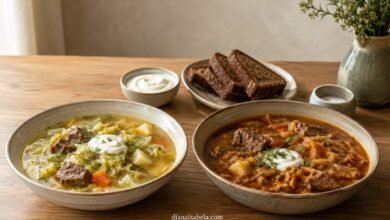
Borscht is the obvious one, and it deserves its reputation. Beet-red, warm, earthy, tangy, sometimes meaty, sometimes vegetarian, usually made better with sour cream, borscht can tell you whether the kitchen understands balance. A good bowl is not just “red soup.” It has depth, brightness and that very specific feeling of being fed by someone who does not believe in emotional minimalism.
But do not ignore other soups. Mushroom soup, chicken broth, solyanka, ukha, cabbage-based soups, or whatever the menu is clearly proud of. If a place treats soup with respect, the rest of the meal often has a better chance.
Also, soup is a graceful first order. It gives you time to read the rest of the menu without looking like you are negotiating with destiny.
Table confidence move: order soup first, then decide the rest after you settle in.
There is something very chic about not panic-ordering the entire dinner in the first 45 seconds.
Dumplings are the friendly door in
If you are nervous, dumplings are usually a safe and delicious beginning.
Pelmeni are small dumplings often filled with meat and served with sour cream, butter, vinegar, broth or herbs depending on the restaurant. Vareniki may also appear on some menus, often with potato, cheese, cherries or other fillings, though naming and traditions can vary by cuisine and restaurant style.
The important thing is not to freeze when you see several dumpling options.
Ask what filling is most popular. Ask whether they are boiled, fried, served with sour cream, served in broth, or topped with onions. If you like soft and cozy, keep them classic. If you like texture, ask if they can be pan-fried or served with a crisp element.
And please, if sour cream comes with them, do not treat it like a decorative cloud. It is part of the experience. She has a job.
Kotleti are for when you want real dinner
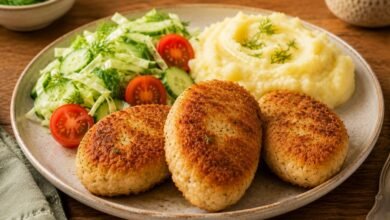
Kotleti are cutlets or patties, often tender, savory and home-style, commonly served with potatoes, salad, pickles or another practical side.
They are not flashy. That is their charm.
Kotleti are the kind of order that says: I did not come here to perform lightness. I came here to eat something warm and satisfying while still looking cute across the table.
If you want more context before ordering them, I wrote about the full craving spiral in my Russian kotleti dinner story. For a more practical restaurant search, this Russian restaurant near me guide is useful when you are trying to find a place that serves the kind of cozy food you actually had in mind.
For ordering, ask what the kotleti come with. If potatoes are involved, good. If pickles are involved, even better. If they arrive alone on a sad plate, the table may need reinforcements.
Russian salads are not always “salad” in the tiny lettuce sense
This is important.
When a Russian menu says salad, do not automatically imagine a delicate pile of greens trying to look expensive.
Some salads are creamy, hearty, chilled, festive, potato-based, beet-based, fish-based, layered, or built for celebrations rather than dieting. Olivier salad, vinaigrette, herring under a fur coat, beet salads, cabbage salads, cucumber and tomato salads — the category has range.
Some are refreshing. Some are rich. Some are basically a side dish wearing a party dress.
If you are ordering a heavier main, a brighter cabbage or cucumber salad can help balance the meal. If you want the festive comfort-food experience, a creamy salad can be fun to share. Just do not order it expecting spa lunch energy.
Green salad mood: light, crisp, familiar, useful if the table is already rich.
Olivier mood: creamy, nostalgic, festive, not trying to be a leaf.
Beet salad mood: colorful, earthy, often brighter than expected, very good when the table needs personality.
Blini can be sweet, savory or dangerously easy to keep ordering
Blini are thin pancakes or crepes, and they can play many roles.
They may be served with sour cream, jam, honey, condensed milk, cottage cheese-style filling, mushrooms, meat, smoked fish or caviar depending on the restaurant. Some versions feel like breakfast. Some feel like dessert. Some feel like a delicate little wrap with serious dinner ambitions.
If you are unsure what to order, blini can be a lovely bridge between familiar and new.
Sweet blini are easy to love. Savory blini can feel elegant without being stiff. If the menu offers several fillings, ask which one is most traditional or most popular. This is not the time to act like you already know. Curiosity looks better than fake expertise.
Do not build a beige table by accident
Russian comfort food can be rich and warm and soft in the best way.
But if you order only dumplings, potatoes, bread and creamy salad, you may end up with a table that is delicious but missing contrast. That is not a disaster. It is simply a styling issue, except edible.
Build the table like an outfit.
You need base, texture, contrast and one interesting detail. Soup gives warmth. Dumplings give softness. Kotleti give savory structure. Pickles give sharpness. A cabbage salad gives freshness. Sour cream gives coolness. Bread gives comfort. Something sweet at the end gives closure.
See? Dinner styling. I have been training for this.
If the table looks too heavy, add pickles, cabbage, cucumber, tomato, vinegar, herbs or a brighter salad.
If the table looks too light, add potatoes, bread, dumplings or a proper main. A dinner should not leave like it was afraid to stay.
What to order if you are afraid of choosing wrong
Here is the truth: most first orders are not about finding the most obscure dish. They are about building confidence.
Choose one classic, one comfort dish, one contrast, and one thing that makes you curious.
For example: borscht, pelmeni, kotleti with potatoes, and pickles or a cabbage salad. Or mushroom soup, blini with a savory filling, Olivier salad to share, and tea with dessert. Or dumplings, a beet salad, bread, and something sweet if you want a gentler first visit.
You do not need the entire cuisine in one sitting. That is what second dinners are for.
What to order on a date
A Russian restaurant can be a surprisingly good date setting if both people enjoy real food and do not panic around sour cream.
I would choose food that creates conversation without requiring too much physical strategy. Soup is elegant. Dumplings are shareable. Blini can be charming. Kotleti are cozy if you want a real meal. A salad to share makes the table feel fuller without becoming chaotic.
Avoid ordering only the messiest or strongest-smelling things unless the relationship is already emotionally advanced. Garlic is beautiful, but timing is also a social skill.
And wear something that lets you eat. I already made a whole guide for getting dressed for dumplings and kotleti, because dinner outfits should not behave like enemies of appetite.
What to order with friends
With friends, Russian food becomes easier.
You can order too much and call it research. You can try the dish nobody can pronounce. You can have one person be brave with herring, one person loyal to dumplings, one person emotionally responsible for bread, and one person who says “let’s get dessert” before anyone has assessed the situation.
This is the best kind of table.
Order soup if everyone wants their own bowl. Then share dumplings, salads, a main or two, pickles, potatoes, and something sweet. The meal becomes less about making one perfect choice and more about collecting impressions.
Food is more fun when the table has opinions.
The words you may see and what they feel like
Menus vary, translations vary, and some restaurants use regional or family names. But these words may help you feel less like the menu is staring back.
One cultural note before you order
Use “Russian food” when the restaurant, menu or dish is actually Russian.
This matters. Eastern European and neighboring cuisines overlap in ingredients, dishes, history and restaurant menus, but they are not all the same thing. Ukrainian, Polish, Georgian, Armenian, Uzbek, Baltic, Balkan and other food traditions deserve their own names when that is the correct context.
If a restaurant is Russian, say Russian. If it is Ukrainian, say Ukrainian. If it is broader Eastern European, say that. If you are not sure, ask.
Curiosity is stylish. Flattening everyone’s food into one label is not.
For a wider regional view, read the Eastern European comfort food guide. And if you want a specific Ukrainian table map, I made a Ukrainian dishes guide for a first cozy dinner too.
Red flags that are not about décor
A restaurant can look plain and serve excellent food. A restaurant can look gorgeous and serve disappointment with garnish.
So do not judge only by the room.
Watch for small clues. Are the soups treated seriously? Do the dumplings look house-made or at least carefully prepared? Do regulars seem comfortable? Are sides thoughtful or random? Does the menu explain enough for beginners? Are photos honest, not suspiciously perfect stock images from another planet?
One more thing: if every dish is described in the vaguest possible way and the staff cannot explain what is in anything, that is not mysterious. That is a problem wearing perfume.
Good sign: clear dish descriptions, steady customers, soups that matter, dumplings people mention in reviews, and sides that make sense.
Be careful: menus where everything sounds generic, no one can explain the fillings, and the photos look emotionally unrelated to the restaurant.
Wild card: deli-style counters. They may not look glamorous, but they can be full of real comfort food if the turnover is good.
The first-order formula I trust
If you are going in completely new, here is my safest stylish order.
Start with borscht or another house soup. Order pelmeni or another dumpling dish. Add kotleti if you want a proper main. Choose one bright thing: pickles, cabbage salad, cucumber and tomato salad, beet salad, or something with acidity. Add bread if it belongs. Finish with blini, cake, tea or whatever dessert looks like it has regulars.
That order gives you warmth, softness, structure, contrast and a sweet ending.
Basically, it is a good outfit, but edible.
Diana’s first-order formula: soup + dumplings + one real main + something sharp or fresh + dessert if the room deserves it.
If you are still nervous, ask the server which version of that formula they would choose.
The final bite
Ordering Russian food should not feel like panic with a menu.
It should feel like curiosity. Like choosing a warm table on purpose. Like letting yourself try something cozy without turning dinner into a performance. You do not need to know every dish. You do not need perfect pronunciation. You do not need to order the most impressive thing to prove you have range.
You need a good bowl, a good plate, one question asked honestly, and enough appetite to let the meal happen.
Start with soup if you are unsure. Trust dumplings if you want comfort. Order kotleti if you want real dinner. Add contrast so the table does not fall asleep. Save room for something sweet if the evening has been kind.
And remember: the chicest girl at the Russian restaurant is not the one pretending she already knows everything.
It is the one who asks a good question, orders with confidence, and eats while the food is still hot.
Read next: For a broader regional starting point, open this guide to Eastern European comfort food. For the kotleti craving specifically, read the vintage-bag-level Russian kotleti story.
For the outfit side of the evening, use the dinner styling guide for dumplings and kotleti. If you want the whole food diary mood first, start with Comfort Food, But Make It Chic.
FAQ
What should I order first at a Russian restaurant?
Start with something classic and comforting: borscht, pelmeni, kotleti, blini or a familiar salad. If you want a balanced first meal, order soup, one dumpling dish, one main dish and something bright like pickles or a cabbage salad.
Is Russian food hard to order if I do not know the dishes?
Not really. The menu can look intimidating at first, but many dishes fall into friendly categories: soups, dumplings, cutlets, pancakes, salads, breads and desserts. Ask what is house-made or what regulars order.
What are pelmeni?
Pelmeni are small dumplings, usually filled with meat. They are often served with sour cream, butter, broth, vinegar or herbs depending on the restaurant. They are one of the easiest beginner-friendly Russian dishes to try.
What are kotleti?
Kotleti are tender cutlets or patties, often served with potatoes, salad, pickles or sour cream. They are a good choice when you want a warm, filling, home-style dinner rather than a light snack.
What Russian food is good for a date night?
Soup, dumplings, blini and kotleti can all work well for date night. Choose dishes that are cozy and shareable without being too difficult to eat. A table with soup, dumplings, one main and a small salad usually feels relaxed but still special.
Are Russian salads like regular salads?
Some are, but many are not. Russian salads can be creamy, potato-based, beet-based, fish-based or layered. Olivier salad, for example, is hearty and festive, not a simple green salad.
What should I ask the server at a Russian restaurant?
Ask what regulars order, what is made in-house, what comes with a dish, and whether a dish is lighter or heavier. These questions are more useful than asking “What is good?” because they help you build a meal that matches your appetite.
Is borscht always Russian?
Borscht is strongly associated with several Eastern European food traditions, especially Ukrainian cuisine, and versions exist across the region. If you are in a Russian restaurant, it may appear on the menu, but it is still important to respect the broader cultural context and not label every beet soup or Eastern European dish as Russian.
How do I make a Russian food order feel balanced?
Add contrast. If you order dumplings, cutlets, potatoes or creamy salad, add something sharp or fresh like pickles, cabbage salad, cucumber and tomato salad, herbs or a soup with brightness. That keeps the meal from feeling too heavy.
What if I mispronounce the dish name?
You will survive. Point, smile, ask politely, and let the server help. Good ordering is not about sounding perfect; it is about being curious, respectful and clear about what kind of dinner you want.