Eastern European Comfort Food for Girls Who Are Done Pretending Salad Is Dinner

A salad can be beautiful.
It can be crisp, fresh, photogenic, balanced, full of herbs, dressed perfectly, served in a bowl that looks like it has never known emotional chaos.
I respect salad.
I also know when salad is lying.
There are days when a salad is dinner. And there are days when a salad is a polite rumor before dinner. A decorative preface. A green little announcement that says, “Something more serious should probably happen after this.”
This article is for the second kind of day.
The day when you do not want to perform lightness. You do not want one forkful of leaves and a motivational quote. You want real food. Warm food. Food with steam, structure, softness, sourness, crisp edges, sauce, bread, cheese, potato, cabbage, mushroom, meat, pastry, fruit, herbs, and enough emotional intelligence to know you did not leave the house for three walnuts and a vinaigrette.
Eastern European comfort food is for girls who still love style, but are no longer interested in pretending appetite is unfashionable.
The problem is not salad. The problem is pretending.
Let us be fair.
A good salad is not the villain. A tomato-cucumber salad with herbs and sour cream can be perfect beside grilled food. Pickled cabbage can rescue a heavy plate. Beet salad can bring color and drama. Mizeria, the Polish cucumber salad, is refreshing and extremely useful if the rest of the table is behaving like winter.
The problem is when food culture acts like wanting something warm and filling is a personal failure.
No.
Sometimes you need goulash. Sometimes you need potato pancakes. Sometimes you need khachapuri, because melted cheese inside bread is not a mistake — it is architecture. Sometimes you need a sour rye soup that makes your shoulders drop. Sometimes you need cabbage rolls, grilled ćevapi, mămăligă with cheese, mushroom pierogi, banosh, chicken paprikash, a proper stew, a bakery dessert and a cup of tea that does not arrive with judgment.
That is not “too much.”
That is dinner having a spine.
Diana’s dinner law: if the meal cannot carry you through the evening, it is not dinner. It is an opening statement.
Beautiful opening statements are welcome. They are simply not the whole case.
Real dinner has structure
This is where Eastern European comfort food is quietly brilliant.
It understands how to build a plate. Not just decorate one.
There is usually something warm, something soft, something sharp, something creamy, something crisp, something fermented or pickled, something starchy enough to make the meal feel complete, and often something sweet at the end because people who survive cold weather understand morale.
That structure is why the food feels satisfying. It is not just “heavy.” Heavy is lazy language. A good comfort meal has rhythm.
Take Polish food: żurek brings sour rye depth, pierogi bring softness, bigos brings long-cooked cabbage and meat, placki ziemniaczane bring crisp potato drama, oscypek brings smoky cheese and cranberry brightness, pączki or sernik finish the story with bakery confidence.
Take Hungarian food: goulash brings paprika warmth, chicken paprikash brings creamy sauce and comfort, lángos brings fried dough chaos in the best way, túrós csusza brings noodles and cheese into a situation that does not require your emotional restraint.
Take Georgian food: khachapuri brings cheese and bread to a level that should be studied by architects, khinkali bring juicy dumpling suspense, badrijani brings walnut-filled eggplant elegance, lobio brings beans with actual personality.
This is not random heaviness.
This is food that knows how to hold a table together.
The appetite scale: what kind of real dinner do you need?
Not every hunger is the same. Some hunger wants soup. Some wants bread. Some wants potatoes. Some wants a dish that looks at your life and says, “We are not discussing emails until you eat.”
Do not call everything “dumplings” and go home
Dumplings are a useful category, but they can make people lazy.
Eastern Europe and its neighboring food cultures have many dough-wrapped, folded, stuffed, boiled, steamed, baked or fried things. They are not all the same. They do not all taste the same. They do not all belong to the same story.
Polish pierogi can be filled with potato and cheese, sauerkraut and mushroom, meat, berries or sweet cheese. Ukrainian varenyky have their own identity and table tradition. Russian pelmeni are often smaller meat dumplings with a different feel. Georgian khinkali are juicy, pleated, and require technique unless you want broth on your outfit. Lithuanian cepelinai are large potato dumplings with a completely different level of commitment. Czech fruit dumplings can turn dessert into a main event.
Same broad family of comfort? Sometimes.
Same dish? Absolutely not.
Pierogi: Polish, many fillings, often buttery, oniony, sweet or savory, very adaptable.
Khinkali: Georgian, juicy, pleated, eaten carefully, not something to attack while distracted.
Cepelinai: Lithuanian potato dumplings, hearty and serious, for a hunger that has made decisions.
Fruit dumplings: Central and Eastern European dessert logic at its most charming: dough, fruit, butter, sugar, crumbs, happiness.
Soup can be the main character if it has personality
Not every soup is a warm beverage with vegetables.
Some soups are dinner wearing a bowl.
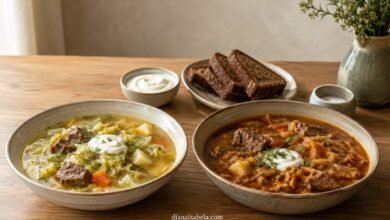
Żurek, the Polish sour rye soup, has tang, depth, sausage, egg and a fermented confidence that makes other soups look underwritten. Hungarian goulash can be soup or stew depending on version and setting, but either way, paprika is not there for decoration. Romanian ciorbă can bring sour brightness that makes the whole meal wake up. Czech kulajda, with mushrooms, dill, cream, potatoes and egg, feels like forest comfort with manners. Lithuanian šaltibarščiai, a cold beet soup, is a completely different mood: pink, refreshing, summery, usually served with potatoes and more personality than some dinner guests.
So no, soup is not always “just a starter.”
Sometimes soup has main-character lighting.
Potatoes are not basic when the kitchen has imagination
I am tired of people disrespecting potatoes.
Potatoes are reliable, affordable, adaptable and emotionally present. That is more than I can say for several people and at least three trends.
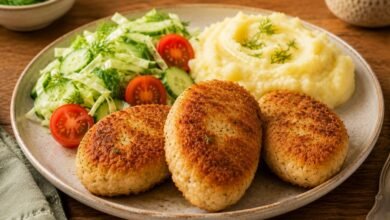
Eastern European kitchens understand the potato’s range. Polish placki ziemniaczane. Ukrainian deruny. Czech bramboráky. Lithuanian kugelis. Potato dumplings. Mashed potatoes with sauce. Fried potatoes with herbs. Potatoes beside grilled meats. Potatoes beside sour things. Potatoes in soups. Potatoes holding the plate together like the friend who books the reservation and remembers parking.
The difference is texture.
A potato pancake with crisp edges is not the same as a soft dumpling, which is not the same as creamy mash, which is not the same as potatoes served beside a sour soup. If the meal feels too soft, potatoes can bring crispness. If it feels too sharp, potatoes can calm it. If it feels too rich, potatoes can absorb the drama and make everyone behave.
Potato truth: basic ingredients become beautiful when the texture is right.
That is true in food, and honestly, in outfits too.
The grilled plate deserves more attention
Not every Eastern European comfort meal is a bowl of something soft.
There is fire. Smoke. Grill. Char. Sausage. Skewers. Flatbread. Raw onion. Ajvar. Mustard. Pickles. Sauces that do not apologize.
Balkan ćevapi, for example, can be exactly the dinner you need when you want something hearty but not creamy. Small grilled minced meat sausages, often served with flatbread, onions, kajmak or ajvar depending on the place, have a completely different energy from dumplings or stew. This is not soft sweater food. This is leather jacket food. Still comfort, just with better posture.
Grilled Polish kiełbasa, Romanian mici, Serbian pljeskavica, Bulgarian kebapche, Georgian mtsvadi — there is a whole world of smoky, savory, outdoor-market, late-evening comfort that does not belong in the same visual folder as soup.
Future photos should remember this.
So should I.
Cheese and bread are allowed to be a full emotional event
There are people who say “it is just bread and cheese” as if they have uncovered a scandal.
Yes. Bread and cheese. Two of civilization’s better decisions.
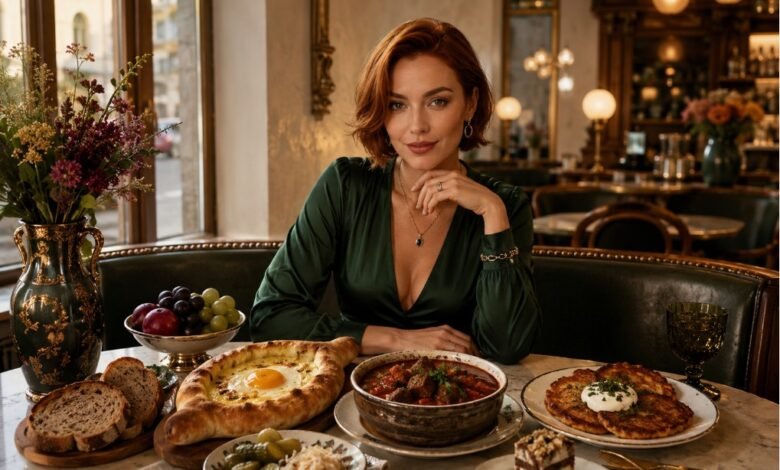
Georgian khachapuri is the obvious queen here: cheese-filled bread that can be boat-shaped, round, layered, or regional in many other ways. Adjarian khachapuri with egg and butter is not a snack; it is an experience with instructions. Polish oscypek with cranberry sauce is smoked cheese with mountain confidence. Slovak bryndzové halušky brings potato dumplings with sheep cheese and bacon into the conversation. Romanian mămăligă with cheese and sour cream proves cornmeal can be cozy if the kitchen respects it.
This is where “comfort food” stops being vague and starts becoming specific.
Cheese behaves differently in every culture. Bread does too. The magic is in the details.
Cabbage is not punishment. Cabbage is strategy.
Bad cabbage is punishment.
Good cabbage is strategy.
Cabbage can be fermented, stuffed, stewed, shredded, rolled, pickled, sour, sweet, smoky, tender, crunchy, rich, bright, or quietly essential. Polish bigos would be lost without it. Romanian sarmale need their cabbage wrapper. Ukrainian holubtsi carry their filling with patience. Sauerkraut and pickled cabbage can save a heavy table from becoming sleepy. Fresh cabbage salad can make grilled meats feel sharper. Cabbage soup can be humble and wonderful when handled by someone who understands seasoning.
If you think you do not like cabbage, I have questions.
Mostly: who hurt you, and did they boil it without love?
Bigos, gołąbki, sauerkraut, mushroom pairings, cold salads and a talent for turning sourness into comfort.
Sarmale with sour cream and mămăligă, especially when the table wants something wrapped, savory and slow.
Pickled cabbage, grilled plates, sharp sides and bright contrasts that make smoky food more interesting.
Cabbage rolls, stews, soups and salads that prove humble vegetables can carry a whole dinner if someone knows what they are doing.
What to order when you are done pretending salad is enough
Do not order randomly. Build the meal with intention.
Choose one warm anchor. Then choose one texture. Then choose one contrast. Then decide whether dessert is part of your healing journey.
Polish version: żurek, pierogi with mushroom or potato filling, placki ziemniaczane, pickles or mizeria, then sernik or pączki.
Hungarian version: goulash or chicken paprikash, nokedli or bread, cucumber salad, then dobos torte if the room has taste.
Georgian version: khachapuri, khinkali, badrijani, tomato-cucumber salad with walnuts, then churchkhela or honeyed pastry if available.
Balkan version: ćevapi or grilled meats, flatbread, ajvar, kajmak, onion, pickled vegetables, then a walnut or honey dessert.
How to keep real dinner from feeling too heavy
This is the part people forget.
Real dinner does not mean ordering every rich thing and then blaming the cuisine. Balance is still a concept. A fashionable one, actually.
If the meal has cream, add acidity. If it has grilled meat, add raw onion, pickles, tomato, cucumber or ajvar. If it has dumplings, add a bright salad. If it has stew, add bread but maybe not three other starches unless you are emotionally prepared. If it has fried potato pancakes, eat them hot and give them something cool or sharp to sit beside.
The secret is contrast.
Comfort food becomes boring only when the whole table has the same texture and mood. Soft with soft with soft. Cream with cream with cream. Beige with beige with beige. That is not comfort. That is a nap with utensils.
Too rich? Add pickles, vinegar, herbs, cabbage salad, tomato, cucumber, sour soup or fruit.
Too soft? Add grilled meat, toasted bread, fried potatoes, crisp onions, seeds, nuts or pastry texture.
Too plain? Add smoked cheese, paprika, mushrooms, garlic, mustard, ajvar, horseradish or a sauce with actual opinions.
Too light? Add dumplings, bread, potatoes, beans, stew, cheese or a proper dessert. Do not suffer for aesthetics.
What to wear to real dinner, because yes, it matters
The outfit should not be afraid of the meal.
That is the entire philosophy.
Wear something with beauty and range: a knit dress, a soft blouse, dark denim, a satin skirt, a cardigan with shape, boots you can walk in, earrings that catch light, lipstick that can survive tea, a coat that makes the walk to dinner feel intentional.
Do not wear a waistband that becomes a hostage situation. Do not wear sleeves that enter the soup before you do. Do not wear a white silk top if you plan to spend the entire meal acting like a security guard for your own chest.
For the specific food-and-outfit side, I already made a dinner styling guide for dumplings and cozy comfort food. The deeper rule still applies here: the best dinner outfit is the one that lets you enjoy the evening and still feel like yourself.
Dessert is not childish. Dessert is punctuation.
Some dinners need a period.
Some need an exclamation point.
Eastern European desserts know this. Polish pączki, sernik, makowiec and szarlotka. Ukrainian syrnyky, nalysnyky with sweet cheese, fruit dumplings, poppy seed pastries. Russian medovik, pirozhki with sweet fillings, tvorog-based sweets. Hungarian dobos torte, kürtőskalács, somlói galuska. Czech koláče and fruit dumplings. Balkan baklava-style sweets, walnut pastries, honey desserts.
This is not “just something sweet.” It is culture, celebration, coffee-table language, holiday memory, bakery-window temptation and sometimes the only reason a long walk through a cold city becomes romantic instead of simply inconvenient.
A proper dessert does not ruin a meal. It gives the evening a last line worth remembering.
Why this belongs on a fashion-lifestyle site
Because appetite is part of style.
Not the fake appetite people perform for photos. Real appetite. Knowing what you want. Choosing dinner without apology. Understanding that the table, the outfit, the city, the mood, the weather and the dish all belong to the same evening.
Dianaisabela is not becoming a recipe site. That is not the point. Food here is lifestyle: what you crave, where you go, what you wear, how the room feels, what the meal says about the day, how culture enters through a menu, how comfort becomes beautiful without becoming fake.
That is why Eastern European comfort food works here. It has character. It has history. It has style, even when it is not trying to.
If you want the broader foundation, read the stylish guide to Eastern European comfort food. For a country-specific table, I would pair this with the Polish food comparison guide and the Ukrainian dishes guide. And for the whole philosophy of this food diary, start with Comfort Food, But Make It Chic.
The final bite
Here is what I want for you.
I want you to stop treating hunger like a styling problem.
I want you to enjoy salad when salad is enough, and stop pretending when it is not. I want you to order the goulash, the pierogi, the potato pancakes, the khachapuri, the sarmale, the ćevapi, the mushroom stew, the sour rye soup, the smoked cheese, the cabbage rolls, the apple cake, the poppy seed pastry, the dessert you noticed first but tried to act casual about.
I want you to understand that real dinner can be chic.
Not because it is tiny. Not because it is expensive. Not because someone placed a microgreen on top and charged you for the feeling of confusion.
Because it has taste. Texture. Warmth. Contrast. A point of view.
Because it lets you sit down and be a person.
Because sometimes the most stylish thing you can do is stop negotiating with your appetite and order the food while it is still hot.

FAQ
What is Eastern European comfort food?
Eastern European comfort food includes warm, filling dishes such as soups, dumplings, stews, cabbage rolls, potato pancakes, grilled meats, cheese breads, sour cream dishes, pickles, pastries and desserts from many countries and neighboring food traditions.
Is Eastern European comfort food only dumplings and soup?
No. Dumplings and soups are important, but the cuisine is much wider. Think Polish żurek and bigos, Hungarian goulash and chicken paprikash, Georgian khachapuri and khinkali, Romanian sarmale and mămăligă, Balkan ćevapi, Czech fruit dumplings and many potato, cabbage, mushroom, cheese and pastry dishes.
What should I order if I want a real dinner, not just a salad?
Choose one warm anchor dish, one starch or bread, one sharp contrast and one creamy, smoky or fresh detail. For example: goulash with bread and cucumber salad, pierogi with pickles, khachapuri with tomato-cucumber salad, or ćevapi with flatbread and ajvar.
Can comfort food still be stylish?
Absolutely. Comfort food can be stylish when it has balance, texture and atmosphere. A warm dish, a beautiful table, smart contrast, good lighting, a cozy outfit and real appetite can feel more chic than a tiny plate that leaves everyone hungry.
What are some Eastern European dishes beyond borscht and pelmeni?
Try żurek, bigos, placki ziemniaczane, pierogi with different fillings, goulash, chicken paprikash, lángos, khachapuri, khinkali, badrijani, sarmale, mămăligă, ćevapi, bramboráky, cepelinai, banosh, fruit dumplings, pączki, sernik and makowiec.
How do I keep a hearty comfort food dinner from feeling too heavy?
Add contrast. Pair rich dishes with pickles, cabbage salad, tomato-cucumber salad, herbs, sour soups, vinegar, ajvar, fruit or something fresh. A good table has warm and sharp, soft and crisp, creamy and bright.
Is salad useless at an Eastern European dinner?
Not at all. Salad can be very useful when it balances the table. Cucumber salad, cabbage salad, beet salad, tomato salad, pickled vegetables and fresh herbs can make a rich meal feel brighter and more complete.
What should I wear to a comfort food dinner?
Wear something stylish but comfortable: a knit dress, soft blouse, cardigan, dark denim, satin skirt, low boots, warm coat or simple gold jewelry. The outfit should let you sit, eat, laugh and enjoy the meal without fighting your waistband or sleeves.
Why does this kind of food work for a lifestyle blog?
Because it is not only about recipes. It is about appetite, culture, dinner mood, travel, restaurant discovery, clothing, comfort, friendship, weather, city cravings and the little rituals that make real life feel more beautiful.
What dessert should I try with Eastern European comfort food?
Try pączki, sernik, makowiec, szarlotka, medovik, syrnyky, fruit dumplings, koláče, dobos torte, kürtőskalács, honey pastries or walnut desserts. Dessert is often part of the cultural experience, not an afterthought.