Your skin is not “bad” because it changes.
It is not bad because it gets oily by lunch. It is not bad because one cheek is calm and the other cheek apparently has a personal vendetta. It is not bad because your forehead broke out the same week you had photos, plans, and one tiny crush-related situation that required emotional stability.
Teen skin can be moody. That is different.
Moody skin has phases. Some mornings it looks clear and sweet, like it has been drinking water and minding its business. Other mornings it wakes up dramatic, shiny, dry, red, bumpy, tight, patchy, or weirdly textured in a way that makes you lean closer to the mirror and immediately regret having eyes.
This guide is not here to shame your skin into behaving. It is here to help you understand what your skin might be asking for, how to keep your routine simple, and how to stop treating every pimple like breaking news.
First, stop calling your skin bad
Language matters. I know that sounds like something printed on a pastel journal, but it is true.
When you call your skin bad, you turn your face into an enemy. Then every routine becomes punishment. You scrub harder. You buy too much. You panic when a breakout shows up. You compare your real skin to filtered skin, bathroom-lighting skin, edited skin, and “she definitely has a ring light” skin.
That is exhausting.
Your skin is an organ, not a moral report card. It reacts to hormones, sweat, sleep, stress, products, weather, sports, hair products, makeup, touching your face, pillowcases, sunscreen, periods, food changes, and sometimes absolutely nothing obvious because bodies enjoy being mysterious.
So instead of “bad skin,” try “moody skin.” Moody skin can be cared for. Bad skin sounds like something you have to defeat.
Diana’s bathroom mirror rule: your skin is allowed to have a day. Do not build your entire self-esteem around what one pore decided before breakfast.
Teen skincare should not feel like a chemistry final
The internet has made skincare feel extremely serious. Suddenly a thirteen-year-old with one cleanser is being told she needs acids, retinoids, barrier repair, double cleansing, ice rolling, red light, snail mucin, three serums, a spatula, and possibly a small laboratory named after a French pharmacy.
Calm down.
Most teen skin does not need a 12-step routine. It needs consistency, gentleness, sunscreen, and fewer experiments. Especially if your skin is already moody, the goal is not to attack it with every trending ingredient. The goal is to create a routine your skin can recognize.
Think of skincare like getting dressed. If you change the entire outfit every five minutes, you never know what actually works. Skin is similar. If you introduce five new products in one week, then break out, get dry, sting, or turn red, you have no idea which product caused the drama.
Simple is not boring. Simple is how you find out what your skin actually likes.
The bathroom-shelf reset
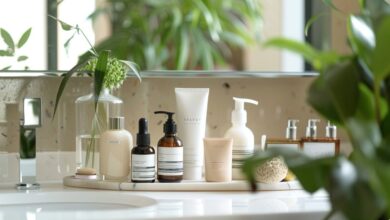
Before buying another viral product, look at what is already sitting by the sink. Your skin may not need more. It may need less confusion.
The routine should be boring enough to repeat
A good teen skincare routine should be easy on school nights, tired mornings, sleepover weekends, after practice, and on the days when you have exactly enough energy to brush your teeth and emotionally stare at your hoodie.
If the routine only works when you feel like a wellness influencer, it is not a routine. It is a performance.
The three things most teen routines need first
If your skin is moody and your product shelf looks like a tiny store with commitment issues, start with the basics.
A gentle cleanser. A moisturizer. A daily sunscreen.
That sounds almost offensively simple, but it is the foundation. Cleanser removes sweat, oil, sunscreen, makeup, and the day. Moisturizer supports the skin so it does not feel tight, stripped, or irritated. Sunscreen helps protect skin during the day, especially if you use products that can make skin more sensitive.
From there, you can add targeted products carefully if you need them. But basics first. Always.
If you want a simpler breakdown, teen skincare basics that do not overcomplicate things is the place to start before turning your bathroom into a product museum.
What “moody skin” can look like
- Oily by midday: your skin may need a better balance, not harsh stripping.
- Dry patches: your routine may be too strong, too inconsistent, or missing enough moisture.
- Random breakouts: products, hormones, sweat, makeup, hair products, or touching your face can all play a role.
- Redness or stinging: your skin may be irritated, especially if you added active products too quickly.
- Texture: not every bump means disaster; skin has pores, movement, and real-life surface.
- Shiny and tight at the same time: sometimes skin can feel oily but still need gentler care.
- Good one week, chaotic the next: teen skin often changes with hormones, stress, sleep, weather, and routine shifts.
The cleanser problem: squeaky clean is not the goal
There is a certain kind of face wash that makes your skin feel so tight afterward that you could probably bounce a coin off your forehead. Some people think that means the cleanser worked.
I do not.
Clean should feel fresh, not punished. If your skin feels tight, burning, stripped, or squeaky after washing, the cleanser may be too harsh for everyday use. This is especially true if you are already dealing with breakouts, because the instinct is often to wash harder and more often. But irritated skin does not usually become calmer because you yelled at it with foam.
For many teens, cleansing once in the morning and once at night is enough. If your skin is dry or sensitive, you may not need a strong morning cleanse. If you wear makeup or sunscreen, nighttime cleansing matters more. If you play sports or sweat a lot, cleanse after sweating when you can, but do not turn your face into a dish you scrub after every snack.
Gentle is not weak. Gentle is strategic.
If your skin feels tight after washing
Try a gentler cleanser or use less product. Tight skin is not proof of cleanliness. It can be a sign that your skin feels stripped.
If your skin still feels greasy after washing
Check whether you are rinsing well, using enough cleanser, or using a product that leaves a heavy film. But do not jump straight to the harshest cleanser on the shelf.
Moisturizer is not only for dry skin
One of the biggest teen skincare myths is that oily skin does not need moisturizer. I understand why people believe this. If your face is shiny by lunchtime, the idea of adding moisture sounds like putting a cardigan on a campfire.
But moisturizer is not the same as oil. A good lightweight moisturizer can help skin feel comfortable and balanced. When skin gets too stripped, it may feel irritated, tight, flaky, or somehow oily and uncomfortable at the same time. That is not a glow. That is your face sending a strongly worded email.
If your skin is oily, look for lighter textures. If your skin is dry, a creamier moisturizer may feel better. If your skin is sensitive, fragrance-free and simple formulas are often easier to tolerate. If your skin changes with the season, you may need a lighter moisturizer in summer and something more comforting in winter.
The point is not to smother your skin. The point is to support it.
Sunscreen is the unglamorous friend who saves the plan
Sunscreen is not always exciting. It does not have the immediate drama of a pimple patch or the sparkle of a new lip gloss. It is also the step people skip because the texture feels wrong, the white cast is annoying, or the morning is already chaotic.
But sunscreen matters.
If you are building a skincare routine, especially if you are using acne products, exfoliating products, or brightening products, daytime sunscreen becomes even more important. Also, sun protection is one of those habits that does not feel glamorous now but quietly helps your future face.
The best sunscreen is the one you will actually wear. Gel, lotion, mineral, chemical, tinted, untinted, glowy, matte — the texture has to work for your skin and your life. If one sunscreen feels awful, that does not mean all sunscreen is impossible. It means that one was not your match.
A skincare routine you hate will not last. A sunscreen you avoid is basically decorative.
Breakouts are information, not a personal failure
A breakout can feel very personal. I know. It always seems to arrive before a photo, a party, a presentation, a birthday dinner, or the exact day you wanted to feel calm and pretty. Skin has dramatic timing.
But a breakout is not proof that you are dirty, lazy, ugly, or doing everything wrong. Breakouts can happen for many reasons: hormones, oil, sweat, clogged pores, makeup, stress, friction from masks or helmets, hair products touching the face, not removing sunscreen well, or simply being a teenager with skin that is still figuring out its rhythm.
The worst thing you can do is attack every breakout like an emergency.
Picking can make the area angrier. Scrubbing can irritate. Trying three new spot treatments in one night can turn one pimple into a tiny disaster area. Sometimes the best move is boring: cleanse gently, moisturize, use one targeted product if your skin tolerates it, and let the spot heal without turning it into a hobby.
The school-night reset
Cleanse, moisturize, spot treat only if you already know the product works for you, and go to sleep. Midnight skincare experiments rarely make heroic decisions.
The after-practice reset
Try to cleanse after heavy sweat, change out of sweaty clothes when possible, and keep hair products away from areas that break out easily.
The photo-day reset
Do not try a brand-new mask the night before. Calm skin beats surprise irritation every time.
The TikTok product trap
TikTok can make one product look like the answer to every face on earth. Someone uses it for three days, their skin glows, the comments scream, the packaging is cute, and suddenly everyone is convinced they have found skincare destiny.
Maybe the product is good. Maybe it is not for you.
Teen skin can be especially reactive to product hopping. If you try every viral cleanser, toner, serum, mask, and exfoliant, your skin may not be improving or worsening because of one product. It may simply be overwhelmed by the constant changes.
Before buying, ask: what problem am I trying to solve? Is this product for my skin type? Does it duplicate something I already own? Am I buying it because my skin needs it, or because the video made the bathroom counter look expensive?
If you are choosing products, skincare and hair care picks for teens can help you think in categories instead of panic-buying every pretty bottle with a dramatic before-and-after.
Do not start five new products at once
This is one of my strongest skincare opinions because it saves so much confusion.
If you add a new cleanser, moisturizer, sunscreen, serum, exfoliant, and spot treatment in the same week, then your skin gets red or breaks out, who is guilty? Nobody knows. The cleanser? The serum? The sunscreen? The combination? Your period? Stress? The fact that you ate chips while watching a show and touched your face for two hours?
No evidence. Just vibes.
Introduce products slowly when you can. Give your skin time. Patch test when appropriate. Pay attention to burning, itching, swelling, or irritation. If something feels wrong, stop and simplify. And if acne is painful, severe, scarring, or making you feel emotionally crushed, it is okay to ask a parent or trusted adult about seeing a dermatologist or medical professional.
Skincare is not supposed to become a guessing game with your face as the prize.
A calm way to test a new skincare product
- Know why you are adding it. Breakouts, dryness, oiliness, sunscreen, makeup removal, or texture are different goals.
- Do not add it with four other new things. Give yourself a chance to know what changed.
- Use it as directed. More product does not mean faster results. Sometimes it means more irritation.
- Watch how your skin feels, not only how it looks. Burning, tightness, stinging, or itching matters.
- Be patient with reasonable expectations. Skin routines take time, and not every product becomes a miracle.
Hair products can secretly affect your skin
This is the plot twist many people miss.
If you break out around your forehead, temples, hairline, jaw, neck, or back, look at what touches those areas. Hair oils, leave-in conditioners, gels, edge control, heavy styling creams, dry shampoo, hairspray, and even shampoo or conditioner residue can sometimes contribute to clogged-feeling skin for some people.
I am not telling you to throw away your entire hair routine. Hair care matters too. But if your skin is moody around the areas where hair products sit, start noticing patterns.
Try keeping hair off your face at night. Rinse conditioner well. Wash pillowcases regularly. Avoid letting heavy hair products smear onto your cheeks. If you use a lot of styling product, cleanse the skin near your hairline gently but thoroughly.
Beauty routines do not live in separate apartments. Hair, skin, makeup, sweat, and fabric all share the same neighborhood.
Makeup is not the villain, but removal matters
Makeup can be fun, creative, confidence-boosting, and honestly sometimes emotionally medicinal. A little concealer, blush, mascara, or gloss can change the whole morning. Makeup is not automatically bad for teen skin.
But sleeping in makeup is where things get rude.
If you wear makeup, removing it well matters. A gentle makeup remover, cleansing balm, micellar water, or cleanser that actually removes what you wear can help. The goal is not to scrub your face into a new identity. The goal is to remove the layer without leaving your skin irritated.
Also, pay attention to tools. Dirty brushes, old sponges, and makeup that has been living in your bag since a previous era can cause problems. Wash what touches your face. Replace things when they need replacing. Do not share eye makeup casually. Cute is not worth mystery irritation.
If makeup makes you break out
Look at removal first, then product texture, then tools. Sometimes the problem is not makeup itself. It is residue, old brushes, or a formula your skin dislikes.
If you feel prettier with makeup
That is okay. Makeup can be style, creativity, and mood. Just do not let it become the only way you are allowed to feel acceptable.
Your routine should change gently with your skin mood
Moody skin does not mean you need a new routine every morning. But it does mean you can make small adjustments.
If your skin feels dry and tight, maybe skip harsh products and focus on cleanser, moisturizer, and sunscreen. If you are extra oily, do not punish your skin; use a gentle cleanse, lightweight moisturizer, and oil-control habits like blotting papers if helpful. If your skin is breaking out, avoid turning the whole routine into a battlefield. If your skin feels irritated, simplify.
Think of it like styling. If your outfit feels too heavy, you do not burn your closet down. You change the shoe. You remove a layer. You adjust the bag. Skin is similar. Small edits. Not chaos.
The goal is to respond, not overreact.
The bathroom mirror is not a microscope appointment
There is a dangerous distance from the mirror. Too close, and every pore becomes a documentary.
Nobody sees your skin from the same distance you do when you are two inches away from the mirror under aggressive bathroom lighting. That lighting could make a peach look suspicious. It is not a fair judge.
Step back.
Look at your whole face. Then your whole outfit. Then your whole person. Your skin texture is not the only thing happening. You have hair, eyes, expression, style, energy, humor, intelligence, taste, and probably something more interesting to do than inspect one tiny bump until it feels like a personality trait.
Care about your skin. Do not shrink your entire self into it.
When confidence gets tangled up with clear skin
Clear skin can feel amazing. I am not going to pretend it does not. When your skin is calm, getting ready feels easier. Makeup sits better. Photos feel less stressful. You move through the day with one less thing whispering at you.
But confidence cannot depend only on clear skin, because teen skin is not a perfectly controlled event.
If your confidence disappears every time a breakout appears, your skin has too much power over your mood. I say that gently, because I know how real it feels. A bad skin day can make you want to hide, cancel plans, avoid photos, or believe everyone is staring. Usually, they are not. People are busy thinking about themselves, their hair, their test, their crush, their lunch, their outfit, their own skin.
You can care about your skin and still refuse to let one breakout cancel your life.
For the deeper part of this, I would read confidence that is not only about clear skin, because a glow-up that depends entirely on perfect skin is too fragile. You deserve something stronger.
When skincare needs grown-up help
Most moody skin can be handled with a gentle routine, patience, and better habits. But some skin concerns deserve extra help.
If acne is painful, deep, spreading, leaving scars, causing a lot of emotional distress, or not improving despite a consistent gentle routine, talk to a parent, guardian, doctor, dermatologist, or trusted adult. That does not mean you failed. It means you are getting support.
Also, if a product causes swelling, severe burning, rash, or a reaction that scares you, stop using it and ask for help. The internet is useful for outfit ideas and product discovery. It is not a replacement for medical care when your skin is truly struggling.
The boring habits that secretly matter
Some skincare advice is not glamorous enough for TikTok, but it works quietly in the background.
Wash pillowcases regularly. Keep hair products from sitting on your face. Clean your phone screen. Do not pick at every bump. Remove makeup before sleep. Rinse after heavy sweating when you can. Keep your routine consistent. Avoid using too many strong products at once. Give products time. Drink water because your body needs it, not because water is a magic filter. Sleep when life allows, even though school schedules act like sleep is optional decoration.
None of these habits are dramatic.
That is why they help. They are not trying to become your whole personality. They just make the background conditions better.
Pillowcase check
If your cheeks or jaw keep acting up, look at what touches your face every night. Fabric matters more than people think.
Phone check
Your phone touches your hands, bags, desks, and sometimes your face. Cleaning it is not glamorous, but neither is mystery irritation.
Hands check
Touching, picking, and leaning on your hands can keep angry spots angry longer. Your fingers are not skincare tools.
A routine for oily, dry, breakout-prone, and confused skin days
On oily days, keep the routine light but do not skip moisture completely. Gentle cleanse, lightweight moisturizer, sunscreen, and maybe blotting later if needed. Do not scrub until your skin squeaks just because your forehead is shiny. Shine is annoying. Irritation is more annoying.
On dry days, treat your skin like it needs comfort. Gentle cleanse, richer moisturizer if your skin likes it, sunscreen in the morning, and skip products that sting or make tightness worse. Makeup may need a softer prep so it does not cling to dry patches.
On breakout days, simplify. Cleanse, moisturize, sunscreen, and use only targeted products your skin already knows. Do not introduce a dramatic new mask because one pimple hurt your feelings.
On confused days, when your skin is oily, dry, textured, and emotionally unclear, go back to basics. Skin can get overwhelmed. A simple routine for a few days can help you see what is actually happening.
The skincare shelf should not become a shame shelf
There is a strange guilt that happens when you buy skincare and it does not work. The bottle sits there, expensive and accusing. You keep using it because you paid for it, even though your skin hates it. Or you keep every product because maybe one day your skin will become the exact type of person that product was designed for.
No.
If a product irritates your skin, does not fit your routine, smells too strong, pills under sunscreen, breaks you out, or makes you dread skincare, it does not deserve permanent real estate. You can stop. You can simplify. You can learn from the purchase and move on.
A skincare shelf should support you. It should not look like a museum of beauty mistakes.
The moody skin diary I actually like
If your skin feels unpredictable, try tracking it for two weeks without becoming obsessive.
Not every pore. Not a spreadsheet with emotional footnotes. Just quick notes: new product, period week, sports, makeup, sunscreen, stress, sleep, hair product, weather, breakout area, dryness, irritation. You may start seeing patterns.
Maybe your forehead breaks out after heavy hair products. Maybe your cheeks get irritated when you switch cleansers. Maybe your skin looks worse after you sleep in makeup. Maybe your jawline gets moody around your cycle. Maybe your sunscreen is fine, but you are not removing it well at night. Maybe your “random” breakout is not random at all.
Information is calmer than panic.
A two-week skin mood diary
- Write down what you used. Cleanser, moisturizer, sunscreen, makeup, hair products, and new treatments.
- Note how your skin felt. Tight, oily, calm, itchy, dry, bumpy, red, or comfortable.
- Track the obvious life stuff. Sleep, stress, sports, period timing, weather, and makeup days.
- Look for patterns, not perfection. One bad skin day is not data. Repeated patterns are useful.
- Make one change at a time. Skin detective work gets messy when you change everything together.
Pretty skin is not the same as filtered skin
Real skin has texture. Real skin has pores. Real skin has tiny shadows, shine, redness, peach fuzz, healing spots, uneven days, and little changes that show you are a living person, not a porcelain lamp.
Filters have made normal skin look suspicious. Even beauty ads, product photos, and influencer videos can blur the line between skincare result and lighting trick. The problem is not wanting nice skin. The problem is thinking nice skin means invisible skin.
Healthy-looking skin does not always mean perfectly smooth. Calm skin does not always mean poreless. A good routine does not erase being human.
If skincare makes you kinder to yourself, beautiful. If skincare makes you hate your face from three inches away, the routine needs emotional editing too.
Your glow-up can include skincare, but it cannot be only skincare
A skincare routine can be part of feeling better. Washing your face at night can feel like choosing yourself after a long day. Moisturizer can feel comforting. Sunscreen can feel responsible in a quiet future-you kind of way. A pimple patch can feel like peace. A clean pillowcase can feel like getting your life together with fabric.
I love that.
But your glow-up also includes how you talk to yourself. How you dress on a bad skin day. Whether you still show up. Whether you stop comparing your normal face to someone else’s edited content. Whether you let yourself be in photos even when your skin is not flawless. Whether you understand that beauty is not a reward for perfect skin behavior.
Skincare is care. It is not a trial where your face has to prove you deserve confidence.
The calm teen skincare routine I would start with
Morning: rinse or gently cleanse if your skin needs it, moisturize if needed, apply sunscreen.
Night: cleanse, moisturize, and use one targeted treatment only if your skin tolerates it and you actually need it.
That is the core. Not glamorous. Not dramatic. Not a bathroom shelf that looks like it requires a manager. Just a routine that can support moody skin without turning every night into a product performance.
Once that feels stable, then you can think about extras: acne products, exfoliation, masks, serums, spot treatments, or richer moisturizers. But extras should earn their place. They are not automatically better because they sound scientific or come in prettier packaging.
Your skin is allowed to be a little unpredictable
Teen skin changes. That does not mean you are doing skincare wrong. It means your body is busy, your life is full, and your skin is responding to things you can control and things you cannot.
Build a routine that is kind enough to repeat. Learn your patterns. Do not chase every trend. Ask for help when you need it. Stop punishing your face for being human.
And please, do not cancel a good outfit because of one breakout.
Your skin can be moody and you can still look beautiful. Your skin can be textured and you can still be stylish. Your skin can be breaking out and you can still be funny, smart, fashionable, loved, interesting, and very much allowed to leave the house.
Clear skin is lovely. But you are not waiting for perfect skin to become someone worth seeing.