Bolivian Anticuchos in Florida: Where the Search Gets Complicated
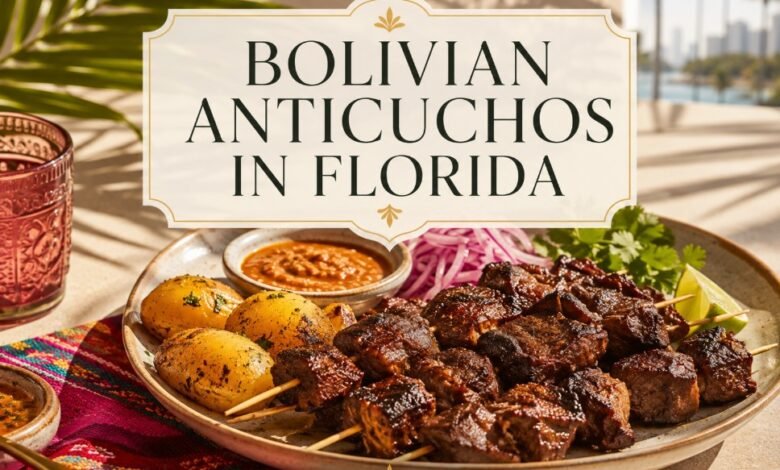
Florida is almost comically good at making an anticucho search look easy. Type the word into a Miami restaurant search and beef-heart skewers appear everywhere: glossy with ají panca, dark from the grill, surrounded by potatoes, choclo and enough Peruvian food to make Lima feel considerably closer than the mileage suggests.
Then add one word — Bolivian — and suddenly the map becomes much quieter.
This is what makes Florida different from the other states in this guide. Virginia gives us a Bolivian food corridor. Maryland has a strong current Bolivian anticucho anchor. Rhode Island gives us a fascinating Bolivian–Peruvian overlap. Florida gives us something else entirely: a very healthy anticucho scene and a much thinner specifically Bolivian anticucho scene.
And I would rather tell you that clearly than hand you five Peruvian restaurants, change the nationality in the headline and hope nobody notices the ají panca and choclo waving from the plate.
The good news is that South Florida still has a living Bolivian food footprint, and Miami has historical evidence of a genuine Bolivian anticucho menu. The current challenge is availability, not whether the dish ever belonged here.
If Florida is only one stop in your search, my national guide to finding Bolivian anticuchos also covers Virginia, Maryland, New York and Rhode Island.
Where I would start in Florida
Start in Miami if the goal is specifically Bolivian food, but do not assume that every current Miami anticucho is Bolivian. South Florida still has active restaurants serving recognizable Bolivian dishes, while an older Miami Bolivian menu documents classic anticuchos. Current readily verifiable beef-heart anticuchos, however, are much easier to find in Peruvian restaurants.
If the exact national style matters, call the Bolivian restaurant first. If beef heart itself matters more than nationality, Florida suddenly becomes one of the easier states on the map.
Best current area for Bolivian menu context plus abundant Peruvian heart anticuchos.
Strong current beef-heart anticucho availability, but the clearest verified examples are Peruvian.
Current heart anticuchos are easy to verify, again primarily through Peruvian restaurants.
That geography immediately changes how I would use this page. I am not sending someone on a statewide pilgrimage from Miami to Tampa for a supposedly Bolivian skewer that is actually sitting in a Peruvian ceviche restaurant.
I am showing you where Bolivia is visible, where heart anticucho is genuinely available, and where those two facts overlap — or fail to.
Miami is the obvious first stop — and the most confusing one
Miami has almost everything required to make this search difficult in an interesting way: large Latin American communities, a mature Peruvian restaurant scene, Bolivian dishes surviving on mixed Latin menus and enough historical restaurant data to prove that classic Bolivian anticuchos have been sold here.
The problem is recency.
A menu can survive online long after the restaurant that created it changes name, address, owner or cuisine. And Miami is particularly good at restaurant reincarnation. A dining room can become three different concepts while the old PDF menu continues floating around the internet with the immortal confidence of a ghost who has forgotten it died.
So I separate two things very carefully in Florida: what is available today and what proves Bolivian anticucho existed here historically.
Mi Tierra Las Americas — Miami
If I wanted to begin with a living Bolivian food context in Miami today, Mi Tierra Las Americas would be one of the places I would investigate first.
Current restaurant listings identify Bolivian food among the restaurant’s cuisines, and current or recently indexed menus include recognizable Bolivian dishes such as salteñas, silpancho, falso conejo, picante de pollo, pique a lo macho, sopa de maní and Bolivian corn preparations.
That is exactly the menu neighborhood I want to see when searching for a Bolivian anticucho. Unfortunately, the currently accessible menu data I checked does not give me a current anticucho listing.
Which means I would call, not speculate.
The phone question is wonderfully simple: “Do you have anticuchos de corazón today?”
If the answer is yes, follow with one more: “Are they the Bolivian-style version?” That is more useful than asking vaguely whether they sell anticuchos, because half of Miami can answer yes to that question while quietly handing you a Peruvian plate.
Miami also has one very important anticucho ghost
The clearest Bolivian anticucho menu evidence I found in Florida belongs to an older listing for Bolivian Restaurant Las Americas.
And this menu is not ambiguous.
That combination is exactly what I want from historical evidence. Anticuchos were not sitting on a generic Latin menu between nachos and chicken wings. They appeared inside an unmistakably Bolivian food vocabulary.
The historical listing puts `Anticuchos (3 piezas)` at $10. The same menu contains humintas, salteñas, chairo, sopa de maní, charque, silpancho, falso conejo and weekend specials.
So the interesting Florida question is not “Did a Bolivian restaurant in Miami actually serve anticuchos?”
Yes. We have menu evidence that one did.
The more useful question is whether you can walk into that exact restaurant today and order them. I do not have enough current evidence to tell you to do that confidently.
I would treat this as historical evidence, not a current restaurant recommendation. An old menu proves the dish belonged to Miami’s Bolivian restaurant landscape. It does not prove that the same kitchen, ownership or anticucho service exists tonight.
This is exactly why old menus are both wonderful and dangerous
I love old menus. They show what immigrant communities were cooking at a particular place and time far better than a generic restaurant category ever could.
But they are terrible travel agents.
A menu indexed five or ten years ago can continue ranking long after the restaurant has closed, rebranded or moved. Prices survive. Phone numbers survive. Photos survive. Sometimes the domain survives. Only dinner has disappeared.
So when I find an old Bolivian Miami menu with anticuchos beside sopa de maní and silpancho, I treat it like culinary archaeology: valuable evidence of what existed, not a promise that a waiter is currently standing there waiting for your order.
New York gave us the same lesson with old Woodside restaurants. Miami simply adds palm trees.
The strange part: Florida itself is absolutely not short of anticuchos
This is where the search becomes almost funny.
If you remove the word Bolivian, Florida suddenly gives you excellent current options.
Miami has multiple restaurants currently advertising heart anticuchos. Orlando does too. Tampa does too. The protein is not the scarcity problem.
The dominant flavor language is Peruvian.
The Florida anticucho you find easily
Beef or veal heart, ají panca or anticuchera marinade, potatoes, choclo, rocoto or other Peruvian accompaniments, usually inside a menu filled with ceviche, causa, huancaína, lomo saltado and related dishes.
The Florida anticucho that takes more work
A specifically Bolivian heart skewer sitting inside a menu of salteñas, sopa de maní, silpancho, charque, plato paceño and other Bolivian dishes, ideally with a sauce and starch presentation that fits the kitchen’s regional style.
If you understand that distinction before opening Google, Florida becomes dramatically easier to navigate.
Dr. Limon — Miami
Dr. Limon is useful here precisely because the menu makes the style so easy to identify.
The current listing for Los Anticuchos del Doctor describes tender beef heart marinated in anticuchado sauce with ají panca, cumin and vinegar, served over golden potatoes and choclo.
That is an excellent current beef-heart lead.
It is also extremely Peruvian.
If what you want tonight is simply to discover whether you like grilled heart, this is exactly the sort of place that makes Florida easy.
If what you want is specifically Bolivian anticucho, this is not the plate I would quietly relabel for convenience.
CVI.CHE 105 — Miami
CVI.CHE 105 makes the same point even more clearly. Its current Downtown Miami menu lists Anticuchos Estadio Nacional using veal heart marinated in anticuchera sauce and cooked over smoking heat.
The currently listed price is $19, and the surrounding menu leaves little doubt about the culinary context: causa, leche de tigre, huancaína, Peruvian peppers, saltados and other unmistakably Peruvian references.
CVI.CHE 105 is therefore useful to this page as a boundary marker. It shows you what a current, explicit Peruvian anticucho listing looks like in Miami — which makes it much easier not to confuse nationality merely because both traditions grill heart.
If that distinction interests you, my Bolivian vs Peruvian anticucho comparison goes ingredient by ingredient.
Miami is where I would compare menus before comparing restaurants
This sounds backwards, but it is incredibly efficient.
Before I care about reviews or décor, I look around the anticucho listing.
If I see this…
I have good reason to investigate the anticucho as part of a Bolivian menu.
If I see this…
I am almost certainly reading a strongly Peruvian menu unless the restaurant explicitly identifies itself as mixed.
One ingredient is never absolute proof. A whole menu usually has considerably less interest in lying to you.
Orlando: excellent news if the heart matters more than the passport
Orlando gives us another currently verifiable beef-heart anticucho, and again the flavor vocabulary is explicitly Peruvian.
Aji Ceviche Bar — Orlando
The current menu lists Anticuchos as grilled beef heart with panca sauce, potatoes, choclo and house ají. The recently listed price is $19.95.
The surrounding menu reinforces the identification immediately: papa a la huancaína, ceviche, ají de gallina, seco and other Peruvian dishes.
So if you live in Orlando and have never eaten heart, this is a current way to try the ingredient without driving to Miami. Just understand that you are learning what Peruvian anticucho tastes like.
Tampa: heart anticucho is on the menu, but Bolivia is not the context
Terra Sur Cafe — Tampa
Terra Sur currently lists Anticuchos Heart at $20 as an appetizer. Its menu is unmistakably Peruvian, with ceviches, papa huancaína, ají de gallina, lomo saltado, tacu tacu and other Peruvian dishes surrounding the skewer.
This is exactly the kind of listing I want on a useful Florida guide even though it is not the final Bolivian answer. If someone in Tampa asks me, “Can I try heart anticucho near me?” the answer is much more useful than pretending the only relevant restaurant lies four hours south.
If they ask, “Is this a Bolivian anticucho?” the answer changes.
Precision is allowed to be helpful.
Florida may actually be one of the best states for learning the difference
That sounds slightly perverse because the Bolivian inventory is thin, but think about what the state gives us.
You can encounter several current heart-anticucho preparations with the classic Peruvian clues laid bare: ají panca, choclo, huancaína-adjacent flavors, rocoto, ceviche-heavy menus and restaurants that openly identify themselves through Peruvian cuisine.
Then you can compare those menus with Miami’s Bolivian food vocabulary: salteñas, silpancho, sopa de maní, falso conejo and pique a lo macho.
Suddenly the question “Bolivian or Peruvian?” stops being abstract.
You can read it.
What I would want from a specifically Bolivian Florida anticucho
I would begin with the obvious: beef heart or an explicit corazón description.
Then I would look at the restaurant itself. Does the kitchen serve recognizably Bolivian food? Are salteñas, silpancho, sopa de maní, charque, plato paceño or pique macho part of the menu?
Then the plate.
A La Paz-style preparation may point toward potato, red ají and a richer peanut-based llajua. But I would not require every Bolivian cook in Florida to reproduce one municipal recipe exactly. Family and regional styles vary, diaspora kitchens adapt and ingredients available in Miami are not identical to those in La Paz.
The goal is not culinary border enforcement.
The goal is avoiding the much simpler mistake of calling every heart skewer Bolivian.
If the menu only says “anticuchos,” ask about the meat first
This is increasingly important because the word itself has escaped beef heart.
Florida menus now use anticucho or anticuchero language for tenderloin, chicken and octopus as well as heart. CVI.CHE 105, for example, lets its Anticuchos Estadio Nacional use heart while other contemporary dishes on similar menus borrow anticuchera seasoning for completely different proteins.
So my first question is:
“Are your anticuchos made with beef heart?”
If yes, excellent. Then I ask whether the preparation is Bolivian, Peruvian or the restaurant’s own interpretation.
This takes approximately twenty seconds and saves a remarkable amount of internet philosophy.
The Florida phone call I would actually make
If anticucho is the reason for the trip, I would not call and ask, “Do you serve Bolivian food?” That is far too broad.
“Do you have anticuchos today?”
This separates a live menu item from an old listing immediately.
“Are they beef heart?”
Now we have eliminated chicken, tenderloin and anticuchero-style interpretations.
“Are they Bolivian style?”
In Florida this question matters because the current heart-anticucho landscape is heavily Peruvian.
“What do they come with?”
Potato, choclo, peanut sauce, rocoto or other accompaniments help explain the kitchen’s interpretation.
That conversation gives me more usable information than twenty photos captioned “best anticuchos!!!” by somebody whose national identification system is apparently based on vibes.
If you are in Miami tonight, I would make the decision this way
If the specific goal is **Bolivian food**, begin with a current Bolivian menu and ask directly about anticucho availability. Even if the answer is no, you can still eat salteñas, sopa de maní, silpancho, falso conejo or pique macho and have an actual Bolivian dinner rather than a failed scavenger hunt.
If the goal is **beef heart**, Miami becomes much simpler. Current Peruvian restaurants give you several serious options without pretending they are Bolivian.
If the goal is **understanding the difference**, you may have accidentally chosen one of the best American cities for the experiment.
It is a slightly inconvenient answer and a much better dinner plan.
The Miami meal I would order if the anticucho phone call ends with “no”
First, I would not leave the Bolivian restaurant simply because one skewer is unavailable. That would be a spectacular way to miss the cuisine while technically pursuing it.
I would look for salteñas first. Then sopa de maní if I wanted something warm and comforting. Silpancho or falso conejo gives you beef through another technique. Pique macho makes sense for a hungry table rather than a person with unrealistic faith in their own capacity.
If yuca is what catches your attention, there is also a completely different Bolivian direction in sonso de yuca.
The evening does not become less Bolivian because heart sold out.
If the heart itself is making you hesitate
Florida is actually an easy state in which to solve this fear because there are multiple current restaurants serving heart anticucho even when the exact Bolivian version is harder to secure.
Beef heart tastes much closer to concentrated lean beef than liver. What first-timers notice more strongly is the texture: firm, muscular and springier than tender steak.
A properly grilled piece should still bite through comfortably. Dry rubber is a cooking problem, not an essential feature of the ingredient.
For the full first-bite explanation, see what Bolivian anticucho tastes like.
Miami heat changes what I want beside the skewer
This is not a rule of Bolivian tradition. This is me admitting that Florida has weather.
On a humid Miami evening, I am less likely to surround anticuchos with three heavy mains than I might be during a cold Rhode Island winter. Smoke, beef heart, chile and peanut richness already give the palate plenty to manage.
I want something bright. A cool drink. A fresh sauce. Maybe a salteña first rather than a giant soup, depending on the day.
If a proper Chuflay happens to be available, the combination of Singani, ginger ale and citrus has exactly the refreshing highball logic that grilled spicy food appreciates. For the drink itself, I have a separate guide to what a Chuflay cocktail is and another for finding Chuflay in the United States.
What Florida teaches us about “authentic” restaurant searches
Sometimes the dish is easy to find and the cultural context is the scarce part.
That distinction matters far beyond anticuchos.
You can find a recipe that crossed a border, entered another country’s restaurant tradition, became fashionable, changed protein and eventually appeared on a fusion menu where nobody remembers why the original ingredient mattered.
None of those developments automatically make the modern versions bad.
They simply mean that searching for a dish by name and searching for a specific cultural expression of that dish are two different tasks.
Florida makes the difference unusually visible.
Would I drive from Orlando to Miami only for Bolivian anticucho?
Not without a confirmed phone call.
This is the sort of state where optimism can turn into a four-hour lesson in menu verification.
If a current Miami Bolivian kitchen confirms heart anticuchos that day, then the calculation becomes personal. If nobody can confirm them, I would eat the strongest Bolivian food available locally or enjoy a well-made Peruvian heart anticucho without pretending it is something else.
A good food guide should reduce pointless driving, not romanticize it.
The strongest Florida anticucho routes right now
Miami for Bolivian context
Begin with current Bolivian menus such as Mi Tierra Las Americas and call about heart anticucho availability before traveling specifically for the dish.
Miami for current heart anticuchos
Dr. Limon and CVI.CHE 105 provide current heart preparations in clearly Peruvian contexts if the protein itself is your priority.
Orlando for a current Peruvian heart version
Aji Ceviche Bar currently lists grilled beef-heart anticuchos with panca, potatoes and choclo.
Tampa for another current heart option
Terra Sur Cafe currently lists heart anticuchos, again within an explicitly Peruvian menu.
So where is the best Bolivian anticucho in Florida?
At the moment, I do not have enough current evidence to crown one restaurant honestly.
That is not a satisfying sentence if you wanted a winner, but it is the useful one.
Miami clearly has Bolivian food. Miami clearly has a documented history of a Bolivian restaurant selling anticuchos. Florida clearly has plenty of current heart anticuchos. What I cannot currently verify strongly enough is a permanent Bolivian restaurant menu in Florida where I can point to a current heart anticucho listing and tell you to drive there without calling.
So call first.
And if a current Bolivian anticucho appears on a South Florida menu tomorrow, this page becomes considerably more exciting with one phone number.
What I would order if that call finally comes back “yes”
I would ask whether the heart comes with potato and what sauce accompanies it. Then I would resist ordering half the menu until the skewers arrive.
First piece mostly without sauce. Second with llajua. Then potato. Then everything together.
If peanut-based llajua appears, I want enough to understand how the richness changes the lean heart rather than enough to hide the grill.
For the reasoning behind that combination, I go deeper into why Bolivian anticuchos pair so well with potatoes and peanut sauce.
Florida’s anticucho problem is actually a good problem
There are states where the difficult part is finding beef heart at all.
Florida is not one of them.
Here the interesting task is understanding the plate in front of you. Is this Bolivian? Peruvian? A restaurant’s anticuchero interpretation? Heart or tenderloin? Potato and peanut llajua, or panca and choclo?
Once you start reading those details, the search becomes less frustrating and more delicious.
Miami may not currently give me the clean permanent Bolivian anticucho answer I wanted. It gives me something almost as useful: enough Bolivian and Peruvian food in one metropolitan area to understand why the distinction matters.
I will take an honest complicated answer over a convenient fake one every time.
Know a Florida kitchen serving Bolivian anticuchos right now?
This is one state where a current reader tip could materially improve the guide. If you know a Bolivian restaurant, caterer, food truck, home kitchen, community event or weekend pop-up in Florida serving anticuchos de corazón, send me the details.
The most useful information is the business name, city, current address, phone number, days the anticuchos are available, current price and a recent menu or plate photo.
I am especially interested in South Florida, Orlando and Tampa — but anywhere in the state counts if the food is real and currently available.
Email: info@dianaisabela.com
Florida already has the heart. Now I want to find the Bolivian grill cooking it.
Where can I find Bolivian anticuchos in Florida?
Miami is the strongest place to begin because it has a current Bolivian food scene and historical evidence of Bolivian anticuchos. However, a permanently available current Bolivian beef-heart anticucho listing is difficult to verify, so call a Bolivian restaurant before making a special trip.
Can I find beef-heart anticuchos in Miami?
Yes. Current Miami restaurants including Peruvian kitchens serve beef or veal heart anticuchos. The important distinction is that many of the easiest current listings are Peruvian rather than Bolivian.
Does Mi Tierra Las Americas in Miami serve Bolivian food?
Current restaurant listings and menus include Bolivian dishes such as salteñas, silpancho, falso conejo, sopa de maní and pique a lo macho. A current anticucho listing was not confirmed, so call if anticuchos are the reason for your visit.
Did Bolivian Restaurant Las Americas in Miami serve anticuchos?
An older indexed menu for Bolivian Restaurant Las Americas lists Anticuchos (3 piezas) alongside clearly Bolivian dishes including salteñas, humintas, sopa de maní, chairo, charque, silpancho and falso conejo. This is useful historical evidence but should not be treated as proof of current availability.
Are most anticuchos in Florida Bolivian or Peruvian?
The easiest currently verified restaurant anticuchos in Florida are largely found on Peruvian menus. Bolivia and Peru both have important beef-heart anticucho traditions, so the word anticucho alone does not identify the national style.
Where can I try beef-heart anticuchos in Orlando?
Aji Ceviche Bar in Orlando currently lists grilled beef-heart anticuchos with panca sauce, potatoes, choclo and house ají. The preparation is presented in a Peruvian culinary context.
Where can I try heart anticuchos in Tampa?
Terra Sur Cafe in Tampa currently lists Anticuchos Heart on its menu. The restaurant menu is Peruvian, so this is a current beef-heart option rather than a specifically Bolivian recommendation.
How can I tell if a Florida anticucho is Bolivian?
Look at the wider restaurant menu, protein, sauce and accompaniments. Bolivian menus may feature salteñas, silpancho, sopa de maní, charque and pique macho, while Peruvian menus commonly feature ceviche, causa, huancaína, ají panca, choclo and lomo saltado.
Should I call before driving for Bolivian anticuchos in Florida?
Yes. Florida has plenty of current beef-heart anticuchos, but specifically Bolivian availability is much less clear. Ask whether anticuchos are available today, whether they are made with beef heart and whether the preparation is Bolivian style.
Do Bolivian and Peruvian anticuchos both use beef heart?
Classic versions in both cuisines commonly use beef heart. The marinades, sauces, sides and surrounding menu provide better clues to the style than the protein alone.