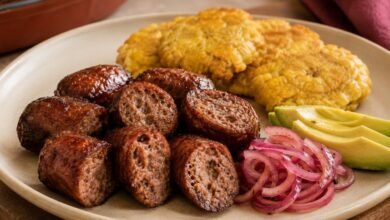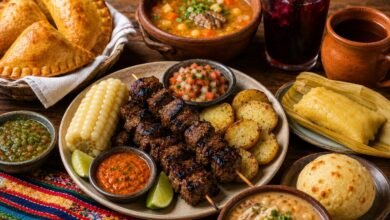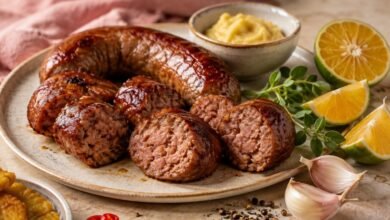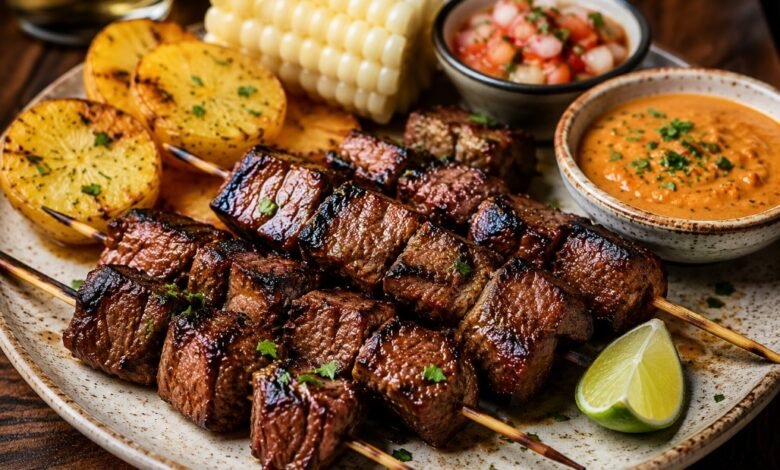
If the words beef heart skewer have you imagining something metallic, liver-like and heroically difficult to chew, Bolivian anticucho has a pleasant surprise waiting for you. Properly made, it tastes much closer to deeply beefy grilled meat — smoky at the edges, savory through the center, brightened with chile and vinegar, then made richer by sauce.
The heart itself is only part of the experience. A Bolivian anticucho associated with La Paz is a small piece of food engineering: lean beef heart meets fierce heat, potato gives you softness and starch, red ají brings warmth, and peanut-based llajua adds the richness the meat naturally lacks. One component without the others tells only half the story.
And no, it does not taste like liver.
I know that is the question hiding behind most first-time curiosity, so we may as well deal with it before anybody spends three paragraphs pretending otherwise.
If tasting it has already turned into finding it, my Best Anticucho Boliviano Near Me guide covers the strongest places I would investigate in the United States.
What does Bolivian anticucho taste like?
Bolivian anticucho tastes smoky, intensely beefy, savory and lightly tangy, with chile heat and a firm but juicy texture when the heart is cooked well. In La Paz-style preparations, potato softens the stronger grilled flavors while spicy peanut llajua can add nuttiness, richness and another layer of chile.
The closest mental picture is not liver. Imagine the concentrated beefiness of a lean steak, the charred edges of excellent grilled meat, the chew of a firmer cut, and then a sauce that turns the whole thing warmer, richer and considerably more interesting.
The important part is that these characteristics arrive at different moments. The heart gives the beefiness. The grill gives char. Vinegar and seasonings sharpen the meat. Chile adds warmth. Peanut sauce broadens and softens the whole experience. Potato resets your palate and then immediately volunteers to carry more sauce.
It is a very efficient dinner.
The heart tastes much more like beef than “organ meat”
Beef heart is muscle, and that fact explains almost everything useful about its flavor. It has a strong, clean beef character rather than the pronounced mineral richness associated with liver. If somebody served you a well-trimmed piece without first announcing its anatomy like a theatrical maître d’, the taste would probably feel much more familiar than you expect.
What distinguishes it from a normal steak is concentration and texture. Heart works constantly, so the muscle is dense. It is also comparatively lean. You do not get the buttery intramuscular fat of a ribeye or the soft surrender of tenderloin. Instead there is a firmer, more purposeful bite.
I rather like that about it. Not every piece of beef needs to dissolve on contact like it has lost the will to live.
Good anticucho gives the heart enough char to make the exterior deeply savory while preserving moisture inside. That combination creates the sensation people often describe simply as “beefier”: there is less fat distracting from the actual flavor of the meat.
No, Bolivian anticucho should not taste like liver
Liver is usually what makes first-time diners suspicious because it has a distinct mineral, sometimes slightly bitter flavor and a soft texture that can become almost creamy depending on how it is cooked. Beef heart belongs to a completely different sensory neighborhood.
Beef heart
Beefy, savory, comparatively clean-tasting and firm. The texture is muscular and springy rather than soft. Good grilling adds smoke, browning and crisp edges.
Beef liver
More mineral and unmistakably “offal-like,” with a softer and sometimes almost pâté-like texture. It is not a useful flavor comparison for a properly prepared heart skewer.
Could heart have a faintly distinctive character compared with a supermarket sirloin? Of course. This is still a different muscle from a different part of the animal. But if your worry is that the skewer will taste like a cube of grilled liver, you can retire that particular anxiety.
For a nervous first-timer: the texture is likely to surprise you more than the flavor. Expect firm grilled beef, not soft organ meat.
The texture is firm, springy and pleasantly chewy — when the cook gets it right
Texture is where anticucho succeeds or fails rather dramatically. Beef heart is lean and dense. Prepared properly, it has resistance without becoming a chore: you bite through it cleanly, feel a little springiness and then get the juicy, savory center.
Prepared badly, the same meat can become dry and rubbery. There is not enough internal fat to hide sloppy heat management, which is why an anticuchera working quickly over charcoal deserves more respect than anybody casually describing the dish as “just skewers.”
Trimming matters too. A whole heart contains connective tissue, vessels and firmer sections that should not simply be chopped indiscriminately and threaded onto sticks. The pleasurable chew comes from cleaned muscle, not from asking a diner to negotiate anatomy with their teeth.
The best texture sits somewhere between tender steak and something more structured. It should never feel mushy. It should never require a strategic pause halfway through chewing.
If your anticucho is genuinely difficult to bite through, that is not proof of authenticity. It is probably proof that something went wrong between knife and grill.
Garlic, vinegar and spices make the beef brighter, not sour
In the La Paz preparation I use as my reference point, beef heart meets garlic, grape vinegar, oregano, cumin, pepper and salt, with lemon appearing as an optional addition. None of those ingredients exists to disguise the heart. Their job is to give a very lean, savory meat more perfume and lift.
Vinegar is especially useful because rich beef flavors love acidity even when the meat itself is lean. A little tang makes smoke and char taste brighter. Garlic and cumin reinforce the savory side. Oregano adds an herbal note that keeps the flavor from becoming one long sentence about meat.
The resulting heart should not taste pickled. Think seasoning with acidity, not acidity with a side of cow.
Then the charcoal changes everything
You can describe all the seasonings in anticucho and still miss the flavor people actually smell first: the grill.
Strong heat darkens the exterior of the heart and creates those browned, slightly crisp edges that make grilled meat so difficult to ignore when you walk past it. There is smoke, rendered surface fat from whatever oil or basting reaches the meat, chile hitting heat and the savory aroma of browning protein.
That char also gives contrast. Without it, heart can feel one-dimensional because the meat itself is so lean. With it, you move from dark roasted edges into the moister center and then into sauce. A skewer is suddenly doing considerably more work than its size suggests.
This is why I would rather eat six beautifully charred pieces of heart from a modest grill than twelve pale cubes from somewhere with dramatically better napkins.
Peanut llajua is where the Bolivian bite becomes especially memorable
Now we reach the part I would probably steal from everybody else’s plate.
La Paz-style anticucho can be served with a cooked peanut-based llajua built around ground peanut and red ají. Exactly how a household or vendor handles its sauce can vary, but the culinary logic is wonderfully consistent: the heart is lean; peanut gives fat, body and richness; chile restores heat and energy; potato absorbs both.
The peanut does not need to make the sauce taste like peanut butter. That comparison is misleading because we are dealing with a savory chile sauce, not sandwich filling. The flavor is nuttier and rounder, with chile and seasoning keeping it firmly on the dinner side of the cupboard.
Put it on the heart and the meat becomes richer. Put it on potato and suddenly the potato has found a career.
Heart without sauce
Lean, beefy, smoky, tangy and direct. You notice the meat and char first.
Heart with peanut llajua
Rounder, richer and more complex. The sauce cushions the lean texture while chile keeps the combination from becoming heavy.
How spicy are Bolivian anticuchos?
There is no useful universal number. The heat depends heavily on the ají and, especially, the llajua served by a particular cook. One plate can be warm and aromatic; another can make you suddenly reconsider how urgently you needed to finish that spoonful.
What I would not assume is that “traditional” automatically means punishingly hot. Chile has flavor as well as heat, and Bolivian sauces can use it for freshness, fruitiness, color and aroma rather than simply trying to win an argument with your nervous system.
If you are sensitive to spice, taste the sauce separately first. This has the added benefit of making you look thoughtful rather than frightened.
If you love heat, do not immediately drown the first skewer either. Taste the grilled heart alone once. Otherwise you have learned everything about the sauce and surprisingly little about the anticucho.
The potato is not filler — it changes the way the heart tastes
One of my father’s kitchen habits that permanently changed the way I look at a plate is asking what each side dish is actually doing. “It comes with potatoes” is a menu description. It is not an explanation.
Here the explanation is excellent. Heart is lean, smoky and intensely savory. Chile adds heat. Vinegar gives acidity. Peanut sauce provides richness. Potato arrives with softness, starch and almost no aggression of its own, which means it can absorb the louder flavors and give your palate a reset between pieces of meat.
Eat only the heart and the plate can feel intense. Eat only potato and I have questions about why we came. Put them together with sauce and each ingredient makes more sense.
Some La Paz preparation guidance also includes cooked white yuca. That brings another mild, dense starch to the same basic equation, though potato is the companion most people will immediately recognize.
How I would build the first four bites
If this is your first anticucho, I would resist the enthusiastic friend who wants to cover everything in sauce before you have even picked up the skewer. Give the dish four bites to introduce itself properly.
Heart alone
Start with one piece straight from the skewer. Notice beefiness, char, salt, tang and how firm the meat feels. This is your baseline.
Heart with llajua
Add a modest amount of sauce. Notice how peanut changes richness and how chile changes the finish rather than simply asking, “Is this hot?”
Potato through the sauce
Now you understand why the potato is there. It catches everything the skewer leaves behind and gives you a softer, rounder bite.
Everything together
Heart, a little potato and enough sauce to connect them. This is the bite that explains the plate better than any ingredient list can.
After that, abandon methodology and eat dinner like a normal person.
What familiar food is Bolivian anticucho closest to?
No comparison is perfect, but I would start with lean grilled beef rather than any other organ meat. Think somewhere in the universe of a strongly beefy steak skewer, except firmer and with less internal fat.
If you have eaten hanger steak, skirt steak or other cuts prized for flavor rather than luxurious softness, you already understand part of the appeal: character can be more interesting than tenderness.
Texture-wise, heart has more spring. Flavor-wise, it remains much closer to beef than liver. Once the chile and peanut sauce enter, however, familiar American steak comparisons become less useful because the plate starts speaking its own language.
Which is precisely why you should probably stop asking it to taste like something else and let it be anticucho.
What does it smell like?
If the anticucho is being cooked over charcoal, the aroma is one of the strongest arguments for ordering it. Hot beef, smoke, chile, garlic and browning create the sort of smell that can reorganize your dinner plans from half a block away.
The aroma should be grilled and savory rather than metallic. Peanut sauce contributes more once the food reaches the plate, while chile can announce itself both through fragrance and heat.
This street-side aroma matters culturally too. La Paz continues to celebrate anticucho through evening food events and vendors, where the grill is part of the attraction rather than something hidden behind a kitchen door. :contentReference[oaicite:2]{index=2}
How to tell a very good anticucho from a disappointing one
A good plate
A disappointing plate
I care particularly about the first two. Anticucho lives or dies by heat and texture. Gorgeous sauce can improve good meat; it cannot successfully negotiate the release of a badly overcooked skewer.
If you are nervous about trying heart, order it this way
First, share an order. Not because anticucho is difficult, but because committing to a full plate of any unfamiliar texture before tasting it is unnecessarily dramatic.
Second, ask whether the restaurant’s anticuchos are beef heart. Modern South American restaurants sometimes use the word anticucho or anticuchero for chicken, steak, tenderloin or other proteins. If you specifically want the traditional heart experience, the menu should say corazón, corazón de res or beef heart.
Third, order something soft and comforting alongside it. Salteñas or sopa de maní can make a wonderful larger Bolivian meal because they give you completely different textures instead of repeating grill on grill on grill.
And finally, do not announce to yourself with every bite that you are “eating an organ.” You are eating grilled beef heart. Culinary curiosity becomes much easier when we stop narrating dinner like a survival documentary.
What should you drink with it?
The happiest pairing depends on how spicy the llajua is. Anything refreshing enough to cool chile and clean up the richness of peanut sauce works well.
In a Bolivian restaurant, I would be delighted to see mocochinchi or another cool fruit drink on the menu. Its sweetness can make a pleasant contrast to smoke and spice. A cold beer also makes intuitive sense with charcoal-grilled meat, especially when the sauce has some heat.
If I were drinking wine, I would avoid anything so tannic and serious that dinner suddenly feels like a board meeting. Juicy fruit, moderate body and enough freshness to survive chile would make me happier.
And water. Revolutionary, I know. Particularly if you told the server, with great confidence, that you enjoy spicy food and the llajua has decided to verify the claim.
Does every Bolivian anticucho taste exactly like this?
Absolutely not, and this is where recipes become more interesting than definitions.
Bolivia has regional variation, family recipes, restaurant adaptations and cooks who learned from other cooks rather than from an official standardized document. The La Paz preparation gives us a strong reference because anticucho is deeply associated with the city’s street-food culture, but it is not a culinary law.
The heart can be sliced differently. Marinades vary. The balance of garlic, cumin and acidity changes. Sauces vary enormously. Restaurants in the United States may adapt chile varieties according to availability or combine traditions when Bolivian and Peruvian cooking share one kitchen.
So use this guide to know what flavors to expect, not to interrogate somebody’s grandmother.
Bolivian anticucho vs Peruvian anticucho: the taste difference in one bite
If you have tried Peruvian anticuchos before, the shared beef-heart foundation will feel familiar. The easiest difference to notice is usually not the meat itself but the flavor structure around it.
A classic Peruvian preparation often puts ají panca prominently into the marinade and the baste used during grilling, producing a chile character that feels integrated directly into the meat. Potato and choclo commonly join the skewer.
The La Paz-style Bolivian direction becomes particularly distinctive through its relationship with red chile, potato and peanut llajua. The sauce adds a richer nutty dimension after the meat leaves the grill.
For the full ingredient-by-ingredient comparison, see my Bolivian Anticucho vs Peruvian Anticucho guide.
Why people who are afraid of the ingredient often end up liking the dish
Expectation is doing half the frightening here. “Grilled beef” sounds familiar. “Beef heart” suddenly summons a medical illustration, even though we happily discuss breast, shoulder, ribs and tongue with varying degrees of emotional composure.
Once you actually taste anticucho, the intimidating part becomes remarkably ordinary: savory beef, smoke, garlic, spices and sauce. The unusual element is mostly the firmer muscle texture.
And then there is the fact that a well-made anticucho is not asking you to admire beef heart in isolation. It has a whole supporting cast. Potato softens it. Chile wakes it up. Peanut sauce gives it richness. Char provides the irresistible grilled edge.
At that point, anatomy has lost the argument to dinner.
Would I recommend Bolivian anticucho to someone who does not usually eat organ meat?
Yes — with one condition: get it from somebody who actually knows how to cook heart.
Heart is one of the easier offal experiences precisely because the flavor remains so beef-forward. If liver is what pushed you away from organ meats, anticucho is not simply liver on a stick under another name. The taste and texture are fundamentally different.
I would start with a properly charred skewer, keep the sauce on the side for the first bite and then try it with potato and peanut llajua. That gives you the ingredient alone and the traditional flavor combination without making the first bite unnecessarily complicated.
If you dislike it after that, excellent. You have acquired an opinion instead of a fear, which is considerably more useful.
The bite I would order again
For me, the best version is not the one with the most aggressive chile, the biggest skewer or the fanciest presentation. I want a piece of heart with genuinely dark grill marks, enough salt, a slight vinegar brightness and a center that still feels juicy.
Then a small spoonful of peanut llajua — enough to give richness without hiding the meat — and a piece of potato that has accidentally-on-purpose absorbed sauce from the plate.
The result is beefy, smoky, spicy, nutty, tangy and comforting at the same time. It has enough chew to remind you what you are eating and enough sauce to prevent that chew from becoming the entire conversation.
Which is probably the simplest answer to the original question: Bolivian anticucho tastes much less strange than it sounds and much more interesting than an ordinary beef skewer.
Have a Bolivian anticucho variation I should taste next?
If your family makes anticuchos differently, or you know a Bolivian restaurant in the United States serving a version with a particularly good llajua, send me the restaurant name, city and a current menu or plate photo if you have one.
Email: info@dianaisabela.com
I am especially interested in regional variations, sauce differences and the tiny cooking details that never make it onto restaurant menus but somehow make the entire plate better.
What does Bolivian anticucho taste like?
Bolivian anticucho tastes intensely beefy, smoky and savory, with light acidity from the seasoning and chile heat from the sauce. La Paz-style versions can include peanut llajua, which adds richness and a nutty, spicy character alongside potato.
Does beef heart anticucho taste like liver?
No. Beef heart is muscle and tastes much more like concentrated grilled beef than liver. Liver has a softer texture and more pronounced mineral flavor, while heart is firmer, leaner and distinctly beefy.
Is Bolivian anticucho chewy?
Beef heart is naturally firmer and more springy than tender steak. Properly trimmed and grilled anticucho should be pleasantly chewy and easy to bite through, not rubbery or extremely tough.
Is Bolivian anticucho spicy?
It can be, but the heat level varies by cook and sauce. Red ají and llajua provide chile flavor and heat, ranging from relatively gentle warmth to a much hotter accompaniment.
What is the peanut sauce served with Bolivian anticucho?
La Paz-style anticucho can be served with a spicy peanut-based llajua made with ground cooked peanut and red ají. It adds body, richness and chile flavor to the lean grilled beef heart and potatoes.
Why are potatoes served with Bolivian anticuchos?
Potatoes provide a soft, starchy contrast to the firm grilled heart. They also absorb chile and peanut sauce particularly well, helping balance smoke, acidity, spice and richness on the plate.
What texture should good beef heart have?
Good grilled beef heart should be firm, juicy and slightly springy with browned or charred edges. It should not be dry, rubbery or difficult to bite through.
Is Bolivian anticucho good for someone who has never eaten organ meat?
It can be an approachable introduction because beef heart has a familiar beef flavor rather than the strong mineral taste associated with liver. First-time diners may notice the firmer texture more than any unusual flavor.
What seasonings are used in Bolivian anticuchos?
La Paz-style preparations can use garlic, grape vinegar, oregano, cumin, black pepper, salt and red ají with beef heart. Specific recipes and family preparations vary.
What is the difference between Bolivian and Peruvian anticucho flavor?
Both commonly use grilled beef heart, but classic Peruvian anticucho often emphasizes an ají panca marinade, while La Paz-style Bolivian anticucho is particularly associated with potato and spicy peanut llajua. Individual recipes vary in both countries.