Longaniza Frita in Florida: Dominican Sausage from Miami to Tampa
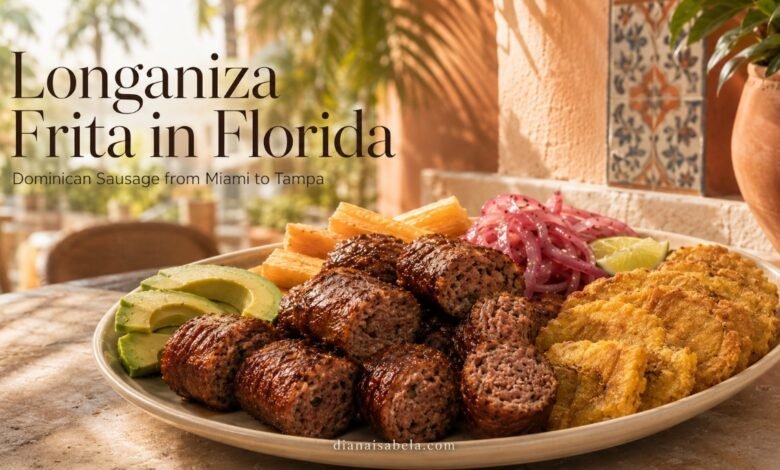
Florida is a funny place to look for Dominican longaniza because the state never seems interested in keeping one Caribbean food tradition neatly inside its own lane. Miami folds Dominican flavors into polished restaurants and late-night menus. Central Florida mixes Dominican and Puerto Rican street-food vocabulary around Kissimmee and Orlando. Tampa Bay still gives you the deeply satisfying simplicity of a fritura counter where sausage, tostones and fried sweet potato can constitute a perfectly reasonable plan for dinner.
For longaniza, that variety is useful. A sausage listed as a seven- or eight-dollar side in Miami tells a different story from a $16.99 mangú breakfast in Kissimmee or an $18 fritura order in Tampa. The trick is making sure they are actually telling the story we came for. “Longaniza” can describe several Latin sausage traditions, and Florida’s broad Caribbean food culture makes careless labeling particularly easy.
So I have been strict here. I want Dominican identity, current menu evidence and, whenever possible, explicit fried preparation. When the menu simply confirms Dominican longaniza inside a fritura section, I say exactly that. When it literally calls the sausage fried, even better. And when a restaurant serves longaniza but the technique is unclear, it remains interesting without magically becoming longaniza frita through editorial optimism.
Miami has the clearest literal description at El Tiesto Cafe, where the current menu calls its longaniza a “Dominican seasoned fried pork sausage.” Tampa Bay gives you two strong fritura-style options: La Casa del Chimi in Riverview explicitly lists Longaniza Frita, while La Picalonga in Tampa sells longaniza under its Fried Favorites section with a choice of fries, tostones or fried sweet potato. In Kissimmee, Dominican Chimi currently lists a $10 solo order specifically described as Dominican Fried Sausage.
Florida does not have one longaniza scene — it has three
The geography matters because a Miami restaurant, a Kissimmee Dominican street-food counter and a Tampa fritura are not competing to deliver the same experience. I would choose between them based on the kind of meal I wanted rather than trying to crown one statewide sausage champion, a job that sounds prestigious until you realize how much fried pork it requires.
Think of Florida as three different longaniza moods
For the broader national picture, including the states where current menu evidence is strongest, see where to find longaniza frita in the U.S. Florida earns its own guide because the same sausage moves through several distinct Caribbean dining formats within one state.
El Tiesto Cafe — Miami
Clearest Miami matchI like El Tiesto for this guide because the menu saves us from interpretation. It does not simply say sausage. It does not ask us to infer frying from the dishes sitting around it. It explicitly identifies the side as Dominican, pork and fried. For a local food guide, that sentence is almost luxurious.
The portion is sold as a side, which also changes how I would use this restaurant. I would not necessarily come here expecting the same enormous fritura experience you can build in Tampa or Kissimmee. Instead, the smaller longaniza portion lets you add Dominican sausage to a broader meal and control how much of the table it occupies.
El Tiesto’s larger menu moves between Dominican ingredients and more contemporary presentation, so this is the option I would choose when dining with people who are not all committed to an evening devoted exclusively to fried Caribbean food. One person can taste longaniza; another can order seafood or a larger entrée; nobody has to negotiate custody of a five-meat picadera.
Dominican Chimi — Kissimmee
Best street-food energyKissimmee is where the Florida page becomes less polished and more fun. Dominican Chimi does not ask longaniza to behave like a tasteful little side dish. It can be the solo fried sausage, one part of a giant mixed pica-longa, or the extra “hit” on a mangú breakfast. This is exactly the kind of menu where longaniza starts showing how flexible it is within Dominican casual food.
The $10 solo order is the cleanest choice if your goal is sausage rather than spectacle. But the menu’s much larger pica-longa is useful cultural context: longaniza can share the tray with beef, chicken, pork, potatoes, tostones, mofonguito, cheese and salami. That is not subtle dining. It is the culinary equivalent of inviting everyone you know and discovering they all brought a friend.
The breakfast option is more useful for someone trying to understand Dominican sausage vocabulary. Los Cuatro Golpes puts longaniza beside mangú, salami, queso frito and egg, so longaniza does not replace the classic salami automatically; it becomes an additional component. That difference matters because online descriptions frequently flatten every Dominican breakfast sausage into the same category.
La Picalonga — Los Primos del Sabor, Tampa
Best classic fritura choiceLa Picalonga may be the most straightforward Florida answer for the person who wants longaniza to arrive as part of a recognizably Dominican fried-food meal. The menu is built around frituras rather than merely happening to contain a sausage side, and the starch choice immediately tells you how you can steer the plate.
Tostones are the obvious first move if you want crisp against crisp. Fried sweet potato changes the balance by adding sweetness against the salty, garlicky richness of sausage. Fries are familiar and perfectly functional, although I would personally come to a Dominican fritura and give the plantains or batata first refusal.
The interesting part is that the sides do more than fill space. A fatty sausage needs contrast. Green plantain stays relatively restrained in flavor; sweet potato pulls the whole meal sweeter; acidity or a fresh condiment can prevent the plate from becoming a competition between fried surfaces.
La Casa del Chimi — Riverview
Most explicit Tampa Bay fritaLa Casa del Chimi is probably the cleanest Tampa Bay evidence because we do not have to rely only on the category name. The current menu actually uses the phrase longaniza frita for the solo side. That gives you two useful ways into the dish: the full fritura order or a cheaper sausage-only portion.
I particularly like that distinction for someone comparing restaurants. Buying the solo portion makes sense if you are already ordering another dish or simply want to taste the sausage. The $12.50 fritura version makes more sense when longaniza is the meal rather than the supporting actor.
The same menu also offers mofongo with Dominican longaniza for $16. That gives Riverview three levels of commitment: taste the sausage alone, order it as fritura, or let mashed fried plantain absorb the entire situation.
Pick the Florida stop by how you want to eat, not by mileage alone
With four genuinely different current menu situations, “best” becomes less useful than “best for what?” Florida is long enough without voluntarily driving three hours for a sausage format that was never the one you wanted.
For the cleanest Miami taste
El Tiesto. Explicit fried Dominican pork sausage, sold as a manageable side, with easy access to tostones or yuca.
For breakfast culture
Dominican Chimi. The solo fried sausage is useful, but the Cuatro Golpes option shows how longaniza enters a fuller Dominican morning plate.
For classic fritura
La Picalonga or La Casa del Chimi. Both place longaniza directly inside fried-food vocabulary rather than forcing us to guess from a generic sausage listing.
If you are choosing the plate rather than the city, my separate guide to the best sides and pairings for longaniza frita explains why tostones, mangú, yuca, onions and avocado change the sausage in very different ways.
The useful Florida price picture runs from a taste to a full breakfast
I am deliberately not turning these current prices into a statewide “average.” One is a side, one is a solo sausage order, one comes with fried starch and another is an entire breakfast. Averaging them would produce a precise-looking number that describes absolutely nothing you can order.
Current published prices checked for this guide
The useful observed range for a focused sausage order is therefore roughly eight to eighteen dollars across these current menus, but the portion format and included sides vary substantially. Treat that as a shopping map, not an official Florida average.
My first bite would be boring on purpose
If you have never eaten Dominican longaniza, the temptation is to order the plate containing the most Dominican things possible. Mangú, fried cheese, salami, egg, onions, tostones — suddenly the sausage is sitting in the middle of a small Caribbean parliament and you are trying to determine which flavor came from where.
I would do the opposite. Start with fried longaniza plus one quiet starch. Tostones are ideal because green plantain does not compete aggressively with the sausage’s seasoning. Yuca works beautifully when you want something denser. Only after you understand the sausage would I move into Cuatro Golpes, mofongo or the giant mixed trays.
What I want from that first piece
If you want the sensory baseline before comparing Florida restaurants, see what Dominican longaniza should taste and feel like.
Florida heat is not your fried-food delivery assistant
Longaniza itself is fairly resilient compared with delicate fried foods. The sausage has structure, a casing and enough internal fat to stay pleasurable after a short drive. The problem is everything happening inside the takeout box. Hot food releases steam; steam softens fried surfaces; rendered fat has nowhere to go except downward. Florida’s climate does not exactly volunteer to cool the situation.
Tostones usually suffer first because their appeal depends so heavily on a dry crisp exterior. Fried cheese also changes quickly as it cools. Mangú has the opposite problem: it does not need crispness, but it can become denser as it sits. A solo longaniza order therefore travels differently from a full fritura or Cuatro Golpes breakfast.
If I were driving twenty or thirty minutes, I would keep wet onions or sauces separate when possible and open the container shortly after arriving instead of letting everything steam politely together while I answer emails. For leftovers, the dedicated fried longaniza reheating guide is a better strategy than treating the microwave’s highest setting as a culinary philosophy.
Florida’s Caribbean abundance is exactly why labels matter
This state is rich in Dominican, Puerto Rican, Cuban and broader Latin food, and that is a wonderful thing for dinner. It is less wonderful for lazy categorization. Longaniza can belong to several culinary traditions, and similar menu words do not guarantee the same seasoning, casing, curing style or serving context.
That is why this page does not include every Florida restaurant that happens to sell “Spanish sausage,” chorizo or some unspecified longaniza. I want the menu or restaurant identity to give us a credible Dominican connection. When the wording literally says Dominican fried sausage, the evidence is excellent. When it says Dominican longaniza inside a fritura section, the context is strong. When cuisine identity is mixed or preparation remains vague, caution is more useful than enthusiasm.
Even within a Dominican restaurant, longaniza does not have to be fried every time. It can appear over mofongo or inside another composed dish. The ingredient remains longaniza; the preparation has changed. A useful local guide should be capable of holding both thoughts at once.
Before crossing Florida for sausage, confirm the thing that matters to you
Menus are snapshots. Restaurants change portion sizes, prices and combinations. A fritura counter can sell through an item. An ordering platform can show one price while pickup shows another. That uncertainty does not make restaurant research useless; it simply means a special trip deserves one final check.
Four questions worth asking
“Do you have longaniza today?”
Especially useful for smaller fritura businesses and late-day orders.
“Is your longaniza fried?”
Ask this whenever the current menu confirms sausage but does not explicitly state the technique.
“Does that price include a side?”
Florida’s current examples range from a solo side to full fritura and breakfast combinations.
“What sides can I choose?”
Tostones, batata, yuca and mangú create substantially different meals around exactly the same sausage.
I would not overcomplicate this for El Tiesto or the solo Dominican Chimi order, where the menu already states fried sausage clearly. The call-first rule becomes more useful whenever menu wording is less precise or you are driving far enough that being wrong would become a personal grievance.
Florida always has one more counter I haven’t found yet
This is the part of Florida food culture I love: a polished Miami menu can lead to one version of longaniza, a Kissimmee street-food place can turn it into breakfast at noon, and somewhere in Tampa a fritura is quietly deciding whether today calls for tostones or fried batata. The dish moves without losing its Dominican personality.
If you know a Florida Dominican restaurant, food truck, cafeteria or fritura serving excellent fried longaniza — especially somewhere outside the obvious Miami, Orlando/Kissimmee and Tampa corridors — write to me at info@dianaisabela.com. Send the location, what comes with the sausage, the current price if you know it, and a menu or food photo if you have one. I am always interested in the places that opened last month, the plates that never made it onto the polished website and the local details that make a food guide worth keeping.
Where can I find Dominican longaniza frita in Florida?
Strong current options include El Tiesto Cafe in Miami, Dominican Chimi in Kissimmee, La Picalonga in Tampa and La Casa del Chimi in Riverview. El Tiesto and Dominican Chimi explicitly describe their sausage as fried, while La Casa del Chimi currently lists a solo Longaniza Frita order.
How much does longaniza frita cost in Florida?
Current menu examples in this guide range from about $7.80 to $18 for focused longaniza orders, depending on whether the sausage is sold as a side, solo order or meal with a fried starch. Full breakfast combinations can cost more.
Where should I try longaniza frita in Miami?
El Tiesto Cafe currently offers one of the clearest Miami menu descriptions: a Dominican seasoned fried pork sausage sold as a side. It can be paired with options such as tostones or fried yuca.
Can I find Dominican fried longaniza in Kissimmee?
Yes. Dominican Chimi currently lists Longaniza Sola as Dominican Fried Sausage for $10. The same menu also offers longaniza in a Cuatro Golpes breakfast with mangú, salami, fried cheese and egg.
Where can I find longaniza frita near Tampa?
La Picalonga in Tampa currently lists longaniza under its Fried Favorites section with a choice of fries, tostones or fried sweet potatoes. La Casa del Chimi in nearby Riverview explicitly lists a solo Longaniza Frita order as well as a larger fritura portion.
What should I eat with longaniza frita in Florida?
Tostones are an excellent first pairing because their mild green-plantain flavor keeps the sausage prominent. Yuca provides a denser starch, fried sweet potato adds sweetness, and mangú works especially well for a Dominican breakfast plate.
Is every longaniza in a Florida Latin restaurant Dominican?
No. Longaniza exists in several Latin and Spanish culinary traditions. Restaurant identity, menu wording and preparation should be checked before assuming a sausage is Dominican longaniza.
Is Dominican longaniza always fried?
No. Dominican longaniza can appear in several preparations or as part of dishes such as mofongo. A menu that simply says longaniza does not automatically prove that the sausage is fried.
Does longaniza frita travel well for takeout?
The sausage can travel reasonably well, but its casing gradually softens in a closed container. Tostones and other fried sides generally lose crispness faster because trapped steam affects their surfaces.