Best Bulgur for Kisir: How Fine, Medium and Coarse Grains Change the Salad

Choosing bulgur for kısır sounds like a small grocery decision, but it determines almost everything that follows. The right grain softens quickly, absorbs the red seasoning base, and leaves the salad tender without becoming mushy. The wrong grain may stay hard in the middle, demand boiling, or produce a bowl that feels more like pilaf than the cool Turkish salad you intended to make.
This guide focuses on the buying and preparation questions that usually appear only after a recipe has already gone wrong: what “fine” really means, why package labels vary, how Turkish market terminology differs from ordinary supermarket wording, whether medium bulgur can be rescued, and how much water the grain actually needs. For a broader introduction to the dish, read What Is Kisir?. To find prepared versions at restaurants and shops, use the Kisir Bulgur Salad Near Me guide.
The answer most cooks need before shopping
The best bulgur for traditional kısır is fine or extra-fine bulgur, often sold as ince bulgur or köftelik bulgur. It should look like tiny cracked wheat particles rather than round pearls or large jagged pieces. This grade is small enough to soften with hot water and rest time, yet substantial enough to retain a delicate grain texture after the paste, oil, herbs and lemon are mixed through it.
In a Turkish grocery store, the ideal package may not mention kısır in English. Instead, look for words such as ince, köftelik, fine, extra fine, or sometimes fine dark bulgur. “Köftelik” literally points toward bulgur used for köfte-style preparations, which is useful because kısır, mercimek köftesi and meatless çiğ köfte all depend on a small grain that can hydrate and bind without becoming porridge.
Medium bulgur can make an acceptable grain salad, but it rarely gives the classic kısır texture. It usually needs more hot water, a longer rest, and sometimes actual simmering. Even when fully tender, the larger particles remain more obvious on the tongue. That creates a looser, chewier salad. Coarse bulgur is better saved for pilaf, soups, stuffing, or dishes in which the wheat should remain visibly separate.
The color of the dry grain is less important than its size. Bulgur may appear pale golden, amber, brown, or reddish depending on the wheat variety and processing. Dark bulgur can produce a deeper, nuttier salad, while lighter bulgur creates a brighter orange-red result. Both can work if the grind is fine. The package’s grain-size description matters more than whether the wheat is light or dark.
Do not confuse bulgur with couscous, cracked wheat, freekeh, quinoa, or pearled wheat. Couscous is a pasta product, not cracked parboiled wheat. Plain cracked wheat has not necessarily been precooked and may require much longer cooking. Freekeh is roasted green wheat with a smoky flavor. Quinoa is a seed and behaves entirely differently. These ingredients can support creative salads, but they do not reproduce the characteristic structure of kısır.
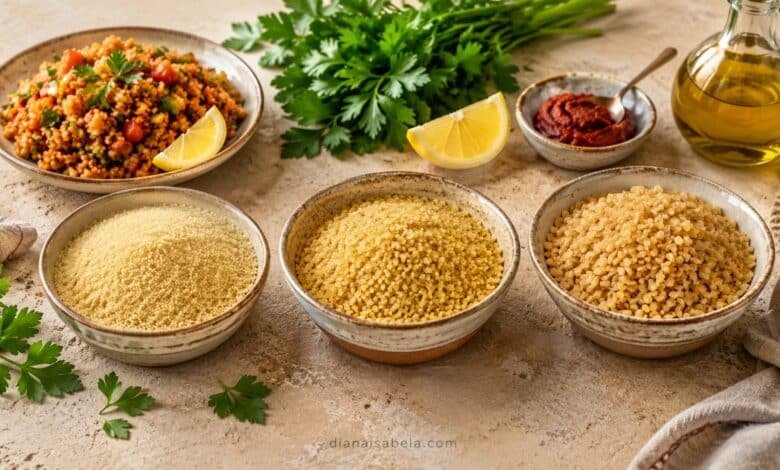
Three bowls of bulgur can lead to three different dishes
Bulgur is wheat that has been cooked or parboiled, dried, and cracked into different sizes. That processing is why fine bulgur can soften through soaking rather than prolonged boiling. The size categories sound simple, yet labels are not perfectly standardized across brands or countries. One company’s “fine” may resemble another company’s “extra fine,” and some American supermarket packages offer only one general-purpose grind.
Fine and extra-fine bulgur
Fine bulgur has the highest surface area relative to each particle. Hot water reaches the center quickly, while paste and oil coat thousands of tiny pieces. Once hydrated, the grains become tender and flexible. They should still be visible, but the salad feels cohesive because the particles nestle together with herbs and chopped vegetables.
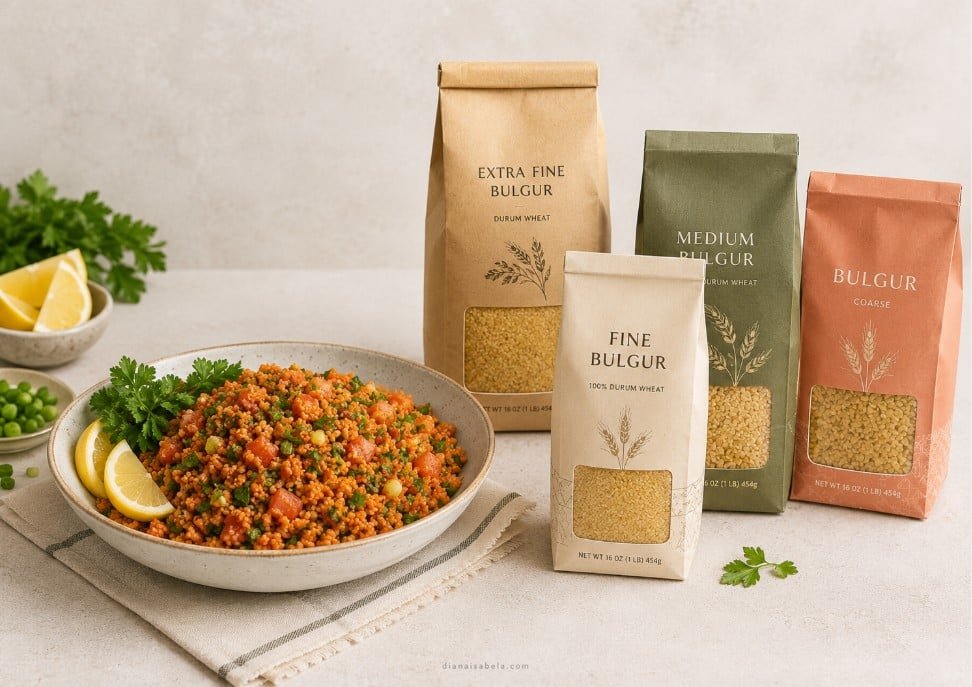
Extra-fine bulgur can work especially well when the cook wants a softer, more integrated kısır. It absorbs seasoning rapidly, so it is important not to flood it with water. The distinction between fine and extra fine is not always useful in practice; both can be appropriate. The safest approach is to examine the grain through a clear package window or compare product photos before ordering online.
A fine grind also changes the flavor. Because more surface is exposed, the bulgur picks up pepper paste, tomato paste, lemon, olive oil and pomegranate molasses evenly. The finished salad tastes seasoned through the grain rather than dressed only on the outside. That is one reason kısır made from medium bulgur can seem bland even when the ingredient quantities look correct.
Medium bulgur
Medium bulgur sits between salad grain and pilaf grain. It may hydrate with boiling water in a covered bowl, but the process is less predictable. Some brands soften adequately after a long rest; others remain firm unless simmered. The larger pieces also release less starch into the mixture, so the salad stays looser.
Medium bulgur is not automatically a failure. It can create a pleasant, hearty lunch salad, particularly when combined with roasted vegetables, beans, feta or grilled food. The problem is expectation. If the goal is a delicate tea-time kısır served in lettuce leaves, medium bulgur will feel too robust. If the goal is a substantial grain bowl inspired by kısır flavors, it may be perfectly enjoyable.
When medium bulgur is the only option, hydrate it separately before adding paste. Use enough hot water to soften the center, drain any excess, and let the grains cool slightly. Then work in the seasoning. Adding paste too early can make it difficult to judge whether the grain itself is fully tender.
Coarse and very coarse bulgur
Coarse bulgur is designed to remain distinct. It is excellent for pilaf because the larger particles hold shape during simmering. In kısır, however, those same qualities work against the intended texture. The grain dominates each bite, herbs fall between the pieces, and the paste coats rather than penetrates.
Trying to force coarse bulgur into kısır usually creates one of two problems. If it is undercooked, the center is hard and distracting. If it is cooked until soft, the outside may become swollen while the salad still lacks the fine, compact structure associated with the dish. The result is not necessarily bad food, but it belongs closer to a warm bulgur pilaf salad.
Fine: kısır, mercimek köftesi, meatless çiğ köfte. Medium: hearty salads and some stuffings. Coarse: pilaf, soups, casseroles and dishes where the grain should stay separate.
The package may tell you everything—just not in the words you expected
Imported bulgur often carries several languages, multiple size numbers, or regional terms. A shopper who searches only for “kisir bulgur” may overlook the correct product because the manufacturer assumes Turkish customers already understand the category. Learning a few package words is more reliable than depending on a recipe photo.
İnce bulgur means fine bulgur. This is the clearest general label. Köftelik bulgur refers to bulgur intended for köfte-like mixtures and is usually fine enough for kısır. Esmer may indicate darker or brown bulgur. Pilavlık bulgur means bulgur for pilaf and is usually too coarse. İri bulgur means large or coarse bulgur. If a package says both köftelik and ince, it is almost certainly in the right category.
Number systems are less dependable. Some brands use #1 for the finest grind and increase the number with size. Other products use internal grade names that do not match competitors. Treat the number as useful only within one brand. When changing brands, compare the actual grain rather than assuming the same number means the same texture.
American natural-food labels may use “fine bulgur,” “quick-cooking bulgur,” or simply “bulgur wheat.” Quick-cooking can be suitable, but check the grain. Some quick products are still medium in size and are designed for hot cereal or side dishes. A recipe instruction that says “pour boiling water over the bulgur and cover” is a helpful clue, but the visual size remains the better test.
Online product photos can be misleading because package images are often enlarged while the grain window is small. Read reviews for comments about grind size, not only flavor. Search within reviews for terms such as fine, tiny, coarse, pilaf, tabbouleh, kısır or köfte. Buyers who complain that a product is “too small for pilaf” may actually be confirming that it is useful for kısır.
Ingredient lists should be simple. Traditional bulgur is usually just wheat or durum wheat. Some flavored mixes include salt, spices, dehydrated vegetables or seasoning packets. Those products limit control over acidity and paste and are less useful for kısır. A plain package allows the salad to develop its own profile.
For shoppers managing allergies, bulgur is wheat and contains gluten. “Whole grain” does not mean gluten-free. Cross-contact labeling may vary by manufacturer, so the package should be checked directly when allergies are involved.
Fine bulgur does not need much water; it needs restraint and time
The most common technical mistake in homemade kısır is treating fine bulgur like rice. Rice is cooked in enough water to expand fully while heat remains active. Fine bulgur has already been processed and only needs to rehydrate. Too much water fills the spaces between the particles, dilutes the seasoning, and leaves the salad heavy.
A practical starting point is slightly less hot water than the volume of fine bulgur, though exact needs vary by grind and brand. Some cooks use equal volumes; others use less because tomato paste, lemon, oil and fresh vegetables add moisture later. The safest method is to begin conservatively. More hot water can be added by the spoonful, but excess water cannot be removed without losing flavor or damaging texture.
Place the bulgur in a wide bowl so steam and moisture distribute evenly. Pour over very hot or boiling water, stir once, cover tightly, and leave it undisturbed. Fine bulgur may soften in ten to twenty minutes. Opening the bowl repeatedly releases steam and encourages uneven hydration.
After resting, fluff and taste a few grains before adding anything else. The particles should be tender but not wet. A faint firmness is acceptable because the paste, oil and acidic ingredients will continue to soften the grain. A hard white center means more water and rest are needed. Visible liquid means too much water was used.
Many traditional methods work tomato and pepper paste into the warm bulgur before the herbs are added. Warm grain absorbs the paste more readily, and hand mixing or firm spoon mixing distributes color evenly. Oil may be added with the paste or shortly afterward. Lemon and pomegranate molasses should be adjusted gradually because their sharpness can increase as the salad rests.
Fresh herbs should enter after the grain has cooled enough not to wilt them. Tomatoes and cucumber, when used, should be finely chopped and added near the end. Their water content can loosen the salad. If the kısır will be stored overnight, watery vegetables may be better served beside it rather than mixed through the whole batch.
Resting after mixing matters. A freshly combined bowl can taste separate: lemon in one direction, pepper paste in another. After twenty to thirty minutes, the grain absorbs the dressing and the flavors become rounder. Taste again before serving. Often the salad needs a little lemon, salt or olive oil rather than more paste.
When the bowl disappoints, the grain usually explains why
Kısır is forgiving in flavor but unforgiving in texture. Extra lemon can be balanced with oil. A mild bowl can be sharpened with pepper flakes. A grain problem is harder to hide. Understanding the symptom helps prevent the next batch from following the same path.
The bulgur is still crunchy
The grind may be larger than the package suggested, the water may not have been hot enough, or the bowl may have lost steam. Add a small amount of boiling water, stir, cover and wait. Do not pour in a full additional cup. Fine bulgur can move from dry to soggy quickly.
If the grain remains hard after repeated resting, it is probably medium or coarse bulgur. At that point, gentle simmering may be necessary. The final dish will be looser, but it can still be seasoned in the kısır style.
The salad is wet and heavy
Excess hydration is the usual cause. Spread the mixture in a wide tray so steam can escape, then allow it to cool uncovered. More herbs can add freshness, but adding dry bulgur directly is risky because it may not hydrate evenly. If the bowl is severely wet, repurpose it as a base for stuffed vegetables or serve it with crisp lettuce rather than trying to force a perfect salad.
The mixture feels like paste
Extra-fine bulgur can become dense when overhydrated or kneaded too aggressively. Tomato paste also thickens the mixture. Fold rather than mash after the initial seasoning is distributed, and keep watery ingredients controlled. A few chopped scallions, parsley and lettuce can improve a dense bowl, but the underlying grain texture cannot be fully restored.
The flavor sits on the outside
This often happens with medium bulgur or with grain that cooled completely before the paste was incorporated. Warm fine bulgur takes seasoning into its surface. Larger cold grains behave more like a dressed salad. The solution next time is a finer grind and earlier seasoning.
The salad dries out in the refrigerator
Bulgur continues to absorb moisture during storage. A well-balanced bowl can feel firm the next day. Let it stand at room temperature briefly, fluff it, then add a small amount of olive oil and lemon. Do not automatically add water; water softens but does not restore flavor.
The color is pale
Pale kısır is not necessarily wrong, especially in lemon-forward household styles. If deeper color is desired, use red pepper paste rather than simply increasing tomato paste. Pepper paste adds both color and flavor, while too much tomato paste can make the salad sweet, dense and metallic.
The best place to buy bulgur may not be the largest supermarket
Turkish, Middle Eastern, Mediterranean, Armenian and international grocery stores usually offer the widest range of bulgur sizes. Instead of one generic bag, they may stock separate shelves for köftelik, pilavlık, fine, coarse, light and dark bulgur. That selection makes it easier to choose by texture rather than compromise.
At a Turkish market, ask for “ince bulgur for kısır” or “köftelik bulgur.” Showing a photo of the dish can help if language is a barrier. Staff may recommend a local favorite or explain which brand is finer. The correct bag is often inexpensive and shelf-stable, so buying two brands for comparison can be useful if kısır will become a regular dish.
Large supermarkets may place bulgur in the rice aisle, international aisle, natural-food section, or near couscous and quinoa. Check all four. Bulk-food departments sometimes carry fine bulgur, but the bin label may not specify the grind. Compare the particles visually before purchasing.
Online shopping offers variety but removes the ability to feel or inspect the grain closely. Favor listings that show a transparent window, state fine or köftelik clearly, and provide the package weight. A very low price can be offset by shipping, while a multipack may be excessive unless the grain is used often.
Buying the largest bag is not always economical. Bulgur is stable, yet its nutty aroma fades and pantry odors can transfer into an opened package. A household making kısır once or twice a month may prefer one- or two-pound bags. Frequent cooks can buy larger quantities and divide them into airtight containers.
Price should not be treated as a direct measure of quality. Bulgur is a basic grain, and excellent Turkish brands are often affordable. The decisive qualities are correct grind, clean aroma, intact packaging and consistent hydration. Decorative packaging does not improve the salad if the grain is too coarse.
One package can make very different bowls depending on quantity and style
Grain size is the first decision, but quantity determines whether the finished dish behaves like a garnish, a shared mezze or a complete lunch. Dry bulgur expands as it hydrates, and the herbs, vegetables, paste and oil add substantial volume. A cup of dry fine bulgur does not produce only one cup of salad. It can become a generous family bowl once the remaining ingredients are folded through it.
For a first attempt, a smaller batch is easier to control than a party tray. Using roughly one cup of dry fine bulgur gives enough room to learn how the brand absorbs water without wasting a large amount if the texture is wrong. It also makes seasoning corrections easier. A bowl built from three or four cups of dry grain may need more paste, acid and herbs than expected, and small measuring errors become expensive.
Think in serving roles rather than exact numbers. As a small mezze among several dishes, each person may take only a few spoonfuls. As a side beside kebabs or grilled vegetables, the portion grows. As a vegetarian lunch wrapped in lettuce leaves, a diner may eat several times the mezze amount. Catering estimates should therefore ask what else will be served. A tray described as serving ten may feed far fewer people when kısır is the central dish.
Fine bulgur also allows the cook to decide how grain-forward the salad should be. A traditional household bowl can range from compact and substantial to green and herb-heavy. Increasing parsley, mint, scallions and lettuce makes the salad feel lighter without changing the bulgur grade. Increasing paste and reducing vegetables makes it denser and more intensely seasoned. The same package can therefore support very different styles.
Light-colored and dark bulgur deserve a separate note. Pale bulgur tends to let the red paste appear brighter and may have a gentler wheat flavor. Dark bulgur can taste nuttier and produce a deeper brick-red or brown-red bowl. Neither is automatically more authentic. The better choice depends on whether the cook wants a clean, bright profile or a more earthy one. What should remain consistent is the fine grind.
Whole-grain and dark bulgur may absorb water at a slightly different rate from pale fine bulgur. Even within the same size category, bran content and processing affect hydration. This is another reason a fixed recipe ratio should be treated as a starting point rather than a law. The first batch with a new brand is partly a test of that grain.
Meal prep changes the preferred texture. Kısır that will be eaten immediately can be softer and more acidic. A batch prepared for several lunches should begin slightly firmer because the grain continues to absorb moisture in the refrigerator. Tomatoes, cucumber and lettuce can be kept separate and added before eating. This preserves freshness and prevents the stored bowl from becoming watery.
For a picnic or potluck, a compact fine-bulgur version travels better than a loose salad made with medium grain. The tiny particles hold together and stay easy to scoop. Pack lettuce, lemon wedges and delicate herbs separately, then add them at the destination. The salad itself should remain cold during transport even though it is commonly served near room temperature.
When doubling a recipe, do not blindly double every sour or salty ingredient at once. Bulgur and water scale predictably; lemon, pomegranate molasses, pepper paste and salt do not always taste balanced at a strict two-to-one ratio. Begin with most of the calculated amount, mix thoroughly, allow the bowl to rest, and finish by taste. Large batches need more mixing time for seasoning to reach the center.
The bowl used for mixing matters more as quantity grows. A narrow deep bowl encourages overworking at the top while leaving pale grain underneath. A wide basin or roasting tray gives the cook room to distribute paste and herbs without crushing the grain. For very large batches, mix in stages and combine them at the end.
Use one package of clearly labeled fine bulgur only after checking the grain size. Make a modest batch, record how much hot water it needed, and note the resting time. The second batch will be more consistent because the brand is no longer an unknown variable.
Leftover dry bulgur is not limited to kısır. Fine bulgur can also be used in lentil patties, meatless köfte-style mixtures, soups that need gentle thickening, or other herb-rich salads. That versatility makes a proper package more useful than a one-recipe specialty purchase. Medium and coarse bulgur, meanwhile, can remain in separate containers for pilaf and cooked grain dishes.
The useful buying question is therefore not simply “Which package is best?” It is “Which fine bulgur gives the texture I want, in a quantity I can keep fresh, for the way I plan to serve kısır?” Once those three decisions are clear, brand differences become much easier to judge.
Fresh grain is quiet in aroma, clean in flavor and easy to store
Unopened bulgur should be kept in a cool, dry pantry away from heat and direct sun. After opening, transfer it to an airtight container or reseal the bag carefully. The grain should smell mildly nutty or neutral. Strong mustiness, rancid oil aromas, visible moisture, webbing or insects are reasons to discard it.
Because bulgur is made from wheat, it contains natural oils that can eventually become stale. Warm kitchens shorten quality. Refrigeration or freezing is useful for large quantities, especially in humid climates. Bring cold grain to room temperature in a closed container before opening so condensation forms outside rather than on the bulgur.
Prepared kısır belongs in the refrigerator in a sealed container. Its quality is best during the first few days, though exact safety depends on ingredients, handling and refrigeration. Lettuce and fresh garnish should be stored separately. Before serving, let the portion lose its refrigerator chill briefly and stir gently.
Freezing prepared kısır is possible but usually disappointing. Herbs darken, vegetables release water, and the grain texture changes after thawing. Freezing dry bulgur is much more successful. Keeping the pantry ingredient ready is better than freezing the finished salad.
Label containers by grind. Fine and medium bulgur can look similar once removed from branded packages. A simple note such as “fine/kısır” prevents the wrong jar from being used months later.
What type of bulgur is best for kısır?
Fine or extra-fine bulgur is best. Turkish packages may call it ince bulgur or köftelik bulgur. It softens through soaking and absorbs the seasoning evenly.
Can I use medium bulgur for kısır?
Yes, but the result will be chewier and looser. Medium bulgur often needs more water, a longer rest or brief cooking before it becomes tender.
Can coarse bulgur be used for kısır?
Coarse bulgur is better for pilaf. It remains too prominent for the classic fine, cohesive texture of kısır and usually requires simmering.
Is köftelik bulgur the same as fine bulgur?
It is generally a fine bulgur intended for mixtures such as köfte, kısır and mercimek köftesi. Exact particle size can still vary by brand.
Does bulgur need to be cooked for kısır?
Fine bulgur usually needs only very hot water and covered resting. Medium or coarse grinds may require simmering.
How much water should I add to fine bulgur?
Start conservatively, often with slightly less hot water than the volume of bulgur. Brand and grind matter, so add more only after checking the center.
Why is my kısır mushy?
Too much water, very fine grain, excessive kneading or watery vegetables can make the mixture dense and mushy.
Is bulgur gluten-free?
No. Bulgur is made from wheat and contains gluten.
Where can I buy fine bulgur?
Look in Turkish, Middle Eastern, Mediterranean or international grocery stores, larger supermarket international aisles, bulk-food shops and online retailers.
How should opened bulgur be stored?
Keep it in an airtight container in a cool, dry place. Refrigeration or freezing can protect large quantities in warm or humid kitchens.