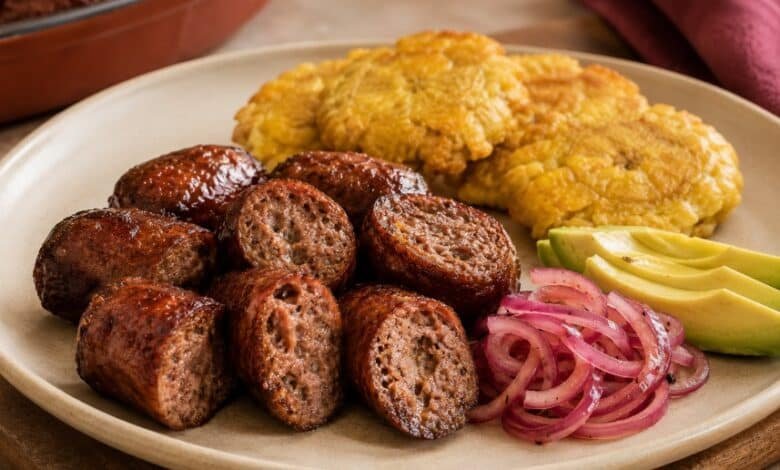
Fried longaniza has one small personality flaw: it is very aware that it was better five minutes after frying than it will be tomorrow afternoon.
Fresh from the pan, Dominican longaniza can give you browned casing, rendered edges and a juicy interior. Put it in a closed takeout container, refrigerate it and reheat it carelessly the next day, and those qualities start negotiating against one another. Too much dry heat can toughen the casing and dry the meat. Too much moisture can soften everything you wanted crisp. A microwave can heat the sausage quickly but may leave you with hot fat, soft casing and uneven temperature if you simply press a button and hope for character development.
The good news is that fried longaniza reheats quite well when you treat it like the fatty, already-cooked sausage it is. You do not need to fry it all over again. You need enough heat to warm the center safely while giving the exterior a chance to recover some of its browned texture.
And if your takeout order came with mangú, tostones, yuca, onions or queso frito, do not reheat the entire container as if those foods have signed a collective agreement. They want very different things.
For the best texture, reheat fried longaniza with relatively dry heat in an air fryer, oven or skillet rather than cooking it again in a pool of oil. Arrange the pieces in a single layer and heat only until they are thoroughly hot. For food safety, previously cooked leftovers should reach 165°F (74°C) internally. If using an oven, set it to at least 325°F (163°C).
The goal is not to fry it twice
Dominican longaniza frita is already cooked. When you reheat leftovers, you are trying to restore heat and some surface texture without continuing to cook the interior far beyond where it was meant to go.
That is why I prefer methods that let moisture escape from the exterior instead of trapping the sausage in steam. Air fryers and ovens do this naturally. A skillet can do it too if you avoid adding unnecessary oil and keep the pieces moving enough to warm evenly.
Air fryer
Useful for smaller portions because moving hot air can warm the sausage while helping the casing and cut surfaces regain some texture.
Oven
Practical when several people are eating or when you have enough longaniza that cramming everything into a small basket would defeat the purpose.
Skillet
Excellent for a few pieces because you can watch the sausage directly and stop as soon as the exterior is hot and appealing again.
Microwave
Completely usable when speed matters, but it is the least helpful method if crisp casing is your main ambition.
The sausage’s original condition matters too. Longaniza that was well browned and juicy yesterday has something to recover. Longaniza that began dry and overfried will not suddenly discover a new personality because it met an air fryer.
If you are not sure what good fried longaniza should feel like before leftovers enter the story, my Dominican longaniza flavor and texture guide explains the fresh version first.
The air fryer is my first choice for a small portion
Longaniza and circulating hot air are well suited to each other because the sausage already contains fat. You generally do not need to coat leftover fried longaniza in more oil simply to make it hot again.
Cut pieces are convenient here because hot air reaches more surface area, although that also means they can dry faster than a larger section of sausage. Watch the food rather than trusting one universal reheating time for every thickness, refrigerator temperature and air fryer model.
There is also a nice bit of symmetry here: Dominican longaniza can be prepared in an air fryer from the beginning, so using the same style of dry circulating heat for leftovers makes culinary sense without pretending the reheated result will be identical to freshly fried sausage.
The oven is better when leftovers have become a group project
If you have a larger amount of longaniza, the oven gives the pieces more room. That matters because overcrowding traps more moisture around the food and works against the surface texture you are trying to recover.
Use a shallow pan and spread the longaniza into one layer. You can turn pieces during reheating if one side is browning more quickly than the other. Again, the goal is not to create an entirely new crust. It is to heat the meat safely while letting the exterior dry enough to become pleasant again.
Diana’s leftover rule: if reheating makes the sausage much darker than it was when you bought it, you are probably solving yesterday’s problem by creating tomorrow’s jaw workout.
For leftovers, use an oven temperature of at least 325°F (163°C), and confirm that the sausage reaches 165°F (74°C) internally before serving.
A skillet works beautifully if you stay near it
The skillet method is useful for a modest portion because it gives you direct control over what the sausage surface is doing. Put the longaniza in the pan without automatically adding more cooking oil. The sausage may release enough of its own fat as it heats.
Use moderate heat rather than trying to shock cold leftovers with maximum flame. You want the center to heat through before the exterior becomes excessively dark or the casing toughens.
Turn the pieces so more than one side touches the pan. If the sausage begins releasing a significant amount of fat, you do not need to encourage the situation with another generous pour of oil.
This is especially effective with sliced or cut longaniza because the exposed meat surfaces can regain some browning. It is less hands-off than an oven, but for two or three breakfast portions I like the control.
The microwave is not forbidden; it simply has different priorities
Sometimes lunch is in seven minutes and nobody has invited the oven into the conversation. Use the microwave.
What you should not expect is the same crisp surface you get from dry circulating heat. Microwaving creates a moister environment, and the rendered fat inside sausage heats quickly. That can make the casing softer and the overall texture less fried.
Arrange the pieces evenly rather than making one dense pile. Cover the food appropriately, rotate or rearrange it for more even heating, and check the temperature in several places because microwaves can create hot and cold spots.
If texture matters enough to justify another step, microwave only as part of the process and briefly finish the sausage in a dry skillet. If speed matters more, eat the microwaved longaniza and continue with your day. Leftovers do not require moral perfection.
Three numbers matter more than any reheating trick
Keep these in mind
If food has been sitting at room temperature for more than two hours, reheating it aggressively is not a time machine. During very hot conditions above 90°F (32°C), the recommended window drops to one hour.
Store leftovers promptly in covered containers. Smaller portions cool more efficiently than leaving a large mass of hot food sitting around while everyone debates dessert.
And remember that “it smells okay” is not a replacement for proper storage. Food-safety decisions are much easier when you know when the food was cooked and refrigerated rather than conducting forensic work with your nose three days later.
Please do not reheat the whole Dominican plate as one organism
This may be the most useful practical advice on the page. Longaniza, mangú, tostones, onions and queso frito do not want the same reheating treatment.
Tostones
They benefit from dry heat because their entire appeal depends on fried surface texture. A microwave tends to move them in the opposite direction.
Mangú
Mangú needs moisture more than crispness. Reheat it separately and restore softness rather than trying to make mashed plantain behave like fried sausage.
Yuca
Yuca can dry as it sits, so it generally benefits from gentler reheating than the sausage. Keep it separate if you want control over texture.
Red onions
If the onions are vinegary or pickled, I would usually keep them cold or room-temperature rather than cooking away the sharp contrast that made them useful.
Queso frito
Fried cheese loses some of its fresh texture in storage. Reheat it separately with dry heat rather than burying it under moist mangú.
Avocado
Please leave the avocado out of the reheating operation entirely. Some ingredients have done nothing to deserve this.
This separation matters especially with breakfast leftovers. If you need a refresher on why soft mangú and crisp longaniza work together in the first place, see my longaniza frita with mangú guide.
If yesterday’s sausage already has problems, reheat accordingly
A good reheating method can improve texture, but it cannot reverse every decision made before the food reached your refrigerator. The quality of the original sausage still matters.
If you know there will be leftovers, plan for them before you leave the restaurant
Takeout changes fried food almost immediately because steam accumulates in closed containers. The sausage itself usually survives this better than a delicate fried crust because there is substantial meat and fat beneath the casing, but surface crispness still fades.
My ideal leftover setup
Keep wet or acidic components separate from the fried foods whenever the packaging allows it. Do not pour onions and their liquid over all the tostones if half the order is destined for tomorrow. Refrigerate leftovers promptly once the meal is over, and separate components before reheating so each food gets the treatment it actually needs.
This is also why I would not dismiss longaniza frita as bad takeout. It can travel reasonably well; you simply have to accept that the fried texture is temporarily on vacation and help it return later.
For a broader look at how longaniza fits with tostones, yuca, mangú and shared fritura plates, see my practical guide to eating longaniza frita.
Sometimes the correct reheating method is the trash can
This is less romantic than discussing crispy casing, but considerably more useful.
If cooked longaniza or the rest of the meal sat unrefrigerated for too long, do not rely on reheating to make it safe again. If properly refrigerated leftovers have gone beyond the recommended storage window, I would not gamble breakfast against food poisoning simply because the sausage still looks photogenic.
If you are reheating because you ordered more longaniza than one person reasonably needed — a situation I respect — the important sequence is simple: refrigerate promptly, store it properly, reheat to 165°F (74°C), then use dry heat intelligently if you want some of the fried texture back.
And if the leftovers have reminded you that you would rather start again with a fresh plate, my guide to finding Dominican longaniza in the U.S. is the place to continue.
Do you have a longaniza leftover trick I should try?
I am endlessly interested in the small kitchen habits that make regional food better the second time around — the way your family reheats longaniza, whether you keep the onions separate, a clever use for leftover mangú, a breakfast transformation, a recipe built from yesterday’s sausage, or a Dominican restaurant whose takeout survives the trip home unusually well.
If you have a reheating trick, leftover recipe, serving idea, new longaniza location, family story or food discovery connected to this dish, write to me at info@dianaisabela.com. I will genuinely be happy to hear from you. Together we can keep making this longaniza guide more practical, more delicious and more useful for everyone who has ever opened the refrigerator and wondered whether yesterday’s fried sausage can still have a respectable second act.
What is the best way to reheat fried longaniza?
For the best texture, use relatively dry heat such as an air fryer, oven or skillet. Arrange the sausage in a single layer and heat it only until thoroughly hot. Previously cooked leftovers should reach 165°F (74°C) internally when reheated.
Can you reheat fried longaniza in an air fryer?
Yes. An air fryer is especially useful for smaller portions because circulating hot air can warm the sausage while helping the casing and browned surfaces regain some texture. Avoid crowding the basket and check that the center reaches 165°F (74°C).
Can you microwave Dominican longaniza?
Yes. The microwave is a fast way to reheat cooked longaniza, but the casing may become softer than it would with an oven, skillet or air fryer. Arrange the pieces evenly, cover appropriately, rotate or rearrange them for even heating, and verify that the food reaches 165°F (74°C).
How long does cooked longaniza last in the refrigerator?
Cooked leftovers should generally be used within three to four days when properly refrigerated. If you will not use them within that period, freezing is a better option.
How hot should reheated longaniza be?
Previously cooked leftovers should reach an internal temperature of 165°F (74°C) when reheated. A food thermometer is the most reliable way to check the center.
Can I reheat longaniza and mangú together?
You can, but reheating them separately usually gives you more control over texture. Longaniza benefits from relatively dry heat, while mangú benefits from retaining or restoring moisture. Vinegary onions and avocado should generally stay out of the reheating process.
How do I keep reheated longaniza from getting greasy?
Avoid adding unnecessary oil and use a method that allows rendered fat and moisture to escape, such as an air fryer, oven or skillet. Heating the sausage only as long as necessary also helps prevent additional fat loss and drying.
How do I keep reheated longaniza from drying out?
Do not continue heating it simply to make the casing darker. Reheat only until the center is safely hot. Smaller cut pieces can dry faster than larger sections because more meat surface is exposed to heat.
Can fried longaniza be left out overnight and reheated?
No. Perishable cooked leftovers should be refrigerated within two hours, or within one hour when the surrounding temperature is above 90°F (32°C). Reheating food that has been left out too long does not make improper storage safe.