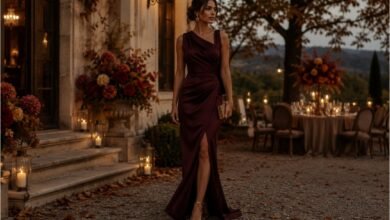
Wedding Guest Dress Etiquette: The Stylish Rules Every Guest Should Know

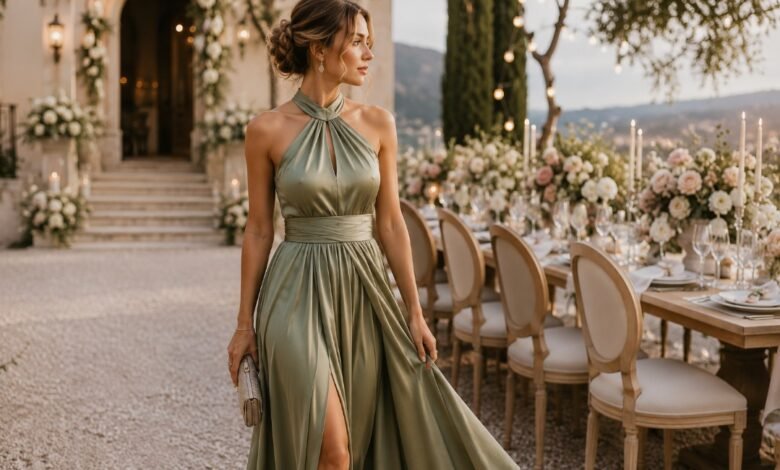
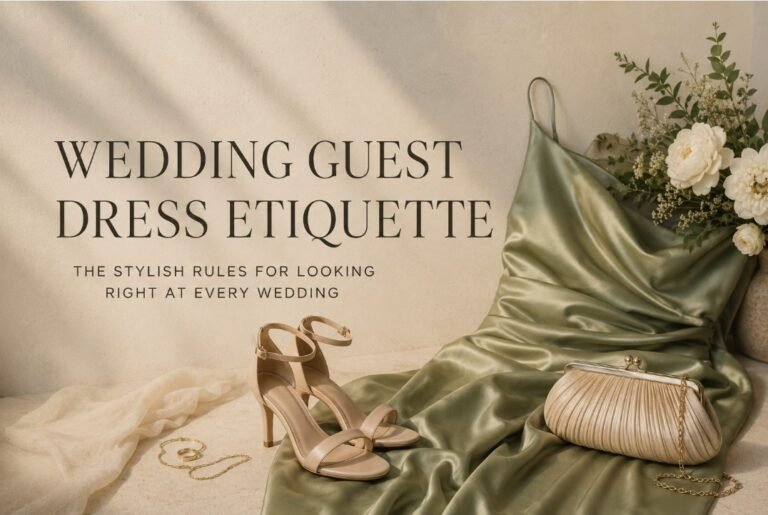
Wedding guest dress etiquette is not about dressing smaller. It is about dressing beautifully without stealing the room. A good guest outfit has manners: it understands the invitation, respects the couple, fits the venue, avoids bridal territory, survives photos, and still leaves space for personality.
The chicest guests are not the ones trying hardest to be noticed. They are the ones who look polished, appropriate, relaxed, and completely right for the moment — as if good taste arrived early and already checked the seating chart.
Quick answer: wedding guest dress etiquette means choosing an outfit that respects the couple, dress code, venue, culture, season, and formality of the wedding. Avoid white, ivory, bridal-looking lace, overly casual clothes, clubwear, impractical shoes, oversized everyday bags, and anything that pulls attention away from the couple. You can still look stylish — etiquette means good judgment, not boring clothes.
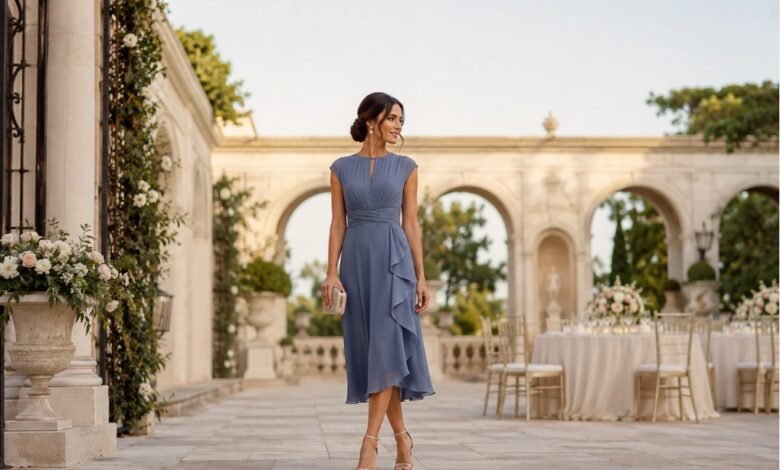
The real rule
Dress beautifully, but do not dress as if the wedding is a stage built for your entrance. The couple should be the visual center. Your outfit should support the mood of the event, not compete with it.
The stylish version
Choose an outfit that feels celebratory, respectful, comfortable, and intentional. You are allowed to look excellent. You are not allowed to look bridal, careless, or so dramatic that the centerpieces feel underdressed.
The outfit should celebrate their day, not turn you into a subplot before the ceremony starts.
Dress code, venue, time, season, and location matter. They are style clues, not decorative text.
White, ivory, pale lace, bridal satin, veils, trains, and pale dresses that photograph white are risky.
If you cannot sit, walk, hug, eat, and dance, the outfit will become your evening project.
Read the invitation like a stylist, not a detective
Wedding guest dress etiquette begins before shopping. It begins with reading the invitation properly, checking the venue, noticing the time of day, respecting the couple’s culture, and asking whether the outfit will look graceful beside the wedding party. A guest can be stylish without becoming a subplot. In fact, the chicest guests usually understand restraint better than anyone.
The invitation tells you more than the words printed under “dress code.” A Saturday evening wedding at a historic hotel usually asks for more polish than a Sunday afternoon garden ceremony. A beach formal invitation has practical rules that a ballroom wedding never has. A casual backyard wedding can still be elegant if the couple has clearly planned it that way.
Before choosing a dress, place the wedding inside the larger style map. The main wedding guest dresses guide is the best anchor if you need to compare dress codes, lengths, fabrics, colors, and formality before narrowing your outfit.
Diana’s version: etiquette is not a dusty rulebook. It is social intelligence with better shoes. The best guest looks feel considered but not nervous, beautiful but not bridal, dressed but not desperate for attention.
The four etiquette rules that solve almost everything
Wedding guest dress etiquette becomes easier when you stop memorizing random rules and start using the core logic behind them.
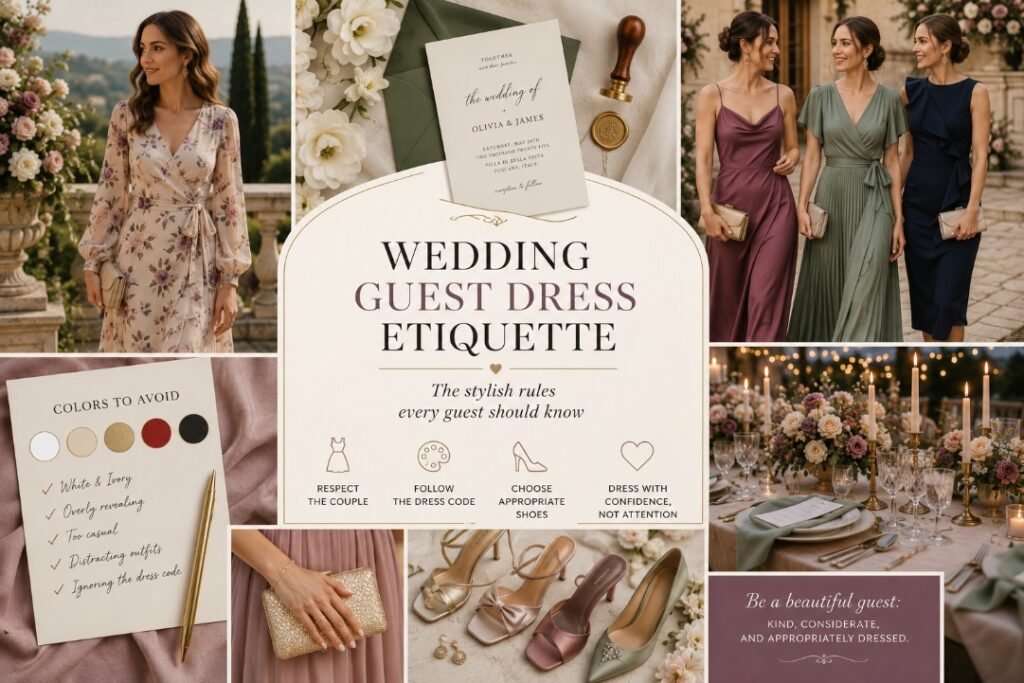
Avoid white, ivory, pale lace, veils, bridal satin, trains, and anything that photographs like a wedding dress.
Dress codes protect the couple’s atmosphere. Underdressing and overdressing can both look awkward.
Shoes, fabric, layers, and hem length should make sense for grass, sand, church aisles, hotel floors, or rooftops.
Statement style is allowed. Main-character disruption is not the same thing as good taste.
The six questions to ask before choosing your outfit
Before the dress, before the shoes, before the tiny bag that holds absolutely nothing except confidence and one lip gloss, ask these questions. They will save you from nearly every wedding guest mistake.
Dress code wording matters. Formal, cocktail, garden party, beach formal, black tie, and black tie optional are not decorative phrases.
A cathedral, vineyard, beach, ballroom, backyard, courthouse, and rooftop all ask for different fabrics, shoes, layers, and levels of polish.
If the answer is “maybe,” choose something else. White, ivory, lace, pale satin, champagne, and bridal silhouettes are not worth the risk.
Etiquette includes not spending the ceremony tugging, adjusting, limping, or quietly regretting your entire fashion philosophy.
Some colors, cuts, levels of modesty, and ceremony traditions matter more in certain families, religions, and cultural contexts.
A look should survive the whole event: ceremony, photos, cocktails, dinner, speeches, dancing, and the tiny chaos near dessert.
Color etiquette: the pretty, the risky, and the absolutely not
Color is where wedding guest etiquette becomes very visible. Some colors are easy. Some need context. Some should be avoided unless the couple has explicitly asked for them. The safest guest colors usually include blue, green, pink, navy, burgundy, floral prints, soft pastels, jewel tones, and tasteful black for the right setting.
The riskiest colors are the ones that create doubt. If your dress could be mistaken for white, bridal champagne, cream, or pale ivory in photos, it is not worth defending. A guest-safe color should not need a legal argument in the hallway.
White & ivory
Avoid. Also be careful with cream lace, pale champagne, and anything that photographs bridal.
Red
Can work, but check culture, dress code, shade, and styling. Burgundy is safer than siren red.
Black
Often chic for evening, city, cocktail, and formal weddings. Add festive fabric or accessories.
Neon brights
Risky. Bright color is fine; fluorescent attention-seeking is usually not the mood.
Pastels
Lovely, but make sure they do not look white in sunlight or photographs.
White, ivory, cream, champagne: the color etiquette everyone still asks about
Unless the couple explicitly requests white or an all-white dress code, avoid white and anything close enough to create doubt. That includes ivory, cream, bridal champagne, white lace, very pale beige, and floral dresses with a mostly white base. The issue is not whether you personally know you are not the bride. The issue is how the outfit reads in photos, at a ceremony, and beside the actual bride.
Champagne and pale gold can be tricky. A deeper metallic bronze may look like a guest color; pale champagne satin can look bridal in soft light. If you have to defend the color before leaving the house, choose another dress. A confident guest-safe shade is always chicer than a risky almost-white explanation.
Dusty blue, sage, rose, mauve, lavender, soft coral, powder green, muted peach, and deeper blush tones.
Navy, chocolate, bronze, olive, espresso, pewter, charcoal, black, or warm taupe that clearly does not read bridal.
If your dress sits close to ivory, use the specific guide on champagne wedding guest dresses before deciding. Champagne can be beautiful, but etiquette depends on shade, fabric, styling, and how the color photographs.
Can you wear black to a wedding?
Yes, usually. Black is no longer automatically inappropriate for weddings, especially in evening, city, cocktail, formal, black tie optional, and winter settings. The key is styling. A black satin midi with elegant sandals and jewelry can look chic. A black dress with heavy boots, aggressive chains, and club energy might be technically black but socially off-key.
For a daytime garden wedding, soften black with texture, print, jewelry, a romantic silhouette, or a less severe shape. For evening, black is often one of the easiest polished choices. Etiquette is not afraid of black; it just asks black to understand the wedding.
Can you wear red to a wedding?
Red can be appropriate at many weddings, but it needs context. A deep burgundy dress at a winter evening reception can be elegant. A bright siren-red bodycon mini at a traditional ceremony may feel like it is trying to become a separate event. The shade, cut, culture, and styling matter.
In some cultures, red may have bridal, ceremonial, lucky, or symbolic meaning. If red belongs to the bride’s visual world, do not wear it. If you are unsure, choose berry, wine, rust, rose, burgundy, or another rich color that feels less likely to compete.
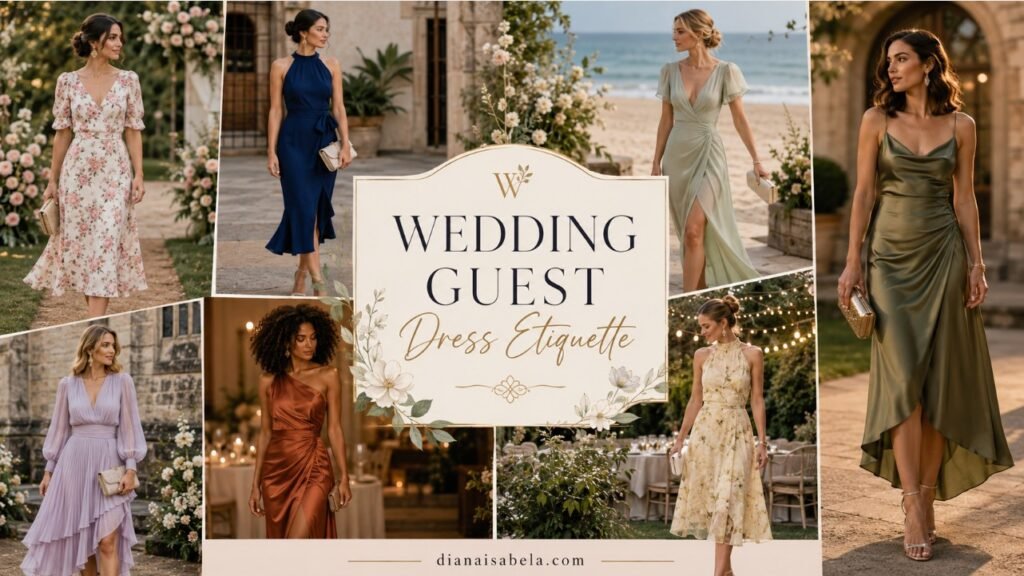
Dress code etiquette without the translation headache
Dress codes are not meant to ruin your life, although some invitations do try their best. The key is to match the level of formality first, then bring your personal style inside that frame. You can look romantic at a cocktail wedding. You can look modern at a formal wedding. You can look relaxed at a beach wedding. But the look still needs to belong to the event.
Choose a gown or very formal evening dress. Rich fabric, polished hair, evening jewelry, and a small clutch. Avoid casual midis, cotton sundresses, or beachy fabrics.
A gown is safe, but a very elegant formal midi or ankle-length dress can work. Think satin, velvet, crepe, jewel tones, refined accessories, and evening polish.
Elevated dresses, long lengths, polished midis, evening shoes, and dressy jewelry. This is not the moment for cotton sundresses or casual prints.
A chic midi, dressy mini, satin dress, elegant jumpsuit, or polished separates. Festive and stylish, but not clubwear.
Choose a dressy midi, refined cocktail dress, soft satin, crepe, chiffon, or a polished silhouette that feels wedding-ready without being too formal.
Upgrade a simple dress with better shoes, a small bag, jewelry, and styled hair. It should feel polished but not formal.
Soft prints, florals, airy fabrics, romantic colors, and block heels. The shoe choice matters because grass is not a friend to stilettos.
Elevated but breathable. Think flowy maxi, refined sandals, dressy flats, soft metallics, and fabric that can handle wind.
Being underdressed is rude; being overdressed can be awkward
Underdressing can make the couple’s effort feel ignored. Overdressing can make you look like you are attending your own imaginary event. The most elegant answer is alignment. If the invitation says casual, choose polish without drama. If it says semi formal, avoid treating it like brunch. If it says black tie optional, remember that some guests will likely arrive in gowns.
This is where comparison helps. If the invitation feels relaxed, check casual wedding guest dresses. If it asks for a middle level of polish, semi formal wedding guest dresses will give you the correct next step up. If the wedding is grand or evening-based, compare the outfit with formal wedding guest dresses or black tie optional wedding guest dresses.
The etiquette of attention: how much is too much?
You can wear a beautiful dress. You can wear red. You can wear sparkle. You can wear a dramatic sleeve, a sculptural neckline, a rich color, or a fashion-forward silhouette. The line is crossed when the outfit competes with the ceremony instead of joining it.
One clear focal point: color, neckline, earrings, texture, sleeve, silhouette, or print.
Very short, very sheer, very sparkly, very loud, very bridal, and very difficult to sit in — all at once.
A jewel-tone gown at a formal evening wedding, a chic black dress at a city reception, a sculptural midi at cocktail hour.
A white lace gown, a nightclub mini at a church ceremony, or a red-carpet train at a relaxed backyard wedding.
Modesty, coverage, and family settings
Wedding guest dress etiquette also depends on cultural, religious, and family context. A church ceremony, traditional family wedding, temple setting, mosque-adjacent celebration, conservative venue, or formal family ceremony may call for more coverage than the reception afterward. This does not mean the outfit has to look old-fashioned. It means bring a layer or choose proportion thoughtfully.
A wrap, shawl, tailored blazer, soft scarf, capelet, pashmina, or elegant cardigan can solve many coverage issues without ruining the outfit. If your dress has thin straps, a deep neckline, high slit, or open back, consider how it will feel during the ceremony, not just on the dance floor.
Wedding guest dress etiquette by venue
A dress can be appropriate in one location and slightly wrong in another. A sparkly mini might look fun at a city cocktail reception and chaotic at a quiet family garden ceremony. A breezy maxi might be perfect on the beach and too casual in a ballroom. Etiquette is not only about rules; it is about reading the room before you enter it.
Bring coverage if needed
A refined layer is smarter than feeling exposed during the ceremony. Keep necklines, slits, and sheer fabrics balanced.
Respect grass and daylight
Block heels, wedges, soft prints, and breathable fabrics work beautifully. Avoid stilettos that sink or fabrics that turn transparent.
Formal does not mean heavy
For seaside invitations, use the beach as a practical clue. The beach formal wedding guest dresses guide is best for sand, wind, and destination rules.
Upgrade the polish
Choose stronger fabric, evening shoes, a small bag, and more refined jewelry. Casual cotton can look lost in a chandelier room.
Do not overdress the setting
A beautiful relaxed dress is better than a gown that looks like it escaped from another wedding.
Keep it clean, not corporate
A simple dress can be perfect. Avoid looking too office-like by adding softer shoes, jewelry, a small bag, or romantic texture.
Choose polish with movement
Soft florals, satin midis, crepe dresses, block heels, and warm tones usually work. Avoid shoes that cannot handle gravel or lawns.
Plan for wind and photos
Choose a dress that moves without misbehaving. Secure wraps, controlled hems, and shoes you can stand in are part of the etiquette.
Cultural etiquette is not optional styling
Some weddings have traditions around color, modesty, ceremony dress, or symbolism. This is where guessing can become impolite. Red, gold, white, black, head coverings, shoulder coverage, and certain levels of formality may mean different things depending on the couple’s background. A stylish guest does not treat cultural context like fine print.
If you are invited to a wedding with traditions you do not fully know, ask politely or choose a safer outfit. There is nothing embarrassing about wanting to be respectful. The awkward thing would be wearing a color strongly associated with the bride, arriving underdressed for a formal religious ceremony, or misunderstanding a cultural dress request because you were too proud to ask.
In some weddings, red may be bridal, ceremonial, lucky, or culturally significant. If red belongs to the bride’s visual world, do not wear it.
Bring a layer, choose a longer hemline, or avoid very low necklines for religious ceremonies, conservative families, and traditional venues.
If the invitation or wedding website asks guests to wear or avoid specific colors, follow it. That is not a suggestion; it is part of the visual plan.
Dress with extra care. You may appear in more photos, more family conversations, and more emotional logistics than a distant guest.
Shoes, bags, and layers have etiquette too
Accessories are not just decoration. They decide whether the outfit feels finished, practical, and appropriate. A beautiful dress with the wrong shoes can become a problem. A huge everyday bag can make a polished outfit feel unfinished. A casual cardigan can quietly sabotage an otherwise lovely look.
Wedding shoes are not only about style. They are about not becoming a logistical problem. If the ceremony is on grass, sand, gravel, old stone, or a wooden deck, choose shoes that can handle the surface. A guest wobbling through the aisle in sinking stilettos is memorable, but not in the dreamy editorial way.
Block heels for grass, dressy flats for long standing, metallic sandals for summer, slingbacks for city weddings, satin or velvet heels for formal evening.
Small clutches, pearl bags, metallic mini bags, satin pouches, structured top-handles, and elegant raffia bags work. Large everyday totes usually do not.
A shawl, wrap, cropped jacket, evening coat, pashmina, or tailored blazer can be beautiful. A random cardigan can make the outfit look like it lost confidence.
High necklines need earrings. Strapless dresses can handle necklaces. Busy prints need quieter jewelry. Simple dresses can take one stronger accent.
For a focused breakdown, use the guide to wedding guest shoes and accessories. It is the easiest way to fix a dress that feels almost right but not fully styled.
Seasonal etiquette: dress for the weather without looking accidental
Season matters because fabric and color communicate effort. A breezy linen dress can be beautiful in July and confusing at a formal December evening wedding. Velvet can be perfect in winter and punishing at a humid summer ceremony. Etiquette is partly emotional intelligence and partly temperature management.
Soft color, florals, chiffon, crepe, light satin, and romantic midis work well. Bring a layer for unpredictable weather.
Choose breathable fabrics, polished sandals, lighter colors, and dresses that do not become transparent in bright sun.
Warm tones, satin, crepe, velvet touches, long sleeves, olive, rust, chocolate, wine, and deeper florals feel right.
Deeper colors, elegant sleeves, velvet, heavier satin, tights, polished coats, and refined layers make the outfit complete.
Do not mistake expensive for appropriate
A designer dress can still be wrong. A luxury mini can still be too revealing. An expensive white gown can still look bridal. A beautiful black dress can still feel too nightclub if styled with heavy chains and boots at a formal family wedding. Wedding guest etiquette is not about price; it is about context.
This is also why the companion guide on what not to wear to a wedding is useful. Sometimes the issue is not that an item is ugly. It is that it belongs to the wrong event.
Awkward outfit situations, solved without spiraling
Sometimes wedding guest etiquette is not clear until you are already standing in front of your closet having a minor theatrical crisis. The dress is almost white. The shoes are gorgeous but dangerous. The wedding website is vague. The ceremony is religious but the reception is glam. Here is how to think through those little dramas.
If it could photograph white, skip it. Pale blue, blush, champagne, and cream can become risky depending on fabric and lighting. Choose a clearer color.
Balance it or replace it. Add length, a layer, softer styling, or choose a version with one dramatic detail instead of several.
Dress slightly more polished rather than less. A refined midi, small clutch, and elegant shoes can survive many dress-code uncertainties.
Choose the pair you can actually walk and stand in. Limping through cocktail hour is not elegance; it is a small tragedy with straps.
Follow it as closely as possible, especially if the couple clearly requested it. You can still show style through silhouette, texture, accessories, and hair.
Dress with extra care. Close friends and family are often in more photos, near more relatives, and part of more emotional moments.
Guest etiquette for photos, dancing, dinner, and real life
An outfit has to live through the event, not just survive one mirror selfie. Wedding guest dress etiquette includes movement. Can you sit through dinner? Can you walk to the ceremony? Can you dance without holding the dress together like a collapsing tent? Can you hug relatives without the neckline doing something dramatic?
The photo test is also useful. Imagine standing beside the couple and wedding party. Does your outfit look guest-appropriate? Does it look polished but not bridal? Does it fit the formality? Does it feel like you understood the day? If yes, you are probably safe.
This is why comfort matters. Not lazy comfort, but elegant comfort. Shoes that can handle the venue. Fabric that does not become transparent in sunlight. A dress that does not need constant adjusting. A bag that holds essentials without becoming luggage. Guest style should let you enjoy the wedding, not make you manage the outfit like a difficult personality.
The photo-and-movement test
Before leaving, do not only look in the mirror. Test the outfit like it has a job.
If the dress becomes too short, too tight, too sheer, or too difficult at dinner, it is not the right dress.
If the shoes hurt after three minutes or the hem keeps catching, the wedding will not magically fix that.
Check pale colors and thin fabrics in photo lighting. If the dress turns white or transparent, choose another outfit.
If your look feels bridal, clubby, careless, or too loud beside the couple, edit before you leave.
When in doubt, choose the more graceful option
Graceful does not mean plain. It means the outfit has judgment. A navy satin midi with pearl earrings. A sage wrap dress with block heels. A burgundy crepe dress with gold jewelry. A floral chiffon dress with a small clutch. A black cocktail dress with festive accessories. These are not boring choices. They are reliable because they understand the room.
If you are between two outfits, choose the one that is less bridal, less revealing, less casual, less uncomfortable, and more aligned with the invitation. You can always add personality through earrings, a bag, shoes, hair, or color. You do not need to test the limits of etiquette to look stylish.
There is a quiet confidence in dressing appropriately. It says you know fashion, but you also know manners. Very powerful combination. Jane Austen would approve, probably after judging the shoe choice first.
The RSVP-to-the-mirror checklist
Before you leave, ask yourself: does this dress respect the couple? Does it match the dress code? Could it look bridal in photos? Does it work for the venue surface and weather? Can I sit, walk, eat, dance, and hug people without managing the outfit all night? Does it feel like a wedding guest look, not a work outfit, club outfit, beach outfit, or gala outfit for a different invitation?
If one answer feels off, fix that piece. Change the shoes. Add a wrap. Choose another bag. Swap the pale dress for color. Steam the fabric. Wedding guest etiquette is often just one smart edit away.
The most stylish guest understands restraint
Wedding guest dress etiquette is not about disappearing into the wallpaper. It is about knowing how to look beautiful inside someone else’s celebration. Choose a dress that honors the invitation, avoid bridal colors, match the venue, respect the dress code, and let your personal style show through the right details.
The result is not timid. It is polished, confident, socially chic, and memorable for the correct reason. The best guest outfit says quietly: I am happy to be here, and I dressed like this mattered.
FAQ
What is wedding guest dress etiquette?
Wedding guest dress etiquette means choosing an outfit that respects the couple, dress code, venue, culture, season, and formality of the wedding. It includes avoiding white or bridal-looking outfits, dressing appropriately for the invitation, choosing practical shoes for the venue, and making sure the look is polished without pulling attention away from the couple.
What should a guest not wear to a wedding?
Guests should usually avoid white, ivory, bridal lace, very revealing outfits, denim, sneakers, overly casual clothes, clubwear, oversized everyday bags, and anything that ignores the dress code. You should also avoid colors or styles that may have special bridal or cultural meaning unless the couple specifically says they are acceptable.
Can I wear black to a wedding?
Yes, black is appropriate for many weddings, especially evening, cocktail, formal, city, and winter weddings. To make black feel wedding-ready, choose elegant fabric such as satin, velvet, crepe, or chiffon, and add festive accessories like metallic heels, pearls, crystal earrings, or a small evening clutch. For beach or daytime garden weddings, softer colors may feel more natural.
Can I wear red to a wedding?
Red can be appropriate at many weddings, but it needs context. Deep shades like burgundy, wine, berry, rust, and ruby are usually easier than very bright red. Avoid red if it has bridal or ceremonial meaning in the couple’s culture, if the couple asks guests not to wear it, or if the dress is very revealing and attention-grabbing.
How do I know if my dress is too bridal?
A dress may be too bridal if it is white, ivory, cream lace, pale champagne satin, heavily beaded in a bridal way, or shaped like a wedding dress. If it could be mistaken for a bridal look in photos, choose something else. Pale colors can be risky if they photograph close to white, especially in sunlight or flash.
What should I wear to a formal wedding as a guest?
For a formal wedding, choose a gown, elegant maxi, polished satin midi, velvet dress, crepe dress, or refined cocktail dress depending on the invitation. Use elevated accessories: evening heels, a small clutch, pearl or crystal earrings, and polished hair. Avoid cotton sundresses, casual shoes, large bags, and fabrics that look too relaxed.
What shoes are appropriate for a wedding guest?
Appropriate wedding guest shoes depend on the venue. Block heels work well for grass and garden weddings. Slingbacks and pumps are elegant for city or cocktail weddings. Metallic sandals are good for summer and destination weddings. Satin, velvet, or embellished heels work for formal events. Dressy flats can also work if they are polished and intentional.
Is it rude to ignore the wedding dress code?
Yes, ignoring the dress code can feel careless because the couple chose it to create a certain level of formality and visual mood. You do not need to dress exactly like everyone else, but your outfit should fit the requested tone. If you are unsure, it is usually better to be slightly more polished than too casual.
What should I wear to a religious wedding ceremony?
For a religious wedding ceremony, choose a respectful outfit with appropriate coverage. A midi dress, sleeves, higher neckline, wrap dress, shawl, pashmina, or elegant jacket can work well. You can still look stylish, but avoid outfits that are too revealing, too short, or too casual for the ceremony setting.
How can I look stylish while following wedding guest etiquette?
Choose a dress that fits the dress code and venue, then add personality through color, fabric, shoes, bag, jewelry, and hair. A navy satin midi, sage wrap dress, floral chiffon dress, black cocktail dress, burgundy crepe dress, or blue maxi can all look stylish and appropriate. Etiquette does not mean boring; it means looking beautiful with good judgment.