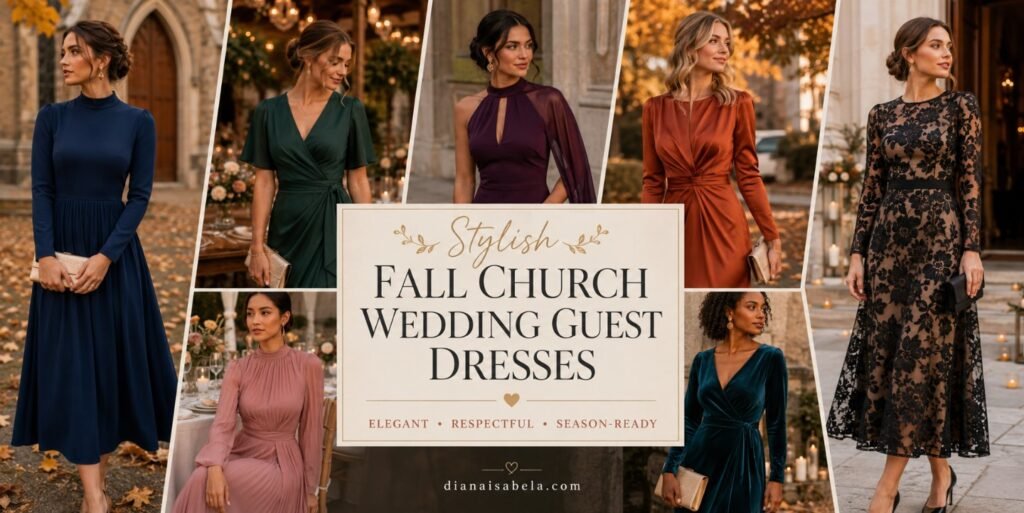
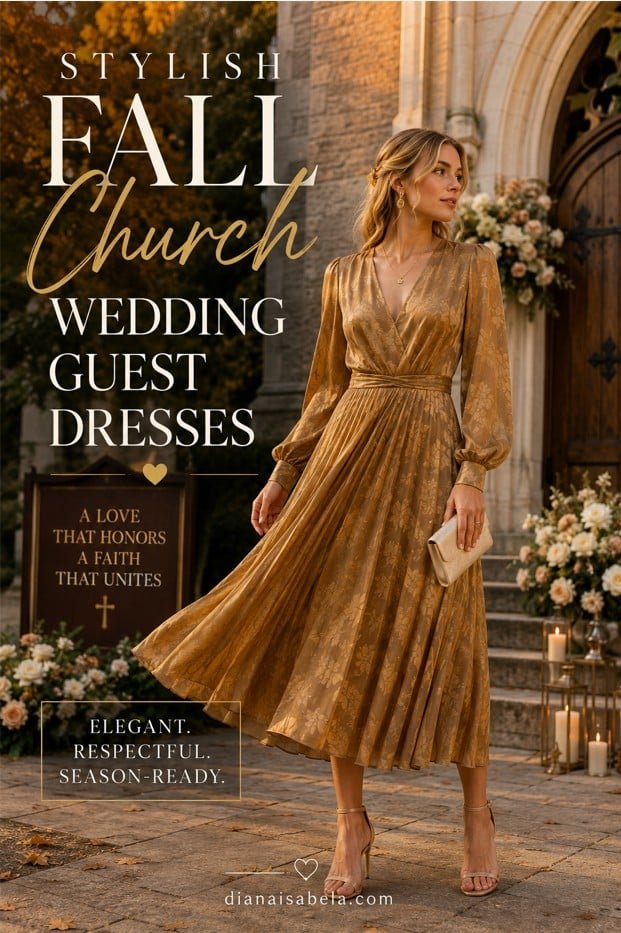
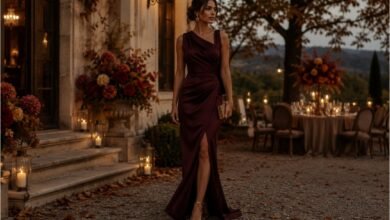
Fall Church Wedding Guest Dresses: Elegant, Respectful & Season-Ready

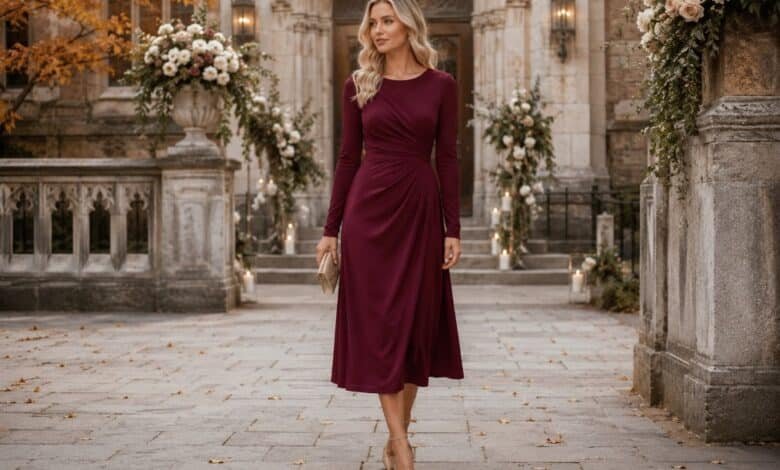
A fall church wedding asks more from an outfit than almost any other wedding setting. You need to look polished in a quiet ceremony, feel comfortable on stone steps and wooden pews, stay warm when the air changes after sunset, and still look ready for dinner, photographs, and dancing once the reception begins.
That is why choosing the right fall church wedding guest dresses is not only about covering your shoulders. The best dress respects the ceremony without making you look severe, suits the actual dress code, photographs beautifully in autumn light, and moves easily from church to reception.
I always think of this outfit as a transition. It should feel composed when you enter the sanctuary, alive when you step outside, and effortless by the time the music starts. You are not dressing for two unrelated events. You are building one look that can shift mood without requiring a complete costume change in a restroom stall.
What should you wear to a fall church wedding?
Choose a midi, tea-length, or floor-length dress with a secure neckline and enough coverage to feel comfortable during the ceremony. Sleeves are useful but not mandatory. Crepe, satin, chiffon, lace, and lightweight velvet all work well in autumn. Add a polished wrap, blazer, jacket, or coat if the dress is sleeveless, and choose stable shoes that can handle church steps, smooth floors, and the walk to the reception.
The two-room test: church first, celebration second
Most disappointing church wedding outfits fail because they are designed for only one half of the day. Some look perfectly respectful during the ceremony but feel stiff and joyless at the reception. Others look fabulous under evening lighting but create an hour of pulling, pinning, crossing arms, and hoping nobody notices the back of the dress in the pew.
A successful look has to pass through two rooms.
- Inside the church, it should look composed, intentional, and appropriate for the setting.
- At the reception, it should still feel festive, attractive, and personal.
- Outside, the fabric and color should make sense in fall weather and seasonal light.
- In motion, the dress should stay in place when you sit, stand, hug, eat, and dance.
This does not mean the dress has to be conservative in a dull way. A strong shoulder, beautiful draping, rich color, romantic sleeve, sculptural neckline, or luxurious texture can give the outfit personality while the overall shape remains ceremony-friendly.
My imaginary entrance test
I picture walking into the church beside the bride’s grandmother, sitting through the vows without adjusting anything, stepping outside for photographs in a cool breeze, and then ordering a drink at the reception without looking as if I need to remove an entire costume first.
If the outfit can handle all four moments, it is probably right.
For broader year-round advice, the main church wedding guest dress guide explains how religious setting, ceremony style, and dress code work together. Here, the extra challenge is autumn: changing temperatures, richer fabrics, darker colors, and the temptation to solve every styling problem with velvet.
Read the church before you read the trend report
“Church wedding” can describe very different places. A historic cathedral with a long aisle, a small countryside chapel, a modern community church, and an ornate traditional sanctuary do not create the same mood. The invitation may also say formal, semi-formal, cocktail, black tie optional, or nothing more useful than “wedding attire.”
Before choosing a dress, look at the venue, ceremony time, denomination if relevant, and reception location. A 2 p.m. ceremony in a rural chapel followed by dinner at a vineyard calls for something different from a 6 p.m. cathedral ceremony followed by a hotel ballroom reception.
| Church setting | What usually works | What may feel wrong |
|---|---|---|
| Historic cathedral | Elegant midi or long dress, refined sleeves or formal wrap, polished pumps, structured coat, restrained but memorable jewelry | Very short hems, casual boots, oversized daytime bags, clubwear details, or a dress that looks too relaxed for the architecture |
| Country chapel | Soft midi dress, dark floral print, crepe or chiffon, block heels, compact bag, warm but refined outer layer | An enormous ballroom gown, fragile stilettos, or heavy fashion styling that looks disconnected from the intimate setting |
| Modern church | Contemporary cocktail dress, clean draping, long sleeves, satin, polished jersey, asymmetric details with controlled coverage | Everyday office clothing or a revealing reception dress without a realistic ceremony layer |
| Traditional religious ceremony | Coverage at shoulders, chest, back, and knees, with a removable wrap, jacket, capelet, or coat | Large cutouts, very low backs, transparent panels over intimate areas, or attention-seeking headwear |
If you are unsure how traditional the ceremony will be, choose flexibility instead of fear. A sleeveless dress with a beautiful wrap is more useful than a dress you dislike simply because it has sleeves. A wrap neckline can be discreetly secured. A tailored jacket can cover the shoulders during the service and come off later. The solution should feel like styling, not punishment.
The neckline conversation nobody wants to have in the fitting room
A neckline does not need to be high to be appropriate. It needs to stay where it belongs.
That distinction saves a lot of bad purchases. A soft V-neck can look elegant when it is properly cut and supported. A square neckline can frame the collarbone beautifully. A modest off-the-shoulder dress may work with a wrap inside the church. A one-shoulder style can be appropriate in a modern setting when the rest of the silhouette is refined.
The problem begins when the neckline requires supervision. If you have to tape it, pin it, pull it up, check it from four angles, and avoid leaning forward for the entire afternoon, the dress is not effortless. It is a part-time job.
The five-movement fitting-room check
- Sit down as though you are in a church pew.
- Stand up without holding the neckline.
- Bend slightly as though greeting someone seated.
- Lift your arms as though reaching for a hug.
- Turn around and inspect the back in normal light.
A wedding guest dress is seen in motion, not as one frozen front-facing photograph. The shape should remain composed through all five movements.
For a traditional church ceremony, reliable necklines include bateau, jewel, soft scoop, controlled V-neck, square, high halter with covered sides, and secure wrap designs. These can still feel romantic or directional, especially when the fabric has depth or the sleeves carry the drama.
Sheer mesh can be elegant, but placement matters. A transparent yoke above a lined bodice is different from a dress that becomes nearly naked in daylight. Church interiors, camera flashes, and direct autumn sun can reveal more than fitting-room lighting does. Before deciding, stand near a window and take a flash photograph from the front and back.
Sleeves are useful, but they are not a moral achievement
Fall wedding advice often treats sleeves as the answer to everything. Sleeves are practical. They add warmth, balance a fitted silhouette, and reduce the need for a ceremony cover-up. But a badly chosen sleeve can make a beautiful dress feel heavy, dated, or strangely theatrical.
If sleeve coverage is your priority, my more detailed edit of fall wedding guest dresses with sleeves compares styles by weather and formality. For a church ceremony, these options are especially useful.
Soft sheer sleeves
Chiffon or fine mesh sleeves provide coverage without visually weighing down the dress. They look especially good in dark florals, navy, forest green, plum, and berry tones. A gathered cuff feels romantic; a clean straight sleeve looks more modern.
Check how the sleeve feels, not only how it photographs. Some inexpensive mesh looks delicate from a distance and feels like decorative sandpaper after twenty minutes.
Three-quarter sleeves
This length is underrated for fall. It shows the wrist, leaves room for a bracelet, fits easily under a coat, and rarely interferes with dinner. It also offers coverage without the visual seriousness of a full sleeve.
Structured long sleeves
A fitted crepe or stretch-satin sleeve can make a simple dress look sophisticated. This is particularly strong for formal evening ceremonies. The overall shape can remain sleek, especially with a column, wrap, or softly draped silhouette.
Statement sleeves
A bishop sleeve, sculptural shoulder, or romantic cuff can become the personality of the outfit. Keep the rest controlled. Statement sleeve plus giant bow plus heavy ruffle plus loud print is not one outfit. It is several outfits arguing in public.
Sleeveless dresses remain completely possible. The better question is whether the dress has enough balance and whether your layer looks intentional. A sleeveless midi with a high neckline may feel more appropriate than a long-sleeved mini with a dramatic cutout.
Length is about movement, not one official number
There is no universal rule requiring a floor-length dress for a church wedding. The safest range is generally below the knee through full length, but proportion and dress code matter more than one measurement.
-
Midi length
This is the most adaptable option. It works for semi-formal, cocktail, and many formal weddings, looks polished during the ceremony, and allows practical shoes. A midi dress also moves easily between a church and a restaurant, ballroom, vineyard, or garden reception.
-
Tea length
Romantic and especially suited to traditional churches. It pairs beautifully with slingbacks, pumps, and block heels. Avoid overly stiff skirts unless the wedding is distinctly formal, because the silhouette can drift into retro costume or bridesmaid territory.
-
Maxi or floor length
Best for formal evening ceremonies, black tie optional invitations, and grand architecture. Choose a hem you can walk in. Church steps, narrow aisles, damp pavement, and long fabric are not natural collaborators.
-
Above the knee
Possible at a modern or less conservative church, especially with an opaque fabric, refined fit, and controlled neckline. The shorter the hem, the quieter I would keep the rest of the dress.
A dress can technically reach the knee and still feel very short once you sit. This is why the pew test matters. A fitted skirt may rise several inches. If you know you will feel self-conscious, choose slightly more length rather than spending the ceremony holding a clutch over your lap.
Fall colors that look luminous inside a church
Autumn does not require dressing like a decorative pumpkin arrangement. Rust, mustard, olive, and brown can be beautiful, but they are not the only seasonal options. Church lighting often favors colors with depth: shades that remain rich in low light and still photograph beautifully outside.
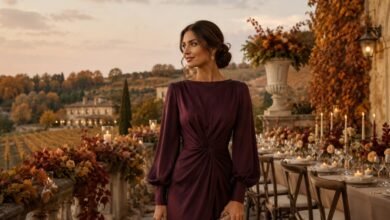
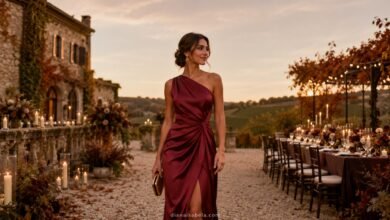
- Burgundy and wine: romantic, formal, and especially strong in satin, velvet, crepe, or lace.
- Deep green: elegant without becoming predictable, particularly with gold or pearl accessories.
- Navy: quieter than black but equally polished, especially for daytime ceremonies.
- Plum and aubergine: flattering in soft light and ideal for expressive evening outfits.
- Chocolate and espresso: modern, warm, and luxurious when the fabric has movement.
- Muted teal: distinctive without looking loud.
- Rosewood and dusty berry: softer choices for afternoon weddings.
- Black: completely workable when styled with warmth, texture, or luminous accessories.
For a wider comparison, my guide to choosing fall wedding guest colors explains which shades work best by venue, time of day, and fabric.
Very pale champagne, ivory, cream, and bridal blush require caution. The dress may appear clearly beige in your bedroom and nearly white under church lighting or camera flash. If there is a realistic chance that the color could be mistaken for bridal wear, choose another shade. Wedding etiquette should not require a courtroom argument about undertones.
Florals can look beautiful in a church, especially when the background is dark or the print uses berry, olive, navy, plum, terracotta, or muted blue. A tropical print is not automatically forbidden, but it may look disconnected from the venue and season. The goal is cohesion, not color policing.
Fabric decides whether the dress feels expensive or exhausting
A modest silhouette can still disappoint when the fabric is thin, overly shiny, wrinkled, or clinging in places it was never meant to cling. In a church setting, fabric carries much of the sophistication because the overall shape may be quieter.
Crepe
Crepe is one of the most dependable choices. It has enough structure to hold a clean shape, usually photographs well, and moves comfortably between formal and semi-formal settings. It is excellent for wrap dresses, long-sleeved midis, and simple column gowns.
Satin
Satin gives autumn color almost liquid depth. Burgundy, olive, chocolate, navy, and plum satin can look beautiful in low church light. Choose a substantial satin with a controlled sheen rather than a thin fabric that reveals every seam, line, and passing thought.
A satin slip dress can work when the neckline is stable and you add a ceremony layer. A soft blazer, silk wrap, cropped jacket, or elegant shawl creates coverage without changing the identity of the dress. My satin wedding guest styling notes offer more combinations for layers, jewelry, and shoes.
Velvet
Velvet is dramatic, warm, and made for evening light, but it becomes heavy if the weather is mild or the silhouette is too voluminous. A velvet bodice, streamlined midi, wrap dress, or long-sleeved column often feels more elegant than a massive velvet skirt.
Early fall may still be warm, so check the actual climate rather than dressing for an imaginary October film. The full velvet dress guide for fall weddings explains when the fabric feels luxurious and when it becomes too much.
Chiffon
Chiffon is ideal for afternoon ceremonies and warmer fall regions. It brings movement and softness, especially in midi and long-sleeved designs. Because chiffon can feel springlike, choose a deeper print, rich lining, or stronger accessories to move it into autumn.
Lace
Lace naturally suits a church setting, but the design should not compete with bridal lace. Navy, berry, green, plum, and black are safer than cream or pale champagne. Modern lace with a simple lining feels fresher than layers of scallops, ruffles, bows, and ornate trim all at once.
Jersey and knit fabrics
A refined matte jersey can be comfortable and elegant, particularly in a draped or wrap silhouette. Thin sweater dresses are more difficult. They may cling, stretch at the knees, or look too casual unless the design is exceptionally polished. Ribbing, bodycon fit, and ankle boots can quickly shift the outfit toward dinner date rather than wedding guest.
Useful test: Photograph the dress with flash before the wedding. Some fabrics become transparent, dramatically shinier, or visibly creased under flash even when they look perfect in soft indoor light.
Your layer should look intentional before you need it
The emergency cardigan pulled from the back seat rarely improves a wedding outfit. A layer should belong to the look from the beginning, even if you remove it at the reception.
- A silk or satin wrap that repeats one shade in the dress.
- A tailored cropped jacket that ends near the natural waist.
- A softly structured blazer in velvet, crepe, or fine wool.
- A refined pashmina with enough weight to stay in place.
- A long wool coat for arrival and outdoor photographs.
- A capelet or short cape for a formal traditional venue.
- A restrained faux-fur stole for a late-fall evening wedding.
Proportion matters. A long loose blazer over a full midi skirt may hide the waist and make the entire outfit look heavy. A cropped jacket over a body-skimming dress often creates better balance. A long coat works beautifully over a column or slip silhouette, especially when the coat is at least as formal as the dress.
For more detailed combinations, see my advice on what to wear over a fall wedding guest dress. The practical principle is simple: outerwear may be functional, but it should not look accidental.
Eight ceremony-to-reception outfits that actually make sense
These are not uniforms. Treat them as starting points and change the color, neckline, shoe, or layer to suit the invitation and your own style.
-
Traditional afternoon ceremony
A berry crepe midi with three-quarter sleeves, pointed slingbacks, pearl earrings, and a structured taupe coat. It feels formal enough for a traditional church without becoming overly evening-focused. At the reception, remove the coat and add a stronger earring or deeper lipstick.
-
Semi-formal church and restaurant reception
A dark floral wrap midi, low block heels, a compact top-handle bag, and a soft wool shawl. The print keeps the outfit warm and celebratory, while the wrap shape remains comfortable through dinner. For more looks at this level of formality, compare it with my fall semi-formal wedding guest edit.
-
Formal evening service
A long-sleeved forest-green column gown, slim gold earrings, a small evening bag, and closed-toe pumps. The covered silhouette lets the color and clean fit carry the drama. No extra ruffles, no giant necklace, no need to decorate every available surface.
-
Sleeveless satin dress with a real church plan
A plum satin midi with a square neckline, a fitted black velvet blazer for the ceremony, delicate drop earrings, and stable pumps. The blazer can come off at the reception, giving the dress a second mood without requiring a full change.
-
Elegant look for an older guest
A teal tea-length dress with sheer sleeves, a defined waist, elegant pumps, and a small brooch or sculptural earring. Mature style does not require beige, shapeless fabric, or disappearing politely into the wallpaper.
-
Modern minimalist
A chocolate asymmetric midi with a high neckline, long clean coat, architectural earrings, and sharp slingbacks. The silhouette feels contemporary, while the coverage and restraint keep it ceremony-appropriate.
-
Cold late-fall wedding
A burgundy velvet midi, sheer tights if needed, closed-toe heels, a refined wool coat, and a metallic clutch. Keep the tights fine rather than heavy and casual. The goal is warmth with polish, not winter office wear.
-
Dressy jumpsuit alternative
A wide-leg navy crepe jumpsuit with a defined waist, formal blazer, pointed pumps, and luminous earrings. This works well for guests who do not feel comfortable in dresses but still want a polished ceremony look.
Formal, semi-formal, or cocktail changes the entire answer
“Church wedding” describes the venue. It does not replace the dress code. You still need to respect the level of formality on the invitation.
Formal
Choose a long dress or elevated midi in crepe, velvet, satin, or refined lace. The silhouette should feel polished from every angle. Long sleeves are useful but not compulsory. A sleeveless gown with a luxurious wrap can be completely appropriate.
If the invitation leans formal, my formal fall wedding guest wardrobe gives a more detailed breakdown of lengths, fabrics, and evening styling.
Semi-formal
A midi dress is usually the easiest answer. Dark florals, wrap silhouettes, pleated skirts, soft sleeves, and elegant block heels all work. Avoid drifting too casual with everyday knitwear, office shirt dresses, or boots that dominate the outfit.
Cocktail
You can choose a more expressive silhouette, richer satin, a sculptural sleeve, or a fitted midi. The ceremony still calls for control. If the dress has a dramatic neckline or open back, add a real layer rather than balancing a napkin-sized scarf across your shoulders.
For more evening-focused ideas, browse the fall cocktail wedding guest dress guide.
Black tie optional
A floor-length gown is welcome, but an exceptional formal midi may also work. Choose richer fabrics and more refined accessories. This is not the moment for a casual daytime dress simply because it has long sleeves.
Shoes should survive silence, stone, stairs, and photographs
Church floors have their own opinions about footwear. Thin metal heels can click loudly through a quiet ceremony. Smooth soles may slide on polished stone. Very high heels become dangerous on steps, damp pavement, or old uneven flooring.
- Pointed pumps with a moderate heel.
- Elegant slingbacks.
- Block-heel sandals for warm early-fall weddings.
- Closed-toe block heels for cooler weather.
- Dressy flats with a refined shape.
- Low kitten heels.
Boots require judgment. A slim polished ankle boot can work with a midi dress at a countryside or less formal wedding. Heavy lug soles, casual suede booties, Western details, and tall everyday riding boots are much harder to make appropriate for a traditional ceremony.
If the church and reception involve different surfaces, bring a second pair. Stable shoes for the ceremony and outdoor photographs can save both your ankles and the lawn. My guide to fall wedding guest shoes covers grass, gravel, rain, cold weather, and dress-code differences.
Accessories should add light, not start a separate event
Church interiors often have low or warm lighting, so a little luminosity helps. Pearls, brushed gold, silver, crystal, and small gemstone details can brighten deep fall colors without becoming loud.
Choose one main point of interest:
- Statement earrings with a clean neckline.
- A delicate necklace with a simple V-neck.
- A sculptural cuff with three-quarter sleeves.
- A beautiful brooch on a blazer or coat.
- A metallic or beaded evening bag with a plain dress.
Avoid stacking every idea. Large earrings, large necklace, embellished belt, jeweled shoes, glitter clutch, and dramatic hair accessory do not automatically create formality. Often they simply prevent the eye from resting anywhere.
Your bag should be small enough for the event but useful enough to hold your phone, lipstick, tissues, cards, and any necessary dress tape. A tiny bag that holds only one breath mint may photograph beautifully, but it becomes less charming when your belongings are distributed among three relatives.
When black looks chic instead of severe
Black is acceptable at most modern fall church weddings. It becomes especially elegant in lace, velvet, satin, crepe, or a softly draped silhouette. The concern is not that black is forbidden. The concern is that an unstyled black dress can read as somber in a traditional setting.
- Add gold earrings or a warm metallic bag.
- Choose berry lipstick or a softer blush tone.
- Bring in a jewel-toned wrap.
- Use pearls or luminous stones near the face.
- Choose lace, satin, or velvet instead of plain business fabric.
A black blazer over a plain black sheath with office pumps may look as if you came directly from work. A black velvet midi with sculptural earrings and an elegant clutch tells a completely different story.
Modesty can be expressive, not apologetic
There is a persistent idea that respectful clothing must be boring. I reject it completely.
Coverage can create drama. A high neckline can frame beautiful earrings. A long sleeve can turn a simple silhouette into the main event. A floor-length skirt can move beautifully. A fitted waist, unusual draping, rich color, sculptural shoulder, or luminous fabric can give the dress personality without relying on exposed skin.
The goal is not to make yourself smaller because the ceremony is religious. The goal is to understand the room and dress with enough confidence that you do not need to challenge it for attention.
The difference between elegant and invisible
Elegant means the dress respects the setting while still looking chosen. Invisible means you bought the safest garment in the store and hoped nobody would notice you.
You are allowed to wear color. You are allowed to have a waist. You are allowed to look attractive. You simply do not need the dress to become the most controversial part of someone else’s ceremony.
Small details that quietly ruin a beautiful dress
Check these before the wedding day
- A slit that travels: it looks moderate while standing but opens dramatically when walking or sitting.
- A wrap neckline that loosens: secure it discreetly before leaving home.
- Static cling: chiffon and satin can attach themselves to tights, slips, or legs.
- Noisy fabric: some stiff synthetics rustle through every quiet moment.
- Visible undergarment lines: test the complete outfit in daylight and with flash.
- A coat that crushes the sleeves: statement sleeves need outerwear with room.
- Shoes that slide: add discreet sole grips before walking on polished floors.
- A pale dress that photographs white: test it beside actual white fabric.
- A shawl that will not stay up: use a hidden pin or choose a better-structured layer.
The most stylish outfit is often the one you prepared properly. Steam the dress. Test the undergarments. Walk in the shoes. Sit in the complete look. Put on the coat. Carry the actual bag. Take one photograph from the front, side, and back.
Comfort creates elegance. A guest who can walk, sit, hug, eat, and dance naturally usually looks better than someone wearing a more dramatic dress that requires constant management.
A note for older guests who do not want to disappear
Church wedding fashion advice often divides women into two groups: young guests who are given stylish options, and everyone else, who is handed a shapeless navy dress with a matching bolero. Age does not remove the right to interesting clothes.
Older guests can wear rich color, modern draping, elegant prints, sculptural sleeves, asymmetry, velvet, satin, and contemporary jewelry. The fit may need to prioritize support, movement, and temperature comfort, but that does not mean surrendering personality.
- A wrap dress with secure coverage and a defined waist.
- A tea-length dress with sheer sleeves.
- A fluid column dress with an elegant long jacket.
- A softly pleated midi with a refined silk shell.
- A tailored jumpsuit with a formal blazer.
The best outfit looks current without chasing youth. Beautiful fabric, intentional color, strong tailoring, and good proportions do far more than any arbitrary “age-appropriate” rule.
Can you wear a jumpsuit to a fall church wedding?
Yes, when it is formal enough for the invitation and provides suitable coverage. A wide-leg jumpsuit in crepe, satin, or velvet can look elegant, especially with a defined waist and structured shoulders. Choose a neckline that stays secure when you sit, and make sure the trouser length works with the actual shoes.
Add a blazer, wrap, or formal coat for the ceremony if the jumpsuit is sleeveless. Avoid styles that resemble office wear, casual jersey, or clubwear with dramatic cutouts. The jumpsuit should feel like an occasion piece, not a clever way to avoid buying a dress.
The ten-minute check before you leave
- Does the dress stay in place when you sit and move?
- Can you enter the church without immediately reaching for the neckline or hem?
- Is your layer polished enough to appear in photographs?
- Do the shoes work on stairs, stone, and pavement?
- Does the fabric suit the actual temperature?
- Could the dress photograph as white or bridal?
- Are the undergarments invisible in daylight and flash?
- Can you carry the essentials in your bag?
- Does at least one detail of the outfit feel personal?
- Can you enjoy the wedding without managing the dress?
If the answer to the final question is no, change something. A wedding outfit should support your presence, not become your full-time responsibility.
Respect the ceremony, then let the outfit live
The best fall church wedding guest dress is not automatically the one with the highest neckline, the longest sleeves, or the darkest color. It is the one that understands the setting without losing its sense of celebration.
Choose a dress that remains composed in the church, feels beautiful in autumn light, and becomes even better once the reception begins. Add coverage because it completes the outfit, not because you are trying to disappear. Choose warmth without unnecessary bulk, then let one feature — the color, fabric, cut, sleeve, or accessory — carry the personality.
Most importantly, dress so you can pay attention to the couple rather than your hemline. That is real wedding guest elegance: appropriate, expressive, and comfortable enough to forget about once the music starts.
For more ideas organized by venue, season, color, fabric, and dress code, explore my complete wedding guest dress collection.
Fall Church Wedding Guest Dress Questions