Dominican Longaniza vs Chorizo: What’s the Real Difference?
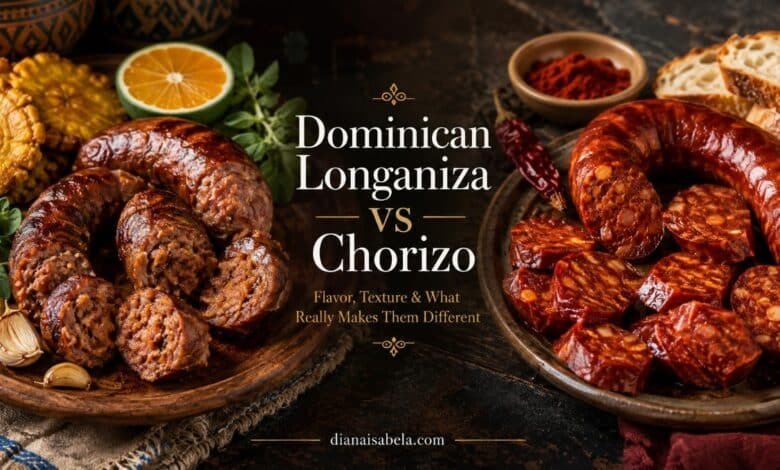
Dominican longaniza and chorizo have one unfortunate thing in common: the internet loves explaining both of them with sentences that sound much more confident than the subject deserves.
You will see longaniza described as “basically chorizo,” chorizo treated as if every country makes the same sausage, and the occasional comparison based almost entirely on whether one of them looks redder in a photograph. None of this is especially helpful when you are standing in front of a menu trying to decide what you actually want to eat.
The first thing to know is that Dominican longaniza is its own Dominican sausage tradition. The second is that chorizo is not one single sausage either. Spanish chorizo can be cured and strongly associated with paprika, while Mexican chorizo is commonly sold fresh and cooked before eating. Other countries have their own versions again.
So the useful comparison is not “Which universal sausage is better?” It is: what makes Dominican longaniza taste and behave differently, what do people usually mean when they say chorizo, and when would you choose one over the other?
Dominican longaniza is commonly a pork sausage seasoned with ingredients such as garlic, oregano and sour citrus and is strongly associated with Dominican fritura, plantains, yuca, rice dishes and other Dominican foods. Chorizo is a broader family of sausages whose seasoning and preparation vary dramatically by country; Spanish chorizo is especially associated with paprika, while Mexican chorizo is usually a fresh cooking sausage.
The side-by-side version before we complicate things
Dominican Longaniza
Think savory, herbal, garlicky and deeply at home beside Dominican plantains and fritura.
Chorizo
“Chorizo” is a category broad enough that the country matters almost as much as the word itself.
If you take only one thing from this article, take this: the comparison becomes accurate only after you ask which chorizo.
Comparing Dominican longaniza with Spanish chorizo produces one set of differences. Comparing it with Mexican chorizo produces another. A statement that sounds correct for one can be spectacularly wrong for the other.
The seasoning is where their personalities separate fastest
Dominican longaniza commonly leans on pork, garlic, oregano and other aromatics, with sour citrus such as bitter orange appearing in traditional-style recipes. The result can feel herbal and fragrant before it feels “spicy” in the chile-heat sense.
Spanish chorizo, by contrast, is famously associated with paprika. That paprika contributes much of the color and recognizable character people associate with Spanish chorizo, although individual regional products still vary.
Mexican chorizo changes the conversation again. It is generally a fresh sausage with its own chile-and-spice profile and is commonly cooked loose or crumbled as part of a dish.
Dominican longaniza
Garlic and oregano are particularly useful flavor clues, while sour citrus may brighten the pork. The overall personality can feel savory and herbal rather than dominated by one red spice.
Spanish-style chorizo
Paprika is one of its defining flavor and color markers. Depending on the product, the profile may be sweet, smoky, spicy or some combination of the three.
Diana’s rule: if someone explains the entire difference as “longaniza has pepper and chorizo has paprika,” ask which country they are talking about. That shortcut can describe a particular Spanish comparison, but it does not magically cover every chorizo and longaniza tradition on earth.
Can you tell longaniza and chorizo apart by color?
Sometimes color gives you a clue, but it is not a reliable universal test.
Spanish chorizo often carries a recognizable red tone because paprika is so central to its identity. Dominican longaniza may look browner, pinker or more naturally meat-colored before cooking, then become deeply browned when fried.
But photographs are terrible judges of sausage identity. Lighting changes color. Frying changes color. Different producers change color. Spice blends change color. And once a sausage has been browned until its edges are crisp, its raw appearance is no longer terribly relevant anyway.
If you are identifying something from a menu, cuisine and description are more useful than deciding whether the sausage is “red enough to be chorizo.”
Texture changes depending on what kind of chorizo you mean
This is where simplistic comparisons usually collapse.
Fried Dominican longaniza can have a casing with some snap, deeply browned exposed surfaces and a juicy interior. Slice it into chunky pieces and you increase the amount of crisp edge relative to soft filling.
Now compare that with a dry-cured Spanish chorizo. The cured sausage is firmer and can be sliced for eating without the same cooking process. That is obviously a very different texture.
Fresh Mexican chorizo goes in the opposite direction. It is commonly cooked from a raw sausage mixture and may be removed from its casing or broken apart in the pan, which means the diner may experience it as loose seasoned meat rather than distinct sausage rounds.
Fried Dominican longaniza
Casing, browned exterior and juicy filling can all remain part of the bite.
Chorizo
Texture can range from firm cured slices to soft fresh sausage cooked loose, depending on regional style.
So if someone tells you “chorizo is firmer than longaniza” without specifying the type of chorizo, the sentence needs more paperwork.
Is longaniza fresh while chorizo is cured?
No universal rule works here. Spanish chorizo is often cured, but Mexican chorizo is commonly fresh and must be cooked. Longaniza traditions also vary by region and producer.
Dominican historical accounts describe longaniza being seasoned, stuffed into casing and dried before frying. Modern preparations and commercial products can differ, so the useful question is not simply “Is longaniza cured?” but “How was this particular Dominican longaniza produced?”
This is one of those food topics where tidy charts become dangerous if they are written too confidently. Traditional methods, industrial production and restaurant sourcing do not always line up perfectly.
They behave very differently once the pan gets involved
Dominican longaniza is particularly satisfying fried because the casing and exposed meat can brown while fat renders from the interior. Pieces can be eaten as individual bites, which makes the sausage naturally suited to fritura and picadera.
It can also be grilled or cooked inside dishes such as locrio, beans or sancocho, where its seasoning spreads into the rest of the food instead of remaining concentrated inside one crisp piece.
Fresh Mexican chorizo often works almost like a highly seasoned ground meat once it is removed from the casing. It can be cooked with eggs, potatoes or other ingredients, distributing its fat and seasoning throughout the entire dish.
Cured Spanish chorizo has another set of possibilities. It may be eaten sliced, added to stews or cooked into dishes where paprika-rich fat flavors the surrounding ingredients.
This is why substitution can become awkward: the sausages do not merely taste different. They may perform different structural jobs in a recipe.
So what does each one actually taste like?
Dominican Longaniza
Savory: pork and rendered fat form the base.
Garlicky: garlic is a recurring part of the seasoning profile.
Herbal: oregano is particularly characteristic.
Bright: sour citrus can sharpen the richness.
Browned when fried: crisp edges add another layer that does not exist in the raw mixture.
Chorizo
Spanish: often paprika-forward, savory and sometimes smoky.
Mexican: typically bold, fresh and chile-spiced, though recipes vary enormously.
Cured versions: more concentrated and firm.
Fresh versions: softer and designed for cooking.
Regional reality: there is no one universal “chorizo flavor.”
Dominican longaniza therefore does not need to taste “like chorizo but slightly different.” Its oregano, garlic, pork, citrus and Dominican preparation context give it enough personality of its own.
If you want the fuller flavor breakdown before comparing it with anything else, start with what Dominican longaniza actually is.
The biggest difference may be what happens around the sausage
Food identity is not just an ingredient list. It is also what people serve beside the food, when they eat it and which dishes have grown around it.
Dominican longaniza makes immediate sense beside tostones. Put it next to yuca and it becomes more substantial. Serve it with mangú and suddenly breakfast becomes part of the conversation. Fold it into mofongo and the sausage begins sharing bites with fried plantain and garlic. Cook it into locrio and its flavor migrates into the rice.
That surrounding food matters.
Dominican longaniza feels at home with
Tostones, yuca, mangú, onions, mofongo, locrio, beans, sancocho, fritura and picadera.
Chorizo depends on which cuisine you enter
Spanish stews and charcuterie, Mexican eggs and potatoes, tacos, beans, rice dishes and many other regional preparations all create different chorizo contexts.
This is why replacing Dominican longaniza with random chorizo in a plate of mangú and tostones may produce tasty food but not the same food experience.
Can you substitute chorizo for Dominican longaniza?
You can sometimes substitute one seasoned sausage for another when you only need pork, fat and spice, but the finished dish will not taste the same.
The more culturally specific the dish becomes, the less convincing the substitution usually feels.
I am suspicious of substitutions described as “you won’t notice the difference.” If the ingredient is flavorful enough to deserve a comparison article, you will probably notice.
Which one should you order?
There is no winner here because “better” depends on what sort of meal you actually want.
What I would not do is order Dominican longaniza expecting chorizo, decide it “doesn’t taste right,” and blame the sausage for successfully being itself.
The simplest distinction is cultural, not cosmetic
Dominican longaniza and chorizo can share pork, casing, salt and the general idea of seasoned sausage. That does not make them versions of one universal product.
Dominican longaniza belongs to a Dominican food vocabulary of oregano, garlic, sour citrus, fritura, plantains, yuca, rice and neighborhood sausage traditions. Chorizo belongs to several other food vocabularies, and even those disagree dramatically with one another.
So when somebody asks me whether Dominican longaniza is “basically chorizo,” my answer is: only in the same way that every beautiful red dress is basically the same dress. Technically we have identified the category. We have learned almost nothing about the actual thing.
Is Dominican longaniza the same as chorizo?
No. Dominican longaniza is its own sausage tradition, commonly associated with pork, garlic, oregano and sour citrus. Chorizo is a broad family of regional sausages, including very different Spanish and Mexican styles.
What is the main difference between Dominican longaniza and chorizo?
Dominican longaniza has a distinctive Dominican seasoning and serving tradition and is commonly paired with foods such as tostones, yuca and mangú. Chorizo varies greatly by country; Spanish chorizo is particularly associated with paprika, while Mexican chorizo is commonly a fresh sausage cooked before eating.
Does Dominican longaniza taste like chorizo?
Not exactly. Dominican longaniza is commonly garlicky, herbal and pork-rich, often with oregano and sour citrus in the seasoning. Spanish chorizo tends to be more paprika-forward, while Mexican chorizo has its own chile-and-spice profile.
Is Dominican longaniza spicy?
Dominican longaniza is usually better described as strongly seasoned than universally hot. Garlic, oregano, pepper and other aromatics can create an assertive flavor without intense chile heat, although individual recipes vary.
Is chorizo always cured?
No. Spanish chorizo is often cured, but Mexican chorizo is commonly sold fresh and needs to be cooked. Other regional chorizo traditions also vary.
Is Dominican longaniza fresh or cured?
Production methods vary. Traditional Dominican accounts describe seasoned longaniza being dried before frying, while modern commercial and fresh-style versions may be produced differently. Follow the handling instructions for the specific product you buy.
Can I substitute chorizo for Dominican longaniza?
You can use another sausage in some recipes, but it will change the flavor and sometimes the texture of the dish. The substitution is particularly noticeable in Dominican plates where longaniza is a central ingredient.
Which is better, Dominican longaniza or chorizo?
Neither is universally better. Dominican longaniza is the better choice when you want its garlicky, herbal Dominican flavor and traditional pairings, while different chorizo styles are better suited to their own regional dishes.
Where can I try Dominican longaniza in the United States?
Dominican restaurants, cafeterias, delis and fritura counters are the best places to look. Areas with established Dominican communities are especially useful, and Diana Isabela’s national fried longaniza guide tracks current U.S. options.