What Is Dominican Longaniza? Flavor, Texture, History & How It’s Eaten
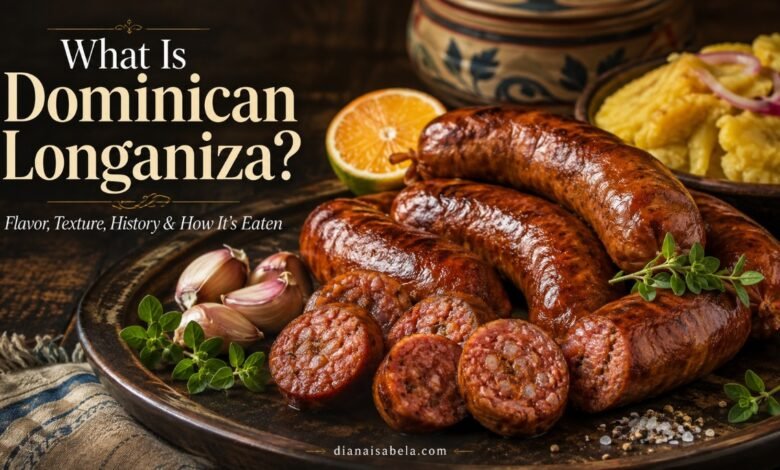
Dominican longaniza is the kind of food that becomes much easier to understand once you stop trying to translate it into another sausage. Calling it “Dominican chorizo” is convenient for approximately twelve seconds and then creates more confusion than it solves.
Longaniza has its own texture, seasoning vocabulary, history and place at the Dominican table. It can be fried until the casing browns and the edges turn crisp, cooked into rice, served with yuca, paired with mangú, folded into mofongo or added to a spread of fritura that looks as if restraint politely declined the invitation.
It is also not one perfectly standardized product. Recipes and production methods vary. Pork is central to many traditional versions; garlic and oregano appear repeatedly in Dominican preparations; bitter orange or another sour citrus may enter the seasoning; and some versions are dried before cooking while others are described and sold more like fresh sausage.
That variation is not a problem to fix. It is part of the story.
Dominican longaniza is a seasoned sausage tradition strongly associated with pork, garlic, oregano and Dominican cooking. It may be fried, grilled or used inside dishes such as locrio, mofongo and sancocho, with fried longaniza especially connected to fritura and tostones.
What makes a longaniza Dominican?
Dominican longaniza is defined less by one universal recipe than by a recognizable Dominican pattern of meat, seasoning, casing, preparation and serving context. Pork appears repeatedly in traditional recipes, while garlic, oregano, salt and sour citrus such as bitter orange are common flavor markers.
The important word there is common, not mandatory. One producer may use a slightly different seasoning balance from another. Some versions are more herb-forward. Others taste more garlicky or pork-rich. Commercial sausages can also differ from small-batch or artisanal versions.
What makes the sausage feel particularly Dominican is what happens after it is made. It enters a cuisine already full of plantains, yuca, rice, beans, fried cheese, onions and deeply savory pork dishes. Longaniza does not sit outside that food culture waiting to be explained. It plugs directly into it.
That is why seeing the word longaniza on a menu is only the beginning. A Dominican cafeteria serving it with tostones and yuca is telling you something different from a Spanish shop selling cured sausage or a Mexican taquería using its own regional longaniza.
The ingredients tell you a lot — but not everything
Dominican recipes commonly begin with pork and enough fat to keep the sausage flavorful during cooking. Garlic and oregano appear again and again, while sour citrus, especially bitter orange in traditional-style preparations, can add brightness to what would otherwise be a very rich mixture.
The exact formula is where things become interesting. There is no good reason to pretend every Dominican butcher, restaurant and family is using identical measurements. Longaniza belongs to the category of foods where culinary identity survives variation.
Diana’s kitchen rule: when two traditional sources disagree slightly about a sausage recipe, I trust the variation more than I trust the person insisting there is exactly one sacred tablespoon of everything. Food traditions are usually messier — and more interesting — than that.
Is Dominican longaniza fresh, cured or dried? This is where the answer gets interesting
Dominican longaniza is not described identically by every source or producer. Some modern recipes and sellers treat it as a fresh sausage that must be cooked, while traditional accounts describe longaniza being dried — historically even in the sun — before it was fried or used in other dishes.
That means simply saying “Dominican longaniza is always fresh” or “Dominican longaniza is always cured” is too neat. Production method matters. The version hanging in a Dominican butcher shop may not behave exactly like a packaged commercial sausage or an artisanal version prepared from an older family technique.
Sold as seasoned raw sausage that still requires full cooking. Texture can remain softer before frying, and the final result depends strongly on how the sausage is cooked.
Traditional accounts describe drying before cooking, which can produce a firmer texture and a different casing-to-filling relationship once the sausage is fried.
For a diner rather than a sausage maker, the practical lesson is easy: do not assume every Dominican longaniza will have exactly the same density, chew or moisture. Brand and preparation matter.
What does Dominican longaniza taste like?
Dominican longaniza is typically savory, garlicky, herbal and pork-rich, with a sharper aromatic profile than a plain breakfast sausage. Sour citrus can add brightness, while frying brings deeper browned flavors and concentrates the seasoning around the casing and exposed edges.
It is not automatically very hot. Pepper and spices can give it intensity without turning it into a chile-driven sausage. This distinction matters because English uses “spicy” for both “highly seasoned” and “hot,” which is how perfectly reasonable menu conversations become unnecessarily complicated.
A fried piece adds another layer: caramelized and browned notes on the surface. That exterior-to-interior contrast is a big part of why longaniza frita has such a different appeal from sausage cooked gently inside another dish.
The texture is half the reason people love it
A good Dominican longaniza can give you several textures in one bite: a casing with some snap, browned edges and a juicy interior. Slice it before frying and you create more exposed surfaces, which means more opportunities for crispness — but also more opportunities to lose moisture.
That is why thin slices and thick pieces behave differently. Thin pieces can become deeply browned and almost snack-like. Thicker pieces preserve more of the moist filling. Neither is automatically superior; they simply emphasize different parts of the sausage.
Fat matters too. As longaniza cooks, some fat renders out. That can help brown the sausage and carry its seasoning, but excessive grease on the finished plate is not the goal. There is a very real difference between juicy and swimming.
And the casing is not decorative packaging. If it browns properly, it gives structure and a satisfying bite. Overcook it, however, and the pleasant snap can turn into something closer to a negotiation.
Dominican longaniza refuses to stay in one meal
One of the easiest mistakes is imagining longaniza as a breakfast sausage with one assigned job. Dominican menus are far less restrictive.
With tostones
This is classic fried-food logic: crisp sausage beside crisp green plantain. Excellent when eaten hot, especially with something sharp or fresh nearby.
With yuca
Cassava gives the sausage a denser, calmer starch. Fried yuca emphasizes texture; boiled yuca lets the sausage carry more of the excitement.
With mangú
Soft mashed plantain is almost the opposite texture from fried longaniza. That contrast is exactly why the pairing makes sense.
Inside mofongo
The sausage becomes part of a more integrated plantain-and-garlic dish instead of remaining an isolated protein on the plate.
In locrio
Longaniza can season an entire rice dish, spreading its pork, garlic and herb character through the grains instead of concentrating it in one fried bite.
Inside fritura or picadera
This is longaniza in social mode: cut into shareable pieces beside other fried meats and starches rather than treated as a formal entrée.
If your goal is finding the fried version in restaurants rather than understanding the sausage itself, my guide to finding Dominican longaniza across the United States is the better place to start.
Why fried longaniza has such a strong identity of its own
Frying pushes Dominican longaniza toward its most textural form: browned casing, crisp exposed edges and rendered fat around a still-moist center. It also makes the sausage particularly suited to tostones and other fritura foods because every component can be eaten in compact, shareable bites.
Good frying requires enough heat for browning. When sausage sits too long in a low-heat oily environment, the exterior can remain soft instead of developing the texture people want. Over-frying solves one problem by creating another: the casing becomes tough and the filling dries.
Sliced sausage creates even more browned surfaces, which is why fried longaniza often looks so appealing cut into chunky pieces rather than left as one long link. But the cook still has to protect the inside from drying out.
The ideal fried longaniza is not “as dark as possible.” Color is only one signal. What you really want is the combination: browned exterior, casing with character, juicy interior and seasoning you can still taste after frying.
Mangú, breakfast and the longaniza question
Longaniza appears naturally beside Dominican breakfast foods, especially mangú, eggs and fried cheese. But there is a distinction worth protecting: traditional Los Tres Golpes is generally associated with mangú plus fried egg, fried cheese and Dominican salami.
Longaniza may appear as an addition, variation or substitution on restaurant menus. That does not make it wrong. It simply means “longaniza is served at breakfast” and “longaniza is one of the canonical three golpes” are not the same statement.
Culinarily, longaniza and mangú make immediate sense together. Mangú is mild, soft and starchy; fried longaniza is seasoned, salty and crisp around the edges. Add onions and the plate gains sharpness that keeps the richness moving.
This is also why I prefer breakfast combinations where the components remain recognizable. When you can taste the mangú, longaniza, cheese and egg separately, the plate feels abundant without becoming shapeless.
A sausage with a much longer Dominican story than its restaurant menu suggests
Longaniza belongs to a broad sausage family with Iberian connections, but its Dominican history developed its own character. Dominican cultural-food accounts describe pork sausage making on the island centuries ago and connect longaniza with Afro-Dominican culinary history as well as later neighborhood and market traditions.
Older preparation accounts describe pork stuffed into casing, seasoned and dried before frying. Longaniza could then be served with green plantains or tostones, or incorporated into dishes such as locrio, beans and sancocho.
This is why reducing Dominican longaniza to “their version of another sausage” feels so inadequate. A food can have an international family tree and still develop a very specific local identity.
What Dominican longaniza is not
The easiest way to create confusion is to classify every strongly seasoned sausage by resemblance.
Those distinctions are important enough that I would not squeeze them into one paragraph and pretend the subject is finished. The comparisons deserve their own deeper guides.
What should good Dominican longaniza feel and taste like?
A good sausage should still taste like its seasoning after cooking. Garlic and herbs should not disappear beneath salt or fryer oil. If it is fried, the exterior should have real color and texture while the interior retains moisture.
Aromatic seasoning, browned casing, juicy filling, controlled fat rendering and a texture that still feels like sausage rather than dry meat packed into a tube.
A pale oily surface, leathery casing, very dry filling, excessive grease collecting underneath or seasoning so flat that only salt remains.
The side dish matters as well. Hot longaniza beside stale, cold tostones is not a successful plate just because the sausage itself survived. Dominican longaniza is especially good at creating contrast with plantains, yuca, onion and avocado, so those supporting textures deserve some care too.
And if you are tasting it for the first time, keep the first plate relatively simple. Longaniza with tostones or mangú tells you far more about the sausage than a gigantic mixed platter containing seven things that all came out of the fryer at once.
The easiest way to understand Dominican longaniza is to stop translating it
Think pork, garlic, oregano, casing, rendered fat, plantains, yuca, neighborhood fritura, breakfast tables and rice dishes — not “which more familiar sausage is this basically the same as?”
Once you taste and read it in its own Dominican context, the category becomes much clearer. Longaniza can be crisp or stewed, breakfast or dinner, a supporting ingredient or the loudest thing on the plate. That flexibility is not a contradiction. It is exactly what has allowed the sausage to live in so many corners of Dominican cooking.
And if the next question is simply where to order the fried version, go to my U.S. guide to places serving fried longaniza.
What is Dominican longaniza?
Dominican longaniza is a seasoned sausage tradition commonly associated with pork, garlic, oregano and sour citrus such as bitter orange. Recipes and production methods vary between producers, so there is no single formula that describes every Dominican longaniza.
What meat is Dominican longaniza made from?
Pork is the meat most strongly associated with traditional Dominican longaniza, often with additional pork fat for flavor and texture. Individual commercial or regional recipes can vary, so the label should be checked when the exact meat matters.
What does Dominican longaniza taste like?
Dominican longaniza is typically savory, garlicky, herbal and pork-rich. Oregano is a common seasoning, while bitter orange or another sour citrus can add brightness. Frying adds browned and crisp flavors to the exterior.
Is Dominican longaniza spicy?
It is usually better described as highly seasoned than universally hot. Garlic, oregano, pepper and other seasonings can make the flavor intense without necessarily creating strong chile heat. Recipes vary by producer.
Is Dominican longaniza the same as chorizo?
No. Dominican longaniza and chorizo belong to different sausage traditions, although both have regional variations. Similar color or shape does not make them interchangeable.
Is Dominican longaniza the same as Dominican salami?
No. Longaniza and Dominican salami are different sausage products. Both can appear on Dominican breakfast tables, but they have different textures, seasoning traditions and culinary roles.
How is Dominican longaniza eaten?
Dominican longaniza can be fried and served with tostones, yuca or mangú, added to mofongo, cooked into locrio, used in sancocho or served as part of fritura and picadera. It can appear at breakfast, lunch or dinner.
Is Dominican longaniza always fried?
No. Fried longaniza is one popular preparation, but Dominican longaniza can also be grilled or cooked inside rice dishes, stews and other preparations.
Where can I find Dominican longaniza in the United States?
Dominican restaurants, cafeterias, delis and fritura counters are good places to look, especially in areas with established Dominican communities. Diana Isabela’s national longaniza guide tracks current restaurant options and fried longaniza plates across several U.S. states.