How to Eat Longaniza Frita: A Dominican Guide to Pairings, Bites & Ordering

There is no ceremonial rulebook for eating longaniza frita. Nobody is going to confiscate your Dominican breakfast because you combined the sausage with the wrong corner of a plantain. But there is a very real difference between merely eating fried sausage and understanding why the plate has been assembled the way it has.
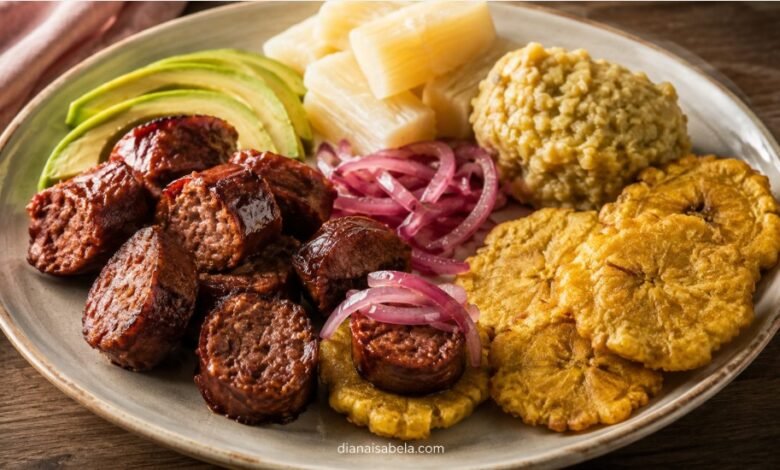
Dominican longaniza brings salt, pork richness, garlic, oregano, browned casing and rendered fat. The foods around it usually answer one of those qualities. Mangú gives softness. Yuca gives dense starch. Tostones give crunch. Onions bring acidity. Avocado cools the whole situation down without introducing another fried surface.
That is the useful way to approach longaniza frita: not as one lonely sausage requiring a fork, but as the loudest member of a plate where every side can change the next bite.
This guide is about exactly that — how to eat it, whether the casing stays on, what to combine in one bite, how a fritura-style plate differs from breakfast, when to choose mangú over tostones, and what I would order if Dominican longaniza were completely new to me.
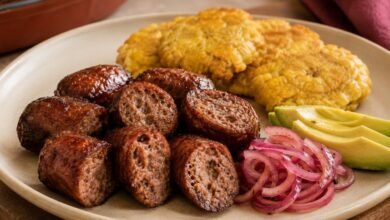
Dominican longaniza frita is commonly eaten in pieces with sides such as tostones, yuca or mangú. The casing is normally eaten with the sausage. For a balanced bite, combine the rich fried longaniza with a starchy side and something sharper or fresher, such as onions or avocado. It can work as casual fritura, a shared plate, breakfast, lunch or dinner.
For the first bite, let the sausage introduce itself
If I were tasting a particular longaniza for the first time, I would not immediately bury it under sauce, onions, mashed plantain and half the contents of the table. I would take one piece mostly on its own.
That first bite tells you several useful things at once. You can feel whether the casing has a pleasant resistance or has become tough. You notice whether the interior remains juicy. You can separate garlic and oregano from the flavor of frying oil, and you can tell whether the sausage is genuinely aromatic or simply very salty.
Try one piece without sauce
Notice the seasoning, browning and amount of rendered fat before other ingredients start changing the flavor.
Add the starch
Try the next piece with a little tostone, yuca or mangú. The sausage should suddenly feel less intense because the starch spreads its salt and richness across a larger bite.
Bring in something sharp
A little onion or another acidic element can reset the palate after pork fat and fried crust.
Then start improvising
Once you know what the sausage tastes like, combine the plate however you like. Dinner should eventually become dinner, not a laboratory practical.
If you want a deeper guide to what you should actually notice in that first bite, I break down the garlic, oregano, citrus, casing and fried texture in my Dominican longaniza flavor guide.
Yes, you normally eat the casing
The casing is generally part of the fried longaniza experience. It holds the seasoned filling together while cooking and can develop some of the most satisfying texture on the entire sausage.
A well-cooked casing adds structure without becoming the dominant event. Depending on the sausage, there may be a little snap when you bite through it, or it may simply feel firmer than the filling beneath it.
If the casing is extremely tough, difficult to chew or separating strangely from an excessively dry filling, that is not a secret dining ritual you have failed to understand. It may simply be an overcooked sausage or a product with a particularly firm casing.
Diana’s test: I want to notice the casing for about half a second. Enough texture to make the bite interesting, not enough to begin a personal relationship with it.
Whole links and cut pieces create different bites
Longaniza can be cooked and served in several formats. Fried Dominican preparations often arrive cut into manageable pieces, especially when the sausage is being shared as part of a fritura-style plate. Other meals may preserve larger sections of the link.
Cutting matters because every exposed surface creates another opportunity for browning. A piece with browned cut faces can taste more roasted and crisp than the protected center of a longer section.
The trade-off is moisture. Smaller pieces expose more meat directly to heat, so careless frying can dry them faster. Larger sections protect more of the center but provide proportionally less browned surface.
At the table, there is no prize for struggling through a whole long link if the plate is meant for sharing. Cut pieces are practical because every bite can be paired differently.
Choose the starch according to the experience you want
Dominican longaniza does not need a neutral garnish placed beside it simply to occupy plate space. The starch changes the personality of the meal.
Longaniza with tostones
Tostones are twice-fried green plantains, so this pairing enthusiastically doubles down on crispness. Their relatively mild interior works beautifully with juicy sausage, but because both elements are fried, something acidic becomes especially welcome.
Longaniza with yuca
Yuca is starchier and denser. It absorbs rendered pork flavor beautifully while providing a calmer background than another fried crust. Add onions and the combination suddenly makes a great deal of culinary sense.
Longaniza with mangú
Mangú creates perhaps the strongest textural contrast. Soft mashed green plantain meets browned casing and seasoned pork, spreading the sausage’s salt and richness through a much gentler bite.
Longaniza with rice
Once rice enters the picture, longaniza moves away from snack territory and toward lunch or dinner. In cooked rice preparations, the sausage can season the grains rather than simply sitting beside them.
The question is therefore not “Which side is correct?” It is what you want from the meal. Tostones amplify fried-food pleasure. Mangú softens it. Yuca grounds it. Rice turns it into another kind of plate entirely.
The longaniza-and-mangú relationship deserves its own treatment, which is why I keep it in my longaniza frita with mangú guide rather than flattening everything into one giant list of side dishes.
Then give all that pork and frying somewhere to go
A plate of sausage plus fried plantain plus fried cheese can be magnificent. It can also reach a point where every bite is asking the previous bite to move over so more fat can sit down.
This is where onions and avocado become much more than decoration.
My favorite bite logic
The sausage supplies salt, aromatics and pork fat. The starch spreads that intensity. Onion brings sharpness and freshness back into the bite.
Onions
Pickled, vinegary or sharply seasoned onions are especially useful because acidity cuts through the richness of the sausage. They also provide moisture beside drier starches such as tostones or yuca.
Avocado
Avocado works differently. It is rich too, but it brings cool creaminess rather than another browned or fried texture. If the plate already contains several fried components, avocado can make the whole meal feel calmer.
Neither is compulsory. But if I were building a large plate for several people, I would rather have one sharp or fresh element than a fourth fried side added merely because empty space on a platter makes us nervous.
A shared fritura is where longaniza becomes social food
Fried longaniza has a natural place in Dominican fritura, where hot pieces of sausage can be served with tostones and other fried foods in an informal, shareable format.
The beauty of this style of eating is that the sausage does not demand an individual plated entrée. Pieces can arrive ready to pick from, letting everyone alternate between sausage, plantain and whatever sharper or fresher element is on the table.
This is how I would approach a shared order:
This social format also explains why longaniza moves so easily between snack, shared meal and full plate. It can be the centerpiece without requiring the entire table to behave formally around it.
At breakfast, eat longaniza differently
Breakfast changes the plate because mangú, eggs and fried cheese introduce soft and rich textures that do not exist in a simple longaniza-and-tostones order.
If longaniza arrives with mangú, I would use the plantain almost like a buffer between sausage bites. A modest amount of longaniza with mangú keeps the sausage dominant while softening its salt and fat. Add onion and the bite becomes brighter again.
Egg works beautifully because yolk adds richness of another kind, although now the plate becomes substantially more indulgent. Fried cheese contributes salt and browned texture, so I become even happier to see onions or avocado somewhere nearby.
One important distinction: Dominican longaniza can absolutely appear at breakfast, but the traditional sausage in classic Los Tres Golpes is Dominican salami. Longaniza works as another breakfast protein or an addition, rather than replacing the identity of the traditional plate.
If the salami-versus-longaniza question is still fuzzy, I compare the two Dominican sausages here.
Fork, toothpick or fingers? The plate decides
There is no purity test hiding in the cutlery drawer.
A plated breakfast with mangú obviously makes a fork useful. Yuca with onions is easier with utensils too. A casual plate of cut longaniza and dry tostones, on the other hand, is naturally suited to fingers or toothpicks when that is how the food is served.
The only method I would avoid is trying to maintain elegance so aggressively that hot fried sausage launches itself across the table. Fashion has survived worse; your dining companion’s shirt may not.
A few ways to accidentally miss the point
If it is your first order, I would keep it this simple
If you now know exactly how you want to eat it but not where to get it, that is the job of my guide to finding Dominican longaniza across the U.S..
The main thing I would remember is that longaniza frita does not require sophistication from the diner. It requires attention from the cook and a little curiosity from you. Taste the sausage. Notice the casing. Let the starch change the bite. Use acidity when the plate gets rich. Then stop analyzing and enjoy lunch.
How do you eat your longaniza?
I love discovering the little food habits that never make it into neat definitions — the family combination everyone insists is best, the particular onions served with longaniza at home, an unexpected sauce, a recipe from a grandparent, a breakfast order I should know about, or a Dominican restaurant that has just started serving a really good version.
If you have a favorite way to eat longaniza frita, a recipe, a serving idea, a new location, a photo or a story connected to this dish, please write to me at info@dianaisabela.com. I will genuinely be happy to hear from you. Together we can keep making this longaniza guide more useful, more delicious and a little more personal for the next hungry person who finds it.
How do you eat Dominican longaniza frita?
Dominican longaniza frita is commonly eaten in pieces with tostones, yuca, mangú or other Dominican sides. The casing is normally eaten too. Combining the rich sausage with starch and something sharper such as onions creates a particularly balanced bite.
Do you eat the casing on Dominican longaniza?
Yes, the casing is generally eaten with Dominican longaniza. When properly cooked it adds structure and may have a pleasant snap. An extremely tough or rubbery casing can be a sign that the sausage has been overcooked or uses a firmer casing.
What is longaniza frita usually served with?
Tostones are one of the classic companions for fried Dominican longaniza, especially in picalonga or fritura. Yuca, mangú, onions, avocado and rice dishes can also accompany longaniza depending on the meal.
Can you eat longaniza frita with mangú?
Yes. Mangú and fried longaniza work especially well because soft mashed green plantain contrasts with the sausage’s browned casing, seasoning and pork richness. Longaniza can appear at Dominican breakfast even though it is not the canonical salami component of traditional Los Tres Golpes.
What is picalonga with longaniza?
Picalonga is a Dominican fried-food or picadera-style preparation that can include fried longaniza served in shareable pieces, commonly with tostones and sometimes other fried foods. It is a casual way to enjoy longaniza rather than a formal plated meal.
Should you eat fried longaniza with a fork or your hands?
Either can be appropriate. A breakfast plate with mangú or rice is easiest with a fork, while dry longaniza pieces and tostones on a casual shared platter can naturally be eaten with fingers or toothpicks when served that way.
Is Dominican longaniza eaten for breakfast?
Yes. Dominican longaniza can be eaten at breakfast as well as lunch and dinner. Breakfast plates may pair it with mangú, eggs, cheese or onions, although traditional Los Tres Golpes specifically uses Dominican salami rather than longaniza as its classic sausage component.
What should I order with longaniza for the first time?
Fried Dominican longaniza with tostones and onions is a useful first order because you can clearly taste the sausage while getting crisp plantain and acidity alongside it. Mangú is another excellent option if you prefer a softer contrast.
Where can I find longaniza frita in the United States?
Dominican restaurants, cafeterias, delis and fritura counters are useful places to search, especially in areas with established Dominican communities. Diana Isabela’s national guide tracks fried Dominican longaniza options across several U.S. states.